
- Tummy Tuck Recovery Period Week by Week
- Tummy Tuck Changes During Week 3 vs. Week 1–2
- 3 Weeks After Tummy Tuck Pictures: What to Expect
- Abdominal Swelling 3 Weeks After Tummy Tuck Pictures
- Scar 3 Weeks After Tummy Tuck Pictures
- Belly Button 3 Weeks After Tummy Tuck
- 3 Weeks After 360 Tummy Tuck Pictures
- 3 Weeks After Traditional Tummy Tuck Pictures
- 3 Weeks After Mini Tummy Tuck Pictures
- FAQs About 3 Weeks After Tummy Tuck Pictures
3 weeks after tummy tuck pictures: Swelling, Scars, Results & Belly Button Pictures
Discover what’s normal 3 weeks after a tummy tuck. See real recovery photos, swelling, scar healing, belly button changes, and tips for smooth progress.
The tummy tuck, or abdominoplasty, is a popular body contouring surgery designed to sculpt your abdomen and remove excess skin after pregnancy or significant weight loss. It is also an essential component of mommy makeover surgery
While many patients are eager to see the results immediately, the first few weeks of recovery can mask the outcome due to swelling, bruising, and incision healing.
Passing through several tummy tuck stages, the initial swelling starts to subside, bruising fades, and the abdomen begins to reveal a flatter, more contoured shape by the third week. Scars gradually settle, and the belly button returns to its natural position, giving a clearer preview of the final results.
In this article, we provide a detailed look at week three of tummy tuck recovery, with realistic pictures, explanations of normal and abnormal appearances, and insights into how your body progresses during this crucial stage.
Tummy Tuck Recovery Period Week by Week
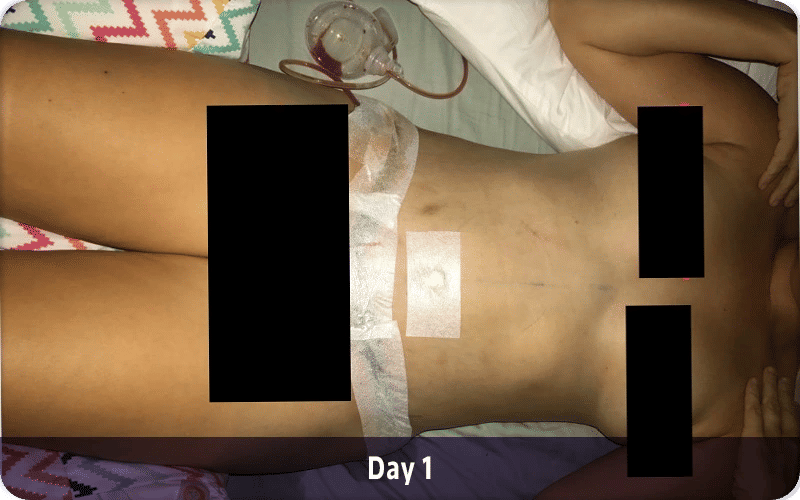
Recovery after a tummy tuck progresses gradually. In the first few days, swelling, bruising, and discomfort are at their peak, and standing upright is difficult. By week two, swelling and bruising begin to decrease, and light daily activities become easier. By week three, the abdomen looks flatter, swelling continues to improve, and the scar starts its early fading phase, with further refinement expected over the next few months.
1 Week After Tummy Tuck
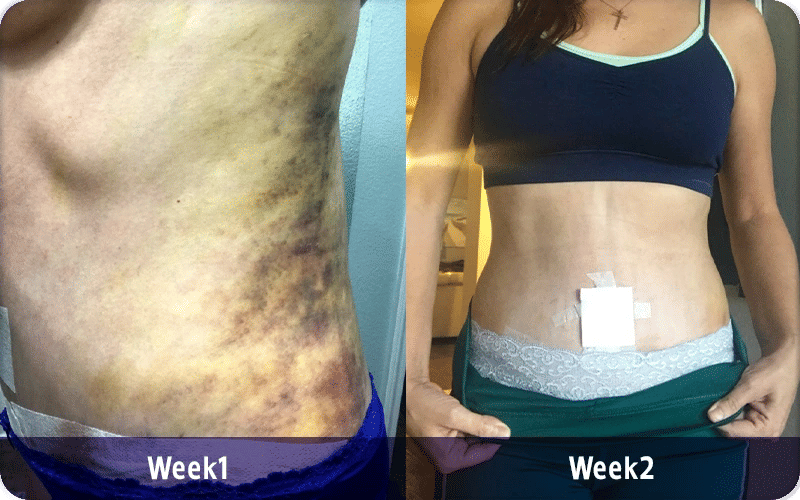
One week after a tummy tuck, you can expect significant swelling, bruising, and discomfort, along with limited mobility, which often makes it difficult to stand upright. Wearing a compression garment is essential, and your surgeon may remove any drainage tubes around this time.
Rest is crucial, but short, gentle walks are encouraged to improve circulation and prevent blood clots.
Photos from this period typically show a swollen, possibly distorted abdomen with dressings and drains. The belly button and incision area may appear swollen, and patients often walk slightly bent over to aid circulation.
2 Weeks After Tummy Tuck
Two weeks after a tummy tuck, the appearance will show a gradual improvement with reduced swelling and bruising, but the abdomen will still appear swollen and tight, and early contours will be visible.
Incisions remain sensitive and should be kept clean. Movement becomes easier, allowing for light daily activities. Scars and incision lines are visible but will continue to improve over time.
3 Weeks After Tummy Tuck
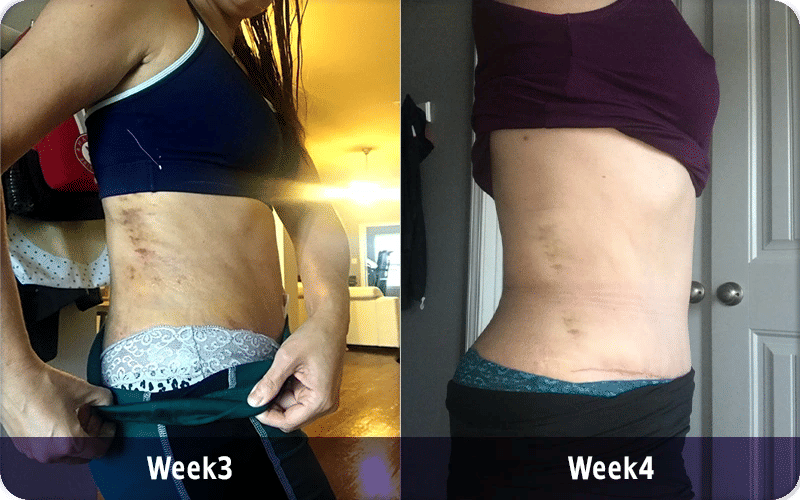
Three weeks after a tummy tuck, some abdominal swelling is still expected, but it is noticeably less than what patients experience in weeks one and two. At this stage, the abdomen usually looks flatter and more defined, although mild puffiness or firmness can remain, especially around the lower abdomen, incision line, and belly button. Bruising is minimal and may appear as faint discoloration.
Even though the overall contour becomes clearer in week three, residual swelling is a normal part of the healing process and may continue for several weeks or even months. Consistent use of your compression garment, combined with following your surgeon’s activity restrictions, plays a key role in reducing swelling and supporting smooth recovery.
Images from this stage help patients understand what normal swelling looks like and how it differs from concerning changes. A sudden increase in swelling, redness, heat, or sharp pain should be evaluated by your surgeon, as these may indicate complications such as infection or fluid accumulation.
4 Weeks After Tummy Tuck
By the fourth week, most patients notice a clearer improvement compared to week three. Swelling continues to go down, especially around the upper and mid-abdomen, while some firmness in the lower abdomen may persist. Bruising is usually gone by this point, and the stomach begins to look more naturally contoured.
Tummy Tuck Changes During Week 3 vs. Week 1–2
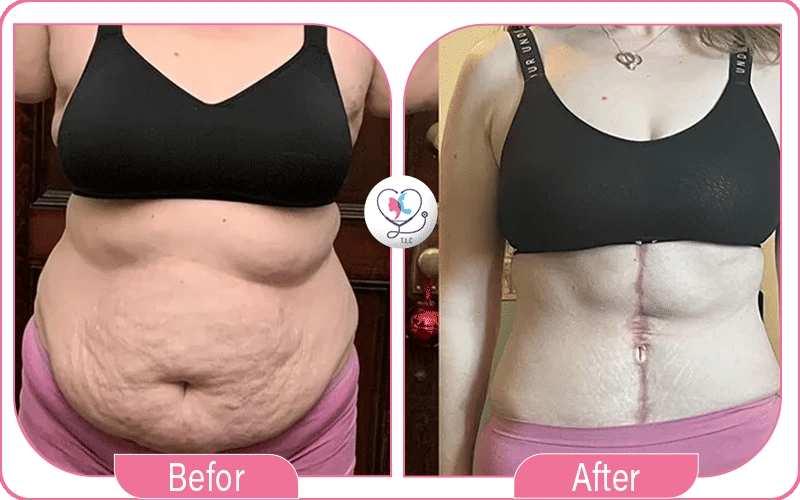
Photos from week 1–2 usually show a noticeably swollen abdomen and a puffy belly button, often with visible sutures. During this early stage, swelling is at its peak, the abdomen feels tight and firm, and bruising is still present.
By the second week, swelling begins to gradually decrease, bruising fades, and movement becomes easier, although the abdomen still appears firm and sensitive.
By week 3, abdominal swelling is significantly reduced compared to the first two weeks, though mild puffiness, especially in the lower abdomen, remains normal. Patients begin to see clearer abdominal contours, but residual swelling can continue for several weeks or even up to six months as the body fully heals.
The belly button at week 3 is still healing and slightly swollen, yet it usually appears flatter and more defined than it did in weeks 1 and 2. The scar also looks more settled at this stage; it is often less raised with milder redness that shifts toward a pinkish tone, although it remains visible. Both the belly button and the scar will continue to evolve over the coming months as healing progresses.
3 Weeks After Tummy Tuck Pictures: What to Expect
Three weeks after a tummy tuck, Visual expectations include reduced swelling and bruising, increased mobility to stand up straight and resume light activities, and the ability to stop most prescription pain medication. While you will feel more like yourself, the area will still be sensitive and swollen, and it is crucial to continue wearing your compression garment and follow your surgeon's activity restrictions to ensure proper healing and avoid overexertion.
Images at this stage typically show
- Swelling and bruising: Significant reduction in swelling and bruising should have dissipated, but the area will still look swollen and sensitive.
- Incisions: Incisions will be healing, but may still be red or raised. They should be covered by the compression garment, which helps support the new contours.
- Visible initial abdominal contour and incision lines: As swelling decreases, you should begin to see the results of the surgery more clearly, which can be a positive motivator.
Abdominal Swelling 3 Weeks After Tummy Tuck Pictures
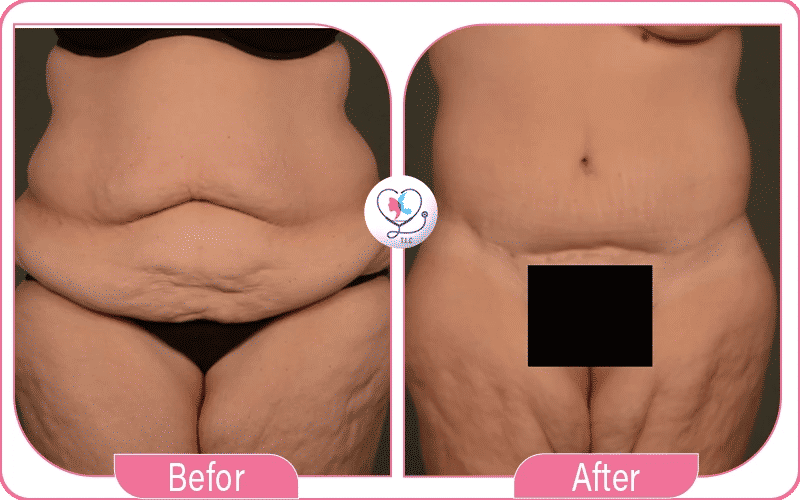
Three weeks after a tummy tuck, swelling is still present but noticeably reduced compared to weeks one and two. Pictures from this stage usually show a flatter abdomen with mild puffiness or firmness, especially around the lower stomach, incision line, and belly button. Bruising is minimal or almost gone.
Residual swelling at week three is normal and can take weeks or even months to fully resolve. Wearing your compression garment and following activity restrictions help speed up improvement. If swelling suddenly increases or is accompanied by redness, heat, or sharp pain, it should be checked by your surgeon.
Scar 3 Weeks After Tummy Tuck Pictures
At 3 weeks after a tummy tuck, the scar is beginning to mature but remains red and visible. Compared to weeks 1–2, it appears slightly firmer and more structured as new tissue and blood vessels form. The edges may still be slightly raised, and the line often shows a pinkish-red hue, which is a normal part of healing.
Photos at this stage typically reveal:
- Scar appearance: Less swollen than the first two weeks, with clearer edges and initial flattening.
- Color: Predominantly pink to red, gradually fading over the coming months.
- Texture: Firm but softening as healing continues.
Belly Button 3 Weeks After Tummy Tuck
At three weeks post-tummy tuck, the belly button is in the healing phase. Swelling has started to subside, and the incision is closing, though some mild puffiness or firmness may remain. The belly button is nearly in its final shape, but full definition and contour will continue to improve over the coming weeks. Mild scabbing, redness, or slight itching is normal.
Photos typically show:
- Shape: Approaching its final contour, though subtle swelling may still slightly alter the outline.
- Incision: Healing edges, slightly raised or pinkish-red, gradually flattening.
- Texture: Firm, tender, or mildly itchy skin around the incision, indicating normal tissue repair.
Sometimes it is common for the belly button to look weird after tummy tuck. Read about causes, solutions, and what is normal and abnormal behind the weird tummy tuck belly button.
See photos of belly button before and after tummy tuck and explore all healing stages of tummy tuck belly button
3 Weeks After 360 Tummy Tuck Pictures
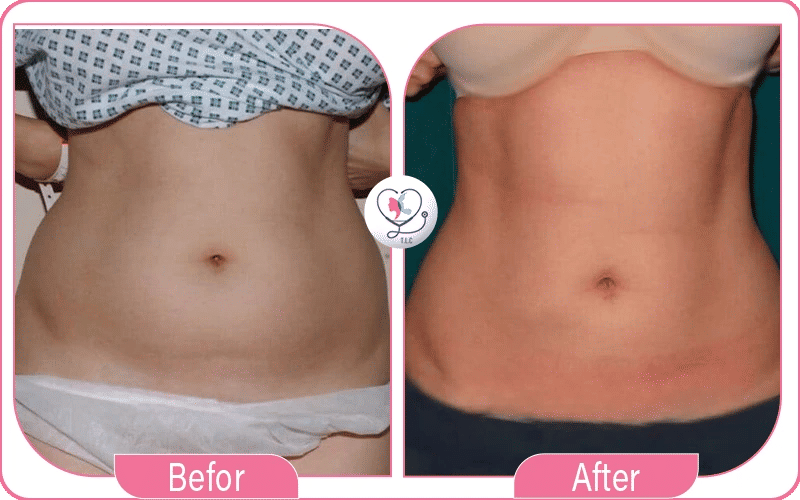
At three weeks post 360 tummy tuck, visual changes are noticeable around the entire midsection, including the front abdomen, flanks, and lower back. Swelling has significantly decreased, revealing the beginning of the new contours. The incision typically runs around the waistline, often hidden under clothing. Patients may still feel mild firmness or tightness in the midsection, but mobility improves and light activities can usually resume. Bruising is minimal by this stage.
3 Weeks After Traditional Tummy Tuck Pictures
For a traditional tummy tuck, changes at week three are most visible in the main abdominal area. Early flattening is noticeable, and the incision along the lower abdomen begins to settle. Swelling and tenderness are reduced but still present, particularly near the incision. The belly button incision is healing and may show mild redness or slight puffiness. Recovery at this stage allows light walking and daily activities, but heavy lifting and core exercises are still restricted.
3 Weeks After Mini Tummy Tuck Pictures
In a mini tummy tuck, the procedure is limited to the lower abdomen below the belly button, with a smaller incision. By week three, subtle flattening and tightening are visible in the treated area. Swelling is less extensive than in larger tummy tucks, but some firmness around the incision is normal. Bruising is minimal, and most patients can resume light activity while continuing to avoid strenuous movement. The belly button is usually unaffected in shape, as the mini approach does not involve extensive repositioning.
FAQs About 3 Weeks After Tummy Tuck Pictures