Take our free online color blind test to check how well you distinguish different colors. This quick screening uses colored plates to look for patterns associated with color vision deficiency, particularly common red-green deficiencies.
What Is a Color Blind Test?
A color blind test checks how well you tell colors apart.
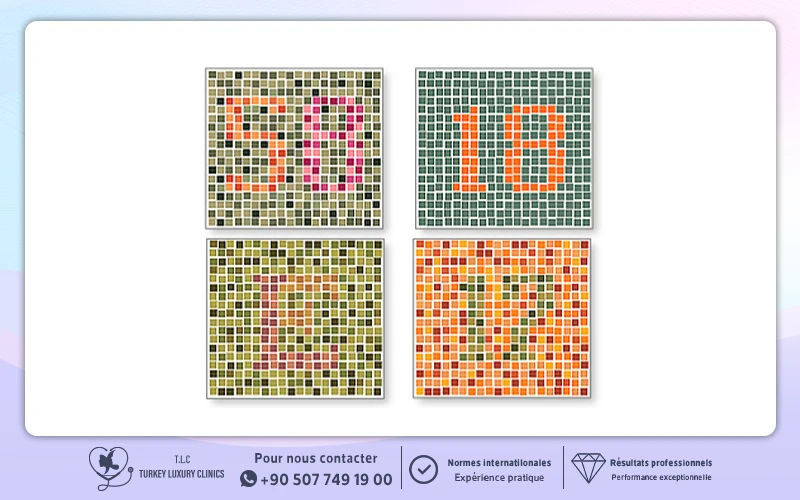
The best known one is the Ishihara test. It shows you circles filled with colored dots. Inside each circle is a hidden number, shape, or line. If your color vision is typical, the hidden figure stands out. If you have a color vision deficiency, it may be hard to see, or you may see a different number instead.
Tests like this look for red-green color blind. That is by far the most common kind. About 1 in 12 men have some form of color vision deficiency.
A test like this is a screening tool. It can show that your answers follow a pattern linked to color blind. Confirming it, and finding out the exact type, requires professional color vision testing.

How Does the Color Blind Test Work?
The hidden figure is made from dots in a slightly different color, not a different brightness. That is why you cannot find it by squinting or turning the brightness up, and why your screen settings matter.
Your result comes from the pattern of answers across all the plates, not from any single one. Getting one plate wrong does not by itself indicate color blind.
Before You Start
Your screen changes how colors look, so take a minute to set it up:
- Turn off Night Shift, Night Light, True Tone, and any blue-light filter
- Turn off color filters in your accessibility settings
- Set brightness to a normal, comfortable level
- Sit in a normally lit room, with no glare or colored light on the screen
- Wear your usual glasses or contacts, but take off tinted or color-boosting lenses
Test Steps
- Look at each colored plate.
- Enter the number or select the shape you see.
- If you cannot see anything, choose that option rather than guessing.
- Complete all the plates.
- Read your result.
Answer with what you see in the first few seconds. Do not stare at a plate hunting for a number. A quick, honest answer gives a more useful screening result than a long guess.
What Is Color Blind?
Color blind, also called color vision deficiency (CVD), is a reduced ability to distinguish certain colors. It occurs when one or more of the cone systems responsible for color vision are absent or function differently.
Most people with color blind can still see colors. The problem is that certain colors or shades become more difficult to distinguish from one another.
Signs You May Be Color Blind
Most people with color blind were born with it, so it can go unnoticed for years. You assume everyone sees what you see.
These are the signs people usually notice first:
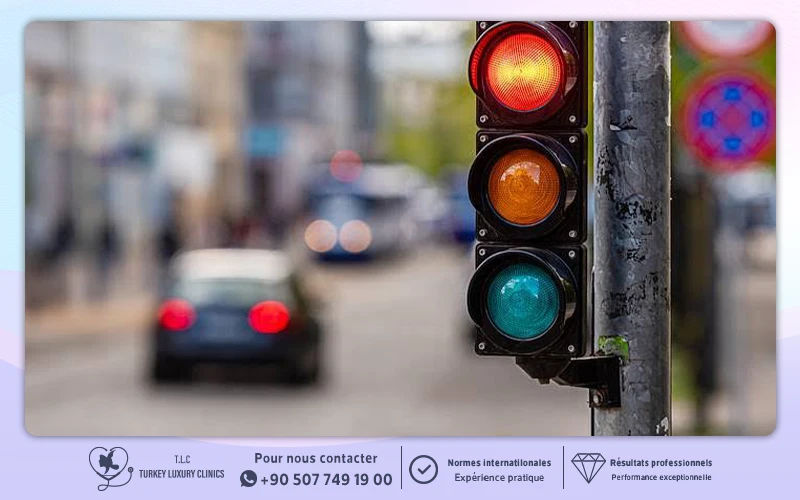
- You use the position of a traffic light, not its color. You read the top light as stop and the bottom as go, because red and green look too alike to rely on.
- Colors look flat. Reds and greens seem washed out, as if a thin film has taken the life out of them.
- You mix up clothes. Matching an outfit is harder than it should be, and other people notice before you do.
- Similar shades run together. Red and brown, green and brown, blue and purple.
- Blue and yellow are hard to separate. Less common, but it happens.
None of these proves anything on its own. Together, they are a good reason to take the test.
What Colors Do Color Blind People See?
Almost nobody with color blindness sees the world in black and white. You still see color. Some colors just look alike.
Here is what that means day to day.
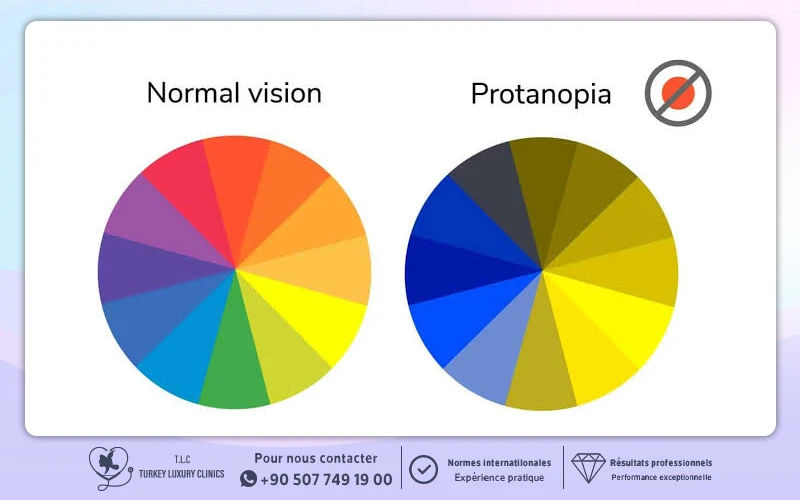
Protanopia
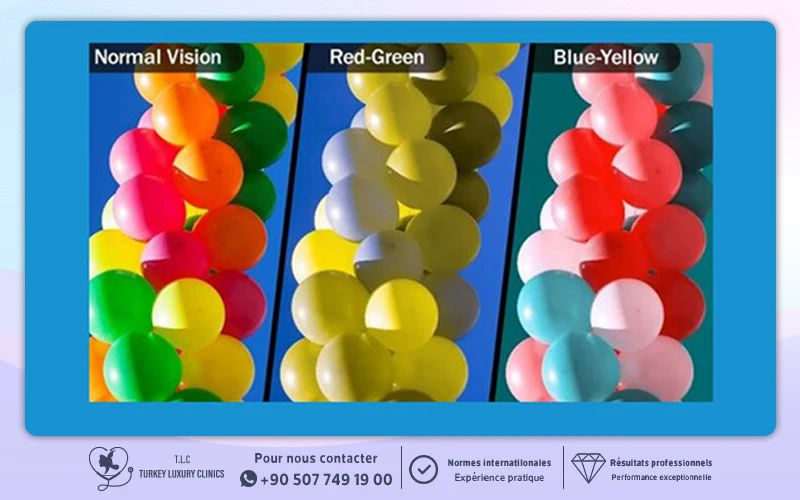
Red loses its brightness. A red car in the shade can look almost black. Ripe strawberries are hard to spot against green leaves. Purple looks a lot like blue.
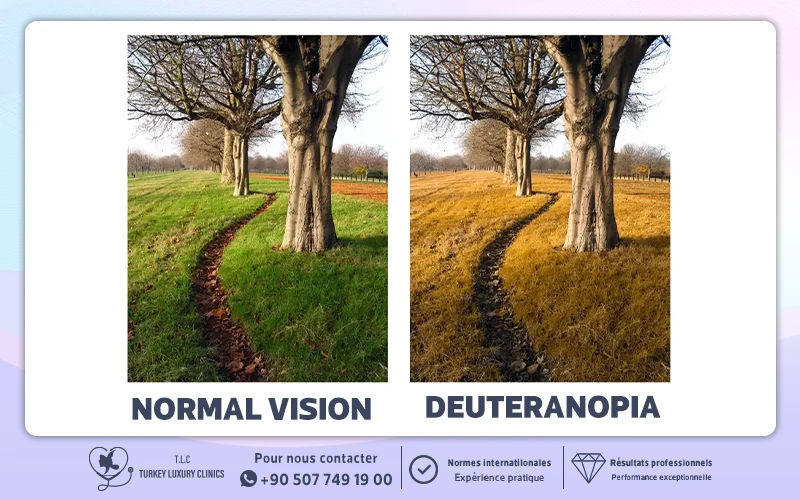
Deuteranopia
Greens drift toward beige and tan. Green, red, orange, and brown all look similar. Unlike protanopia, red keeps its normal brightness. It just does not look clearly red.
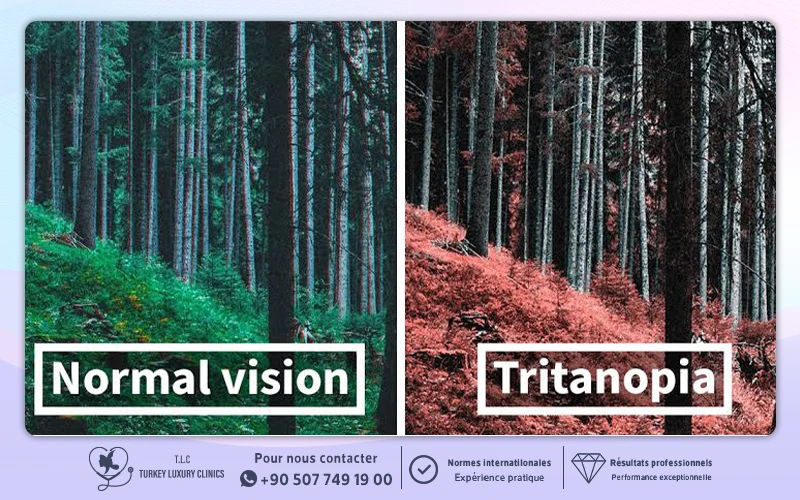
Tritanopia
Blue looks like green. Yellow looks like pink. Colors overall look a little washed out.
Types of Color Blindness
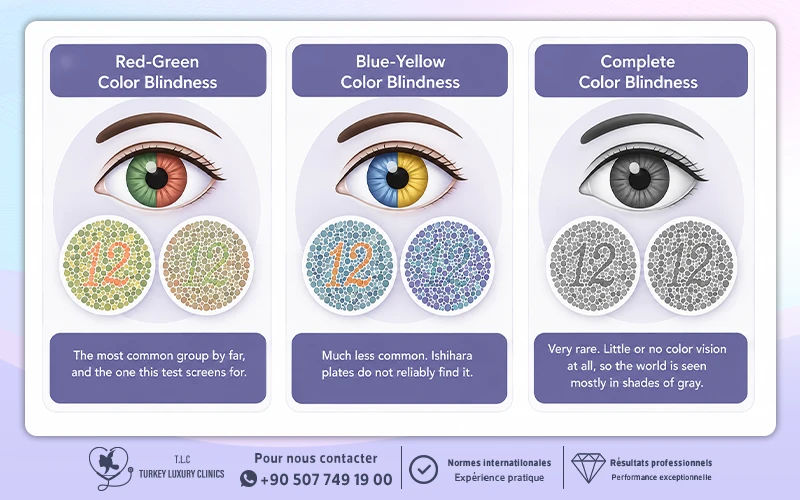
There are three groups, based on which cells are affected.
Red-Green Color Blindness
The most common group by far, and the one this test screens for.
Deuteranomaly: The green-sensing cells work, but weakly. This is the most common type of all, and it is usually mild enough not to interfere with daily life.
Deuteranopia: The green-sensing cells do not work. Red and green become hard to separate.
Protanomaly: The red-sensing cells work weakly. Reds look less bright than they should.
Protanopia: The red-sensing cells do not work. Reds also look darker than they do to other people.
Blue-Yellow Color Blindness
Much less common. Ishihara plates do not reliably find it.
Tritanomaly: The blue-sensing cells work weakly. Blue and green become hard to separate.
Tritanopia: The blue-sensing cells do not work. Blue and green, purple and red, and yellow and pink all look alike.
Complete Color Blindness
Achromatopsia: Very rare. Little or no color vision at all, so the world is seen mostly in shades of gray.
It usually comes with other problems too: strong light sensitivity, blurry vision, and eyes that move on their own.
It is a different condition from ordinary red-green color blindness, not a stronger version of it.
Types of Color Blindness Tests
Not every color vision test does the same job. Some screen quickly for the common red-green deficiency. Others measure how finely you separate close shades. A few decide whether you qualify for a particular job.
They fall into three groups.
Plate and Dot Screening Tests
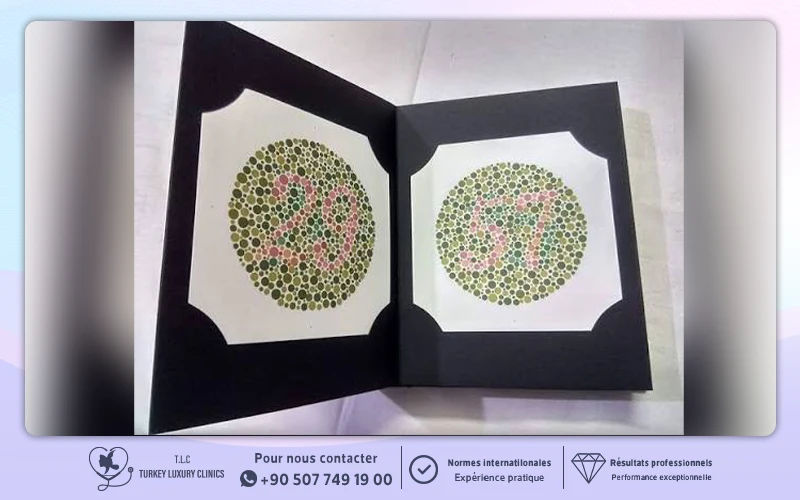
These use colored dots arranged so a figure appears — or disappears — depending on your color vision. They are quick, and they are what most people mean by a color blindness test.
Ishihara Plate Test
Circular plates filled with colored dots forming a hidden number or shape. What you read depends on your color vision.
It screens for red-green deficiency only.
HRR Test
Uses 24 plates with simple shapes — circles, triangles, crosses — instead of numbers, which makes it easier for children.
It screens for both red-green and blue-yellow deficiency, and it also indicates how strong the deficiency is. Ishihara does neither.
Cambridge Colour Test
A computerized test. A letter C appears against a background of shifting similar colors, and you say which way the gap faces.
It measures the exact threshold at which you stop telling two colors apart.
Arrangement and Hue Tests
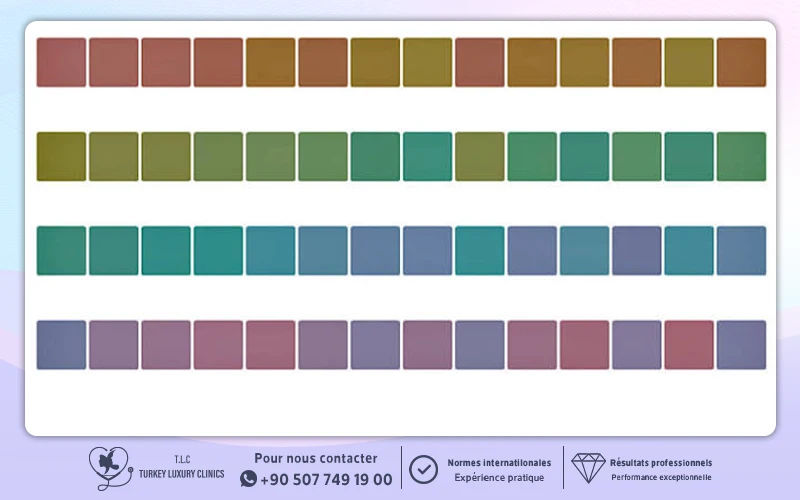
Instead of reading figures, you put colors in order. This shows how finely you separate shades that sit close together — something plate tests cannot measure.
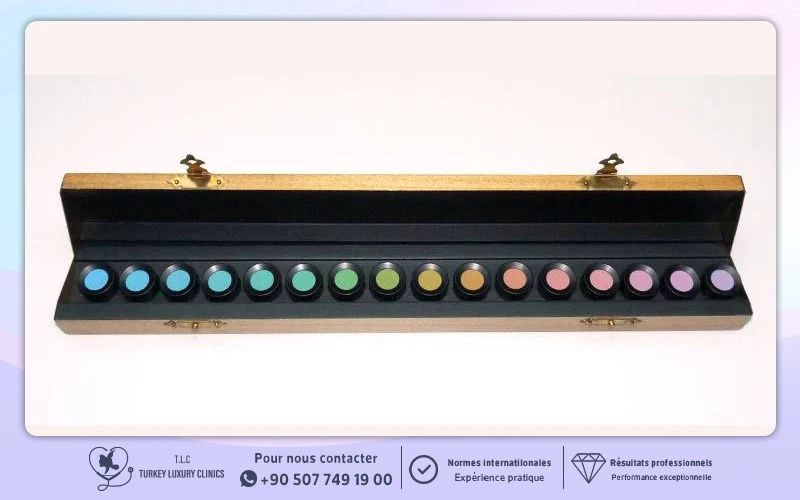
Farnsworth D-15
You arrange 15 colored caps in sequence, starting from one fixed reference cap.
It picks up moderate to severe deficiency in both red-green and blue-yellow. Very mild cases can slip past it.
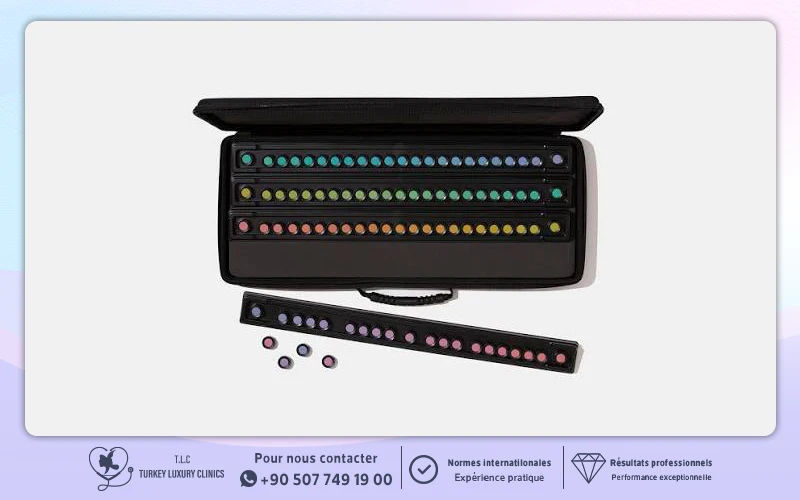
Farnsworth-Munsell 100 Hue
The same idea, but with four trays of caps in far finer steps of color.
It is the most detailed measure of color discrimination, and it is used when precise color work is part of the job.
Diagnostic and Occupational Tests
The first confirms exactly which type of deficiency you have. The second decides whether you can do a specific job.
Anomaloscope
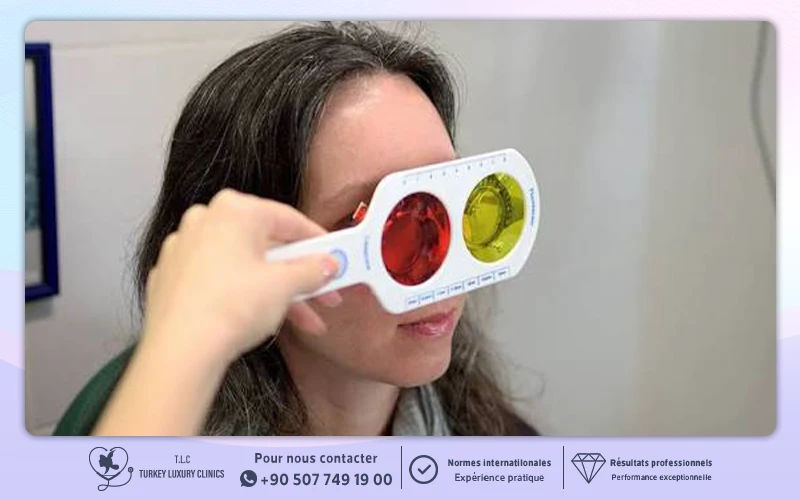
You look through an eyepiece and turn dials to mix red and green light until it matches a standard yellow.
It is the most precise test there is for red-green deficiency, and it is the standard other tests are measured against. Mostly found in specialist clinics and research.
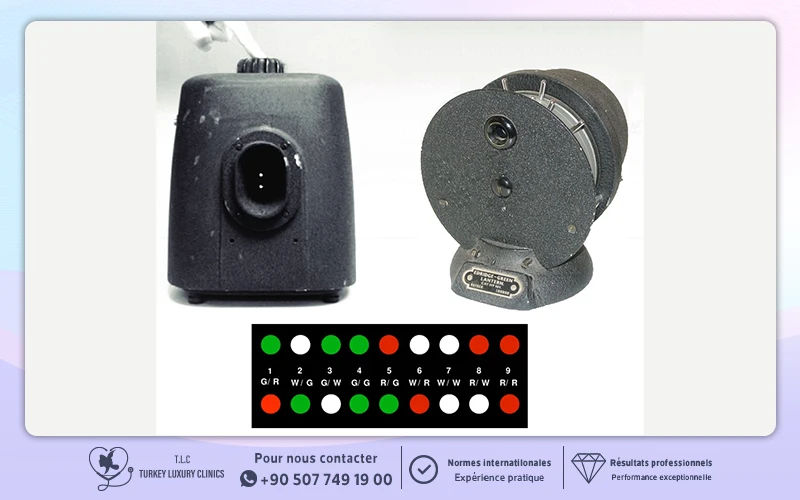
Farnsworth Lantern Test (FALANT)
Shows small colored lights at a distance and asks you to name them — much closer to reading a real signal light than reading a number off a plate.
Used to qualify people for transportation and military roles. Aviation, maritime, and rail authorities each set their own passing standard.
What Is the Ishihara Color Blind Test?
The Ishihara test was created in 1917 by Dr. Shinobu Ishihara, and eye doctors still use it today. It is the most widely used color vision screening test in the world.
What it finds: red-green color blindness — the most common kind by a wide margin.
What it misses: blue-yellow color blindness. Ishihara plates were never built to find it. So a normal result means red-green color blindness is unlikely, not that every part of your color vision is normal.
Types of Ishihara Plates
Not every plate does the same job. The full test uses five kinds.
Demonstration plates are read the same way by everyone, including people with color blindness. They come first, and their only job is to confirm you have understood the task. Reading the demonstration plate correctly does not mean your color vision is normal.
Transformation plates show a number to everyone — but not the same number. What you read depends on your color vision.
Vanishing plates make up most of the test. Only someone with typical color vision can read the number. To everyone else, it fades into the dots.
Hidden digit plates work the other way round. Someone with typical color vision sees nothing but scattered dots, while someone with red-green color blindness reads a clear number.
Diagnostic plates separate the two forms of red-green color blindness — protan, involving the red-sensing cells, and deutan, involving the green-sensing cells. Without them, a test can only tell you that red-green color blindness is present, not which kind.
Tracing plates replace the number with a winding line to follow across the plate. They are used for children and for anyone who does not read numbers.
Understanding Your Color Blindness Test Result
One unusual answer does not necessarily mean you have color blindness. Ishihara tests are interpreted from the pattern of responses across multiple plates rather than from a single plate alone.
Some plates are designed so that people with typical color vision and people with red-green color vision deficiency identify different figures. On other plates, a figure may disappear, become difficult to see, or become visible depending on the person's color vision.
Screen differences, lighting, glare, and uncertain answers can also affect an online test.
Once you complete the test, your result will explain what your response pattern may indicate. Remember that an online color blindness test is a screening tool, not a medical diagnosis.
What This Test Cannot Tell You
The Exact Type of Red-Green Color Blindness
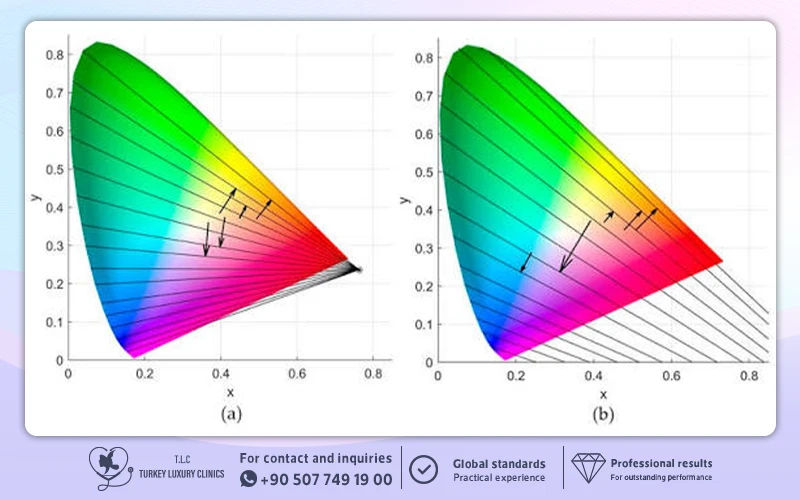
Red-green color vision deficiency includes protan and deutan patterns.
Specific diagnostic plates can help distinguish between them, but the test should only report protan or deutan if its plates and scoring system are specifically designed to make that distinction.
How Mild or Severe Your Color Vision Deficiency Is
An online screening result cannot precisely measure the severity of a color vision deficiency. More detailed color vision testing may be needed when severity matters.
Whether You Have Blue-Yellow Color Blindness
Ishihara testing is designed primarily to detect red-green color vision deficiency. A normal result therefore does not rule out blue-yellow color vision deficiencies such as tritan defects.
Whether You Meet a Job or Licensing Standard
An online color blindness test should not be used as proof that you meet occupational color vision requirements. Aviation, maritime, rail, military, and other color-critical occupations may use specific approved tests and passing standards.
What Should You Do After the Test?
If Your Result Is Normal
No further testing is usually necessary if you have no difficulty with colors in everyday life.
However, a normal result on an Ishihara-style test mainly provides information about red-green color vision. It does not rule out every possible color vision problem.
If Your Result Suggests Red-Green Color Blindness
Repeat the test once under appropriate viewing conditions if you took it online.
Turn off Night Shift, Night Light, True Tone, blue-light filters, and accessibility color filters, and make sure there is no strong glare on the screen.
If the result continues to suggest a red-green deficiency, an optometrist or ophthalmologist can perform standardized color vision testing to confirm the result and, when necessary, determine the type more precisely.
If Your Result Is Borderline or Inconclusive
Check your display settings and take the test again under normal lighting.
Do not repeatedly take the test until you obtain the result you want. If repeated tests remain borderline or unclear, professional testing is more useful than continuing to retake an online test.
If You Need a Color Vision Test for a Job or Licence
Do not rely on an online screening result.
Check which color vision test and passing standard your employer, licensing authority, aviation authority, military service, or other organization requires.
If Your Color Vision Has Changed Recently
A recent change in color perception deserves more attention than a color vision difference that has been present since childhood.
Inherited red-green color vision deficiency is usually stable. If colors have recently started looking different—particularly if the change affects one eye more than the other—arrange an eye examination regardless of your online score.
Color Blindness Test for Kids
Children rarely say anything, because they have no idea their color vision differs from anyone else's. Parents and teachers usually spot it first.
Signs to Watch For
- Colors named wrongly, over and over. A sky described as purple, leaves described as brown — while shapes, letters, and details are described perfectly.
- Avoiding coloring. Or reaching for the same few crayons every time, and mixing up close shades like red and green, or blue and purple.
- Trouble with color-coded schoolwork. Colored maps, charts, and worksheets that sort by color.
- Using other senses instead. Smelling food rather than looking at it. Describing an object by its shape or pattern instead of its color.
Testing a Child
Young children can struggle with number plates even when their color vision is fine, simply because they do not know their numbers well yet. Tests made for children use shapes or a winding line to trace instead.
Book a proper test if your child keeps struggling with color, or if color blindness runs in your family. An online result from a young child is easily thrown off by guessing and by screen settings, so treat it as a reason to book an appointment, not as an answer.
How Accurate Is an Online Color Blindness Test?
An online test is good for screening. It is not a diagnosis.
The same plate can look slightly different on a phone, a laptop, and a monitor, so treat a normal result as reassuring rather than as proof.
What Can Affect Your Result?
- Screen calibration and color profile
- Brightness set too low or too high
- Night mode or True Tone
- Blue-light filters
- Accessibility color filters
- Room lighting and glare on the screen
- Tinted glasses
- Rushing, or staring at a plate for too long
If your result does not match your everyday experience, take the test again in normal conditions.