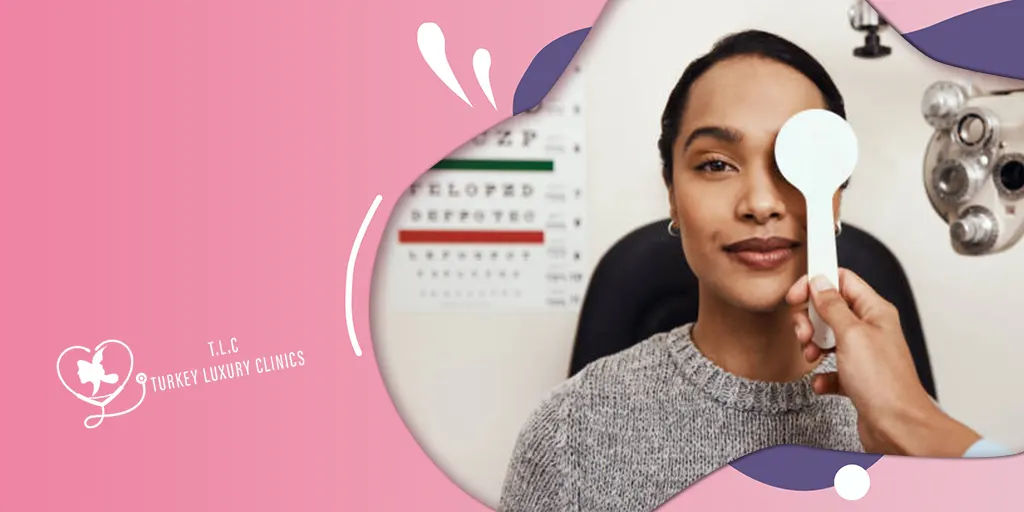

A vision eye test, or eye exam, is a comprehensive procedure used by eye care specialists to evaluate your eyesight, determine your need for corrective lenses, and assess the overall health of your eyes. In-person exams are essential for checking vision accuracy and detecting eye diseases or conditions such as glaucoma, cataracts, or retinal issues that online tests cannot identify.
However, for convenience and cost-effectiveness, especially when a full exam is not required every time you want to check your vision, an online vision test can serve as a quick screening tool. It allows you to monitor your visual acuity from home and get a preliminary assessment before your next comprehensive eye exam.
Online eye examinations are primarily intended for renewing an existing prescription for glasses or contact lenses and are not a replacement for a comprehensive in-person eye health exam. They provide a convenient way to check your visual acuity.
Online vision exams are mainly designed for healthy adults, typically aged 18–55, who have no existing eye conditions and are looking to renew a stable prescription for glasses or contact lenses. Using an online eyesight test is free, convenient, fast, and easy to use, without the need for an in-person visit.
What is an Online Vision Eye Test?
An online eye exam is an automated, interactive vision test conducted on a computer, tablet, or smartphone that checks your visual acuity and refractive error, such as nearsightedness or farsightedness.
What Do Online Eye Exams Test?
- Visual acuity: How clearly you can see at a distance.
- Refractive error: Issues like nearsightedness, farsightedness, and astigmatism.
- Color vision: Your ability to distinguish colors.
- Contrast sensitivity: The ability to distinguish between different levels of brightness.
Benefits of Online Vision Eye Tests
1. Flexible scheduling: Complete the exam at a time that works for you, even outside traditional business hours.
2. Faster results: Many providers can issue an updated prescription in under 24 hours, ideal for urgent needs like a lost or broken pair of glasses.
3. Lower cost: Online eye exams are typically less expensive than in-person appointments.
Reduced expenses: Save on travel costs to and from a clinic.
4. Remote access: Easier for people in rural or underserved areas to check their vision.
5. Regular monitoring: Use periodic self-assessments to track changes in vision between professional exams.
6. Initial screening: Serves as a preliminary tool to identify potential issues that may require further evaluation by an eye care professional.
Who Can Use an Online Vision Eye Test?
Healthy adults between the ages of 18 and 45 with a mild to moderate, simple eyeglasses prescription and no eye health concerns can use an online vision test, particularly for updating an existing prescription.
Recommended users for eye checkup online include:
- Healthy adults: Individuals in good overall health with no risk factors for eye disease, such as diabetes or high blood pressure.
- Ages 18–45: While ranges may vary slightly among providers, these tests are primarily designed for adults within this age group.
- Existing prescription: People who already have a current or recently expired prescription and need an update.
- Mild to moderate prescriptions: Suitable for those with simple prescriptions, such as single-vision distance or reading glasses.
- No eye health concerns: Individuals without symptoms of eye disease or major health conditions affecting the eyes.
Who Should NOT Use an Online Vision Eye Test?
Some people should avoid eye checkup online because these tests cannot safely assess their vision needs:
- Complex or high-power prescriptions: Online tests are not designed for high-strength lenses.
- Serious or chronic eye conditions: Those with glaucoma, macular degeneration, diabetic retinopathy, or other chronic eye diseases.
- First-time vision prescription users: Individuals who have never had an eye prescription before.
- Sudden vision changes or symptoms: Anyone experiencing sudden changes in vision, eye pain, flashes, or other unusual symptoms.
- Health conditions affecting the eyes: People with medical conditions like diabetes or high blood pressure that can impact eye health.
- Children under 5 years: They require in-person assessment.
- Post-eye surgery patients: Online tests do not detect complications after LASIK, lens implants, and Cataract surgery
How to Use an Online Vision Test Step by Step
Getting eye tests online is a simple way to check your vision from home. You’ll follow on-screen instructions, testing each eye separately by reading letters or identifying patterns.
Below is a step-by-step guide to make online eye exam easy and accurate:
1. Prepare your space and device: Choose a well-lit room, sit at the correct distance from the screen (about 10 feet), and use a desktop computer if possible.
2. Wear your prescription glasses or contacts: Use your usual distance lenses unless the test instructs otherwise.
3. Test one eye at a time: Cover one eye without pressing the eyelid, and follow the on-screen prompts to read letters or identify patterns.
4. Record your results: Enter the letters you see or note the smallest line you can read correctly.
5. Repeat for the other eye: Switch to the other eye and complete the same steps.
How to Set Up Proper Lighting for an Accurate Online Vision Eye Test
- Bright but not harsh: Use enough light to clearly see the screen and your surroundings, but avoid direct glare on your eyes or the screen.
- Avoid reflections and shadows: Do not sit directly in front of a window or have a lamp behind you that reflects on the screen. Side or front lighting works best.
- Even room lighting: Make sure the room is evenly lit, with no areas that are too dark or overly bright near your workspace.
- Adjust screen brightness: Set your monitor or device brightness so that letters and patterns are clear without straining your eyes.
- Test before starting: Try reading the screen before beginning the exam. If you experience difficulty or eye strain, adjust the lighting accordingly.
Tips for an Accurate Online Vision Eye Exam
- Use proper lighting: Make sure your room is well-lit, and there’s no glare on your screen. Avoid direct sunlight or bright lamps reflecting on the display.
- Keep the right distance: Sit about 50–70 cm (roughly 2–3 feet) away from your screen for accurate results.
- Follow the 30-30-30 rule: Every 30 minutes, look at something 30 feet away for 30 seconds to reduce eye strain.
- Repeat tests regularly: Take the online eye test periodically to track any changes in your vision over time.
Limitations of Online Vision Eye Exam
1. Cannot check for eye diseases: An Online eye exam cannot detect serious conditions such as glaucoma, cataracts, or macular degeneration, or provide a comprehensive eye health assessment.
2. Does not consider personal factors: While having eye tests online is free and simple, it cannot account for age, occupation, hobbies, or other personal factors that an optometrist would evaluate when prescribing corrective lenses.
3. No physical exam: Online vision tests do not include a hands-on eye examination, which is crucial for assessing overall eye health.
4. Potential for inaccuracy: Results may be affected by screen size, calibration, or improper setup, and there is no professional present to verify them.
What is a Comprehensive Vision Eye Test
A vision test, or eye examination, is a series of tests to assess vision and eye health, commonly including reading letters from a chart (Snellen chart) to measure visual acuity, checking peripheral vision, and using instruments to examine the eye's internal structures. Tests like retinoscopy and autorefraction are used to determine the correct prescription for glasses, while others check for eye muscle coordination, color vision, and potential signs of diseases like glaucoma or diabetic retinopathy.
What is Involved in the Comprehensive Vision Eye Tests?
1. Visual acuity test: Measures how well you can see at a distance by reading letters on a chart, such as the Snellen chart. You'll be asked to cover one eye at a time and read the smallest line you can see clearly.
2. Visual field test: Assesses your peripheral (side) vision by having you identify when you see flashing lights in the corners of your eyes while focusing on a central point.
3. Refraction test: Uses a device with different lenses to determine the exact prescription needed for your glasses or contact lenses.
4. Color vision test: Helps diagnose color blindness by having you identify specific patterns or colors.
5. Eye muscle test: Checks for proper eye coordination and strength by having you follow a moving object with your eyes.
6. Slit-lamp examination: Uses a specialized microscope and a bright light to examine the front and back of your eye, checking for any abnormalities.
Why Comprehensive Vision Eye Tests are Important
- Detecting vision problems: They identify if you are nearsighted, farsighted, or have astigmatism, and determine the need for corrective lenses. Or to monitor vision after eye surgeries like IOLs, LASIK, or cataract removal.
- Checking for eye diseases: Many serious eye conditions, such as glaucoma or diabetic retinopathy, may not have early symptoms, but can be detected during a comprehensive eye exam.