

- BBL Recovery Timeline at a Glance
- How Long Does BBL Recovery Take?
- Clinical Factors Altering Your Recovery Timeline
- Detailed Week-by-Week BBL Recovery Timeline
- Sitting After BBL: The Clinical Protocols
- Sleeping After BBL: Safety and Positioning
- Managing Pain and Discomfort After BBL
- BBL Recovery Results: When Will You See Your Final Shape?
- Will a BBL Leave Scars?
- Post BBL Odor: Normal Healing vs. Infection
- Common BBL Recovery Symptoms Explained
- BBL Recovery Do's and Don'ts
- Potential Complications to Watch After BBL
- Book Your BBL with Turkey Luxury Clinics
- FAQs About BBL Recovery
A Brazilian Butt Lift (BBL) combines high-volume liposuction with autologous fat transfer using your own fat to reshape the buttocks. While the surgical procedure creates the initial shape, the final outcome depends entirely on postoperative care.
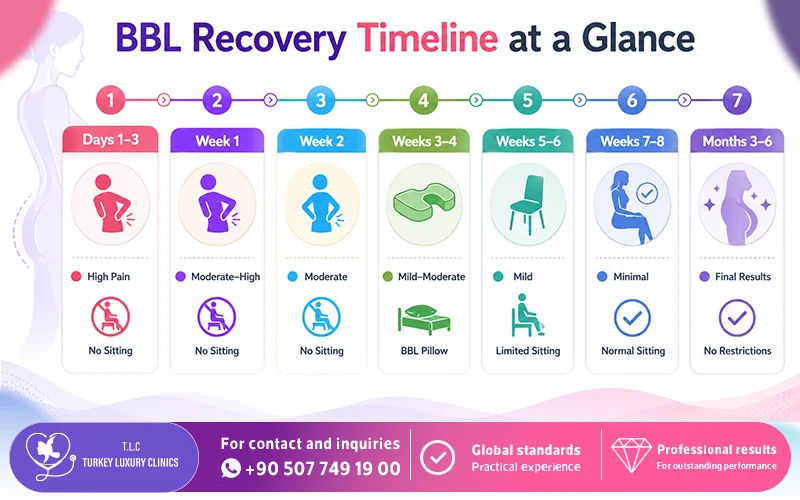
Understanding the BBL recovery timeline involves more than just knowing how long healing takes. Most patients want to know how painful recovery is, when they can sit again, the safest sleeping positions after surgery, and when they can return to walking, work, exercise, and other normal activities. The table below summarizes the key recovery milestones week by week.
During the initial healing phases, the transferred fat cells, known as adipocytes, have no independent blood supply. They rely on a process called inosculation, surviving on surrounding tissue fluids until new blood vessels sprout through neovascularization. Subjecting these vulnerable cells to direct pressure, shear force, or inadequate blood flow during the first few weeks can cause them to die, leading to fat necrosis, volume loss, or asymmetrical contours.
This medical guide explains how to protect your results, manage discomfort, and navigate recovery safely. Contact us for a free consultation to learn more about our surgeons’ post-BBL recovery plan and how to achieve a safe and smooth healing process.
BBL Recovery Timeline at a Glance
Recovery Stage | Pain Level | Sitting Restrictions | Key Recovery Milestone |
Days 1–3 | High | No sitting | Peak swelling, soreness, and drainage |
Week 1 | Moderate to High | No sitting | Bruising peaks and discomfort remain significant |
Week 2 | Moderate | No sitting | Pain decreases, and mobility improves |
Weeks 3–4 | Mild to Moderate | BBL pillow only | Swelling improves and contours begin softening |
Weeks 5–6 | Mild | Limited sitting with BBL pillow | Shape stabilizes and low-impact cardio resumes |
Weeks 7–8 | Minimal | Gradual return to normal sitting | Most restrictions are lifted |
Months 3–6 | None | No restrictions | Final BBL results develop |
How Long Does BBL Recovery Take?
The biological timeline for BBL recovery spans three to six months, which is the window required for the transferred fat to become permanently grafted into the surrounding tissue. However, functional recovery occurs much sooner. Initial acute healing takes ten to fourteen days. Returning to sedentary or desk work takes ten to fourteen days, utilizing a standing setup or strict BBL pillow protocols. Returning to strenuous physical labor or exercise takes six to eight weeks, and the maturation of final results takes four to six months.
Clinical Factors Altering Your Recovery Timeline
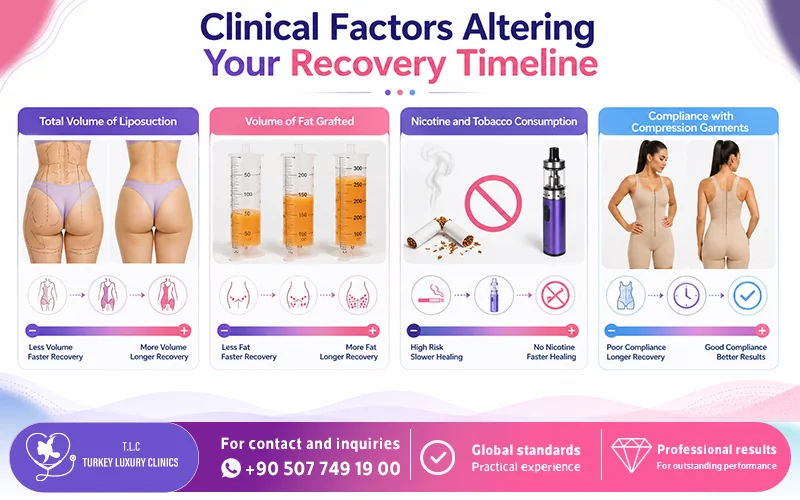
Total Volume of Liposuction
More extensive liposuction, such as 360-degree liposuction, creates greater tissue trauma, leading to increased inflammation, swelling, and a longer recovery period.
Volume of Fat Grafted
Larger fat transfer volumes increase tissue pressure, which may require longer periods of pressure avoidance to support optimal fat survival.
Nicotine and Tobacco Consumption
Smoking and vaping restrict blood flow and impair the formation of new blood vessels, significantly increasing the risk of delayed healing and fat loss.
Compliance with Compression Garments
Consistent use of a properly fitted compression garment helps control swelling, reduce fluid buildup, and support the healing process.
Detailed Week-by-Week BBL Recovery Timeline
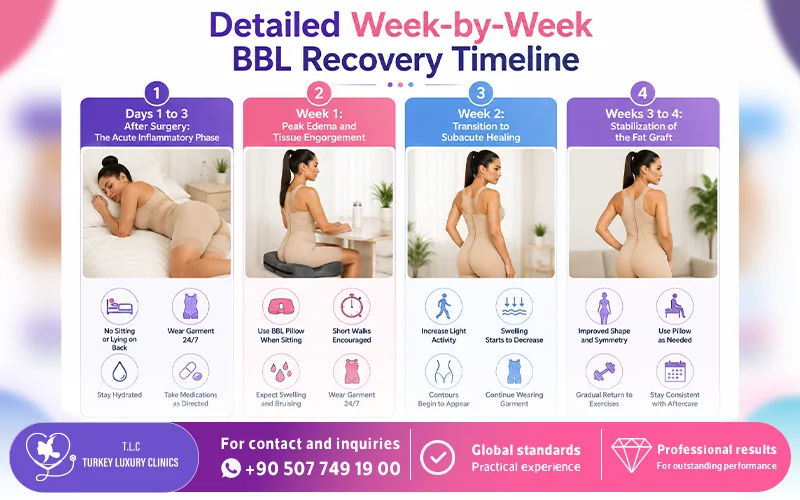
Days 1 to 3 After Surgery: The Acute Inflammatory Phase
The first 72 hours demand strict monitoring. As the local anesthesia and intraoperative nerve blocks wear off, systemic soreness peaks.
You will experience significant fluid leakage, which is tumescent fluid mixed with small amounts of blood, from the liposuction access ports. This drainage is completely normal and healthy, as it actively reduces local swelling and bruising.
Expect localized numbness, severe muscular soreness akin to an intense workout, and visible bruising.
For your clinical protocol, walk for five minutes every two hours while awake to stimulate deep vein circulation and mitigate blood clot risks. Keep your compression garment on continuously, changing only the absorbent pads underneath. Do not sit, lean, or apply any pressure to the gluteal region.
Week 1: Peak Edema and Tissue Engorgement
By day four, fluid drainage typically tapers off, and the incision ports begin to seal. However, cellular swelling reaches its maximum during this week.
You will experience tight, firm tissues, and the buttocks may appear unnaturally large or hyper-projected. This is a temporary visual artifact caused by swelling and surgical fluid, not your final volume.
For your clinical protocol, maintain a high-protein, low-sodium diet to assist tissue repair and mitigate fluid retention. Continue 24/7 garment compliance, removing it only for brief showers. Do not sit or drive.
Week 2: Transition to Subacute Healing
Pain transitions from a sharp, restrictive ache to a deep, bruised tenderness. Systemic fatigue begins to lift. Most patients notice that liposuction zones begin to feel hard or uneven. This is the onset of subcutaneous fibrosis, or scar tissue formation, which is an entirely normal phase of healing.
Numbness may briefly give way to a transient tingling or hypersensitivity as superficial nerves begin to regenerate.
For your clinical protocol, if your surgeon clears you, you may begin professional lymphatic drainage massages to accelerate the evacuation of trapped fluid and smooth out internal tissue contours. You can also return to remote computer work using a standing desk setup.
Weeks 3 to 4: Stabilization of the Fat Graft
At this stage, the process of inosculation completes, and the surviving fat cells begin anchoring to the local blood supply. You will notice a visible drop in generalized swelling. Your contours will begin to look softer and more natural as the initial rigid edema resolves.
For your clinical protocol, modified sitting using a validated BBL pillow may be introduced for short periods, such as 15 to 20 minutes at a time, if cleared by your surgeon. Light, non-strenuous walking can be extended to twenty to thirty minute intervals.
Sitting After BBL: The Clinical Protocols
Why Sitting Destroys Transferred Fat Cells
When you sit normally, your body weight concentrates directly onto the gluteal fat pads and ischial tuberosities, which are the sit bones.
This direct vertical pressure compresses the delicate, un-engrafted capillary networks feeding the newly transferred fat cells. Deprived of oxygen and vital nutrients, the cells undergo rapid ischemic cell death, leading to structural oil cysts or complete volume loss.
Strict Sitting Timeline
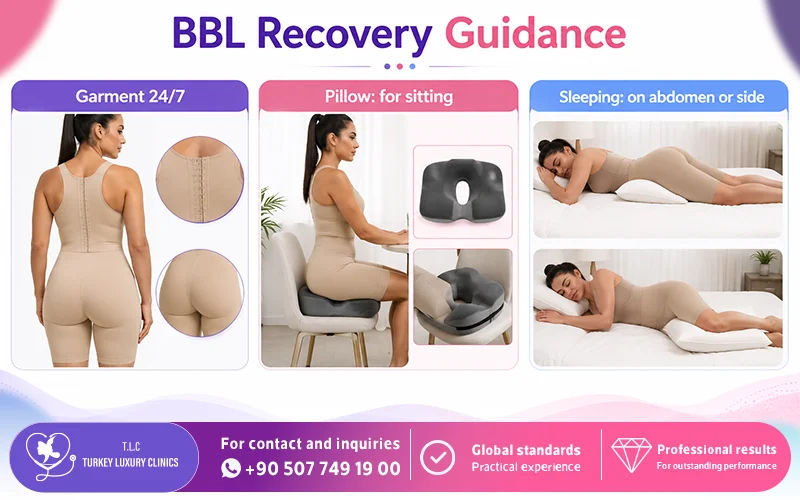
- Weeks 0–2: No direct sitting is allowed. The only exception is using the toilet by leaning forward and placing your weight on the back of your thighs rather than the buttocks.
- Weeks 3–6: Controlled sitting may be allowed using an approved BBL pillow. Sitting sessions should remain limited and follow your surgeon’s instructions.
- Week 7 and Beyond: A gradual return to normal sitting can begin, provided your surgical team confirms that healing is progressing appropriately.
How to Use a BBL Pillow Correctly for Sitting
To use a BBL pillow correctly, place it under the back of your thighs (lower hamstrings) rather than under your buttocks. Your buttocks should remain completely suspended without touching the chair to avoid pressure on the transferred fat cells.
For proper positioning:
- Place the pillow just above the knee crease.
- Keep your buttocks completely off the seat surface.
- Maintain an upright posture.
- Keep your knees bent at a 90-degree angle.
- Limit sitting sessions to 20–30 minutes at a time.
- Stand and walk regularly to restore healthy circulation.
A properly positioned BBL pillow shifts your body weight to the thighs, helping protect the fat graft while you recover.
Sleeping After BBL: Safety and Positioning
Why Sleeping Position Matters
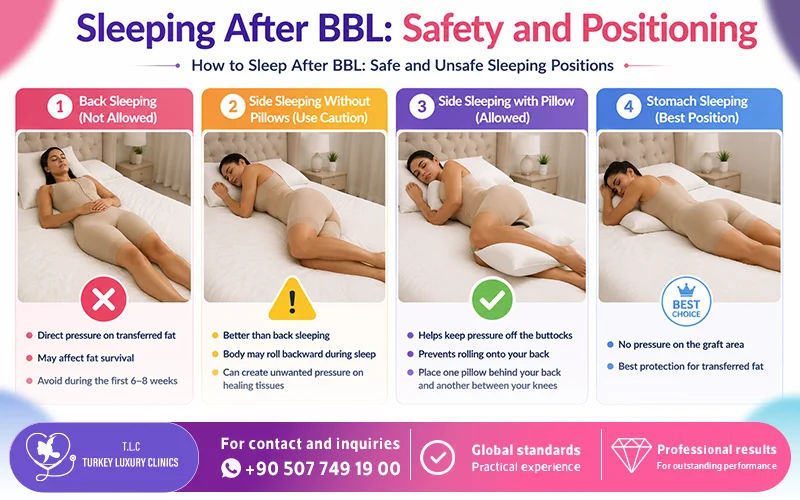
Just like sitting, sleeping directly on your back applies prolonged, heavy pressure to the graft zone for hours at a time. Furthermore, involuntary tossing and turning creates shear force, which is the sliding friction between the skin and deep tissue layers. This friction can snap the fragile new capillary links forming within the fat graft.
The Best Sleeping Positions
Prone position, or stomach sleeping, is the ideal clinical position. Lay flat on your stomach with pillows tucked beneath your pelvis and ankles to prevent hyperextension of the lower back.
Lateral position, or side sleeping, is permitted if you can maintain strict alignment. Place pillows behind your back and between your knees to prevent your body from rolling backward onto your gluteal cheeks mid-sleep.
Recommended Pillow Setup During Sleeping
- Place a pillow behind your back to prevent rolling.
- Place a pillow between your knees for alignment.
- Place a small pillow under your ankles if needed.
- Keep all pressure away from the buttocks.
When Can You Sleep on Your Back?
Back sleeping is strictly prohibited for a minimum of 6 to 8 weeks post-op. You must maintain prone or lateral positioning until your surgeon conducts a physical exam to confirm that tissue compliance has returned to normal and the fat graft is fully stable.
Managing Pain and Discomfort After BBL
What Does BBL Pain Feel Like?
Surprisingly, patients rarely report significant pain in the buttocks themselves, as the fat transfer process causes minimal disruption to deep muscle nerves. Instead, discomfort centers on the liposuction donor sites. This feels like an intense, deep-tissue muscular bruise combined with a tight, burning sensation beneath the skin, caused by the cannula traversing the subcutaneous fat layers.
Managing the BBL Pain Timeline
During days 1 to 3, the baseline pain score is typically six to eight out of ten. This is caused by acute cannulation trauma, swelling, and muscle spasms. The management strategy relies on scheduled oral narcotics, muscle relaxants, and continuous compression.
During days 4 to 7, the pain score drops to four to six out of ten as the primary cause shifts to maximum inflammatory tissue edema. Management focuses on transitioning to high-dose acetaminophen, and you should strictly avoid NSAIDs if advised by your surgeon due to bleeding risks.
By week 2, the pain score settles between two and four out of ten. The primary causes are nerve regeneration, which feels like tingling, and early tissue fibrosis. Management involves light ambient walking, transitioning to over-the-counter pain management, and starting lymphatic massage.
From week 3 onward, the pain score is minimal, between zero and two out of ten, caused only by residual superficial tissue tenderness. Management includes targeted manual stretching and consistent use of a Stage 2 garment.
BBL Recovery Results: When Will You See Your Final Shape?
Most patients begin to see their new shape once the initial swelling subsides, but final BBL results typically take 3 to 6 months to fully develop. During this time, swelling resolves, surviving fat cells establish a permanent blood supply, and the tissues soften into their final contour.
How Long Does a BBL Last?
Once the transferred fat establishes a stable blood supply, BBL results can last for many years. Because the transferred fat is your own living tissue, it can expand or shrink with future weight changes, making long-term weight stability important for maintaining results.
BBL Results Timeline
- Weeks 1–3: Significant swelling, bruising, and a firm appearance are normal.
- Months 2–3: The “fluffing” phase begins as swelling decreases and the fat softens.
- Month 6: Final contours are typically visible, with minimal residual swelling and stable results.
Will a BBL Leave Scars?
BBL leaves small scars where the liposuction cannulas and fat transfer instruments are inserted. However, these incisions are typically only a few millimeters long and are strategically placed in discreet areas such as the lower back, natural skin folds, or beneath underwear lines.
Most scars appear pink or red during the first few weeks, then gradually fade over the following months. While scars do not disappear completely, they usually become difficult to notice once fully healed.
When Do BBL Scars Fade?
Most BBL scars begin fading within the first few months and continue improving for up to 12 months after surgery. Following your surgeon's aftercare instructions, protecting scars from sun exposure, and maintaining proper wound care can help optimize scar healing.
Post BBL Odor: Normal Healing vs. Infection
Is It Normal to Notice a Smell After a BBL?
Yes, experiencing a mild, musty odor during the first 7 to 10 days is a common occurrence. This is almost always caused by a combination of trapped tumescent fluid and old blood. Fluid draining onto your absorbent dressings can develop a metallic or stale smell when exposed to air.
Additionally, garment accumulation contributes to the odor. Because you must wear your compression faja 24/7 without regular laundering in the first few days, it traps sweat, skin oils, and dead skin cells.
When a Smell Indicates Infection?
A foul, strong, or unusual odor coming directly from your incision sites or drainage fluid may be a sign of infection, especially if it is accompanied by other symptoms.
Contact your surgical team immediately if you notice:
- A strong, foul, pungent, or sweet rot-like odor from the incision sites or drainage.
- A fever above 38.5°C (101.3°F).
- Spreading redness around the surgical area.
- Skin that feels warm or hot to the touch.
- Thick, yellow, green, or opaque pus draining from the incisions.
- Rapidly worsening swelling, particularly if it affects only one area.
These symptoms may indicate a localized or systemic infection, such as cellulitis or an abscess, and require prompt medical evaluation.
Common BBL Recovery Symptoms Explained
- Swelling (Generalized Edema)
Generalized edema, or swelling, is a normal response to surgical trauma. Because fluid follows gravity, swelling often shifts downward and may temporarily affect the lower thighs, knees, and ankles.
- Bruising (Ecchymosis)
Ecchymosis, or bruising, occurs when blood collects beneath the skin after surgery. Bruises typically change color from deep purple or blue to green and yellow before fading completely within about three weeks.
- Numbness and Tingling (Paresthesia)
Paresthesia occurs because liposuction temporarily disrupts small sensory nerve fibers. As these nerves heal over the next two to four months, you may experience alternating periods of numbness, tingling, hypersensitivity, or brief zinging sensations.
- Itching (Pruritus)
Pruritus, or itching, is a common part of healing as the skin adjusts to its new contours and inflammatory chemicals are released during tissue repair. Avoid scratching the area and use approved moisturizers or oral antihistamines if recommended by your surgeon.
- Lumps and Firmness (Subcutaneous Induration)
Subcutaneous induration refers to areas of firmness or small lumps caused by scar tissue formation or localized fluid accumulation. These areas typically improve with proper post-operative lymphatic massage and gradually resolve over six to twelve weeks.
BBL Recovery Do's and Don'ts
Do
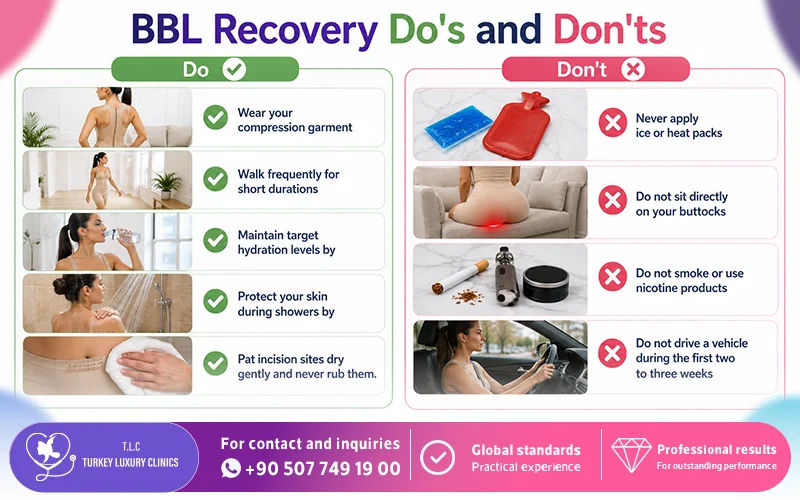
- Wear your compression garment precisely as prescribed because it keeps tissues compressed, minimizing fluid accumulation and supporting your new contours.
- Walk frequently for short durations to maintain blood flow, reduce swelling, and prevent Deep Vein Thrombosis.
- Maintain target hydration levels by drinking 2.5 to 3 liters of water or electrolyte-balanced fluids daily to offset surgical fluid losses.
- Protect your skin during showers by using lukewarm water and a mild, unscented antibacterial soap.
- Pat incision sites dry gently and never rub them.
Don't
- Never apply ice or heat packs to the buttocks because transferred fat cells are highly sensitive to temperature extremes. Vasoconstriction from ice can kill the graft, while heat packs can easily burn numb skin.
- Do not sit directly on your buttocks for at least six weeks unless explicitly cleared by your surgeon.
- Do not smoke or use nicotine products entirely for at least four weeks before and four weeks after surgery.
- Do not drive a vehicle during the first two to three weeks, as driving forces your body into a direct sitting position and risks sudden muscle contractions or shear forces in an emergency stop.
Potential Complications to Watch After BBL
- Fat Necrosis
Fat necrosis occurs when transferred fat cells do not develop an adequate blood supply, causing firm lumps, scar tissue, or oil cysts within the buttocks.
- Fluid Buildup (Seroma)
A seroma is a collection of fluid beneath the skin after liposuction, often appearing as soft or wave-like swelling. It can usually be treated with simple drainage.
- Blood Clots (Deep Vein Thrombosis)
Deep Vein Thrombosis (DVT) is a blood clot that typically forms in the legs due to immobility. Symptoms include leg pain, swelling, and redness. In rare cases, the clot can travel to the lungs and become a medical emergency.
Book Your BBL with Turkey Luxury Clinics
If you are considering a BBL procedure, Turkey Luxury Clinics in partnership with JCI-accredited hospitals and highly experienced surgeons ensures a safe surgical experience and a smooth, well-managed recovery journey from start to finish. Contact us to plan your procedure with confidence and medical support at every stage.
FAQs About BBL Recovery