


- How Long is the recovery from Breast Reduction?
- Breast Reduction Recovery Week by Week
- Scars Breast Reduction Recovery Week by Week
- Lift & Breast Reduction Recovery Week by Week
- Breast Reduction Recovery Tips
- Pain Level Timeline During Breast Reduction Recovery
- When Can You Resume Daily Activities After Breast Reduction?
- Breast Reduction Risks and Complications
- Breast Reduction Recovery in Turkey: What Makes It Easier?
- FAQs About Breast Reduction Recovery Week by Week
Breast reduction recovery typically takes 4–6 weeks for daily activities and 3–6 months for full results. Week 1 focuses on rest and swelling control, weeks 2–3 allow light activity, and by weeks 4–6 most patients return to normal routines. Final breast shape and scars continue improving for up to 12 months.
Breast reduction recovery is a gradual process that unfolds week by week, and knowing what to expect at each stage can make a real difference in both comfort and results.
From early swelling and discomfort to scar healing and safely returning to work and exercise, recovery follows a clear timeline—but it’s not the same for everyone.
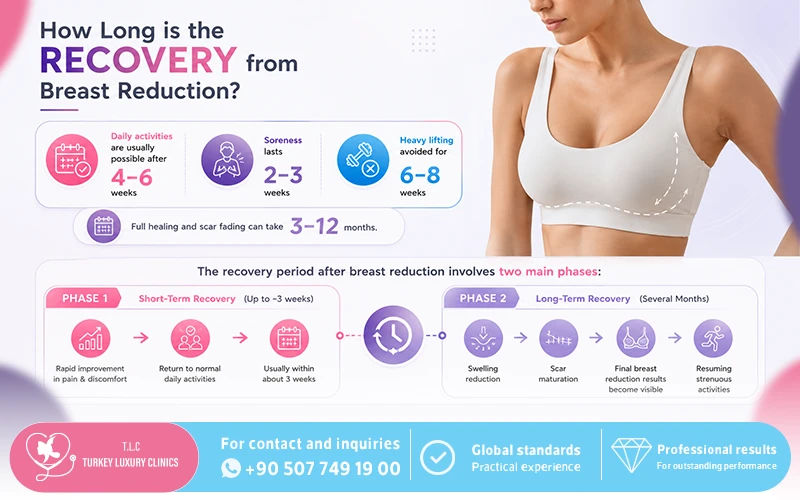
How Long is the recovery from Breast Reduction?
Daily activities are usually possible after 4–6 weeks, with soreness lasting 2–3 weeks and heavy lifting avoided for 6–8 weeks. Full healing and scar fading can take 3–12 months.
The recovery period after breast reduction involves a short phase of rapid improvement in pain, discomfort, and return to normal daily activities, usually within about 3 weeks, followed by long-term recovery, which includes swelling reduction, scar maturation, final breast reduction results becoming visible, and resuming strenuous activities over several months.
Breast Reduction Recovery Week by Week
Day 1 (Surgery Day)
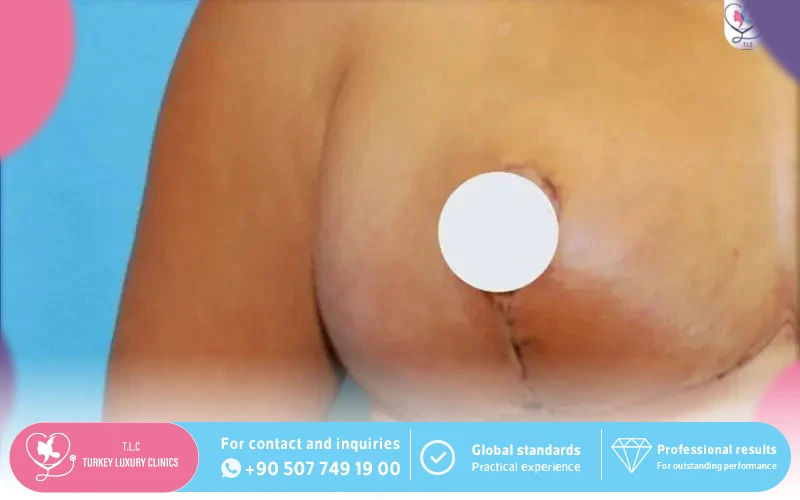
The first day is usually marked by significant fatigue from anesthesia, with a feeling of heaviness and tightness in the chest area. Most of the time is spent resting, with very limited movement just to get up briefly when needed, while pain is controlled with prescribed medication.
Days 2–3
Swelling and bruising become more noticeable, and tightness often feels at its peak during this stage. Movement is still limited and usually requires assistance for basic activities, but pain is generally manageable and the body is slowly adjusting to the surgical changes.
Days 4–7
Gradual improvement begins, with pain shifting into mild discomfort, itching, or tingling sensations as nerves start to heal. Light movement around the house becomes easier, while rest and avoiding any strain remain essential for proper recovery.
Week 1
The first week after breast reduction surgery is focused entirely on rest and early healing. Swelling, tightness, and discomfort are common, and movement is usually limited. Driving and strenuous activity should be avoided, while short, gentle walks are encouraged to support circulation. Wearing a surgical or supportive non-underwired bra around the clock is essential during this stage. Some patients may have drainage tubes in place, and closely following post-operative instructions is critical to prevent complications and support proper healing.
Weeks 2–3
During weeks two and three, most patients notice a steady improvement. Bruising begins to fade, swelling continues to decrease, and soreness becomes more manageable. Light activities such as slow walking can be resumed, but heavy lifting and strenuous exercise should still be avoided. Stitches may be removed during this period, and dressings may change as incisions continue to heal. This stage often includes learning how to properly care for the incision sites while gradually returning to simple daily routines.
Weeks 4–6
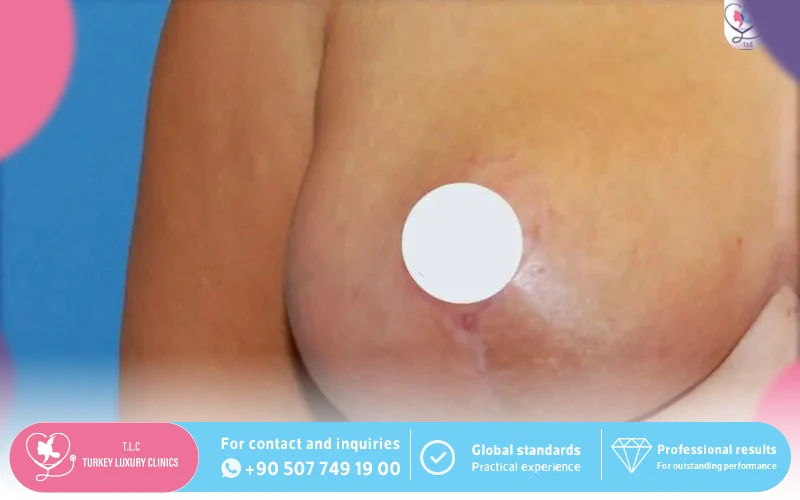
Between weeks four and six, recovery becomes more comfortable and stable. Swelling subsides further, allowing breast shape and results to appear more defined. Many patients feel more like themselves and may be cleared for increased activity, though overhead lifting and intense workouts should still be approached cautiously. Scar management often begins during this phase, and incisions may appear red but gradually start to fade as healing progresses.
Months 1–3: Long-Term Healing
During months one to three after breast reduction surgery, most of the remaining swelling is resolved by this time, and the breasts begin to look and feel more natural. By this stage, many patients are cleared to return to more strenuous activities, including weightlifting and higher-impact exercise, as long as activity is reintroduced gradually and comfortably. Scar tissue continues to strengthen during this period, with scars slowly flattening and lightening in color, although they may still appear pink or slightly raised.
Months 3–12: Final Results
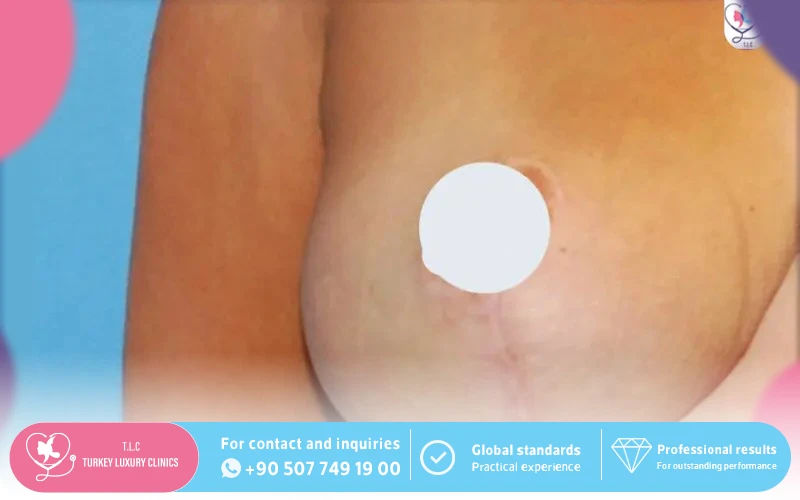
Between three months and one year after breast reduction surgery, the breasts continue to settle into their final shape and position. Any residual swelling is minimal, and overall results become more stable and predictable. Scars continue to mature throughout this phase, becoming softer, flatter, and lighter over time. While scars never disappear completely, they often fade significantly by the end of the first year, with continued improvement possible beyond that point.
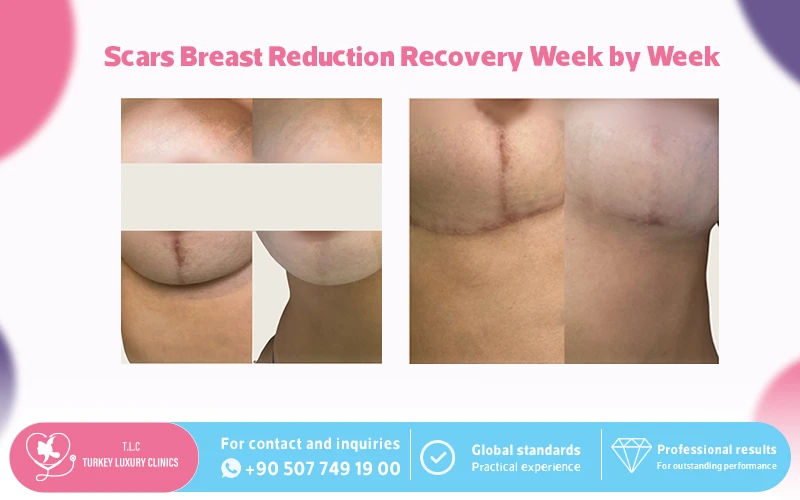
Scars Breast Reduction Recovery Week by Week
Week 1–2: Initial Healing
During the first one to two weeks after breast reduction surgery, scars appear red, swollen, and firm, and may be slightly raised. Dressings cover the incisions, and pain, tenderness, swelling, and numbness or tingling are common. It is crucial to keep the incisions clean and dry while resting as much as possible. Gentle walking is encouraged to support circulation, but any straining or heavy activity should be avoided to allow proper healing.
Weeks 3–6: Early Maturation
By weeks three to six, the scars begin to flatten and may remain dark pink or red. They can feel tight or itchy as collagen forms and the tissues start maturing. Discomfort gradually decreases, although swelling may still be present. During this period, patients can slowly resume light daily activities and chores. Strenuous work or heavy lifting should only be undertaken after consulting the surgeon.
Months 2–3: Scar Softening
Between two and three months, scars start becoming flatter, firmer, and lighter in color, transitioning from red or purple to a soft pink. Numbness often improves, and increased sensitivity may occur as the nerves continue to heal. This is usually the stage when surgeons advise starting silicone sheets or gels and gentle massage to support scar remodeling. Sun protection also becomes essential to prevent darkening of the scars.
Months 3–6: Significant Improvement
From three to six months post-surgery, scars become noticeably lighter, smoother, and start blending with the surrounding skin, though some pinkness may remain. Most patients can return to the majority of normal activities, but heavy lifting and intense exercise should still be approached cautiously.
Months 6–12: Maturation
During this period, scars continue to mature, becoming thin, pale, and more skin-toned. Consistent sun protection and scar care remain important to achieve the best cosmetic results.
Up to 2 Years: Final Appearance
Even up to two years after surgery, scars can continue to refine and may become almost invisible in some patients, although complete disappearance is rare. Long-term care, including protection from sun and gentle scar management, ensures the most natural and aesthetic outcome.
Lift & Breast Reduction Recovery Week by Week
When breast reduction is combined with a lift, recovery is largely similar to reduction alone, but a few key differences apply. Patients may experience slightly more swelling or soreness, and scar placement is adjusted for lifting.
Arm movements and exercise restrictions may last a bit longer, and gentle scar care is especially important as the lifted tissues settle. Despite these differences, most milestones, returning to light activity, managing pain, and gradual resumption of exercise, follow the same week-by-week pattern, making recovery predictable and safe.
Breast Reduction Recovery Tips
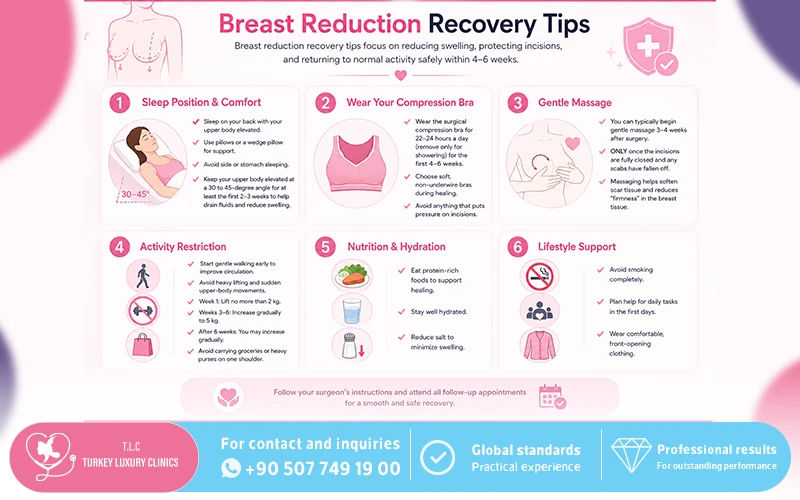
Breast reduction recovery tips focus on reducing swelling, protecting incisions, and returning to normal activity safely within 4–6 weeks.
1. Sleep Position & Comfort
Sleep on your back with your upper body elevated and use pillows or a wedge pillow for support (Avoid side or stomach sleeping). You should sleep on your back with your upper body elevated at a 30 to 45-degree angle for at least the first 2–3 weeks to help gravity drain fluids and reduce swelling.
2. Wear Your Compression Bra
You must wear the surgical compression bra for 22–24 hours a day (taking it off only for showering) for the first 4–6 weeks. Choose soft, non-underwire bras during healing (Avoid anything that puts pressure on incisions)
3. Gentle massage
You can typically begin gentle massage 3–4 weeks after surgery, but ONLY once the incisions are fully closed and any scabs have fallen off. Massaging helps soften scar tissue and reduces "firmness" in the breast tissue.
3. Activity restriction
While it is important to start gentle walking early to improve circulation you should avoid heavy lifting and sudden upper-body movements.
The first week strictly lifts to 2 kg only, increasing gradually to 5 to kg by week 3 to 6, after 6 weeks you may increase. You can gradually increase lift but avoid groceries or heavy purses on one shoulder
5. Nutrition & Hydration
- Eat protein-rich foods to support healing
- Stay well hydrated
- Reduce salt to minimize swelling
6. Lifestyle Support
- Avoid smoking completely
- Plan help for daily tasks in the first days
- Wear comfortable, front-opening clothing
How to care for scars during breast reduction recovery?
Keep incisions clean and dry during early healing, wear a supportive bra, and avoid sun exposure. Once healed, silicone sheets or gels and gentle scar massage can improve scar appearance. Scar maturation takes time and continues for 12–18 months.
Pain Level Timeline During Breast Reduction Recovery
Week 1: The Peak Phase
- Pain Level: Moderate to high soreness and chest tightness.
- What it feels like: Heaviness, bruising, and tenderness. Pain often peaks around days 2–4.
- Management: Prescription pain medication is typically used for the first few days before transitioning to over-the-counter options like Tylenol.
Week 2: Significant Improvement
Pain level is mild soreness and occasional "twinges". Most patients feel a "sudden relief" toward the end of Week 1 or early Week 2. You may start to feel sharp, intermittent shooting pains (often called "zings"); these are normal signs of nerves regenerating.
Weeks 3–4: Transition to Sensitivity
Pain Level is minimal to very low. General pain is usually gone, but the breasts may remain sensitive to touch. You might experience itching around the incisions, which is a common sign of healing.
Weeks 5–6+: Settling In
By week 5 and 6 nearly zero pain is observed, though residual tightness persists. You may still feel some firmness or internal "pulling" as the tissues settle into their new shape. Strenuous activity might still cause temporary aching.
How to manage pain during breast reduction recovery?
Pain is usually manageable by following your surgeon’s medication plan, wearing a supportive surgical bra, using cold packs to reduce swelling, resting with your upper body elevated, and avoiding strain. Gentle walking helps circulation, while front-zip clothing and assistance with daily tasks reduce discomfort.
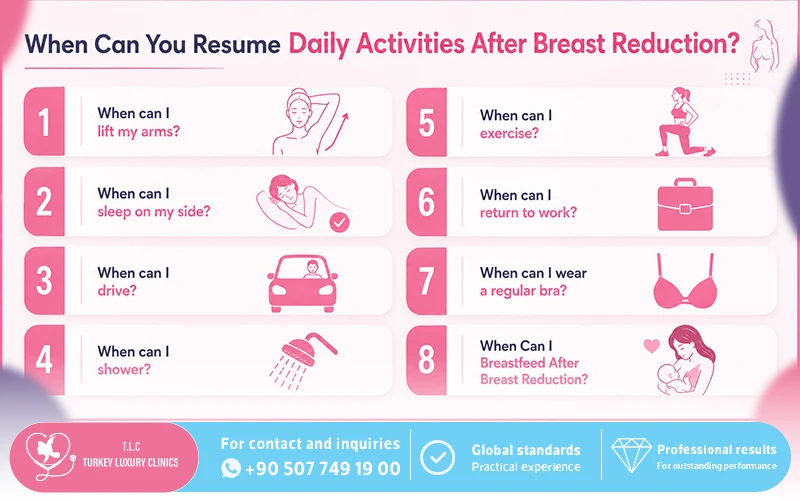
When Can You Resume Daily Activities After Breast Reduction?
Recovery activity should be gradual. Light walking is encouraged early, while heavy lifting and strenuous exercise are avoided for 4–6 weeks. Low-impact activities can be added slowly, with full workouts only after surgeon clearance and complete healing.
1. When can I lift my arms?
- Days 1–7: Keep arm movement minimal and avoid raising your arms above shoulder level.
- Week 2: Light movements such as brushing your hair are usually possible.
- Weeks 4–6: Most patients regain full range of motion comfortably.
- Heavy lifting: Avoid lifting heavy objects until at least 6 weeks.
2. When can I sleep on my side?
- Weeks 1–4: Sleep on your back with your upper body elevated to reduce swelling and protect incisions.
- Weeks 4–6: Side sleeping is usually allowed once healing progresses and discomfort improves.
- Stomach sleeping: Typically avoided for 8–12 weeks.
3. When can I drive?
- Days 7–14: You can drive once you are no longer taking strong pain medications and can move your arms comfortably without pain.
- You should be able to react quickly and control the steering wheel safely.
4. When can I shower?
- After 48 hours: Most patients can shower, depending on surgeon's instructions.
- Let water run gently over the area and avoid scrubbing incisions.
- Baths, pools, and hot tubs: Avoid until incisions are fully healed (usually around 4–6 weeks).
5. When can I exercise?
- Walking: Encouraged from day 1 to improve circulation.
- Weeks 3–4: Light cardio and lower-body exercises may begin.
- Weeks 6–8: Return to full workouts, including upper body and high-impact activities, after medical clearance.
6. When can I return to work?
- Desk jobs: Usually 7–10 days after surgery.
- Physically demanding jobs: May require 3–4 weeks or longer, depending on activity level.
7. When can I wear a regular bra?
- Weeks 1–6: Wear a surgical or compression bra continuously.
- Weeks 6–12: Switch to a soft, non-underwire bra.
- After 3 months: Underwire bras may be introduced once healing is complete and approved by your surgeon.
8. When Can I Breastfeed After Breast Reduction?
Most women can begin breastfeeding immediately after giving birth, regardless of when their surgery occurred, though success rates vary but the outcome varies. The ability to produce milk depends on whether the milk ducts and nerves around the nipple were preserved during surgery. Some patients can produce a full milk supply, while others may need to supplement with formula.
Breast Reduction Risks and Complications
Common issues after breast reduction can include
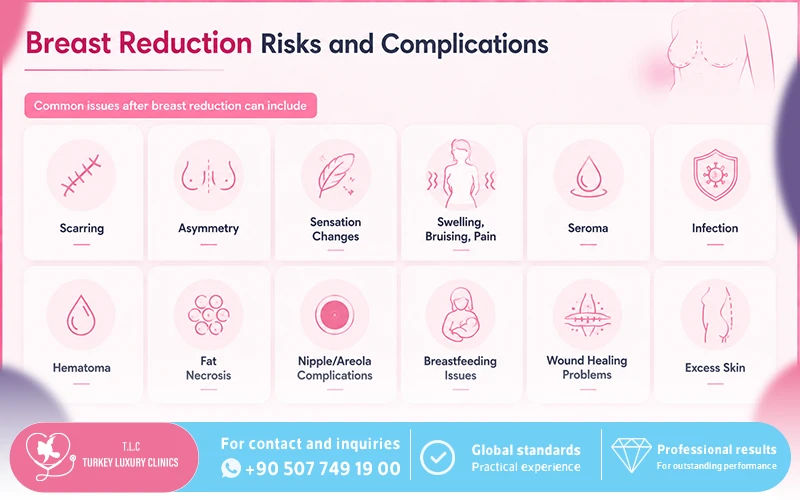
- Scarring: Thick, raised, or visible (hypertrophic/keloid), usually improves over time.
- Asymmetry: Breasts may differ in size, shape, or nipple position.
- Sensation Changes: Temporary or permanent numbness, tingling, or increased sensitivity.
- Swelling, Bruising, Pain: Normal during recovery, usually temporary.
- Seroma: Fluid accumulation under the skin.
- Infection: Risk at the surgical site.
- Hematoma: Blood collection under the skin may require drainage.
- Fat Necrosis: Hard lumps from death of fatty tissue.
- Nipple/Areola Complications: Partial or total loss due to reduced blood supply.
- Breastfeeding Issues: Reduced or inability to breastfeed.
- Wound Healing Problems: Delayed healing or skin breakdown.
- Excess Skin: May require additional removal.
Breast Reduction Recovery in Turkey: What Makes It Easier?
Patients typically spend one night in the hospital, stay in Turkey for 7–10 days for follow-up checks, and wear a special surgical bra for 6–8 weeks. Expect to return to desk work in 7–10 days, with light activities allowed immediately and strenuous exercise after 6–8 weeks.
What does breast reduction recovery in Turkey look like?
After breast reduction surgery in Turkey, you should plan to stay for 7 to 10 days before travelling.
You will typically stay in the hospital for the first night and be discharged after an evaluation of your wound, fluid drainage, and overall general health. You will then be transferred to your hotel to continue your recovery.
Follow-up appointments and surgeon visits are arranged either at the hotel or at the clinic, with transportation provided by the medical coordinator.
During your recovery in Turkey, logistics are fully managed and may include VIP transfers, medication, and ongoing support.
Your surgeon will provide a prescription that may include antibiotics, painkillers, and anti-swelling medications.
Remote follow-up is also part of the care process. You should maintain communication via WhatsApp or email with your surgical team, and you may be asked to send photos to monitor your healing progress once you return home.
Before leaving, your surgeon must provide a medical clearance document confirming that you are fit to fly. This is usually issued at your final check-up, typically around Day 7–9 after surgery.
Book your breast reduction consultation with Turkey Luxury Clinics
Turkey Luxury Clinics' plastic surgeons plan the recovery process from the first week to the final results, helping you prepare for a safe, smooth, and effective healing journey.
If you’re ready to explore breast reduction options or want a personalized recovery plan, consult with an experienced plastic surgeon today to discuss your goals, expected outcomes, and the safest approach for your body.
FAQs About Breast Reduction Recovery Week by Week