


- What Is Cat Eye Surgery?
- Cat Eye Surgery Before and After Photos
- How Much Does Cat Eye Surgery Cost in Turkey? (2026)
- Cat Eyes vs Fox Eyes: How Do They Differ?
- Canthoplasty (Cat Eye Surgery) vs Canthopexy
- How is Cat Eye Surgery Performed?
- Cat Eye Lift Surgery Recovery
- What Results Can Cat Eye Surgery Achieve?
- Are You a Good Candidate for Cat Eye Surgery?
- Is Cat Eye Surgery Safe?
- Considering Cat Eye Surgery in Turkey?
- FAQs About Cat Eye Surgery in Turkey
Cat eye surgery in Turkey is one of the most sought-after cosmetic eye procedures for creating a permanently lifted, elongated, almond-shaped appearance. Most cat eye procedures are performed using lateral canthoplasty, a surgical technique that reshapes and elevates the outer corner of the eye by repositioning the lateral canthal tendon.
Cat eye surgery in Turkey typically costs $2,200–$4,500, making it significantly more affordable than in the United States and the United Kingdom while maintaining high standards of surgical care. The procedure usually takes 1–2 hours, with most patients returning to normal daily activities within 1–2 weeks and enjoying permanent results.
In this guide, you'll learn everything about cat eye surgery in Turkey, including the procedure, costs, recovery, before and after results, potential risks, and how it differs from fox eye surgery.
What Is Cat Eye Surgery?
Cat eye surgery is a cosmetic procedure designed to create a permanently lifted, elongated, and upward-slanted eye shape by reshaping and tightening the outer corner of the eye. The procedure is most commonly performed using canthoplasty, although additional techniques may be combined depending on the patient's anatomy and aesthetic goals. A board-certified plastic surgeon or oculoplastic surgeon performs it. It involves small incisions at the outer corner of the eye to reposition and tighten the lateral canthal tendon, creating a more defined and feline appearance.

How Does Cat Eye Surgery Work?
Cat eye surgery works by strengthening and repositioning the lateral canthal tendon—the fibrous structure that supports the outer corner of the eyelid. By elevating and securing this tendon to a higher position on the lateral orbital rim, the surgeon permanently changes the angle and shape of the outer eye, creating a lifted, elongated, feline appearance.
Unlike blepharoplasty, cat eye surgery does not primarily remove excess skin or fat. Instead, it reshapes the structural support of the eyelid. If significant eyelid skin laxity or protruding fat pads are present, upper or lower blepharoplasty may be performed simultaneously to achieve a more balanced and rejuvenated result.
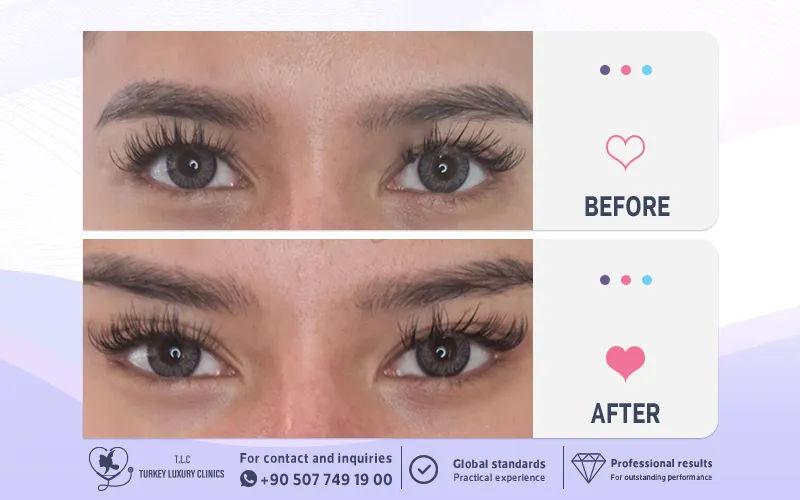
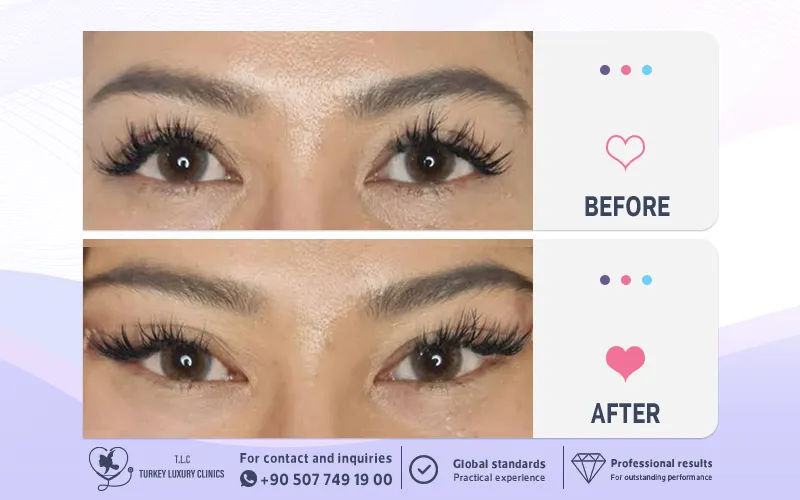
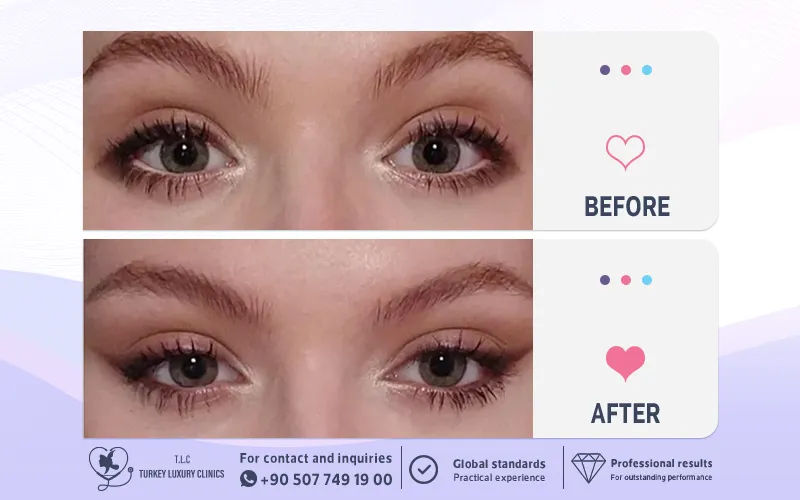
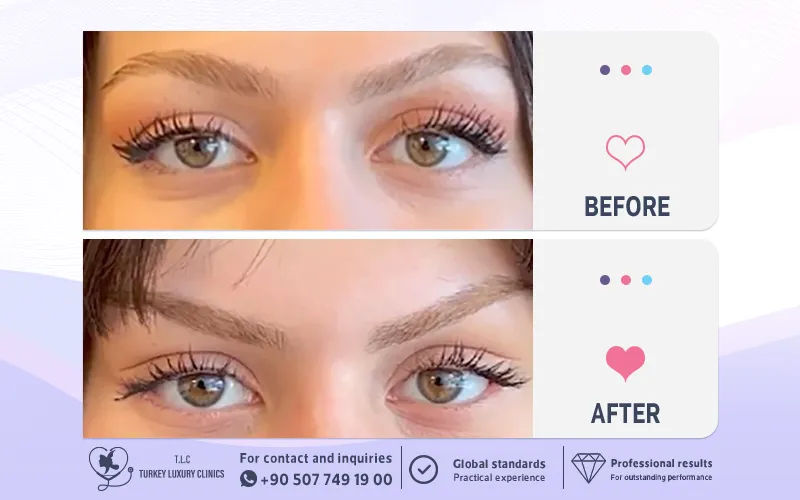
Cat Eye Surgery Before and After Photos
How Much Does Cat Eye Surgery Cost in Turkey? (2026)
Cat eye surgery in Turkey, most commonly performed using canthoplasty, typically costs between $2,200 and $3,500, with an average price of around $2,850 depending on the surgeon's experience, clinic reputation, and the complexity of the procedure. Most clinics offer comprehensive packages that include the surgery, anesthesia, post-operative follow-up, and, in many cases, hotel accommodation and airport transfers for international patients.
Cat Eye Surgery (Canthoplasty) Cost in Turkey vs the US and UK
Country | Typical Cost |
Turkey | $2,200–$3,500 |
United Kingdom | $4,000–$8,000 |
United States | $4,000–$10,000 |
Turkey offers significant cost savings for cat eye surgery (canthoplasty) compared with the United States and the United Kingdom. Lower operating costs and a well-established medical tourism industry allow Turkish clinics to provide high-quality treatment at more competitive prices without compromising on modern facilities or experienced surgeons.
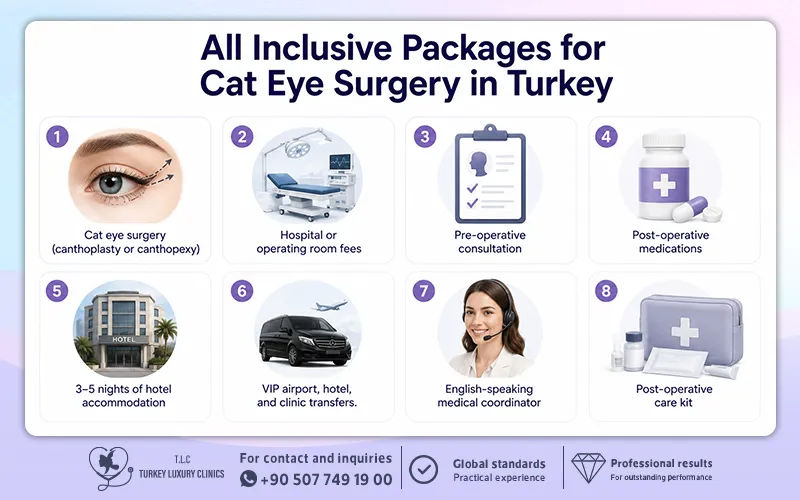
All Inclusive Packages for Cat Eye Surgery in Turkey
Many Turkish clinics offer all-inclusive cat eye surgery packages for international patients, helping simplify travel and reduce overall treatment costs. Depending on the clinic, a typical package may include:
- Cat eye surgery (canthoplasty or canthopexy) performed by a board-certified plastic surgeon.
- Hospital or operating room fees and anesthesia.
- Pre-operative consultation and medical evaluation.
- Post-operative medications and follow-up appointments.
- 3–5 nights of hotel accommodation in a 4- or 5-star hotel.
- VIP airport, hotel, and clinic transfers.
- English-speaking medical coordinator or translation services.
- Post-operative care kit and recovery instructions.
Before booking, ask for a detailed breakdown of what is included. Some packages may not cover pre-operative laboratory tests, extended hotel stays, revision surgery, or optional recovery treatments.
Canthoplasty (Cat Eye Surgery) vs Canthopexy vs Fox Eye Surgery Cost (2026)
Procedure | Complexity | Average US Cost | Average Turkey Cost |
Canthopexy (Cat Eye Lift) | Low to Moderate | $2,500–$5,500 | $1,500–$3,000 |
Surgical Cat Eye Lift (Canthoplasty) | High | $4,000–$10,000 | $2,200–$3,500 |
Surgical Fox Eye Lift | High (Combined Procedures) | $4,000–$10,000 | $2,200–$4,500 |
Non-Surgical Fox Eye Lift (Threads) | Minimal (Temporary) | $500–$2,500 | $600–$1,200 |
Cat Eye Lift + Blepharoplasty | Very High (Combined Surgery) | $9,000–$15,000 | $3,000–$4,500 |
Factors Affecting the Cost of Cat Eye Surgery in Turkey
- Surgical Technique
- Canthoplasty is more expensive than canthopexy because it involves permanent structural reshaping of the outer eye corner.
- Surgeon's Experience
- Board-certified plastic surgeons with extensive facial aesthetic experience and strong surgical portfolios typically charge higher fees.
- Clinic Accreditation and Reputation
- Internationally accredited hospitals and well-established cosmetic surgery centers generally charge more due to higher safety standards and advanced facilities.
- Combined Procedures
- Combining cat eye surgery with procedures such as upper blepharoplasty, brow lift, or facial rejuvenation increases the overall cost.
- All-Inclusive Package
- Packages that include hotel accommodation, airport transfers, medications, translation services, and post-operative care cost more than the surgical procedure alone but often provide better overall value for international patients.
Cat Eyes vs Fox Eyes: How Do They Differ?
Cat eyes and fox eyes are two popular aesthetic eye styles that create a lifted appearance by elevating the outer corners of the eyes. Both can be achieved using surgical techniques such as canthoplasty, canthopexy, or temporal lifting, depending on the patient's anatomy and desired outcome. However, they differ in the degree and direction of the lift.
Fox eyes create a softer, straighter, elongated almond-shaped appearance, while cat eyes feature a more dramatic upward slant that produces a sharper, feline look.
Feature | Cat Eye Surgery (Canthoplasty) | Fox Eye Lift |
Primary Target | Outer eyelid corner / Tendon | Outer brow / Temple skin |
Invasiveness | Always surgical | Surgical or Non-surgical (threads) |
Lower Eyelid | Tightened and raised | Remains unchanged |
Longevity | Permanent | Permanent (if surgery) or 6–12 months (if threads) |
Canthoplasty (Cat Eye Surgery) vs Canthopexy
Canthoplasty is a more invasive, permanent surgical procedure in which the surgeon detaches, repositions, and tightens the lateral canthal tendon before securing it to the orbital bone. This permanently changes the shape and position of the outer corner of the eye.
Recovery is longer than with canthopexy because the procedure alters the eyelid's structural support. Temporary swelling, bruising, and dry eyes are common during the healing period.
Canthopexy is a less invasive alternative that creates a similar, but typically more subtle, lifting effect without permanently reshaping the eye.
Rather than cutting or detaching the tendon, the surgeon reinforces and tightens the existing lateral canthal structures using permanent sutures.
Recovery after canthopexy is generally quicker than canthoplasty, with less swelling, a lower risk of complications, and a faster return to normal activities.
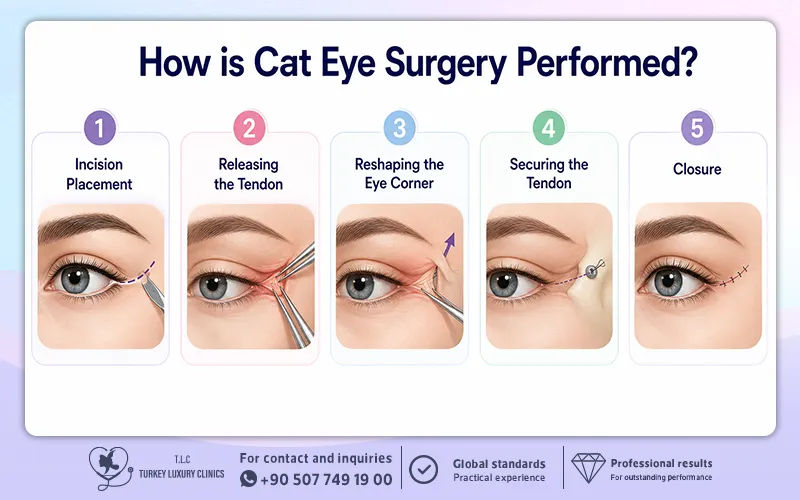
How is Cat Eye Surgery Performed?
Cat eye lift surgery is performed by canthoplasty technique. Canthoplasty is a surgical procedure that tightens, reshapes, or repositions the outer corner of the eye (the lateral canthus). It is performed under local anesthesia with sedation, taking about 30 to 90 minutes. The surgery involves the following core steps:
1. Incision Placement:
The surgeon makes a small incision at the outer corner of the eye, usually hidden within a natural skin crease (crow's feet) to minimize visible scarring.
2. Releasing the Tendon:
The lateral canthal tendon, which supports the outer corner of the lower eyelid, is carefully detached from its attachment to the orbital bone.
3. Reshaping the Eye Corner:
The tendon is repositioned and tightened to elevate and elongate the outer corner of the eye. In some patients, a small amount of lower eyelid tissue may be adjusted to achieve optimal tension and symmetry.
4. Securing the Tendon:
The repositioned tendon is anchored securely to the periosteum covering the lateral orbital rim, creating long-term structural support for the new eye shape.
5. Closure:
The incision is closed with fine sutures to promote minimal scarring. Non-dissolvable stitches are typically removed within 5–7 days during a follow-up visit.
Cat Eye Lift Surgery Recovery
The recovery period after cat eye lift surgery takes about 1 to 2 weeks for swelling and bruising to subside and from 2 to 4 weeks for complete recovery and resuming normal life. Although most patients return to work in 7 to 10 days. The final results settle in about 6 to 12 weeks.
Cat Eye Lift Surgery Recovery Aftercare
During recovery patients are advised to elevate their head with 2 to 3 pillows to reduce fluid buildup and swelling during the first 7 to 10 days, avoid strenuous exercise, heavy lifting, bending over, and swimming for at least 1–2 weeks and wait at least 2 weeks (or until cleared by your surgeon) before applying eye makeup, wearing contact lenses, or using harsh face creams. It is better to wear sunglasses on bright days for up to a year post-surgery to protect the delicate, healing eye area from UV damage.
Essential aftercare tips are:
- Sleep with your head elevated for the first week to reduce swelling.
- Apply cold compresses during the first 24–48 hours as instructed by your surgeon.
- Avoid rubbing or pulling the eyes while the incisions heal.
- Use prescribed antibiotic ointments, eye drops, and medications exactly as directed.
- Avoid strenuous exercise, heavy lifting, and swimming for 2–4 weeks.
- Do not wear contact lenses until your surgeon confirms it is safe.
- Protect your eyes from direct sunlight by wearing sunglasses outdoors.
- Avoid smoking and alcohol during the early healing period, as both may delay recovery.
- Keep all follow-up appointments to monitor healing and remove sutures if necessary.
- Contact your surgeon immediately if you experience severe pain, worsening vision, excessive bleeding, or signs of infection.
Cat Eye Surgery Recovery and Results Timeline
Cat eye surgery recovery usually takes 2–4 weeks, while final results continue to refine over several months as swelling fades and the tissues settle.
Timeline | What to Expect |
Days 1–3 | Swelling, bruising, tightness, and mild discomfort are usually most noticeable. |
Days 5–7 | Non-dissolvable stitches may be removed during a follow-up visit. |
Weeks 2–4 | Bruising improves significantly, and most patients return to work, light activities, and social events. |
Weeks 6–8 | The lifted eye shape becomes more visible as deeper swelling continues to resolve. |
3–6 Months | Final results become more refined as tissues fully settle and scars continue to fade. |
What Results Can Cat Eye Surgery Achieve?
- Lifted Outer Eye Corners: Repositions the lateral canthal tendon to create a more elevated and youthful eye contour.
- Almond-Shaped Eyes: Creates a longer, narrower eye shape with a more defined outer corner.
- Improved Lower Eyelid Support: Tightens and stabilizes the outer lower eyelid, reducing eyelid laxity and improving eye contour.
- Sharper, More Defined Eye Appearance: Produces a subtle feline look while maintaining facial harmony.
- Long-Lasting Structural Enhancement: Permanently reshapes the outer eye corner when performed with canthoplasty.
How Long Do Cat Eye Lifts Last?
Surgical cat eye procedures generally provide long-lasting to permanent results. Canthoplasty is considered permanent because it repositions the lateral canthal tendon, whereas canthopexy may gradually lose some of its lifting effect over time.
Are You a Good Candidate for Cat Eye Surgery?
You may be a good candidate if you:
- Have naturally downturned or rounded outer eye corners.
- Want a permanently lifted, almond-shaped eye appearance.
- Have mild lower eyelid laxity.
- Are in good overall health.
- Are a non-smoker or willing to stop smoking before and after surgery?
- Have realistic expectations about the outcome.
- Have no active eye infection or uncontrolled eye disease.
Is Cat Eye Surgery Safe?
Cat eye surgery (canthoplasty or canthopexy) is generally safe when performed by a qualified, board-certified plastic or oculoplastic surgeon, but it carries specific risks. Because it involves the delicate restructuring of the outer eye corner, improper execution can lead to permanent complications
Careful surgical planning, proper patient selection, and following post-operative instructions help minimize the risk of complications.

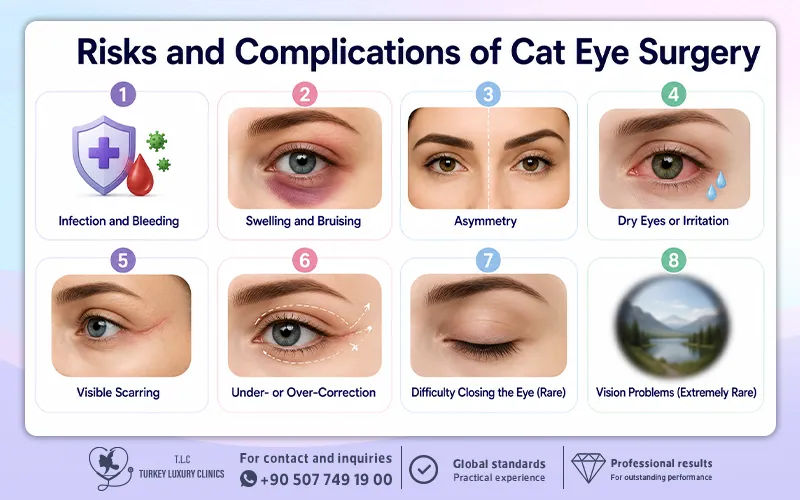
Risks and Complications of Cat Eye Surgery
- Infection and Bleeding: As with any surgical procedure, there is a small risk of infection, bleeding, or delayed wound healing.
- Swelling and Bruising: Temporary swelling, bruising, and discomfort are common during the first few weeks of recovery.
- Asymmetry: Minor differences between the eyes may occur if healing is uneven or the desired correction is difficult to achieve.
- Dry Eyes or Irritation: Some patients experience temporary dry eyes, tearing, or irritation while the eyelids heal.
- Visible Scarring: Incisions are usually hidden within natural skin creases, but noticeable scars may rarely develop.
- Under- or Over-Correction: The lift may be less or more pronounced than expected, occasionally requiring revision surgery.
- Difficulty Closing the Eye (Rare): Excessive tightening may temporarily affect eyelid closure, requiring close follow-up.
- Vision Problems (Extremely Rare): Serious vision-threatening complications are exceptionally uncommon but remain a potential risk with any surgery around the eyes.
Considering Cat Eye Surgery in Turkey?
Our team connects international patients with experienced plastic surgeons, internationally accredited hospitals, and personalized treatment plans to help achieve natural-looking results.
FAQs About Cat Eye Surgery in Turkey