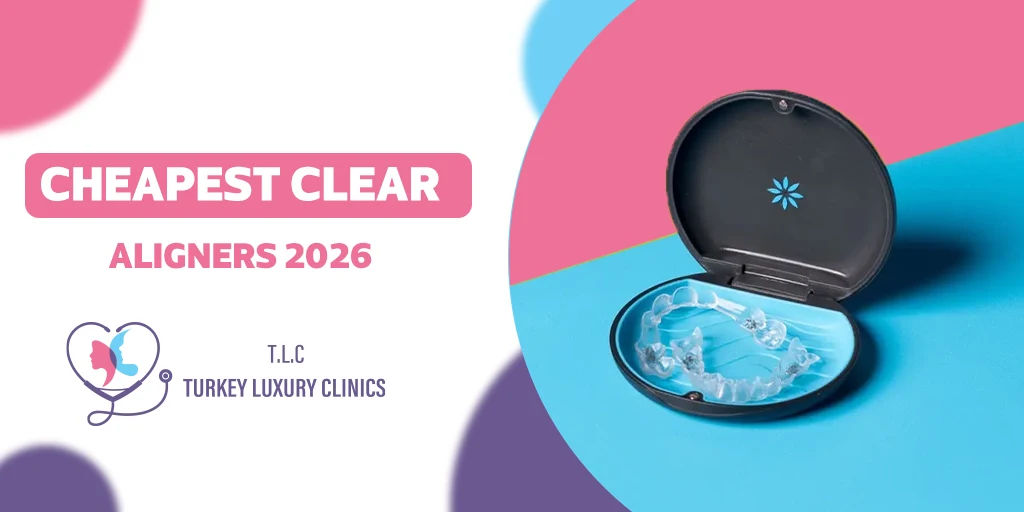


- Cheapest Clear Aligners with 2026 Prices
- Are At-Home Aligners as Effective as Invisalign?
- Do Cheap Clear Aligners Actually Work?
- Are Cheap Aligners Safe?
- What Are the Risks of Cheap Aligners?
- How to Choose a Cheap Clear Aligner?
- Cases Typically Require Orthodontist-Supervised Clear Aligners
- How to Get Clear Aligners at a Lower Cost
- Does Insurance Cover Clear Aligners?
- What Are the Cheapest In-Clinic Clear Aligners?
- FAQs About Cheapest Clear Aligners
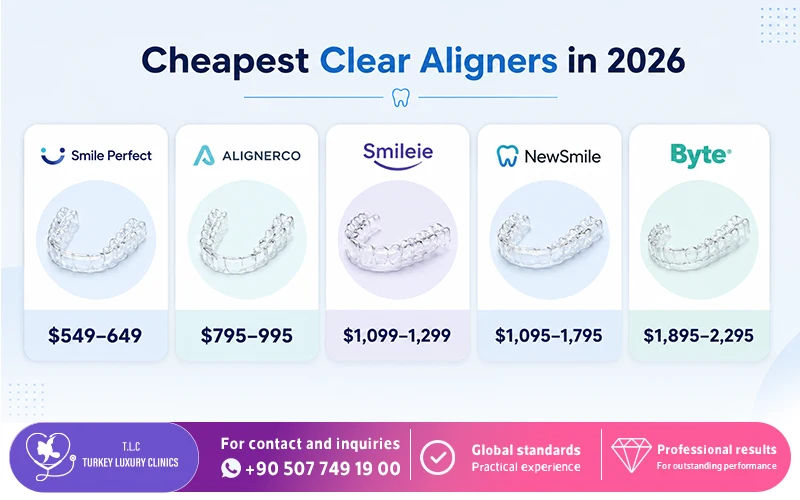
The cheapest clear aligners in 2026 typically start at around $550 for at-home treatment and $1,500 for dentist-supervised treatment. Most treatment plans include full-mouth teeth straightening and take approximately 6 to 24 months, depending on the complexity of the case.
The most affordable clear aligners are usually direct-to-consumer systems, which allow patients to complete impressions or scans remotely and receive their aligners by mail. Popular budget-friendly brands include ALIGNERCO, NewSmile, and Smileie.
While at-home aligners can be suitable for mild crowding, small gaps, and minor cosmetic alignment concerns, they are generally not designed for complex bite correction, significant tooth rotations, or severe crowding. Tooth movement is a biological process that requires accurate diagnosis, treatment planning, and monitoring. Without proper assessment, treatment outcomes may become less predictable and may require additional orthodontic correction.
Patients seeking affordable alternatives to Invisalign may also consider lower-cost in-clinic aligner brands, dental insurance coverage, or treatment abroad. Turkey remains one of the most affordable destinations for high-quality, dentist-supervised clear aligner treatment, often offering substantial cost savings compared with the United States and the United Kingdom.
Cheapest Clear Aligners with 2026 Prices
Brand | Price | Best For |
Smile Perfect | $549–$649 | Lowest upfront cost |
ALIGNERCO | $795–$995 | Budget-conscious adults |
Smileie | $1,099–$1,299 | Affordable cosmetic alignment |
NewSmile | $1,095–$1,795 | Day & night treatment options |
Byte | $1,895–$2,295 | Premium at-home experience |
1. Smile Perfect ($549–$649)
Smile Perfect is currently one of the lowest-cost clear aligner providers on the market. It offers daytime and nighttime treatment options and is primarily designed for mild cosmetic alignment issues, such as small gaps and minor crowding. While its pricing is highly competitive, it is generally best suited for simple cases rather than significant bite correction or complex tooth movement.
2. ALIGNERCO ($795–$995)
ALIGNERCO is one of the most recognized budget-friendly clear aligner brands. The company provides at-home impression kits, remote treatment planning, and flexible payment options. It is typically recommended for mild crowding, spacing, and minor relapse after previous orthodontic treatment. Its affordability makes it a popular alternative to more expensive aligner systems.
3. Smileie ($1,099–$1,299)
Smileie focuses on affordable cosmetic teeth straightening with fully remote treatment. Patients complete impressions at home and receive a customized aligner series by mail. The brand is generally intended for mild orthodontic concerns and appeals to patients looking for a balance between affordability and convenience.
4. NewSmile ($1,095–$1,795)
NewSmile offers both daytime and nighttime aligner plans and is known for its streamlined treatment process. The company targets patients with minor crowding and spacing issues who prefer remote treatment over regular clinic visits. Compared with some lower-cost competitors, NewSmile provides additional treatment options and customer support features.
5. Byte ($1,895–$2,295)
Byte is one of the more premium direct-to-consumer aligner brands. It is known for its HyperByte technology, which is marketed to improve aligner seating and treatment efficiency. Although it costs more than many at-home alternatives, it remains less expensive than most doctor-supervised systems while offering a more comprehensive remote treatment experience.
Are At-Home Aligners as Effective as Invisalign?
At-home aligners are generally less effective than Invisalign for moderate or complex orthodontic problems. They work best for mild cases such as minor crowding, small gaps, and slight relapse after previous treatment, while Invisalign offers greater treatment flexibility through comprehensive diagnostics and professional supervision.
Direct-to-consumer (DTC) aligners are designed to make orthodontic treatment more convenient by reducing or eliminating in-person appointments.
They can be effective for carefully selected mild cases, including minor crowding, small gaps, and slight relapse after previous orthodontic treatment.
At-Home Aligners vs Invisalign
Feature | At-Home Aligners (Mail-Order) | Invisalign (Doctor-Supervised) |
Cases Treated | Primarily mild crowding, spacing, and cosmetic alignment issues | Mild, moderate, and many complex orthodontic cases |
Clinical Supervision | Remote monitoring with limited in-person assessment | Regular orthodontic evaluation and treatment monitoring |
Attachments | Typically no attachments or advanced treatment mechanics | Uses attachments, elastics, and other treatment auxiliaries when needed |
Bite Correction | Limited ability to address significant bite discrepancies | Can treat many overbite, underbite, crossbite, and deep bite cases |
Treatment Adjustments | More limited when teeth do not track as planned | Ongoing refinements and treatment modifications throughout treatment |
Do Cheap Clear Aligners Actually Work?
Cheap clear aligners can successfully straighten teeth for mild-to-moderate cosmetic issues, such as small gaps and minor crowding. However, professional organizations and many orthodontists have expressed concerns about direct-to-consumer aligners for complex orthodontic cases because treatment is often performed without comprehensive in-person examinations, diagnostic imaging, and ongoing clinical supervision.
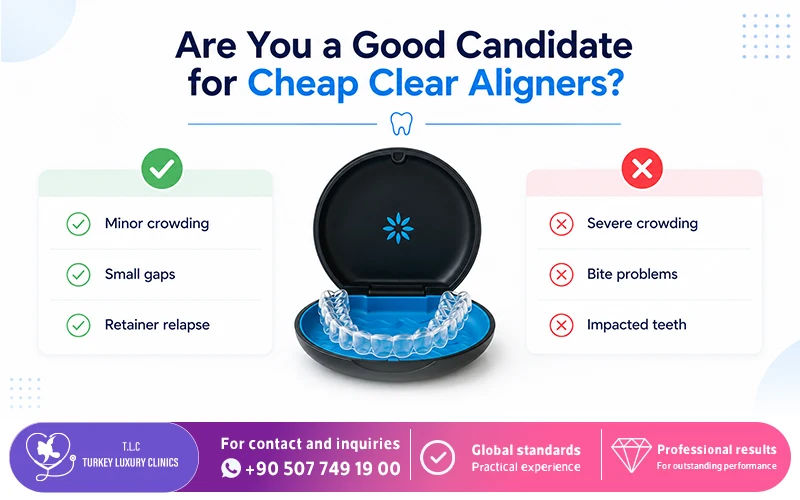
Cases That May Be Suitable for At-Home Aligners
- Minor Retainer Relapse: Patients who previously completed orthodontic treatment and experienced slight tooth movement after inconsistent retainer use.
- Small Spaces Between Teeth: Mild spacing issues involving limited movement of the front teeth.
- Mild Crowding: Slight overlap of teeth that does not require significant root movement, bite correction, or complex rotations.
- Cosmetic Alignment Improvements: Patients seeking modest improvements in the appearance of visible front teeth without major changes to their bite.
Factors That Influence Clear Aligner Success
- Case complexity and required tooth movements
- Quality of the digital treatment plan
- Consistent wear for 20–22 hours per day
- Patient age and biological response to treatment
- Professional monitoring and follow-up
- Use of attachments, elastics, or additional orthodontic mechanics when necessary
Are Cheap Aligners Safe?
Cheap at-home or mail-order aligners can be safe for carefully selected mild orthodontic cases when treatment is based on a proper dental assessment and monitored by a licensed dentist or orthodontist. However, many dental professionals express concerns about direct-to-consumer aligner systems that lack comprehensive diagnostics, in-person examinations, or ongoing clinical supervision.
Safety depends on several factors, including the patient's oral health, case complexity, treatment planning, and the level of professional monitoring throughout treatment. Cases involving significant crowding, bite problems, gum disease, or complex tooth movement typically require closer orthodontic supervision.
What Are the Risks of Cheap Aligners?
Cheap at-home or mail-order aligners may increase the risk of bite changes, gum problems, unpredictable tooth movement, and treatment outcomes that require additional orthodontic correction. These risks are generally higher when treatment is started without a comprehensive dental examination, diagnostic imaging, or ongoing professional supervision.
Clear aligners apply controlled orthodontic forces that affect the teeth, surrounding bone, and supporting tissues. Because tooth movement is a biological process, proper diagnosis and monitoring play an important role in achieving predictable and stable results.
Potential risks may include:
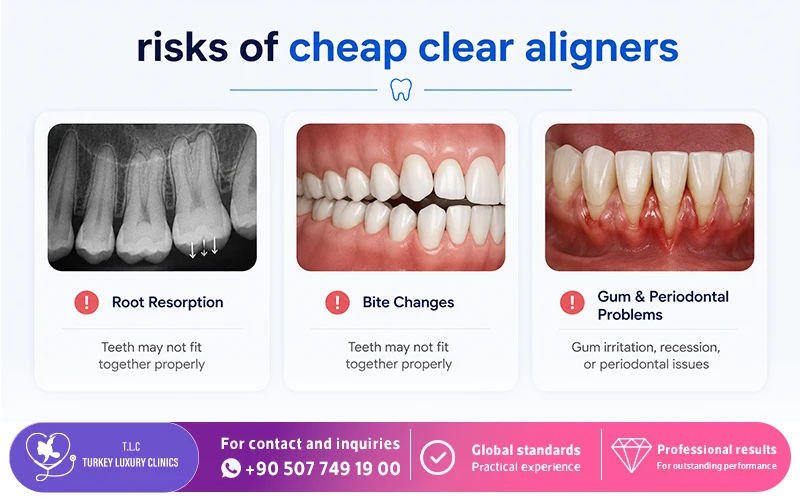
- Root Resorption: Excessive or poorly controlled tooth movement may contribute to shortening of tooth roots.
- Bite Changes: Teeth may not move as planned, affecting how the upper and lower teeth fit together.
- Gum and Periodontal Complications: Existing gum disease, bone loss, or other oral health issues may go undetected.
- Unpredictable Treatment Outcomes: Some patients may require refinements or additional orthodontic treatment to achieve the desired result.
While many patients complete aligner treatment successfully, complications are more likely when complex orthodontic problems are treated without appropriate clinical assessment and follow-up.
How to Choose a Cheap Clear Aligner?
Cheap clear aligners can be effective for selected orthodontic cases when the required tooth movements are relatively simple and the treatment plan is properly designed. They are generally most suitable for mild crowding, minor spacing, and limited alignment corrections. However, treatment success depends on several factors, including the accuracy of diagnosis, case complexity, aligner quality, patient compliance, and professional monitoring when needed.
More complex orthodontic problems such as significant crowding, bite discrepancies, impacted teeth, severe rotations, or skeletal jaw issues typically require comprehensive orthodontic supervision and may not be suitable for low-cost or direct-to-consumer aligner systems.
Cases Typically Require Orthodontist-Supervised Clear Aligners
Patients with the following conditions generally require comprehensive diagnosis, treatment planning, and ongoing clinical supervision:
- Moderate to Severe Crowding: Significant lack of space that requires complex tooth movement.
- Overbite, Underbite, or Crossbite: Bite discrepancies that affect how the upper and lower teeth fit together.
- Impacted or Ectopic Teeth: Teeth that have not erupted normally or are positioned outside their ideal location.
- Large Tooth Rotations: Teeth that require substantial rotational movement to achieve proper alignment.
- Skeletal Jaw Discrepancies: Orthodontic problems related to jaw position rather than tooth position alone.
- Cases Requiring Extractions: Treatment plans that involve removing teeth to create space.
- Complex Bite Correction: Cases requiring attachments, elastics, or advanced orthodontic mechanics.
How to Get Clear Aligners at a Lower Cost
Choosing a direct-to-consumer aligner brand is not the only way to reduce the cost of treatment. Patients looking for affordable clear aligners have several options that may provide better value while maintaining professional supervision.
1. Choose a More Affordable In-Clinic Aligner Brand
Brands such as Angel Aligner, ClearCorrect, and SureSmile are often more affordable than Invisalign while still providing comprehensive diagnosis, treatment planning, and ongoing monitoring by a dentist or orthodontist.
2. Use Dental Insurance If Available
Some dental insurance plans include orthodontic coverage that may partially cover the cost of clear aligners. Depending on the policy, insurance can significantly reduce out-of-pocket expenses.
3. Consider Getting Clear Aligners Abroad
In some countries, clear aligner treatment costs considerably less than in the United States, Canada, or the United Kingdom. Turkey is one of the most popular destinations for affordable dentist-supervised clear aligners, often offering lower treatment costs while maintaining modern dental facilities and internationally experienced providers.
4. Ask About Monthly Payment Plans
Many dental clinics offer monthly financing options that allow patients to spread the cost of treatment over time, making higher-quality aligner systems more accessible.
Does Insurance Cover Clear Aligners?
Sometimes. Coverage for clear aligners varies by insurance provider, plan type, age restrictions, waiting periods, and lifetime orthodontic maximums. Many dental insurance plans cover a portion of orthodontic treatment, but the amount reimbursed can differ significantly between policies.
Patients should contact their insurance provider to confirm eligibility, coverage limits, and whether clear aligners are included under their orthodontic benefits. Before starting treatment, it is often helpful to request a pre-treatment estimate or predetermination of benefits to understand your expected out-of-pocket costs.
If insurance coverage is unavailable or limited, patients may also reduce costs through monthly payment plans, health savings accounts (HSA), flexible spending accounts (FSA), or by choosing lower-cost in-clinic aligner brands and treatment destinations abroad.
What Are the Cheapest In-Clinic Clear Aligners?
The most affordable dentist-supervised clear aligners are typically Angel Aligner, ClearCorrect, and SureSmile, which often cost less than Invisalign while still providing professional treatment and monitoring.
Brand | Average Cost | Best For |
Angel Aligner | $2,000–$5,000 | Mild to moderate cases |
ClearCorrect | $2,000–$5,500 | Invisalign alternative |
SureSmile | $2,000–$6,000 | Cost-conscious patients |
What Is the Cheapest Way to Get Clear Aligners?
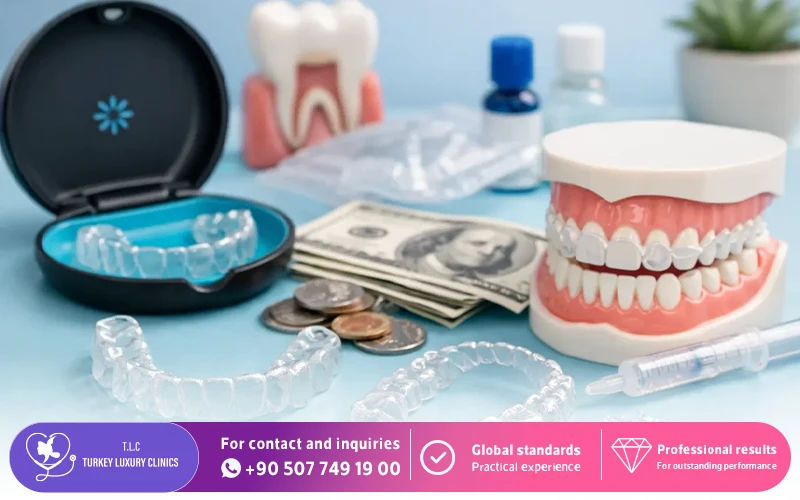
The cheapest clear aligners are direct-to-consumer brands such as Smile Perfect, ALIGNERCO, and Smileie, with prices starting below $1,000. However, patients seeking greater safety, professional supervision, and treatment flexibility may find better value in affordable in-clinic systems such as Angel Aligner, ClearCorrect, or SureSmile. For many international patients, receiving dentist-supervised treatment in countries such as Turkey can provide a balance between affordability and clinical oversight.
For many international patients, clear aligners in Turkey provide a balance of affordability, professional supervision, and predictable treatment outcomes without the high costs often associated with treatment in the United States or the United Kingdom. Contact the team at Turkey Luxury Clinics for a personalized treatment plan, detailed cost estimate, and comprehensive treatment package tailored to your needs.
FAQs About Cheapest Clear Aligners