

- How Much Does Composite Bonding Cost in Turkey? (2026 Prices)
- Composite Bonding in Istanbul: 2026 Prices
- Composite Bonding vs Other Cosmetic Dental Treatments
- Which City Is Best for Composite Bonding in Turkey?
- Best Dentist in Turkey for Composite Bonding
- What is Composite Bonding?
- Who is a Candidate for Composite Bonding?
- Who Is Not a Good Candidate for Composite Bonding?
- Steps for Composite Bonding in Turkey
- Composite Bonding Aftercare: How to Prevent Staining and Chipping
- How Long Does Composite Bonding Last?
- Is Composite Bonding Safe for Your Teeth?
- What Happens If Bonding Chips After You Return Home?
- Risks and Disadvantages of Composite Bonding
- Composite Bonding vs Porcelain Veneers: Which Is Better?
- Best Composite Bonding Clinic in Turkey in 2026
- Trust Turkey Luxury Clinics for Best Composite Bonding in Turkey
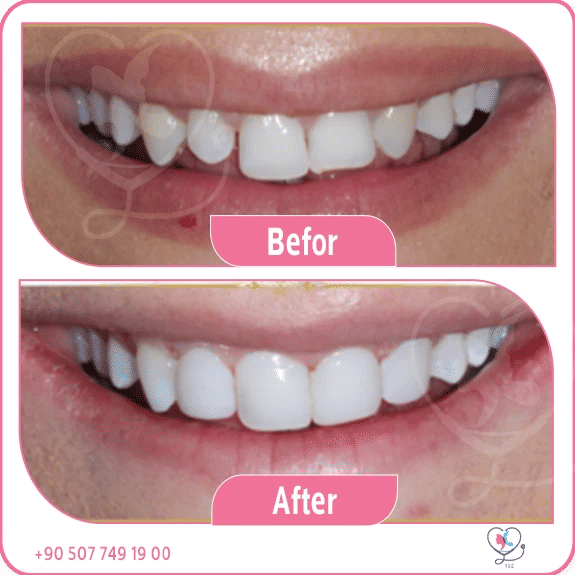
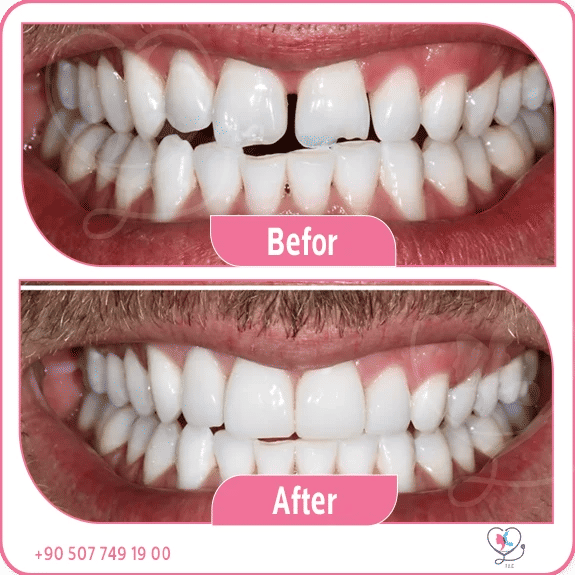
- Composite Bonding in Turkey Before and After: Real Photos
- FAQs About Composite Bonding in Turkey
Composite bonding in Turkey is a popular, non-invasive cosmetic dental treatment used to fix minor imperfections such as gaps, chips, and discoloration. Prices range between $80 and $150 per tooth, and the process is usually completed in a single 1-to-3-hour visit.
Composite bonding works by layering high-quality composite resin onto the tooth surface, restoring its shape and colour without drilling or removing enamel.
Istanbul clinics offer packages ranging from single-tooth repairs to full-mouth smile transformations, making Turkey a leading destination for affordable cosmetic dentistry.
Composite bonding is a cost-effective alternative to porcelain veneers and can also repair fractured or worn teeth with natural-looking results. Choosing a Ministry of Health-certified or internationally accredited clinic, along with an experienced cosmetic dentist, plays a key role in achieving safe and durable outcomes.
How Much Does Composite Bonding Cost in Turkey? (2026 Prices)
Composite bonding in Turkey costs around $80–$150 per tooth in 2026. An 8-tooth composite bonding package typically costs $650–$1,200, while a full 16–20 tooth smile makeover costs approximately $1,300–$3,000. Prices are generally 60%–80% lower than private treatment in the UK or US.
These prices usually cover a high-quality nano-composite resin — often a top-tier German or American brand offering natural lustre, superior translucency, and higher resistance to staining — along with the dentist's and clinic's fees, the initial consultation, and X-rays. All-inclusive packages add airport transfers, translation services, and accommodation.
Price Breakdown by Number of Teeth Treated
Teeth Treated | Price (USD) |
Single tooth | $80–$150 |
8–10 teeth | $650–$1,300 |
16–20 teeth | $1,300–$3,000 |
Composite Bonding Turkey Package Prices 2026
Partial Composite Smile Makeover (8 Teeth)
Price: $650–$1,200
Includes: composite bonding for up to 8 teeth · correction of minor gaps, chips, or discoloration · initial dental consultation · dental X-rays · accommodation (in some clinics) · airport transfers (in some clinics)
Full Composite Smile Makeover (16 Teeth)
Price: $1,300–$2,400
Includes: composite bonding for up to 16 teeth · smile reshaping and colour correction · initial dental consultation · dental X-rays · short hotel stay · VIP airport transfers
Full Composite Smile Makeover (20 Teeth)
Price: $1,600–$3,000
Includes: composite bonding for up to 20 teeth · comprehensive smile reshaping · initial dental consultation · dental X-rays · multiple-night hotel stay · VIP airport transfers
Many international patients choose Turkey not only for lower treatment costs but also for access to experienced cosmetic dentists and packages that may combine dental treatment with accommodation and airport transfers.
Composite Bonding Price by City
City | Price per Tooth | 20 Teeth |
Istanbul | $80–$150 | $1,600–$3,000 |
Antalya | $75–$140 | $1,500–$2,800 |
Izmir | $70–$130 | $1,400–$2,600 |
Composite Bonding Cost in Turkey vs the US and the UK
Treatment Type | Turkey (Average) | UK (Private Clinics) | US (Average) |
Per tooth | $80–$150 | $380–$640 | $400–$1,000 |
Partial smile (8 teeth) | $650–$1,200 | $3,000–$5,100 | $3,200–$8,000 |
Full smile (16 teeth) | $1,300–$2,400 | $5,700–$9,600 | $6,000–$14,000 |
20 teeth | $1,600–$3,000 | $7,000–$12,000 | $7,500–$18,000 |
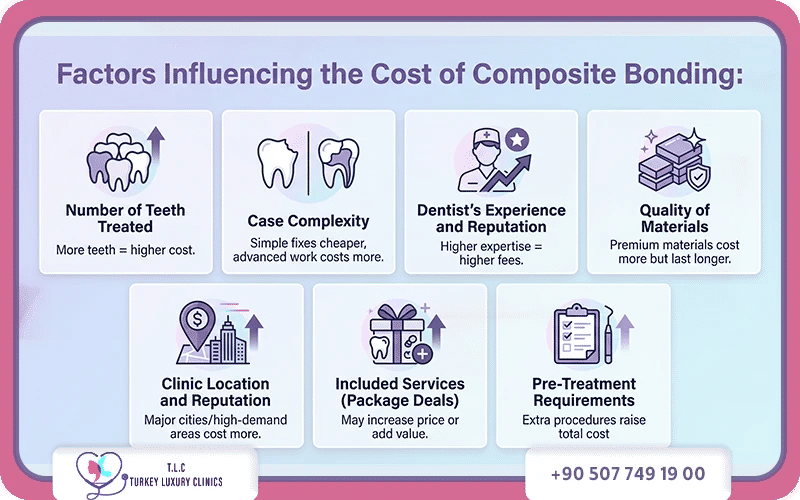
Factors Influencing the Cost of Composite Bonding
- Number of teeth treated: The number of teeth requiring bonding is one of the main cost factors. Treating a single tooth costs considerably less than an 8-, 16-, or 20-tooth smile makeover.
- Case complexity: Repairing a small chip or closing a minor gap generally requires less time and material than extensive reshaping or rebuilding worn teeth.
- Dentist's experience: Fees may be higher for dentists with extensive experience in cosmetic bonding and complex smile design.
- Composite resin used: The type and quality of composite resin can affect the price, as well as the final colour match, polish, and aesthetic result.
- Clinic location: Prices can vary between Istanbul, Antalya, and Izmir and between individual clinics within the same city.
- Package inclusions: Some clinics include consultations, X-rays, accommodation, and airport transfers, while others charge for these services separately.
- Pre-treatment dental care: Professional cleaning, whitening, treatment of tooth decay, or periodontal care may increase the overall treatment cost.
Composite Bonding in Istanbul: 2026 Prices
Composite bonding in Istanbul typically costs $80–$150 per tooth in 2026. An 8-tooth smile makeover costs around $650–$1,200, while 16–20 tooth packages typically range from $1,300 to $3,000. Some Istanbul clinics also include consultations, X-rays, hotel accommodation, and airport transfers in their treatment packages.
Composite Bonding Specialists in Istanbul
Dr. Emin Orkun Olcay — Prosthodontist (PhD), Istanbul. Specialises in high-precision digital restorations and complex full-mouth composite work.
For patients travelling to Antalya, Dr. Hakan İmatoğlu and Dr. Haydar Özel cover natural-looking smile makeovers and minimal-prep bonding.
How Long Should You Stay in Istanbul?
Composite bonding is usually completed in a single 1-to-3-hour appointment, so a 2-night stay is enough for a small case. Full-mouth makeovers of 16–20 teeth may be split across two appointments, in which case allow 3–4 nights. Most patients fly home the day after treatment.
What's Included in an Istanbul Package
Istanbul packages typically cover the treatment, an initial consultation, dental X-rays, and airport transfers. Full-mouth packages usually add 2–4 nights of hotel accommodation. Confirm before booking whether the quoted price includes:
- The resin brand and shade code used
- Professional cleaning, if needed before bonding
- A follow-up appointment before you fly home
- Any warranty on chipping or discolouration
Composite Bonding vs Other Cosmetic Dental Treatments
Treatment | Price per Tooth (Istanbul) | Lasts |
Composite bonding | $80 – $150 | 5–7 years |
Composite veneers | $180 – $350 | 5–7 years |
Porcelain veneers | $250 – $400 | 10–15 years |
E-max® veneers | $300 – $450 | 10–15 years |
Zirconium crowns | $250 – $400 | 15+ years |
Composite bonding is one of the most affordable cosmetic dental treatments in Turkey, at approximately $80–$150 per tooth in Istanbul. It is cheaper than composite veneers, porcelain veneers, E-max veneers, and zirconium crowns, making it a lower-cost option for patients seeking minor cosmetic improvements without extensive tooth preparation.
Is Composite Bonding Worth It Despite the Lower Price?
Composite bonding is worth it for patients who want to correct minor chips, small gaps, uneven tooth shapes, or mild discoloration without the higher cost of porcelain veneers or significant enamel removal. It is particularly suitable for patients who accept its shorter lifespan of around 5–7 years and are willing to maintain it carefully by avoiding habits that can cause staining or chipping, such as smoking, biting hard foods or objects, and excessive coffee or tea consumption.
For these patients, the lower price does not necessarily make composite bonding a poor-value treatment. Its lower cost is partly because the resin is applied directly to the teeth, often in a single visit, without the laboratory fabrication required for porcelain veneers.
However, patients who prioritize longer-lasting results, greater stain resistance, and less frequent maintenance may find porcelain or E-max veneers worth the higher upfront cost.
Which City Is Best for Composite Bonding in Turkey?
Istanbul is the best choice for patients who prioritize a wider selection of cosmetic dentists and clinics, while Antalya is particularly convenient for patients who want to combine dental treatment with a holiday and all-inclusive packages. Izmir generally offers the lowest prices of the three, making it worth considering for patients focused on cost.
However, the city should not be the main factor when choosing where to have composite bonding. The dentist's experience with direct composite restorations, before-and-after results, the resin system used, bite assessment, and access to follow-up care are more important than whether the clinic is located in Istanbul, Antalya, or Izmir.
Best Dentist in Turkey for Composite Bonding
Dentist | Specialty | Location | Best For |
Dr. E. Orkun Olcay | Prosthodontist (PhD) | Istanbul | High-precision, digital restorations |
Dr. Hakan İmatoğlu | Cosmetic Dentist | Antalya | Natural-looking smile makeovers |
Dr. Haydar Özel | Cosmetic & Implantology | Antalya | Digital design & minimal-prep bonding |
The best dental specialists for composite bonding are cosmetic dentists or prosthodontists with a strong portfolio of "before and after" cases. Top-rated specialists in Turkey include Dr.Emin Orkun Olcay, Dr. Hakan İMATOĞLU, and Dr. Haydar ÖZEL, all of whom are highly experienced practitioners specializing in Aesthetic Dentistry and Digital Smile Design, recognized for their artistic precision and use of advanced restorative materials.
What is Composite Bonding?
Composite bonding is a non-invasive cosmetic dental procedure where a tooth-colored resin material is applied, sculpted, and hardened with a blue dental curing light to improve the shape, color, or appearance of teeth. It is used to fix chips, cracks, gaps, or minor misalignment and usually requires no drilling or anesthesia
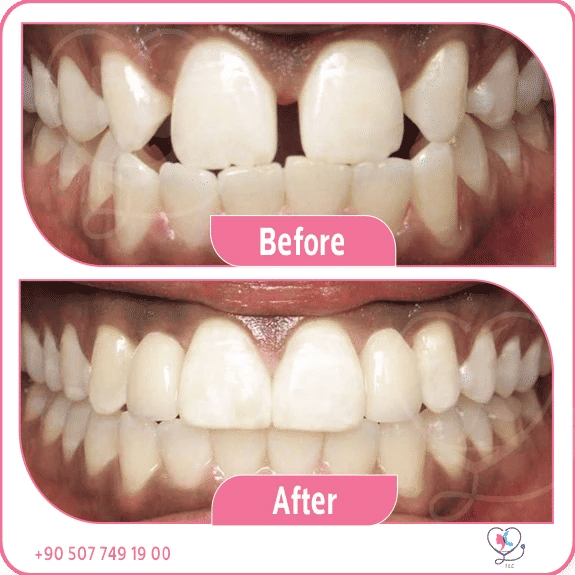
Composite bonding is widely used to repair chipped or cracked teeth, close gaps (diastemas), reshape uneven teeth, and improve discoloration, offering both functional and aesthetic benefits.
Who is a Candidate for Composite Bonding?
Ideal candidates for composite bonding are individuals seeking a fast, affordable, and non-invasive way to enhance their smile. This treatment is specifically designed for those looking to address minor cosmetic imperfections rather than severe structural damage or deep decay.
You are an excellent candidate if you have:
- Minor Gaps: Small spaces between teeth (diastemas) that you wish to close without orthodontics.
- Surface Damage: Chipped, cracked, or naturally worn-down teeth.
- Stubborn Discoloration: Teeth that are resistant to traditional chemical whitening treatments.
- Irregular Shapes: Teeth that appear too small or unevenly shaped.
Who Is Not a Good Candidate for Composite Bonding?
While highly versatile, composite resin is not a "one-size-fits-all" solution. You may not be a suitable candidate if you have:
- Extensive Structural Damage: Large cavities, deep fractures, or severe decay typically require the strength of dental crowns or inlays.
- Severe Misalignment: Major bite issues or heavily crowded teeth require orthodontic treatments such as braces or Invisalign before cosmetic work can begin.
- Chronic Bruxism (Teeth Grinding): Individuals who habitually grind or clench their teeth may easily chip or wear down the resin. In these cases, treatment is only recommended if the patient commits to wearing a custom nightguard.
- Poor Oral Hygiene: Active gum disease or untreated tooth decay must be resolved before any cosmetic procedure is performed.
Steps for Composite Bonding in Turkey
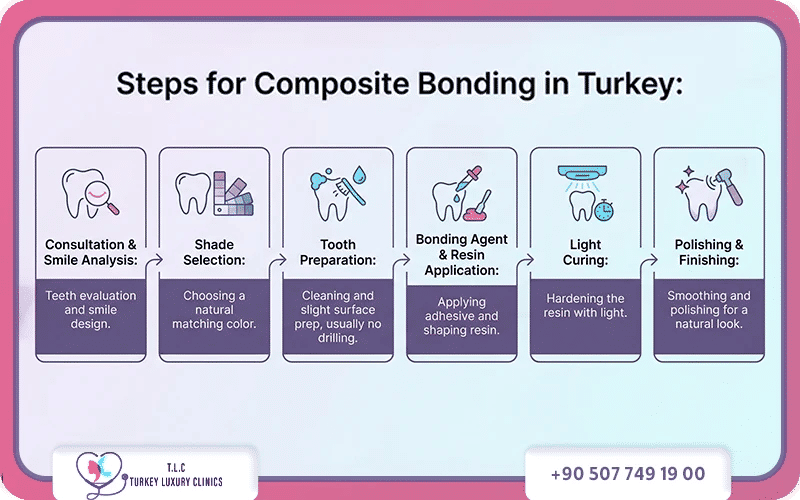
Composite bonding is a fast, minimally invasive treatment, usually completed in 1–2 days. Here’s what to expect:
- Consultation & Smile Analysis: Your dentist evaluates your teeth, discusses your cosmetic goals, and takes photos or digital scans to design your perfect smile.
- Shade Selection: A shade guide ensures the resin matches your natural teeth perfectly.
- Tooth Preparation: The surface is cleaned and slightly etched to improve adhesion—usually no drilling or anesthesia is needed.
- Bonding Agent: A liquid adhesive is applied for strong attachment.
- Resin Application & Shaping: The dentist applies the resin in layers, sculpting it to correct chips, gaps, uneven shape, or discoloration.
- Light Curing: A dental curing light hardens the composite resin.
- Polishing & Finishing: The resin is trimmed, contoured, and polished to create a natural, glossy finish.
Most international patients can return home the same day, as composite bonding is a quick, minimally invasive procedure that often requires only one visit.
Composite Bonding Aftercare: How to Prevent Staining and Chipping
Proper aftercare helps composite bonding maintain its colour, shape, and appearance for longer. Composite resin is more prone to staining than porcelain and cannot be whitened in the same way as natural teeth, so preventing discoloration is particularly important.
To protect bonded teeth, limit frequent exposure to strongly staining foods and drinks, particularly coffee, tea, red wine, and other highly pigmented products. Smoking can also contribute to discoloration. Regular brushing, interdental cleaning, dental check-ups, and professional polishing can help maintain the surface and appearance of the bonding.
Composite resin can also chip or wear over time. Avoid biting ice, hard foods or objects, biting your nails, or using bonded front teeth to open packaging. If you grind or clench your teeth, discuss this with your dentist, as repeated pressure can shorten the lifespan of the bonding.
With good care, composite bonding typically lasts around 5–7 years, although repairs or polishing may be needed during that time.
How Long Does Composite Bonding Last?
Composite bonding typically lasts 5–7 years with good care. Its lifespan can be affected by staining, wear, chipping, and daily habits. Unlike porcelain, composite may require occasional polishing or repair over time.
One advantage is that damaged composite bonding can often be repaired or adjusted without replacing the entire restoration. Because composite resin cannot be whitened like natural enamel, patients should also consider potential colour changes when planning future teeth whitening.
Is Composite Bonding Safe for Your Teeth?
Yes, composite bonding is a minimally invasive cosmetic dental treatment that usually requires little or no drilling of the natural tooth. The tooth-coloured resin is applied and shaped directly onto the tooth and then hardened with a dental curing light.
Because little or no natural enamel needs to be removed in many cases, composite bonding is a more conservative option than treatments that require greater tooth preparation. The procedure is also typically painless and can often be completed without injections or local anaesthesia.
What Happens If Bonding Chips After You Return Home?
One advantage of composite bonding is that minor chips can often be repaired without replacing the entire restoration. A dentist may be able to add new composite resin to the damaged area, reshape it, and polish the surface.
This is particularly important for patients travelling to Turkey for dental treatment. Before returning home, ask the clinic for your treatment records and details of the composite material and shade used. These details can help another dentist assess or repair the restoration if treatment is needed later.
Before booking, also ask about the clinic’s warranty and aftercare policy, including whether repairs are covered after you return home and whether travel costs are excluded. If bonding repeatedly chips, a dentist should assess the bite, teeth grinding, and underlying tooth structure rather than simply repairing the same area again.
Risks and Disadvantages of Composite Bonding
Composite bonding preserves more natural tooth structure than many indirect restorations, but it also has limitations. Composite resin is generally less resistant to staining, wear, and fracture than dental ceramics such as porcelain.
Potential disadvantages include:
- Chipping or fracture: Bonding can chip under excessive biting forces, particularly on front teeth or in patients who grind their teeth.
- Staining: Coffee, tea, tobacco, and other strongly pigmented substances can gradually discolour the resin.
- Surface wear: The material may lose its smoothness and gloss over time and occasionally require repolishing.
- Debonding: In some cases, part or all of the restoration can detach from the tooth.
- Colour limitations: Existing composite resin does not whiten in the same way as natural enamel during tooth-whitening treatment.
- Maintenance: Bonding may require periodic polishing, repair, or eventual replacement.
For patients seeking maximum stain resistance and a longer-lasting ceramic restoration, porcelain veneers may be more appropriate. The choice depends on the condition of the teeth, the amount of correction required, bite forces, budget, and willingness to remove enamel.
Composite Bonding vs Porcelain Veneers: Which Is Better?
Neither composite bonding nor porcelain veneers are better for every patient. Composite bonding is usually more conservative, faster, easier to repair, and less expensive, while porcelain veneers generally provide greater stain resistance and longer-term colour stability.
Factor | Composite Bonding | Porcelain Veneers |
Tooth preparation | Little or sometimes no enamel removal | Usually requires some enamel preparation |
Treatment time | Often completed in one visit | Usually requires multiple stages |
Cost | Lower | Higher |
Stain resistance | Lower | Higher |
Repair | Often repairable directly | Damage may require veneer replacement |
Longevity | Commonly around 5–7 years, but varies | Generally longer-lasting |
Best suited for | Minor chips, gaps, shape and colour corrections | More extensive or longer-term aesthetic changes |
Composite bonding may therefore be preferable for patients with healthy tooth structure and relatively minor cosmetic concerns who want to preserve as much enamel as possible. Porcelain veneers may be considered when greater colour stability, stain resistance, or more extensive aesthetic correction is required.
The final choice should be based on an examination of the teeth, enamel, bite, existing restorations, and cosmetic goals rather than price alone.
Best Composite Bonding Clinic in Turkey in 2026
Turkey Luxury Clinics in Istanbul conntect you to the advanced, high-quality cosmetic dental clinics for your composite bonding. Our contracted hospitals — Liv Hospital and Medical Park — hold JCI accreditation delivering precise, long-lasting results that enhance your smile naturally.
Our skilled dentists and surgeons are board-certified and bring extensive experience in aesthetic dentistry. Using cutting-edge techniques like Digital Smile Design (DSD), Turkey Luxury Clinics is Temos-accredited and ISO-certified
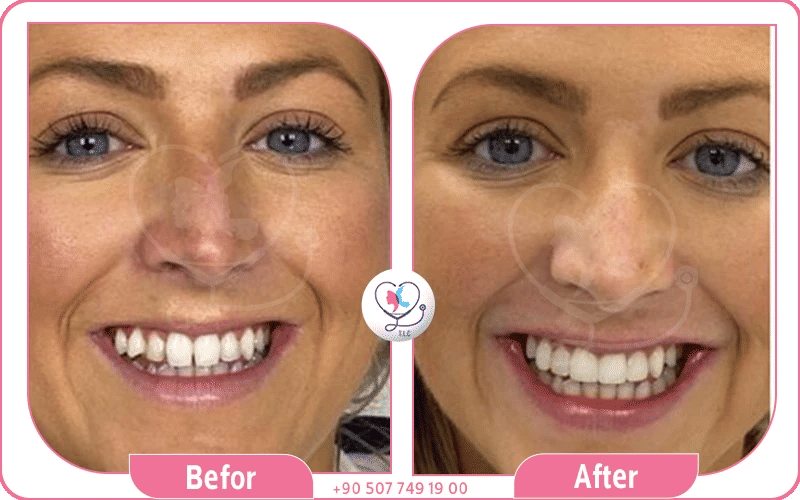
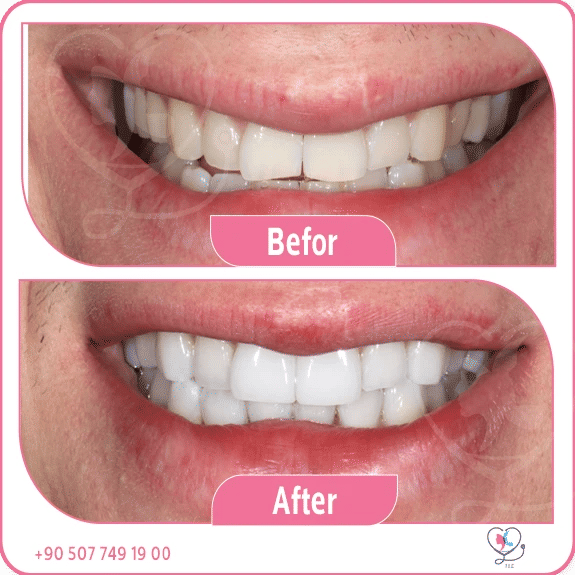
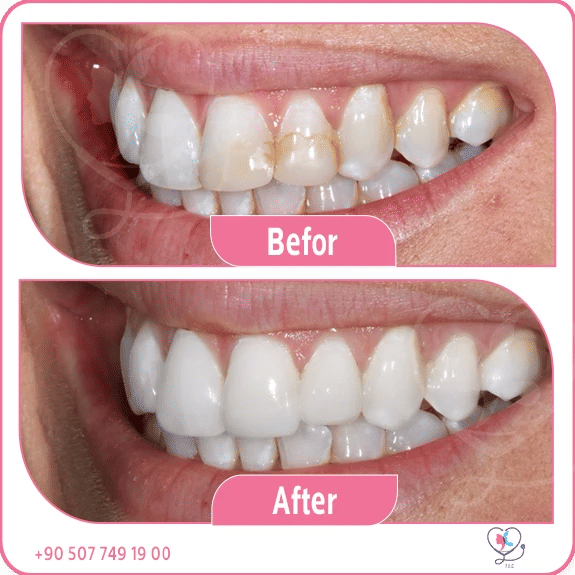
See our before-and-after gallery to discover how composite bonding and veneers can transform your smile in a single session, all at a fraction of the cost compared to private clinics in the UK or USA.
We provide all-inclusive packages that cover consultations, X-rays, treatment, VIP transfers, and accommodation, with tailored options to meet each patient’s unique needs.
Trust Turkey Luxury Clinics for Best Composite Bonding in Turkey
Join thousands of international patients who have boosted their confidence with our premium composite bonding packages. Enjoy VIP transfers, 5-star care, and a seamless journey to your perfect smile.
Take your first step today with a free consultation and personalized price quote.
Contact us now to start your smile transformation.
Composite Bonding in Turkey Before and After: Real Photos
FAQs About Composite Bonding in Turkey