
- What is Deep Brain Stimulation Surgery?
- How is Deep Brain Stimulation Surgery Performed?
- How Long Does Deep Brain Stimulation Surgery Take?
- Recovery after Deep Brain Stimulation Surgery
- Conditions Treated by Deep Brain Stimulation Surgery
- What are the Benefits of Deep Brain Stimulation Surgery?
- Deep Brain Stimulation Surgery Results and Success Rate
- Risks and Complications of Deep Brain Stimulation Surgery
- Deep Brain Stimulation (DBS) Surgery Cost in 2026
- Why Choose Deep Brain Stimulation in Turkey?
- FAQs About Deep Brain Stimulation Surgery
Deep brain stimulation (DBS) surgery is an advanced and generally safe neurosurgical procedure used to treat conditions like Parkinson’s disease, essential tremor, OCD, and epilepsy. Approximately 12,000 DBS surgeries are performed worldwide each year.
DBS works by implanting electrodes in specific brain regions to regulate abnormal electrical activity, helping reduce symptoms and improve quality of life. The procedure is carefully planned with advanced imaging and surgical techniques to maximize safety, and it can be performed either while the patient is awake or under general anesthesia. Recovery typically involves a short hospital stay, gradual return to daily activities, and ongoing device programming for optimal results.
What is Deep Brain Stimulation Surgery?
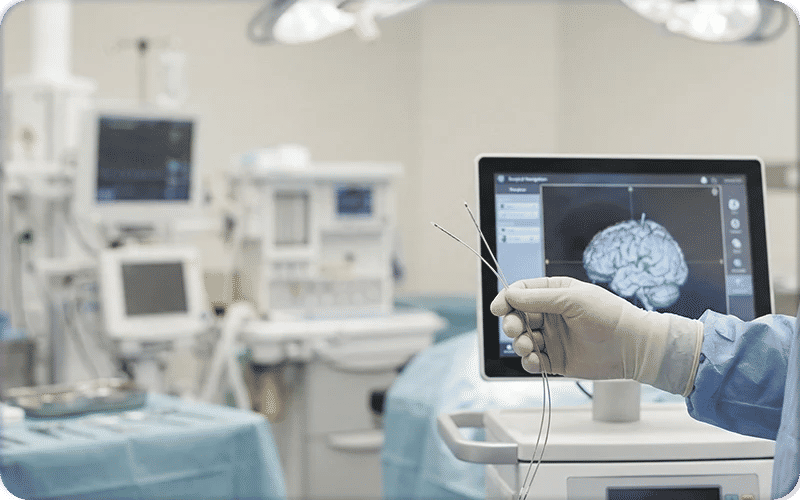
Deep brain stimulation (DBS) is a surgical procedure for movement disorders like Parkinson's disease, essential tremor, and dystonia, where a device is implanted to send electrical signals to specific brain areas
How is Deep Brain Stimulation Surgery Performed?
Deep brain stimulation (DBS) surgery involves implanting electrodes in the brain to control symptoms of movement disorders and other conditions.
The procedure is typically performed in two stages: first, electrodes are placed and connected to an extension wire under the scalp, and second, a pulse generator (like a pacemaker) is implanted in the chest, which connects to the electrodes via the extension wire.
The pulse generator delivers electrical impulses that regulate abnormal brain activity, and a doctor programs the device after surgery to optimize symptom control.
Pre‑operative Preparation
Before your DBS surgery, you’ll undergo MRI and CT scans to map the precise areas of the brain where the electrodes will be placed. The medical team will review your neurological health and medical history to ensure you’re a suitable candidate.
A head frame may be used to stabilize your skull, making this a key step in the deep brain stimulation surgery procedure. These proper pre-operative preparation ensures accurate electrode placement and reduce potential complications.
Lead Implantation (Awake vs Asleep)
During electrode placement, you may be awake or asleep.
In awake DBS surgery, you remain conscious so the surgeon can test the electrodes in real time, adjusting placement to reduce tremors or rigidity.
A deep brain stimulation surgery drill creates a small opening in the skull (a very small craniotomy) for inserting the DBS leads (electrodes).
This opening does not involve removing a large portion of the skull; it is simply a precise hole that allows the electrodes to be implanted safely and accurately.
In asleep DBS surgery, anesthesia is used, and advanced imaging guides electrode placement. A virtual deep brain stimulation surgery system allows surgeons to plan the optimal trajectory before the operation and monitor electrode placement in real time during surgery. This modern technique improves accuracy and reduces risks such as bleeding or incorrect lead positioning.
In both approaches, the DBS leads are carefully implanted, which is part of deep stimulation brain surgery.
Pulse‑Generator Implantation
After the leads are in place, the pulse generator (neurostimulator) is implanted under the skin near your collarbone. This device sends electrical signals to the electrodes to regulate brain activity. Although shorter than lead implantation, this step is essential in the deep brain stimulation surgery procedure and ensures proper functionality of the system.
Programming and Activation
Once the electrodes and pulse generator are implanted, your doctor programs the device, adjusting voltage and signal frequency to safely reduce symptoms. Multiple sessions may be required to optimize the settings, which is part of deep brain stimulation surgery recovery and programming. The goal is to improve tremor, rigidity, or dyskinesia while minimizing side effects of deep brain stimulation surgery, such as temporary numbness or weakness.
How Long Does Deep Brain Stimulation Surgery Take?
Deep brain stimulation (DBS) surgery typically takes place in two stages. The first stage, implanting the electrodes into the brain, usually takes 3 to 6 hours. The second stage, connecting the electrodes to the pulse generator, takes about 1 to 2 hours. Therefore, the total surgery time is about 4–8 hours, often divided over two separate procedures, which can be completed on different days or, in some cases, on the same day.
Recovery after Deep Brain Stimulation Surgery
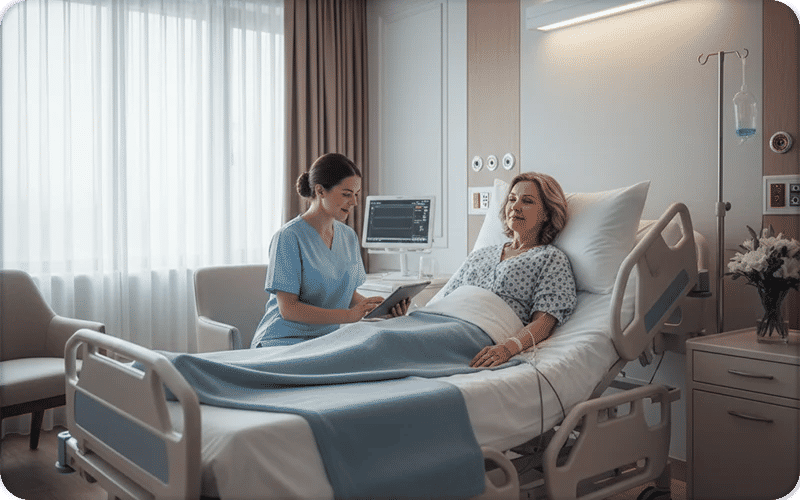
Recovery after deep brain stimulation (DBS) surgery involves a hospital stay of about one day, followed by several weeks of at home recovery to allow for physical healing. A crucial part of the recovery process is the gradual DBS programming, which begins several weeks after surgery and may take up to 18 months to achieve the optimal settings for symptom management.
What to Expect During DBS Surgery Recovery?
0–2 weeks
During the first two weeks after surgery, patients typically stay in the hospital for one night and then rest at home. It is important to keep the incision dry and avoid heavy lifting over 20 pounds or any strenuous activity. Patients should not raise their arms overhead or drive for approximately four weeks. Mild swelling and tenderness around the incision are expected during this period.
3–4 weeks
Between three and four weeks, patients can gradually return to light activities, and many are able to go back to work. This is also the time when the first activation and early programming sessions for DBS usually begin.
1–6 months
During the first six months, regular follow-ups are scheduled for DBS programming, allowing fine-tuning of stimulation settings. Patients generally notice a significant improvement in their symptoms, and medication adjustments may be necessary as the treatment is optimized.
6–12 months
By six to twelve months, most patients reach their optimal DBS settings, achieving stable symptom control. Continued monitoring and occasional adjustments ensure that the therapy remains effective over time.
Scarring from DBS Surgery
DBS device programming is the process of adjusting the electrical stimulation settings of an implanted device to maximize symptom control for conditions like Parkinson's disease and minimize side effects.
- Initial programming: Initial DBS programming begins 2-6 weeks after surgery, after brain swelling has subsided. During the programming session, the doctor uses a programmer (like a remote control) to adjust the electrical signals. The process requires multiple programming sessions over several months to fine-tune settings for optimal results and may include adjustments to medications.
- Ongoing DBS device adjustment: Follow-up visits are typically scheduled every 3–6 months. During these checkup sessions, the doctor checks and adjusts stimulation settings to ensure the best continued symptom control, with minimum side effects. Also, a Battery check-up is performed to ensure the device has sufficient charge.
Read more about what to expect after DBS surgery
Conditions Treated by Deep Brain Stimulation Surgery
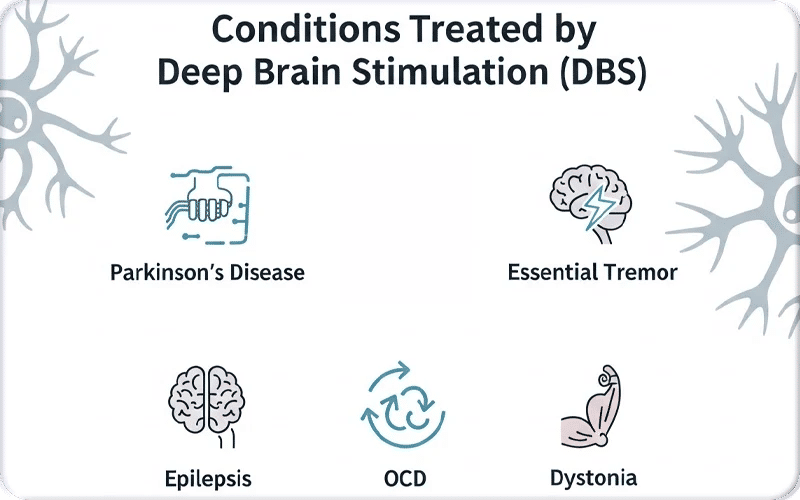
Deep Brain Stimulation (DBS) is used to treat several conditions, primarily movement disorders like Parkinson's disease, essential tremor, and dystonia, as well as other neurological and psychiatric conditions such as severe obsessive-compulsive disorder (OCD) and Tourette syndrome. It is also being explored for other conditions like epilepsy, Huntington's disease, and chronic pain syndromes.
- Parkinson’s Disease: DBS for Parkinson’s disease improves tremor, rigidity, and slowness of movement in modern to advanced stages when medications are less effective. Electrodes and a pulse generator regulate abnormal brain activity.
- Essential Tremor: DBS reduces involuntary shaking, improving hand coordination and daily activities, especially when medications fail.
- Epilepsy: DBS lowers the frequency and severity of drug-resistant seizures by stabilizing neural circuits with targeted electrical stimulation.
- OCD: DBS targets circuits linked to obsessive thoughts and compulsive behaviors, reducing symptoms in treatment-resistant cases.
- Dystonia: DBS regulates abnormal motor signals, reducing muscle spasms and improving mobility.
What are the Benefits of Deep Brain Stimulation Surgery?
DBS effectively manages movement disorders like Parkinson's and essential tremors, improving motor control and daily functioning. The procedure reduces dependency on medications, minimizing side effects and enhancing the quality of life.
DBS surgery benefits include improved movement control, with a significant reduction in tremors, rigidity, and slowness associated with conditions like Parkinson's disease, essential tremor, and dystonia
Deep Brain Stimulation Surgery Results and Success Rate
Deep brain stimulation (DBS) surgery is generally very successful, often resulting in significant symptom improvement (50–90%) and high patient satisfaction rates (around 92.5%). Success varies by condition, but for Parkinson's disease, DBS can dramatically increase the amount of time patients experience no motor symptoms (e.g., from 27% to 74% awake time), reduce the need for medication, and improve long-term survival rates. In essential tremor, studies show significant improvement in tremor and hand function, with benefits lasting for many years.
Risks and Complications of Deep Brain Stimulation Surgery
Common side effects include:
- Seizure.
- Infection.
- Headache.
- Confusion and trouble concentrating.
- Stroke.
- Hardware complications, such as an eroded lead wire.
- Temporary pain and swelling at the implantation site.
Deep Brain Stimulation (DBS) surgery can cause temporary side effects such as mild numbness, tingling, or slight weakness near the incision sites. Some patients may notice mild tremor or balance changes during initial device programming. Most of these effects are reversible with device adjustments.
Potential risks and complications include bleeding in the brain (less than 3% of cases), infection at the implant site (2.6–7.9%), and hardware issues like lead displacement or device failure (less than 1%). Rare anesthesia-related complications, such as blood clots or respiratory issues, may occur. Mood or cognitive changes can affect up to 6% of patients, and some may experience reduced benefit over time (up to 15%).
Deep Brain Stimulation (DBS) Surgery Cost in 2026
The cost of DBS surgery globally ranges from $16,000 to $100,000, varying by country, surgeon experience, type of device, and the number of leads used in the procedure.
Country | Approximate Cost | Includes |
Turkey | $21,000 – $36,300 | Surgery, implant, hospital stay; often considered cost-effective for medical tourism |
India | $8,000 – $15,000 | Surgery, implant, hospital stay, and initial follow-ups |
United States | $70,000 – $100,000 | Surgery, implant; bilateral |
Europe | €50,000 – €100,000 | Depends on the country and the healthcare system |
Factors Influencing DBS Surgery Cost in 2026
Factors affecting Deep Brain Stimulation (DBS) surgery cost include the medical device (type and manufacturer), surgical complexity (one vs. two sides of the brain), hospital and surgeon fees (based on location, reputation, and experience), and pre- and post-operative care (tests, hospital stays, anesthesia, and long-term follow-up). Insurance coverage also plays a significant role, as it can vary based on the medical indication and specific policy.
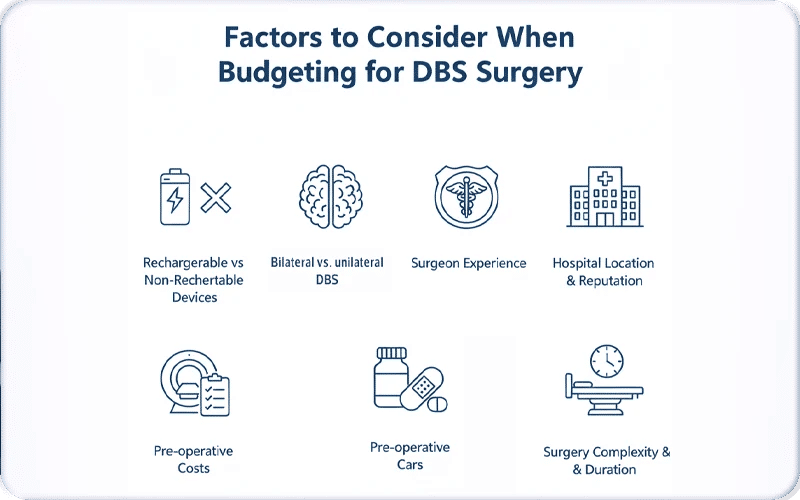
Factors to consider when budgeting for a DBS surgery
- Rechargeable vs. non-rechargeable devices: Rechargeable devices are more expensive upfront.
- Bilateral vs. unilateral DBS: Surgery on both sides of the brain costs more due to longer operative time and additional resources.
- Surgeon experience: Highly specialized or experienced neurosurgeons may charge higher fees.
- Hospital location and reputation: Costs vary based on the hospital’s services and prestige.
- Pre-operative costs: Initial consultations, imaging studies, and diagnostic tests.
- Post-operative care: Follow-up visits, medications, and physiotherapy.
- Surgery complexity and duration: Longer or more complex surgeries may require extended hospital stays, increasing total costs.
Why Choose Deep Brain Stimulation in Turkey?
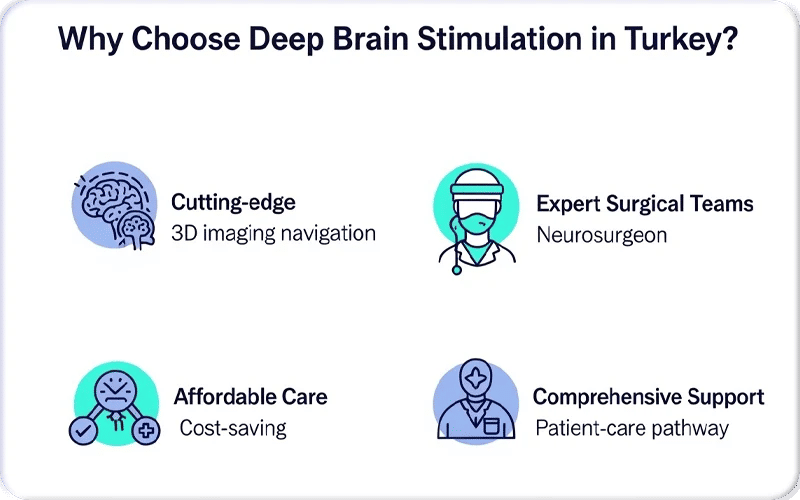
Turkey is a top destination for DBS surgery thanks to world-class neurosurgeons, advanced hospitals, and competitive costs. Choosing Turkey for DBS means combining high-quality outcomes, safety, and cost-effectiveness in a patient-focused environment. Patients benefit from:
- Cutting-edge techniques: Advanced imaging and virtual DBS systems ensure precise electrode placement and safer outcomes.
- Expert surgical teams: Highly experienced neurosurgeons specialize in Parkinson’s, essential tremor, OCD, and epilepsy treatments.
- Affordable care: Costs are significantly lower than in the US or Europe, without compromising quality.
- Comprehensive support: From pre-operative evaluation to post-operative device programming, care is personalized and continuous.
Get safe, effective, and affordable Deep Brain Stimulation (DBS) surgery with Turkey Luxury Clinics. Benefit from expert neurosurgeons, advanced surgical techniques, and personalized care throughout your treatment journey, ensuring optimal symptom improvement and a smoother recovery.
FAQs About Deep Brain Stimulation Surgery