

- Why is Traveling to Turkey for Endometrial Cancer Treatment the Right Choice?
- What is the Best Hospital for Endometrial Cancer in Turkey?
- What is Endometrial Cancer?
- Endometrial Cancer Treatment Options in Turkey 2026
- Cost of Endometrial Cancer Treatment in Turkey
- Endometrial Cancer Survival Rates and Prognosis
- How to Choose the Right Hospital or Specialist in Turkey
- Start Your Treatment Journey with Expert Support
- FAQ About Endometrial Cancer Treatment in Turkey
Endometrial cancer treatment in Turkey is strictly aligned with the latest international clinical guidelines, including ESMO, ESGO, and ESTRO. The primary focus is on comprehensive surgical staging, predominantly performed through minimally invasive robotic (Da Vinci Xi) or laparoscopic methods. This is followed by personalized adjuvant radiotherapy or chemotherapy, tailored specifically to the patient’s molecular risk profile.
For younger patients, specialized oncology centers in Turkey prioritize fertility-sparing approaches to preserve reproductive health, while utilizing advanced vaginal brachytherapy for precise localized control in early-stage disease. By integrating these high-quality, multidisciplinary care pathways, Turkey offers world-class medical outcomes at 40-60% lower costs than in Europe or the United States
Why is Traveling to Turkey for Endometrial Cancer Treatment the Right Choice?
Turkey has become a recognized destination for cancer treatment due to its combination of clinical expertise, advanced medical infrastructure, and accessibility for international patients.

Key clinical advantages include:
- Accredited oncology centers (JCI standards)
- Advanced surgical technologies (including robotic systems)
- Short waiting times for diagnosis and treatment
- Integrated care pathways for international patients
- Experienced multidisciplinary teams
Multidisciplinary Endometrial Cancer Treatment in Turkey Includes
- Gynecologic oncology for surgical management
- Medical oncology for systemic therapies
- Radiation oncology for local disease control
- Pathology and radiology for accurate staging and monitoring
Each case is reviewed individually to determine the optimal combination and sequence of treatments, ensuring that therapy is tailored to both disease characteristics and patient needs.
What is the Best Hospital for Endometrial Cancer in Turkey?
1. JCI Accreditation (Joint Commission International): This is the "gold standard" in global healthcare. It guarantees that the hospital adheres to strict patient safety goals, surgical safety protocols, and high-quality clinical management.
2. ESGO Certified Centers: The most elite hospitals for endometrial cancer are those certified by the European Society of Gynaecological Oncology (ESGO). This certification ensures the center meets European standards for surgical volume, multidisciplinary teamwork, and specialized training in gynecologic oncology.
3. ISO 9001:2015 Certification: This reflects the hospital's commitment to quality management systems, particularly in handling international patient services and medical data accuracy.
4. Ro-Surg Excellence: Leading hospitals are often recognized as Centers of Excellence in Robotic Surgery, featuring a high volume of successful procedures using the Da Vinci Xi robotic system.
What is Endometrial Cancer?
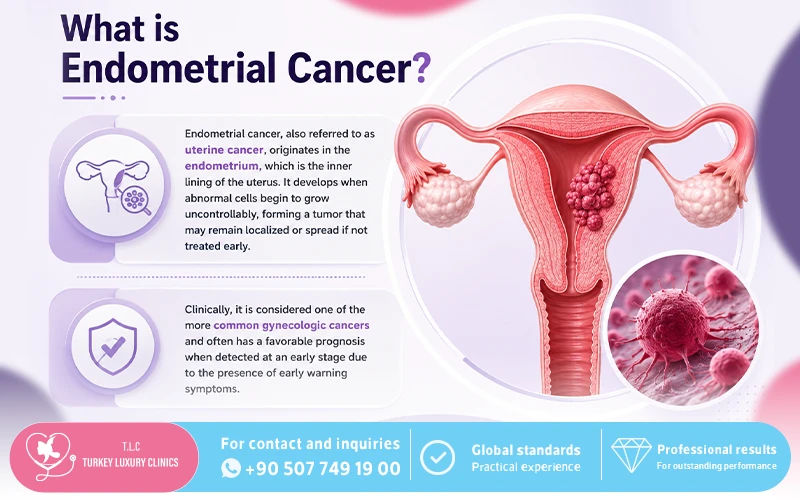
Endometrial cancer, also referred to as uterine cancer, originates in the endometrium, which is the inner lining of the uterus. It develops when abnormal cells begin to grow uncontrollably, forming a tumor that may remain localized or spread if not treated early.
Clinically, it is considered one of the more common gynecologic cancers and often has a favorable prognosis when detected at an early stage due to the presence of early warning symptoms.
Types and Clinical Classification of Endometrial Cancer
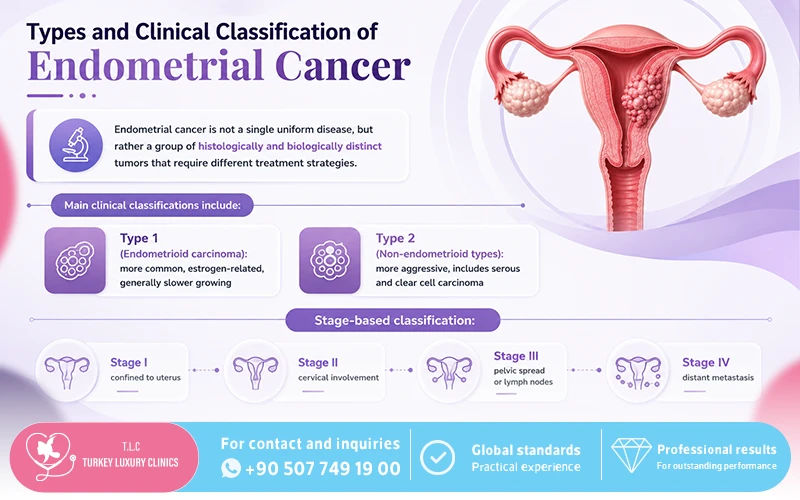
Endometrial cancer is not a single uniform disease, but rather a group of histologically and biologically distinct tumors that require different treatment strategies.
Main clinical classifications include:
- Type 1 (Endometrioid carcinoma): more common, estrogen-related, generally slower growing
- Type 2 (Non-endometrioid types): more aggressive, includes serous and clear cell carcinoma
Stage-based classification:
- Stage I: confined to uterus
- Stage II: cervical involvement
- Stage III: pelvic spread or lymph nodes
- Stage IV: distant metastasis
Risks of Endometrial Cancer
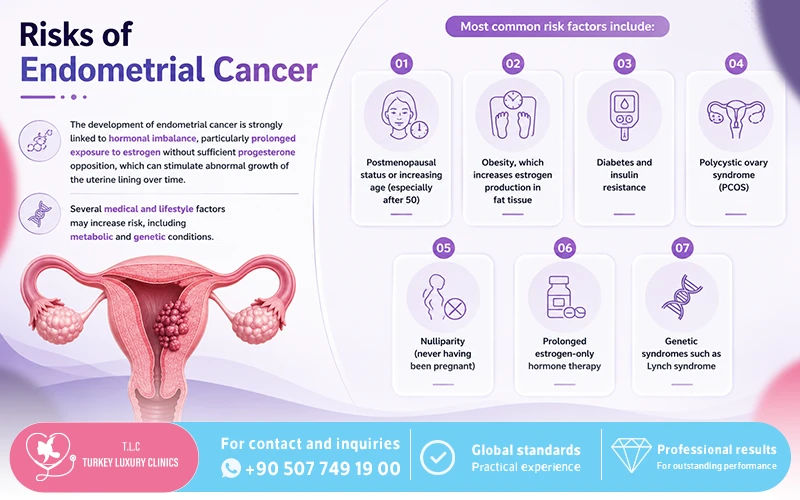
The development of endometrial cancer is strongly linked to hormonal imbalance, particularly prolonged exposure to estrogen without sufficient progesterone opposition, which can stimulate abnormal growth of the uterine lining over time.
Several medical and lifestyle factors may increase risk, including metabolic and genetic conditions.
Most common risk factors include:
- Postmenopausal status or increasing age (especially after 50)
- Obesity, which increases estrogen production in fat tissue
- Diabetes and insulin resistance
- Polycystic ovary syndrome (PCOS)
- Nulliparity (never having been pregnant)
- Prolonged estrogen-only hormone therapy
- Genetic syndromes such as Lynch syndrome
Signs and Symptoms of Endometrial Cancer
The most common and clinically significant early symptom is abnormal uterine bleeding, which often leads to early diagnosis compared to other cancers.
Symptoms may vary depending on the stage of the disease, but they usually begin subtly and progress over time.
Common symptoms include:
- Postmenopausal bleeding (most important warning sign)
- Heavy or irregular menstrual bleeding
- Bleeding between menstrual cycles
- Pelvic pain or pressure
- Pain during intercourse or urination (in some cases)
- Unexplained weight loss or fatigue in advanced stages
Stages of Endometrial Cancer
Endometrial cancer is classified into stages based on the extent of tumor spread, which directly determines treatment planning and prognosis.
Staging is usually confirmed through imaging, biopsy, and sometimes surgical evaluation.
Stage classification:
- Stage I: Cancer is limited to the uterus
- Stage II: Cancer has spread to the cervix but remains within the uterus
- Stage III: Spread to nearby pelvic tissues or lymph nodes
- Stage IV: Distant spread to organs such as bladder, bowel, or lungs
Each stage requires a different therapeutic approach, ranging from surgery alone in early stages to combined modalities in advanced disease.
Why Early Treatment of Endometrial Cancer Matters
Early diagnosis and treatment significantly improve outcomes in endometrial cancer, as the disease is highly treatable when confined to the uterus.
Delayed treatment increases the risk of progression and reduces the likelihood of using less invasive options.
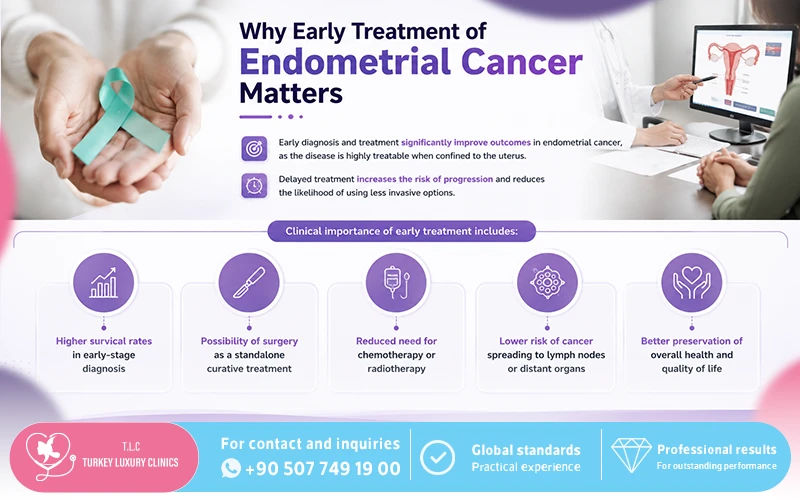
Clinical importance of early treatment includes:
- Higher survival rates in early-stage diagnosis
- Possibility of surgery as a standalone curative treatment
- Reduced need for chemotherapy or radiotherapy
- Lower risk of cancer spreading to lymph nodes or distant organs
- Better preservation of overall health and quality of life
Endometrial Cancer Treatment Options in Turkey 2026
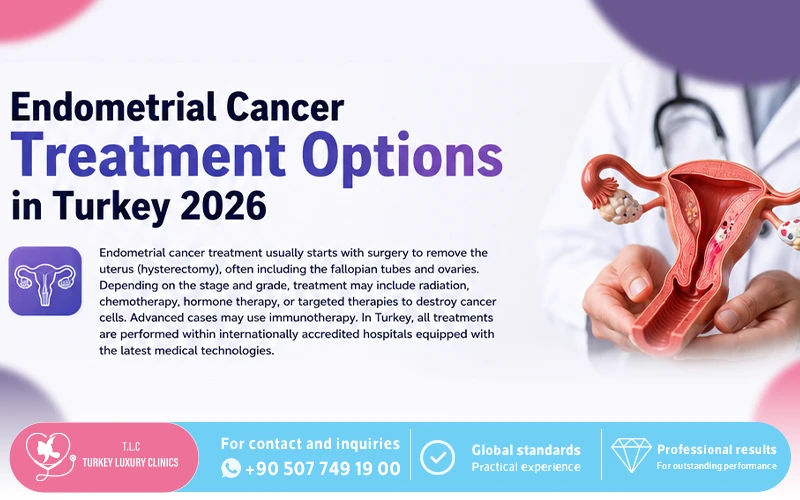
Endometrial cancer treatment usually starts with surgery to remove the uterus (hysterectomy), often including the fallopian tubes and ovaries.
Depending on the stage and grade, treatment may include radiation, chemotherapy, hormone therapy, or targeted therapies to destroy cancer cells. Advanced cases may use immunotherapy. In Turkey, all treatments are performed within internationally accredited hospitals equipped with the latest medical technologies.
1. Surgical Treatment (Primary Treatment in Most Cases)
Surgery remains the primary treatment for endometrial cancer. In Turkey’s JCI-accredited hospitals, the focus is on precision oncology to ensure complete tumor removal while preserving quality of life.
The standard surgical procedure is a hysterectomy, which involves the removal of the uterus, and in many cases, additional structures are also removed depending on disease spread.
- Total Hysterectomy & BSO: Removal of the uterus, cervix, ovaries, and fallopian tubes to eliminate the cancer source and hormonal triggers.
- Sentinel Lymph Node (SLN) Mapping: Instead of removing all lymph nodes, surgeons use a specialized dye to identify the primary nodes. This minimally invasive technique is crucial for preventing Lymphedema (chronic leg swelling).
- Robotic-Assisted Surgery (Da Vinci Xi): Robotic-assisted surgery is increasingly used in modern oncology centers as it allows for higher precision, reduced blood loss, smaller incisions, and faster postoperative recovery compared to traditional open surgery.
2. Radiotherapy (Localized Cancer Control)
Radiotherapy is used either as a primary adjunct after surgery or as a standalone treatment in patients who are not surgical candidates. It works by using high-energy radiation to destroy remaining cancer cells and reduce the risk of recurrence.
Treatment planning is highly individualized and may involve external beam radiation or internal radiation therapy (brachytherapy), depending on the extent and location of the disease.
Radiotherapy is commonly used for:
- Reducing recurrence risk after surgery
- Treating residual cancer cells in the pelvis
- Managing locally advanced disease
- Patients unfit for surgical intervention
3. Chemotherapy (Systemic Treatment for Advanced Cases)
Chemotherapy is used when cancer has spread beyond the uterus or when there is a high risk of systemic recurrence. It works by targeting rapidly dividing cancer cells throughout the body. The most common combination is Carboplatin and Paclitaxel (Taxol) that are administered in cycles and may be combined with surgery and radiotherapy depending on disease progression.
Common indications for chemotherapy include:
- Advanced-stage endometrial cancer (Stage III–IV)
- High-grade or aggressive tumor types
- Recurrence after initial treatment
- Presence of lymph node or distant metastasis
4. Hormonal Therapy (Selected Low-Grade Tumors)
Hormonal therapy is used in specific cases where the tumor is hormone-sensitive, particularly in low-grade or early-stage endometrial cancers.
It works by reducing or blocking estrogen activity, which plays a key role in tumor growth in certain types of endometrial cancer.
It may be used in:
- Early-stage, low-grade tumors
- Patients who cannot undergo surgery
- Fertility-sparing treatment approaches in selected cases
- Recurrent disease with hormone receptor positivity
5. Immunotherapy and Targeted Therapy (Advanced or Resistant Cases)
In recent years, immunotherapy and targeted treatments have become important options for patients with advanced or recurrent endometrial cancer that does not respond to conventional therapies.
These treatments work by enhancing the immune system’s ability to recognize and destroy cancer cells or by targeting specific molecular pathways involved in tumor growth.
These therapies are generally used for:
- Advanced or metastatic endometrial cancer
- Tumors resistant to chemotherapy
- Mismatch repair-deficient (dMMR) or MSI-high cancers
- Personalized oncology treatment plans based on genetic testing
Cost of Endometrial Cancer Treatment in Turkey
The cost of endometrial cancer treatment in Turkey typically ranges from $12,000 to $28,000 for comprehensive treatment plans. The final price depends on the cancer's stage, the surgical method, and the specific drugs used in subsequent therapies
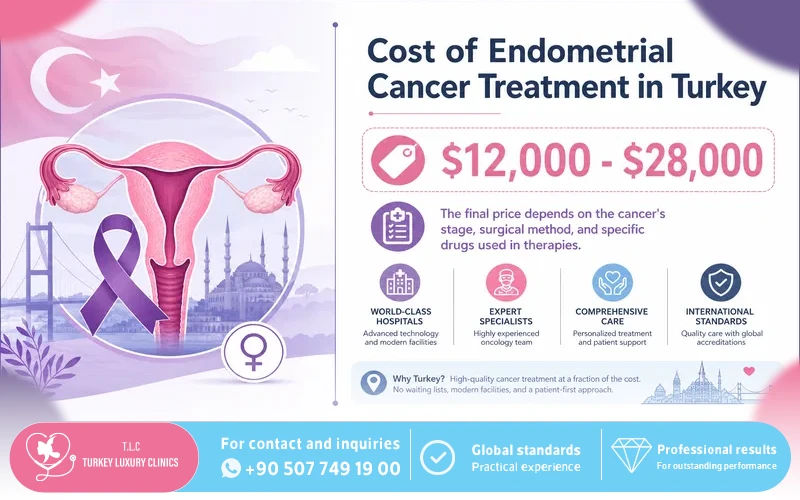
Endometrial cancer treatment cost breakdown:
Treatment Category | Estimated Price (USD) |
Consultation & Diagnostics | $1,500 – $3,000 |
Standard Surgery (Hysterectomy) | $4,100 – $6,000 |
Robotic Surgery (DaVinci) | $11,000 – $16,000 |
Chemotherapy (per cycle) | $2,000 – $10,000 |
Radiation Therapy (Full Course) | $7,000 – $8,000 |
Immunotherapy (per cycle) | $3,300 – $6,800 |
All-Inclusive Packages for Endometrial Cancer Treatment in Turkey
Most hospitals in Turkey frequently offer comprehensive all-inclusive packages specifically designed for international patients. These bundles are often 50% cheaper than itemized billing in other European countries because they consolidate medical, logistical, and recovery services into a single fixed price
With these packages, you receive a fixed quote before traveling, which helps avoid "hidden" fees for follow-up imaging or laboratory work that are common in fragmented billing systems.
What is included in all-inclusive packages?
Medical components:
- Initial specialist consultation and case review
- Pre-treatment diagnostic work-up (imaging, labs, pathology review)
- Surgical or primary treatment procedure
- Hospital stay with postoperative monitoring
- Basic medications and medical supplies during hospitalization
Support and coordination services:
- Airport transfers and local transportation between hospital and accommodation
- Dedicated international patient coordinator
- Medical report translation and communication support
- Assistance with scheduling and treatment planning
Endometrial Cancer Survival Rates and Prognosis
The prognosis for endometrial cancer is generally favorable, clinical data indicates that the overall 5-year survival rate is approximately 81%, and for localized cases and early-stage cancer can reach up to 95%, highlighting the effectiveness of early surgical and oncological management.
Survival Rates by Stage:
Stage | Description | 5-Year Survival |
Stage I | Confined to the uterus | 90–95%+ |
Stage II | Spread to the cervix | 70–85% |
Stage III | Regional spread to lymph nodes or nearby tissues | 40–60% |
Stage IV | Distant metastasis | 18–22% |
However, prognosis varies significantly depending on how far the cancer has spread at the time of diagnosis.
How to Choose the Right Hospital or Specialist in Turkey
Selecting the right hospital or doctor is a crucial step that can directly impact treatment outcomes. At Turkey Luxury Clinics we partner with internationally accredited hospitals and experienced oncology specialists in Turkey to help patients access appropriate medical care based on their specific diagnosis, stage of disease, and clinical needs.
Our services include personalized care, language support, and coordinated services that help reduce stress during an already difficult time, allowing patients to focus on recovery while the logistics of travel, accommodation, and hospital coordination are handled professionally.
Start Your Treatment Journey with Expert Support

If you are considering endometrial cancer treatment in Turkey, obtaining a professional medical evaluation is the first step toward understanding your options, as specialized teams can review your reports and provide a personalized treatment plan, helping you make an informed decision with confidence.
FAQ About Endometrial Cancer Treatment in Turkey