

- What is an Endoscopic Mid Facelift?
- Endoscopic Mid Facelift Before and After
- Endoscopic Mid Facelift Surgery Results
- Is Endoscopic Mid Facelift Suitable for You?
- Who is Not a Candidate for Endoscopic Mid Facelift?
- Endoscopic Mid Facelift vs Deep Plane facelift
- How an Endoscopic Mid Facelift Works
- Advanced Endoscopic Facelift Techniques: 4K Endoscope and Endotine
- What is the Endoscopic Mid-Facelift Revision?
- Recovery After Endoscopic Mid Facelift
- Is Endoscopic Mid Facelift Safe?
- How Much Does Endoscopic Mid Facelift Cost?
- Endoscopic Mid Facelift in Turkey
- Why Choose Turkey Luxury Clinics for Your Endoscopic Mid Facelift?
- FAQs About Endoscopic Mid Facelift
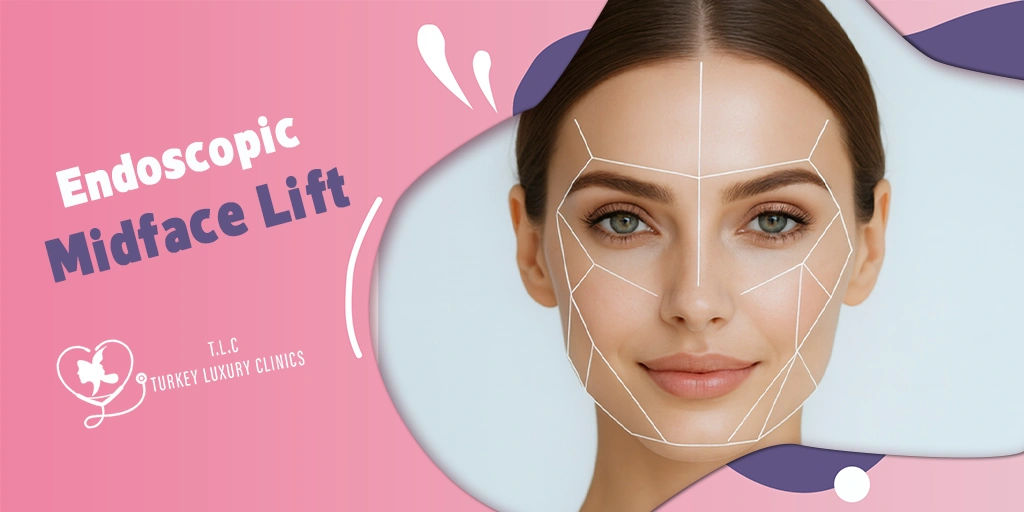
An endoscopic mid facelift is an anti-aging facial rejuvenation procedure that lifts the cheeks and under-eye area to restore youthful facial structure, without visible scars or a “pulled” appearance.
As the midface descends with age, the cheeks flatten, under-eye hollows deepen, and smile lines become more pronounced, creating a tired or aged appearance. This procedure reverses that pattern through vertical repositioning of the deeper facial tissues rather than skin tightening.
Aesthetic Benefits of Endoscopic Midface Restoration:
- Restored Harmony: Re-establishes natural cheek projection.
- Seamless Transition: Improves the tear trough–cheek junction to eliminate hollowing.
- Softened Contours: Visibly reduces nasolabial folds without signs of overcorrection.
Unlike traditional methods that rely on skin tightening, this technique restores youthful cheek projection and softens nasolabial folds through hidden incisions, achieving a naturally refreshed look without a 'pulled' appearance or visible scarring."
What is an Endoscopic Mid Facelift?
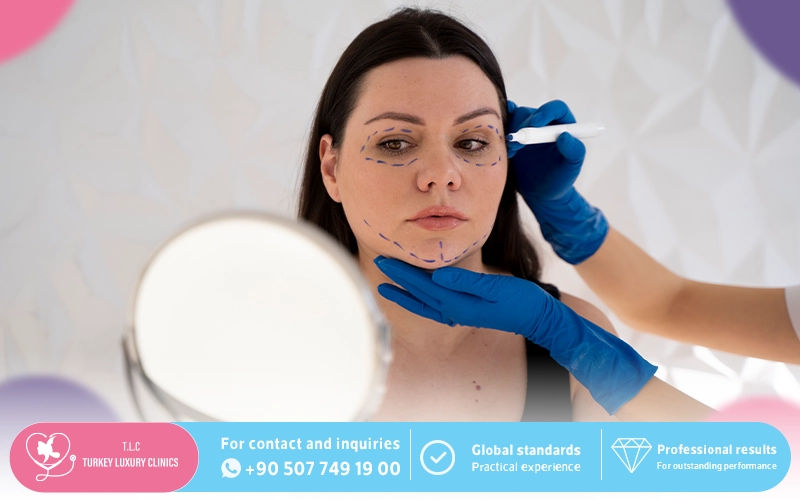
An endoscopic mid facelift is a minimally invasive facial rejuvenation procedure designed to restore youthful midface proportions by lifting and repositioning the deeper facial structures, especially the SMAS layer, rather than removing excess skin.
It is performed through small, hidden incisions using an endoscope (a miniature camera) and specialized lifting tools such as Endotines to elevates sagging cheek tissues, softens nasolabial folds, and enhances the lower eyelid–cheek transition, achieving natural-looking rejuvenation with minimal visible scarring.
The procedure specifically targets the middle third of the face. It reverses the age-related descent of the malar fat pads, which typically leads to flattened cheeks and deepening smile lines.
Endoscopic Mid Facelift Before and After
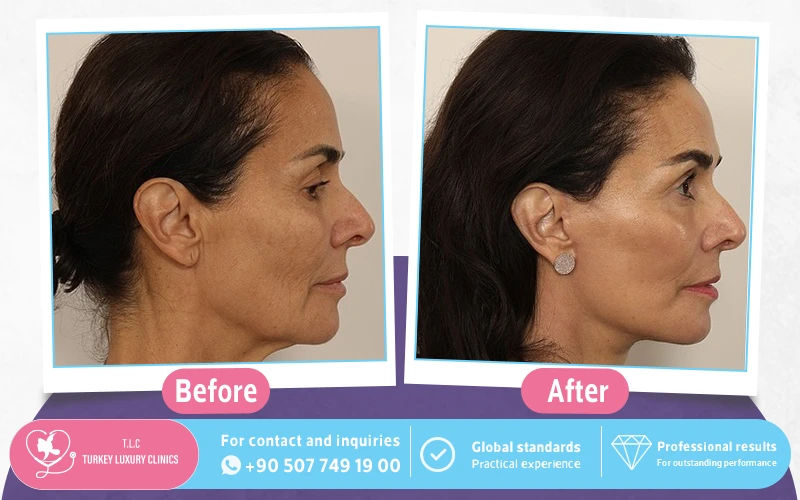
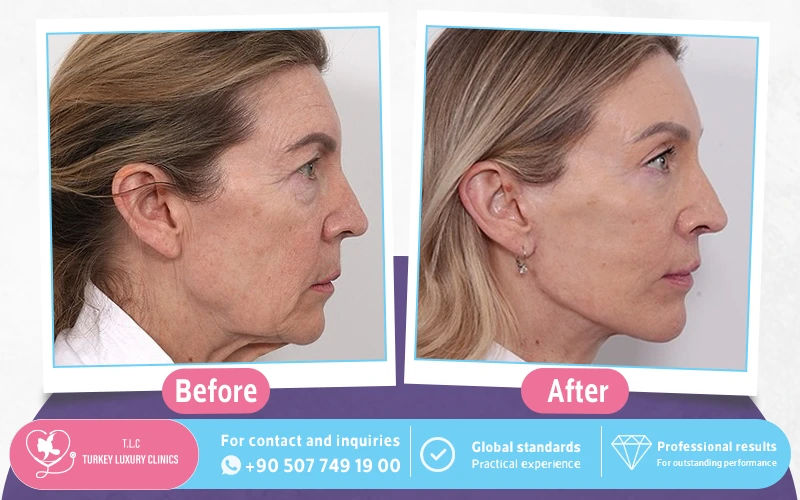
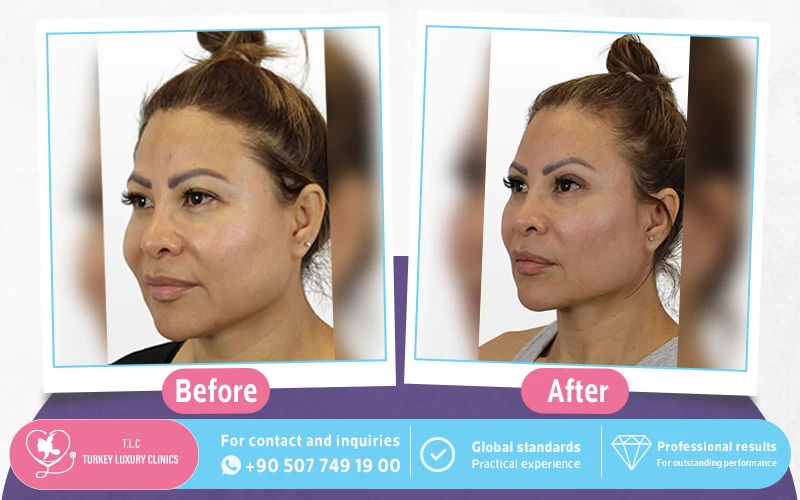
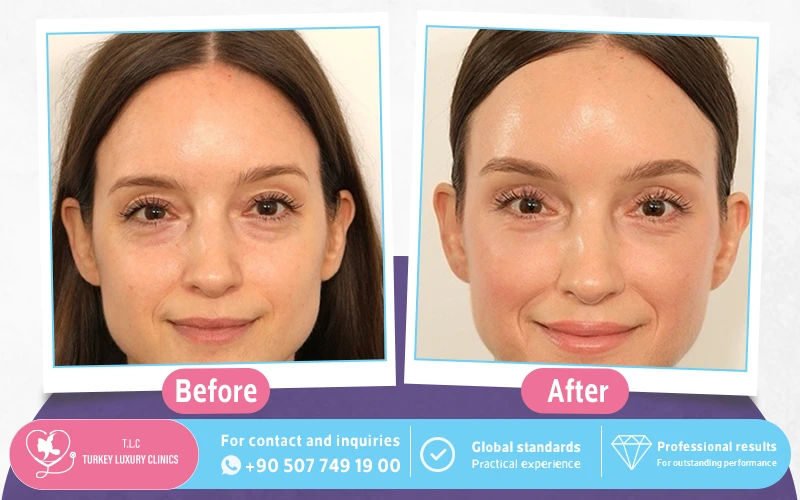
Endoscopic Mid Facelift Surgery Results
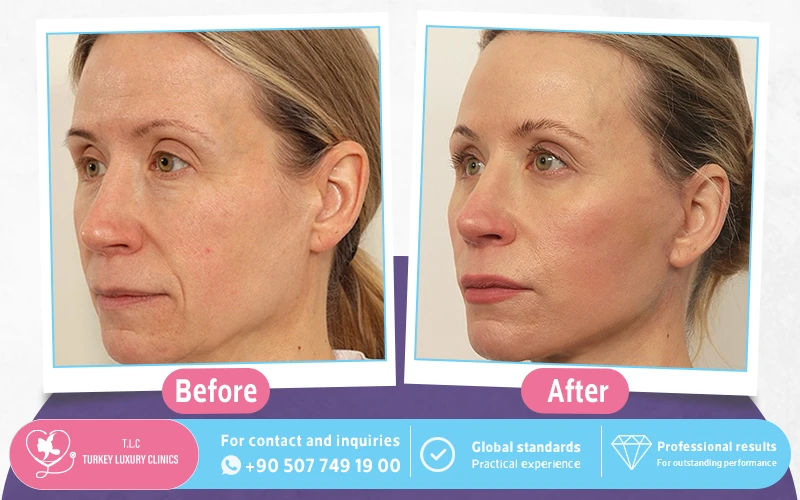
Endoscopic mid facelift results fully settling in 3–4 weeks restoring the natural “triangle of youth” by lifting the cheeks, under-eye area, and nasolabial folds back to their original, elevated position—without creating a tight or “pulled” look.
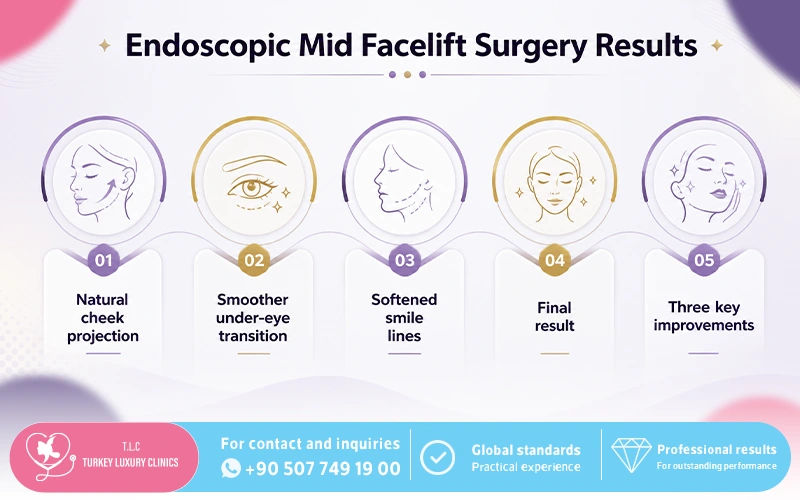
Most patients notice three key improvements:
1. Natural cheek projection:
The descended cheek fat is lifted back to the upper cheek, restoring youthful contour and structure without the need for repeated fillers.
2. Smoother under-eye transition:
The junction between the lower eyelid and cheek becomes more seamless, reducing hollowing and eliminating the tired appearance.
3. Softened smile lines:
By elevating the midface tissues, nasolabial folds (smile lines) appear visibly less deep, often with immediate improvement after recovery.
Final result:
A refreshed, well-rested appearance with naturally lifted cheeks and smoother contours—typically making the face look several years younger without any obvious signs of surgery.
Is Endoscopic Mid Facelift Suitable for You?
To determine your suitability, surgeons look for a specific balance between anatomical aging and overall health. You may be an ideal candidate if you meet the following criteria:
Key Factors for Success:
- Skin Elasticity: Your skin must still possess enough natural "snap-back" to redrape smoothly over the newly repositioned deeper tissues.
- Anatomical Aging Pattern: This procedure specifically targets midface descent—where cheek fat pads have shifted downward toward the mouth—rather than isolated surface skin laxity.
- Bone Structure: A well-defined skeletal framework, particularly strong cheekbones, provides the necessary foundation to support and maintain long-term lifting results.
- Medical Readiness: Ideal candidates are non-smokers in good general health, without conditions that impair healing, such as uncontrolled diabetes or cardiovascular disease.
Typical Candidate Profile:
- Age Range: Late 30s to early 50s with early to moderate midface sagging.
- Specific Concerns: Under-eye hollowing, midface flattening, and deepening nasolabial folds (smile lines).
- Lower Face Condition: Minimal early jowl appearance may be present, but significant jawline or neck laxity is not treated with this procedure and typically requires a deep plane or lower facelift.
- Expectations: A focus on natural, subtle rejuvenation rather than a dramatic or "over-tightened" look.
Who is Not a Candidate for Endoscopic Mid Facelift?
While an endoscopic mid facelift is best suited for early to moderate midface aging with minimal lower face or neck laxity, it is primarily designed to lift the cheeks, under-eye area, and nasolabial folds in patients with preserved skin elasticity, typically in the late 30s to early 50s.
It is not suitable in the following cases:
- Significant jowling or loss of jawline definition
- Moderate to severe skin laxity in the lower face or neck
- Excess or heavy skin requiring surgical removal
- Advanced multi-zone facial aging involving the midface and lower face
- Weak tissue support where repositioning alone is insufficient
In these situations, a more comprehensive facial rejuvenation approach is required to achieve stable and balanced long-term results.
When a Deep Plane or Full Facelift Is the Better Option?
A deep plane facelift or full facelift is recommended when facial aging extends beyond the midface and involves the lower face and neck, and deepen beneath skin to muscles, or result in excess skin which cannot be adequately corrected with a minimally invasive endoscopic approach.
Deep plane facelift lifts deeper facial structures as a single layer is necessary to restore natural facial harmony and achieve a longer-lasting, comprehensive result.
A full facelift is typically more appropriate when aging is more advanced, involving pronounced skin laxity in the cheeks, jawline, and neck, along with loss of definition in the lower face. This procedure allows for more extensive repositioning and removal of excess skin to achieve full facial rejuvenation.
Endoscopic Mid Facelift vs Deep Plane facelift
Feature | Endoscopic Mid Facelift | Deep Plane Facelift |
Primary Goal | Lifts cheeks and softens nasolabial folds | Lifts midface, improves jawline, and tightens neck |
Incision Type | Small (1–2 cm) hidden incisions in hairline or mouth | Longer incisions around ears and hairline |
Technique | Endoscopic camera–guided minimally invasive approach | Direct open surgical approach with deep tissue release |
Skin Management | No skin removal; repositioning of deeper tissues | May include removal of excess, sagging skin |
Target Area | Midface (cheeks + under-eye region) | Full face (midface, jawline, neck) |
Ideal Age | Late 30s to early 50s | 50s and older |
Recovery Time | 7–14 days | 2–4 weeks |
Longevity | 5–8 years | 10–15+ years |
How an Endoscopic Mid Facelift Works
Here is a step-by-step breakdown of the procedure:
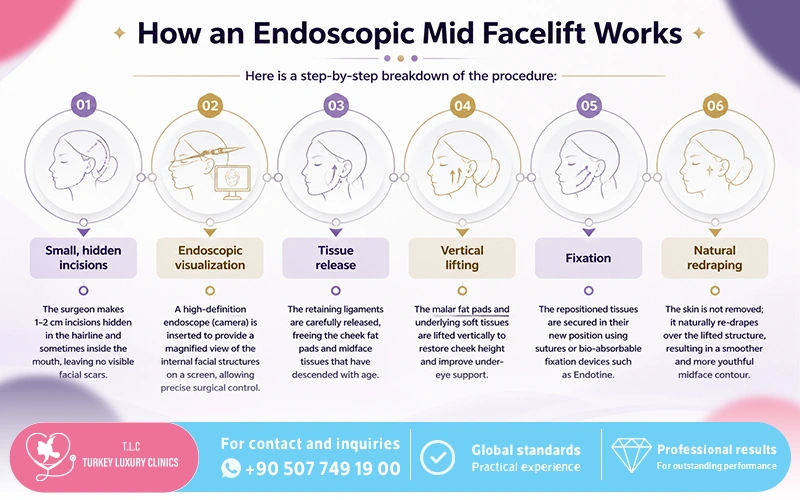
1. Small, hidden incisions
The surgeon makes 1–2 cm incisions hidden in the hairline and sometimes inside the mouth, leaving no visible facial scars.
2. Endoscopic visualization
A high-definition endoscope (camera) is inserted to provide a magnified view of the internal facial structures on a screen, allowing precise surgical control.
3. Tissue release
The retaining ligaments are carefully released, freeing the cheek fat pads and midface tissues that have descended with age.
4. Vertical lifting
The malar fat pads and underlying soft tissues are lifted vertically to restore cheek height and improve under-eye support.
5. Fixation
The repositioned tissues are secured in their new position using sutures or bio-absorbable fixation devices such as Endotine.
6. Natural redraping
The skin is not removed; it naturally re-drapes over the lifted structure, resulting in a smoother and more youthful midface contour.
Advanced Endoscopic Facelift Techniques: 4K Endoscope and Endotine
Modern endoscopic mid facelift techniques have evolved beyond simple lifting. To ensure maximum safety and predictability, surgeons now utilize two critical advancements:
- 4K High-Definition Endoscopy: Unlike traditional systems, 4K visualization provides surgeons with microscopic clarity. This allows for the precise identification of delicate facial nerves and ligaments, ensuring that the subperiosteal release is performed with zero damage to surrounding structures.
- Endotine Fixation Systems: Instead of relying solely on traditional sutures, which can sometimes cheese-wire through soft tissue, Endotines act as bio-absorbable anchors. They distribute tension evenly across the lifted malar fat pads, providing stable vertical support until the tissues naturally bond in their new, youthful position.
What is the Endoscopic Mid-Facelift Revision?
One important feature is that endoscopic mid-facelift can be used as a revision procedure to correct previous, unsatisfactory midface lifting, addressing persistent sagging cheeks, deep nasolabial folds, and uneven facial contours.
An endoscopic mid-facelift revision is a secondary surgical procedure performed to correct or enhance the outcomes of a previous facial surgery that may have resulted in asymmetry, inadequate tissue repositioning, or premature recurrence of tissue laxity.
Recovery After Endoscopic Mid Facelift
Recovery from an endoscopic mid-facelift usually takes 7–14 days of downtime. During recovery, patients typically experience mild swelling, bruising, and a temporary 'chipmunk cheek' appearance, which usually resolves within 2 to 3 weeks.
Compared to a deep plane or full facelift, the endoscopic technique generally offers a faster recovery period due to smaller incisions and reduced tissue dissection, with less postoperative swelling and shorter overall downtime.
Recovery Timeline and Aftercare
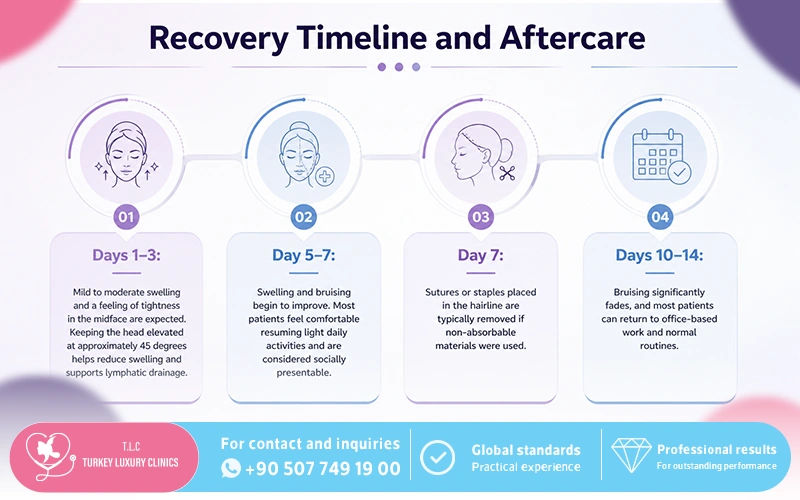
Days 1–3:
Mild to moderate swelling and a feeling of tightness in the midface are expected. Keeping the head elevated at approximately 45 degrees helps reduce swelling and supports lymphatic drainage.
Day 5–7:
Swelling and bruising begin to improve. Most patients feel comfortable resuming light daily activities and are considered socially presentable.
Day 7:
Sutures or staples placed in the hairline are typically removed if non-absorbable materials were used.
Days 10–14:
Bruising significantly fades, and most patients can return to office-based work and normal routines.
Is Endoscopic Mid Facelift Safe?

Compared to traditional facelift techniques, endoscopic mid facelift is generally considered safe as it involves smaller incisions, reduced tissue trauma, and a lower risk of visible scarring, prolonged numbness, or infection, while still achieving long-lasting and natural-looking midface rejuvenation.
Although it is minimally invasive, it remains a precise surgical procedure, and like any surgery, it carries potential risks. Most of these are temporary and resolve during the healing process.
Possible Risks and Side Effects
- Temporary numbness: Mild sensory changes in the cheek or scalp area may occur as the nerves adapt to tissue repositioning. This typically resolves within weeks to a few months.
- Mild asymmetry: Early swelling may create slight unevenness between both sides of the face, which usually improves as healing progresses.
- Incision-related sensitivity: Temporary tenderness or minor hair thinning around scalp incisions may occur in rare cases.
These risks are generally low and significantly reduced when the procedure is performed in the deep subperiosteal plane with careful preservation of facial nerve structures.
How Much Does Endoscopic Mid Facelift Cost?
In the US, the endoscopic mid-facelift costs between $6,000 and $15,000, with a national average of roughly $8,000 to $9,600. In Turkey, the same procedure costs between $3,200 – $5,400, provided as all-inclusive packages that cover the accommodation, transfers, surgeon fees and services, making it 60–70% lower compared to Western countries.
In the U.S., the total cost often goes beyond the surgeon’s fee, with additional hidden expenses such as anesthesia, facility fees, and post-operative care.
Many clinics also offer financing options, allowing patients to pay in monthly installments rather than a full upfront payment, which is common in aesthetic surgery practices.
Different Facelift Techniques Cost Comparison (2026 Prices)
Technique | Estimated Total Cost Range | Targeted Areas |
Thread Lift | $1,500 – $5,500 | Mild facial lifting; non-surgical skin tightening |
$5,000 – $20,000 | Lower face and jawline | |
Endoscopic Mid Facelift | $7,000 – $20,000 | Midface (cheeks and under-eye area) |
SMAS Facelift | $10,000 – $22,000 | Midface, jowls, and jawline |
$15,000 – $50,000+ | Full face and neck rejuvenation |
Endoscopic Mid Facelift in Turkey
Turkey has become a leading global hub for endoscopic mid facelifts, offering advanced minimally invasive techniques that rejuvenate the middle third of the face with significantly less downtime than traditional surgery, making it a preferred option for international patients seeking efficient recovery and natural results.
The cost of an endoscopic mid facelift in Turkey is often offered as an all-inclusive package that typically covers:
- Surgeon’s fees and anesthesia
- Hospital or accredited clinic fees
- Pre-operative medical assessments
- Post-operative medications and follow-up care
- Accommodation and airport transfers (in many medical tourism packages)
Many high-rated facilities are located in Istanbul and Antalya, often holding international accreditations such as JCI or ISO certification.
These medical hubs are known for experienced, board-certified plastic surgeons with extensive expertise in facial rejuvenation procedures.
Surgeons in cities like Istanbul frequently perform a high volume of endoscopic facial surgeries annually, often with a specialized focus on minimally invasive facial lifting techniques.
Why Choose Turkey Luxury Clinics for Your Endoscopic Mid Facelift?
While the technology behind an endoscopic mid facelift is universal, the artistry and experience in executing it define the final result. Turkey has emerged as the global capital for facial plastic surgery, and Turkey Luxury Clinics stands at the forefront of this excellence.
With our team of elite, board-certified facelift surgeons, we combine clinical precision with an aesthetic eye for natural harmony.
Our facelift procedures are performed in internationally accredited, state-of-the-art hospitals equipped with the latest 4K endoscopic systems, ensuring the highest standards of safety and care.
At Turkey Luxury Clinics, we don’t just provide surgery; we offer a seamless, high-end medical journey. With our 24/7 dedicated patient support, VIP transfers, and premium recovery suites, we ensure that your path to rejuvenation is as comfortable as it is transformative.
Experience the pinnacle of facial rejuvenation where luxury meets medical excellence. Contact us today for a private consultation and discover the art of a naturally youthful you.
FAQs About Endoscopic Mid Facelift