

- How Long Does Gastric Sleeve Surgery Take?
- Gastric Sleeve Surgery Step-by-Step Timeline
- Factors That Affect How Long Gastric Sleeve Surgery Takes
- How Long Does Recovery From Gastric Sleeve Take?
- The 30-Minute Rule After Gastric Sleeve
- How Long Do Gastric Sleeve Results Last?
- How Long Does Gastric Sleeve vs. Bypass Procedure Take?
- Gastric Sleeve Before and After Photos
- Why Choose Turkey Luxury Clinics
- FAQs About How Long Is Gastric Sleeve Surgery
Gastric sleeve surgery takes 60–90 minutes on average. In simple cases, it may take as little as 45 minutes, while more complex procedures can last up to 2 hours, depending on the patient's and surgeon's experience.
After surgery, most patients stay in the hospital for 1–2 days and return to normal activities within 2–3 weeks, while full stomach healing takes about 6–8 weeks.
Light physical activity, such as walking, usually begins within the first week. Full stomach healing takes about 6–8 weeks, during which patients gradually return to normal eating habits
A Glance at Gastric Sleeve Procedure Timeline (from surgery day to results appearance)
- Preparation & anesthesia: 15–30 minutes
- Sleeve gastrectomy (surgery): standard 60–90 minutes, minimum 45 min, maximum 2 hours
- Recovery from anesthesia: 15–30 minutes
- Total operating room time: approximately 90–150 minutes
- Return to light activity: 5–7 days
- Return to work: 2–3 weeks (depending on job type)
- Light exercise (walking): within 7 days
- Full stomach healing: 6–8 weeks
- Normal diet: 4–8 weeks
- Rapid weight loss phase: 1–3 months
- Final weight loss results: 12 months and beyond.

How Long Does Gastric Sleeve Surgery Take?
Gastric sleeve surgery typically takes 60–90 minutes, when performed laparoscopically, with some cases completed in as little as 45–70 minutes depending on the patient’s anatomy and the surgeon’s experience. Conversely, complications like dense scar tissue from past surgeries or high BMI can extend the time to 2+ hours.
Typical Gastric Sleeve Surgery Timeline
Stage | Minutes |
Anesthesia induction | 15–20 min |
Trocar placement / access | 5–10 min |
Stomach mobilization | 15–20 min |
Stapling and division | 20–30 min |
Leak test and closure | 10–15 min |
TOTAL | 60–90 min (avg 75 min) |
Gastric Sleeve Surgery Step-by-Step Timeline
The total time in the operating suite typically includes preparation (15–30 minutes), the surgery itself (60–90 minutes), and anesthesia recovery (15–30 minutes), bringing the overall duration to approximately 1.5–3 hours depending on the complexity of the case.
Day of Surgery (Admit, Operation Room, Post-Anesthesia Room, Recovery Room)
On the day of surgery, patients arrive at the hospital a few hours before the procedure to complete paperwork and routine medical tests. They are then taken to a preparation area where vital signs are checked and anesthesia is administered.
The procedure is performed under general anesthesia using a laparoscopic approach. The surgeon makes 3 to 5 small incisions to insert surgical instruments and removes approximately 75–80% of the stomach, creating a sleeve-shaped structure. This step typically takes 60–90 minutes.
After surgery, patients are transferred to the recovery room (PACU), where they are monitored for 30–60 minutes as they wake from anesthesia before being moved to their hospital room.
Hospital Stay (1–2 Nights)
Most patients remain in the hospital for 1–2 days for observation. During this time, the medical team monitors vital signs, checks for complications, and manages pain.
In rare or complex cases, patients may require additional monitoring in an intensive care unit (ICU), but this is uncommon.
Day 1 Post-Op
Within the first 24 hours after surgery, patients are encouraged to start walking to improve circulation and reduce the risk of complications such as blood clots.
Fluid intake begins gradually, starting with small amounts of clear liquids. The medical team ensures the patient can tolerate fluids without nausea or discomfort before discharge.
First Week at Home
After leaving the hospital, recovery continues at home. Patients follow a structured diet that begins with clear liquids and gradually progresses to full liquids.
Light physical activity, such as walking, is recommended to support healing. Most patients begin to regain energy during this period, but should avoid strenuous activity and heavy lifting.

Factors That Affect How Long Gastric Sleeve Surgery Takes
- Surgeon Experience: Highly experienced, high-volume surgeons typically perform the procedure faster and with greater efficiency.
- Patient BMI: Patients with a higher BMI are associated with increased technical complexity and longer operating times.
- Comorbidities & Anatomy: Previous abdominal surgeries, severe adhesions, or conditions like fatty liver can complicate the procedure and significantly extend surgical time.
- Surgical Approach: Laparoscopic techniques are generally faster than open surgery; however, complications can increase duration regardless of the approach used.
- Anesthesia & Support Staff: The time required for anesthesia induction and recovery, as well as operating room coordination, contributes to the total time spent in the operating suite.
How Long Does Recovery From Gastric Sleeve Take?
Recovery after gastric sleeve occurs in stages rather than a single fixed timeline. Most patients recover enough to resume light daily activities within 2–4 weeks, while full internal healing of the stomach typically takes 6–8 weeks. Complete adjustment to diet and lifestyle changes may take several months.
Immediate Recovery (0–2 Weeks)
During the first two weeks, the body focuses on healing external incisions and adapting to reduced food intake. Most patients stay in the hospital for 1–3 days and are encouraged to start walking within hours after surgery to improve circulation and reduce complications.
Diet is limited to clear liquids in the first week, gradually progressing to full liquids. Fatigue and mild discomfort are common, but most patients can return to light, desk-based work within 2–4 weeks.
Early Recovery (2–6 Weeks)
Between weeks 2 and 6, patients transition from liquid to pureed and then soft foods. Energy levels gradually improve, and normal daily routines become easier to manage.
Heavy lifting and strenuous activity should still be avoided during this period. By the end of this phase, many patients are able to return to regular work schedules, depending on the nature of their job.
Full Internal Healing (6–8 Weeks)
Internal healing of the stomach, including the staple line, is typically completed within 6–8 weeks. At this stage, the tissue has strengthened significantly, and the risk of complications decreases.
Patients usually begin transitioning toward a more regular diet under medical guidance, while continuing to follow portion control and nutritional recommendations.
Return to Work Timeline
- Desk-based jobs: Typically after 2–4 weeks, depending on recovery progress.
- Physically demanding jobs: Usually require 4–6 weeks or longer before safely returning.
Return timing ultimately depends on individual healing speed, overall health, and how closely post-operative guidelines are followed.
How Long Does It Take for the Staple Line to Heal?
The staple line in a gastric sleeve typically takes 6–8 weeks to fully heal. In the first 2 weeks, the tissue seals and the risk of leakage is highest. Between weeks 3–6, collagen remodeling strengthens the tissue, and by week 8, the staple line has regained near-normal tensile strength. External incisions usually heal faster, within 2–3 weeks.
How Long Does It Take for Your Stomach to Heal?
While patients may feel physically better within a few weeks, full internal stomach healing usually takes around 6–8 weeks. However, digestive adaptation and tolerance to different foods can continue improving over 2–3 months or longer.

The 30-Minute Rule After Gastric Sleeve
The 30-minute rule after gastric sleeve surgery requires avoiding liquids 30 minutes before, during, and 30 minutes after meals.
This prevents overfilling the stomach, improves satiety, and reduces symptoms like nausea, bloating, and dumping-like discomfort. Patients are also advised to chew each bite thoroughly (20–30 times).
Why the 30-minute rule matters
- Impact on Gastric Emptying
Drinking fluids with meals accelerates gastric emptying, pushing food more quickly into the small intestine. This reduces the duration of stomach distension, leading to decreased satiety and earlier return of hunger.
- Link to Dumping-Like Symptoms
Combining fluids with food can cause rapid transit of partially digested contents into the intestine. This may trigger symptoms such as nausea, dizziness, and tachycardia, especially in early post-operative stages.
- Protection Against Stomach Stretching
Consuming liquids alongside meals increases intragastric volume and pressure within the reduced stomach. Over time, this repeated pressure may contribute to gradual stomach stretching and reduced surgical effectiveness.
- Improved Nutrient Absorption
Separating fluids from meals helps maintain optimal concentration of digestive enzymes and gastric juices. This supports more efficient breakdown and absorption of nutrients in the gastrointestinal tract.

How Long Do Gastric Sleeve Results Last?
A gastric sleeve is a permanent, non-reversible procedure that lasts a lifetime. Most patients maintain significant long-term weight loss, typically around 50%–60% or more of excess weight, even 10 years after surgery. However, long-term success depends on lifestyle habits, as the stomach can gradually stretch if overeating persists, which may lead to partial weight regain in some cases.
Weight Loss Timeline After Gastric Sleeve
Most patients lose about 60% to 70% of their excess weight within the first 12 months after gastric sleeve surgery, with the fastest weight loss occurring in the first 6 months and gradual stabilization afterward.
Weight Loss Milestones (%EWL)
Timeframe | Excess Weight Loss | Monthly Trend |
1 Month | 10% – 20% | 10–20 lbs |
3 Months | 25% – 35% | 8–12 lbs |
6 Months | 45% – 55% | 5–10 lbs |
12 Months | 60% – 70% | 2–5 lbs |
18 Months | 70% – 80% | Stabilization |
This percentage reflects how much of the extra body weight above your ideal weight is lost over time, which is the standard medical measure of bariatric success.
Factors That Affect Long-Term Weight Loss
- Lifestyle Adherence: Long-term success depends heavily on maintaining healthy eating habits and regular physical activity.
- Stomach Stretching: Consistent overeating can gradually stretch the reduced stomach pouch, which may reduce restriction and lead to partial weight regain over time.
- Weight Regain Risk: Around 20–30% of patients may experience some weight regain several years after surgery if lifestyle changes are not maintained.
- Health Improvements: Many patients experience long-term remission of conditions such as type 2 diabetes, hypertension, and sleep apnea.
Can the Stomach Stretch After a Gastric Sleeve?
Yes, the stomach can partially stretch over time because it is a flexible muscle.
However, it does not return to its original size since the removed portion is permanent.
Stretching typically occurs only with chronic overeating or loss of dietary control.
Long-Term Success Rate (5–10 Years)
- 2 years after gastric sleeve:
- At this stage, many patients have stabilized their weight. While some continue to lose additional weight, others may experience minor weight regain as the body adapts to the smaller stomach and the initial surgical impact decreases.
- 5-Year Results: Approximately 70–80% of patients maintain significant weight loss after 5 years.
- 8-Year Outcomes: Studies show sustained effectiveness in around 59% of patients.
- 10 years Outcomes: Most patients maintain 50–60% of their excess weight loss long-term. Long-term success is strongly linked to lifestyle adherence rather than the surgery itself.
Interesting read: What They Don’t Tell You About Gastric Sleeve Surgery

How Long Does Gastric Sleeve vs. Bypass Procedure Take?
Gastric sleeve surgery is generally quicker than gastric bypass, typically taking about 1 to 2 hours, while gastric bypass usually lasts 2 to 3 hours due to its more complex two-step nature involving stomach pouch creation and intestinal rerouting.
Recovery is also faster after a gastric sleeve. Most patients return to normal activities within 2 to 4 weeks, compared to 3 to 6 weeks for gastric bypass. Both procedures usually require a 1 to 2 day hospital stay and follow a gradual 4 to 6 week diet progression from liquids to soft foods.
Overall, the gastric sleeve is a simpler single-step procedure with faster recovery, while gastric bypass is more complex but may offer additional metabolic benefits for certain patients.
Feature | Gastric Sleeve (VSG) | Gastric Bypass (Roux-en-Y) |
Surgery Time | 1–2 hours | 2–3 hours |
Hospital Stay | 1–2 days | 1–2 days |
Return to Normal Activities | 2–4 weeks | 3–6 weeks |
Diet Progression | 4–6 weeks | 4–6 weeks |
Recovery Considerations | Single-step, faster recovery | Two-step, longer recovery |
Interesting read: What They Don’t Tell You About Gastric Sleeve Surgery
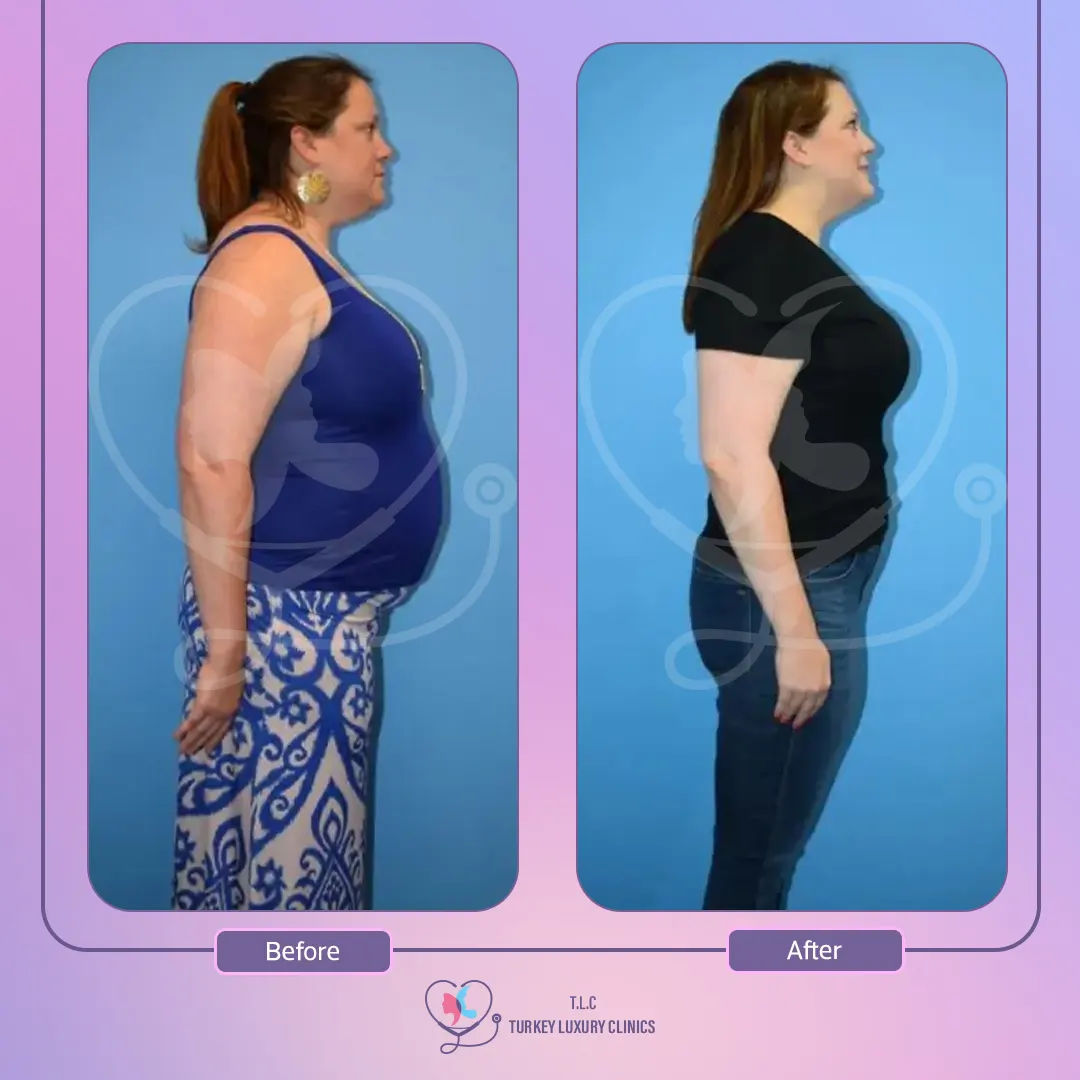
Gastric Sleeve Before and After Photos
Why Choose Turkey Luxury Clinics
Ready to start your weight loss journey? Our expert team at Turkey Luxury Clinics offers personalized consultations, advanced surgical care, and full post-operative support to ensure the best results. Contact us today to book your consultation and take the first step toward a healthier life.
FAQs About How Long Is Gastric Sleeve Surgery