


- What is the Surgery to Get Taller? Limb Lengthening Surgery?
- Is Height Surgery Safe?
- How Much Taller Can You Get After Limb Lengthening Surgery
- Limb Lengthening Surgery Before and After Photos
- How Much Does Height Surgery Cost? 2026 Prices
- Who is a Candidate for Height Increase Surgery
- Types of Limb Lengthening Surgery
- How to Get Taller Surgery Step-by-Step
- Recovery from Limb Lengthening Surgery
- What are Risks of Height Surgery and How to Manage Them?
- Height Surgery in Turkey: International Patient Journey with Turkey Luxury Clinics
- Get Taller with Confidence in Turkey..Start with Turkey Luxury Clinics
- FAQs About How to Get Taller Surgery
Limb lengthening surgery is a procedure that increases height by 3–8 cm using internal devices like the Precice 2 nail. The process involves a surgical bone cut (osteotomy) followed by a 3-month distraction phase (1mm growth/day). In Turkey, the cost ranges from $15,000 to $40,000, offering a 95% success rate.
People with leg length discrepancy, short stature, or simply those who wish to be taller can now achieve a noticeable height increase through cosmetic leg lengthening surgery.
At Turkey Luxury Clinics, we guide you through every step of the bone elongation process, from evaluation to recovery, while offering competitive pricing and expert guidance. If you're wondering how to get taller surgery, you're in the right place.
What is the Surgery to Get Taller? Limb Lengthening Surgery?
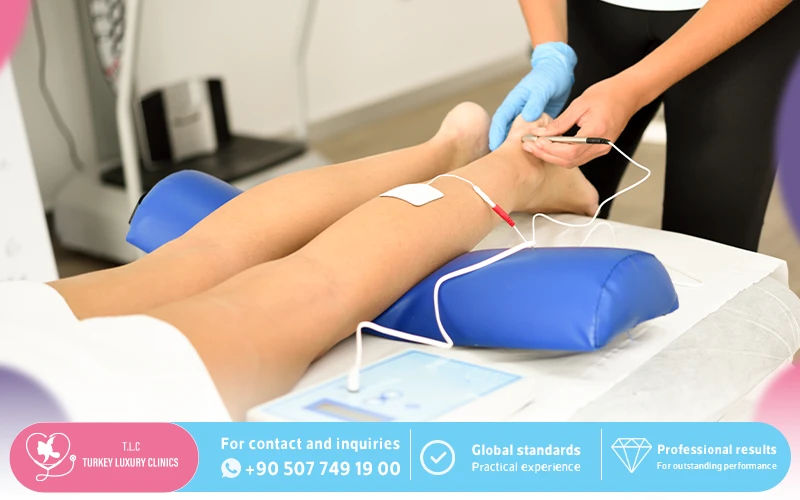
Cosmetic limb lengthening surgery is a height-increasing procedure performed by a specialized orthopedic surgeon to make you taller by increasing the length of either the thigh bone (called the femur) or the shinbone (called the tibia). It is an effective and permanent solution for adults who wish to gain height.
While generally considered safe, it is still a complex and invasive procedure. The selected bone is surgically cut, and the two segments are gradually separated to allow new bone tissue to grow and fill the gap—a process known as distraction—followed by consolidation, during which the new bone hardens and becomes permanent.
Is Height Surgery Safe?
Modern limb lengthening surgery is considered highly safe with a 95% success rate when performed by experienced orthopedic specialists. Using advanced internal devices like the Precice 2 magnetic nail, the procedure has become minimally invasive compared to traditional methods.
While serious complications (such as nerve damage, infection, or non-union) occur in only 2–5% of cases, they are typically manageable through proactive clinical monitoring and strict adherence to post-operative rehabilitation protocols.
How Much Taller Can You Get After Limb Lengthening Surgery
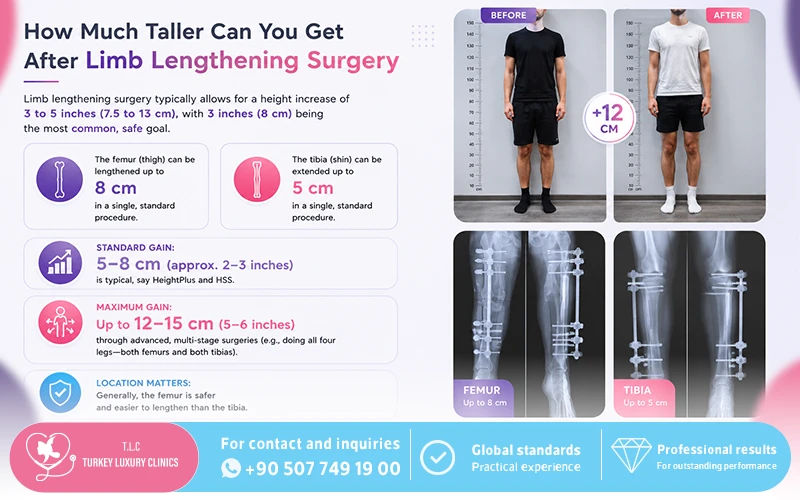
Limb lengthening surgery typically allows for a height increase of 3 to 5 inches (7.5 to 13 cm), with 3 inches (8 cm) being the most common, safe goal. The femur (thigh) can be lengthened up to 8 cm, while the tibia (shin) can be extended up to 5 cm in a single, standard procedure.
- Standard Gain: 5–8 cm (approx. 2–3 inches) is typical, say HeightPlus and HSS.
- Maximum Gain: Through advanced, multi-stage surgeries (e.g., doing all four legs—both femurs and both tibias), it is possible to achieve up to 12–15 cm (5–6 inches) of increased height.
- Location Matters: Generally, the femur is safer and easier to lengthen than the tibia.
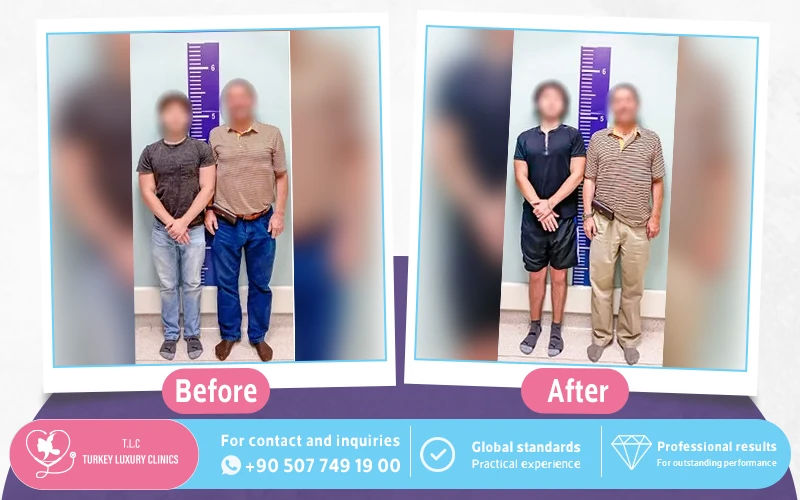
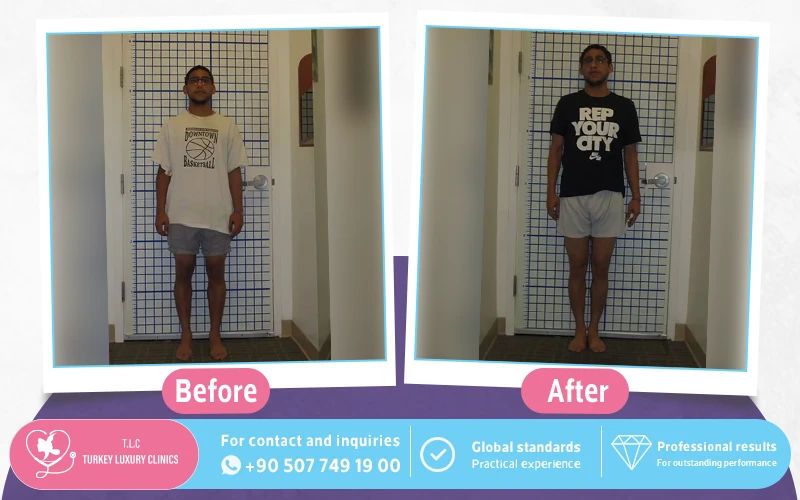
Limb Lengthening Surgery Before and After Photos
How Much Does Height Surgery Cost? 2026 Prices
Height surgery (limb lengthening) in 2026 generally costs between $75,000 and $150,000+ in the US for advanced internal (PRECICE) methods, while international options (e.g., Turkey, India) range from $15,000 to $55,000+. Prices vary by technique (Femur vs. Tibia), target height, and hospital.
What Determines How Much Height Surgery Costs?
The cost of height surgery depends on several key factors—starting with the country where it’s performed. For example, surgeries in Turkey or India are typically more affordable than in the U.S. or Europe.
Other factors include the surgeon’s expertise, the technique used (whether internal nails like the PRECICE system or external fixators), how many centimeters you want to gain, and the expected duration of recovery and rehabilitation.
On top of the surgical fee, there are additional costs like physical therapy, accommodation, and potential revision procedures. Don’t forget hidden expenses, too—such as time off work, extended recovery, and mobility aids during the healing process.
Height Surgery Cost Comparison by Country and Technique (2026)
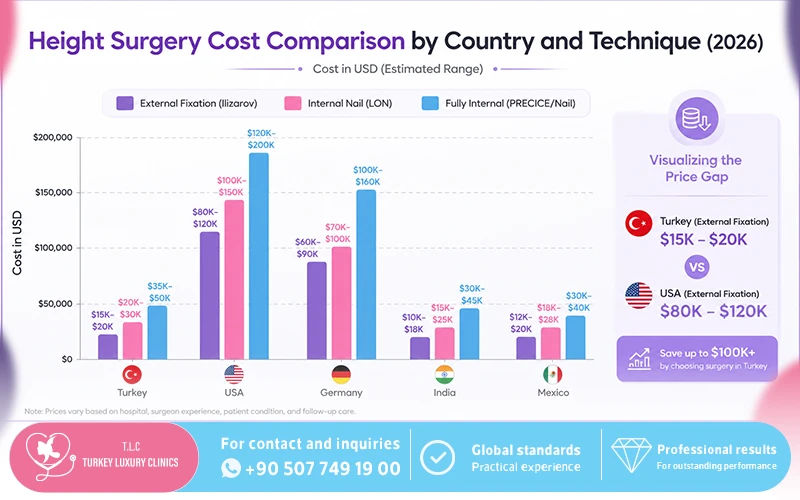
Country | External Fixation (Ilizarov) | Internal Nail (LON) | Fully Internal (PRECICE/Nail) |
Turkey | $15,000 – $20,000 | $20,000 – $30,000 | $35,000 – $50,000 |
USA | $80,000 – $120,000 | $100,000 – $150,000 | $120,000 – $200,000 |
Germany | $60,000 – $90,000 | $70,000 – $100,000 | $100,000 – $160,000 |
India | $10,000 – $18,000 | $15,000 – $25,000 | $30,000 – $45,000 |
Mexico | $12,000 – $20,000 | $18,000 – $28,000 | $30,000 – $40,000 |
Does insurance cover limb lengthening surgery?
Leg lengthening surgery is generally only covered by insurance if it is deemed medically necessary to correct significant leg length discrepancies, congenital defects, or injuries.
Who is a Candidate for Height Increase Surgery
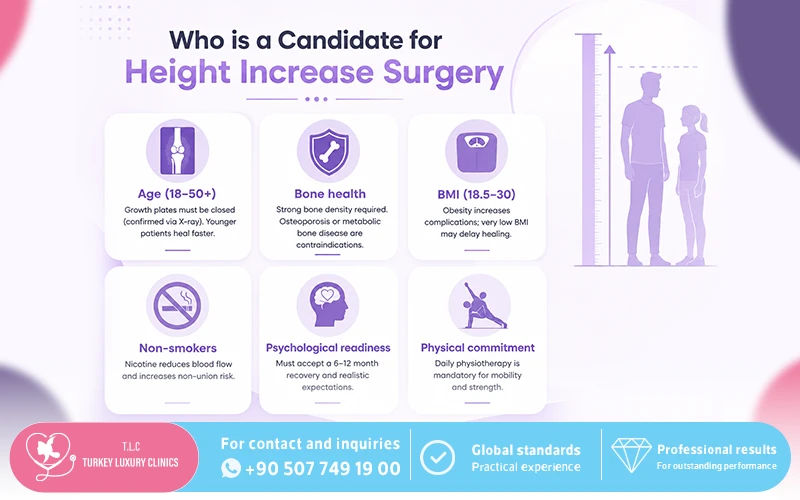
- Age (18–50+): Growth plates must be closed (confirmed via X-ray). Younger patients heal faster.
- Bone health: Strong bone density required. Osteoporosis or metabolic bone disease are contraindications.
- BMI (18.5–30): Obesity increases complications; very low BMI may delay healing.
- Non-smokers: Nicotine reduces blood flow and increases non-union risk.
- Psychological readiness: Must accept a 6–12 month recovery and realistic expectations.
- Physical commitment: Daily physiotherapy is mandatory for mobility and strength.
Types of Limb Lengthening Surgery
Feature | Precice 2 | Stryde Nail | LON Technique | External Fixator |
System type | Fully internal | Fully internal | Hybrid | External frame |
Weight bearing | Limited | Best among internal nails | Moderate | Moderate |
Infection risk | Very low | Very low | Medium | High |
Comfort | High | High | Moderate | Low |
Scarring / appearance | Minimal | Minimal | Moderate | Visible frame |
Complexity | High | High | Medium | Medium |
Recovery experience | Smooth | Smoothest | Mixed | Difficult |
1. Precice 2 (Internal Magnetic Lengthening Nail)
Precice 2 is an internal intramedullary lengthening nail that is implanted inside the bone after a controlled osteotomy. It uses an external magnetic controller that activates an internal motor, gradually elongating the telescopic nail.
The mechanism is fully internal, meaning no external frames or pins are passing through the skin. The bone is separated slowly, and new bone forms in the gap through distraction osteogenesis.
Precice 2 is designed for precise, low-impact controlled lengthening, usually in the femur or tibia. The system allows gradual daily adjustment, typically around 1 mm per day, under strict medical monitoring.
2. Stryde Nail (Internal Weight-Bearing Lengthening System)
Stryde is an advanced version of internal magnetic nails, designed with a stronger titanium alloy, allowing partial weight-bearing during the lengthening phase. It uses the same magnetic lengthening mechanism as Precice but with improved structural strength.
The system remains fully internal, and lengthening is controlled externally using a magnetic device.
Stryde was developed to address one of the main limitations of earlier internal nails: restricted mobility and delayed weight-bearing. It allows patients to walk with a partial load earlier in the recovery process.
3. LON Technique (Lengthening Over Nail)
LON combines internal and external systems. A standard intramedullary nail is inserted inside the bone, but an external fixator is also applied temporarily to control the early phase of lengthening.
After sufficient bone regeneration is achieved, the external fixator is removed, and the internal nail continues to stabilize the bone during consolidation.
LON is considered a hybrid technique, balancing internal comfort with external control flexibility. It is often used in cases where full internal systems are not suitable or when cost limitations exist.
4. External Fixators (Ilizarov / Monorail Systems)
External fixators are the traditional foundation of limb lengthening surgery, based on the Ilizarov method. A metal frame is attached outside the limb and connected to the bone using pins or wires that penetrate the skin.
The bone is gradually separated by adjusting the external frame, allowing new bone to form in the created gap.
External systems are highly versatile and widely used for complex deformities, bone loss, infections, and reconstructive surgery.
How to Get Taller Surgery Step-by-Step
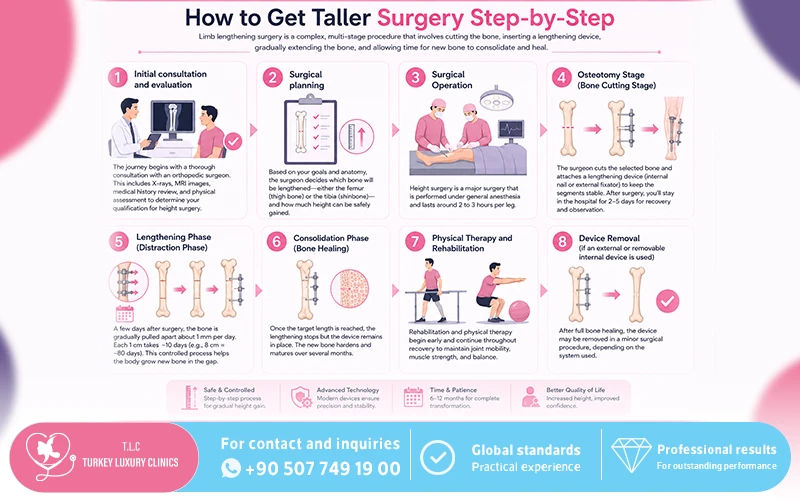
Limb lengthening surgery is a complex, multi-stage procedure that involves cutting the bone, inserting a lengthening device, gradually extending the bone, and allowing time for new bone to consolidate and heal.
1. Initial consultation and evaluation:
The journey begins with a thorough consultation with an orthopedic surgeon. This includes X-rays, MRI images, medical history review, and physical assessment to determine your qualification for height surgery.
2. Surgical planning
Based on your goals and anatomy, the surgeon decides which bone will be lengthened—either the femur (thigh bone) or the tibia (shinbone)—and how much height can be safely gained.
3. Surgical Operation:
Height surgery is a major surgery that is performed under general anesthesia and lasts around 2 to 3 hours per leg.
4. Osteotomy Stage (Bone Cutting Stage):
During this stage, the surgeon cut the selected bone carefully. Then a specialized limb-lengthening device—either an internal nail or an external fixator—is attached to the bone using screws or pins to keep the segments stable.
Once the osteotomy is complete and the device is securely in place, the surgical incision is closed.
The patient usually wakes up a few hours after the procedure and remains in the hospital for close observation, pain control, and initial recovery. Most patients are discharged within 2 to 5 days.
The main function of the fixator is to gradually separate the two bone segments in the following phase.
5. Lengthening Phase (Distraction Phase):
A few days after surgery, the bone lengthening process begins. The patient adjusts the device daily—whether it’s an external fixator or internal motorized nail—following the surgeon’s instructions.
The bone is gradually pulled apart at a rate of about 1 mm per day. So, for each centimeter of desired length, this phase takes roughly 10 days. For example, lengthening 8 cm takes about 80 days with consistent device adjustments.
This slow and controlled separation, known as distraction osteogenesis, encourages the body to grow new bone tissue in the gap.
6. Consolidation Phase (Bone Healing):
Once the target length is reached, the lengthening stops but the device remains in place. During this phase, the newly formed bone begins to harden and mature.
The consolidation phase often lasts several months and depends on factors like the patient’s age, overall health, and how many centimeters were gained.
7. Physical Therapy and Rehabilitation:
Rehabilitation and physical therapy begin early within the first days and continue throughout the recovery to maintain joint mobility, muscle strength, and balance.
8. Device Removal (if an external or removable internal device is used)
After full bone healing, the device may be removed in a minor surgical procedure, depending on the system used.
Recovery from Limb Lengthening Surgery
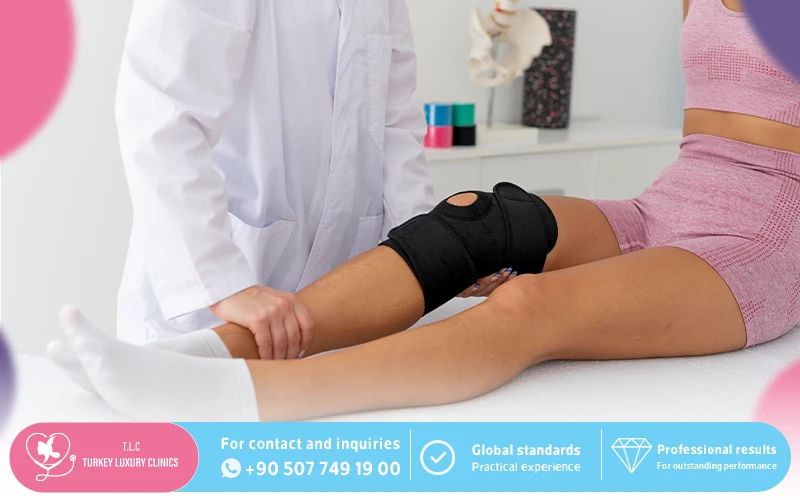
Limb lengthening recovery is a intensive, months-long process involving a 3–5 day hospital stay, followed by a distraction phase (gradual lengthening) and a consolidation phase (bone healing). Full recovery takes 8–12 weeks for initial healing, but up to 9–12 months or more to regain full strength and mobility, requiring extensive physical therapy, diet optimization, and, eventually, a second surgery for device removal.
Phase | Bone Healing | Mobility | Activity Level |
Day 0–5 | Bone cut (osteotomy) | Bed rest + walker | Basic bed exercises |
Week 1–2 | Early healing | Walker assisted walking | Light stretching |
Week 2–Month 3 | Active lengthening (1mm/day) | Crutches + partial weight | Daily physiotherapy |
Month 3–5 | Bone hardening | 1 crutch + walking | Strength training |
Month 6–8 | Bone consolidation | Full weight bearing | Cycling, swimming |
Month 9–12 | Near full strength | Normal walking | Light jogging, gym |
Month 12–18+ | Complete healing | Full mobility | Sports & high-impact activity |
How Painful is Height Surgery?
The operation itself is performed under general anesthesia, so there is no pain during surgery. Discomfort mainly occurs during the lengthening phase, which lasts 1–3 months. This stage involves moderate pain and tightness, which is usually managed with prescribed medication and gradually decreases over time. Most patients describe the process as demanding rather than extremely painful.
When can I Move Safely After Limb Lengthening Surgery?
After limb lengthening surgery, you can usually start moving with assistance—like a walker or crutches—within a few days. However, walking without help takes longer.
Most patients rely on a walker during the distraction phase, and only start walking independently 2 months after the end of the consolidation phase. However, you should get X-rays to confirm the bone is strong enough to safely bear your weight.
Generally, most people take about 6 to 8 months to walk more comfortably and return to daily activities, though this depends on your body, the amount of lengthening, and your dedication to physical therapy.
Can I Return to Sports After Limb Lengthening Surgery?
Yes, you can return to sports after limb lengthening surgery, but it requires patience, rehabilitation, and a gradual approach, with most patients returning to high-impact activities within 9–12 months or longer.
What are Risks of Height Surgery and How to Manage Them?
- Bone Healing (Non-Union):
To prevent delayed bone hardening, we utilize bi-weekly digital X-ray monitoring and a mandatory osteogenic diet (High Calcium/D3). Nicotine is strictly prohibited as it inhibits osteoblast (bone-forming cell) activity.
- Neurovascular Adaptation:
Rapid lengthening can stretch nerves and vessels. We adhere to a controlled 0.75mm–1.0mm daily distraction rate, allowing soft tissues to adapt without neurological deficit.
- Joint & Muscle Contracture:
The stiff joint risk is mitigated by early-intervention physiotherapy. Stretching the hamstrings and Achilles tendon maintains mobility as the bone elongates.
- Infection Control:
Internal systems (like Precice 2) significantly reduce infection risks compared to external frames.
- Thromboembolism (DVT) Prevention:
To eliminate blood clot risks during reduced mobility, patients receive anticoagulant therapy and mechanical compression immediately post-surgery.
- Psychological Distress:
Limb lengthening surgery is a long process that can be mentally challenging for some patients. The extended recovery period may lead to emotional fatigue or reduced motivation over time. To manage this, patients are usually prepared in advance through psychological assessment, and clear recovery milestones are set to help maintain motivation and realistic expectations throughout the treatment journey.
Most complications in stature lengthening are preventable. Success depends on the synergy between surgical precision and the patient’s commitment to the rehabilitation protocol.
Height Surgery in Turkey: International Patient Journey with Turkey Luxury Clinics
International patients choosing limb lengthening surgery in Turkey benefit from structured all-inclusive medical packages designed to simplify the entire process. These packages typically cover not only the surgical procedure but also all essential logistics before, during, and after treatment.
Patients receive coordinated support that includes airport pickup, hotel accommodation, VIP transportation, medical coordination, and language interpretation services. This ensures a smooth and stress-free experience from arrival to recovery.
Most international patients prefer these packages when traveling to Turkey for the first time, as they allow them to focus entirely on their treatment and rehabilitation while all organizational details are professionally managed.
What is Included in All-Inclusive Height Surgery Turkey Packages?
Typical medical tourism packages for limb lengthening surgery in Turkey may include:
- Initial medical consultation and surgical evaluation.
- Pre-operative medical tests and imaging.
- Surgeon and hospital fees.
- Hospital stay and nursing care.
- Post-operative follow-up appointments.
- Airport pickup and drop-off.
- Hotel accommodation during the recovery period.
- VIP transportation between hotel and the hospital.
- Dedicated patient coordinator.
- Professional medical translator support.
- Basic rehabilitation guidance and physiotherapy planning.
If you're serious about increasing your height and looking for trusted options abroad, Turkey Luxury Clinics guide you to increase your height safely, and precisely top international accredited hospitals in Istanbul. Dr. Humam Baki is a top-rated orthopedic surgeon in Turkey and guides you through every step, from consultation to recovery. Contact us now for a free consultation.
Get Taller with Confidence in Turkey..Start with Turkey Luxury Clinics
If you're serious about increasing your height and looking for trusted options abroad, Turkey Luxury Clinics can help. We connect you with top-rated orthopedic surgeons in Turkey and guide you through every step—from consultation to recovery. Wondering what real results look like? Just search how to get taller surgery " on Instagram and explore the transformations. When you're ready, contact us to start your journey with confidence.
FAQs About How to Get Taller Surgery