

- Inflatable Penile Implant (IPP) Cost in 2026
- What Is an Inflatable Penile Prosthesis (IPP)?
- Types of Inflatable Penile Implants
- Advantages of an Inflatable Penile Prosthesis
- How the Inflatable Penile Implant Surgery Works
- Recovery, Activation, and Use of an Inflatable Penile Implant
- Success Rates and Patient Satisfaction After Inflatable Penile Implant
- Risks and Complications of Inflatable Penile Implant
- Ideal Candidates for Inflatable Penile Implant Surgery
- Common Concerns About Penile Implants
- Restore Confidence Safely and Effectively
An Inflatable Penile Prosthesis (IPP) is considered the gold-standard surgical treatment for severe, refractory erectile dysfunction (ED), with patient satisfaction rates exceeding 95%.
The inflatable penile implant consists of several interconnected components that are surgically placed. They are designed to mimic the look and performance of a natural erection. Men who receive an Inflatable Penile Prosthesis (IPP) regain the ability to achieve and maintain a rigid erection on demand, unlike other treatments that may provide inconsistent or temporary results.
With modern 3-piece implants offering natural-feeling erections, complete flaccidity, and long-lasting durability, thousands of men and their partners experience renewed confidence and intimacy every year.
By restoring erectile function, this procedure can significantly improve men’s quality of life, offering a long-term solution with low complication rates and minimal surgical risks.
Explore how a modern inflatable penile prosthesis (IPP) can restore sexual function and confidence with a safe, reliable, and long-lasting solution. Our clinics are JCI-accredited, staffed by board-certified urologists, and equipped with state-of-the-art surgical technologies. We also offer comprehensive, cost-effective packages to ensure care is accessible without compromising quality.
Schedule your consultation today to discuss the best IPP option for you and take the first step toward regaining intimacy and confidence.
Inflatable Penile Implant (IPP) Cost in 2026
The cost of an inflatable penile prosthesis (IPP) in 2026 can vary significantly depending on the country, implant type, and hospital or surgeon fees. In the United States, prices typically range from $10,000 to $30,000+, making it one of the most expensive options. For patients looking for affordable yet high-quality IPP surgery, countries like Turkey offer packages starting from $6,000 to $12,000+, often including all-inclusive fees and lifetime warranties. In the United Kingdom, private hospital costs usually fall between £8,000 and £18,000+.
Costs also depend on the type of implant: 3-piece IPPs the most natural erection and flaccidity, while 2-piece models are easier to implant and slightly less expensive. Leading brands such as AMS 700, Coloplast Titan, ZSI 475, and AMS Ambicor may influence the price based on durability, features, and surgical support.
Inflatable Penile Implant Cost by Country
Country | Typical Cost (USD) | Notes |
US & Canada | $15,000–$35,000. | Includes device, surgery, hospital fees |
Turkey | $6,000 – $12,000+ | Often includes all-inclusive packages for medical tourists |
Europe and UK | $10,000–$19,000 | Private hospitals; prices vary by region |
Inflatable Penile Implant Cost by Type of Implant
Type | US | Turkey | UK |
3-Piece Inflatable | $15,000 – $30,000 | $8,000 – $12,000 | $12,000 – $22,500 |
2-Piece Inflatable | $10,000 – $20,000 | $6,000 – $9,500 | $8,000 – $16,000 |
Inflatable Penile Implant Cost by Brand
Brand | US | Turkey | UK |
AMS 700 | $18,000 – $30,000 | $9,000 – $12,000 | $15,000 – $22,500 |
Coloplast Titan | $15,000 – $28,000 | $8,500 – $11,500 | $13,000 – $20,000 |
ZSI 475 | $12,000 – $20,000 | $6,500 – $10,500 | $10,500 – $18,000 |
AMS Ambicor (2-piece) | $10,000 – $18,000 | $6,000 – $9,500 | $8,000 – $15,000 |
What Is an Inflatable Penile Prosthesis (IPP)?
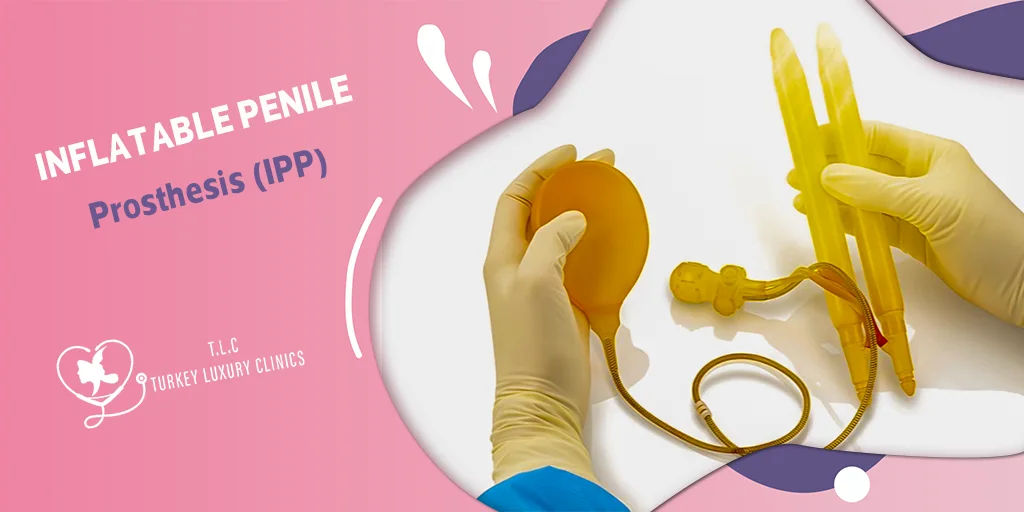
An Inflatable Penile Prosthesis (IPP) is a surgically implanted device proven to help men with erectile dysfunction (ED) achieve and maintain an erection.
IPP is considered the gold-standard surgical treatment for severe, treatment-resistant erectile dysfunction (ED). It is also used for certain cases of Peyronie’s disease when medications or other therapies fail.
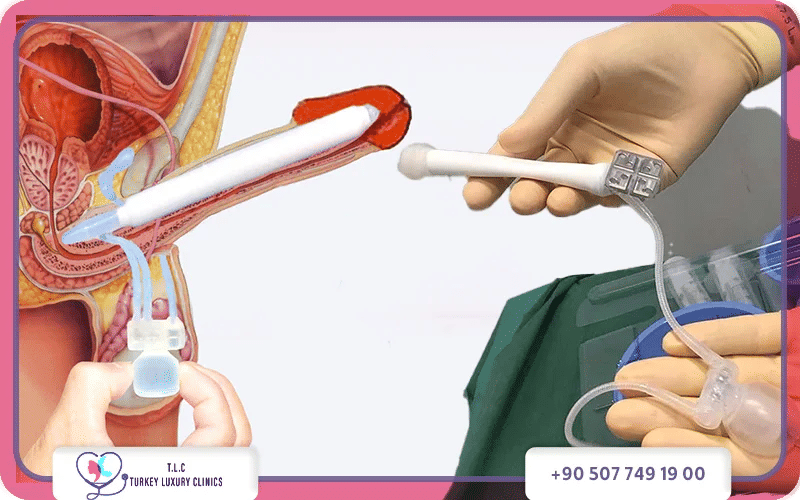
Inflatable devices (2 or 3-piece) use cylinders in the penis, a scrotal pump, and a reservoir to mimic natural erections, while malleable implants use firm rods. They provide on-demand, long-lasting erections without affecting sensation, ejaculation, or orgasm
IPP devices come in a variety of sizes to match each patient’s anatomy, providing a comfortable fit, optimal rigidity, and a natural appearance.
The device consists of:
Most modern inflatable penile prostheses are three-piece devices, which consist of cylinders, a pump, and a fluid reservoir. This design provides the most natural erection and complete flaccidity when deflated.
- Two Cylinders: Placed within the corpora cavernosa (the chambers of the penis) that fill with sterile saline to create an erection.
- Pump: Located in the scrotum, this component is squeezed by the patient to move fluid into the cylinders.
- Reservoir: Placed in the abdomen (near the bladder), this holds the saline fluid when the device is deflated
Two-Piece Inflatable Implant: Similar to the 3-piece, but the pump and reservoir are combined, eliminating the separate abdominal reservoir.
This system allows men to achieve a rigid, natural-feeling erection on demand, which remains hidden when not in use.
How to use IPP?
The user squeezes the scrotal pump to move fluid into the cylinders, creating a firm erection. A release valve on the pump allows fluid to return to the reservoir, making the penis flaccid.
Types of Inflatable Penile Implants
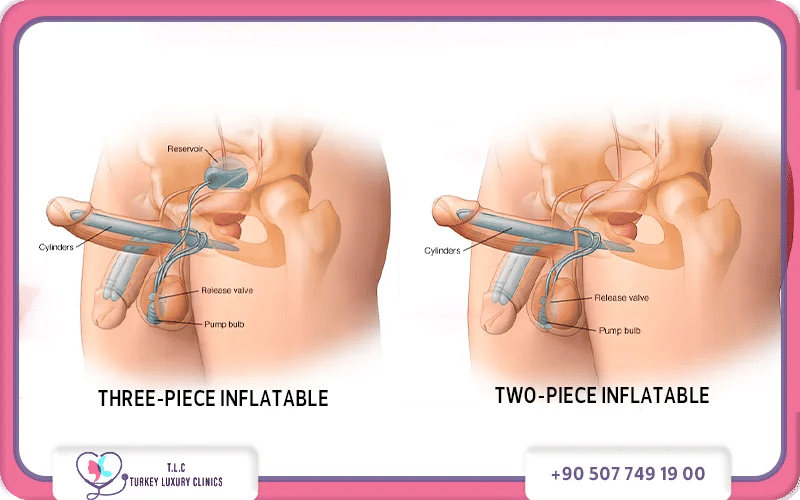
1. Three-Piece Inflatable (Most Common) AMS 700 series, Coloplast Titan, ZSI 475
This type includes two cylinders in the penis, a pump in the scrotum, and a fluid reservoir in the lower abdomen. It gives the most natural-feeling erection and allows the penis to be completely flaccid when not in use.
2. Two-Piece Inflatable AMS Ambicor
Here, the pump and reservoir are combined into a single unit in the scrotum, connected to two cylinders in the penis. It’s easier to implant than the three-piece model but provides slightly less expansion and firmness.
3-Piece vs 2-Piece IPP
Feature | 3-Piece Implant | 2-Piece Implant |
Components | Cylinders + pump + separate fluid reservoir | Cylinders + pump (reservoir integrated) |
Rigidity | Highest rigidity, closest to a natural erection | Slightly less rigid |
Flaccidity | Returns to a natural flaccid state | May remain partially firm |
Surgical Complexity | Slightly more complex procedure | Simpler and quicker surgery |
Advantages of an Inflatable Penile Prosthesis
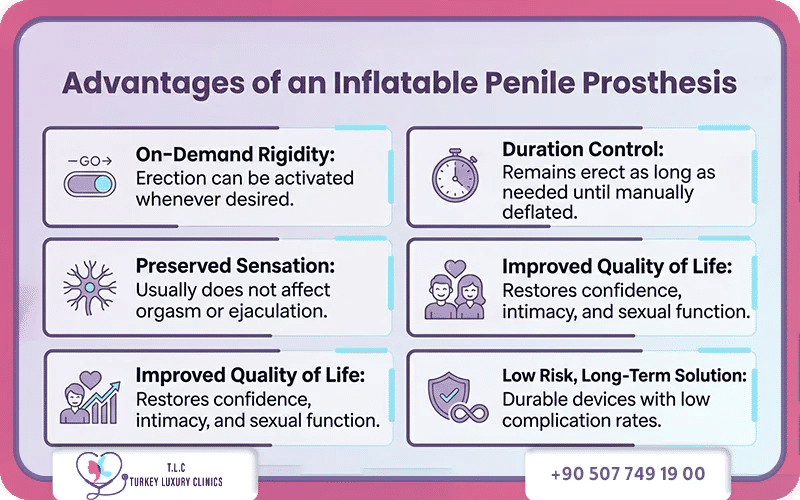
Men who receive an IPP typically regain the ability to achieve and maintain an erection at will, unlike other treatments that may be inconsistent or less controllable. Key benefits include:
- On-Demand Rigidity: The erection can be initiated whenever desired, supporting spontaneous sexual activity.
- Duration Control: The erection lasts as long as needed and only deflates when the user manually activates the release valve.
- Preserved Sensation: The device generally does not affect the ability to reach orgasm or ejaculate; the penile nerve endings remain fully functional.
- Improved Quality of Life: By restoring sexual function reliably, men experience improved confidence, intimacy, and overall well-being.
- Low Risk, Long-Term Solution – Modern IPPs are highly durable, with low complication rates, offering a permanent solution when other treatments fail.
How the Inflatable Penile Implant Surgery Works
- Surgery: The procedure is typically performed as a 45–90 minute outpatient surgery through a small incision in either the scrotum (penoscrotal approach) or above the pubic bone (infrapubic approach).
- Placement: The surgeon implants two cylinders inside the corpora cavernosa (the erectile chambers of the penis), positions a pump in the scrotum, and places a fluid reservoir behind the abdominal wall.
- Activation: The patient creates an erection by squeezing the scrotal pump, which transfers sterile saline from the reservoir into the cylinders.
- Deactivation: Pressing the release valve on the pump allows the fluid to flow back into the reservoir, returning the penis to a flaccid state.
Recovery, Activation, and Use of an Inflatable Penile Implant
After IPP surgery, patients typically require a 4–6 week recovery period, followed by device activation and training with a urologist. This allows for regular, user-controlled inflation and deflation to achieve erections.
The first 48 hours focus on managing swelling and discomfort, and most patients can return to light activities within a week. The crucial “activation phase” occurs around 4 to 6 weeks post-surgery, during which your urologist will teach you how to operate the pump and provide guidance on safely resuming sexual activity.
Success Rates and Patient Satisfaction After Inflatable Penile Implant
IPPs have the highest patient satisfaction rates among all ED treatments, with many users reporting high satisfaction for both themselves and their partners. High satisfaction rates are reported (80%–90%), with the device designed to last 5 to 10+ years. High patient satisfaction is closely linked to positive clinical outcomes, reduced malpractice claims, and better financial performance for healthcare facilities, often driven by effective physician communication and tailored care. Success rates, particularly in specialized areas like surgery, are enhanced by setting accurate patient expectations and utilizing proactive, standardized care approaches.
Risks and Complications of Inflatable Penile Implant
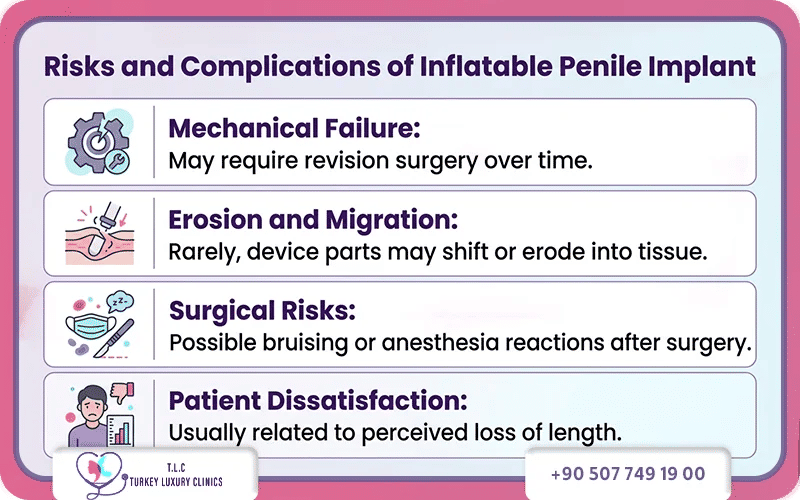
While safe, potential complications include mechanical failure (over 5 years), infection (3-5%), and, rarely, urethral/bladder injury.
Risks of IPP patients should consider are:
- Mechanical Failure: Although IPPs are highly durable, they are mechanical devices. Studies show a mechanical survival rate of approximately 90% at 5 years and 60% to 70% at 10 years, meaning a revision surgery may eventually be required.
- Erosion and Migration: In rare cases, the device components may shift or wear through the internal tissue. This is more commonly seen in patients with underlying conditions like uncontrolled diabetes or previous pelvic radiation.
- Surgical Risks: As with any surgery, there are standard risks such as hematoma (internal bruising) or adverse reactions to anesthesia, which are typically managed within the first 48 to 72 hours post-op.
- Patient Dissatisfaction: Clinical outcomes show that dissatisfaction is rarely due to the device itself, but rather a "perceived" loss of length. Studies suggest that thorough pre-operative counseling regarding anatomical expectations is the most effective way to prevent this.
Ideal Candidates for Inflatable Penile Implant Surgery

1. Patients with Refractory Erectile Dysfunction
The most common candidates for an Inflatable Penile Prosthesis (IPP) are men with refractory erectile dysfunction, meaning their condition does not respond to first- or second-line treatments. If the following therapies have failed, an IPP may be the next logical option:
- Oral Medications: PDE5 inhibitors such as Viagra (sildenafil) or Cialis (tadalafil)
- ICI Therapy: Intracavernosal injections (e.g., Trimix)
- VCDs: Vacuum constriction devices that failed to provide sufficient rigidity or were difficult to use consistently
2. Post-Prostatectomy Patients
Men who have undergone radical prostatectomy for prostate cancer often develop severe ED due to nerve damage or vascular changes.
An IPP bypasses the need for normal nerve signaling or natural blood flow, providing a mechanical solution that works even when erectile pathways have been affected by surgery.
3. Diabetic Patients with Vascular ED
Diabetes is one of the leading causes of erectile dysfunction because it affects both blood vessels (microvascular disease) and nerves (neuropathy).
As medications may become less effective over time in diabetic patients, an IPP offers a reliable long-term solution that does not depend on the body’s vascular response.
4. Men with Peyronie’s Disease:
Peyronie’s disease involves the formation of fibrous scar tissue (plaque) inside the penis, leading to curved or painful erections.
During IPP surgery, a urologist can perform penile modeling to help straighten the penis while the implanted cylinders restore rigidity and girth, addressing both curvature and ED simultaneously.
5. Patients with a History of Priapism:
Priapism—a prolonged erection lasting more than four hours—can cause permanent scarring (fibrosis) of the erectile tissue.
When the erectile chambers become fibrotic, medications typically no longer work. In such cases, an IPP may be the most effective option to restore sexual function.
Common Concerns About Penile Implants
Does a penile implant reduce penile length?
This is the most common concern for men. The IPP restores functional length but does not technically "add" new length. While some men perceive a loss of size due to years of ED-related atrophy or scarring, the prosthesis is designed to maximize your existing anatomical capacity for a full erection.
Will the implant be visible or cause a bulge?
No. A 3-piece inflatable penile prosthesis is completely internal. When deflated, the 8 penis appears natural and flaccid, and the implant cannot be seen externally.
Will the pump in the scrotum look unusual?
The pump is small and placed inside the scrotum, where it is usually not noticeable to others. Most patients report that it becomes easy to use and does not affect their normal appearance.
Does a penile implant affect sensation or orgasm?
No. The surgery does not affect the nerves responsible for sensation or the structures involved in ejaculation. If a patient was able to orgasm before surgery, he will typically retain that ability afterward.
Is the device easy to operate?
Modern devices include ergonomic pumps that are easy to activate. For example, many implants use simplified pump mechanisms that allow patients to inflate the cylinders with minimal effort.
What is the risk of infection or rejection?
Modern penile implants are coated with antibiotic technologies such as InhibiZone, which significantly reduce infection rates. In healthy patients, the risk of infection is typically below 1–3%.
How soon after surgery can I have sex with an IPP?
Most men can safely resume sexual intercourse 4 to 6 weeks after inflatable penile prosthesis (IPP) surgery.
Read more details about How Long After Penile Implant Surgery Can I Use It
Restore Confidence Safely and Effectively
Are you ready to consider a permanent solution that offers a natural sensation and long-lasting results? Contact Turkey Luxury Clinics today for a free consultation to determine the best IPP option for your specific needs.
Our clinics are JCI-accredited, staffed by board-certified urologists, and equipped with the latest inflatable penile implant technologies. To ensure a stress-free experience, we offer comprehensive, all-inclusive packages designed to provide world-class care at competitive rates, whether you choose a 3-piece or 2-piece IPP.
Book your consultation today to discuss your personalized treatment plan. Take the first step toward a safe, reliable, and life-changing solution for erectile dysfunction