

- What Invisalign Alternatives Are Available?
- 11 Best Invisalign Alternatives
- Steps to Choose the Right Invisalign Alternative
- How Do Invisalign Alternatives Compare to Invisalign?
- Invisalign Alternatives Cost Comparison
- Get Your Aligned Teeth and Perfect Smile at Turkey Luxury Clinics
- FAQs About Invisalign Alternatives
Alternatives to Invisalign can be in-office clear aligners like ClearCorrect and SureSmile, traditional fixed braces, and at-home aligner kits. In-office aligners cost $2,000 to $7,000 under direct dentist supervision. Fixed braces, metal, ceramic, and lingual, handle severe crowding and bite correction that aligners cannot. At-home kits cost $1,100 to $1,800 with remote monitoring only, and suit minor cosmetic adjustments.
The right choice between them depends on how complex your case is, how much supervision you need, the cost and whether the brand is still operating, two of the biggest at-home names are no longer on the market.
This guide compares 11 Invisalign alternatives by cost, treatment duration, material, and case suitability, so you can match the right system to your bite, your budget, and how much supervision you actually need.
What Invisalign Alternatives Are Available?
Category | Options | Average Cost | Supervision |
In-office clear aligners | ClearCorrect, Spark, SureSmile, Angel Aligner | $2,000–$7,000 | Dentist or orthodontist, in person |
Fixed braces | Metal, ceramic, lingual | $1,500–$13,000 | Orthodontist, with regular visits |
At-home aligner kits | ALIGNERCO, NewSmile, CandidPro | $1,100–$1,800 | Remote monitoring only |
Professional In-Clinic Clear Aligner Alternatives to Invisalign
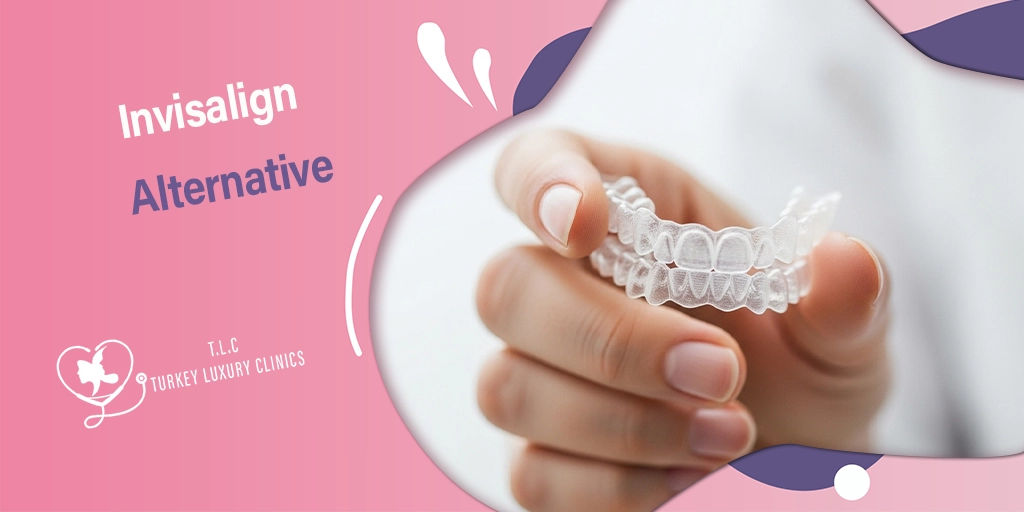
Professional clear aligners from other orthodontic brands provide a treatment approach similar to Invisalign, using a series of custom-made, removable trays that gradually move teeth into improved alignment.
Popular systems in this category include ClearCorrect, Spark Aligners, SureSmile, and Angel Aligner. Although they are based on the same biological principles of tooth movement, they may differ in aligner materials, digital treatment-planning technology, attachment protocols, and clinical workflows.
These treatments are prescribed and monitored by a licensed dentist or orthodontist throughout the treatment process. They often use tooth-colored attachments bonded to the teeth, allowing aligners to perform more complex movements, such as rotating teeth, correcting deep bites, and moving tooth roots. For patients with severe crowding, bite problems, or more complex orthodontic needs, professionally supervised aligners can often achieve results comparable to Invisalign.
Traditional Fixed Braces Alternatives to Invisalign
Traditional braces remain one of the most effective orthodontic treatments, particularly for moderate to severe orthodontic cases. Options include metal braces, ceramic braces, and lingual braces.
Unlike removable aligners, braces are fixed to the teeth and apply continuous, controlled force throughout treatment. This makes them especially effective for significant crowding, complex bite corrections, and cases requiring precise tooth movement. Because treatment does not depend on patient compliance, fixed braces are often considered one of the most predictable orthodontic solutions.
At-Home Invisalign Alternatives
At-home aligner systems are designed primarily for mild orthodontic concerns, such as minor crowding or spacing issues. These treatments typically rely on remote monitoring, digital treatment planning, and significantly fewer in-person dental visits compared to Invisalign.
Unlike Invisalign, which is prescribed and closely supervised by a licensed orthodontist or dentist, at-home aligners are generally managed through virtual assessments and periodic remote check-ins. As a result, they are usually recommended only for simpler cases and are not considered suitable for complex bite corrections or advanced tooth movements.

11 Best Invisalign Alternatives
Alternative | Best For | Treatment Model |
ClearCorrect | Patients seeking Invisalign-quality treatment at a lower cost | In-office |
Spark Aligners | Patients wanting maximum clarity and stain resistance | In-office |
Angel Aligner | Budget-conscious patients | In-office |
SureSmile | Patients seeking highly predictable treatment | In-office |
Metal Braces | Severe crowding and bite issues | In-office |
Ceramic Braces | Complex cases requiring better aesthetics | In-office |
Lingual Braces | Completely hidden fixed treatment | In-office |
Byte | Previously used for fast treatment in mild cases | Suspended |
CandidPro | Remote treatment with professional oversight | Hybrid |
ALIGNERCO | Budget-friendly mild corrections | Remote |
NewSmile | Simple cosmetic alignment | Remote |
1. ClearCorrect
Average Cost: $2,500 – $5,500 Treatment Duration: 6 to 24 months Material Science: Fabricated from ComfortTrack clear plastic, a proprietary tri-layer material engineered for high stain resistance and optimal force retention
ClearCorrect is a doctor-supervised clear aligner system owned by Straumann. Like Invisalign, it straightens teeth using a series of custom-made, removable aligners designed through digital treatment planning.
One notable difference is the aligner trim line. ClearCorrect uses a straight-cut edge that extends slightly beyond the gumline, while Invisalign uses a scalloped trim line that follows the natural contours of the teeth. Invisalign's design is often considered more discreet, whereas ClearCorrect's trim line may provide additional aligner retention in some treatment plans.
Compared with Invisalign, ClearCorrect is often the more affordable option while offering a similar treatment experience for many mild to moderate orthodontic cases. However, Invisalign benefits from a larger global provider network, a longer clinical track record, and proprietary technologies that some orthodontists prefer for more complex tooth movements.
Advantages
- Often costs less than Invisalign
- Nearly invisible appearance
- Comfortable to wear
- Professional monitoring throughout treatment
Potential drawbacks
- Not as widely available in some countries
- Some orthodontists prefer Invisalign for highly complex movements
2. Spark Clear Aligners
Average Cost: $3,000 – $6,000 Treatment Duration: 6 to 24 months Material Science: Formulated with TruGEN™ technology, a material that is measurably clearer and more stain-resistant than Invisalign.
Spark Aligners are a premium clear aligner system developed by Ormco. Similar to Invisalign, Spark uses digitally planned, removable aligners to straighten teeth without traditional braces. The biggest difference is the aligner material itself, which many orthodontists consider clearer and more stain-resistant than Invisalign trays.
Advantages
- Extremely clear aligner material
- Comfortable edges
- Strong stain resistance
- Professional orthodontic supervision
Potential drawbacks
- Similar pricing to Invisalign in many markets
- Availability varies by region
3. Angel Aligner
Average Cost: $2,000 – $4,500 Treatment Duration: 6 to 24 months Material Science: Dual-material aligner system that alternates between softer and more rigid aligners to improve comfort and force control throughout treatment.
Angel Aligner is a rapidly growing clear aligner brand that offers a treatment experience comparable to Invisalign. It uses digital treatment planning and a series of custom-made aligners to correct crowding, spacing, and bite issues. While Invisalign benefits from greater global recognition and a longer clinical history, Angel Aligner is often available at a lower price point and has gained popularity in many international markets.
Advantages
- Advanced digital treatment planning
- Competitive pricing
- Growing provider network
Potential drawbacks
- Less brand recognition
- Availability depends on location
4. SureSmile
Average Cost: $3,000 – $7,000 Treatment Duration: 12 to 18 months Material Science: Utilizes premium Essix plastic, the gold standard for structural rigidity and durability.
SureSmile combines the power of custom clear aligners with traditional orthodontic planning software. It is highly favored for patients who need highly predictable, efficient treatment timelines.
SureSmile shines in its software orchestration. Instead of relying on automated algorithms to guess how your teeth will move, it allows your dentist to plan movements based on your actual nerve paths and bone thickness using raw 3D CBCT scans.
Essix plastic is incredibly strong, which means the initial pressure during the first 48 hours of shifting into a new aligner tray is noticeably tighter and more painful than the multi-layered plastics used by Invisalign or ClearCorrect.
5. Metal Braces
Average Cost: $1,500 – $5,000 Treatment Duration: 12 to 36 months Material Science: High-grade stainless steel brackets and archwires designed for strong and continuous orthodontic force
Metal braces are the most traditional and widely used orthodontic system. They are fixed appliances bonded to the teeth and use metal brackets connected by wires to gradually move teeth into proper alignment.
Compared with Invisalign, metal braces are generally more effective for complex orthodontic cases, including severe crowding, significant spacing issues, and bite misalignment. They do not rely on patient compliance, since they remain fixed throughout the treatment period.
However, they are more visible than clear aligners and may cause initial irritation to the lips and cheeks during early treatment stages.
Advantages
- Highly effective for complex orthodontic cases
- No dependence on patient compliance
- Strong and predictable tooth movement
- Cost-effective compared to many aligner systems
Potential drawbacks
- Highly visible on teeth
- Initial discomfort or irritation
- Requires regular in-clinic adjustments
- More challenging oral hygiene
6. Ceramic Braces
Average Cost: $2,000 – $6,500 Treatment Duration: 12 to 36 months Material Science: Tooth-colored ceramic brackets designed for improved aesthetics with similar mechanical performance to metal braces
Ceramic braces function in the same way as metal braces but use clear or tooth-colored brackets to improve aesthetics. They blend more naturally with the teeth, making them less noticeable in social or professional settings.
Compared with Invisalign, ceramic braces are still suitable for moderate to complex orthodontic cases, offering fixed and continuous tooth movement without reliance on patient compliance.
However, they may be slightly more fragile than metal braces and can sometimes stain if oral hygiene is not maintained properly.
Advantages
- More aesthetic than metal braces
- Effective for complex orthodontic cases
- No compliance required
- Stable and predictable results
Potential drawbacks
- More expensive than metal braces
- Possible staining of elastic components
- Slightly more fragile than metal brackets
- Still visible on close inspection
7. Lingual Braces
Average Cost: $5,000 – $13,000 Treatment Duration: 18 to 36 months Material Science: Custom-made metal brackets placed on the inner (tongue side) surface of the teeth for full aesthetic concealment
Lingual braces are a highly aesthetic orthodontic option, as they are placed on the inside surface of the teeth, making them completely invisible from the front. They function similarly to traditional braces but require custom fabrication and advanced clinical expertise.
Compared with Invisalign, lingual braces offer full control over tooth movement and are suitable for complex cases while maintaining complete external invisibility.
However, they may require a longer adaptation period, particularly in speech and tongue comfort during the early stages of treatment.
Advantages
- Completely invisible from the outside
- Effective for complex orthodontic cases
- No reliance on patient compliance
- Full orthodontic control
Potential drawbacks
- Higher cost than other brace types
- Initial speech and comfort adaptation issues
- More complex cleaning and maintenance
- Requires specialized orthodontic expertise
8. Byte
Status: Sales and marketing suspended since October 2024 pending an FDA regulatory review. Byte aligners are not currently available to new patients.
Previous Average Cost: $1,900 – $2,300 Treatment Duration: 3 to 6 months Treatment Model: 100% remote direct-to-consumer (DTC) aligner system
Byte was among the most recognized direct-to-consumer aligner brands in the United States, known for its remote-first treatment model and accelerated treatment protocols for suitable candidates. Its system focused on improving convenience and reducing treatment duration for mild alignment cases under remote supervision.
In October 2024, Dentsply Sirona voluntarily suspended the sale and marketing of Byte aligner systems and impression kits as a precautionary measure while reviewing certain regulatory requirements related to these products. Shipments and new orders were paused. Patients considering a remote aligner system should review the remote and hybrid alternatives in this guide instead.
Previously best for: Mild crowding and spacing cases without bite complications.
Advantages
- Short treatment timelines
- Fully remote process
- Convenient at-home treatment
- Lower cost than Invisalign
Potential Drawbacks
- Not currently available for new treatment
- Not suitable for complex bite corrections
- Limited in-person supervision
- Requires strict compliance with aligner wear
9. CandidPro
Average Cost: $2,000 – $3,500 Treatment Duration: 6 to 18 months Treatment Model: Hybrid aligner system with remote monitoring and dentist oversight
CandidPro initially operated as a direct-to-consumer aligner company but later transitioned toward a hybrid model combining remote monitoring with dentist oversight. This shift positioned it closer to professionally supervised orthodontic care than fully remote systems.
Best for: Patients seeking remote treatment with enhanced professional oversight.
Advantages
- Greater clinical supervision than most at-home aligners
- Remote monitoring throughout treatment
- Suitable for selected mild to moderate cases
- Hybrid care model
Potential Drawbacks
- More expensive than some at-home aligners
- Not ideal for severe orthodontic issues
- Availability varies by location
10. ALIGNERCO
Average Cost: $1,100 – $1,800 Treatment Duration: 4 to 8 months Treatment Model: 100% remote direct-to-consumer aligner system
ALIGNERCO is a budget-focused clear aligner provider offering remote treatment pathways designed primarily for cosmetic alignment improvements. Its model emphasizes affordability and accessibility, making it one of the lowest-cost options in the at-home aligner category.
Best for: Mild aesthetic alignment concerns in cost-sensitive patients.
Advantages
- Among the most affordable clear aligner options
- Fully remote treatment process
- Convenient home impression kits
- Accessible pricing for cosmetic corrections
Potential Drawbacks
- Limited suitability for complex orthodontic cases
- Reduced clinical supervision
- Results depend heavily on patient compliance
11. NewSmile
Average Cost: $1,400 – $1,800 Treatment Duration: 4 to 6 months Treatment Model: Remote aligner treatment with digital monitoring
NewSmile provides impression-kit and digital scan-based aligner treatment with remote monitoring throughout the process. It is structured as a convenience-oriented alternative to in-office orthodontic care, focusing on simple alignment corrections.
Best for: Adults seeking affordable and convenient mild teeth straightening.
Advantages
- Affordable treatment pricing
- Fully remote process
- Includes retainers with some treatment plans
- Convenient for minor cosmetic alignment issues
Potential Drawbacks
- Intended primarily for mild cases
- Limited ability to address bite problems
- Less clinical oversight than in-office systems

Steps to Choose the Right Invisalign Alternative
Before choosing a brand, walk through these three critical parameters to guarantee you don't compromise your long-term oral health:
Request a Panoramic X-Ray: Never allow any company to shift your teeth without verifying your bone density and root health via X-ray. Moving teeth over undetected gum disease or shortened roots can cause permanent tooth loss.
Diagnose Your Bite vs. Your Smile: If you only want to straighten a single crooked front tooth, an at-home system can safely fulfill your goals. If you are trying to resolve jaw clicking (TMJ), uneven tooth wear, or an overbite, you must invest in an in-office system with attachment capabilities.
Be Honest About Compliance: Removable aligners require a lifestyle shift. You must commit to wearing them for 20 to 22 hours a day, removing them only to eat and brush your teeth. If your routine makes this impossible, save your money and opt for a fixed clear or lingual brace system.

How Do Invisalign Alternatives Compare to Invisalign?
Professional clear aligners such as ClearCorrect, Spark, Angel Aligner, and SureSmile offer treatment experiences very similar to Invisalign.
Traditional braces provide greater control for severe orthodontic cases but sacrifice removability and aesthetics.
At-home aligners are typically less expensive but are generally limited to mild alignment concerns.
Choose in-office aligners for moderate cases, fixed braces for severe crowding or bite problems, and at-home kits only for minor cosmetic corrections.
Invisalign Alternatives Cost Comparison
Alternative | Average Cost Range (USD) |
Invisalign (reference) | $3,000 – $8,000 |
ALIGNERCO | $1,100 – $1,800 |
NewSmile | $1,400 – $1,800 |
Metal Braces | $1,500 – $5,000 |
Byte (suspended) | $1,900 – $2,300 |
Angel Aligner | $2,000 – $4,500 |
Ceramic Braces | $2,000 – $6,500 |
CandidPro | $2,000 – $3,500 |
ClearCorrect | $2,500 – $5,500 |
Spark Aligners | $3,000 – $6,000 |
SureSmile | $3,000 – $7,000 |
Lingual Braces | $5,000 – $13,000 |
Get Your Aligned Teeth and Perfect Smile at Turkey Luxury Clinics
Ready to transform your smile with a customized treatment plan built around your budget and facial features? At Turkey Luxury Clinics, we specialize in providing world-class, doctor-led orthodontic and cosmetic dental care. Our elite medical teams use advanced 3D intraoral scanning to determine whether clear aligners or fixed cosmetic braces are the safest, most effective choice for you.
Achieving proper tooth alignment is often the baseline step toward an entire aesthetic smile makeover. If you are looking to correct both the position and the fundamental shape or shade of your teeth, you can explore a comprehensive Hollywood Smile in Turkey. For patients requiring immediate tooth reconstruction or structural enhancements, we invite you to read our master guide comparing veneers vs crowns or check out our breakdown of the cheapest countries for veneers to confidently budget your medical tourism journey today.

FAQs About Invisalign Alternatives