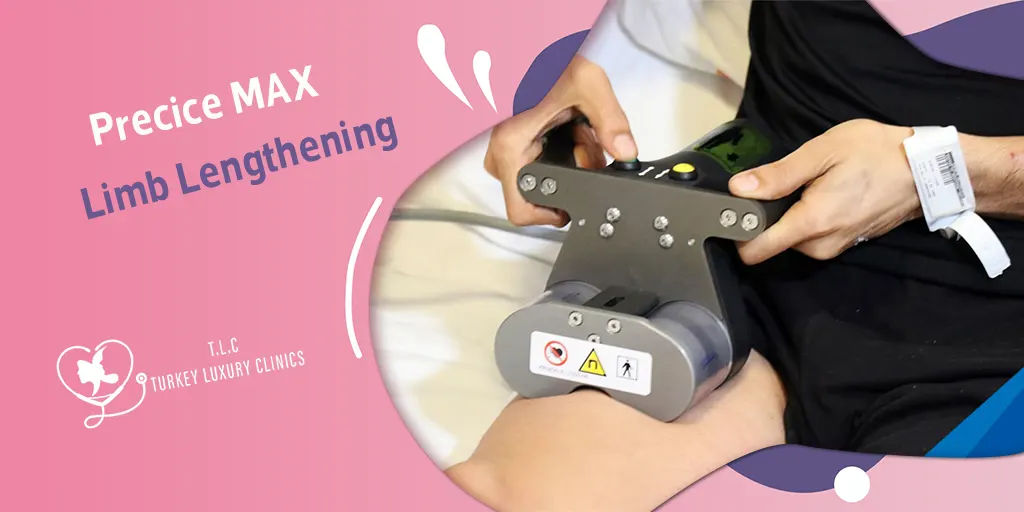


- What Is the Precice MAX (PMax) System?
- Precice MAX Cost in 2026
- Precice MAX and Precice 2 Limb Lengthening Cost in 2026
- Precice MAX vs Precice 2: What Changed?
- How Precice MAX Limb Lengthening Works: Surgery to Recovery
- Precice MAX Recall, MRI and Safety
- Safe & Affordable Precice Nail Limb Lengthening in Turkey
- FAQs About Precice MAX
Written by Dima Abed, Pharmacist and Medical Researcher ·
Medically reviewed by Assoc. Prof. Dr. Humam Baki, Orthopedic Surgeon ·
The PMax system is a magnetic intramedullary nail that gradually lengthens the femur or tibia with precise, non-invasive adjustments. Precice MAX (PMax) is the fourth-generation Precice nail, made by Globus Medical and cleared by the FDA in December 2023. In the US, it costs about $95,500–$125,000 to lengthen both femurs or both tibias in 2026.
This guide explains how PMax differs from Precice 2, its official weight-bearing limits and sizes, what it costs in the US and Turkey, the 2024 recall, and where it is available.
What Is the Precice MAX (PMax) System?
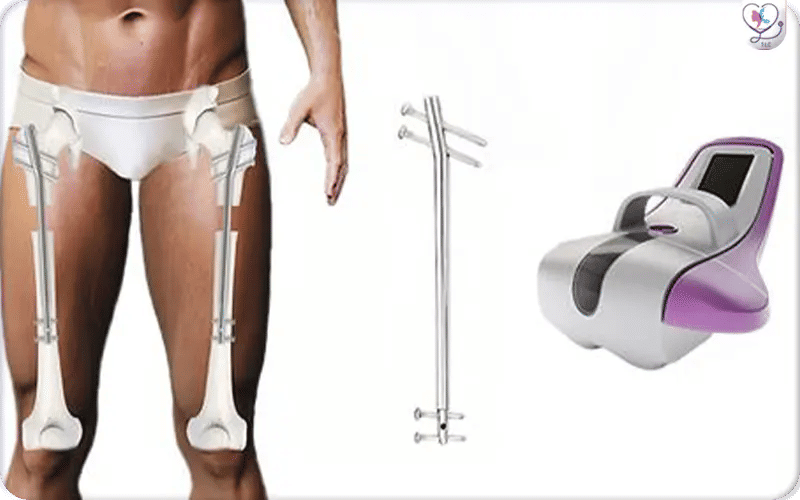
The PRECICE MAX System is a fourth-generation, internal intramedullary Precice nail device designed for limb lengthening and reconstruction of the femur and tibia.
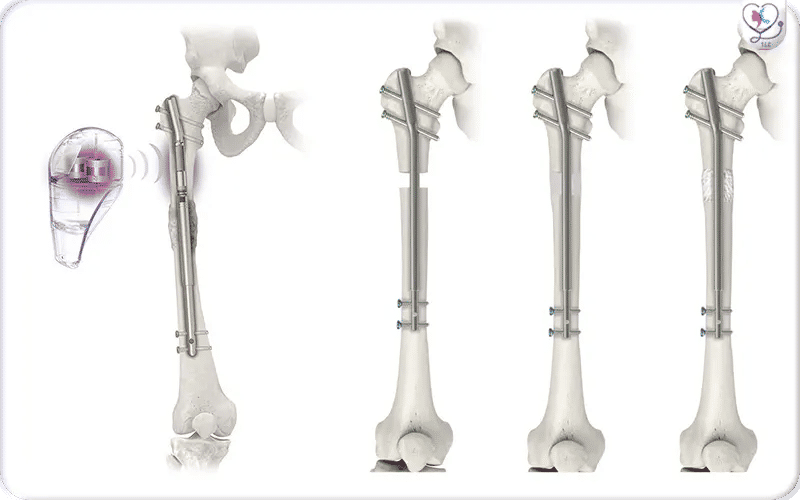
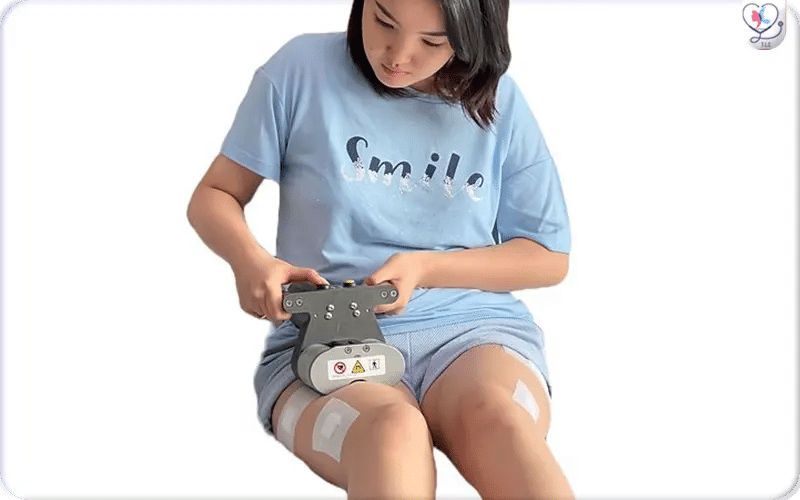
The titanium nail holds a small internal magnet and gears. When you place the handheld External Remote Controller (ERC) on the skin over the nail, it turns the magnet and lengthens the nail in small steps. New bone forms in the gap (distraction osteogenesis), with no external frame or pins through the skin. It was developed by NuVasive Specialized Orthopedics, now part of Globus Medical.
The Precice Max system allows for a maximum tibia elongation of 6.5 cm and max. femur elongation of 8 cm (approx. 3.15 inches) per nail. In practice, many US centers plan up to 8 cm in the femur and about 5 cm in the tibia per stage to protect the nerves, muscles and joints.
Is Precice MAX FDA Cleared?
Yes. The FDA cleared the Precice Max System through 510(k) K232267 on December 15, 2023. It is cleared for limb lengthening, fracture fixation, nonunions, malunions and bone transport of long bones in adults aged 18 and older, and for femur and tibia lengthening in children older than 12. The Paley Institute Stature Center in Florida served as the global launch center, with procedures starting in July 2026, and real-world patient data are still limited compared with Precice 2.
Precice MAX Components and Nail Sizes
The Precice Max (PMax) system key components include a titanium lengthening nail with an internal magnetic motor, proximal and distal interlocking screws, a handheld External Remote Controller (ERC) for non-invasive adjustments, and specialized surgical instruments for precise implantation. The nail comes in 10, 11.5, 13 and 14 mm diameters, and its distal screw holes are larger than on Precice 2.
Precice MAX Cost in 2026
In the US, Precice MAX limb lengthening costs about $95,500–$114,500 for both femurs and $105,500–$125,000 for both tibias in 2026, and about $195,000–$229,500 for femurs plus tibias. Precice MAX usually adds about $10,000–$20,000 per pair of nails compared with Precice 2, where Precice 2 limb lengthening costs about $75,500 for both femurs and $85,500 for both tibias. Nail removal is billed separately: about $14,500–$18,000 for femurs and $17,500–$22,500 for tibias in the US.
In Turkey, Precice 2 (2.2) limb lengthening costs about $28,500–$58,000 for both femurs or both tibias. Where Precice MAX is offered, Istanbul clinic quotes start at about $50,000–$65,000 for both femurs. See our full guide to limb lengthening cost in Turkey.
Precice MAX and Precice 2 Limb Lengthening Cost in 2026
Option | Both femurs | Both tibias | Femurs + tibias |
Precice MAX, US | $95,500–$114,500 | $105,500–$125,000 | $195,000–$229,500 |
Precice 2, US | $75,500 | $85,500 | $150,000 |
Precice MAX, Turkey (where offered) | $50,000–$65,000 | — | $90,000–$120,000 |
Precice 2, Turkey | $28,500–$58,000 | $28,500–$58,000 | $50,000–$70,000 |
Nail removal, US | $14,500–$18,000 | $17,500–$22,500 | $24,500–$28,000 |
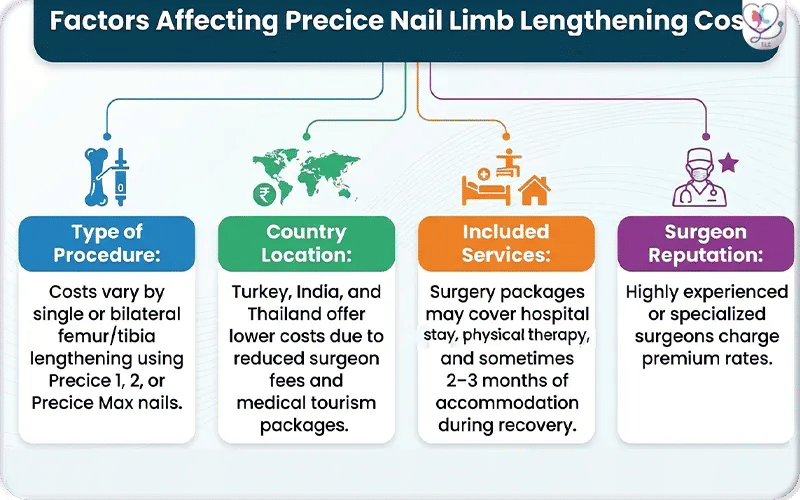
What Affects the Cost of Precice MAX Limb Lengthening
- Type of Procedure: Costs vary by single or bilateral femur/tibia lengthening using Precice 2 or Precice Max nails. MAX adds about $10,000–$20,000 per pair.
- Country Location: Turkey, India, and Thailand offer lower costs due to reduced surgeon fees and medical tourism packages.
- Included Services: Surgery packages may cover hospital stay, physical therapy, and sometimes 2–3 months of accommodation during recovery.
- Surgeon Reputation: Highly experienced or specialized surgeons charge premium rates.
- Extra procedures and later costs: rotation or deformity correction, soft-tissue releases, travel, extended physical therapy and nail removal are often billed separately.
Precice MAX vs Precice 2: What Changed?
All Precice nail systems operate on the same fundamental principle: a magnetic internal nail controlled remotely via an External Remote Controller (ERC) for gradual bone elongation. The main change in Precice MAX is strength. Globus Medical reports 2.6 times greater dynamic bending strength and 1.3 times greater rotational stability than Precice 2, from a thicker titanium wall.
- Stronger nail: 2.6x bending strength and 1.3x rotational stability compared with Precice 2.
- More sizes: 10, 11.5, 13 and 14 mm diameters, with larger distal screw holes.
- Earlier loading at some centers: some surgeons use higher weight-bearing protocols with PMax, although the official limit is still partial weight bearing (see below).
- Remote-Controlled Internal System: Unlike external fixators, the nail is fully internal and controlled remotely, which means less scarring, lower infection risk, and a more comfortable experience.
- Wider age range: cleared for adults and for femur and tibia lengthening in children older than 12.
The choice of system should consider individual factors such as bone diameter, desired lengthening, activity level and cost, all evaluated by a qualified surgeon.
Precice 2 vs Precice MAX at a Glance
Feature | Precice 2 (2.2) | Precice MAX |
Nail Type | Internal magnetic nail | Internal magnetic nail with a thicker titanium wall |
Bone Type | Femur & Tibia | Femur & Tibia |
Strength | Baseline | 2.6× bending, 1.3× rotational stability |
Nail Sizes | 8.5, 10.7, 12.5 mm | 10, 11.5, 13, 14 mm |
Weight-Bearing (official IFU) | Partial; cannot take full weight | Partial, max 50 lbs (23 kg); cannot take full weight |
MRI Safety | MR Unsafe | MR Unsafe |
Clinical Data | Extensive | Limited |
Recall | FDA safety letters on biocompatibility (2021, 2023) | Class 2, 2024 |
Availability | Widely available | Limited |
Cost (US, both femurs) | About $75,500 | About $95,500 |

Precice MAX Weight Bearing by Nail Size
The official Precice MAX instructions for use (2026) set a maximum partial weight-bearing load of 50 lbs (23 kg) for all four nail sizes and state that the nail cannot withstand full weight bearing until the bone has consolidated. Some centers use their own higher protocols, based on biomechanical testing, as shown below. Your surgeon sets your limit from your nail size, bone quality and X-rays.
Precice MAX Weight-Bearing Limits by Nail Diameter
Nail Diameter | Official IFU Limit | Center Protocol (e.g., LimbplastX) |
10 mm | 50 lbs (23 kg) | 150 lbs (68 kg) |
11.5 mm | 50 lbs (23 kg) | 200 lbs (91 kg) |
13 mm | 50 lbs (23 kg) | 250 lbs (113 kg) |
14 mm | 50 lbs (23 kg) | 250 lbs (113 kg) |
How Precice MAX Limb Lengthening Works: Surgery to Recovery
The Surgery
Precice MAX limb lengthening surgery follows the same surgical principles as the Precice 2 nail procedure. The surgery is performed under general anesthesia and typically takes 2 to 4 hours. During the procedure, the surgeon makes a precise, pre-planned cut (osteotomy) in the tibia or femur and inserts the magnetic Precice MAX nail into the bone marrow cavity.
After surgery, you are transferred to the recovery room to wake up from anesthesia, usually within 30 to 60 minutes. You then stay in the hospital for 3 to 5 days, during which physiotherapy is initiated, and you are trained to use a walker or crutches. The medical team also monitors you for any early complications.
The Lengthening Phase
Once discharged, your home recovery begins. The scheduled bone elongation typically starts after 1 to 2 weeks, once your initial recovery and wound healing have been confirmed. You hold the ERC against your leg at home, usually several times a day; about 1 mm per day is the generally recommended rate, and some centers split it into 0.25 mm steps. Reaching 8 cm takes about 3 months.
Your surgeon monitors bone growth and alignment with X-rays—every 1–2 weeks during lengthening and every 2–4 weeks during consolidation.
During this phase, you walk with a walker or crutches within your weight-bearing limit. Pain is usually described as a stretching or “growing pain” sensation during bone distraction. It is managed with medication and physical therapy 5–6 days a week to keep the joints flexible and the muscles stretched.
Consolidation, Recovery and Nail Removal
After lengthening stops, the new bone hardens (consolidation) over about 3 to 6 months while the nail stays in place. Recovery usually requires 2–3 months of mobility aid. Light work resumes in 4–5 months, and full activities, including sports, after 6–12 months. The official instructions recommend removing the nail no more than one year after implantation, in a second, shorter surgery.
Physical Therapy: Begins in-hospital, focusing on joint mobility, muscle strengthening, and preventing stiffness. Daily stretching and strengthening exercises help adapt to new bone length. Initial rehab lasts 1–3 months; full recovery, including normal walking, typically takes 6–12 months. Key goals: flexibility, joint mobility, and weight-bearing capacity.
Precice MAX Recall, MRI and Safety
On September 30, 2024, NuVasive Specialized Orthopedics (Globus Medical) started a Class 2 recall of Precice MAX nails (FDA recall Z-0500-2025) because of potential issues with design, manufacturing and validation documents. Hospitals were told to stop using nails that had not been implanted, return them, and closely monitor patients who already had one. The FDA still lists this recall as open. A Class 2 recall means use may cause temporary or medically reversible health problems. For earlier titanium Precice nails, including Precice 2, the FDA issued safety letters in 2021 and 2023 about potential biocompatibility concerns, and stainless-steel Precice devices such as Precice Stryde were recalled.
MRI: Precice MAX is MR Unsafe. You must not have an MRI scan while the nail is in your leg.
Other risks: like any limb lengthening, PMax can cause joint stiffness, muscle tightness, nerve irritation, infection, delayed bone healing or hardware problems, so close follow-up and physical therapy are essential.
Is Precice MAX Available in Turkey?
Precice MAX availability is still limited worldwide, and its international rollout is still in progress. In Turkey, at least one Istanbul clinic has offered Precice MAX since mid-2026, while most Turkish limb lengthening centers still use Precice 2 (2.2), LON or Fitbone. Before booking, ask which nail will be used and confirm it is in stock and approved for use at that hospital.
Safe & Affordable Precice Nail Limb Lengthening in Turkey
Become taller with internal Precice nail at Turkey Luxury Clinics. Experience comprehensive limb lengthening services in Turkey with safe, effective, and affordable procedures.
Our skilled surgeons provide premium care to help you achieve perfect body proportions. With trusted height solutions, affordable lengthening, and top-quality results, we make your limb lengthening journey smooth, comfortable, and successful. You can grow taller safely with a Precice nail and a free consultation with our team.
Explore Fitbone limb lengthening in Turkey — an advanced Orthofix limb lengthening option in 2026.
FAQs About Precice MAX