

- What is Sculptra?
- How Does Sculptra Work?
- How Does Sculptra Differ From Dermal Fillers?
- Sculptra Treatment Areas
- What Does Sculptra Treat and Where Is It Used?
- Sculptra Face Injections: What Happens During the Session
- Sculptra Results Timeline: When Do Results Appear?
- Sculptra Pros and Cons
- Sculptra Treatment: When to Use and When not to Use
- Sculptra Side Effects and Risks
- Sculptra Reviews
- How Much Does Sculptra Cost?
- Is Sculptra Really Worth the Money?
- Considering Sculptra Treatment in Turkey?
- FAQs About Sculptra
Sculptra is an FDA-approved injectable collagen biostimulator manufactured by Galderma and made from poly-L-lactic acid (PLLA). When injected beneath the skin, Sculptra stimulates the body’s natural collagen production to restore lost facial volume, soften deep folds and wrinkles, improve skin firmness, and rebuild structural support over time.
Sculptra differs from traditional hyaluronic acid (HA) dermal fillers by providing gradual, long-lasting, and natural-looking volume restoration through new collagen formation.
Doctors commonly use Sculptra for facial rejuvenation and age-related volume loss. Beyond the face, they may also use it off-label for body contouring, including non-surgical buttock augmentation and the improvement of hip dips.
Sculptra contains biodegradable PLLA, which the body gradually breaks down while newly formed collagen continues to support the treated tissue. This collagen-stimulating process contributes to long-lasting results that can remain visible for up to two years.
This guide explains how Sculptra works, where it can be injected, its before-and-after results and timeline, benefits, side effects and risks, treatment costs, and how it compares with traditional dermal fillers.
What is Sculptra?
Sculptra is an injectable cosmetic treatment made from poly-L-lactic acid (PLLA) that stimulates the body’s natural collagen production. Unlike traditional hyaluronic acid (HA) fillers that add immediate volume, Sculptra works as a collagen biostimulator, gradually restoring lost facial volume, improving skin structure, and smoothing deeper wrinkles over several months.
Its active ingredient consists of biodegradable PLLA microparticles. Once injected beneath the skin, these particles stimulate fibroblasts to produce new collagen. The PLLA is gradually broken down and absorbed by the body, while the newly formed collagen provides progressive and longer-lasting improvement.

How Does Sculptra Work?
Sculptra works deep within the skin to stimulate new collagen production and gradually rebuild the skin’s structural support. It contains poly-L-lactic acid (PLLA-SCA) microparticles supplied as a sterile, freeze-dried preparation that is reconstituted with sterile water before injection.
The Step-by-Step Process
- Preparation and Injection: Sculptra is reconstituted to form an injectable suspension and injected into appropriate deep tissue planes according to the treatment area and injection technique.
- Initial Fullness: Immediately after injection, the volume of the injected suspension can make the treated area appear fuller. This initial effect is temporary and should not be confused with the gradual collagen-related results of Sculptra.
- Fibroblast Recruitment: The PLLA-SCA microparticles recruit fibroblasts, the cells responsible for producing collagen within the tissue.
- New Collagen Formation: Fibroblasts deposit new collagen around the treated tissue, gradually reinforcing the skin’s inner structure and foundation.
- PLLA Absorption: Over time, the PLLA-SCA microparticles are gradually absorbed while collagen production and remodeling continue.
- Gradual Structural Restoration: The newly formed collagen helps restore the skin’s underlying structure, improving firmness, volume, wrinkles, and folds progressively rather than producing the final result immediately after injection.

How Does Sculptra Differ From Dermal Fillers?
In short, dermal fillers add immediate volume, while Sculptra stimulates your body’s natural collagen production over time, producing more gradual and typically longer-lasting results.
Traditional dermal fillers, most commonly made with hyaluronic acid (HA), use a gel to physically add volume beneath the skin. This makes them useful when immediate or precise correction is needed, such as lip enhancement, filling certain facial hollows, or contouring specific areas.
Sculptra works differently. It contains poly-L-lactic acid (PLLA) and acts as a collagen biostimulator rather than simply adding lasting physical volume with a gel. After injection, it stimulates new collagen formation, so improvements develop progressively over the following weeks and months.
Feature | Dermal Fillers | Sculptra |
Main ingredient | Usually hyaluronic acid (HA) | Poly-L-lactic acid (PLLA) |
How it works | Gel physically adds volume | Stimulates natural collagen production |
Results timeline | Visible immediately | Gradual. Develops over several weeks to months |
Longevity and duration | Often 6–18 months, depending on the filler and area | Up to 2 years or longer in some patients |
Best suited for | Precise volume and contouring | Broader volume loss and collagen restoration |
Common areas | Lips, cheeks, chin, jawline and other targeted areas | Primarily cheeks, temples and broader facial volume loss |
Reversibility | HA fillers can generally be dissolved with hyaluronidase | Cannot be dissolved in the same way as HA filler |
Sculptra Treatment Areas
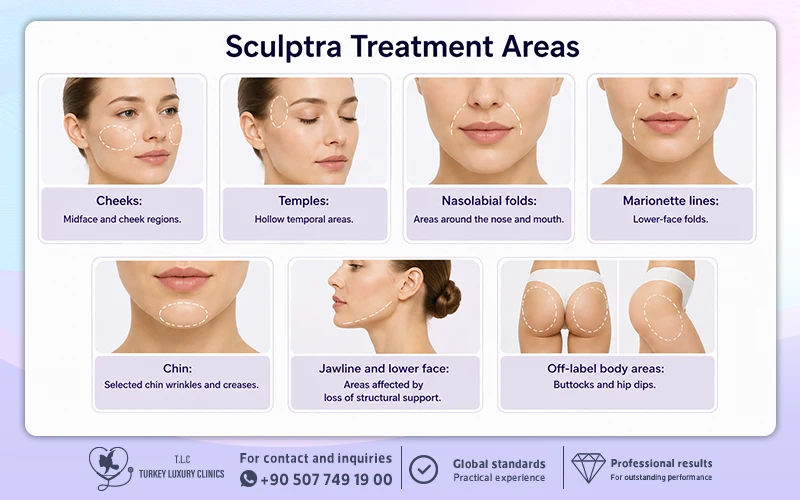
Sculptra treatment areas may include:
- Cheeks: Midface and cheek regions.
- Temples: Hollow temporal areas.
- Nasolabial folds: Areas around the nose and mouth.
- Marionette lines: Lower-face folds.
- Chin: Selected chin wrinkles and creases.
- Jawline and lower face: Areas affected by loss of structural support.
Off-label body areas: Buttocks and hip dips.
What Does Sculptra Treat and Where Is It Used?
Sculptra is used to restore lost facial volume, soften wrinkles and folds, improve facial contours, and stimulate collagen production. Common Sculptra treatment areas include the cheeks, temples, smile lines, chin, and jawline. It is also used off-label for body contouring, particularly the buttocks and hip dips.
Sculptra for Cheeks and Facial Volume Loss
Sculptra can restore age-related volume loss in the cheeks and midface, including sunken or flattened cheeks. Rather than adding permanent physical volume itself, Sculptra stimulates new collagen formation, gradually improving cheek fullness, structural support, and facial contour. Sculptra is FDA-approved in the U.S. for the correction of fine lines and wrinkles in the cheek region.
Sculptra for Temples
Sculptra may be injected into hollow or sunken temples to gradually restore volume lost with aging. Collagen production increases over time, creating a smoother transition between the forehead, temples, and cheeks rather than an immediate filling effect.
Sculptra for Smile Lines and Facial Wrinkles
Sculptra can soften nasolabial folds (smile lines) and other facial wrinkles by rebuilding collagen and structural support beneath the skin. It may also be used for selected marionette lines and chin wrinkles, depending on the patient's anatomy and treatment plan.
Sculptra for Jawline and Skin Laxity
Sculptra can improve jawline definition and mild skin laxity by increasing collagen and structural support in the lower face and adjacent cheek region. It may create a firmer, better-defined contour, but it does not remove excess skin or provide the degree of lifting achieved with facelift surgery.
Sculptra for Buttocks and Hip Dips
A Sculptra butt lift is an off-label use of Sculptra for buttock augmentation and the improvement of hip dips. Multiple vials are injected into targeted areas to stimulate collagen production, gradually adding volume and improving the contour of the buttocks and hips. Because these are larger treatment areas, Sculptra butt lifts typically require substantially more vials than facial treatments.
Other off-label treatment areas may include selected body areas, but suitability depends on anatomy, treatment goals, and injector experience.
Sculptra Face Injections: What Happens During the Session
Sculptra face injections are performed by placing a reconstituted poly-L-lactic acid (PLLA) suspension into selected deeper tissue planes of the face to stimulate collagen production.
The exact injection sites, depth, amount of Sculptra, and technique are selected according to the treatment area, degree of volume loss, and individual facial anatomy.
Step by Step Sculptra Treatment:
- Facial assessment: The provider evaluates facial volume loss, wrinkles, skin quality, and facial structure to determine where Sculptra should be placed.
- Preparation: The treatment areas are cleaned and marked. A topical or local anesthetic may be used to improve comfort.
- Sculptra injection: The reconstituted PLLA suspension is injected into predetermined areas using an appropriate needle or cannula and technique.
- Massage: The treated areas are massaged after injection to help distribute the product evenly.
A Sculptra session generally takes around 30 to 60 minutes, depending on the number of areas treated. Unlike HA filler, the fullness seen immediately after injection is not the final result; much of the early volume comes from the injected fluid and swelling. As this subsides, Sculptra gradually stimulates new collagen, with results developing over the following weeks and months.
After the Treatment
Temporary swelling, redness, tenderness, or bruising may occur at the injection sites. The initial fullness typically decreases within several days as the fluid used to reconstitute Sculptra is absorbed.
Patients are usually given aftercare instructions, which may include massage of the treated areas, according to the injector’s protocol.
How Many Sculptra Treatments Are Needed?
Most patients require 2–3 treatment sessions, commonly spaced about 4–6 weeks apart, although the exact number depends on age, degree of volume loss, treatment area, and desired correction.
Sculptra Results Timeline: When Do Results Appear?
Sculptra results develop gradually rather than immediately. The initial fullness seen after injection is mainly from the reconstitution fluid and temporary swelling, which usually subsides within a few days. Early collagen-related improvements may become noticeable after about 4–6 weeks, with more visible volume restoration developing over 3–4 months and fuller results often becoming apparent by 3–6 months. Results can last up to 2 years or longer in some patients.
- Days 1–5: Temporary swelling and fullness from the injected fluid.
- Weeks 4–6: Early collagen production begins to create subtle improvement in skin quality and firmness.
- Months 3–4: Facial volume and contour become more noticeably improved.
- Months 5–6: Collagen remodeling is more established and results are usually more developed.
- Up to 2 years or longer: The collagen-related improvement may remain visible, although longevity varies by patient, treatment area, age, and number of sessions.
What Do Sculptra Results Look Like?
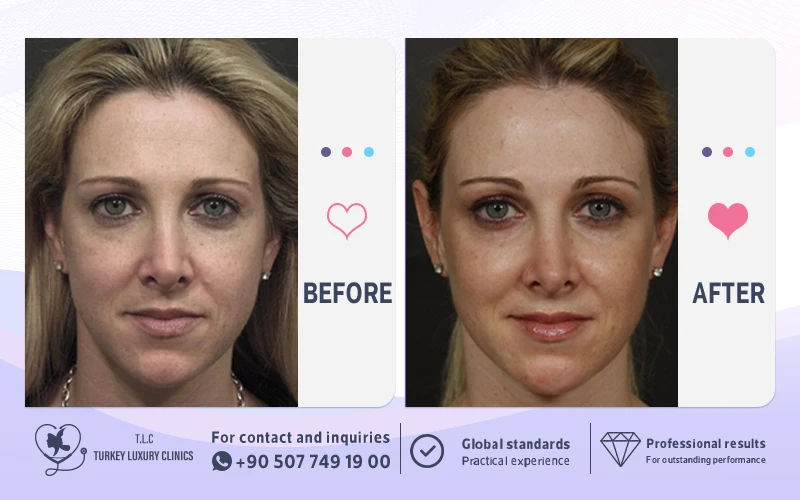
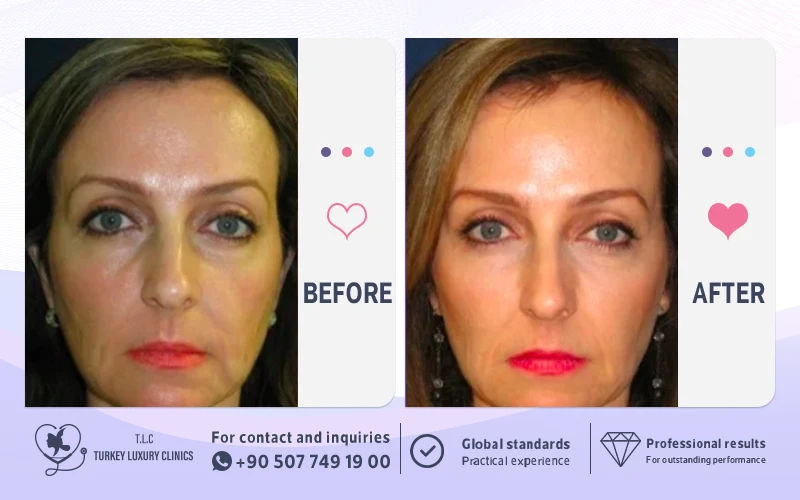
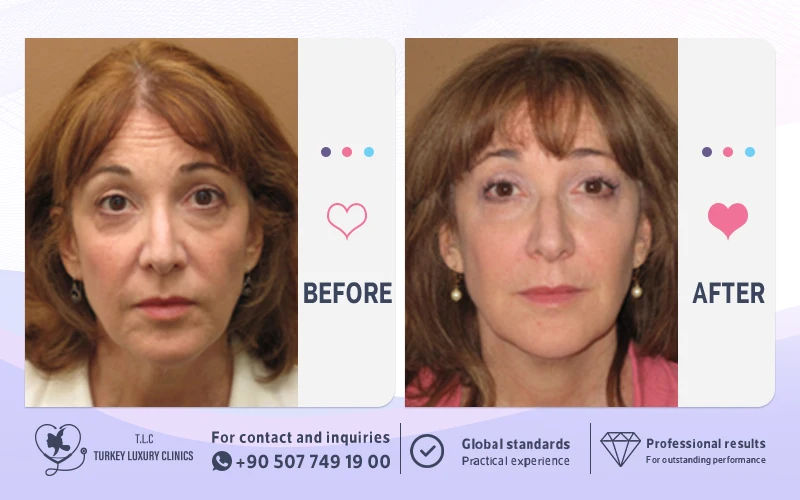
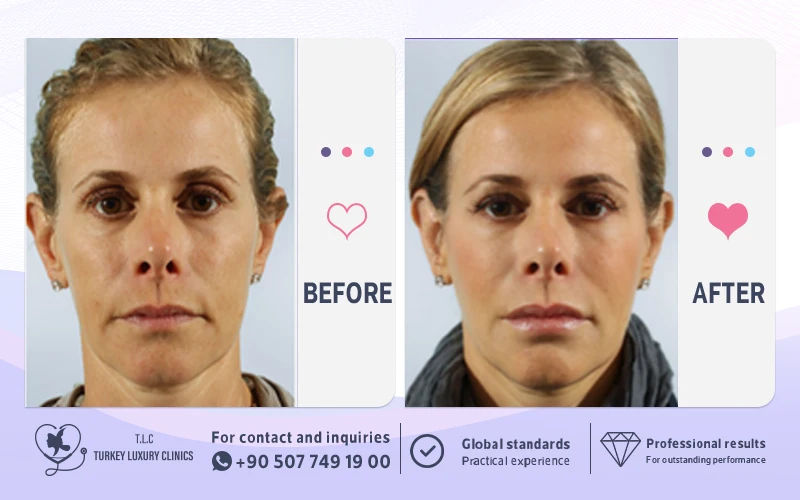
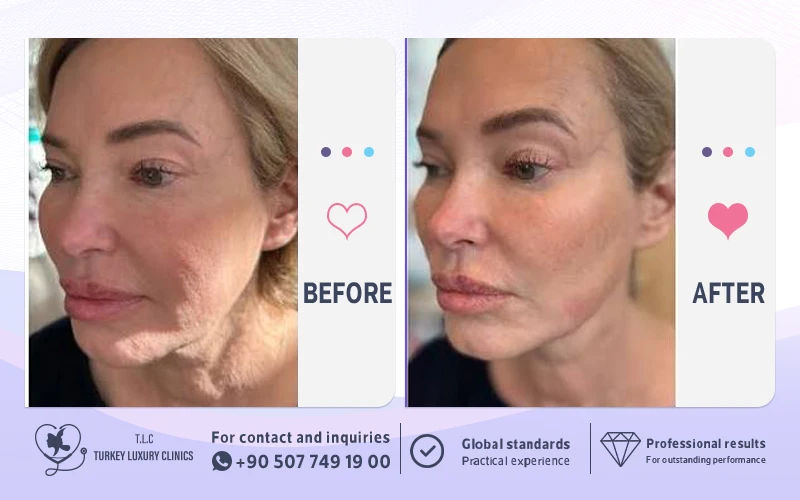
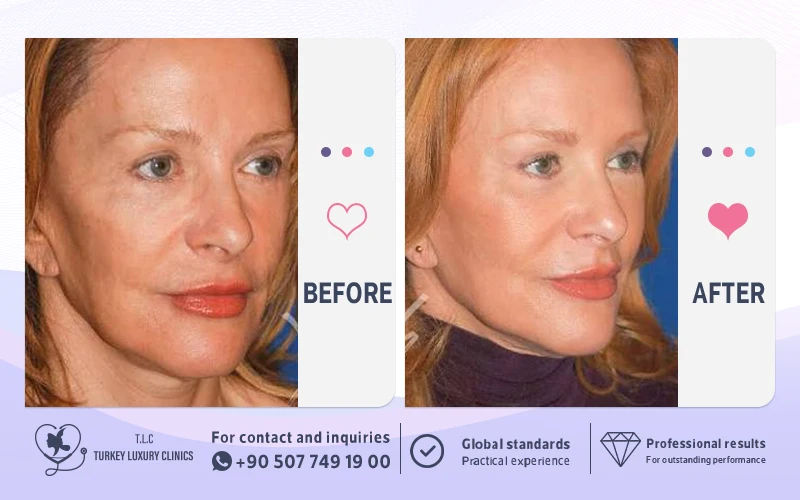
Sculptra usually produces a gradual, natural-looking improvement rather than an abrupt change. Patients may notice better facial volume, smoother folds, firmer skin, and improved contour as new collagen develops.
See our Sculptra before and after guide for real examples of how results develop across the cheeks, jawline, temples, hip dips, and buttocks over time.
Sculptra Pros and Cons
Sculptra’s main advantages are gradual, natural-looking results, collagen stimulation, and effects that can last up to two years. Its main disadvantages are delayed results, the need for multiple treatment sessions, higher upfront cost, and the fact that it cannot be dissolved like hyaluronic acid fillers.
Sculptra Pros | Sculptra Cons |
Stimulates natural collagen production | Results are not immediate |
Gradual, natural-looking improvement | Usually requires multiple sessions |
Results can last up to 2 years | Cannot be dissolved like HA fillers |
Restores broader facial volume loss | Less suitable for precise, immediate correction |
Improves skin structure and firmness | Swelling, bruising, tenderness, and redness can occur |
Progressive improvement over several months | Lumps or nodules can occur |
PLLA is biodegradable and gradually absorbed | Results depend heavily on injector technique |
Sculptra Treatment: When to Use and When not to Use
Use Sculptra When:
- You want gradual, natural-looking volume restoration rather than an immediate change.
- You have age-related collagen and facial volume loss, particularly across broader areas.
- You want to stimulate your own collagen production rather than rely solely on injected filler volume.
- You want results that may last up to two years.
- You want to improve volume, skin firmness, structure, and facial contour together.
- You are comfortable with the higher upfront cost and multiple-session treatment plan.
Why Sculptra May Not Be Right for You?
- You want immediate results.
- You need precise enhancement of a small area, such as the lips.
- You want a treatment that can be dissolved if necessary, as HA fillers can.
- You do not want to undergo multiple treatment sessions.
- You prefer a treatment with a lower upfront cost.
- You are not comfortable waiting several weeks or months for the final result to develop.
Sculptra Side Effects and Risks
Most Sculptra side effects are temporary and occur around the injection site, including swelling, bruising, redness, tenderness, pain, itching, and small lumps or bumps under the skin. Rare but more serious complications can occur if the product is injected into or near a blood vessel.
Common Side Effects
- Swelling
- Bruising
- Redness
- Tenderness or pain
- Itching
- Temporary skin discoloration
- Small bumps or lumps under the skin
Cleveland Clinic lists swelling, bruising, discoloration, pain, itching, and bumps or lumps among recognized risks. Healthline similarly lists redness, tenderness, pain, bleeding, itching, bumps, and possible skin discoloration.
Nodules and Lumps
One of the more characteristic Sculptra complications is the development of papules or subcutaneous nodules, which may appear as palpable or visible lumps beneath the skin. Risk can be affected by injection depth, product preparation, placement, and treatment area. The FDA labeling specifically notes an increased risk of papules and nodules with injections in the periorbital area.
Rare but Serious Complications
Sculptra must not be injected into blood vessels. Accidental intravascular injection can cause vascular occlusion, infarction, or embolic complications, and localized tissue necrosis and scarring may occur after injection in or near a vessel.
The FDA safety data also reports that visual disturbances, including blindness, have been reported after injections in higher-risk facial areas such as the temples and around the eyes.
Where Sculptra Should Not Be Injected
- Sculptra should not be injected into blood vessels.
- It should not be injected into the vermillion of the lips.
- The official U.S. information advises against injection in the periorbital area.
- Treatment should be postponed where there are active skin sores, cysts, pimples, rashes, hives, or infection until the area heals.
Who Should Not Get Sculptra?
FDA lists contraindications including:
- Hypersensitivity to any Sculptra component.
- Severe allergy with a history of anaphylaxis.
- Multiple severe allergies.
- History or susceptibility to keloids or hypertrophic scarring.
- Allergy to lidocaine or other amide-type local anesthetics when lidocaine is included in the reconstitution.
Sculptra Reviews
Sculptra reviews are generally positive but mixed, with many patients praising its natural-looking, gradual results, improved facial volume, firmer skin, and long-lasting effect.
Common positive feedback includes:
- Natural-looking volume without an overfilled appearance
- Improved skin firmness and texture
- Results that may last two years or longer
Common complaints include:
- Results take several weeks or months to appear
- Multiple treatment sessions may be required
- Massage and aftercare require commitment
- Lumps, nodules, or unwanted contour changes can occur, particularly with poor injection technique
Overall, Sculptra tends to receive better reviews from patients who want gradual collagen restoration and subtle facial rejuvenation, rather than immediate or easily reversible volume.
How Much Does Sculptra Cost?
Sculptra typically costs $600–$1,200 per vial, with many patients paying around $700–$1,000 per vial. Because most treatments require multiple vials across 2–3 sessions, a complete Sculptra treatment plan may cost approximately $2,000–$6,000 or more.
The total cost depends mainly on the number of vials needed, treatment area, degree of volume loss, number of sessions, injector experience, and clinic location. Larger treatment areas require more product; for example, full-face rejuvenation may require several vials, while off-label treatment of the buttocks or hip dips can require considerably more.
Sculptra generally has a higher upfront cost than traditional HA fillers, which often cost around $500–$1,200 per syringe. However, Sculptra results can last up to two years or, longer, while many HA fillers last approximately 6–18 months, depending on the product and treatment area. This means Sculptra may offer better long-term value for patients seeking broader, gradual volume restoration, although the two treatments serve different purposes.
Sculptra Cost in Turkey
Sculptra treatment in Turkey is generally more affordable than in the U.S. or UK, particularly for patients who require multiple vials or treatment sessions.
Sculptra treatment in Turkey typically costs around $350–$900 per vial, while a full treatment course may cost approximately $1,500–$2,700+, depending on the number of vials, treatment area, clinic, and treatment plan.
See our complete Sculptra cost in Turkey guide for current 2026 prices per vial, facial treatment costs, body treatment prices, and package estimates.
Is Sculptra Really Worth the Money?
Sculptra may be worth the cost for patients who want gradual, natural-looking volume restoration and longer-lasting collagen stimulation rather than immediate filler results.
Although the upfront cost can be higher because multiple vials and sessions may be needed, results can last up to two years or longer. However, it may offer less value for patients seeking immediate, precise, or reversible correction.
Considering Sculptra Treatment in Turkey?
The right Sculptra treatment plan depends on the areas you want to treat, the degree of volume loss, and the number of vials required to achieve your goals.
Contact Turkey Luxury Clinics for a personalized consultation and treatment plan. Our team can connect you with experienced Sculptra providers in Turkey, help you compare treatment options and costs, and estimate how many sessions and vials you may need.
Get your personalized Sculptra treatment plan in Turkey.
FAQs About Sculptra