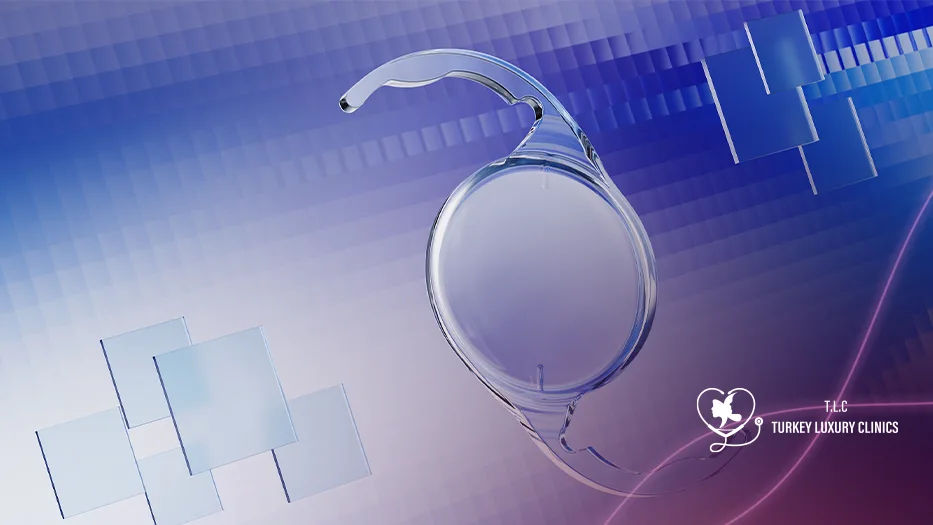


- Vivity Lens: Vision Results, Side Effects, Cost & Recovery
- What Is the Vivity Lens and How Does It Work?
- What Are the Pros and Cons of Vivity Lenses?
- Who Is a Good Candidate for a Vivity Lens?
- Vivity Lens Results: Distance, Computer and Reading Vision
- Vivity Lens Reviews: What Do Patients Actually Report?
- Vivity Lens Complaints: Reading Glasses, Glare and Night Vision
- Vivity vs PanOptix vs Monofocal Lenses
- Vivity Lens Price: What Determines the Cost in Turkey?
- Vivity Lens for Cataract Surgery: What Happens During Treatment?
- Recovery After Cataract Surgery With Vivity
- Is the Vivity Lens Worth It for Your Daily Routine?
The Vivity lens is a non-diffractive extended depth-of-focus (EDOF) implant used in cataract surgery to improve distance and computer vision. In Alcon’s US clinical trial of the original AcrySof IQ Vivity lens, 94% of patients rated distance vision as good or very good without glasses in bright light; 92% reported the same at arm’s length.
These figures do not represent results for every Clareon Vivity model. Reading glasses may still be needed, and reduced contrast can affect night driving. Suitability depends on eye health and daily needs.
Vivity Lens: Vision Results, Side Effects, Cost & Recovery
Vivity offers a wider range of focus than a standard distance-targeted monofocal lens, with important limits for near reading and low-light contrast.
Feature | What to know |
Manufacturer | Alcon |
Lens category | Non-diffractive EDOF intraocular lens (IOL) |
Best visual ranges | Distance and intermediate |
Near reading | Some functional near vision; readers may still be needed |
Astigmatism | Toric models are available for suitable eyes |
Common concerns | Fine print, glare, halos and low-light contrast |
Cost | General premium IOL surgery in Turkey: $2,500–$2,500–$4,500 per eye; not a Vivity-specific quote |
Recovery | Vision often improves over days; healing and adjustment can take weeks |
What Is the Vivity Lens and How Does It Work?
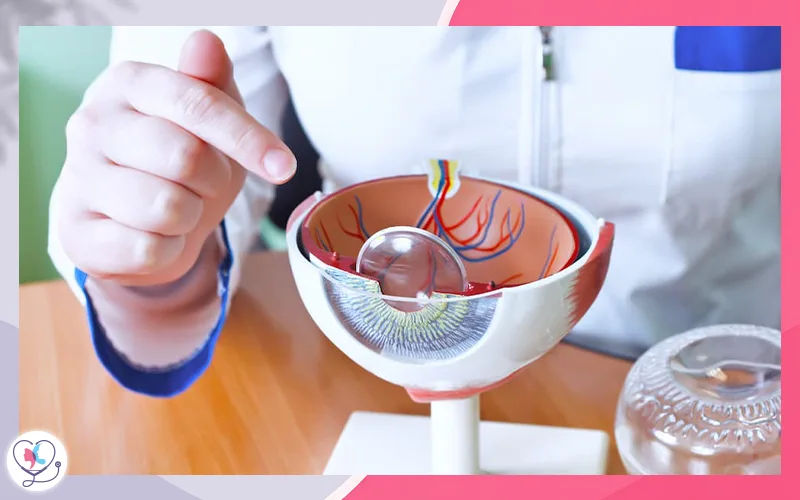
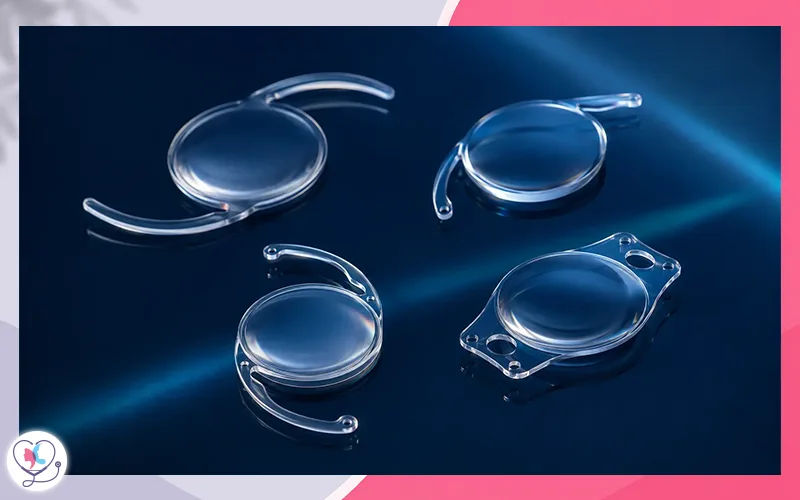
Vivity is an artificial intraocular lens (IOL) implanted during cataract surgery after the cloudy natural lens is removed. It extends useful focus beyond the single target of a conventional monofocal IOL.
- How it works. Alcon’s non-diffractive X-WAVE technology changes how light passes through the lens. It does not use diffractive rings to create separate focal points.
- Range of vision. Vivity is designed to support distance and intermediate vision, including activities at arm’s length. It also provides some near vision, although reading glasses may still be needed.
- Vivity optical design. The name Vivity refers to the lens’s extended-depth-of-focus design.
- Clareon material platform. Clareon describes Alcon’s lens material platform. Clareon Vivity combines this material with the Vivity optical design.
- Clareon Vivity Toric. This version also corrects suitable corneal astigmatism.
- Earlier lens models. Some clinical studies tested AcrySof IQ Vivity lenses. Their findings should not be presented as if every Clareon Vivity model was tested separately.
What Are the Pros and Cons of Vivity Lenses?
The main benefit is useful distance and intermediate vision with less reliance on glasses for everyday activities. The main compromises involve fine near work and some aspects of visual quality.
Potential advantage | Important limitation |
Clear distance vision for many suitable patients | Results depend on eye health and lens power |
Better computer-range vision than a distance-targeted monofocal | Small print may still need readers |
Extended focus without diffractive rings | Halos, glare and starbursts remain possible |
Toric option for suitable astigmatism | Accurate measurements and lens alignment matter |
Reduced glasses use for some activities | Low-light contrast can be lower than with a monofocal |
A patient who spends hours on a computer may value this balance. Someone whose priority is reading very small print without glasses may prefer to discuss other lens options.
Who Is a Good Candidate for a Vivity Lens?
Vivity may suit adults undergoing cataract surgery who value distance and intermediate vision more than complete independence from reading glasses.
The choice depends on more than a prescription. An ophthalmologist needs to assess the cornea, retina, optic nerve, tear film, astigmatism and previous eye surgery. Conditions such as significant retinal disease, glaucoma or corneal irregularity may limit the expected benefit or require another approach.
Night-driving habits also matter. A person who regularly drives on poorly lit roads may be particularly sensitive to changes in contrast. A discussion about daily activities—reading labels, working on screens, driving or sewing—is more useful than choosing by lens name alone.

Vivity Toric for Astigmatism
Clareon Vivity Toric adds correction for suitable corneal astigmatism. A standard non-toric Vivity lens does not provide that same toric correction. The surgeon uses eye measurements to choose the model and power. A toric lens must also remain correctly aligned to deliver its intended effect.
Vivity Lens Results: Distance, Computer and Reading Vision
Vivity aims to provide clear distance and computer-range vision, with less improvement for close reading. Individual results vary.
What Did the 2025 Clinical Study Find?
A 2025 study compared Clareon Vivity with Clareon monofocal lenses in 149 participants. Patients were not randomly assigned.
The findings showed:
- Distance vision: Both groups achieved comparable results.
- Computer and near vision: Clareon Vivity provided better intermediate and near vision.
- Reduced glasses use: 45.7% of Clareon Vivity patients rarely or never needed glasses, compared with 16.4% of monofocal patients.
An Alcon employee was among the study authors. These findings describe the study groups, not guaranteed outcomes.
What Does This Mean for Everyday Vision?
You may enjoy clear vision for driving and computer work but still need glasses for prolonged reading. Results also depend on eye healing, any remaining prescription, ocular surface health and whether one or both eyes were treated.
Will You Still Need Reading Glasses?
Possibly. Vivity reduces glasses dependence for some activities rather than eliminating it at every distance. Small labels, menus in dim light and extended reading may remain easier with reading glasses. That is a recognised limitation, not necessarily a surgical complication.

Vivity Lens Reviews: What Do Patients Actually Report?
Published Vivity lens reviews and patient surveys show why patient expectations matter. A 2022 study compared Vivity with other presbyopia-correcting lenses. The Vivity group included 60 people who had surgery in both eyes.
The findings show how much outcomes depend on what patients expect:
- 85% of Vivity recipients reported no glare or halos, or only a little, in dim light.
- 33% said they never needed glasses for any activity.
- Patient satisfaction: Among the 60 patients in this study’s Vivity group, 95% were somewhat or very satisfied with their vision. This is a result for that study group, not a predicted outcome for every Vivity patient.
These figures come from a published study of AcrySof IQ Vivity and Vivity Toric recipients. They are not verified Turkey Luxury Clinics patient results. The groups were not randomised, and the authors disclosed industry relationships. The results help explain trade-offs, but they cannot predict personal satisfaction.
If you read online reviews, look for details about the lens model, reading glasses, night driving and time since surgery. A patient who mainly works at a computer may be pleased with a result that disappoints someone who reads fine print all day. That context is more helpful than a star rating alone.
Vivity Lens Complaints: Reading Glasses, Glare and Night Vision
The complaints most relevant to a Vivity decision are continued need for reading glasses, halos or glare, starbursts and reduced contrast in dim conditions. These effects are possible, not inevitable.
Alcon’s current professional safety information warns that most Clareon Vivity recipients are likely to experience a significant reduction in contrast sensitivity compared with a monofocal IOL. Contrast sensitivity is the ability to distinguish an object from its background, especially in dim light. This matters particularly for night driving, especially with oncoming headlights. Although many patients report good vision, the risk deserves a clear discussion before consent.
Alcon reports that 1%–2% of patients in the original AcrySof IQ Vivity clinical study found starbursts, halos, blurred vision or dark areas very bothersome. No lens removals were reported in that study. This does not remove the risk of bothersome symptoms, and the results should not be applied to every Clareon model without qualification.
Blurred vision after surgery is not always caused by the lens design. Dry eye, a remaining focusing error, corneal swelling, inflammation, clouding of the capsule behind the implant and retinal problems can also affect vision. Persistent or worsening symptoms need an eye examination rather than an assumption that the brain simply needs more time to adapt.
Is Vivity suitable for night driving?
Some patients may be able to drive at night with Vivity, but reduced low-light contrast is a material safety consideration. Alcon specifically advises caution with activities requiring good vision in dim conditions, including night driving. Discuss your usual driving conditions, eye health and alternative IOLs with your ophthalmologist before choosing this lens.
Vivity vs PanOptix vs Monofocal Lenses
The best lens depends on the visual distances you prioritise and the optical trade-offs you can accept. Vivity is often positioned between a distance-focused monofocal and a trifocal such as PanOptix.
Feature | Monofocal targeted for distance | Vivity EDOF | PanOptix trifocal |
Distance | Main focus | Strong | Strong |
Intermediate | Often needs some correction | Major strength | Usually useful |
Fine near reading | Glasses commonly needed | Glasses may still be needed | Greater potential for near independence |
Optical design | One main focus | Extended focus, non-diffractive | Multiple focal ranges |
Visual disturbances | Generally fewer optical trade-offs | Halos and glare still possible | Halos and glare can be more noticeable |
Best discussion point | Simplicity and distance clarity | Computer and everyday range | Greater near independence |
These are broad design differences, not a prediction for a particular eye. PanOptix may offer more near independence, while Vivity may be attractive to someone willing to use readers for fine print. Neither is universally better. For more context about the different approach, see the clinic’s Tri-Focal Smart Lens Surgery guide.
Vivity Lens Price: What Determines the Cost in Turkey?
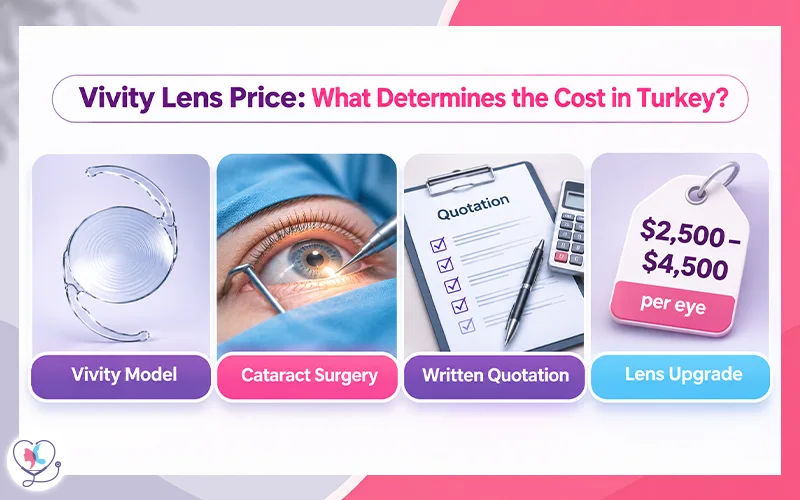
Turkey Luxury Clinics’ 2026 cataract surgery cost guide lists $2,500–$2,500–$4,500 per eye for premium IOL surgery in Turkey. This is a broad premium-lens price range, not a confirmed Vivity or Clareon Vivity quote. The published guide covers different implants and procedures, so the price for your chosen Vivity model must be confirmed separately.
Your total also depends on whether the quotation covers a lens upgrade or the full procedure. A written quotation should state the total in USD, the number of eyes covered, the exact implant model, and the costs of tests, medicines and follow-up care. A headline cataract surgery price may include a standard monofocal lens rather than Vivity.
Clareon Vivity Lens Price: Is It Different From Standard Vivity?
The Clareon Vivity lens price is not a fixed global amount. Clareon refers to Alcon's lens material platform, while Vivity describes its extended-focus design. A Clareon Vivity Toric model also corrects suitable corneal astigmatism. Your written quote should specify which model is planned and whether any extra toric fee applies.
Cost question | What the written quote should confirm |
Vivity or Clareon Vivity? | Exact Alcon implant model |
One eye or both? | Price per eye and full total in USD |
Astigmatism correction? | Whether the Toric model and any extra fee are included |
Surgical care? | Surgeon, facility, tests, medicines and follow-up |
Travel arrangements? | Whether accommodation and transfers are included, if offered |
Compare the full cost, not just the headline price. A quote that leaves out the Vivity implant, eye tests or aftercare may cost more than it first appears.
Vivity Lens for Cataract Surgery: What Happens During Treatment?
Vivity is implanted during cataract surgery, after the cloudy natural lens is removed. The operation follows the usual cataract surgery pathway rather than a separate Vivity-specific procedure.
- Eye assessment: The ophthalmologist checks eye health and measures the eye to calculate lens power.
- Visual planning: The surgeon discusses distance, computer and reading goals, including any astigmatism correction.
- Cataract removal: The cloudy lens is usually broken up using ultrasound and removed through a small incision. The clinic also explains this step in its phacoemulsification guide.
- IOL insertion: The folded Vivity lens is placed inside the remaining lens capsule.
- Aftercare: The patient receives prescribed eye drops and instructions for follow-up.
Cataract surgery is commonly performed under local anaesthetic. Many patients go home the same day, although individual arrangements vary. The procedure also has risks beyond the lens design, including infection, retinal detachment and clouding of the capsule behind the implant. Your surgeon should explain these risks before treatment.

Recovery After Cataract Surgery With Vivity
Vision may be blurry at first and often improves over the following days. Healing, visual adjustment and the final glasses prescription can take several weeks.
Period | What may happen | General care |
First day | Blurring, watering or a gritty feeling | Use prescribed drops; do not rub the eye |
First week | Vision often becomes clearer | Follow advice about washing, lifting and activity |
Following weeks | Vision continues to settle | Attend follow-up; discuss persistent blur |
Once stable | Glasses needs can be assessed | Review the result with the eye-care team |
The NHS advises avoiding driving until vision has recovered sufficiently and following the surgical team's advice on activity. A mild gritty feeling is different from severe or increasing pain.
Seek urgent medical assessment for sudden loss of vision, severe eye pain, worsening redness with blurred vision, new flashes, a sudden shower of floaters or a dark curtain across your sight. These are not normal symptoms to wait out.
Is the Vivity Lens Worth It for Your Daily Routine?
Vivity may be worth considering if you want good distance and intermediate vision and accept that reading glasses may still be needed. If reading fine print without glasses is your priority, discuss other lens options with your ophthalmologist.
Your choice should reflect three things.
- Eye health. Your eye examination helps determine whether Vivity is suitable.
- Daily activities. Consider computer work, close reading and night driving.
- Benefits and trade-offs. Weigh reduced glasses use against possible visual disturbances and the total treatment cost.
Study results can guide this discussion, but they cannot predict your individual outcome.
Considering Cataract Treatment in Turkey?
Contact Turkey Luxury Clinics through its cataract surgery service page to arrange an assessment and confirm Vivity availability.
If your ophthalmologist recommends the lens, request a written USD quotation specifying the implant model, number of eyes and included aftercare. Before booking your return journey, confirm your postoperative checks and who to contact for care once you are home.