

- 3 Month PRP Before and After Results
- 3 Month PRP for Hair loss Before and After with Photos
- 3 Months PRP Before and After Androgenetic Alopecia
- 3 Months PRP Before and After Female Pattern Hair Loss
- 3 Months PRP Before and After Alopecia Areata (Patchy Hair Loss)
- 3 Months PRP for Post-Hair Transplant Patients
- 3 Months PRP Before and After Telogen Effluvium (Stress-Related Shedding)
- PRP Hair Growth Timeline
- How PRP Works to Improve Hair Growth
- How Many PRP Sessions Are Needed for Hair Loss
- Are You a Good Candidate for PRP Hair Loss treatment
- Curious How PRP Can Transform Your Hair? Schedule Your Session with Turkey Luxury Clinics
- FAQs About 3 Month PRP for Hair Loss Before and After
After just 3 months of Platelet-Rich Plasma (PRP) therapy, many patients notice reduced hair shedding, early growth of fine “baby hairs,” and thicker, fuller strands in previously thinning areas.
PRP is a safe, nonsurgical treatment designed to increase hair density and improve scalp health, particularly for men and women with androgenetic alopecia (pattern baldness). While peak results are usually seen around 6 months, the 3-month mark already shows visible improvements in hair coverage, texture, and overall hair health. Discover how PRP can transform your hair in just a few sessions and see real before-and-after results below.
PRP is typically performed as a series of three monthly sessions. After three months, PRP helps stabilize hair loss and can improve hair density by 30–45% in men with androgenetic alopecia and by 20–35% in women with female pattern hair loss, depending on individual response.
In this article, you’ll see real 3-month PRP results and learn how this non-surgical treatment can boost your hair density and thickness — check out the before-and-after photos and discover how to start your sessions.
As you’ll see in the photos below, PRP can have a big impact on hair loss. Significant improvements in hair regrowth are often visible after just 3 months.
3 Month PRP Before and After Results
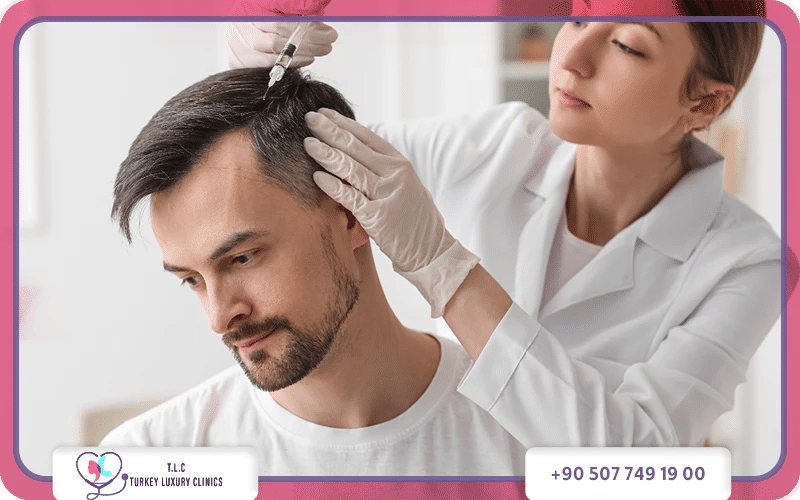
After 3 months of PRP hair treatment (typically three sessions), patients commonly experience significantly reduced hair fall, improved hair texture, and the appearance of new baby hairs. Visible improvements in hair density and thickness start becoming apparent around this milestone, with about a 30-45% increase in density reported by some.
- Reduced Hair Fall: Hair shedding usually decreases within 4–6 weeks as PRP helps stabilize the hair growth cycle and keeps more follicles in the active growth phase rather than the shedding phase.
- Initial Regrowth: Fine “baby hairs” often appear along the hairline or in thinning areas, indicating that previously weak or inactive follicles have started producing new hair again.
- Thicker Hair Texture: Existing hair strands gradually become stronger and thicker, giving the hair a fuller, healthier feel and making it less prone to breakage.
- Reduced Scalp Visibility: As hair strands thicken and new hairs grow, areas such as the crown and mid-scalp begin to show less visible scalp, creating better overall coverage.
- Density Improvements: Clinical observations show that hair density in treated areas can increase by up to about 30%, leading to fuller and more noticeable hair growth.
While PRP is not a permanent solution like hair transplantation, it provides satisfying improvements in hair thickness, density, and texture in several types of hair loss.
PRP delivers satisfying results in the following conditions:
- Androgenetic alopecia (male pattern baldness)
- Female pattern hair loss (thinning)
- Alopecia areata (patchy hair loss)
- Post-hair transplant thinning
- Telogen effluvium (stress-related shedding)
3 Month PRP for Hair loss Before and After with Photos
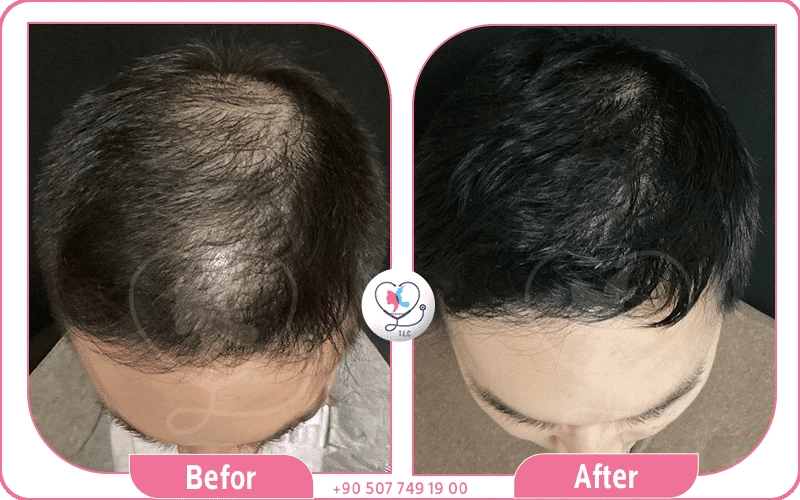
What results can you expect to see in before and after photos of PRP therapy after three months? By the third month, PRP treatment often leads to a noticeable increase in hair thickness in thinning areas, a significant reduction in hair shedding, and an overall improvement in hair density thanks to enhanced scalp nourishment. The main results typically visible in before and after photos include:
1. Visible Hair Density & Thickness
After three months of PRP hair treatment, hair begins to look noticeably fuller. Thinning areas show more coverage, and fine “baby hairs” start filling in the hairline. Each strand feels thicker and stronger, giving the hair a healthy, dense appearance that is visible when brushing, styling, or under bright lighting. These changes represent typical 3 months PRP hair results and early signs of hair density improvement with PRP.
2. Significant Reduction in Shedding
Hair shedding visibly slows down within the first month. Fewer hairs fall out during washing or brushing, and the scalp looks less thin. Overall, hair feels more resilient and stays in place better, showing a noticeable reduction in daily hair loss. This is one of the most commonly observed PRP for hair loss before and after effects.
3. Boosted Scalp Health & Appearance
The scalp begins to look fuller as thin spots gradually fill in. Hair shines under light, feels smoother, and is easier to style. Crowns and mid-scalp areas show less scalp visibility, giving the hair an overall healthier and more vibrant appearance. These visible improvements are part of the 3-month PRP hair results that many patients report.
3 Months PRP Before and After Androgenetic Alopecia
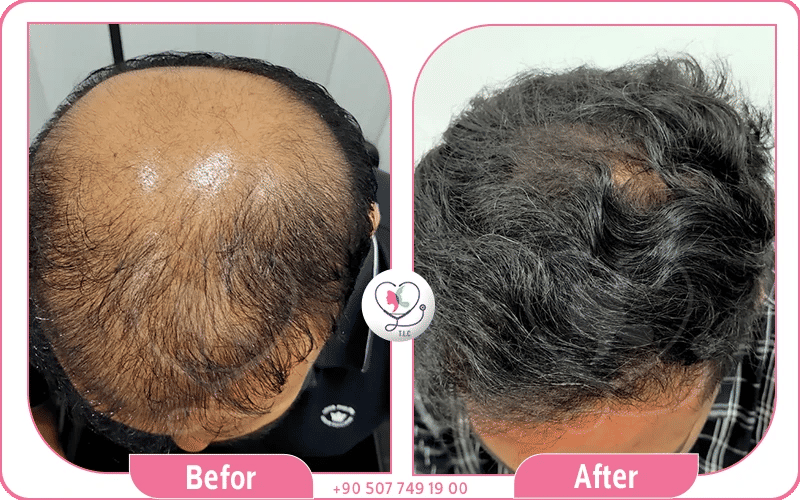
After three months of PRP treatment, men with androgenetic alopecia often experience the most dramatic changes. By the third month, hair count typically increases by around 20.5%. Patients may notice “baby hairs” filling in the hairline or crown, and the existing hair often feels thicker and stiffer when touched or combed.
3 Months PRP Before and After Female Pattern Hair Loss
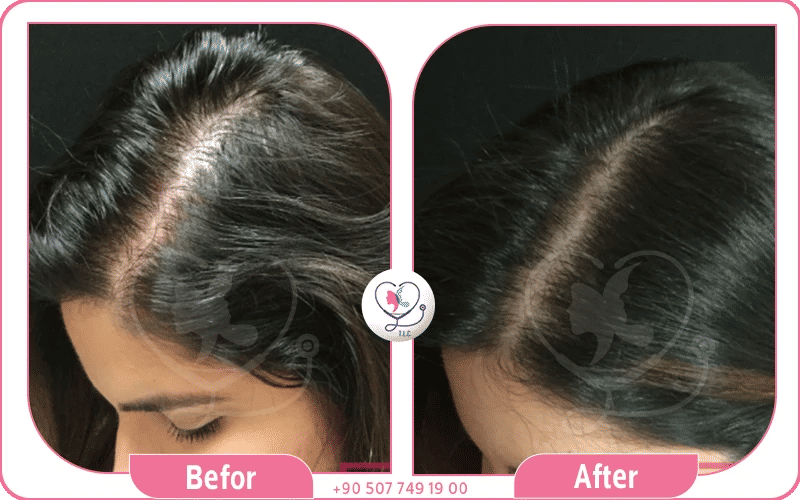
In women, the focus of PRP treatment is usually on improving hair volume and overall coverage rather than creating a new hairline. By the third month, the part line may appear narrower, ponytails feel fuller, and less scalp is visible under bright lighting. These subtle improvements often make hair look noticeably denser.
3 Months PRP Before and After Alopecia Areata (Patchy Hair Loss)
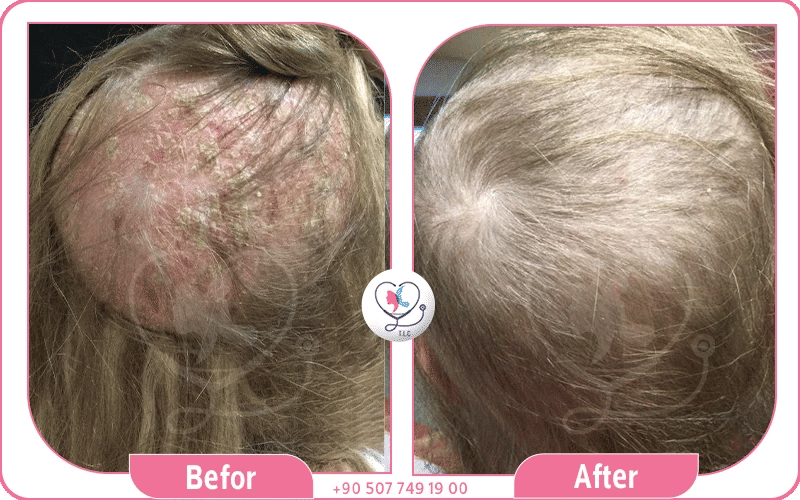
PRP acts as an anti-inflammatory therapy for patchy hair loss caused by alopecia areata. After three months, bald patches often start to sprout pigmented hairs instead of white fuzz. Clinical examinations also show a significant reduction in “yellow dots,” which are markers of active follicle inflammation.
3 Months PRP for Post-Hair Transplant Patients
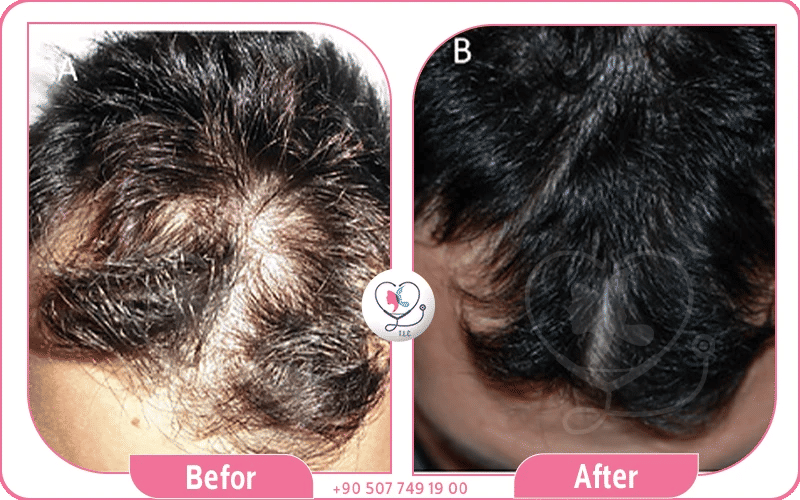
PRP is commonly used to enhance the results of hair transplant surgery. Patients who receive PRP alongside their transplant experience higher survival rates of the newly implanted grafts. In addition, the donor area typically heals faster compared to patients who do not receive PRP.
Read more about hair transplant combined with PRP therapy and the comparison between PRP vs hair transplant
3 Months PRP Before and After Telogen Effluvium (Stress-Related Shedding)
In cases of telogen effluvium, PRP helps accelerate the recovery of the hair growth cycle. By the third month, hair shedding often returns to the normal range of 50–100 hairs per day. Patients also report significant improvement in hair shine and overall hair quality.
PRP Hair Growth Timeline
Timeframe | Expected Progress |
Month 1 | Reduced inflammation; initial slowing of hair fall. |
Month 3 | Peak of "New Growth" phase; visible density and thickness. |
Month 6 | Most significant visual "before and after" difference. |
Month 12 | Maximum results; hair has matured and reached full length. |
Compare the PRP result with the hair transplant result timeline
Hair Transplant After 4 Months: What to Expect With Photos
Hair Transplant Week by Week: From Week 1 to Week 48
How PRP Works to Improve Hair Growth
The beneficial effects of PRP are thought to be related to the release of several growth factors, including platelet-derived growth factor (PDGF), vascular endothelial growth factor (VEGF), transforming growth factor beta (TGF-β), and insulin-like growth factor (IGF-1).
These growth factors stimulate dermal papilla cells, enhance angiogenesis around hair follicles, and promote the transition of hair follicles from the resting phase (telogen) to the active growth phase (anagen).
By enhancing follicular vascularization and cellular proliferation, PRP therapy may help prolong the anagen phase of the hair growth cycle.
How Many PRP Sessions Are Needed for Hair Loss
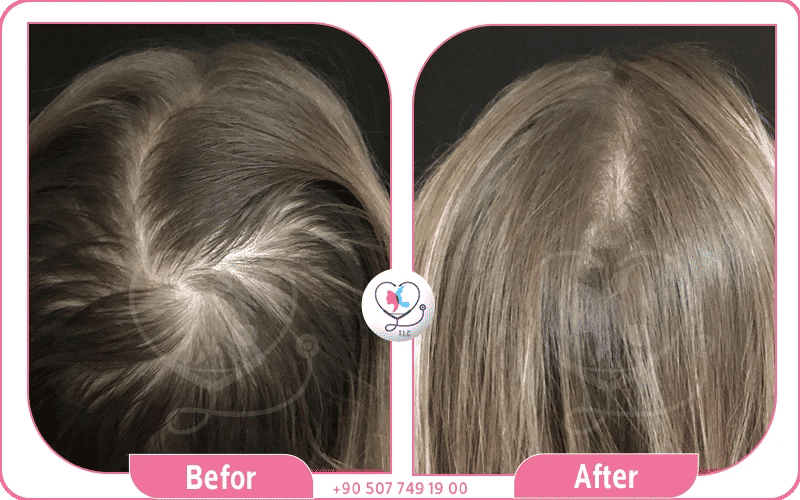
Most patients require 3 to 4 initial PRP sessions, spaced 4–6 weeks apart, to treat hair loss. Followed by maintenance sessions are typically needed every 3–6 months thereafter to sustain hair density.
- Initial Protocol: A series of 3 to 4 treatments is considered standard to jumpstart hair follicle stimulation.
- Optimal Timeline: Spacing treatments roughly one month apart ensures consistent, repeated stimulation for dormant follicles.
- Long-Term Maintenance: After the initial phase, 1 maintenance session every 3–6 months is recommended to prevent relapse.
Are You a Good Candidate for PRP Hair Loss treatment
Ideal candidates for Platelet-Rich Plasma (PRP) hair loss treatment are individuals experiencing early-to-moderate thinning, particularly androgenetic alopecia (pattern baldness) or alopecia areata, who still have active, dormant hair follicles. It is best suited for healthy adults seeking non-surgical, natural-looking improvements in hair density.
Curious How PRP Can Transform Your Hair? Schedule Your Session with Turkey Luxury Clinics
See the visible difference yourself: patients often notice significant improvements in hair density, texture, and new growth after just 3 months of PRP treatment.
Check out our gallery of before-and-after photos to see how PRP has helped men and women restore fuller, healthier hair.
Interested in trying PRP? Contact us today to schedule a consultation and find out how this non-surgical treatment can work for you.
FAQs About 3 Month PRP for Hair Loss Before and After