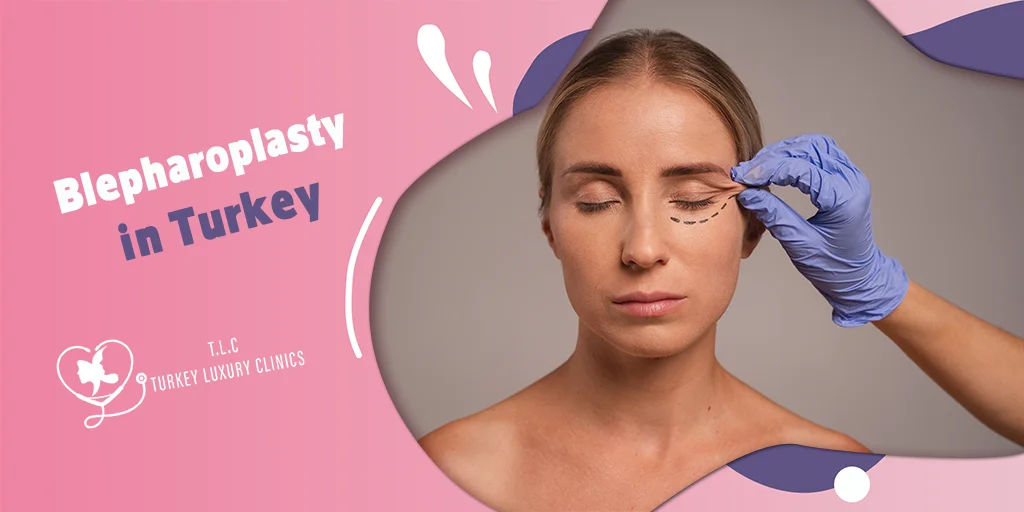


- Blepharoplasty Surgery in Turkey for International Patients
- Blepharoplasty Cost in Turkey (2026)
- Why Choose Turkey for Blepharoplasty?
- Best Destinations for Blepharoplasty in Turkey
- Top Blepharoplasty Surgeons in Istanbul
- Blepharoplasty Before and After Realistic Results with Photo
- Upper Blepharoplasty in Turkey
- Lower Blepharoplasty in Turkey
- Combined Upper and Lower Blepharoplasty (Quad Blepharoplasty)
- Upper vs. Lower vs. Quad Blepharoplasty
- Combining Blepharoplasty with Brow Lift or Facelift
- Blepharoplasty vs. Non-Surgical Alternatives
- Blepharoplasty Procedure Step-by-Step
- Blepharoplasty Recovery Timeline (Day 1 to Month 3)
- Blepharoplasty Risks & Complications
- Book Your Blepharoplasty with Turkey Luxury Clinic
- FAQs About Blepharoplasty in Turkey
Blepharoplasty in Turkey, or eyelid surgery in Turkey, offers a highly effective solution for eyelid rejuvenation at a fraction of the cost found in the US, UK, and Europe, without compromising clinical safety or aesthetic quality.
Whether your goal is to correct heavy, drooping upper eyelids that impair your superior vision or to eliminate persistent under-eye bags, blepharoplasty delivers permanent results by restoring a naturally refreshed and youthful appearance.
Eyelid surgery is medically recommended when structural periorbital changes either interfere with the visual field or create severe aesthetic concerns that cannot be resolved with non-surgical alternatives.
By utilizing advanced tissue-preserving techniques, board-certified facial surgeons in Turkey achieve symmetrical, long-lasting outcomes within internationally accredited hospital settings. As a widely performed cosmetic procedure chosen by thousands of international patients each year, it stands as a global gold standard for safety and affordability.
To assess your anatomical suitability and receive a personalized treatment plan with transparent pricing, you can contact Turkey Luxury Clinic for a free comprehensive digital consultation.
Blepharoplasty Surgery in Turkey for International Patients
Blepharoplasty (eyelid surgery) in Turkey is a precise cosmetic and reconstructive procedure designed to remove or reposition excess skin, lax muscle, and herniated fat from the upper and lower eyelids. It is increasingly sought after by global patients due to Turkey’s elite surgical faculties, highly modernized medical facilities, and structured all-inclusive packages.
- Best Destinations: Istanbul (The Medical Epicenter) and Antalya (The Coastal Recovery Hub)
- Hospital Standards: Joint Commission International (JCI) and Turkish Ministry of Health accredited private surgical facilities
- Surgeon Credentials: Specialists board-certified by TSPRAS (Turkish Society of Plastic Surgeons), EBOPRAS, and ISAPS
- Procedure Duration: Typically requires 1 to 2 hours depending on clinical complexity
- Anesthesia Options: Local anesthesia with deep intravenous (IV) conscious sedation, or general anesthesia
- Hospital Stay: Usually performed as an outpatient procedure; certain complex quad cases include a 1-night post-op stay for observation
- Recovery Downtime: Initial swelling and bruising peak by Day 3; most patients safely return to remote work and daily routines within 10 to 14 days
- Final Visual Results: Settles completely after a few months as scar tissue matures into invisible margins
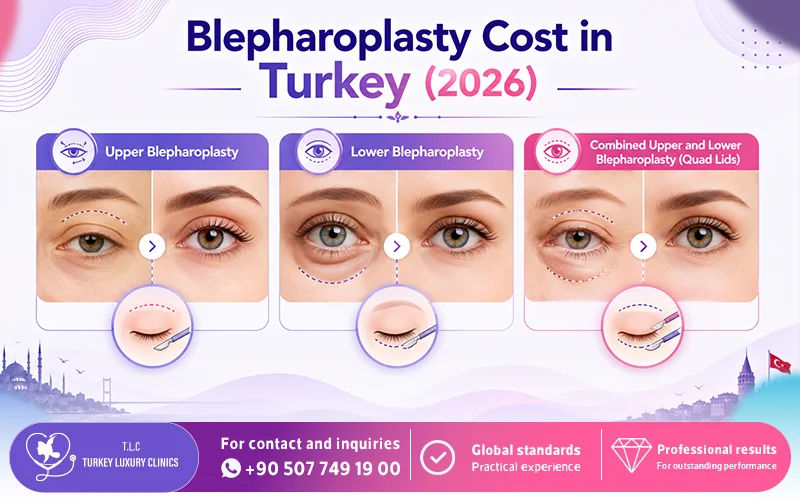
Blepharoplasty Cost in Turkey (2026)
Procedure | Average Cost |
Upper Blepharoplasty | $1,200–1,800 |
Lower Blepharoplasty | $1,400–2,000 |
Combined Upper & Lower (Quad) | $2,400–5,200 |
The average cost of blepharoplasty in Turkey ranges from $1,600 to $3,500 USD, which is up to 70% less than private clinics in the UK and US. This price typically includes the surgeon's fees, JCI-accredited hospital facility costs, luxury hotel accommodations, and VIP airport transfers as part of a fixed all-inclusive package.
The final quote is determined by your customized surgical plan, clinic grading, and whether surgery targets single zones or full-face alterations.
A combined quad procedure involves a higher upfront fee but is significantly more cost-efficient overall as patients save anesthesia fees and post-op hotel stay protocols into a single clinical session.
Upper Blepharoplasty Cost in Turkey
The average cost of upper blepharoplasty in Turkey ranges from $1,200 to $1,800. The final price depends on the surgeon's experience, anesthesia method, clinic location, and whether the procedure is performed alone or combined with other facial surgeries. Upper eyelid surgery is usually the most affordable type because it is less complex and requires a shorter operating time.
Lower Blepharoplasty Cost in Turkey
Lower blepharoplasty in Turkey generally costs $1,400 to $2,000. Surgery on the lower eyelids is often more technically demanding because it may involve fat repositioning, skin tightening, or correction of under-eye bags, which can increase the overall cost.
Combined Upper and Lower Blepharoplasty (Quad Belpharoplasty) Cost
A combined upper and lower blepharoplasty usually costs between $2,400 and $5,200 in Turkey. Performing both procedures during one operation is typically more cost-effective than scheduling two separate surgeries because patients pay anesthesia and operating room fees only once.
Eyelid Surgery Prices in Turkey vs. UK, US, & Germany
Eyelid Surgery | Turkey | UK | US | Germany | Savings in Turkey |
Upper Eyelid Surgery | $1,600 | $4,600 | $4,500 | $4,200 | 65% |
Lower Eyelid Surgery | $1,700 | $5,900 | $5,500 | $5,000 | 70% |
Quad Blepharoplasty | $2,500 | $8,500 | $8,000 | $7,500 | 70% |
Blepharoplasty in Turkey is typically 50% to 60% more affordable than in Western private medical clinics, while operating under identical or superior international safety protocols.
Blepharoplasty Cost by City in Turkey
City | Average Cost |
Istanbul | $1,600–3,500 |
Antalya | $1,500–3,300 |
Izmir | $1,400–3,200 |
Istanbul is the most popular destination for blepharoplasty due to its large number of experienced surgeons and internationally accredited hospitals. Antalya and Izmir may offer slightly lower prices while maintaining high standards of care.
What is Included in All-Inclusive Blepharoplasty Packages in Turkey?
While packages vary slightly by clinic, a structured all-inclusive eyelid surgery bundle arranged by Turkey Luxury Clinic covers your entire transit and medical stay:
- The Surgical Procedure: Comprehensive surgeon fees, anesthesiologist fees, pre-operative blood screens, clinical marking, and all post-op take-home medications.
- Clinical Facility: 1 night of post-operative observation in a private room at an accredited hospital (if required by the anesthesia protocol).
- Luxury Accommodation: 4 to 7 nights in a pre-vetted 4-star or 5-star hotel close to the clinic, including breakfast options for both the patient and an accompanying travel attendant.
- Private Logistics: Dedicated VIP chauffeur transfers managing all airport-to-hotel, hotel-to-clinic, and return commutes.
- Personal Support: Access to a multilingual patient coordinator/interpreter who provides full translation during all clinical checkups.
Are There Any Additional Costs?
Most blepharoplasty packages in Turkey include surgery, hospital fees, accommodation, and airport transfers. However, patients should confirm whether international flights, additional hotel nights, companion accommodation, or future revision surgery are included before booking. Requesting a written quotation helps avoid unexpected expenses.
What Factors Affect Your Eyelid Surgery Prices?
- Surgeon’s Credentials: Board-certified professors or specialized oculoplastic surgeons who limit their practice entirely to periorbital structures command higher surgical fees due to lower historical revision rates.
- Clinic and Hospital Location: Private facilities operating in central premium districts (such as Nişantaşı or Beşiktaş in Istanbul) have varied overhead costs which influence package adjustments.
- Anesthesia Type: General anesthesia requires a certified anesthesiologist and specialized operating theater monitoring equipment, increasing the base operational cost by $400 USD to $600 USD compared to local sedation.
- Combined Surgical Goals: Adding secondary procedures like an endoscopic brow lift, a mid-face lift, or micro-fat grafting to the tear troughs will increase the immediate package price but offer immense total savings compared to scheduling them independently.
Why Turkey Can Offer Lower Eyelid Surgery Prices than Western Countries
The significant price difference is sustained purely by macroeconomic indicators, not clinical compromise:
- Favorable Currency Exchange: The purchasing power of currencies like the British Pound, Euro, and US Dollar is exceptionally high against the Turkish Lira.
- Lower Operational Overhead: Hospital facility maintenance, administrative staffing, and medical malpractice insurance premiums are a fraction of those in Western Europe or North America.
- National Subsidies: The Turkish Government actively provides tax exemptions and development grants to licensed health tourism coordination companies to boost national infrastructure.
Why Choose Turkey for Blepharoplasty?
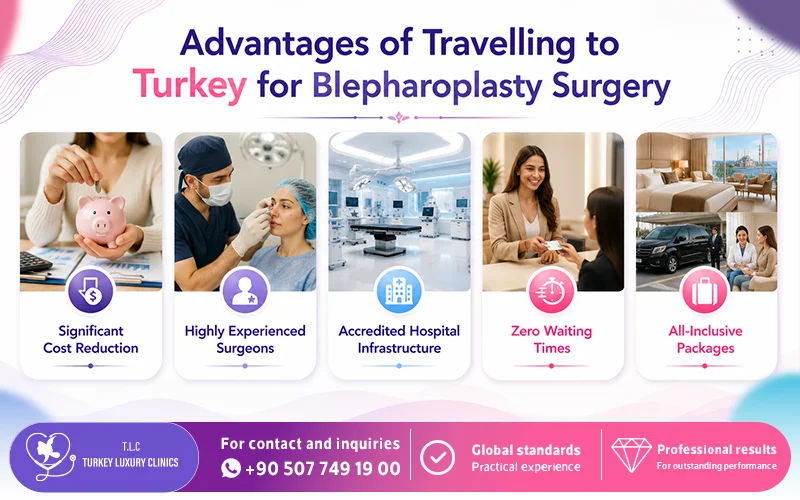
International patients choose Turkey for blepharoplasty because the country combines board-certified plastic surgery expertise (with certifications like ISAPS and EBOPRAS) with lower operational costs that reduce out-of-pocket expenses by 50% to 60%.
Additionally, Turkey’s highly developed medical tourism infrastructure eliminates waiting lists, allowing patients to schedule operations within days of a digital consultation.
Choosing a trusted medical tourism provider such as Turkey Luxury Clinic gives direct access to accredited, board-certified blepharoplasty surgeons and structured all-inclusive packages designed specifically for international patients seeking both safety and predictable outcomes.
The decision to undergo blepharoplasty in Turkey is mainly driven by three core advantages that directly impact both results and patient experience:
- High Cost Efficiency Without Compromising Quality: Turkish clinics deliver advanced eyelid surgery at significantly reduced prices compared to Western private hospitals, while maintaining internationally recognized clinical standards.
- Short Waiting Times: Most candidates in Turkey can schedule consultations and surgery within days or a few weeks after a digital assessment.
- Transparent All-Inclusive Pricing: With the fixed surgical packages, patients avoid unexpected additional medical costs and financial uncertainty.
- Strong Medical Tourism Infrastructure: Turkey has developed a highly organized system for international patients, where treatment, recovery, accommodation, and airport logistics are coordinated as one complete medical journey rather than separate fragmented services.
Best Destinations for Blepharoplasty in Turkey
When choosing where to undergo blepharoplasty in Turkey, the decision typically comes down to Istanbul and Antalya, and this choice can directly influence both surgical complexity and recovery experience.
- Istanbul (The Medical Epicenter): Istanbul is the strongest option for patients seeking advanced or revision eyelid surgery. It concentrates the highest number of experienced facial plastic surgeons and JCI-accredited hospitals, making it the preferred choice when precision, experience, and complex correction are priorities.
- Antalya (The Recovery Hub): Antalya is often selected by patients who prioritize comfort and a calm recovery environment. It combines medical treatment with a resort-style setting, making the post-surgery period feel less clinical and more relaxed.
For patients requiring advanced corrections such as lower eyelid fat repositioning or combined facial procedures, Istanbul remains the more clinically advanced and strategically recommended destination.
Top Blepharoplasty Surgeons in Istanbul
Choosing the right blepharoplasty surgeon in Turkey is the most critical factor in determining the safety, symmetry, and natural appearance of blepharoplasty results. Small differences in surgical technique can significantly affect long-term eyelid function and aesthetic balance.
Highly experienced eyelid surgeons typically perform a substantial volume of blepharoplasty procedures annually, consistently produce natural-looking results, and operate exclusively in accredited hospitals with full anesthesia and emergency support systems in place.
At Turkey Luxury Clinic, patients are matched with board-certified plastic surgeons specializing in eyelid surgery, affiliated with respected organizations such as TPRECD and ISAPS.
All procedures are carried out in accredited hospital environments with a strong focus on safety, precision, and achieving natural, long-lasting results. You can request a consultation through Turkey Luxury Clinic to be matched with a qualified eyelid specialist based on your needs.
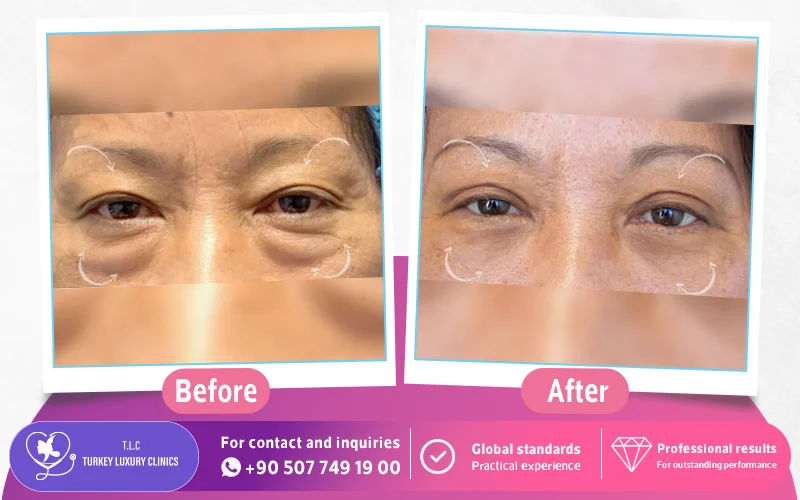
Blepharoplasty Before and After Realistic Results with Photo
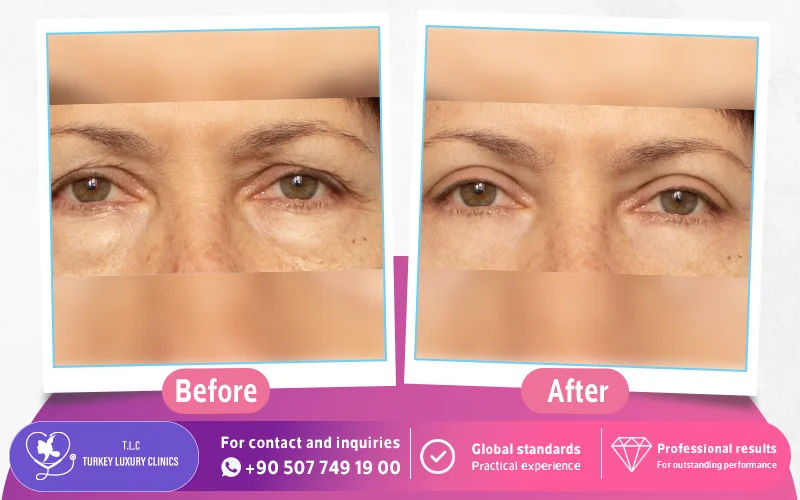
Timeline of Visual Results
- Weeks 1 – 2: Suture lines look slightly red. Localized swelling and bruising peak and then fade by roughly 70%.
- Month 1: The vast majority of residual deep edema resolves, revealing a much brighter, well-rested appearance.
- Month 6: Scar lines soften fully, transitioning from pink into faint, nearly invisible white lines cleanly tucked into your natural anatomical creases. At this stage, your refined contours are fully stable and permanent.
Longevity of Results
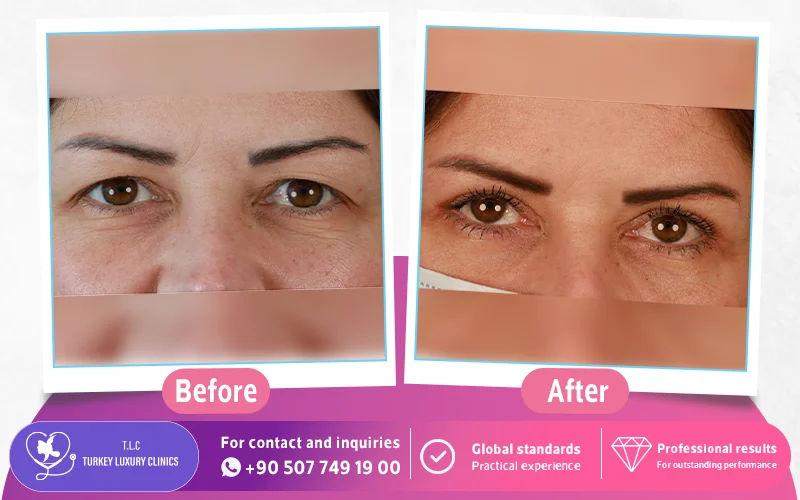
- Upper Blepharoplasty: Typically maintains its pristine position for 5 to 10 years. Results vary because the natural aging process of the forehead and brows continues over time, which can gradually push skin back down onto the upper lids.
- Lower Blepharoplasty: Frequently lasts a lifetime. The physical fat pads removed or repositioned from beneath the eyes do not regrow.
What Real Results Achieve
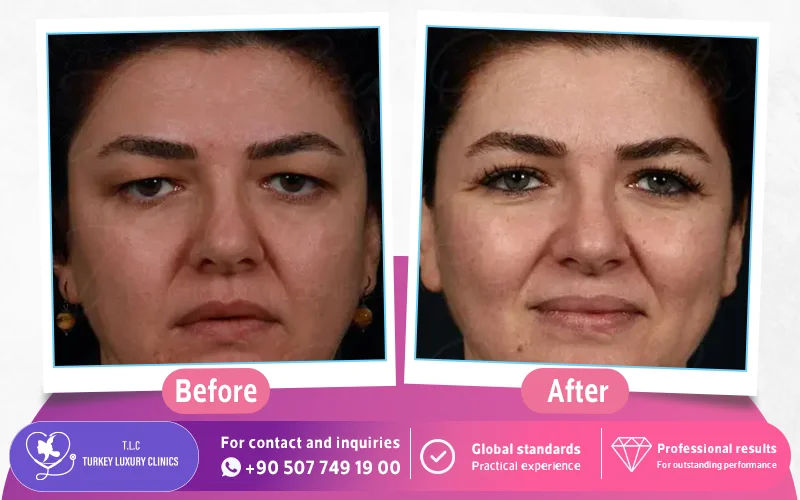
- Youthful Alertness: Eliminates a permanently "tired," "sad," or "angry" expression caused by structural tissue descent.
- Smoother Skin Canvas: Provides a flat, firm surface that allows for flawless cosmetic and makeup application.
- Expanded Vision: Restores the full upward and peripheral field of view if heavy upper hooding was physically encroaching on your line of sight.
Factors That Impact Longevity
- UV Sun Exposure: Chronic UV radiation breaks down localized collagen fibers, causing premature skin laxity around the delicate eye frame.
- Smoking Nicotine: Smoking drastically impairs micro-vascular blood flow, reducing skin elasticity and worsening incision line scar healing.
- Targeted Skincare: Daily hydration paired with clinically approved, gentle periorbital retinoids helps maintain long-term skin firmness.
Upper Blepharoplasty in Turkey
An upper blepharoplasty (or “eyelid lift”) is a surgical procedure that removes excess skin, muscle, and sometimes fat from the upper eyelids. It is performed by plastic surgeons or ophthalmologists to eliminate sagging “hooded” lids, resulting in a more rested, youthful appearance and, in some cases, improved vision. It targets:
- Hooded Eyelids: Excess skin folds that completely drape over your natural crease, making eyes appear visually smaller or tired.
- Sagging Skin & Muscle Laxity: Stretched tissue matrices that lose structural bounce over time, inducing a heavy sensation around the brows.
- Vision Obstruction: Severe upper drooping that physically blocks your upward sightline, qualifying the procedure as a functional medical necessity.
Upper Incision Technique: The surgeon places the incision line directly inside your pre-existing natural upper eyelid crease. When your eyes are fully open, the resulting micro-scar is completely hidden within the anatomical fold.
Lower Blepharoplasty in Turkey
Lower blepharoplasty is a cosmetic surgical procedure that removes or repositions excess fat and tightens sagging skin under the eyes. Often referred to as “eye bag surgery,” it is designed to reduce under-eye puffiness, smooth the transition between the lower eyelid and cheek, and minimize shadows that contribute to dark circles.
It targets:
- Chronic Eye Bags & Puffiness: Persistent lower lid swelling that fails to respond to sleep modifications, creams, or non-surgical dermal fillers.
- Under-Eye Fat Prolapse: The direct migration or herniation of orbital fat pads pushing outward against weakened structural retaining walls.
The Transconjunctival Technique: For patients with strong skin elasticity but pronounced fat bags, surgeons utilize a transconjunctival approach. The incision is made completely inside the pink lining of the lower eyelid. This technique guarantees zero external visible scarring and keeps surrounding skin matrices entirely intact.
Combined Upper and Lower Blepharoplasty (Quad Blepharoplasty)
Combined upper and lower blepharoplasty (often called a “quad blepharoplasty”) is a comprehensive cosmetic and functional procedure that treats both the upper and lower eyelids during a single surgical session. It corrects sagging upper eyelids while removing or repositioning under-eye fat bags to create a smoother, more youthful, and refreshed appearance.
Why Choose a Quad Blepharoplasty?
- Cohesive Facial Balance: Managing both zones simultaneously allows the facial specialist to align proportions perfectly, avoiding a mismatch where refreshed upper lids contrast with aging lower bags.
- Consolidated Downtime: Bruising, swelling, and social downtime are experienced in a single healing block rather than forcing patients to undergo two separate recovery windows.
- Financial Advantages: Bundling these procedures within a single package removes secondary operating theater rentals and dual anesthesiologist fees, reducing costs by up to 50% compared to separate timelines.
Read more about Upper vs Lower blepharoplasty surgery
Upper vs. Lower vs. Quad Blepharoplasty
Feature | Upper Blepharoplasty | Lower Blepharoplasty | Quad Blepharoplasty |
Target Area | Upper eyelids only | Lower eyelids only | Both upper & lower eyelids |
Primary Goal | Removes hooding & lifts heavy skin | Eliminates under-eye bags & shadows | Full, balanced periorbital rejuvenation |
Medical Need | Cosmetic, or Functional (Vision) | Strictly cosmetic adjustments | Can be functional and cosmetic |
Incision Site | Natural upper eyelid crease | Inside the lid (Transconjunctival) or below lash line | Combined upper crease + lower approach |
Anesthesia | Local anesthesia with sedation | General anesthesia, or deep IV sedation | General anesthesia or deep IV sedation |
Procedure Time | 45 to 60 minutes | 60 to 90 minutes | 90 to 150 minutes |
Recovery Window | 1 to 2 weeks | 1 to 2 weeks | 2 to 3 weeks |
Result Longevity | 5 to 10 years | Lifetime results | 10+ years global stability |
Combining Blepharoplasty with Brow Lift or Facelift
Facial aging rarely occurs in complete biological isolation. If your eyebrows sit heavily below the orbital rim, performing a standalone upper blepharoplasty will not fully open your expression; it may pull the brows further downward.
- Blepharoplasty + Endoscopic Brow Lift: Elevating the entire brow matrix balances the upper third of the face, preventing an over-resected, unnaturally taut surgical look.
- Blepharoplasty + Mid-Facelift / Tear Trough Fat Grafting: Instead of discarding herniated eye-bag fat during lower surgery, advanced surgeons reposition this vascular tissue into the hollow cheek-lid junction. This removes the shadow while filling out depleted mid-face volume.
- The Package Benefit: Combining these procedures within an all-inclusive framework in Turkey reduces total surgical investment by up to 50% compared to separate clinical timelines back home.
Blepharoplasty vs. Non-Surgical Alternatives
Non-surgical eye alterations cannot structurally replicate or replace the definitive tissue clearing provided by surgical intervention. They act primarily as early-stage maintenance filters.
Treatment Option | Ideal Candidate / Indications | Clinical Mechanism | Longevity of Results |
Dermal Tear Trough Fillers | Mild under-eye hollowing with zero fat herniation (no bags). | Hyaluronic acid gel is injected to smooth out the shadow beneath the eyes. | 9 to 14 months |
Plasma Pen / Fibroblast | Minimal upper eyelid skin laxity; early stages of wrinkling. | Electrical arcs sublimate micro-dots of skin, forcing immediate tissue contraction. | 1 to 2 years |
Lateral dynamic smile lines (crow's feet) and mild brow drooping. | Temporarily relaxes orbicularis oculi muscles to smooth out dynamic expression lines. | 3 to 4 months |
No topical laser, filler, or cosmetic injection can remove structurally herniated fat pads or excise sagging, detached skin. If your eyes present with pronounced bags or heavily hooded eyelids, surgical blepharoplasty is the only clinically viable solution.
Blepharoplasty Procedure Step-by-Step
- Step 1: Marking & Anesthesia: While you are completely upright, the surgical specialist marks your eyelid skin folds to ensure geometric symmetry. Local anesthetic mixed with adrenaline is injected into the margins to numb the field and clamp micro-vessels, which reduces post-op bruising.
- Step 2: The Incision: For upper lids, the incision follows your natural crease line. For lower lids, the surgeon cuts either transconjunctivally (completely inside the pink inner wall) or subciliary (1 mm below the lower lash line).
- Step 3: Tissue Modification: The surgeon meticulously trims away sagging skin, tightens underlying lax muscle fiber strings, and either conservatively resects or artistically repositions herniated orbital fat pockets into surrounding depressions.
- Step 4: Micro-Suture Closure: The incision sites are re-approximated using ultra-fine micro-sutures. Steri-Strips or skin-safe surgical glue are gently applied over the boundaries to secure the wounds during the initial 48 hours of healing.
Blepharoplasty Recovery Timeline (Day 1 to Month 3)
Eyelid tissue has an incredibly robust blood supply but is structurally delicate. Following a strict recovery regimen ensures stable incision maturation.
- Days 1 – 3 (Peak Swelling Phase): Swelling and bruising peak around day 3. Expect eyelid tightness, temporary sensitivity to ambient light, and minor blurred vision from protective ophthalmic ointments. Apply sterile cold compresses every 2 hours and keep your head elevated at a 45-degree angle using high-backed pillows.
- Days 5 – 6 (Suture Removal): You return to the clinic to have your ultra-fine micro-sutures safely extracted. Edema and skin tension decline sharply once the stitches are removed.
- Day 7 (Travel Clearance): Your surgeon evaluates your incision line closure and issues an official fit-to-fly certificate. You can safely return home and resume remote, non-strenuous desk work.
- Weeks 2 – 4 (Activity Resumption): Residual bruising can be safely concealed with specialized camouflage makeup from Day 10. Light walking can resume by Week 2, but heavy weightlifting, gym routines, or swimming must be completely avoided until Week 4 to prevent intraocular pressure spikes.
- Month 3 (Final Tissue Settling): The scar tissues soften fully, shifting from pink to your natural skin tone. They blend cleanly into your anatomical lines, locking in your permanent aesthetic results.
Blepharoplasty Risks & Complications
Every surgical procedure carries a small percentage of risk. Transparency is fundamental to patient safety:
- Temporary Dry Eyes (Ocular Sicca): Post-surgical edema alters your blink cycle, leading to rapid tear evaporation. Mitigation: Preservative-free artificial tears are prescribed for daily use, paired with lubricating ophthalmic ointments at bedtime.
- Eyelid Asymmetry: Minor healing speed variations between your left and right eyes can cause early visual differences. This typically self-corrects within 6 weeks as localized tissue fluids balance out.
- Lagophthalmos: The temporary inability to close the eyes completely due to initial post-op skin tightness. Permanent lagophthalmos only happens if an unvetted, under-qualified surgeon over-resects the skin matrix—highlighting the critical importance of checking surgeon credentials.
- Infection & Hematoma: Occurs in less than 1% of cases due to the robust vascular layout of the face. Adhering to prophylactic oral antibiotics and sterile cleaning routines eliminates this risk.
Book Your Blepharoplasty with Turkey Luxury Clinic
Ready to take the next step toward a more refreshed and youthful appearance? Contact Turkey Luxury Clinic to receive your personalized blepharoplasty plan, including certified surgeon recommendations, accurate pricing options, and full medical travel coordination.
FAQs About Blepharoplasty in Turkey