

- Clear Aligners vs Braces: Key Differences at a Glance
- How Clear Aligners and Braces Work
- Clear Aligners vs Braces: Side-by-Side Comparison
- Which Is More Effective: Clear Aligners or Metal Braces?
- Which Is More Affordable: Traditional Braces or Clear Aligners?
- Clear Aligners vs Braces: Pros and Cons
- Clear Aligners vs Braces for Adults and Teens
- Clear Braces vs Clear Aligners: Key Differences
- Lingual Braces vs Clear Aligners: Key Differences
- Are Metal Braces or Clear Aligners Better?
- Ready to Choose Between Clear Aligners and Braces?
- FAQs About Clear Aligners vs Braces
Clear aligners and braces are both effective orthodontic treatments that can straighten teeth, correct bite problems, and improve overall oral health.
In general, clear aligners offer advantages in appearance, comfort, oral hygiene, and dietary flexibility, while traditional braces remain the most reliable option for complex tooth movements, severe crowding, and significant bite corrections.
The choice between clear aligners and braces depends on several factors, including the severity of your orthodontic issues, your lifestyle, treatment goals, budget, and willingness to follow treatment instructions.
Compare clear aligners vs braces and learn how they differ in effectiveness, cost, treatment time, comfort, oral hygiene, suitability for adults and teens, and long-term results.
Clear Aligners vs Braces: Key Differences at a Glance
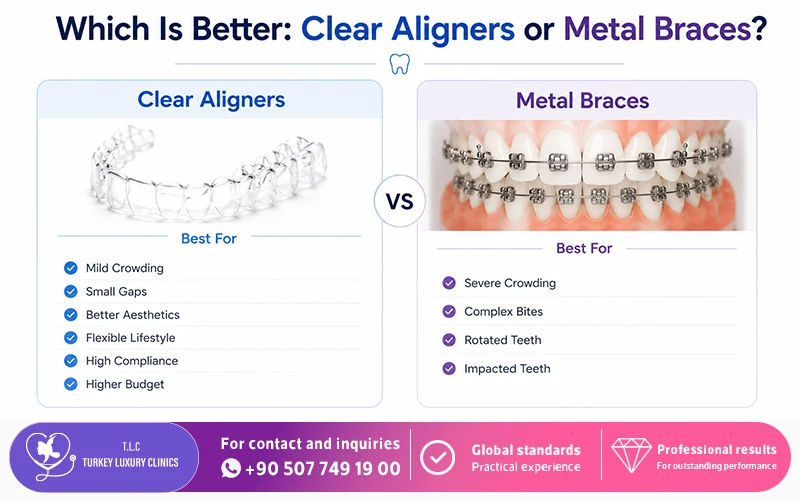
Factor | Clear Aligners | Traditional Braces |
Appearance | Nearly invisible | Visible metal or ceramic brackets |
Comfort | Smooth plastic trays with less irritation | Brackets and wires may cause mouth irritation |
Removability | Removable for eating and brushing | Fixed to the teeth until treatment is complete |
Eating Restrictions | No food restrictions when removed | Avoid hard, sticky, and chewy foods |
Oral Hygiene | Easier brushing and flossing | More difficult to clean around brackets and wires |
Treatment Effectiveness | Excellent for mild-to-moderate cases | Effective for mild, moderate, and complex cases |
Severe Crowding | May be suitable in some cases | Often preferred for severe crowding |
Bite Correction | Effective for many bite problems | Usually preferred for complex bite corrections |
Compliance Required | Must be worn 20–22 hours daily | Works continuously without patient compliance |
Office Visits | Typically fewer appointments | Usually requires more adjustment visits |
Adults | Popular for aesthetics and convenience | Suitable when greater tooth control is needed |
Teens | Good for responsible teens | Often recommended when compliance is a concern |
Cost | Similar to braces in many cases | Similar to aligners in many cases |
Best For | Patients seeking a discreet, removable option | Patients needing maximum control and complex tooth movement |
How Clear Aligners and Braces Work
Clear Aligners
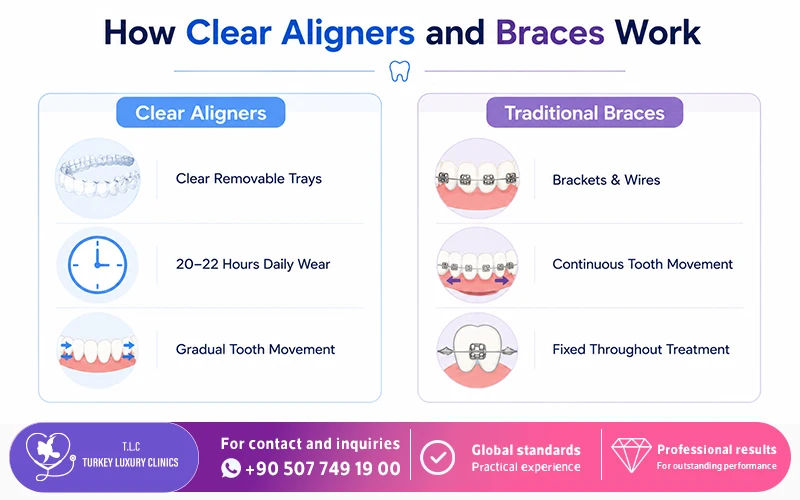
Clear aligners are a series of custom-made transparent trays designed to gradually move teeth into their planned positions. Your dentist uses a digital scan of your teeth to create a personalized treatment plan and a sequence of aligners. Each set is typically worn for 1–2 weeks before being replaced with the next set in the series.
Clear aligners are removable, and patients must wear them for 20–22 hours per day, removing them only for eating, drinking anything other than water, and oral hygiene.
Popular clear aligner brands include:
- Invisalign
- ClearCorrect
- Spark Aligners
- Angel Aligner
- SureSmile
Traditional Braces
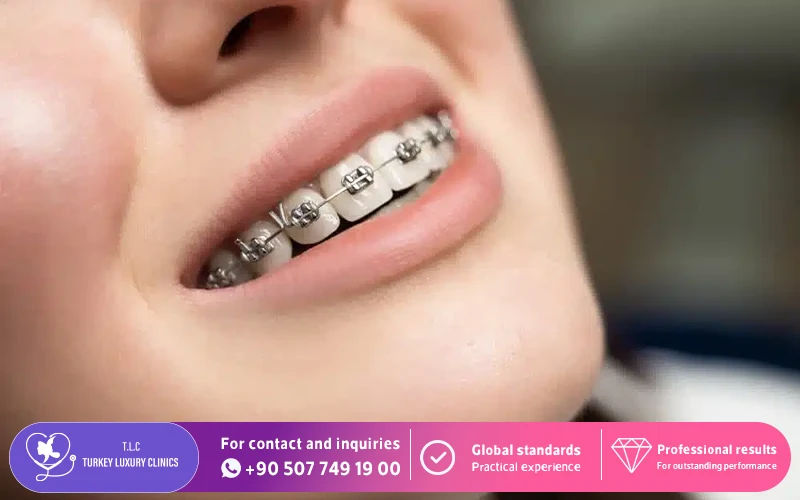
Traditional braces use metal or ceramic brackets bonded to the teeth and connected by an archwire. The wire applies continuous pressure that gradually moves teeth into their desired positions. During regular orthodontic appointments, the wire may be adjusted or replaced to continue guiding tooth movement throughout treatment.
Unlike clear aligners, braces remain fixed to the teeth and work continuously without requiring daily patient compliance. Additional components, such as elastic bands, springs, or other orthodontic appliances, may be used to correct complex bite problems and improve overall tooth alignment.
The main types of braces include:
- Metal braces
- Ceramic (clear) braces
- Self-ligating braces
- Lingual braces
Clear Aligners vs Braces: Side-by-Side Comparison
Appearance and Visibility
Clear aligners are the better choice if appearance is your top priority. Their transparent design makes them nearly invisible during daily activities, which is why they are popular among adults, professionals, and public-facing individuals. Traditional braces are more noticeable because brackets and wires remain visible throughout treatment, although ceramic braces offer a less conspicuous alternative.
Comfort and Pain
Most patients find clear aligners more comfortable than braces because they are made from smooth plastic and do not contain brackets or wires that can irritate the cheeks, lips, and gums. However, both treatments create pressure and temporary soreness as teeth move. Braces may cause additional discomfort after adjustments or if wires and brackets rub against soft tissues.
Eating and Food Restrictions
Clear aligners offer greater freedom when eating because they are removed before meals. Patients can continue eating popcorn, nuts, hard fruits, chewy foods, and other items that are often restricted during braces treatment. With traditional braces, certain foods should be avoided to reduce the risk of damaging brackets and wires.
Oral Hygiene and Cleaning
Clear aligners make oral hygiene easier because they can be removed for brushing and flossing. Patients can maintain their normal dental routine without navigating around brackets and wires. Braces require more time and effort to clean properly, increasing the importance of meticulous oral hygiene throughout treatment.
Monitoring and Follow-Up Visits
Both treatments require regular monitoring, but the experience differs. Braces typically require periodic wire adjustments and appliance checks. Clear aligner patients usually receive several sets of aligners in advance and may require fewer in-office adjustments, although follow-up appointments are still necessary to ensure teeth are moving as planned.
Treatment Duration
Neither treatment is consistently faster than the other. Treatment duration depends primarily on the complexity of the case and patient compliance. For mild to moderate cases, clear aligners and braces often achieve similar treatment times. For complex orthodontic problems, braces may provide more predictable and efficient tooth movement.
Lifestyle and Convenience
Clear aligners are generally more convenient for adults and busy individuals because they are removable for meals, special occasions, and oral hygiene. They also eliminate many of the dietary restrictions associated with braces. Traditional braces, however, have one important advantage: they work continuously without relying on the patient to remember daily wear time, making them particularly suitable for younger patients and individuals who may struggle with compliance.
Which Is More Effective: Clear Aligners or Metal Braces?
For severe cases such as significant crowding, major tooth rotations, impacted teeth, and complex bite problems (including severe overbites, underbites, and crossbites), metal braces are usually the best option because they provide continuous force and give orthodontists greater control over tooth movement.
Invisalign and other clear aligners are highly effective for mild to moderate crowding, spacing issues, and many common bite problems. They can achieve results comparable to braces in appropriately selected cases while offering the advantages of being nearly invisible, removable, and easier to clean.
Clear aligners vs braces for different conditions:
Orthodontic Problem | More Effective Option |
Mild Crowding | Clear Aligners or Braces |
Moderate Crowding | Clear Aligners or Braces |
Severe Crowding | Metal Braces |
Significant Tooth Rotations | Metal Braces |
Complex Overbite or Underbite | Metal Braces |
Crossbite Correction | Usually Metal Braces |
Impacted Teeth | Metal Braces |
Small Gaps Between Teeth | Clear Aligners or Braces |
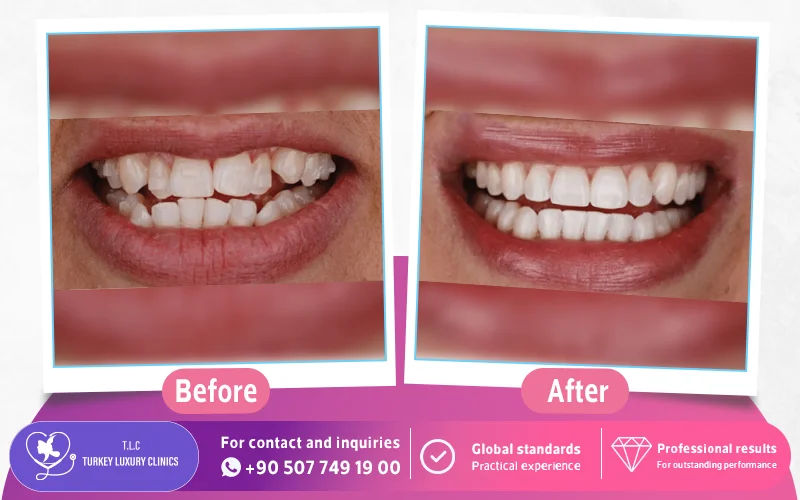
Metal Brace Before and After
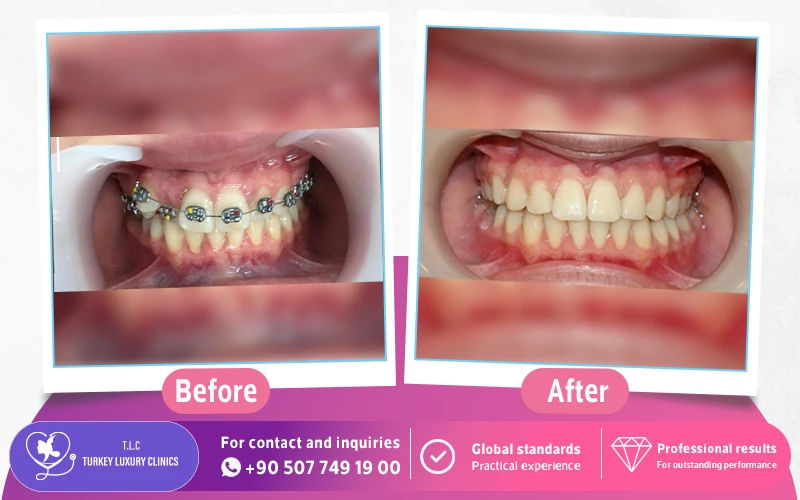
Clear Aligners Before and After
Which Is More Affordable: Traditional Braces or Clear Aligners?
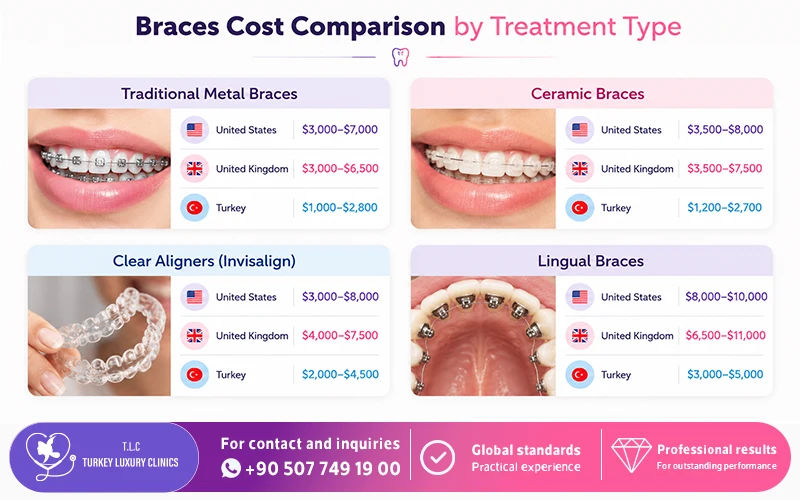
Traditional braces are generally more affordable than premium clear aligners such as Invisalign. As of 2026, traditional metal braces typically cost between $3,000 and $7,000, whereas premium clear aligners, like Invisalign, range from $3,500 to $8,000
The total cost of braces usually includes the orthodontic records, treatment planning, brackets, archwires, routine adjustment appointments, and retainers if specified in the treatment package. Clear aligner treatment often includes digital scans, custom-manufactured aligner trays, treatment planning software, progress monitoring, and retainers.
Cost Difference Between Clear Aligners and Braces
Treatment Type | Average Cost in the United States | Average Cost in the United Kingdom | Average Cost in Turkey |
Traditional Metal Braces | $3,000–$7,000 | $3,000–$6,500 | $1,000–$2,800 |
Ceramic Braces | $3,500–$8,000 | $3,500–$7,500 | $1,200–$2,700 |
Clear Aligners Invisalign | $3,000–$8,000 | $4,000–$7,500 | $2,000–$4,500 |
Lingual Braces | $8,000–$10,000 | $6,500–$11,000 | $3,000–$5,000 |
Clear Aligners vs Braces: Pros and Cons
Clear Aligners Pros and Cons
Pros
- Virtually Invisible: Clear aligners are nearly invisible during daily, professional, and social interactions.
- Removable: They can be removed for eating, drinking, brushing, flossing, or special occasions.
- Better Oral Hygiene: Patients can brush and floss normally without navigating around brackets and wires.
- Less Soft-Tissue Irritation: Their smooth plastic design reduces the risk of mouth sores and irritation commonly associated with brackets and wires.
Cons
- Requires Discipline: Because aligners are removable, treatment success depends heavily on compliance. Failing to wear them for the recommended 20–22 hours per day can delay treatment progress.
- Not Suitable for Every Case: While modern aligners can treat many moderate and some complex cases, braces may provide more predictable results for severe crowding, impacted teeth, and certain complex bite corrections.
- More Daily Maintenance: Aligners must be removed before meals and most beverages, and teeth should be brushed before reinserting them.
Traditional Braces (Metal or Ceramic) Pros and Cons
Pros
- Proven Reliability: Braces remain the gold standard for severe crowding, complex bite corrections, impacted teeth, and significant tooth rotations.
- Always Working: Because they are fixed to the teeth, there is no risk of forgetting to wear them, ensuring continuous tooth movement throughout treatment.
- Often More Affordable: Traditional metal braces are frequently less expensive than premium clear aligner systems, although costs vary by provider and location.
Cons
- More Noticeable: Traditional metal brackets are clearly visible, although ceramic and lingual braces offer less noticeable alternatives.
- Food Restrictions: Patients must avoid hard, sticky, or chewy foods that could damage brackets and wires.
- More Challenging Oral Hygiene: Cleaning around brackets and wires requires additional care, and plaque buildup is more common if oral hygiene is neglected.
- Mouth Discomfort: Brackets and wires can occasionally irritate the cheeks and lips, and orthodontic adjustments may cause temporary soreness.
Clear Aligners vs Braces for Adults and Teens
Adults
For most adults, clear aligners are often the preferred orthodontic option because they are nearly invisible, removable, and easier to fit into professional and social lifestyles.
Many adults choose aligners to avoid the appearance of metal brackets during work meetings, presentations, or social events, especially when their budget and clinical situation make them suitable candidates for Invisalign or other removable clear aligners.
Teens
Both clear aligners and braces can be effective for teenagers, but compliance often plays a larger role in treatment success. Teens must consistently wear aligners for 20–22 hours per day and remember to replace them after meals and snacks.
Traditional braces eliminate this concern because they remain fixed to the teeth and work continuously throughout treatment. Some teenagers are not concerned about the appearance of metal braces and may even enjoy customizing them with colored elastic bands. However, the severity of the orthodontic problem and the overall treatment cost are often more important decision factors than aesthetics or compliance alone.
Clear Braces vs Clear Aligners: Key Differences
Clear braces, ceramic braces, and clear aligners are both discreet alternatives to traditional metal braces, but they work differently. Clear ceramic braces are fixed to the teeth and can handle complex orthodontic movements, while clear aligners are removable and generally offer better aesthetics, comfort, and oral hygiene. The best choice depends on the complexity of your case and your willingness to wear aligners consistently.
Feature | Clear Ceramic Braces | Clear Aligners |
Hardware | Ceramic brackets & metal archwires | Removable medical-grade plastic trays |
Removability | Fixed; only removed by an orthodontist | Fully removable by the patient |
Force System | Constant pulling via wires and brackets | Pushing force via scheduled step-trays |
Discipline | Zero daily discipline required | Requires strict 22-hour daily wear time |
Complexity | Corrects severe, complex bite issues | Effective for mild-to-moderate cases |
Which Should You Choose?
- Choose clear aligners if you want a nearly invisible, removable treatment and are willing to wear them for 20–22 hours daily.
- Choose clear ceramic braces if you need greater tooth control, have a complex orthodontic case, or prefer a treatment that works continuously without relying on compliance.
Lingual Braces vs Clear Aligners: Key Differences
Lingual braces and clear aligners are both popular choices for patients who want a more discreet alternative to traditional metal braces. However, lingual braces are attached to the back surfaces of the teeth and remain fixed throughout treatment, whereas clear aligners are removable transparent trays that fit over the teeth.
Feature | Lingual Braces | Clear Aligners |
Visibility | Hidden behind the teeth | Nearly invisible from the front |
Removability | Fixed to the teeth | Removable |
Oral Hygiene | More difficult to clean | Easier to brush and floss |
Speech Adaptation | Often affects speech initially | May cause a mild temporary lisp |
Comfort | Can irritate the tongue | Generally more comfortable |
Complex Cases | Suitable for many complex cases | Best for mild to moderate cases and selected complex cases |
Compliance | Not dependent on patient compliance | Requires 20–22 hours of daily wear |
Which Should You Choose?
Choose clear aligners if you want a removable, comfortable, and nearly invisible treatment that fits easily into your daily routine. Choose lingual braces if you need a hidden orthodontic solution but require the control and predictability of fixed braces for more complex tooth movements.
Are Metal Braces or Clear Aligners Better?
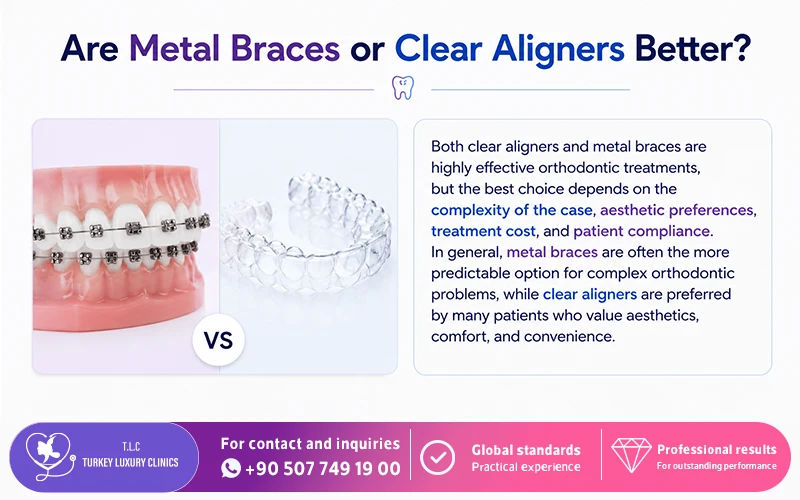
Both clear aligners and metal braces are highly effective orthodontic treatments, but the best choice depends on the complexity of the case, aesthetic preferences, treatment cost, and patient compliance. In general, metal braces are often the more predictable option for complex orthodontic problems, while clear aligners are preferred by many patients who value aesthetics, comfort, and convenience.
When Should You Choose Clear Aligners Over Braces?
- You have mild to moderate crowding or spacing issues.
- You want a nearly invisible orthodontic treatment.
- You prefer a removable appliance for eating and oral hygiene.
- You can commit to wearing aligners for 20–22 hours per day.
- You want fewer dietary restrictions during treatment.
- You prioritize convenience and aesthetics in professional or social settings.
When Should You Choose Traditional Braces Over Invisalign?
- You have severe crowding or complex bite problems.
- You require significant tooth rotations or difficult tooth movements.
- You have impacted teeth that need to be guided into position.
- You are concerned about remembering to wear removable aligners.
- You want a treatment that works continuously without relying on compliance.
- Your orthodontist recommends braces for maximum control and predictability.
Ready to Choose Between Clear Aligners and Braces?
Schedule a consultation with an experienced orthodontist to compare clear aligners and braces based on your specific case. A personalized treatment plan can help you understand your expected results, treatment timeline, and costs before making a decision.
FAQs About Clear Aligners vs Braces