

- Veneers in Turkey at a Glance
- What are Dental Veneers?
- Why Opt for Dental Veneers Tourism in Turkey?
- How Much Do Dental Veneers Cost in Turkey?
- What Is Included in an All-Inclusive Veneers Package in Turkey?
- Dental Veneers Journey in Turkey Step by Step
- Types of Veneers in Turkey
- What Can Dental Veneers Fix?
- Are Veneers in Turkey Safe?
- Risks and Complications of Getting Veneers in Turkey
- Are Veneers in Turkey Worth It?
- Pros and Cons of Getting Veneers in Turkey
- Best Veneers in Turkey: How to Choose the Right Clinic
- How Long Do Veneers Last?
- What Results Can You Expect from Veneers?
- Veneers in Turkey Before and After
- Who Is a Good Candidate for Veneers?
- Alternatives to Dental Veneers
- Dental Veneers Recovery and Aftercare
- Book Your Veneers Treatment in Turkey
- FAQs About Dental Veneers in Turkey
Veneers in Turkey are thin, custom-made porcelain, E-max, zirconia or composite shells bonded to the front of the teeth to improve their color, shape, size and alignment. Treatment typically costs $150–$650 per tooth, while a full set of 16–20 veneers generally costs $3,500–$8,000.
Most veneer treatments in Turkey take 5–7 days and require 2–3 dental appointments. The patient journey usually includes a dental examination, Digital Smile Design, tooth preparation when necessary, impressions or digital scans, temporary veneers and final bonding followed by bite adjustment.
Turkey can offer savings of 50–70% compared with private treatment in the US or UK, while many clinics provide packages that include dental treatment, 4- or 5-star hotel accommodation, and airport and clinic transfers.
Aggressive filing of healthy teeth can cause irreversible damage. Before booking, confirm whether you are receiving veneers or crowns and how much natural enamel will be removed.
Veneers in Turkey at a Glance
Treatment Detail | What to Expect |
Cost per tooth | Approximately $150–$650 |
Full set cost | Approximately $3,500–$8,000 for 16–20 veneers |
Potential savings | Around 50–70% compared with private US or UK treatment |
Main types | Porcelain, E-max, composite and zirconia |
Treatment time | Usually 5–7 days and 2–3 appointments |
Tooth preparation | Enamel removal varies by veneer type and tooth condition |
Typical package | Treatment, hotel and airport or clinic transfers |
Recovery and lifespan | Quick recovery; veneers commonly last 5–15 years depending on material |
What are Dental Veneers?
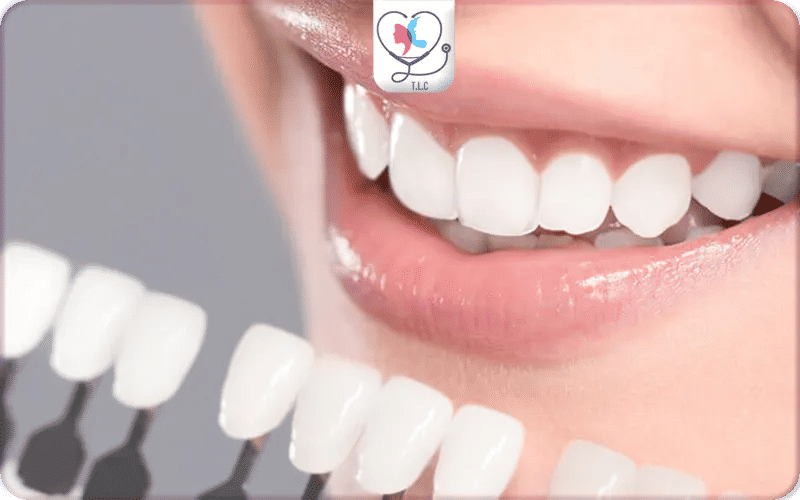
Dental veneers are ultra-thin, custom-made shells designed to cover the front surface of teeth. They are usually made of porcelain or composite resin and are bonded to the teeth to improve their appearance.
Veneers are a popular cosmetic dental treatment used to brighten discolored teeth, create the appearance of straighter teeth, restore worn-down or damaged enamel, and cover minor imperfections such as chips, cracks, or surface wear.
Once placed, veneers are considered permanent, because the dentist removes a very thin layer of the tooth’s enamel to reshape the tooth and ensure the veneer fits properly, preventing any bulging or misalignment. The tooth looks thinner if the veneers are removed.
Discover A1 vs B1 Tooth Color and Which Shade Is Right for Your Veneers?
Dental Veneers Benefits
- Provide a natural, attractive smile with an instant aesthetic boost.
- Custom-made to fit the shape, size, and color of your teeth perfectly.
- Correct minor chips, cracks, discoloration, and small gaps.
- Preserve as much of your natural tooth structure as possible.
- Ideal for a full-mouth makeover or enhancing selected teeth.
Why Opt for Dental Veneers Tourism in Turkey?
Turkey is a top destination for dental veneers, offering highly experienced dentists who handle numerous cases each year, advanced materials and modern labs, and all-inclusive packages that make your veneers and full-mouth smile makeover a seamless and worthwhile experience.
How Much Do Dental Veneers Cost in Turkey?
The average cost of veneers in Turkey in 2026 typically ranges from $150 to $650 per tooth, depending on the veneer material, clinic, dentist’s experience, and treatment complexity. Composite veneers typically cost $100–$200 per tooth, porcelain veneers $200–$400, E-max veneers $250–$600, and zirconia veneers $150–$350.
A full smile makeover with veneers in Turkey typically costs around $3,500–$8,000, depending on the number of veneers, material, and treatment plan. Many clinics also offer all-inclusive packages for international patients.
For prices by material, number of teeth, full-set options, package levels, city, international comparisons, and possible additional expenses, read our complete veneers cost in Turkey guide.
What Is Included in an All-Inclusive Veneers Package in Turkey?
Most clinics in Turkey offer veneer treatment as a package built around an international patient’s trip rather than as a per-visit fee. A typical package covers:
- Full set of veneers in your chosen material (porcelain, E-max, zirconia or composite)
- Initial consultation and treatment plan
- 3D imaging and Digital Smile Design
- Teeth whitening or preparatory treatment where needed
- 4- or 5-star hotel accommodation near the clinic
- Airport and clinic transfers
- Interpreter and patient coordinator
- Post-treatment follow-up and aftercare
Premium packages usually add luxury accommodation, private transfers, extended dental care and a dedicated coordinator. Ask for the inclusions in writing before you book, since what counts as “all-inclusive” varies between clinics.
A full set of 16–20 veneers is usually part of a comprehensive smile makeover, often called a Hollywood smile. Read our complete guide to the Hollywood smile in Turkey.
Dental Veneers Journey in Turkey Step by Step
Getting dental veneers in Turkey usually takes 5 to 7 days and two or three appointments, because clinics plan the whole trip around the laboratory stage.
- Online consultation (before you travel). You send photos and your dental history, and receive a preliminary treatment plan, a veneer recommendation and a quote.
- Dental examination (Day 1). The dentist checks your teeth, gums and bite, takes X-rays and digital scans, and confirms whether veneers are the right treatment for your case.
- Digital Smile Design (Day 1). Using 3D imaging and CAD/CAM software, the dentist shows you a preview of the result, and you agree on the shape, length and shade together before anything is prepared.
- Tooth preparation (Day 1–2). A thin layer of enamel, usually 0.3 to 0.7 mm, is removed to make room for the veneer. Digital scans or impressions are taken, and temporary acrylic veneers are fitted to protect the prepared teeth and let you eat and smile normally in the meantime.
- Laboratory fabrication (Day 2–5). Ceramists craft each veneer to the agreed shade and shape. Clinics with an on-site laboratory finish this in three to five days, which is what makes a one-week treatment plan possible, and you are free to explore the city while you wait.
- Final bonding (Day 3–6). The temporaries come off, each veneer is tried in and checked for fit, colour and margins, then permanently bonded and the bite is adjusted.
- Final check (before departure). A last appointment confirms the bite feels comfortable and the gums are settling, and you receive your aftercare instructions and treatment records.
Composite veneers can often be completed in a single appointment because they are shaped directly on the tooth with no laboratory stage. A single tooth may be finished in three to four days, while a full-mouth makeover can need seven to eight. Most patients fly home 24 to 48 hours after final bonding, so allow enough time for adjustments, and report persistent pain, a loose veneer, an uneven bite or significant gum irritation before you leave Turkey.
Are Veneers Painful?
Getting veneers is not usually painful because local anaesthesia can be used during tooth preparation. Patients may feel pressure during treatment and temporary sensitivity to hot, cold or biting afterward, particularly when enamel has been removed.
Mild gum tenderness or sensitivity usually settles as the tissues adjust. Severe or worsening pain, swelling, a high bite or pain that prevents chewing is not expected and should be assessed by the dentist.
How Long Does It Take to Get Veneers in Turkey?
Getting veneers in Turkey usually takes five to seven days and requires two or three appointments. The exact timeline depends on the veneer material, number of teeth, laboratory production and whether additional dental treatment is required.
Composite veneers may be completed in one appointment, while porcelain, E-max and zirconia veneers normally require preparation, temporary veneers and a separate fitting appointment. Complex cases involving gum treatment, root canal therapy or bite correction may require a longer stay or an additional visit.
Types of Veneers in Turkey
The main types of veneers available in Turkey are porcelain or laminate, E-max, composite, zirconia and no-prep veneers such as Lumineers. They differ in material, translucency, strength, stain resistance, tooth preparation and lifespan. The best option depends on the condition of your teeth, bite, cosmetic goals and how much healthy enamel can be preserved.
Porcelain or Laminate Veneers
Porcelain veneers are thin ceramic shells known for their natural appearance, durability and resistance to stains from coffee, tea and smoking. The term “laminate veneer” commonly describes a particularly thin porcelain restoration rather than a completely different material. Porcelain veneers usually require some enamel preparation and are produced in a dental laboratory from impressions or digital scans.
E-max Veneers
E-max veneers are made from lithium disilicate glass-ceramic and provide high translucency that closely resembles natural enamel. They are commonly selected for visible front teeth when a lifelike result is the priority. Their suitability depends on the bite, remaining enamel, underlying tooth colour and the amount of strength required.
Composite Veneers
Composite veneers are made from tooth-coloured resin that is shaped directly on the teeth or produced indirectly in a laboratory. They can often be completed faster and with less tooth preparation than ceramic veneers. However, composite is more susceptible to staining, wear and chipping and generally does not last as long as porcelain or E-max.
Zirconia Veneers
Zirconia veneers are made from zirconium dioxide, a strong and relatively opaque ceramic that can help mask darker tooth discoloration. Newer translucent zirconia materials can provide improved aesthetics, although they may not reproduce natural enamel translucency as closely as E-max in every case.
Patients should confirm whether the proposed restoration is a thin zirconia veneer or a full-coverage zirconia crown, as crowns generally require more tooth reduction. Bruxism must also be assessed separately because grinding can damage veneers regardless of the material selected.
No-Prep Veneers and Lumineers
No-prep veneers are ultra-thin ceramic shells designed to preserve as much natural enamel as possible. Lumineers are a branded example of this minimal-preparation approach, not a separate veneer material.
No-prep veneers are suitable only for selected cases and may still require minor enamel adjustment. They may not adequately correct prominent teeth, significant crowding, severe discoloration or bite problems, and using them without enough space can produce a bulky appearance.
What Can Dental Veneers Fix?
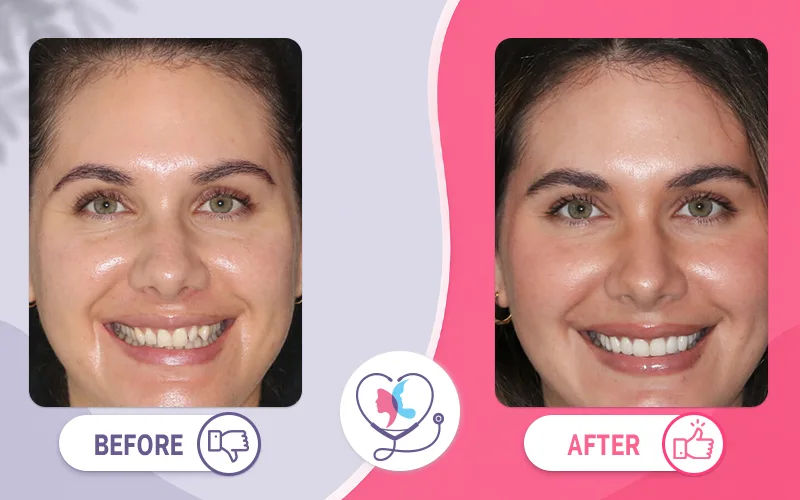
Dental veneers can improve persistent discoloration, small gaps, minor chips, worn edges, uneven tooth shapes, and mild cosmetic misalignment. They cover visible imperfections without moving the teeth or treating underlying dental disease.
Veneers may be used to improve:
- Stains that do not respond adequately to teeth whitening.
- Small chips and minor cosmetic cracks.
- Limited gaps between teeth.
- Teeth that appear too small, short, or uneven.
- Mildly worn or irregular tooth edges.
- Developmental enamel defects.
- Minor cosmetic misalignment.
- Differences in tooth shape, shade, or proportion.
Veneers are not suitable for every dental problem. Significant crowding or bite problems may require orthodontics, missing teeth may need dental implants or bridges, and severely damaged teeth may need crowns instead. Active tooth decay, gum disease, infection, and other oral health problems should be treated before veneers are placed.
Are Veneers in Turkey Safe?
Veneers in Turkey are safe for suitable candidates when an experienced cosmetic dentist confirms healthy teeth and gums, preserves sufficient natural enamel, uses sterilized equipment and approved veneer materials, and provides accurate bonding, bite adjustment and aftercare.
Before treatment, confirm:
- Dentist credentials: Verify the dentist’s licence, cosmetic dentistry experience and registration with the Turkish Dental Association or the relevant dental chamber.
- Clinic authorization: Check the clinic’s Turkish Ministry of Health licence and international health-tourism authorization.
- Diagnosis: Expect an in-person examination, bite assessment and appropriate X-rays or digital scans. CBCT should be used when clinically indicated, not automatically for every veneer case.
- Enamel shaving: Ask how much natural enamel will be removed and whether minimal-prep veneers are suitable.
- Materials and laboratory: Confirm the veneer material, brand, dental laboratory and traceability documents.
- Infection control: Check that the clinic follows sterilization, hygiene and cross-infection protocols.
- Treatment time: Allow enough time for smile design, laboratory production, fitting and bite adjustments.
- Aftercare: Request treatment records, warranty terms, follow-up arrangements and a plan for complications after returning home.
- Top accreditation: JCI or ISO certification may provide extra reassurance when genuinely held by the treating facility, but it does not replace the dentist’s licence or the clinic’s Ministry authorization.
Avoid clinics that diagnose you only through WhatsApp photographs, pressure you into unnecessary full crowns, refuse to explain tooth preparation, offer unclear materials or provide no corrective-care policy.
How Turkey Luxury Clinics Meets These Standards
At Turkey Luxury Clinics, this is exactly how we work. Our contracted dental clinics in Istanbul, including Esnan Dental Clinic and Adem Can Karaçor Aesthetic Dentistry, hold Turkish Ministry of Health authorization, Health Tourism certification, TEMOS accreditation and ISO certification.
Before you commit, you receive the treating dentist’s credentials, the veneer brand and laboratory, and a written treatment plan showing how much enamel will be prepared, so you can run the checks above against a real plan, not a promise.
Risks and Complications of Getting Veneers in Turkey
Dental veneers are generally safe when properly planned and placed, but complications can occur with excessive enamel removal, poor fitting, incorrect bite adjustment, or inadequate aftercare.
Potential risks include:
- Tooth sensitivity: Temporary or persistent sensitivity after enamel removal.
- Excessive enamel removal: Irreversible tooth reduction that may damage the pulp.
- Gum irritation: Poorly fitted margins can cause inflammation or hygiene problems.
- Bite problems: Incorrect fitting can cause discomfort, uneven pressure, or jaw pain.
- Chipping or debonding: Veneers may crack, chip, or become loose.
- Tooth decay: Decay can develop around or beneath veneer margins.
- Nerve damage: Extensive preparation may occasionally require root canal treatment.
- Aesthetic problems: Color, shape, size, or symmetry may not meet expectations.
- Corrective treatment: Repairs after returning home may be difficult or costly.
Are Veneers in Turkey Worth It?
Yes, veneers in Turkey can be worth it for suitable candidates who choose a licensed, experienced dentist and receive genuine veneers with conservative enamel preparation, documented materials and reliable aftercare. Treatment can cost 50%–70% less than in the UK or US and is often completed within five to seven days.
They are not worth the savings if healthy teeth are aggressively filed for unnecessary crowns, treatment is rushed without proper diagnosis or bite adjustment, or the clinic offers no support after you return home.
Pros and Cons of Getting Veneers in Turkey
Pros | Cons |
Prices may be 50%–70% lower than in the UK or US | Travel makes long-term adjustments and corrective care more difficult |
Treatment is often completed within 5–7 days | A short schedule may leave limited time for remakes or additional treatment |
Porcelain, E-max, composite and zirconia options are widely available | Some clinics may recommend crowns instead of conservative veneers |
Packages may include a hotel and airport or clinic transfers | Aggressive tooth shaving can cause irreversible enamel loss |
Digital Smile Design and on-site laboratories may speed up production | Poor fit or bite adjustment can lead to pain, gum problems or veneer failure |
Lower cost and faster treatment are valuable only when the dentist preserves healthy tooth structure, uses appropriate materials and provides reliable aftercare.
Best Veneers in Turkey: How to Choose the Right Clinic
There is no single best veneers clinic in Turkey for every patient. The right clinic offers:
- Dentist’s qualifications and cosmetic veneer experience
- Turkish Ministry of Health authorization
- Genuine before-and-after veneer cases
- Positive patient reviews
- Clear porcelain, E-max, zirconia and composite options
- Digital Smile Design and treatment planning
- Conservative enamel preparation
- Material brand and dental laboratory
- Transparent price and package inclusions
- Warranty and aftercare after returning home
Do Veneers in Turkey Come With a Warranty?
Some dental clinics in Turkey offer warranties for veneers, but coverage, duration, and conditions vary between providers. A warranty should not be treated as a guarantee that a veneer will never chip, debond, or require replacement.
Before booking, ask for the warranty terms in writing, including the coverage period, exclusions, maintenance requirements, corrective treatment policy, and whether you must return to the original clinic for repairs.
How Long Do Veneers Last?
Dental veneers usually last between 5 and 15 years, depending on their material, placement and aftercare. Porcelain, E-max and other ceramic veneers commonly last 10–15 years or longer, while composite veneers generally last 5–7 years and may require earlier polishing or repair.
Veneers may wear out sooner because of teeth grinding, biting hard objects, poor oral hygiene, gum recession, decay around the edges or an incorrect bite. Brushing, flossing, regular dental check-ups and wearing a night guard for bruxism can help them last longer.
What Results Can You Expect from Veneers?
Veneers change the color, shape, length and proportion of the teeth you treat, and the result is visible the moment they are bonded. A well-planned case looks like your own teeth at their best, not like a uniform block of white.
What veneers do well: an even shade across the smile, closed small gaps, restored worn edges, and teeth that look straighter without orthodontics.
What to expect realistically: the shade you agree at Digital Smile Design is the shade you keep, because veneer material does not respond to whitening later. Very white shades can look artificial against your skin tone and the color of your lower teeth. Your speech may feel slightly different for a few days while your tongue adapts, and the bite often needs a small adjustment before you fly home.
What veneers cannot do: move teeth, fix a bad bite, or treat decay and gum disease underneath.
Results also depend on how many teeth are treated. Treating only the front four can leave a visible mismatch with the teeth beside them, which is why most smile makeovers cover 8 to 20 teeth.
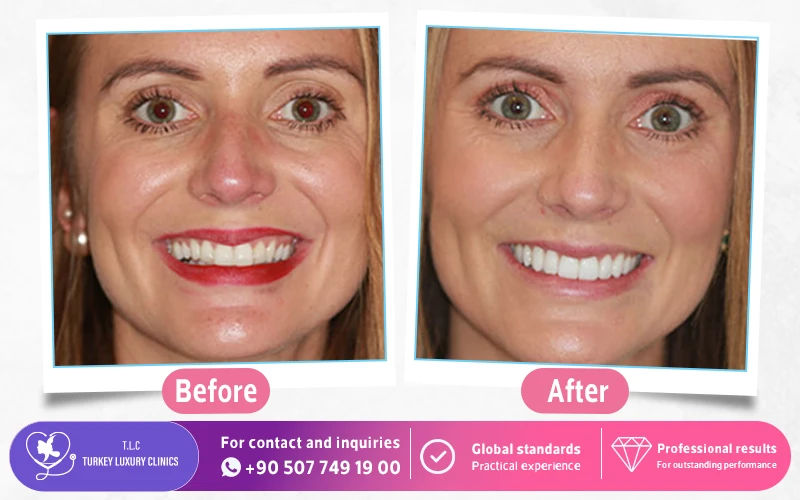
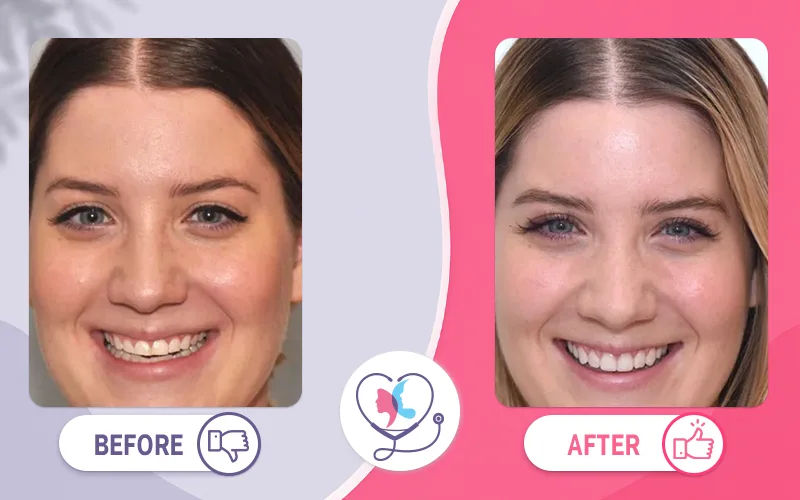
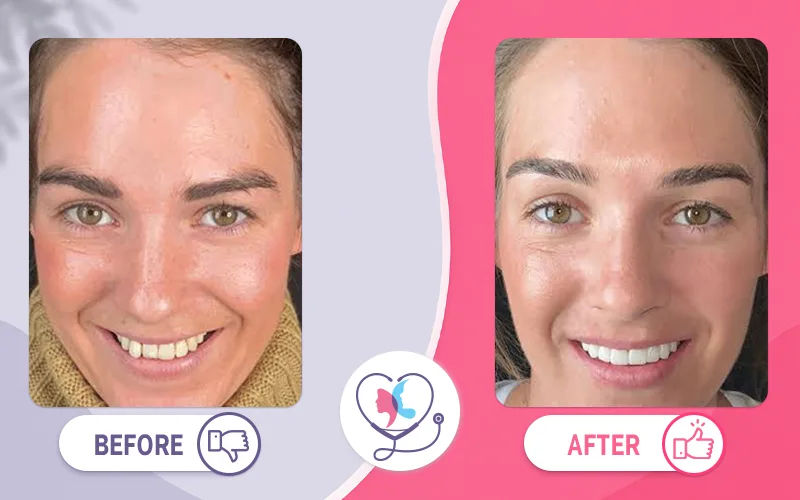
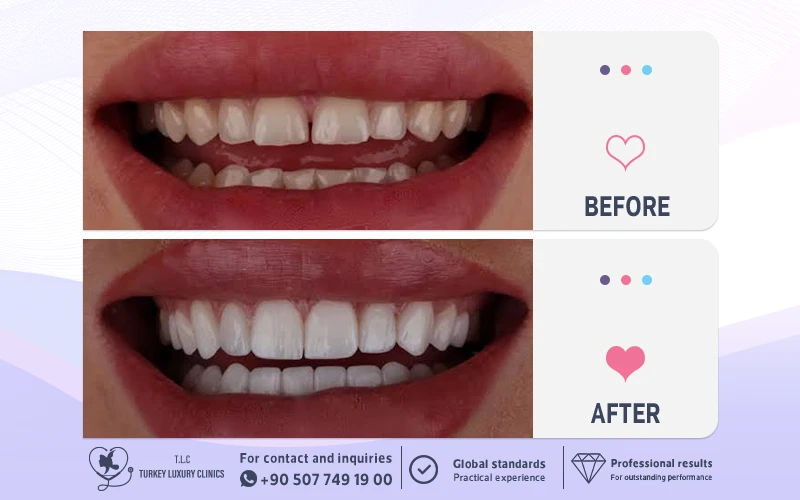
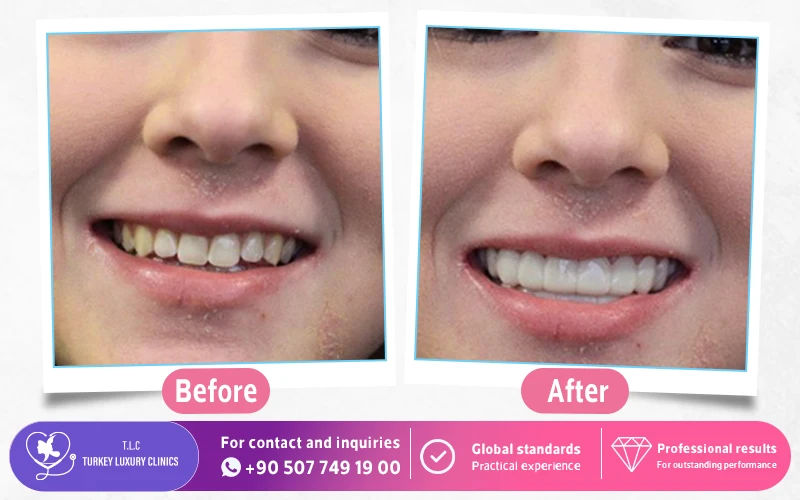
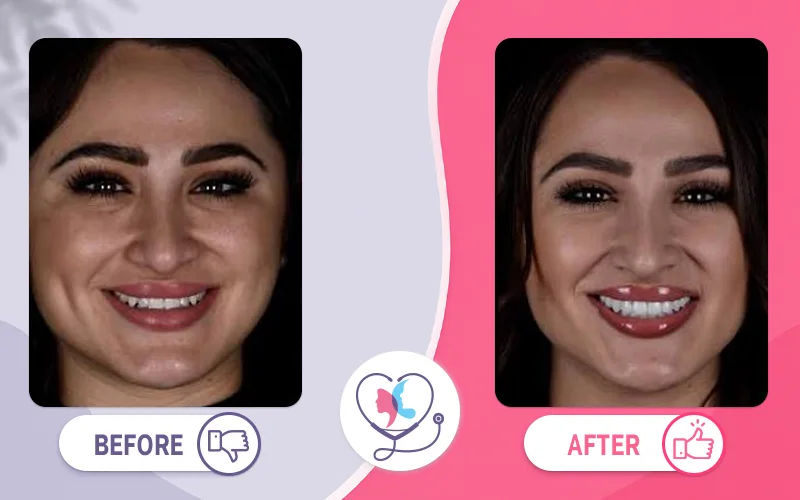
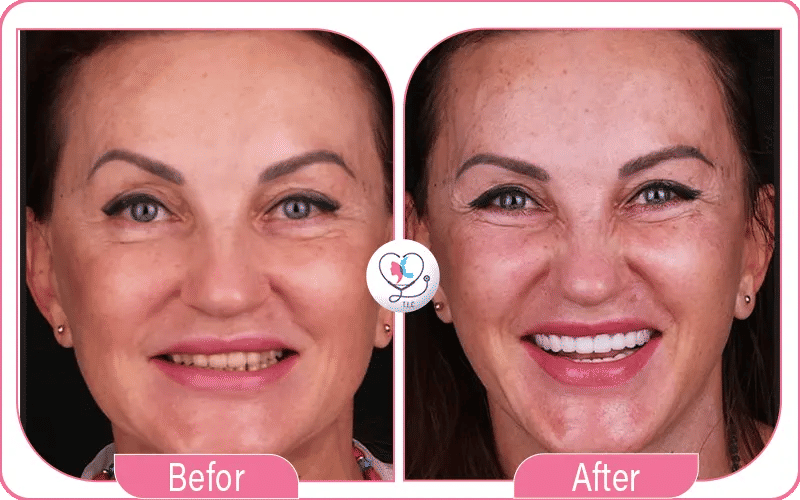
Veneers in Turkey Before and After

Who Is a Good Candidate for Veneers?
A good candidate for veneers has healthy teeth and gums, sufficient enamel for bonding, a stable bite and realistic expectations about the results.
Veneers may be suitable if you:
- Have persistent tooth discoloration, small gaps, minor chips, worn edges or uneven tooth shapes.
- Have mild cosmetic misalignment that does not require orthodontic treatment.
- Have healthy teeth without untreated decay or infection.
- Have healthy gums without active periodontal disease.
- Have enough enamel for reliable veneer bonding.
- Maintain good oral hygiene and attend regular dental check-ups.
- Do not have uncontrolled teeth grinding or clenching.
- Understand that traditional veneers are usually irreversible and may eventually require replacement.
A dental examination is required to assess your teeth, gums, enamel and bite before confirming your suitability.
Who Is Not a Good Candidate for Veneers?
Veneers may be unsuitable or need to be postponed if you have:
- Untreated tooth decay, infection or gum disease.
- Insufficient enamel for reliable bonding.
- Severe crowding or significant bite problems.
- Severely fractured, heavily filled or structurally weak teeth.
- Uncontrolled teeth grinding or clenching.
- Poor oral hygiene or unrealistic expectations.
Some patients may become suitable after treating cavities or gum disease, completing orthodontic treatment or controlling bruxism.
Alternatives to Dental Veneers
The right alternative depends on the problem being treated:
- Teeth whitening for discoloration.
- Composite bonding for minor chips, gaps or reshaping.
- Braces or clear aligners for crowding and bite problems.
- Dental crowns for severely damaged or weakened teeth.
- Implants or bridges for missing teeth.
- Gum contouring for an uneven gumline.
- A night guard to protect teeth from grinding.
The dentist should recommend the least invasive treatment capable of achieving a safe and predictable result.
Dental Veneers Recovery and Aftercare
Recovery after veneers is usually quick, and most patients can return to normal daily activities on the same day. Temporary tooth sensitivity, gum tenderness or an unfamiliar bite may occur after preparation or bonding.
Veneers Recovery Timeline
- The same day: Wait until local anaesthesia has completely worn off before eating to avoid biting your cheeks, lips or tongue.
- The first few days: Mild sensitivity to hot, cold or pressure may occur. Choose softer foods if chewing feels uncomfortable.
- After adjustment: Eating and speaking should feel normal once your mouth adapts. Contact the dentist if pain, sensitivity or an uneven bite persists or worsens.
Do Dentists Shave Your Teeth for Veneers in Turkey?
Traditional porcelain and E-max veneers usually require the removal of a thin layer of enamel, while composite and no-prep veneers may require less preparation. The exact amount depends on the tooth position, veneer material, bite and treatment plan.
Enamel removal is irreversible, but healthy teeth should not routinely be filed into small pointed shapes for conventional veneers; this level of preparation is more commonly associated with crowns.
See what teeth look like under veneers for preparation examples, the difference between minimal shaving and aggressive filing, and what happens to the natural teeth beneath veneers.
When Can You Eat After Getting Veneers?
You can usually eat after the anaesthesia wears off, unless your dentist gives different instructions. Patients wearing temporary veneers should be more cautious because temporary restorations are less securely bonded than the final veneers.
What to Eat and Avoid After Veneers
Choose softer foods initially if your teeth or gums feel sensitive, such as:
- Eggs, yoghurt and soft cheese.
- Pasta, rice and cooked vegetables.
- Soup that is not extremely hot.
- Soft fish or tender meat cut into small pieces.
Avoid biting directly into hard or crunchy foods, including ice, hard sweets, nuts, raw carrots and whole apples. Cut firm foods into smaller pieces and chew with your back teeth. While wearing temporary veneers, also avoid sticky foods such as chewing gum, caramel and toffee.
How to Care for Veneers Long Term
Veneers require the same consistent oral care as natural teeth because decay and gum disease can still affect the teeth underneath and around them.
- Brush twice daily with a soft-bristled toothbrush and non-abrasive fluoride toothpaste.
- Floss between the teeth every day.
- Attend regular dental examinations and professional cleanings.
- Do not use your teeth to open packages or bite hard objects.
- Wear a night guard if prescribed for grinding or clenching.
- Limit smoking and frequent exposure to strongly pigmented foods and drinks.
- Avoid abrasive whitening products, which do not whiten the veneer material and may affect its surface.
Good oral hygiene, a stable bite and regular dental care help reduce the risk of staining, gum problems, chipping and veneer failure.
What Happens When Veneers Need Replacing?
The dentist removes the old veneer, checks the tooth and gums underneath, treats any decay or gum disease, and bonds a new veneer in place. A chipped composite veneer can often be repaired instead, while a cracked or debonded porcelain veneer usually needs replacing.
Because enamel was removed the first time, the tooth has to stay covered by a new veneer or another restoration — it cannot simply be left bare.
Book Your Veneers Treatment in Turkey
The professional team at Turkey Luxury Clinics makes your smile transformation journey easier and more convenient.
Whether you need composite, porcelain, E-max, or Zirconia veneers, our expert team can create a full-mouth veneers makeover tailored just for you. All-inclusive packages cover everything from consultation and 3D smile design to accommodation and aftercare—giving you a beautiful, confident smile without any hidden costs.
You may like Can Veneers Replace Missing Teeth? Discover which is better, Veneers vs Crowns: Aesthetic, Durability, Uses and Costs
FAQs About Dental Veneers in Turkey