

- Why Choose Turkey for Ethnic Rhinoplasty?
- How Much Does Ethnic Rhinoplasty Cost in Turkey (2026)
- Ethnic Rhinoplasty Turkey Before and After
- Best Ethnic Rhinoplasty Surgeon in Turkey
- Who is an Ideal Candidate for Ethnic Rhinoplasty Surgery
- Types of Ethnic Rhinoplasty in Turkey
- Ethnic Rhinoplasty Journey in Turkey: Step by Step Day 1 to 10
- How Is Ethnic Rhinoplasty Performed?
- Recovery After Ethnic Rhinoplasty
- Ethnic Rhinoplasty Realistic Results
- Potential Risks and Complications of Ethnic Rhinoplasty
- How Turkey Luxury Clinics Can Help
- FAQs About Ethnic Rhinoplasty in Turkey
Ethnic rhinoplasty is a highly specialized nose reshaping procedure that enhances the nose while preserving your natural ethnic identity and facial harmony.
In Turkey, ethnic rhinoplasty costs between $3,700 and $6,500 in 2026, depending on the complexity of the procedure, the surgeon's expertise, the surgical technique used, whether functional breathing problems are corrected, and the hospital or clinic selected. Most international packages include the surgery, hospital stay, airport transfers, hotel accommodation, and follow-up care, allowing patients to save approximately 60% to 70% compared with the United States and the United Kingdom.
Turkey has become one of the world's leading destinations for ethnic rhinoplasty thanks to its experienced plastic surgeons, internationally accredited hospitals, advanced medical facilities, and affordable all-inclusive treatment packages. Surgeons in Istanbul, Izmir, and Antalya have extensive experience performing customized rhinoplasty techniques for patients from diverse ethnic backgrounds, helping achieve natural-looking results while preserving each patient's unique facial features.
Why Choose Turkey for Ethnic Rhinoplasty?
- Experienced surgeons: Skilled in treating diverse nasal anatomies and ethnic features.
- High case volume: Extensive experience from treating thousands of international patients.
- Affordable packages: Lower costs than many Western countries without compromising quality.
- Accredited hospitals: Modern facilities with advanced technology and qualified medical teams.
- Medical tourism support: Assistance with travel, accommodation, transfers, and follow-up care.

How Much Does Ethnic Rhinoplasty Cost in Turkey (2026)
Ethnic rhinoplasty in Turkey costs between $3,700 and $6,500 in 2026, depending on the complexity of the nasal correction, the surgeon's expertise in ethnic rhinoplasty, the surgical technique used, whether functional breathing problems are treated, and the hospital or clinic selected.
Compared with the United States and the United Kingdom, patients can typically save 60% to 70% while receiving treatment from experienced surgeons at internationally accredited hospitals.
International patient packages commonly include the surgeon's fee, anesthesia, hospital charges, pre-operative tests, post-operative medications, follow-up visits, airport transfers, and hotel accommodation. Since package inclusions vary between clinics, patients should request a detailed written quotation before booking.
Many leading ethnic rhinoplasty clinics are located in Istanbul, where experienced surgeons perform a high volume of complex ethnic rhinoplasty procedures. Prices may be higher for highly specialized surgeons or internationally accredited hospitals, reflecting greater expertise, advanced technology, and comprehensive patient care.
What's included in All Inclusive Ethnic Rhinoplasty Packages in Turkey
Most all-inclusive rhinoplasty packages in Turkey include:
- Surgeon's fee
- Hospital and operating room fees
- Anesthesia
- Preoperative consultation and medical tests
- Hotel accommodation (typically 5–7 nights)
- Airport, hotel, and clinic transfers
- Prescription medications
- Follow-up appointments
- English-speaking patient coordinator or interpreter
Usually not included:
- International flights
- Additional hotel nights
- Revision rhinoplasty
- Personal expenses

Factors Affecting Cost of Ethnic Rhinoplasty Prices
The final cost of ethnic rhinoplasty in Turkey depends on several factors, including:
- Surgeon's experience and specialization: Highly experienced surgeons who regularly perform ethnic rhinoplasty generally charge more because of their advanced expertise and consistent results.
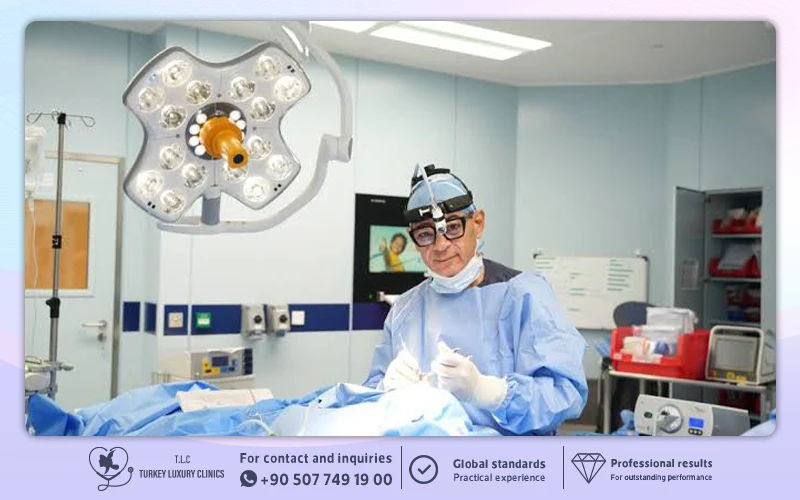
- Complexity of the nasal anatomy: Thick skin, weak cartilage, significant asymmetry, or the need for structural support can make surgery more complex and increase the cost.
- Primary vs. revision rhinoplasty: Revision (secondary) rhinoplasty is usually more expensive than primary surgery because it involves scar tissue, altered anatomy, and may require cartilage grafts to rebuild nasal support.
- Need for cartilage grafts: Harvesting cartilage from the ear or rib adds surgical time and complexity, which can increase the overall price.
- Functional corrections: Combining ethnic rhinoplasty with procedures such as septoplasty or turbinate reduction generally costs more than cosmetic surgery alone.
- Hospital standards: Accredited private hospitals with advanced facilities and experienced surgical teams may have higher treatment costs.
- Package inclusions: Comprehensive packages that include hotel accommodation, airport transfers, medications, and follow-up care typically cost more than surgery-only packages.
- Additional procedures: Combining ethnic rhinoplasty with treatments such as chin augmentation or alar base reduction increases the total cost because multiple procedures are performed during the same operation.
Ethnic Rhinoplasty Cost in Turkey vs USA vs UK
Country | Lower-End Estimate | Higher-End Estimate |
United States | $10,000 | $20,000+ |
United Kingdom | $8,500 | $13,000 |
Turkey | $3,700 | $6,500 |
Why Does Turkey Cost Less?
- Lower Operational Expenses: Clinics in Turkey benefit from a lower cost of living and favorable exchange rates, allowing them to offer world-class medical facilities at a fraction of Western costs.
- All-Inclusive Packages: The prices in Turkey usually include luxury hotel accommodation (5–7 nights), local VIP transfers, pre-op tests, and medications. In the US and UK, the quoted price often only covers the surgery itself.
- Complex Cartilage Work: Despite the lower cost, Turkish surgeons frequently utilize Piezo (ultrasonic) tools and perform complex rib or ear cartilage grafting required for specific ethnic nasal structures without massive price markups.
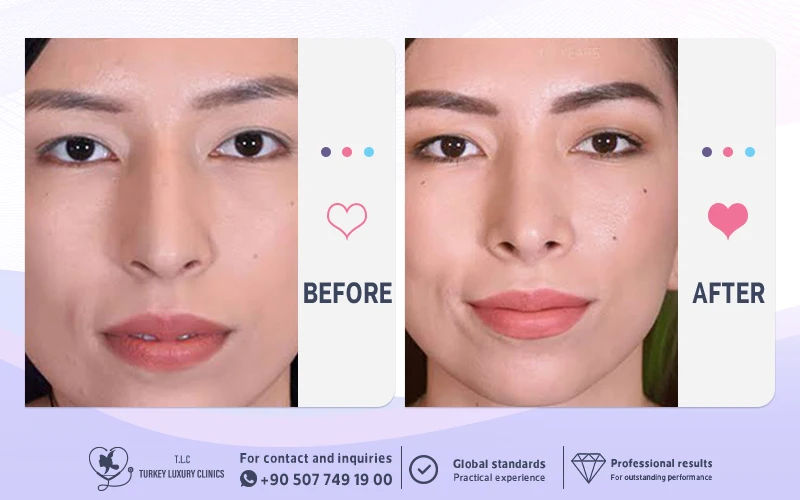
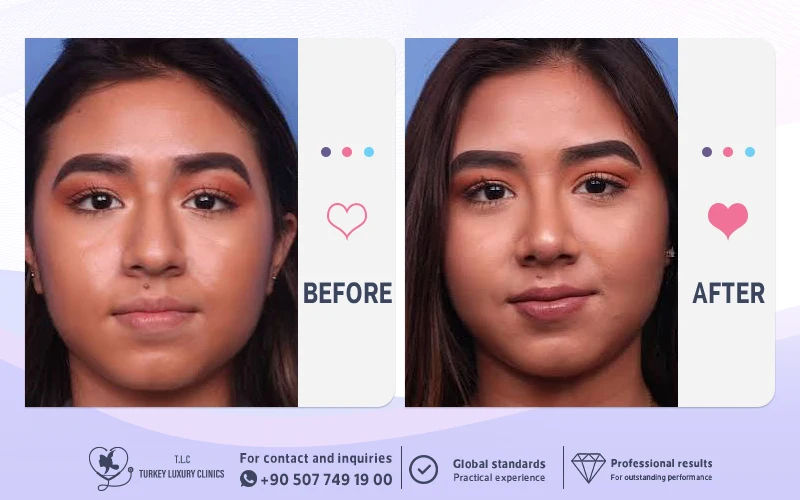
Ethnic Rhinoplasty Turkey Before and After
Best Ethnic Rhinoplasty Surgeon in Turkey
Turkey is home to many experienced rhinoplasty surgeons, but ethnic rhinoplasty requires advanced knowledge of different nasal anatomies and techniques that preserve each patient's natural facial identity. At Turkey Luxury Clinics, patients can consult with experienced rhinoplasty specialists, including:
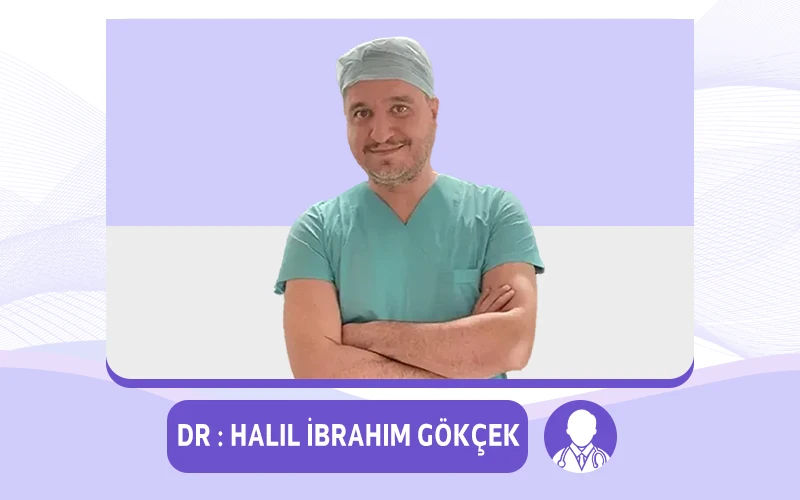
- Prof. Dr. Halil İbrahim Gökçek: A board-certified plastic and reconstructive surgeon with more than 25 years of experience in primary, revision, and complex facial rhinoplasty.
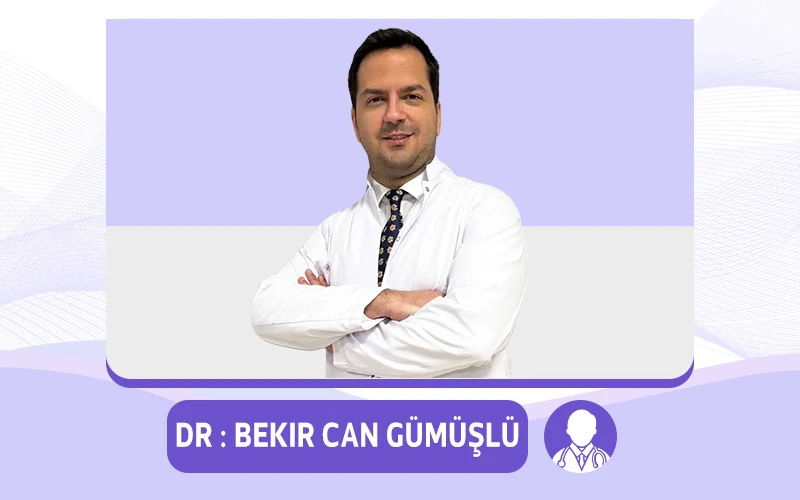
- Op. Dr. Bekir Can Gümüşlü: An ENT facial plastic surgeon specializing in ultrasonic (Piezo), revision, and functional rhinoplasty, with a focus on both aesthetics and breathing function.
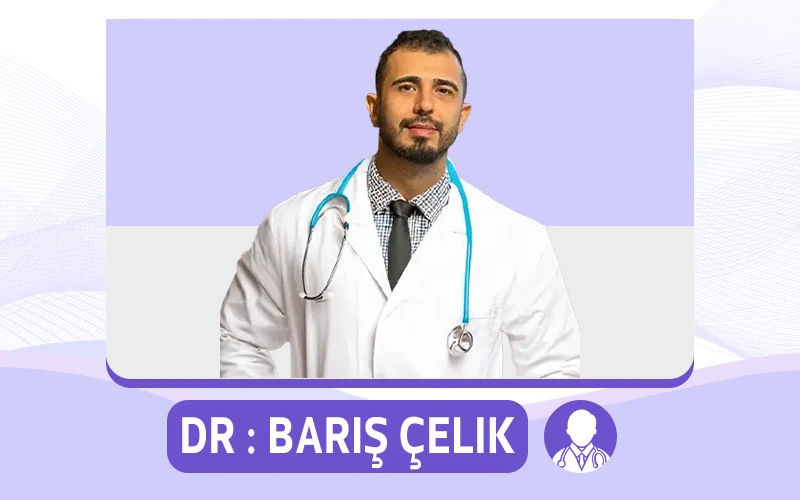
- Dr. Barış Çelik: A rhinoplasty specialist with over 11 years of experience performing primary and revision nasal surgery with natural-looking results.
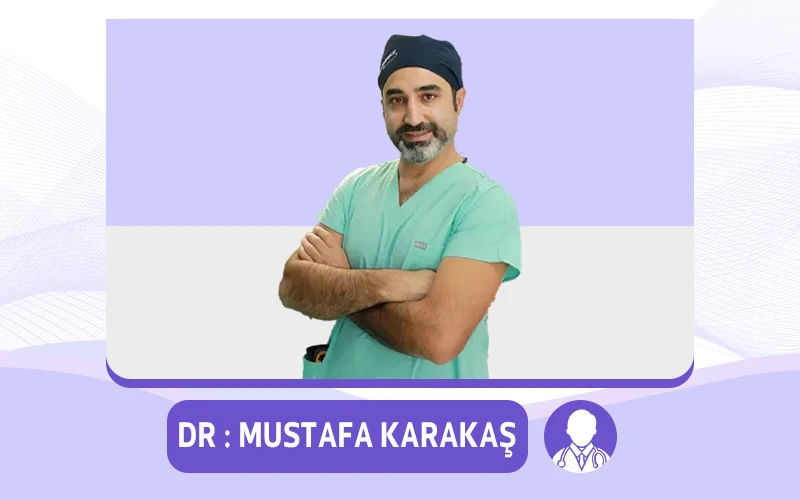
- Dr. Mustafa Karakaş: An ENT surgeon with more than 15 years of experience in cosmetic and functional rhinoplasty, including procedures that improve both nasal appearance and airflow.
Who is an Ideal Candidate for Ethnic Rhinoplasty Surgery
To qualify for ethnic rhinoplasty you should have good general health and you want to improve your nose shape while preserving the facial features that reflect your ethnic background.
You may benefit from ethnic rhinoplasty if you:
- Want to refine your nose without losing your natural ethnic characteristics.
- Have a broad, rounded, or under-projected nasal tip.
- Have a low or flat nasal bridge that affects facial balance.
- Feel your nostrils are disproportionately wide or flared.
- Need both cosmetic improvement and functional correction, such as treatment for a deviated septum.
- Have realistic expectations and understand that the goal is enhancement, not complete transformation.
Ethnic rhinoplasty is commonly performed in patients of African, Asian, Middle Eastern, Hispanic, or mixed ethnic backgrounds. However, candidacy is determined by your nasal anatomy and treatment goals—not your ethnicity alone.
Types of Ethnic Rhinoplasty in Turkey
Asian Rhinoplasty in Turkey
Asian rhinoplasty usually focuses on increasing nasal definition rather than reducing nasal size. Many Asian patients have a lower nasal bridge, thicker skin, and less tip projection, so surgeons commonly use cartilage grafts or, in selected cases, implants to build structural support. The goal is to create a more defined nose while maintaining natural facial harmony.

African Rhinoplasty in Turkey
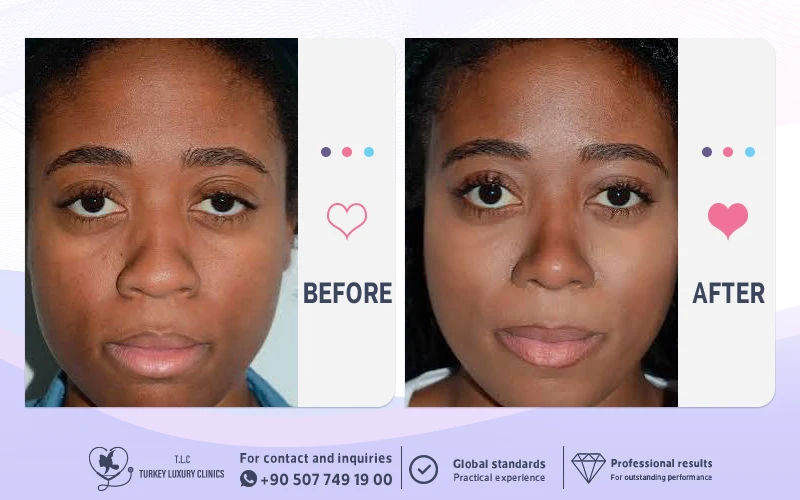
African rhinoplasty aims to improve nasal definition without removing the features that reflect the patient's ethnic identity. Common goals include refining the nasal tip, improving projection, and reducing nostril flare when appropriate. Structural cartilage grafts are frequently used to support thicker skin and achieve long-term stability.

Middle Eastern Rhinoplasty in Turkey
Middle Eastern rhinoplasty often combines reduction and preservation techniques. Many patients seek to reduce a dorsal hump, refine the nasal tip, or improve breathing while maintaining the nose's natural character. The surgical plan varies according to facial proportions rather than following a standard nose shape.

Hispanic Rhinoplasty in Turkey
Hispanic rhinoplasty is highly individualized because nasal anatomy varies widely among patients. Depending on the patient's facial features, surgery may include bridge refinement, tip support, nostril reshaping, or functional correction while preserving natural ethnic characteristics.
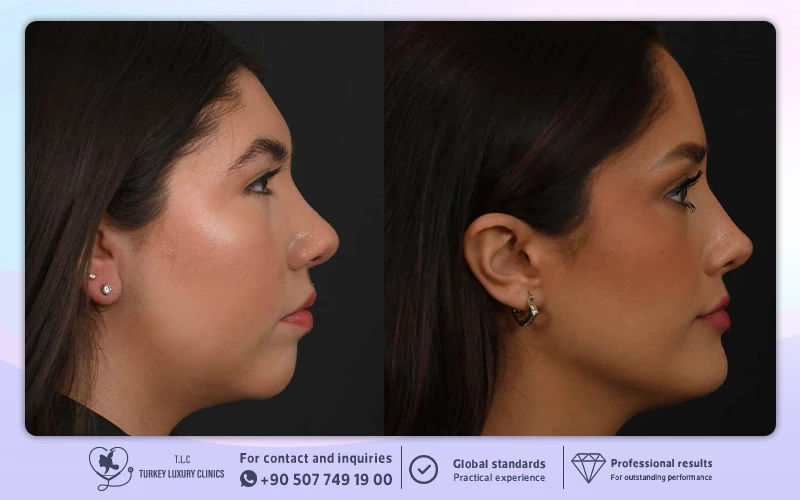
Mixed-Heritage Rhinoplasty in Turkey
Patients of mixed ethnic backgrounds often present with a unique combination of anatomical features that cannot be addressed using a standard surgical approach. The treatment plan is customized to the individual's nasal structure, skin quality, and facial proportions to achieve natural-looking, balanced results.

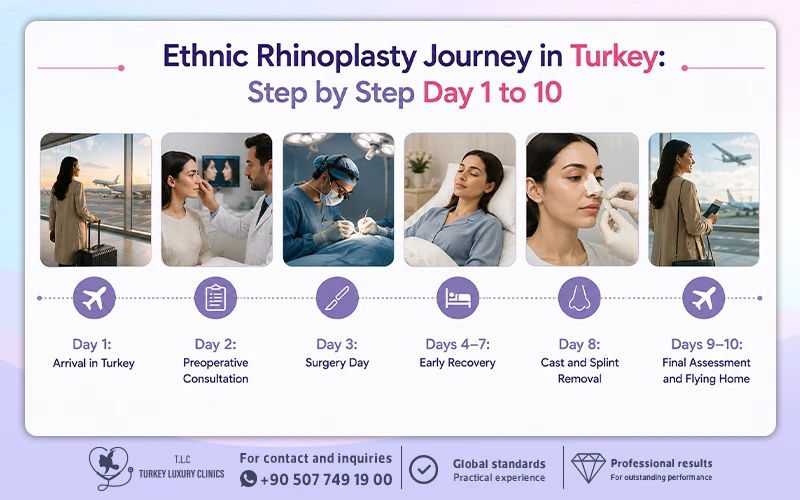
Ethnic Rhinoplasty Journey in Turkey: Step by Step Day 1 to 10
Day 1: Arrival in Turkey
After arriving, most international patients are transferred from the airport to their hotel or directly to the hospital, depending on the clinic's schedule.
Your first day is usually reserved for:
- Airport pickup.
- Hotel check-in.
- Meeting the patient coordinator.
- Reviewing your appointment schedule.
- Resting after your flight and staying well hydrated.
There is generally no surgery on the day of arrival.
Day 2: Preoperative Consultation
This is one of the most important days of your journey.
During the consultation, your surgeon will:
- Examine your nasal anatomy.
- Assess your breathing.
- Review your medical history.
- Discuss the planned changes.
- Explain the expected outcome and limitations.
- Answer your remaining questions.
Most clinics also perform routine preoperative investigations such as:
- Blood tests.
- Anesthesia assessment.
- Medical clearance.
- Clinical photographs.
This is your opportunity to confirm that the proposed surgical plan aligns with your expectations before signing the final consent.
Day 3: Surgery Day
Ethnic rhinoplasty is performed under general anesthesia and usually takes 3 to 5 hours, depending on the complexity of the procedure.
Your operation may include:
- Nasal bridge augmentation or reduction.
- Tip refinement.
- Cartilage grafting.
- Alar base reduction.
- Septoplasty if breathing problems are present.
Most patients stay in the hospital for one night before being discharged the following day.
Days 4–7: Early Recovery
The first week focuses on protecting the nose while reducing swelling and discomfort.
During this period, patients are usually advised to:
- Sleep with the head elevated.
- Apply cold compresses around the eyes if recommended.
- Take prescribed medications.
- Avoid strenuous activity.
- Keep the nasal splint dry.
- Attend scheduled follow-up appointments.
Swelling and bruising are generally most noticeable during the first few days before gradually improving.
Day 8: Cast and Splint Removal
Around one week after surgery, most patients return to the clinic for their first major postoperative review.
Depending on your surgeon's protocol, this visit may include:
- Removal of the external cast.
- Removal of internal silicone splints if used.
- Removal of non-dissolvable stitches.
- Cleaning of the nasal passages.
- Examination of the healing process.
- Updated postoperative photographs.
Although the nose will already look different, noticeable swelling is still expected, especially around the tip.
Days 9–10: Final Assessment and Flying Home
Before departure, the surgeon performs a final examination to confirm that recovery is progressing normally.
Patients typically receive:
- Postoperative instructions.
- Prescribed medications if needed.
- A fit-to-fly confirmation when appropriate.
- A schedule for online follow-up appointments after returning home.
Most international patients fly home approximately 8 to 10 days after surgery, although more complex procedures may require a slightly longer stay.
Why Should You Stay in Turkey for at Least 8–10 Days?
Leaving too early may increase discomfort and make postoperative care more difficult.
Remaining in Turkey until your first follow-up allows your surgeon to:
- Monitor the initial healing process.
- Remove the cast and splints safely.
- Identify early complications if they occur.
- Confirm that you are medically fit to travel.
Flying before the surgeon recommends may also increase discomfort because postoperative swelling, nasal congestion, and cabin-pressure changes can make the journey more challenging.
How Is Ethnic Rhinoplasty Performed?
Ethnic rhinoplasty is typically performed under general anesthesia and takes 2–4 hours, depending on the complexity of the case. Most surgeons use an open rhinoplasty approach because it provides better visibility of the nasal structures and allows precise reshaping while preserving the patient's ethnic identity.
The procedure generally involves:
- Creating the Incision – A small incision is made across the columella to access the nasal framework.
- Reshaping the Nose – The surgeon modifies the bridge, tip, and nasal cartilage based on the patient's anatomy and aesthetic goals.
- Adding Structural Support – Cartilage from the septum, ear, or rib may be used to strengthen the nose or improve projection when necessary.
- Refining the Nostrils – Alar base reduction may be performed to reduce wide nostrils while maintaining natural facial harmony.
- Closing the Incisions – The skin is repositioned, the incisions are closed, and an external splint is applied to protect the new nasal shape during healing.
Recovery After Ethnic Rhinoplasty
Recovery from ethnic rhinoplasty is slightly longer than traditional rhinoplasty recovery due to thicker nasal skin and the intensive use of structural cartilage grafting.
Recovery follows a gradual healing process.
Because many patients undergoing ethnic rhinoplasty have thicker nasal skin, swelling typically takes longer to resolve than after conventional rhinoplasty.
- 1–2 Weeks: A nasal splint is usually worn for the first 7 days. Swelling and bruising around the eyes are most noticeable during the first week and improve significantly by the second week. Most patients can return to work or other non-strenuous activities during this period.
- 1–3 Months: The nose begins to take shape, although it may still feel stiff or numb. Mild residual swelling, particularly in the nasal tip, is common and may be more noticeable in patients with thicker skin.
- 6–18 Months: Swelling continues to resolve, allowing the nasal contours to become more defined. While significant refinement is often visible within 6–12 months, final results typically develop over 12–18 months, especially in patients with thicker skin.
Ethnic Rhinoplasty Realistic Results
A successful ethnic rhinoplasty should make your nose look more balanced—not like someone else's. The goal is to enhance nasal shape while preserving the facial characteristics that reflect your ethnic identity. Rather than creating a dramatic transformation, the procedure aims for subtle, natural-looking improvements that complement the rest of your face.
Unlike standardized rhinoplasty, ethnic rhinoplasty focuses on improving structural support, facial harmony, and, when necessary, nasal function without producing an over-operated appearance.
Expected Improvements After Ethnic Rhinoplasty
The exact outcome depends on your anatomy and surgical plan, but many patients notice improvements in several areas.
Improvement | Expected Result |
Nasal bridge | A low or flat bridge may appear more defined while remaining proportionate to the face. |
Nasal tip | A broad, rounded, or under-projected tip can become more refined with better definition and support. |
Nostrils | Wide nostrils may be narrowed conservatively to improve facial balance without looking unnatural. |
Profile | The nose typically appears more harmonious from both the front and side views. |
Breathing | Patients undergoing septoplasty or functional correction may experience improved airflow after healing. |
When Will You See the Final Results?
Recovery is grad ual, and the nose continues to change long after the cast is removed.
- First week: The splint is removed, but swelling remains significant.
- First month: Most bruising resolves, and the nose begins to look more natural.
- 3–6 months: Swelling continues to decrease, particularly along the bridge.
- 6–12 months: Tip definition becomes more visible as tissues soften.
- 12–18 months: Final results are typically reached, especially in patients with thick nasal skin or extensive cartilage grafting.
Patients with thicker skin often require more time for swelling to resolve than those with thinner skin.
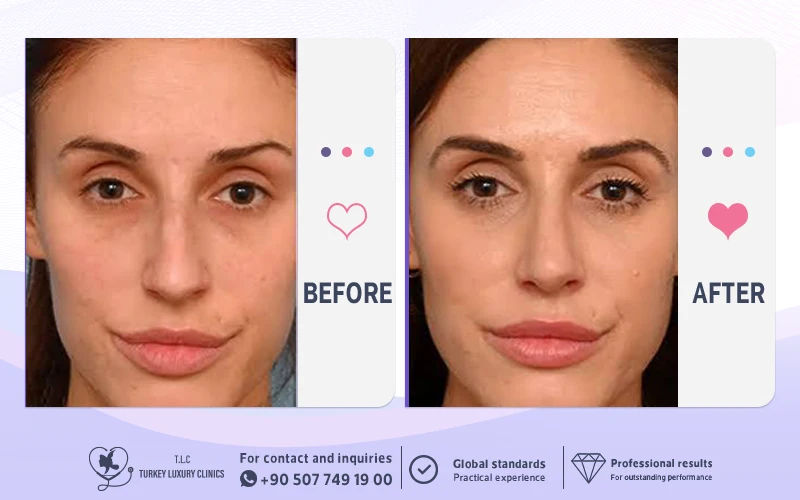
What Determines the Quality of the Final Result?
Several factors influence the outcome, many of which are unique to each patient.
The most important include:
- Your skin thickness.
- Cartilage strength.
- The complexity of the procedure.
- Whether cartilage grafts were required.
- How closely you follow postoperative instructions.
- Your body's natural healing response.
For this reason, two patients undergoing the same procedure may heal at different speeds and achieve slightly different levels of definition.
What Does a Successful Ethnic Rhinoplasty Look Like?
The best ethnic rhinoplasty results are often the least obvious. A successful outcome should preserve your ethnic identity, complement your facial proportions, and look natural from every angle.
It should also maintain or improve nasal function and age naturally with the rest of your face. The goal is not to create a “perfect” or standardized nose, but to achieve a balanced result that enhances your features without erasing what makes your appearance unique.
Ideally, people should notice that you look more refreshed and harmonious—not immediately recognize that you have had surgery.
Potential Risks and Complications of Ethnic Rhinoplasty
Like any surgical procedure, ethnic rhinoplasty carries potential risks, although serious complications are uncommon when performed by an experienced surgeon. Possible risks include:
- Swelling that lasts longer than expected, especially in patients with thicker skin.
- Asymmetry or irregular contours that may require minor revision surgery.
- Overcorrection or undercorrection, resulting in changes that do not fully meet the desired aesthetic goal.
- Breathing difficulties if the nasal airway is not adequately preserved or reconstructed.
- Visible scarring, particularly after open rhinoplasty or nostril reduction, although scars usually fade over time.
- Infection, bleeding, or delayed wound healing, which are uncommon but possible after any operation.
- Unsatisfactory cosmetic results, making revision rhinoplasty necessary in a small percentage of patients.
Choosing a board-certified surgeon with extensive experience in ethnic rhinoplasty is the most effective way to reduce these risks while preserving both nasal function and your natural ethnic features.
How Turkey Luxury Clinics Can Help
Turkey Luxury Clinics supports you throughout your ethnic rhinoplasty journey with:
- Personalized treatment planning
- Matching with experienced rhinoplasty surgeons
- Transparent pricing with no hidden fees
- Hotel accommodation and airport transfers
- Interpreter assistance and follow-up care
Patients choose us for our high-quality services, clear communication, and commitment to safe, natural-looking results.
Ready to explore your options? Contact Turkey Luxury Clinics for a free consultation, a personalized treatment plan, and a no-obligation price quote.
FAQs About Ethnic Rhinoplasty in Turkey