

- What Is the Best Hair Transplant Donor Area?
- Why the Back of the Scalp Is the Best Donor Area
- Good Hair Transplant Donor Areas
- What Is the Safe Donor Zone in Hair Transplant?
- Risks and Side Effects at the Hair Transplant Donor Area
- Donor Area After Hair Transplant: What to Expect
- Aftercare Tips for the Donor Area After Hair Transplant
- Does Hair Grow Back in the Donor Area?
- What If There Is Not Enough Donor Hair?
- Secure Your Hair Transplant with the Best Donor Area
- FAQ About Hair Transplant Donor Area
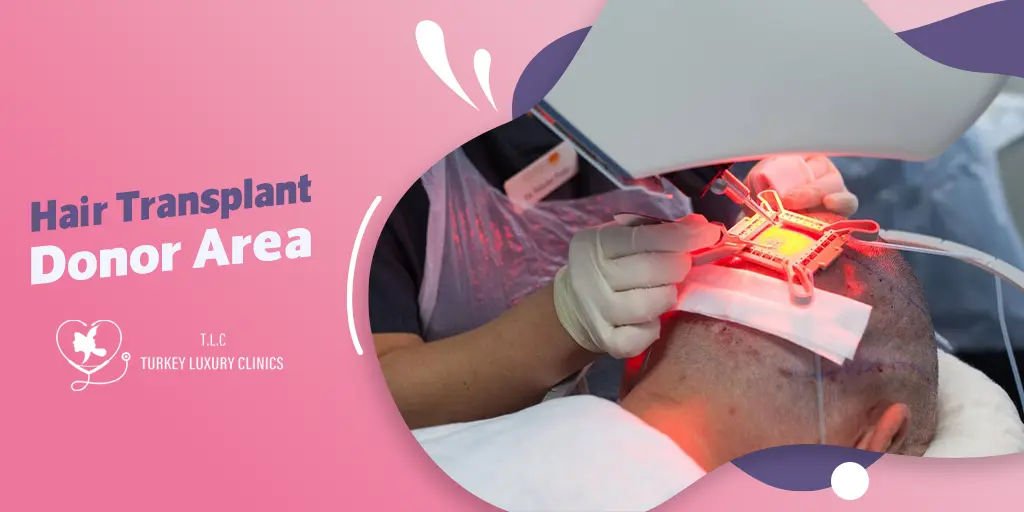
The hair transplant donor area is usually the back and sides of the scalp, known for its thick, permanent hair. Other areas - beard or chest- may also be used, depending on hair quality and transplant needs.
Did you know that there is more than one hair transplant donor area in your body? But which donor area works best for your condition? What makes an area suitable to be the donor site?
Hair transplant surgery is the ideal solution for people who have baldness or loss of hair due to certain causes or accidents. Let’s learn in this article about the hair transplant donor areas and how to choose the suitable one!
What Is the Best Hair Transplant Donor Area?
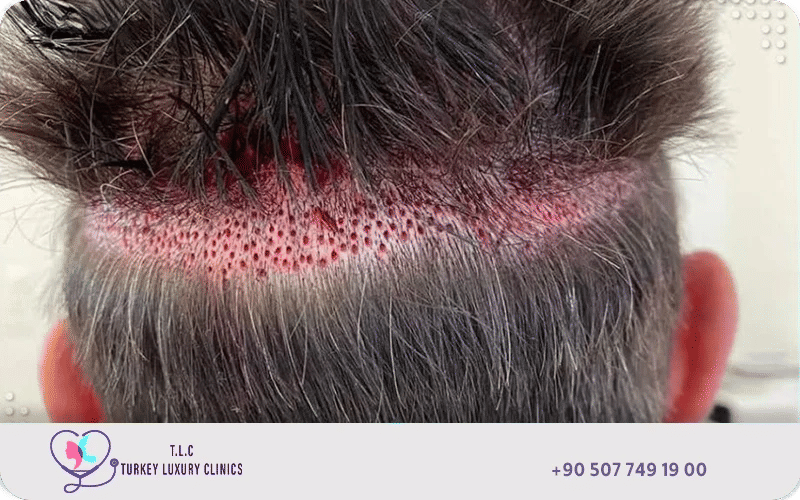
The best donor area for a hair transplant is the back and sides of the scalp, with the safest donor zones located in the occipital region. This area usually extends horizontally across the back of the head and is approximately 5–6 cm wide.
Hair follicles in this region are genetically resistant to DHT (dihydrotestosterone), the hormone responsible for most cases of hair loss. Because of this resistance, transplanted follicles taken from this zone are more likely to grow permanently and provide natural-looking results.
Although the scalp is considered the standard donor site, other areas, such as the beard or chest, can also be used when the scalp donor supply is limited, provided that the hair quality and growth cycle are suitable for transplantation.
Why the Back of the Scalp Is the Best Donor Area
There are several reasons why surgeons prefer the back and sides of the scalp as the primary donor area:
- Safe Donor Area (SDA): This region is known as the safe donor zone because the hair follicles are genetically resistant to DHT, making them less likely to fall out after transplantation.
- Higher Hair Density: The back of the scalp usually has a high concentration of hair follicles, allowing surgeons to extract grafts without creating visible thinning.
- Stronger Hair Follicles: Hair in this region is less affected by environmental factors such as sun exposure and damage.
- Natural Hair Texture: The follicles have a natural shape and direction that helps create a realistic hairline and natural-looking results.
- Good Blood Supply: The scalp in this region has strong blood circulation, which supports healthy graft survival and hair growth after transplantation.
Surgeons usually divide hair transplant donor areas into three main sources: the scalp donor area, the beard donor area, and the body hair donor area.
Good Hair Transplant Donor Areas
The main donor areas for hair transplantation include the back and sides of the scalp, the beard, chest, legs, and other body parts. The choice depends on hair density, texture, and quality, ensuring the best natural-looking results.
Scalp Donor Area (Back & Sides)
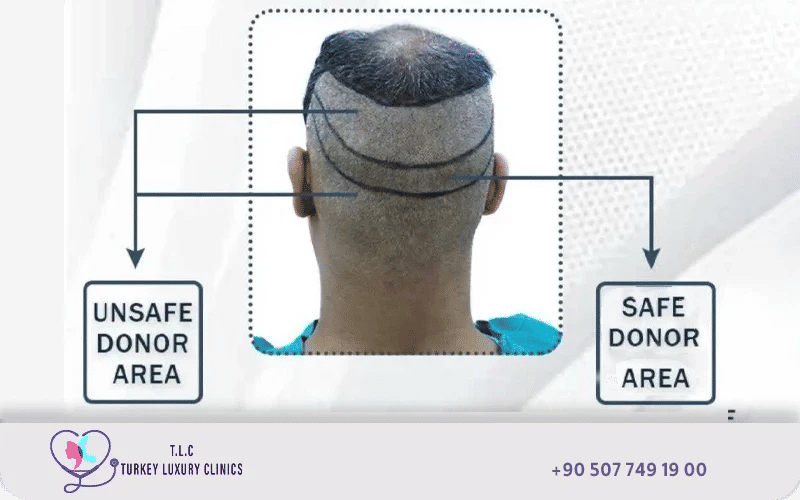
The most common donor area, doctors normally choose the nape or back of the head as the hair follicles in there are usually resistant to the effect of the hormones that cause hair loss.
Features of the back of the head area:
- The hair is dense, coarse and thick
- The hair grows consistently
- It is similar to the hair that was on the scalp
- The hair grows in a swirling or horizontal direction
Advantages of the nape of the head area:
- The most abundant and efficient site for transplanting hair
- The transplanted hair almost matches the texture of the previous hair
- Great coverage and therefore invisible scarring or traces of surgery
Disadvantages of the nape of the head area:
- It is not reliable if there is not enough hair density
- Facing the risk of temporary depletion of density
Beard Donor Area
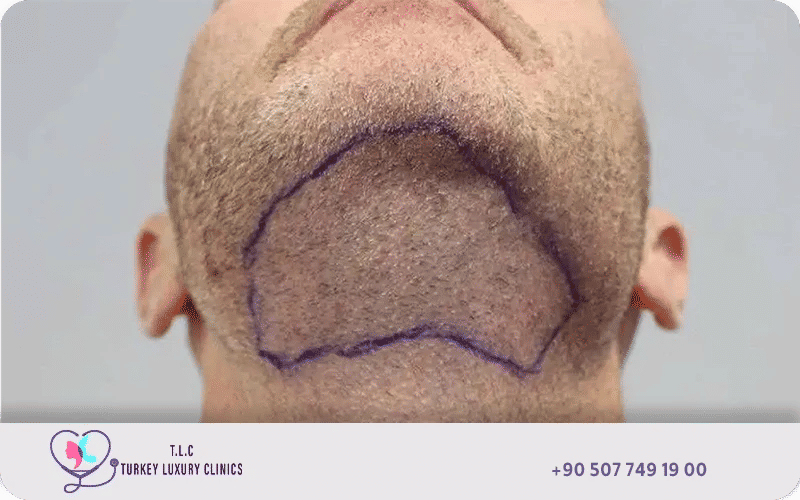
If the back of the head is not an option, especially in full baldness cases, then the beard is the perfect site; it is totally resistant to the hormones that cause male hair loss, which makes it the second safest choice.
Features of the beard area:
- The hair is thicker and denser than the hair at the nape
- The hair is coarser, and the texture is curlier
- The color often doesn’t match the hair color on the scalp
- It follows a different growth cycle, probably longer
Advantages of the beard area:
- The hair grows less frequently, which means low maintenance
- Great density after transplantation
- Good scarring covering after the hair grows off
Disadvantages of beard area:
- The hair follicles count is limited unlike the scalp hair
- You may find the newly growing hair different in color or texture
- The hair requires more time to grow than the scalp hair
- The harvested hair follicles require more treatment to match the density of the scalp
- It is less common than the traditional donor site, therefore it needs more precision and experience
Read about: Hair Transplant For Thinning Hair
Body Hair Donor Area
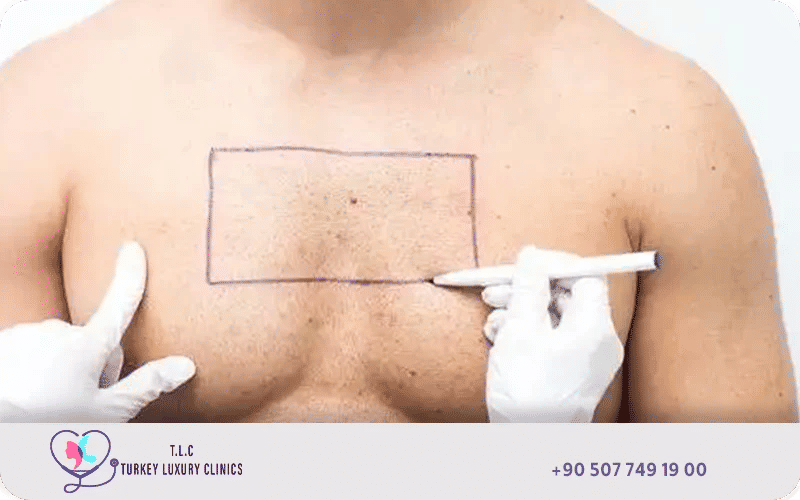
Body hair is a less common choice and the last site to think about due to many reasons. Body hair can be extracted from the chest, back, and shoulders, and in rare cases, the pubic hair. For example, a beard transplant with pubic hair is possible using the FUE technique, but it’s usually considered only when no other suitable donor areas are available, due to differences in texture and growth patterns.
Good body areas as hair transplant donor:
- Chest Hair: Used mainly for adding density in the crown area when scalp and beard hair are insufficient.
- Back and Shoulders: A secondary body hair option, though the growth cycles and textures differ significantly from head hair.
- Legs and Arms: The last resort. These hairs are typically thinner and have a shorter growth phase, meaning they won't grow as long as scalp hair.
Features of body hair as a donor site:
- The hair is different in texture, coarser, and curlier
- It has a different growth cycle than scalp hair
- The density differs according to each body type
- It has a different color from the scalp hair in most cases
Advantages of using body hair as a donor site:
- It is an additional source, especially for people who have other donor site issues
- The body hair is an open donor site with an endless amount of hair follicles
- The hair grows slowly, which means low maintenance
Disadvantages of using body hair as a donor site:
- The color of the newly grown hair is different than the scalp hair
- The texture of the grown hair is difference which needs more care
- Lower density than the first two donor sites which requires collecting the hair follicles from vast spaces across the body
- The hair grows slowly which mean more time to change your style
- The body hair is unpredictable, it goes through different changes and can be affected by many factors
Key Features of a Good Hair Transplant Donor Area
What makes an area perfect to extract air follicles? The ideal donor area is the one that has:
- High hair density to extract as much as the doctor wants without facing the issue of empty spots
- Sun resistance: the area should be resistant to sun damage, which makes hair follicles stronger
- Fine formation and shape to gain a natural-looking hair and hairline after the transplant
- Good blood supply, which enables the hair follicles to grow normally without falling off again
What Is the Safe Donor Zone in Hair Transplant?
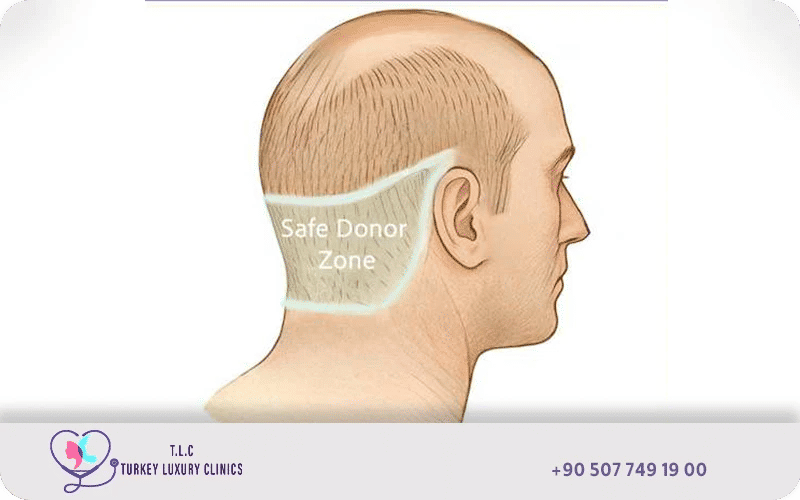
The Safe Donor Zone in a hair transplant is the area of permanent hair at the back and sides of the scalp, the occipital and temporal regions, that is resistant to DHT-related hair loss.
Hair follicles from this region are genetically permanent, making them the most reliable for long-term graft survival. This zone generally spans from above the ears to the nape, avoiding thinning areas in the upper crown or too-low nape.
The safest donor site is in the parietal‑occipital region, where androgenetic alopecia has minimal effect. The lower border is defined by a hair density of at least 10 hairs per 4‑mm circle, providing a cushion against age-related thinning, and the front border can be marked perpendicular to the external auditory canal. In most people, the zone is about 6.5–7 cm wide at the front and gradually narrows toward the back of the scalp.
Risks and Side Effects at the Hair Transplant Donor Area
Although hair transplant is a safe, minimally invasive process, there is still a chance of risks and side effects, which include:
- Shock loss, a temporary hair fall near the donor site, which grows back again
- Bleeding that requires medical intervention if it is excessive or continuous
- Infection due to poor sterilization and care during or after the process
- Swelling and it is completely normal and can be managed with the prescribed medication
- Scarring, which can occur at the hands of an inexperienced medical practitioner
- Numbness and it is also temporary and goes off in a couple of days
Donor Area After Hair Transplant: What to Expect
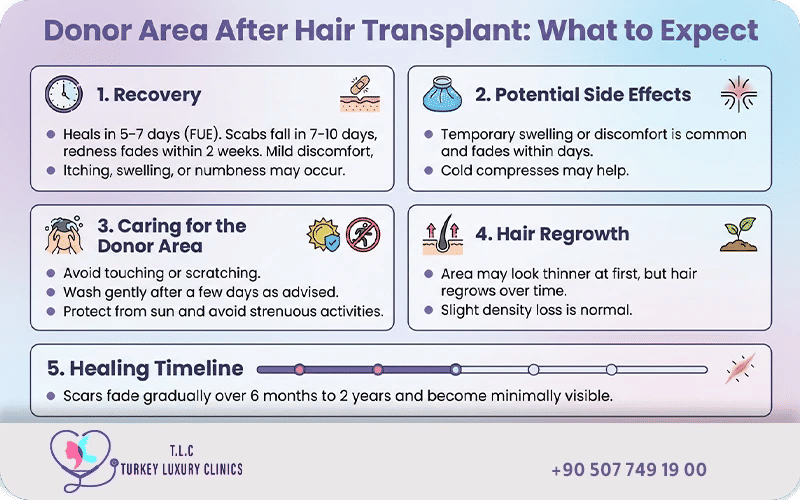
After a hair transplant, the donor area goes through a healing process that includes stages of redness, scabbing, and scarring, which can vary depending on the technique used. While the extracted follicles are permanently removed, resulting in a slightly reduced density, the surrounding hair usually conceals the donor site as it recovers.
1. Recovery
The donor area after hair transplant typically heals within 5–7 days following an FUE procedure. Scabs usually fall off in 7–10 days, and redness fades within two weeks. Mild discomfort, itching, swelling, numbness, or burning are common during early recovery. Proper care during this stage ensures faster healing and optimal results.
2. Potential Side Effects
Some patients may experience temporary swelling, burning, or mild discomfort in the donor area. Using cold compresses can help relieve these symptoms. These side effects are normal and typically subside within the first few days.
3. Caring for the Donor Area
Proper care of the FUE donor area is essential. Avoid touching, scratching, or pressing the area. Gentle washing is allowed a few days post-surgery, following your doctor’s instructions. Protect the scalp from sun exposure and avoid strenuous activities such as exercise, swimming, or sauna. Using a neck pillow can provide extra protection if the donor area is at the back of the head.
4. Hair Regrowth
Immediately after surgery, the donor area may appear thinner, but hair continues to grow over time. The overall density might be slightly lower than before the transplant, which is normal. Most patients see gradual improvement in appearance as the surrounding hair conceals the donor site.
5. Donor Area Healing Timeline
Scars in the donor area gradually fade over time, typically becoming less noticeable between 6 months and 2 years. While complete disappearance is rare, professional technique and proper care make scars minimally visible.
Aftercare Tips for the Donor Area After Hair Transplant
- Avoid rubbing or scrubbing the donor area for at least two days to prevent irritation or complications.
- Pat the area dry with a wet towel or follow your doctor’s guidance on the safest cleaning method.
- Apply cold compresses to reduce swelling, scabbing, or itching.
- Use a neck pillow during the first few days if the donor area is at the back of the head for extra protection.
- Protect from the sun to prevent sensitivity or irritation.
- Avoid strenuous activities such as exercise, swimming, or sauna that could irritate the scalp during initial recovery.
Does Hair Grow Back in the Donor Area?
No, the donor area does not grow back in the sense that new follicles are created. However, the existing, non-harvested hair grows over the gaps. When the extraction of the grafts is properly performed, the removal of part of the hair is completely imperceptible. Therefore, it is very important to use an experienced surgeon and to remove the donor area in a well-thought-out manner.
What If There Is Not Enough Donor Hair?
If a patient has insufficient donor hair or their hair loss is too advanced, the transplant may not achieve the desired density or coverage. Additionally, certain types of hair loss, such as diffuse unpatterned alopecia, can make it difficult to achieve successful results.
If you have limited donor hair for a transplant, options include using body hair (beard or chest) for transplantation (BHT), using specialized techniques like Hair Stem Cell Transplantation (HST), or focusing on non-surgical treatments like PRP, Minoxidil, or Finasteride to maximize existing hair.
Here are the main options if your donor hair is limited:
- Body Hair Transplant (BHT): Use beard or chest hair to supplement the scalp.
- Scalp Micropigmentation (SMP): Tattoo technique to create a fuller look.
- Medical Management: Finasteride & Minoxidil to stabilize and improve hair.
- Strategic Planning: Focus grafts on visible areas like the hairline.
- Advanced Techniques (HST): Generate more follicles from less donor hair.
- Regenerative Therapies: PRP or stem cells to strengthen existing follicles.
Secure Your Hair Transplant with the Best Donor Area
Worried about having enough donor hair or choosing the right area for your transplant? Turkey Luxury Clinics offers a personalized assessment of your donor zones, ensuring a safe, effective procedure and natural-looking results. Schedule your consultation today and discover the ideal solution for your hair!
FAQ About Hair Transplant Donor Area