

- Hair Transplant Timeline in Turkey
- Is Hair Transplant in Turkey Worth It?
- How Safe Is Hair Transplant in Turkey?
- How Good Are Hair Transplant Results in Turkey?
- How Much Does Hair Transplant in Turkey Cost in 2026?
- Your Hair Transplant Journey in Turkey: Step by Step
- How to Choose the Best Hair Transplant Clinic in Turkey
- What Makes an Ideal Candidate?
- Hair Transplant Recovery: What to Expect?
- Hair Transplant in Turkey Before and After Photos
- What Are the Risks of Hair Transplant?
- Does Hair Transplant Stop Hair Loss Forever?
- How Turkey Luxury Clinics Can Help
- FAQs About Hair Trasnplant in Turkey
Hair transplant surgery in Turkey typically costs between $1,500 and $5,500—around 50% to 80% less than in the United States, the United Kingdom, and many European countries. Most international patients choose all-inclusive packages covering the procedure, hotel accommodation, airport transfers, medications, and post-operative care, allowing them to complete treatment within a single, well-organized medical trip.
Should you travel abroad for a hair transplant, or stay in your home country?
Every year, thousands of international patients choose Turkey not only because treatment is more affordable, but because it offers a unique combination of specialized hair transplant expertise, streamlined medical travel, and comprehensive all-inclusive care.
At Turkey Luxury Clinics, we help international patients compare trusted clinics, choose the right surgeon, and plan a personalized treatment journey from consultation to recovery.
Hair Transplant Timeline in Turkey
Timeline | What to Expect |
Before Travel | Online consultation, treatment plan, and travel arrangements |
Day 0 | Arrival in Turkey and hotel check-in |
Day 1 | Final consultation, hairline design, and hair transplant surgery |
Day 1–2 | First hair wash, medical check, and recovery instructions |
Day 2–4 | Return home (most patients) |
Weeks 1–2 | Healing, scab removal, and graft stabilization |
Months 1–18 | Progressive hair growth and final results |
Is Hair Transplant in Turkey Worth It?
Yes, for many international patients, traveling to Turkey for a hair transplant is worth it, provided they choose the right clinic rather than simply choosing the country.
Most international patients pay between $1,500 and $5,000 for a hair transplant in Turkey, compared with approximately $15,000 to $20,000 in the United States. Beyond the lower price, Turkey simplifies the entire treatment journey by combining consultation, surgery, accommodation, airport transfers, and early recovery into a single, well-organized treatment plan that can usually be completed within just a few days.
Still deciding? Compare Turkey with other popular destinations in our Turkey vs Mexico, Turkey vs Thailand, and Turkey vs India guides.
How Safe Is Hair Transplant in Turkey?
Yes. Hair transplant in Turkey is safe when performed in a licensed, surgeon-led clinic.
Licensed clinics follow national healthcare regulations and internationally recognized standards for infection control and patient safety.
Healthcare facilities are regulated by the Turkish Ministry of Health, and some hospitals also hold international accreditations such as JCI. However, patients should always verify the surgeon's qualifications and the clinic's licensing before booking treatment.
To reduce the risk of complications, avoid high-volume "hair mills" and clinics where technicians perform most of the procedure instead of the surgeon. Also be cautious of treatment plans that promise excessively high graft numbers, as aggressive extraction can lead to donor overharvesting. Before traveling, confirm that the clinic provides structured post-operative follow-up after you return home.
Read more about Why Do People Go to Turkey for Hair Transplants?
How Good Are Hair Transplant Results in Turkey?
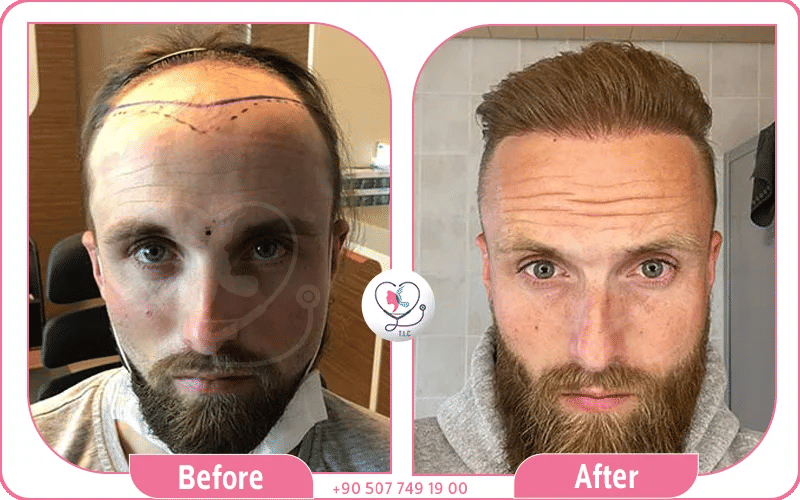
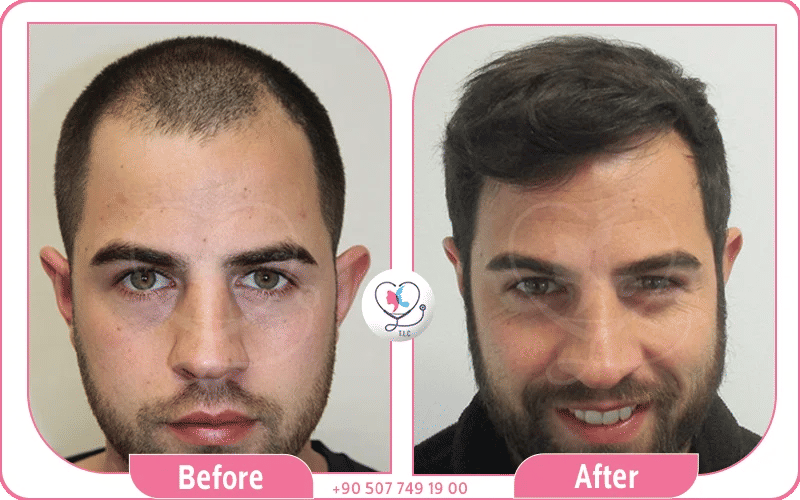
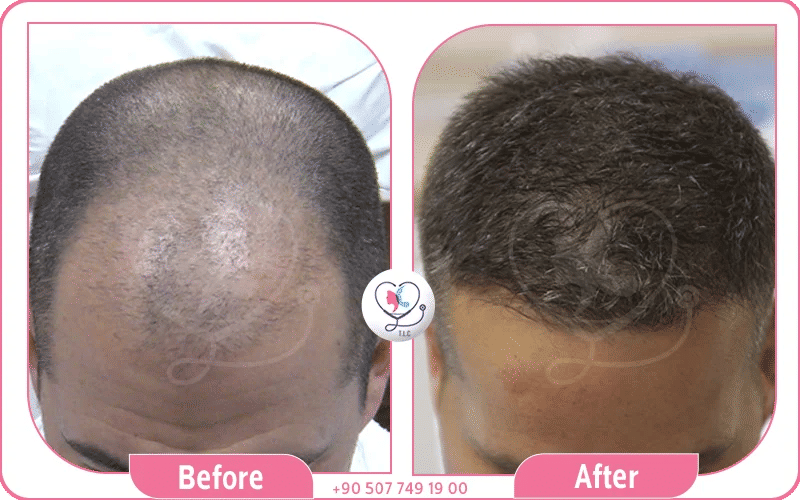
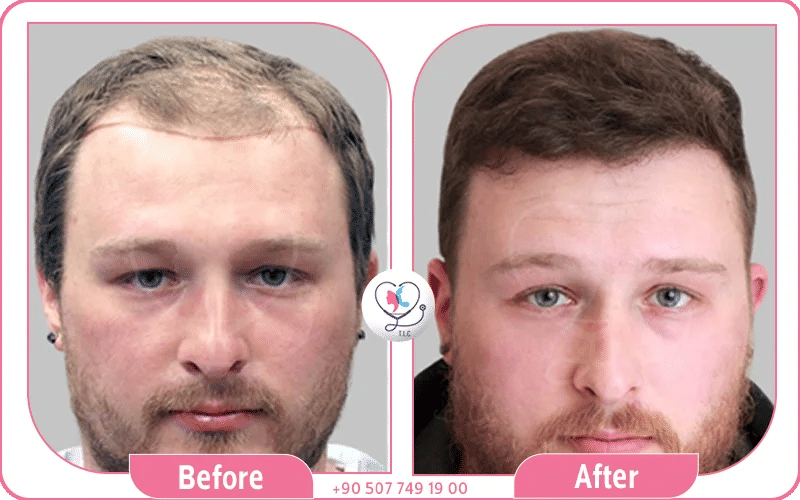
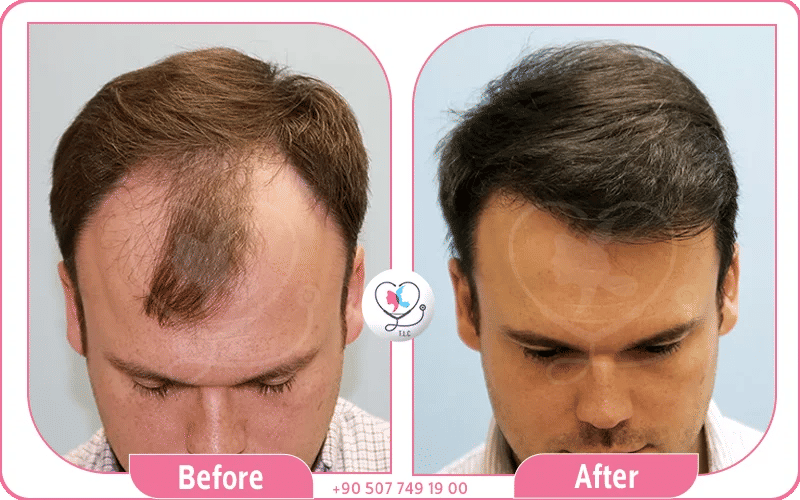
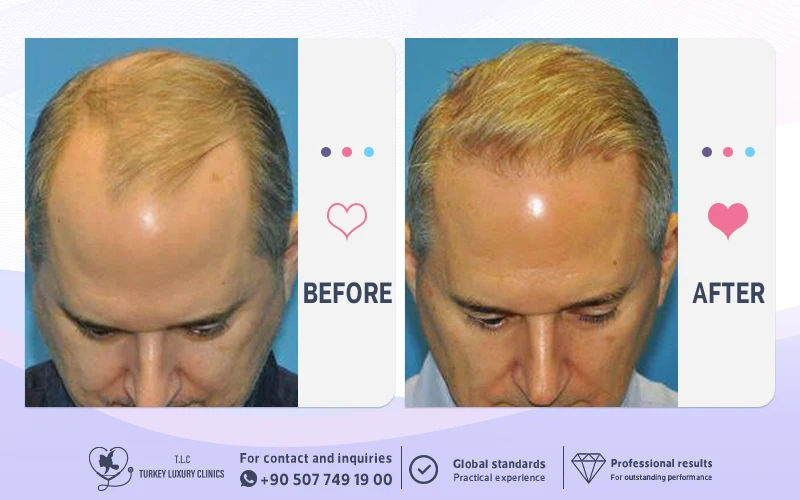
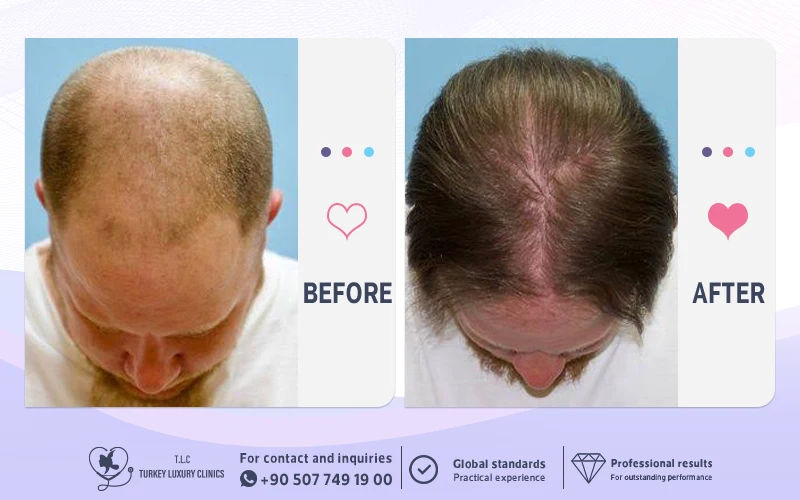
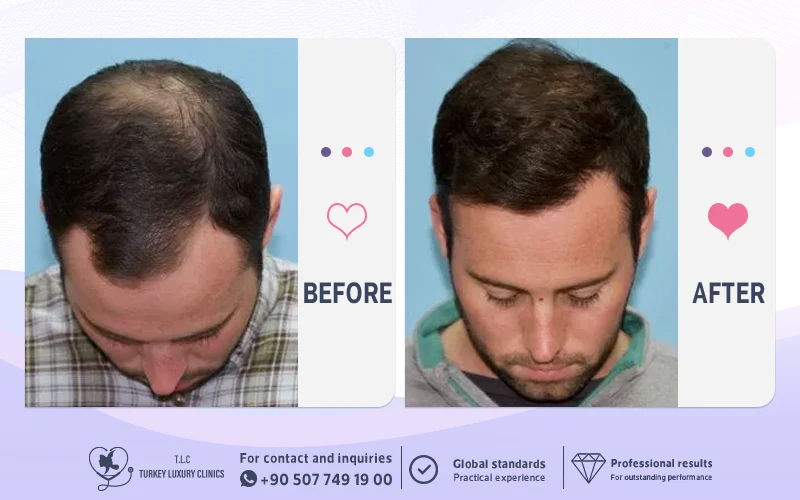
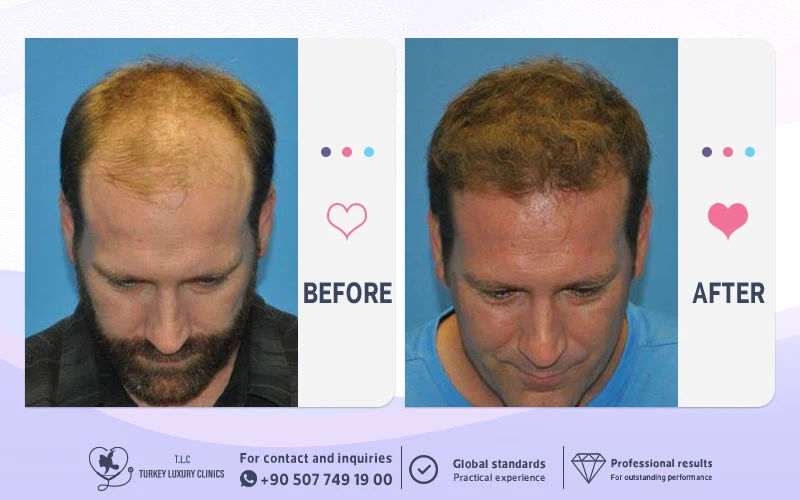
Hair transplant results in Turkey are generally excellent when performed by an experienced hair transplant surgeon. Experienced surgeon-led clinics typically achieve graft survival rates of 90%–95%. Successful outcomes include a natural-looking hairline, fuller hair density, balanced coverage, natural hair direction, and seamless blending with existing hair for an undetectable result.
When performed by an experienced surgeon, hair transplant results are customized to each patient's facial features, age, gender, and ethnic hair characteristics. For men, the goal is to create an age-appropriate masculine hairline, while for women the focus is on preserving a softer, feminine hairline and natural overall density. Patients with Afro-textured hair require specialized expertise because the hair's tight curl pattern and curved follicles demand different harvesting and implantation techniques to achieve natural-looking, long-lasting results.
Patients usually notice new hair growth within 3–4 months, with significant improvement by 6 months. Final results typically develop between 12 and 18 months.
The final outcome depends on donor hair quality, surgeon expertise, treatment planning, the patient's overall health, and careful adherence to post-operative instructions.
How Long Do Hair Transplant Results Last?
Hair transplant results can last a lifetime because transplanted follicles are usually taken from the permanent donor area, where hair is genetically resistant to pattern hair loss. However, existing non-transplanted hair may continue to thin over time, so some patients benefit from medical therapy or future touch-up procedures.
How Much Does Hair Transplant in Turkey Cost in 2026?
Technique | Average Price (USD) |
FUE | $1,500–$3,500 |
Sapphire FUE | $2,000–$4,000 |
DHI | $2,500–$5,500 |
The cost of a hair transplant in Turkey depends primarily on the number of grafts you need, the technique used (FUE, Sapphire FUE, or DHI), the surgeon's experience, the clinic's reputation, and whether you choose a standard or all-inclusive treatment package.
In 2026, most international patients pay between $1,500 and $5,500 (€1,400–€4,600) for an all-inclusive hair transplant package, typically covering procedures of around 2,000 to 5,000 grafts.
Although the average cost per graft is around $0.50 to $1.00, most clinics in Turkey charge fixed package prices rather than pricing each graft individually. This pricing model makes treatment more predictable and often more affordable for international patients.
Compared with the United States, the United Kingdom, and many European countries, patients can often save 50% to 80% while still receiving treatment from experienced hair transplant specialists.
All-inclusive hair transplant packages, include the procedure, hotel accommodation, airport transfers, medications, interpreter services, and post-operative care, make the overall treatment journey more streamlined, predictable, and easier to manage for international patients.
For a detailed pricing breakdown, read our Hair Transplant Cost in Turkey(2026) guide. It compares Standard, Premium (PRP), and Stem Cell packages, explains what's included in each package, including accommodation, VIP transfers, and aftercare, and shows how prices vary by graft count, technique, clinic, and surgeon experience to help you choose the best option.
Your Hair Transplant Journey in Turkey: Step by Step
Step 1: Before You Travel
Submit your photos and medical history for an online consultation. The clinic evaluates your donor area, estimates the required grafts, recommends the best technique, and prepares your treatment plan. Once confirmed, your surgery date, hotel, airport transfers, and patient coordinator are arranged.
Step 2: Arrival in Turkey
Most patients arrive one day before surgery. A private transfer takes you to your hotel, where you rest before your consultation the following morning.
Step 3: Final Consultation & Hair Transplant Planning
Before surgery, your surgeon performs the final assessment and confirms that you are a suitable candidate for the procedure. During this consultation, the surgeon evaluates your donor area, estimates the number of grafts available and required, designs your hairline, plans the graft distribution and density, and selects the most appropriate technique (FUE, Sapphire FUE, or DHI). This planning stage is one of the most important factors influencing your final results.
Read our Hair Transplant Experience Guide to learn what surgery day really feels like.
Step 4: Hair Transplant Surgery
Once the treatment plan is finalized, the procedure is performed under local anesthesia, allowing you to remain awake throughout the surgery. Depending on your treatment plan, FUE, Sapphire FUE, or DHI is used to restore the thinning or bald areas. Most procedures take 4–8 hours, while very large sessions may be completed over two consecutive days.
Step 5: Hotel Recovery & First Wash
After surgery, you'll return to your hotel to rest and begin the initial recovery period. The following day, the clinic performs your first hair wash, checks the transplanted grafts, and provides detailed aftercare instructions before you travel home.
Step 6: Return Home
Your clinic will continue to monitor your recovery through online follow-up appointments and progress photos while guiding you through the healing process until your final results develop over the next 12–18 months.
How Many Days Should You Stay in Turkey?
Most international patients stay in Turkey for 3 to 4 days. This allows enough time for the pre-operative consultation, hair transplant procedure, the first post-operative hair wash, and a final medical check before traveling home. Some patients undergoing smaller procedures may be able to leave after 2–3 days, while larger sessions or combined treatments may require a slightly longer stay.
When Can You Fly Home After a Hair Transplant?
Most patients can safely fly 24 to 72 hours after surgery, provided their surgeon confirms that the grafts are stable and there are no early complications. Before traveling, you should receive your medications, aftercare instructions, and contact details for remote follow-up. During your flight, avoid rubbing the transplanted area and follow your clinic's recommendations to protect the newly implanted grafts.
How to Choose the Best Hair Transplant Clinic in Turkey
The best hair transplant clinic isn't the one with the lowest price or the biggest marketing budget—it's the one where an experienced surgeon personally plans your treatment, performs the critical parts of the procedure, and can consistently demonstrate natural, long-term results.
What Makes a Hair Transplant Clinic One of the Best?
- Qualified hair transplant surgeon with documented experience.
- Personalized treatment plan based on your donor area and hair loss pattern.
- Natural before-and-after results from patients with similar hair loss.
- Conservative donor area management to preserve grafts for future procedures.
- Licensed healthcare facility operating under Turkish healthcare regulations.
- Transparent treatment package with clearly explained inclusions and exclusions.
- Structured aftercare and long-term follow-up.
- Verified patient reviews across independent platforms.
Red Flags
- Guaranteed "unlimited grafts".
- One-size-fits-all treatment plans.
- No direct consultation with the surgeon.
- Unrealistically low prices.
- Surgery performed entirely by technicians.
- No documented long-term patient results.
Hair Transplant in Istanbul vs Antalya vs Izmir
City | Highlights |
Istanbul | Largest selection of specialized clinics and surgeons |
Antalya | Well-developed medical tourism infrastructure and resort location |
Izmir | Smaller selection of reputable clinics with a quieter atmosphere |
Istanbul is the leading destination for hair transplant surgery in Turkey, offering the largest selection of specialized clinics, experienced surgeons, and all-inclusive treatment packages. Antalya is popular among patients who want to combine treatment with a holiday, while Izmir provides a quieter alternative with reputable clinics.
Is Hair Transplant Right for You?
Hair transplant is the most effective long-term solution for permanent hair loss, particularly when medications and other non-surgical treatments are no longer able to achieve the desired result.
Hair Transplant Is Usually Recommended For:
- Male or female pattern baldness: The most common reason for hair transplant surgery and the condition with the most predictable long-term results.
- A receding hairline: Ideal for restoring temple recession and creating a natural-looking frontal hairline.
- Crown thinning: Suitable for improving density in the vertex when sufficient donor hair is available.
- Advanced hair loss (Norwood 6–7): Still possible in selected patients, although coverage depends on donor hair availability and realistic treatment goals.
- Hair loss that has not improved with medication: Hair transplantation may be considered when treatments such as minoxidil or finasteride do not provide sufficient cosmetic improvement.
- Hair loss caused by scars: Transplantation can help restore hair in selected scarred areas after proper evaluation.
- Beard or eyebrow hair loss: Hair transplantation can also be used for facial hair restoration in suitable candidates.
What Makes an Ideal Candidate?
Hair transplant is suitable for both men and women and can be successfully performed on different hair types, including Afro, Asian, European, Middle Eastern, and Caribbean hair, when the procedure is tailored to each patient's hair characteristics. However, achieving natural, long-lasting results depends largely on selecting the right candidate rather than simply performing the procedure.
To Be an Ideal Candidate, You Should Have:
- A healthy donor area with enough permanent hair follicles to cover thinning or bald areas. The best donor hair is usually taken from the back and sides of the scalp because these follicles are more resistant to pattern hair loss. In selected cases, beard or body hair may also be used to increase graft availability.
- Stable hair loss, typically male or female pattern baldness that is no longer rapidly progressing.
- Good overall health, with no uncontrolled medical conditions that could interfere with healing or recovery.
- A healthy scalp, free from active infections, inflammation, or untreated scalp disorders.
- Realistic expectations, understanding that a hair transplant redistributes existing hair rather than creating new follicles or restoring teenage hair density.
When Should You Delay a Hair Transplant?
A hair transplant may not be the best first step if you have:
- Active or rapidly progressing hair loss.
- Poor donor hair density.
- Untreated scalp conditions or infections.
- Uncontrolled medical conditions.
- Hair loss that may respond better to medical treatment first.
Which Hair Transplant Technique Is Best?
FUE, Sapphire FUE, and DHI all transplant healthy hair follicles but differ in how the recipient sites are created and the grafts are implanted. The best technique depends on your hair loss pattern, donor area, graft requirements, and the surgeon's expertise rather than one technique being universally superior.
FUE Hair Transplant
FUE (Follicular Unit Extraction) is the most established and widely performed hair transplant technique in Turkey. It is best suited for large areas of hair loss and high graft sessions (2,000–5,000+ grafts), offering natural-looking results with tiny dot-like scars.
Sapphire FUE
Sapphire FUE follows the same principles as conventional FUE but uses sapphire blades instead of steel blades to create the recipient channels. It is commonly chosen for large graft sessions requiring precise channel creation, although the surgeon's technique has a much greater influence on the final outcome than the blade material itself.
DHI Hair Transplant
DHI (Direct Hair Implantation) uses an implanter pen to place follicles directly into the scalp, allowing greater control during implantation. It is particularly useful for hairline refinement, increasing density between existing hairs, and selected partially unshaven procedures. Compared with FUE, DHI usually takes longer, costs more, and is not inherently superior for every patient.
Hair Transplant Recovery: What to Expect?
Hair transplant recovery is a gradual process that begins immediately after surgery and continues for 12–18 months. While most patients return to normal daily activities within a few days, the transplanted hair follows a predictable growth cycle before reaching its final appearance.
During recovery
Hair Transplant Recovery Timeline
Recovery Stage | What to Expect |
Days 1–3 | Mild swelling, redness, and tenderness as the grafts begin to heal. |
Week 1–2 | Scabs gradually fall off and the transplanted grafts become securely anchored. |
Weeks 3–8 | Temporary shock loss occurs as the transplanted hairs shed before new growth begins. |
Months 3–6 | Fine new hairs emerge and hair density gradually increases. |
Months 6–12 | Hair becomes thicker, longer, and more natural-looking. |
Months 12–18 | Final maturation, particularly in the crown area. |
Read our complete guide: Hair Transplant Recovery Week by Week → (Internal Link)
When Will I See My Hair Transplant Results?
Most patients notice the first signs of new hair growth 3–4 months after surgery. Visible improvement usually appears by 6 months, while most final results develop between 9 and 12 months. If the crown area is treated, maturation may continue for 12–18 months. Hair growth is gradual, so patience and proper aftercare are essential throughout the recovery process. Read more about Hair Growth Timeline After Hair Transplant
What Affects Hair Transplant Results?
Several factors influence the final outcome of a hair transplant, including:
- Surgeon experience: Affects graft placement, hairline design, and the overall natural appearance.
- Donor area quality: Determines the number and quality of grafts available for transplantation.
- Hair characteristics: Hair thickness, curl, and color influence the appearance of density.
- Surgical planning: Helps prevent overharvesting and preserves donor hair for future procedures.
- Post-operative care: Supports healing, graft survival, and long-term hair growth.
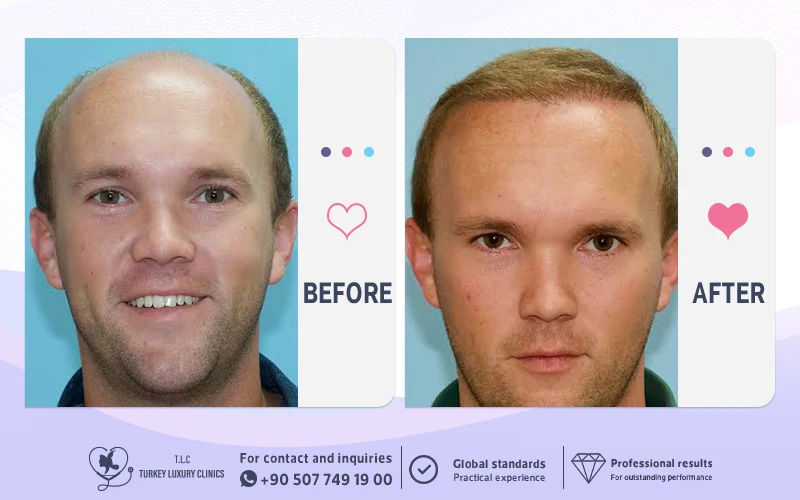
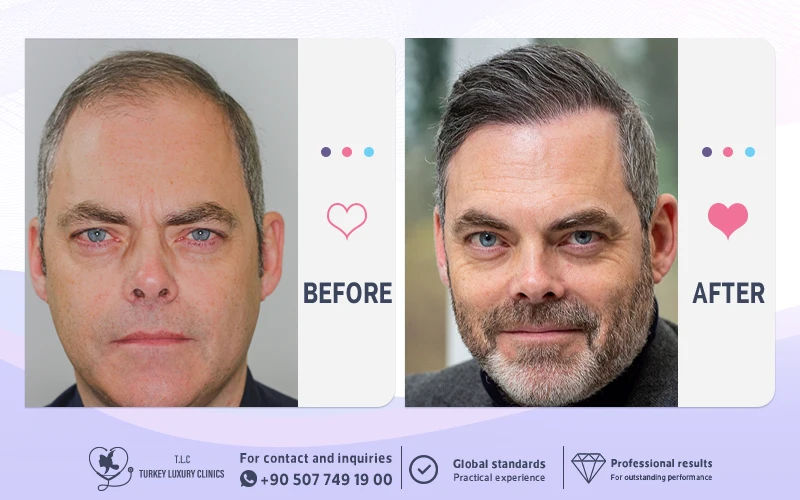
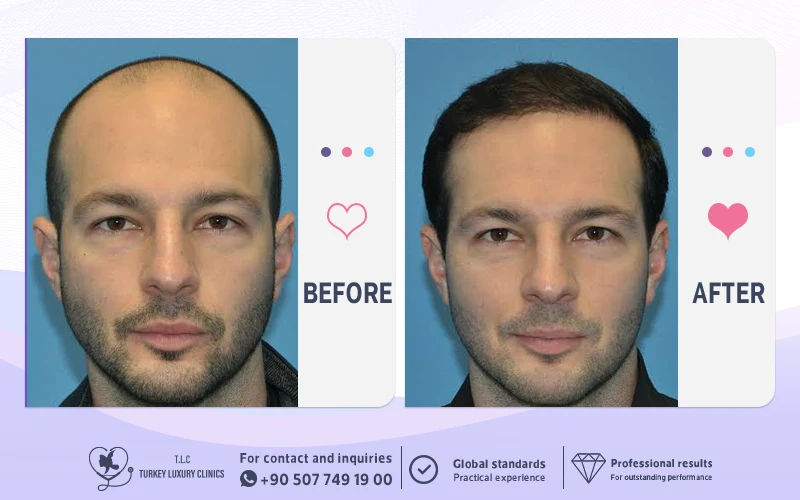
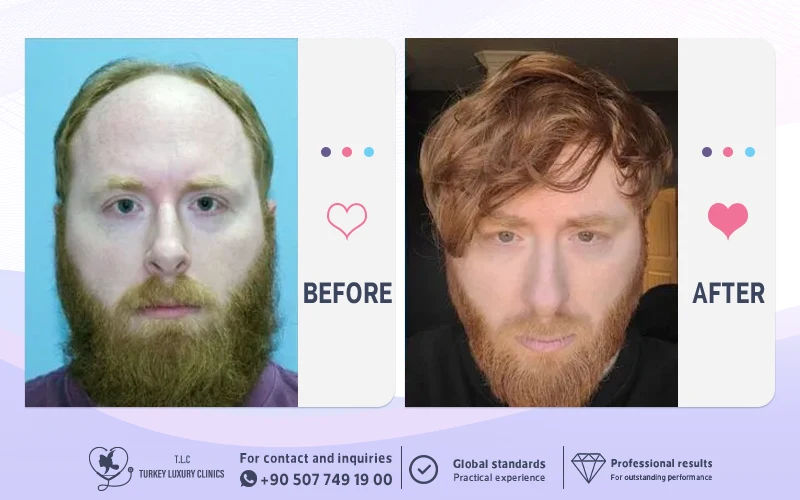
Hair Transplant in Turkey Before and After Photos
What Are the Risks of Hair Transplant?
Hair transplant is generally a safe procedure with a low risk of serious complications when performed by an experienced surgeon in a licensed clinic. However, like any surgical procedure, it can cause temporary side effects during recovery and, in uncommon cases, complications. Proper patient selection, meticulous surgical technique, and careful post-operative care all help minimize these risks.
Common Side Effects
Temporary side effects after hair transplant, during the first 2 weeks, are normal part of the healing process and usually resolve within days or weeks.
- Mild swelling of the forehead or scalp
- Redness around the transplanted grafts
- Scabbing during the first 1–2 weeks
- Temporary numbness or itching
- Shock loss of transplanted or existing hair
Possible Complications
Although uncommon, complications can occur, particularly if the procedure is poorly planned, performed, or followed by inadequate aftercare.
- Infection
- Folliculitis (inflamed hair follicles)
- Poor graft survival or uneven growth
- Unnatural hairline design
- Overharvesting of the donor area
- Visible scarring (more common after FUT or poor surgical technique)
Does Hair Transplant Stop Hair Loss Forever?
No. A hair transplant permanently relocates healthy hair follicles from the donor area to balding areas, but it does not stop the underlying process of hair loss. While the transplanted hairs are usually resistant to male or female pattern baldness, your existing native hair may continue to thin over time.
To maintain long-term results, many patients are advised to combine hair transplantation with treatments such as finasteride, minoxidil, or other medically appropriate therapies, depending on the cause and progression of their hair loss.
How Turkey Luxury Clinics Can Help
We help international patients find experienced hair transplant surgeons and trusted clinics in Turkey. Our team provides personalized treatment plans, travel coordination, and ongoing support before, during, and after your procedure.
Get a Free Treatment Plan
FAQs About Hair Trasnplant in Turkey