

- A Glance at Female Hair Transplant in Turkey
- Female Hair Transplant Before and After Photos
- How Much Does a Female Hair Transplant Cost in Turkey?
- What are the Signs of Hair Loss in Women?
- What Causes Hair Loss in Women
- Are there Tests to Diagnose Female Hair Loss?
- What are the Best Hair Transplant Techniques for Women
- How Do Female Hair Transplant Procedures Work?
- Who is a Good Candidate for the Surgery?
- Female Hair Transplant Recovery Timeline
- How Long Does a Female Hair Transplant Last?
- Post-Operation Instructions for Hair Transplant for Women
- Hairline Lowering vs Hair Transplant
- Book your Consultation
- FAQs About Women Hair Transplant in Turkey
Female hair transplants in Turkey typically cost between $2,200 and $3,800, making Turkey one of the most affordable destinations for women seeking permanent hair restoration. Modern techniques such as DHI and FUE allow many women to undergo treatment with minimal shaving while achieving natural-looking results.
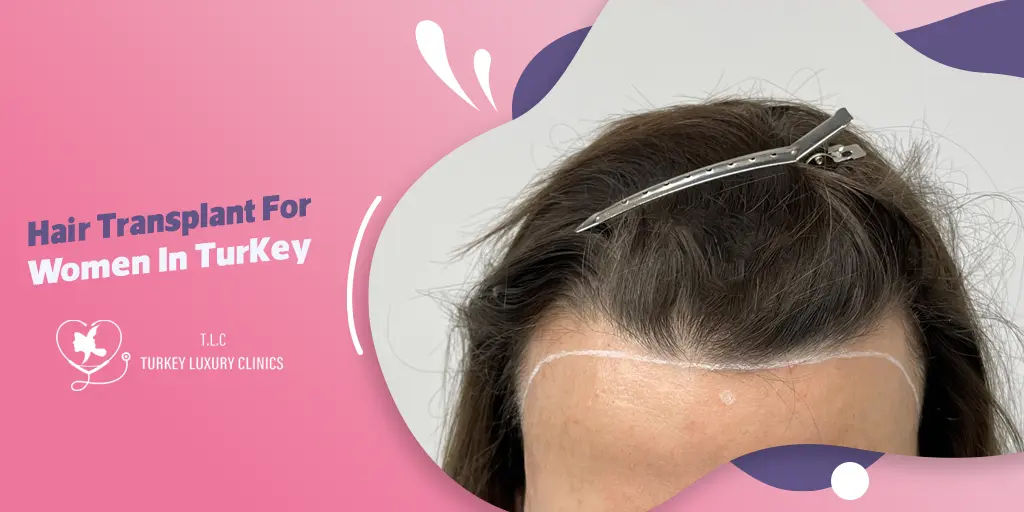
Hair transplant for women in Turkey offers a permanent solution for suitable candidates experiencing hair thinning, receding hairlines, or localized hair loss. Unlike male hair transplantation, female procedures require a more customized approach that preserves existing hair and creates a soft, natural-looking hairline. Many clinics also offer unshaven or partially shaven techniques, allowing patients to conceal the procedure more easily, although these approaches may increase the overall treatment cost.
A Glance at Female Hair Transplant in Turkey
- Typical price: $2,200–$3,800
- Preferred technique: DHI for most women
- Alternative option: FUE (standard or unshaven)
- Typical graft count: 1,500–3,000 grafts
- Procedure time: 5–8 hours
- Recovery: Most patients resume daily activities within one week
- Results begin: 3–4 months
- Final results: 9–12 months
- Package usually includes: Hotel, airport transfers, medications, aftercare, and interpreter
- Ideal candidates: Women with stable hair loss and a healthy donor area
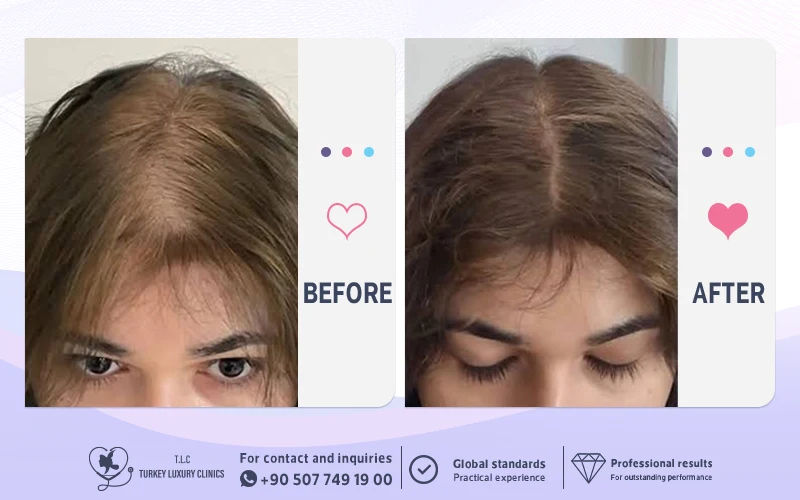
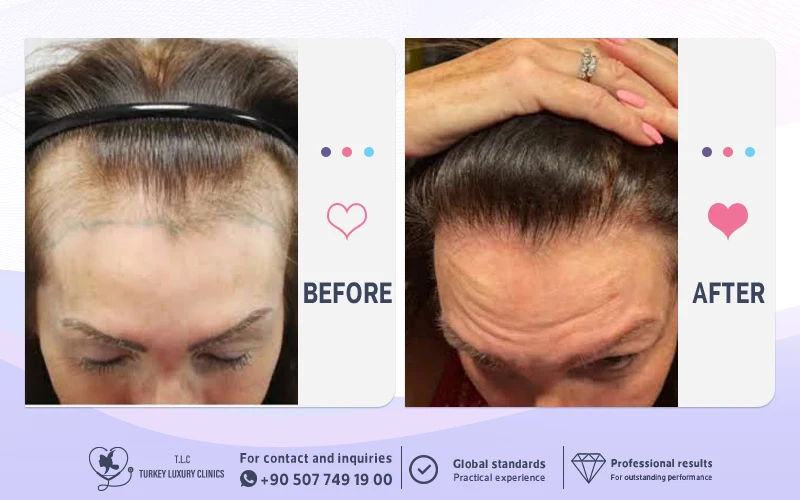
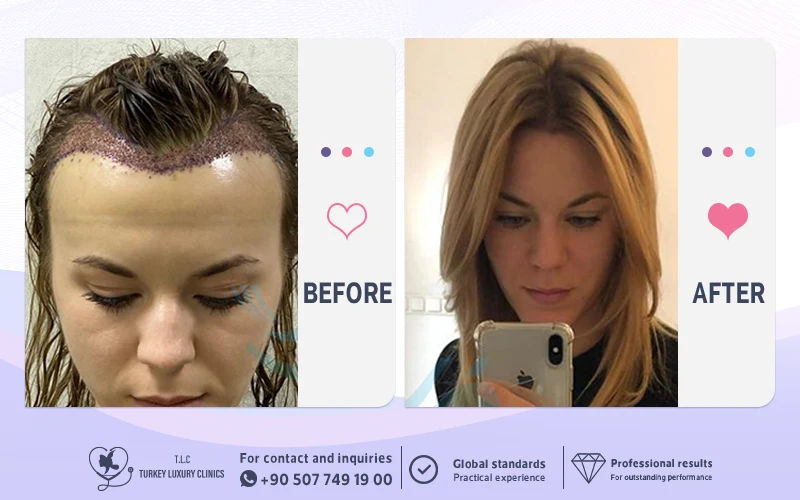
Female Hair Transplant Before and After Photos
How Much Does a Female Hair Transplant Cost in Turkey?
The cost of a female hair transplant in Turkey typically ranges from $2,200 to $3,800, depending on the technique (FUE or DHI), clinic reputation, and the size of the transplant area. All-inclusive packages often cover accommodation, transportation, and aftercare.
Female Hair Transplant Cost by Technique
- Sapphire FUE: $1,850 to $2,500
- DHI (Direct Hair Implantation): $2,500 to $3,500
- Combined FUE + DHI: $2,000 to $3,500
- Eyebrow Transplant: $1,600 to $2,000
Female Hair Transplant Cost by Number of Grafts
Number of Grafts | Average Cost in Turkey |
1,000 grafts | $2,000–$2,500 |
1,500 grafts | $2,200–$2,900 |
2,000 grafts | $2,500–$3,200 |
2,500 grafts | $2,800–$3,800 |
The final cost depends on the treatment technique, clinic reputation, and whether the package includes accommodation, transportation, and post-operative care.
Prices will also scale depending on the size of the thinning area (e.g., temples vs. crown).
Female Hair Transplant Cost by Treatment Area
The cost of a female hair transplant in Turkey also depends on the treatment area. Smaller areas usually require fewer grafts, while treating multiple areas increases both the number of grafts and the overall procedure cost.
Treatment Area | Typical Grafts | Average Cost |
Hairline & temples | 1,200–2,500 | $2,200–$3,800 |
Mid-scalp & part line | 2,000–3,500 | $2,500–$4,200 |
Crown (vertex) | 2,500–4,000 | $2,800–$4,500 |
Multiple areas | 4,000–5,500+ | $3,800–$5,500+ |
Hairline and Hair Transplant Cost
Hairline restoration is one of the most common reasons women undergo hair transplantation. The procedure usually requires 1,200–2,500 grafts and costs between $2,200 and $3,800. Many surgeons prefer DHI or unshaven techniques to create a soft, natural-looking female hairline while preserving the surrounding hair.
Mid-Scalp and Part Line Hair Transplant Cost
Treating diffuse thinning along the part line generally requires 2,000–3,500 grafts, with prices ranging from $2,500 to $4,200. The goal is to increase density while blending the transplanted follicles with existing hair.
Crown Hair Transplant Cost
Women with thinning at the crown typically need 2,500–4,000 grafts, depending on the size of the affected area. Treatment usually costs $2,800–$4,500, with the exact price depending on graft count, technique, and clinic experience.
Multiple Treatment Areas
Patients who need restoration in more than one area—such as the hairline and crown—generally require 4,000–5,500+ grafts. Combined procedures typically cost between $3,800 and $5,500+, depending on the total graft count and whether treatment is completed in one or more sessions.
Female Hair Transplant Cost by Hair Loss Severity
The cost of a female hair transplant in Turkey largely depends on the extent of hair loss and the number of grafts required. Women with mild thinning usually need fewer grafts, while extensive thinning requires larger sessions and a higher overall cost.
Hair Loss Severity | Typical Grafts | Average Cost |
Mild thinning | 1,000–1,500 | $2,000–$2,600 |
Moderate thinning | 1,500–2,500 | $2,500–$3,300 |
Advanced thinning | 2,500–3,500 | $3,200–$3,800 |
Mild Hair Loss
Women with mild thinning or a slightly receding hairline typically require 1,000–1,500 grafts. Treatment is usually completed in a single session and costs approximately $2,000–$2,600.
Moderate Hair Loss
Moderate hair loss often affects the central scalp and crown, requiring 1,500–2,500 grafts. Most procedures cost between $2,500 and $3,300, depending on the technique and clinic.
Advanced Hair Loss
Women with extensive thinning generally require 2,500–3,500 grafts, with prices ranging from $3,200 to $3,800. Larger procedures may take longer to complete and often benefit from DHI for improved density and natural-looking coverage.
All-Inclusive Female Hair Transplant Packages in Turkey
Most clinics in Turkey offer all-inclusive packages designed specifically for international patients, making it easier to plan both treatment and travel costs. Rather than charging per graft, many reputable clinics provide a fixed package that includes the procedure and essential support services.
A typical all-inclusive female hair transplant package may include:
- Hair transplant procedure (FUE or DHI, with the number of grafts determined during consultation)
- Surgeon consultation and personalized treatment planning
- 2–4 nights of hotel accommodation
- Airport and clinic transfers
- Local anesthesia
- Post-operative medications and hair care products
- Interpreter services (if required)
- Follow-up consultation and aftercare support
- PRP therapy (included by some clinics as part of the package)
Package inclusions vary between clinics, so always request a detailed treatment plan to understand exactly what is covered before booking.

What are the Signs of Hair Loss in Women?
- An increase in the number of daily hair falls
- The appearance of patches of thinner or missing hair
- The appearance of scalp skin through hair
- Hair breaking off
What Causes Hair Loss in Women
There are many reasons why women experience hair loss, some of which include:
- Dietary changes and rapid weight loss
- Treatments like chemotherapy or radiation therapy
- Genetic
- Stress
- Damaged hair follicles
- Hormonal changes (menopause, pregnancy)
Are there Tests to Diagnose Female Hair Loss?
Before making the decision that hair transplantation is necessary for you, several tests should be performed to make an informed decision. Here are some of the tests:
- A gentle pull on your hair to see how many hairs fall out
- Microscopic Scalp Examination
- Blood tests. Blood tests are used to determine the levels of vitamins and minerals (such as vitamins D and B, zinc, and iron) and hormones (such as thyroid hormone) in the blood.
- In rare cases, a biopsy of the scalp to remove and examine a very small piece of scalp skin.
What are the Best Hair Transplant Techniques for Women
DHI (Direct Hair Implantation) is generally considered the preferred hair transplant technique for women because it offers greater precision and often eliminates the need to shave the entire head. In many cases, only a small portion of the donor area needs to be trimmed, allowing patients to preserve their existing hairstyle. DHI also enables surgeons to implant follicles between existing hairs, helping achieve higher density and more natural-looking results.
FUE (Follicular Unit Extraction) is another effective option for female hair transplantation. However, it often requires partial or complete shaving of the donor area, depending on the number of grafts and the surgeon's approach. While FUE delivers excellent results, many women prefer DHI when minimizing visible shaving is a priority.
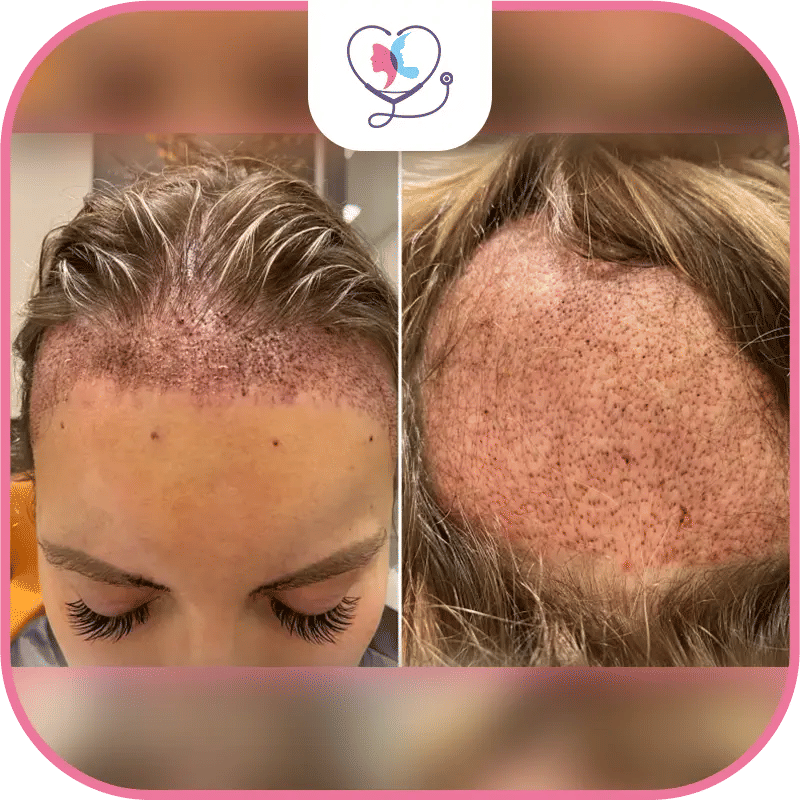
The DHI technique is regarded as one of the most innovative hair transplantation techniques, offering a highly effective approach that preserves the donor area's full head of hair while only shaving the required amount of hair.
The size of the instruments utilized by the surgeon is of significant importance, as is the angle at which the incisions are made. These factors contribute to the natural appearance of the hairline.
Female Hair Transplant Procedure Using DHI
The planning and approach for female hair transplants must be completely different in order to achieve the desired aesthetic results. Here is how the procedure goes:
- A medical examination of the donor and recipient areas is required.
- Then, the number of follicles to be implanted is determined.
- The surgeon will draw the hairline and determine the areas to be transplanted.
- The donor area is prepared for extraction by shaving, sterilizing, and administering local anesthesia.
- The scalp, which will be the recipient area, is locally anesthetized in preparation for the graft implantation stage.
- The implantation of follicles using the Choi pen.
How Do Female Hair Transplant Procedures Work?
Although every treatment plan is personalized, most female hair transplant procedures follow the same general steps:
- Medical Consultation
- The surgeon evaluates the pattern of hair loss, examines the donor area, and determines whether a hair transplant is the right option.
- Hairline Design
- A natural-looking hairline is planned based on your facial features, hair density, and aesthetic goals.
- Donor Hair Extraction
- Healthy hair follicles are carefully harvested from the donor area using the selected technique, usually FUE or DHI.
- Recipient Area Preparation
- The treatment area is numbed with local anesthesia before implantation begins.
- Graft Implantation
- The extracted follicles are implanted one by one at the correct angle, direction, and density to achieve natural-looking results.
- Recovery and Aftercare
- Patients receive detailed aftercare instructions, medications, and follow-up appointments to support proper healing and hair growth.
Do Women Need to Shave Their Hair?
Not always. Many women can undergo a DHI or unshaven FUE hair transplant with only a small section of the donor area trimmed and hidden beneath the surrounding hair. The amount of shaving depends on the number of grafts, the treatment area, and the surgeon's preferred technique.
Who is a Good Candidate for the Surgery?
Women may be good candidates if they have:
- Female pattern hair loss
- Hairline recession
- Traction alopecia caused by tight hairstyles
- Hair loss after trauma or burns
- Scar camouflage following previous surgery or injury
- A healthy donor area with adequate hair density
- Stable hair loss that has been medically evaluated
Female Hair Transplant Recovery Timeline
The recovery process after a female hair transplant follows a predictable timeline, although healing speed varies between individuals.
Time | What to Expect |
Week 1 | Mild swelling and redness gradually improve. Small scabs form and begin falling off as the scalp heals. |
Weeks 2–4 | Temporary shedding of transplanted hairs (shock loss) is normal and expected. |
Months 3–4 | New hair begins growing from the transplanted follicles. |
Months 6–9 | Hair becomes thicker and denser, with noticeable cosmetic improvement. |
Months 9–12 | Final results are usually visible, with mature hair growth and natural density. |
Following your surgeon's aftercare instructions helps promote healthy healing and optimal long-term results.
How Long Does a Female Hair Transplant Last?
A female hair transplant is generally considered a permanent solution because the transplanted follicles are taken from areas that are naturally resistant to hair loss. Once these follicles establish themselves, they continue growing for many years.
However, the procedure does not prevent ongoing thinning of the surrounding non-transplanted hair. Women with progressive hair loss may still benefit from medical treatments such as Minoxidil or other therapies recommended by their specialist.
Post-Operation Instructions for Hair Transplant for Women
Proper aftercare is essential for the success of hair transplantation. It is therefore strongly recommended that you familiarize yourself with the following:
- Wear the provided head bandage for a period of two days.
- Avoid any bending and maintain a straight posture.
- Refrain from washing your hair for 3 days. The first wash will be performed by our clinic's expert staff.
- To prevent sweating, limit exposure to heat and humidity, exercise for a minimum of one month, and refrain from sexual intercourse for at least one week.
- Refrain from swimming in pools for a minimum of two months and in the sea for a minimum of three months.
- Avoid exposure to extremely high temperatures, such as those found in a sauna.
- Contact the clinic immediately in case of any side effects (bleeding, swelling, etc.)
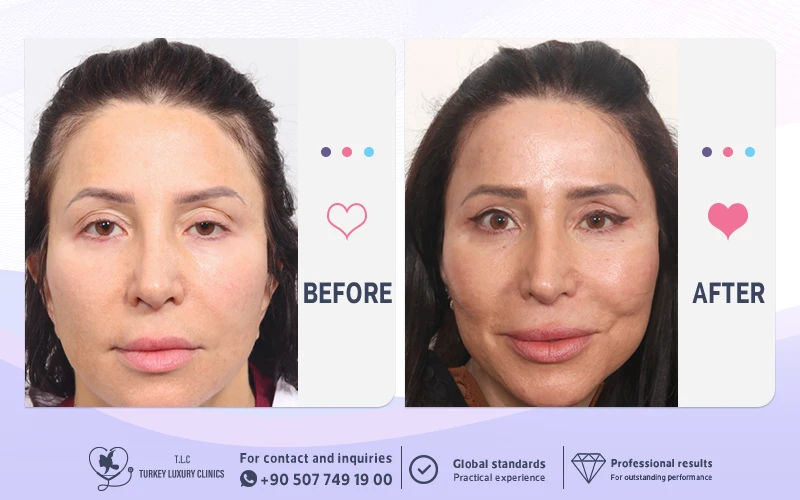
Hairline Lowering vs Hair Transplant
Many women with a naturally high forehead wonder whether they need a hair transplant or forehead reduction surgery.
Hair Transplant | Forehead Reduction Surgery |
Moves the hairline forward using transplanted follicles | Surgically lowers the forehead by removing excess forehead skin |
Minimal scarring | Leaves a scar hidden along the hairline |
Best for thinning hair and hairline recession | Best for women with a naturally high forehead and good scalp elasticity |
Recovery is generally easier | More invasive surgical procedure |
A specialist consultation helps determine which option best matches your anatomy and aesthetic goals.
Book your Consultation
Turkey Luxury Clinics is specialized in hair transplants for women in Turkey and other medical specialties. Our mission is to help people improve their appearance and health. Here is why you should choose Turkey Luxury Clinics instead of many others in Turkey:
- Professional medical consultation is provided by a qualified team of surgeons.
- Your transportation in Istanbul is our responsibility.
- Medical examination and complete preparation for surgery.
- Medical health consultants for assistance and interpretation.
- Regular follow-ups and remote recovery support.
FAQs About Women Hair Transplant in Turkey
- Does Turkey do hair transplants for women?
Yes, Turkey is one of the leading countries for high-quality hair transplants for women. Clinics in Turkey offer advanced procedures tailored to different hair types, including Afro-textured and fine hair, to ensure natural-looking and lasting results.
- Is hair transplant successful in females?
Absolutely. Hair transplants can be very successful for women, especially those experiencing pattern baldness or significant hair thinning. Success depends on proper diagnosis and choosing the right technique for the individual’s condition.
- How much does a female hair transplant cost globally?
The cost of female hair transplant procedures varies by country. In the U.S., for example:
- Small procedures (1,000–1,500 grafts): $12,000 – $15,000
- Medium procedures (around 3,000 grafts): $15,000 – $18,000
This makes Turkey an affordable alternative with comparable quality.
- What are the risks of hair transplant in Turkey?
While Turkey is known for safe and advanced hair transplants, there are still potential risks, especially with aggressive techniques. These may include:
- Excessive bleeding
- Allergic reaction to anesthesia (lidocaine toxicity)
- Postoperative swelling or pain
- Choosing a certified and reputable clinic minimizes these risks.
- Which country is best for hair transplant?
Turkey is widely regarded as the best country for hair transplants, combining high success rates, experienced surgeons, and affordable prices. Other notable countries include:
- USA – Top medical standards but high cost
- Spain – Excellent facilities for Europeans
- India – Budget-friendly treatments with growing medical tourism
- Are female hair transplants in Turkey successful?
When performed by a qualified surgeon, female hair transplants are as successful as males.
- Is hair transplant procedure painful?
Female hair transplants use local anesthesia to numb the treatment area, so patients experience minimal discomfort from the initial injection. Once the anesthesia takes effect, the rest of the procedure is painless.
- Do I need to shave my hair before the surgery?
When possible, we offer women the flexibility to choose unshaven, partially shaved, or fully shaved FUE. However, in order to facilitate hair extraction, the donor area on the back of the head (or part of it) must be shaved.
- Do women's hairlines look soft and natural? How to avoid plugged hairlines?
It takes a great deal of skill to create a natural-looking hairline in women. Surgeons can accomplish this by implanting single hair follicles at the front of the hairline to soften the look, and double or multiple units at the back of the hairline to add density.
Read more about
Best Hair Transplant Surgeon in Turkey: Leading Expert in DHI, FUE & Stem Cell Therapy