

- Liposuction in Turkey at a Glance
- What is Liposuction?
- When Is Liposuction Performed?
- Who Is a Good Candidate for Liposuction?
- Liposuction Cost in Turkey
- All Inclusive Liposuction Turkey Packages
- Why Patients Travel to Turkey for Liposuction
- Is Liposuction in Turkey Safe?
- Which Clinic in Turkey is the Best for Liposuction?
- Who Is the Best Liposuction Surgeon in Turkey?
- Types of Liposuction in Turkey
- How to Prepare for Liposuction in Turkey
- What Happens on Liposuction Surgery Day?
- Your Liposuction Trip to Turkey: Day by Day
- Recovery After Liposuction in Turkey
- Liposuction in Turkey Before & After Photos
- Risks and Possible Complications of Liposuction
- How to Book Liposuction in Turkey
- FAQs About Liposuction in Turkey
Liposuction in Turkey, also known as fat removal surgery in Turkey, is a cosmetic body contouring procedure that permanently removes stubborn fat cells that do not respond to diet or exercise from targeted areas such as the abdomen, flanks, thighs, arms, back, and chin.
Plastic surgeons in Turkey perform liposuction in accredited hospitals using modern techniques such as VASER, laser-assisted, power-assisted, and tumescent liposuction, as well as Lipo 360 for the full midsection.
Liposuction in Turkey typically costs $1,500 to $6,000, which is about 40–70% less than in the US, UK, or Western Europe, and most all-inclusive packages cover surgery, a 1-night hospital stay, hotel accommodation, VIP transfers, and compression garments.
The procedure usually takes 2 to 3 hours.
International patients typically stay in Turkey for 5–10 days, return to desk work within 7 to 14 days, and see final results after 3–6 months as swelling settles.
Not sure which technique or package fits your goals? Send us a message on WhatsApp for a personalized quote.
Liposuction in Turkey at a Glance
- Cost: $1,500–$6,000, depending on the technique, number of areas, and fat volume (see full prices)
- Purpose: Body contouring, NOT a weight loss procedure
- Operation Time: 2–3 hours
- Anesthesia: General (local anesthesia may be used for small areas)
- Hospital Stay: 1 night
- Stay in Turkey: 5–10 days
- Target Areas: Abdomen, thighs, arms, hips, chin, back
- Techniques: Traditional, VASER, laser-assisted, and power-assisted; Lipo 360 treats the full midsection
- Incisions: Small, minimal scarring
- Post-op Care: Compression garments for 4–6 weeks, follow-ups
- Recovery: Back to desk work in 7–14 days; complete healing 6–8 weeks
- Results: Final results in 3–6 months, long-lasting with a healthy lifestyle
What is Liposuction?
Liposuction is a surgical body contouring procedure that removes localized fat deposits that do not respond to diet or exercise, improving body shape and definition rather than serving as a weight-loss method.
Unlike fat-dissolving injections such as Kybella, which are approved only for small areas like the chin and need several sessions, liposuction removes fat from one or more body areas in a single procedure.
Liposuction procedure removes only the fat under the skin, not the deep visceral fat around the organs, so it is designed to reshape the body rather than to treat obesity or replace weight loss.
Areas Liposuction Treats
Liposuction can be performed on several areas of the body, depending on the patient’s fat distribution and aesthetic goals.
Some patients choose to treat a single specific area, especially when fat is localized in one region, such as the abdomen or chin. This approach is usually suitable for minor contour refinement and shorter procedures.
Others opt for multiple areas in the same session, particularly when fat is distributed across several zones like the abdomen, waist, and back. This allows for more balanced body proportions and a more comprehensive transformation in a single surgical plan.
The most common Liposuction areas including:
- Abdomen
- Waist and flanks
- Back
- Thighs (inner and outer)
- Arms
- Chin and neck
- Hips and lower buttocks area
- Chest (in selected cases, such as male liposuction for gynecomastia)
When Is Liposuction Performed?
Liposuction is performed to remove stubborn, localized fat that does not respond to diet and exercise, in people who are close to their ideal weight. Its purpose is body contouring, not weight loss.
Liposuction is commonly performed to:
- Reduce stubborn belly fat or a “lower belly pouch”
- Slim the waist, flanks, and love handles
- Remove a double chin and define the jawline
- Refine the thighs, arms, or back
- Improve body proportions after pregnancy, once weight is stable
- Create athletic definition in fit patients (HD liposuction)
Medical Situations Where Liposuction May Be Used
Besides cosmetic body contouring, surgeons may use liposuction in certain medical situations, including:
- Lipedema: a chronic condition that causes painful, abnormal fat buildup, usually in the legs and arms
- Gynecomastia: enlarged male breast tissue, often combined with gland removal
- Lipomas: benign fatty lumps under the skin, in selected cases
- Fat transfer: collecting fat to use in another area, such as a BBL or breast reconstruction
Can I Get Liposuction to Lose Weight?
No. Liposuction is not a weight-loss procedure or a treatment for obesity. It removes a limited amount of fat, usually up to about 5 liters in one session, to improve body shape rather than reduce body weight. Patients who need significant weight loss should consider weight-loss options first, while those with loose skin after major weight loss may need skin removal or combined procedures for the best results.
Who Is a Good Candidate for Liposuction?
The best candidates for liposuction are people who:
- Have localized fat deposits that do not respond to diet or exercise
- Are close to their ideal body weight and have kept a stable weight for at least 6 months
- Have good skin elasticity, so the skin can adapt to the new contour
- Are in good overall health with no serious uncontrolled medical conditions
- Do not smoke, or are willing to stop before and after surgery
- Have realistic expectations about results and recovery
- Prefer body contour improvement rather than drastic body transformation
- Are emotionally stable and understand the limitations of the procedure
BMI Requirements for Liposuction
Ideal candidates for liposuction typically have a BMI in the normal to slightly overweight range (around 18.5–30). Liposuction is not a weight-loss procedure and is best suited for patients with localized fat deposits and good overall health. Higher BMI cases may require medical evaluation to determine suitability.
Higher BMI cases may require medical evaluation to determine suitability. Patients with a higher BMI may still be candidates for plus-size Lipo 360 after a careful medical assessment.
Who Is Not a Good Candidate for Liposuction?
Liposuction is not suitable for everyone, especially when the procedure would not deliver safe or predictable results. You may not be a good candidate if you:
- Are seeking weight loss rather than body contouring
- Have severe obesity or a very high BMI
- Have an unstable weight or plan major weight loss in the coming months
- Have significant skin laxity or excess loose skin that would not retract after fat removal
- Have uncontrolled medical conditions (such as heart disease, diabetes, or bleeding disorders)
- Have a history of blood clots or take blood-thinning medications that cannot be safely paused
- Are a smoker who cannot stop before and after surgery
- Have poor wound healing or immune system issues
- Have unrealistic expectations about results or recovery
- Are currently pregnant or breastfeeding
- Have active infections or untreated skin conditions in the treatment area
In cases of significant weight loss or loose skin, surgeons may recommend alternative or combined procedures such as a tummy tuck or body lift instead of liposuction alone for safer and more effective results.
Liposuction Cost in Turkey
Liposuction in Turkey typically costs $1,500–$6,000 in 2026, depending on the technique, the number of areas, and the clinic. Prices start from about $1,200 for a single area, while all-inclusive packages start from about $1,550. See the full Turkey liposuction cost guide.
All Inclusive Liposuction Turkey Packages
All-inclusive liposuction packages in Turkey start from about $1,550 for a single area and $3,400–$4,250 for 360° liposuction, typically including surgery, hotel accommodation, VIP transfers, and post-operative care. See full liposuction package prices and inclusions.
What Services Are Included in All-Inclusive Liposuction Packages in Turkey?
1. Travel and Transportation
- Airport pickup upon arrival
- VIP transfers between the airport, hotel, and hospital
- Coordinated transportation throughout the treatment stay
2. Accommodation
- 4–5 star hotel accommodation
- Hospital stay when medically required after surgery
3. Medical Evaluation and Surgical Planning
- Consultation with the plastic surgeon
- Pre-operative tests and medical imaging
- Personalized treatment planning based on body goals and anatomy
4. Surgery and Hospital Services
- Liposuction procedure (traditional, VASER, or Lipo 360, depending on the treatment plan)
- Operating room and anesthesia fees
- Surgical team and hospital support
5. International Patient Support
- Multilingual translator assistance
- Dedicated patient coordinator
- Scheduling and medical communication support
6. Post-Operative Care and Recovery
- Compression garments
- Medications and early recovery guidance
- Post-operative check-ups and follow-up visits
- Package inclusions may vary depending on the clinic, procedure complexity, and recovery requirements.
Why Patients Travel to Turkey for Liposuction
International patients choose to get liposuction in Istanbul, Antalya, or Izmir in Turkey, for experienced plastic surgeons, modern accredited hospitals, and competitive treatment costs. Procedures such as VASER liposuction and Lipo 360 are widely performed using advanced techniques, making Turkey a well-established destination for medical tourism. The availability of structured treatment packages and shorter waiting times further supports international patient demand.
Is Liposuction in Turkey Safe?
Liposuction in Turkey is generally safe when it is performed by a certified plastic surgeon in a licensed, accredited hospital, with proper patient selection and aftercare. Serious complications are rare, but the risk rises with large-volume liposuction, combined procedures, and poorly regulated clinics.
Large studies show that liposuction has a low complication rate when performed alone. In a study of more than 31,000 patients, blood clots occurred in 0.06% of liposuction-only cases…, compared with about 0.6% when liposuction was combined with other procedures. Deaths after liposuction are very rare, with reported rates between 0.01% and 0.06% in large patient series.
The safest liposuction plan is not the one that removes the most fat in one session. Combining many areas or several procedures in one surgery increases operating time, anesthesia time, and the risk of complications. A good surgeon will sometimes recommend staging the treatment.
How to Verify a Clinic and Surgeon Before You Travel
Before booking liposuction in Turkey, confirm the following:
- Surgeon credentials: The surgeon is a board-certified plastic surgeon and a member of the Turkish Society of Plastic, Reconstructive and Aesthetic Surgeons. Memberships such as ISAPS or EBOPRAS certification are additional signs of training.
- Hospital licensing: The surgery takes place in a hospital licensed by the Turkish Ministry of Health, ideally one with JCI accreditation.
- Health tourism authorization: The facility or agency holds the International Health Tourism Authorization Certificate issued by the Turkish Ministry of Health.
- Anesthesia team: A qualified anesthesiologist, not the surgeon, manages your anesthesia.
- Emergency readiness: The hospital has an intensive care unit (ICU) and a clear plan if a complication occurs.
- Written treatment plan: You receive the areas to be treated, the technique, the estimated fat volume, and the total price in writing.
- Follow-up plan: You know who to contact after you return home, and how follow-up will work.
Which Clinic in Turkey is the Best for Liposuction?
The best clinic for liposuction in Turkey is a hospital licensed by the Turkish Ministry of Health, ideally with JCI accreditation, where the procedure is performed by a board-certified plastic surgeon with extensive body contouring experience, supported by a qualified anesthesiologist, an ICU, and a clear follow-up plan for international patients.
Liposuction in Turkey is widely performed in Istanbul, Antalya, and Izmir, with Istanbul hosting the largest number of accredited hospitals and experienced plastic surgeons. Leading hospital groups for liposuction in Istanbul include Memorial Hospitals and Medical Park Hospitals, which have dedicated international patient departments and full surgical and intensive care facilities.
There is no single “best” clinic for every patient. The right choice depends on your treatment plan, the areas you want to treat, and the surgeon’s experience with that specific technique, such as VASER liposuction, Lipo 360, or liposuction combined with BBL.
Who Is the Best Liposuction Surgeon in Turkey?
The best liposuction surgeon in Turkey is a board-certified plastic surgeon who performs body contouring procedures regularly, operates in an accredited hospital, and can show consistent before-and-after results for your specific treatment, such as VASER liposuction, Lipo 360, or liposuction with BBL. Compare top surgeons, their experience, and their specialties in our guide to the best liposuction surgeons in Turkey.
Experienced liposuction surgeons in Istanbul include:
- Op. Dr. Salih Cem Altunal: Focuses on VASER liposuction, Lipo 360, and body reshaping procedures.
- Prof. Dr. Halil İbrahim Gökçek: Specializes in liposuction combined with fat transfer, such as BBL, and full-body contouring.
- Op. Dr. Mehmet Akif Çakmak: Experienced in high-volume liposuction and body contouring after major weight loss.
What These Surgeons Have in Common:
- Plastic surgery certification: Board-certified plastic surgeons trained in aesthetic body contouring
- Advanced techniques: Experience with VASER, power-assisted, and high-definition liposuction
- Combined procedures: Lipo 360, BBL, tummy tuck, mommy makeover, and full-body contouring in one treatment plan
- Natural results: A focus on balanced proportions and symmetry rather than maximum fat removal
- Safety-first planning: Staging large or combined procedures when needed to reduce surgical risk
We help international patients connect with experienced surgeons and accredited hospitals in Turkey for procedures including VASER liposuction and Lipo 360.
Types of Liposuction in Turkey
The main types of liposuction in Turkey are tumescent, traditional (suction-assisted), VASER (ultrasound-assisted), laser-assisted, power-assisted, water-assisted, and high-definition (HD) liposuction, while Lipo 360 is a treatment plan that can use any of these techniques.
Liposuction techniques differ mainly in how the fat is loosened before it is removed. In practice, most modern procedures combine more than one method, and the surgeon chooses based on your anatomy, the amount and type of fat, your skin quality, and your goals.
1. Tumescent Liposuction
Tumescent liposuction is a technique in which a fluid of saline, lidocaine, and epinephrine is injected into fatty tissue before fat removal. It reduces bleeding, bruising, and pain, and is used with almost all modern liposuction methods.
The fluid firms the fatty tissue, making the fat easier to remove and reducing blood loss during surgery.
Tumescent” describes how the area is prepared, not a separate way of removing fat. It is used together with traditional, VASER, laser, power-assisted, and water-assisted techniques.
2. Traditional Liposuction (SAL)
Traditional (suction-assisted) liposuction is a technique in which the surgeon uses a thin cannula and gentle suction to break up and remove fat by hand. It is suitable for most body areas and moderate fat volumes.
It remains the most widely used method and is commonly performed on the abdomen, thighs, flanks, and arms.
Results depend far more on the surgeon’s technique than on the device. In experienced hands, traditional liposuction gives smooth, natural results for most patients.
3. VASER Liposuction (UAL)
VASER liposuction is an ultrasound-assisted technique that loosens fat cells with sound energy before they are suctioned out. It is best for fibrous areas, such as the back and male chest, and for detailed body contouring.
Because the loosened fat is easier to remove, VASER is also a common choice for flanks and high-definition sculpting.
VASER may support modest skin tightening, but it does not replace a skin removal procedure when skin is loose. Because it uses energy, it requires careful technique to avoid heat-related skin injury.
Some surgeons combine liposuction with skin-tightening technologies, such as J-Plasma (Renuvion), for patients with mild skin laxity. These are add-on treatments, not liposuction techniques, and their suitability depends on your skin quality.
4. Laser-Assisted Liposuction (LAL)
Laser-assisted liposuction is a technique that uses laser energy through a thin fiber to heat and break down fat before removal. It is best for small areas, such as the chin, neck, and arms.
Laser heat may encourage mild skin tightening in some patients, but results vary. It is generally less suitable for removing large volumes of fat.
5. Power-Assisted Liposuction (PAL)
Power-assisted liposuction is a technique that uses a rapidly vibrating cannula to help the surgeon remove fat more efficiently. It is best for larger volumes, firmer fat, and revision procedures.
It is often used in Lipo 360 and other multi-area procedures, where efficiency during longer surgeries matters.
6. Water-Assisted Liposuction (WAL / Body-Jet)
Water-assisted liposuction is a technique that uses a gentle, pressurized stream of fluid to loosen fat before removal. It is often used for small to moderate areas and when fat is collected for transfer, such as in a BBL.
It may cause less bruising and swelling in some patients.
7. High-Definition (HD) Liposuction
HD liposuction is a sculpting approach in which fat is removed strategically around muscle groups to create visible athletic definition. It is best for patients close to their ideal weight with good skin elasticity.
It is usually performed with VASER or power-assisted technology and is commonly used on the abdomen, chest, and flanks.
Overly aggressive sculpting can look unnatural, so a conservative plan and an experienced surgeon are essential.
8. Lipo 360
Lipo 360 is a treatment plan, not a separate technique, that contours the abdomen, waist, flanks, and lower back in one session. It can be performed with any of the liposuction methods above.
What is the most effective type of liposuction?
There is no single most effective type of liposuction for every patient. Tumescent liposuction is the foundation of almost all modern techniques, while power-assisted liposuction (PAL) is widely considered one of the most efficient and precise methods, especially for large volumes. The best technique depends on the area being treated, the type and amount of fat, your skin elasticity, and whether you also need skin tightening.
Your Goal | Most Effective Option | Why |
Large volumes or multiple areas (Lipo 360) | Power-assisted (PAL) with tumescent | Removes fat efficiently with greater precision during longer procedures |
Flat stomach or visible abs | VASER or HD liposuction | Allows detailed sculpting around the abdominal muscles |
Fibrous areas (back, male chest) or revision cases | VASER or power-assisted | Loosens dense, fibrous fat that is harder to remove |
Thighs and hips | Traditional or power-assisted with tumescent | Gives smooth, even contouring over larger areas |
Small, delicate areas (chin, neck, arms) | Laser-assisted or traditional with fine cannulas | Precise fat removal with possible mild skin tightening |
Mild skin laxity | VASER or laser-assisted, with or without J-Plasma (Renuvion) | Combines fat removal with modest skin tightening |
Significant loose skin | Liposuction + skin removal surgery (e.g., tummy tuck) | Liposuction alone cannot tighten very loose skin |
Fat transfer (BBL) | Power-assisted or water-assisted | Gentle fat harvesting that keeps fat cells viable for transfer |
Non-surgical alternatives, such as CoolSculpting, can reduce small, localized bulges without surgery, but results are much more subtle and usually require several sessions.
How to Prepare for Liposuction in Turkey
Preparing for liposuction in Turkey starts 4–6 weeks before surgery and includes an online medical assessment, stopping smoking, adjusting certain medications, and planning your travel and recovery stay.
4–6 weeks before surgery:
Send your medical history and photos of the treatment areas for an online assessment.
Stop smoking and using nicotine products, because nicotine slows healing and increases complication risk.
Keep your weight stable.
2 weeks before surgery:
Ask your surgeon which medications and supplements to stop. These often include aspirin, anti-inflammatory painkillers (NSAIDs), fish oil, and vitamin E, because they can increase bleeding.
Arrange travel insurance that covers medical treatment abroad.
Before you travel, pack:
Loose, comfortable clothing that opens at the front
An extra compression garment, if your surgeon recommends one
Your medical records and a list of your current medications
The day before surgery:
Complete your pre-operative tests, which usually include blood tests and, for some patients, an ECG.
Follow fasting instructions, usually no food or drink for 6–8 hours before surgery.
What Happens on Liposuction Surgery Day?
On the day of liposuction, the surgeon marks the treatment areas, the anesthesiologist gives anesthesia, tumescent fluid is injected, and fat is removed through small incisions. The procedure usually takes 2-3 hours, depending on the number of areas treated.
- Final consultation and marking: The surgeon reviews your goals and marks the treatment areas while you stand.
- Anesthesia: Most procedures use general anesthesia. Small areas, such as the chin, may be treated under local anesthesia with sedation.
- Tumescent fluid: A solution of saline, lidocaine, and epinephrine is injected to reduce bleeding and pain.
- Fat removal: The surgeon makes small incisions, usually 3–5 mm, and removes fat with a thin cannula using the chosen technique (traditional, VASER, laser, or power-assisted).
- Closing: The incisions are closed or left to drain, and temporary drains may be placed.
- Compression garment: A compression garment is applied before you wake up.
- Monitoring: Most patients stay 1 night in the hospital and start walking within a few hours.
Expert note: Many surgeons limit the amount of fat removed in one session to about 5 liters, because larger volumes increase the risk of fluid imbalance and other complications.
Your Liposuction Trip to Turkey: Day by Day
Most liposuction packages in Turkey include a 5-day stay. Patients treating multiple areas, or combining liposuction with other procedures, are often advised to stay 7–10 days.
Day | What Happens |
Day 1 | Arrival, airport transfer, and hotel check-in |
Day 2 | Consultation with the surgeon, pre-operative tests, and surgery |
Day 3 | Hospital check-up, discharge, and transfer to the hotel |
Day 4 | Rest at the hotel, light walking, and drain check if needed |
Day 5 | Final check-up and clearance to fly |
Days 6–10 | Extra recovery days for multi-area or combined procedures |
Flying Home After Liposuction
Flying soon after surgery increases the risk of blood clots (deep vein thrombosis). Most surgeons advise waiting at least 5–7 days before a long flight, and longer after extensive or combined procedures. Only fly after your surgeon confirms you are ready.
To lower your risk during the flight:
- Choose an aisle seat and walk every hour.
- Drink plenty of water and avoid alcohol.
- Wear your compression garment, and compression stockings if advised.
- Take any blood-thinning injection your surgeon prescribes.
Seek emergency care if you notice leg pain or swelling, chest pain, or shortness of breath after the flight.
Recovery After Liposuction in Turkey
Recovery after liposuction usually takes 1–2 weeks for daily activities, 4–6 weeks for exercise, and 3–6 months for final results. Most patients walk within a few hours of surgery and wear a compression garment for 4–6 weeks.
Time After Surgery | What to Expect |
First 3 days | Swelling, bruising, tightness, and fluid drainage are most noticeable. Pain is managed with prescribed medication. |
Week 1 | Light walking every day. Most patients fly home after being cleared by the surgeon. |
Weeks 1–2 | Return to desk work for most patients. Swelling begins to decrease. |
Weeks 4–6 | Return to exercise and heavy lifting, if your surgeon approves. Compression garment use usually ends. |
Months 3–6 | Swelling fully settles and final results appear. |
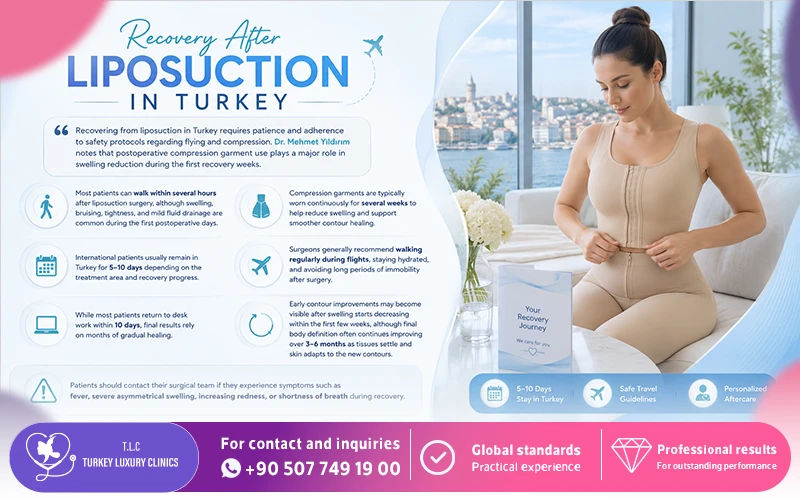
Recovering from liposuction in Turkey requires patience and adherence to safety protocols regarding flying and compression. Postoperative compression garment use plays a major role in swelling reduction during the first recovery weeks.
Most patients can walk within several hours after liposuction surgery, although swelling, bruising, tightness, and mild fluid drainage are common during the first postoperative days. Compression garments are typically worn continuously for several weeks to help reduce swelling and support smoother contour healing.
International patients usually remain in Turkey for 5–10 days depending on the treatment area and recovery progress. Surgeons generally recommend walking regularly during flights, staying hydrated, and avoiding long periods of immobility after surgery.
While most patients return to desk work within 10 days, final results rely on months of gradual healing. Exercise and heavy lifting usually resume after 4–6 weeks, once your surgeon approves.
Early contour improvements may become visible after swelling starts decreasing within the first few weeks, although final body definition often continues improving over 3–6 months as tissues settle and skin adapts to the new contours.
Patients should contact their surgical team if they experience symptoms such as fever, severe asymmetrical swelling, increasing redness, or shortness of breath during recovery.
Recovery Tips After Liposuction
- Compression garment: Wear it day and night for the period your surgeon recommends, usually 4–6 weeks.
- Walking: Walk short distances several times a day to support circulation and lower the risk of blood clots.
- Showering: Most patients can shower 24–48 hours after surgery. Avoid baths, pools, and saunas until the incisions fully heal.
- Lymphatic drainage massage: Some surgeons recommend it to help reduce swelling, usually starting about a week after surgery.
- Diet and hydration: Drink plenty of water and limit salt to help control swelling.
Is Liposuction Painful?
Liposuction is not painful during surgery, because it is performed under general or local anesthesia. After surgery, most patients feel soreness, tightness, and bruising, similar to an intense workout, which peaks in the first 2–3 days and improves noticeably within the first week.
The level of discomfort depends on the number of areas treated, the amount of fat removed, and the technique used. Most patients manage it with prescribed pain medication, and wearing the compression garment also helps reduce soreness and swelling. Contact your surgical team if the pain becomes severe, one-sided, or gets worse instead of better.
When Results Start to Appear After Liposuction?
Initial changes after liposuction become visible once early swelling begins to reduce, typically within the first few weeks. However, final results develop gradually as the body fully heals and tissues settle.
- First 1–2 weeks: Swelling, bruising, and tightness are most noticeable, so final shape is not yet visible
- 2–4 weeks: Early contour changes start to appear as swelling decreases
- 6–8 weeks: More defined body shape becomes visible
- 3–6 months: Final results typically appear as tissues fully settle and skin adjusts to new contours
How Long Do Liposuction Results Last?
Liposuction results are long-lasting, as fat cells removed during the procedure do not return. However, maintaining results depends on lifestyle factors such as diet, exercise, and stable body weight. Significant weight gain after surgery can affect overall body shape, even in untreated areas.
Can Fat Return After Liposuction?
Fat cells removed during liposuction do not regenerate. However, remaining fat cells in the body can still expand if a patient gains weight. This means fat can return in untreated areas or slightly affect treated areas if there is significant weight gain after surgery.
Skin Tightening After Liposuction in Turkey
Skin tightening after liposuction depends mainly on your skin elasticity. Most patients with good elasticity see their skin retract naturally over 3–6 months, while patients with mild laxity may benefit from energy-based skin tightening, and those with significant loose skin usually need surgical skin removal.
- Natural skin retraction: In patients with good skin elasticity, the skin gradually adapts to the new contour as swelling settles. Wearing your compression garment as advised, keeping a stable weight, and avoiding smoking all support better skin retraction.
- Skin tightening during liposuction: Some surgeons in Turkey combine liposuction with energy-based technologies, such as J-Plasma (Renuvion) or radiofrequency-assisted devices, to stimulate collagen and improve mild skin laxity. VASER and laser-assisted liposuction may also provide modest skin tightening.
- Non-surgical skin tightening after recovery: Radiofrequency and microneedling treatments, such as Morpheus8, may help improve mild skin laxity once healing is complete, usually several months after surgery.
- Surgical skin removal: When skin is very loose, such as after major weight loss or pregnancy, procedures like a tummy tuck, arm lift, or thigh lift are the only way to remove excess skin. These can be combined with liposuction or planned as a second stage.
- Expert tip: Wait 3–6 months before deciding on additional skin tightening. Much of the skin’s retraction happens during this time, and many patients find that they no longer need an extra procedure.
Liposuction in Turkey Before & After Photos
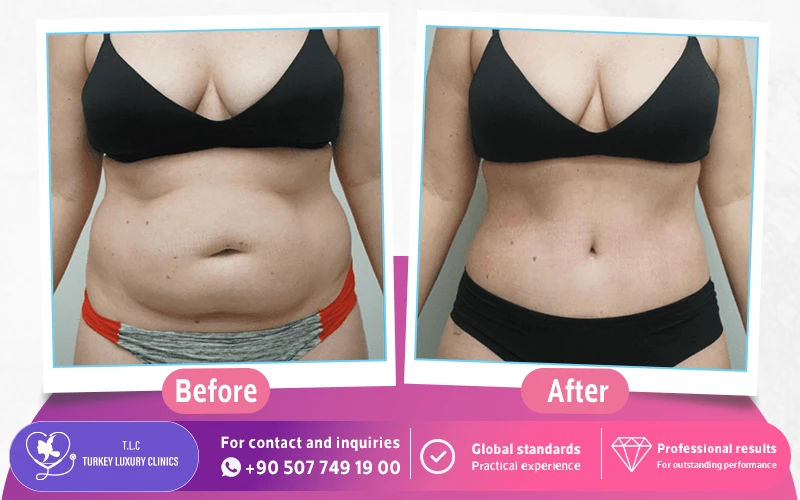
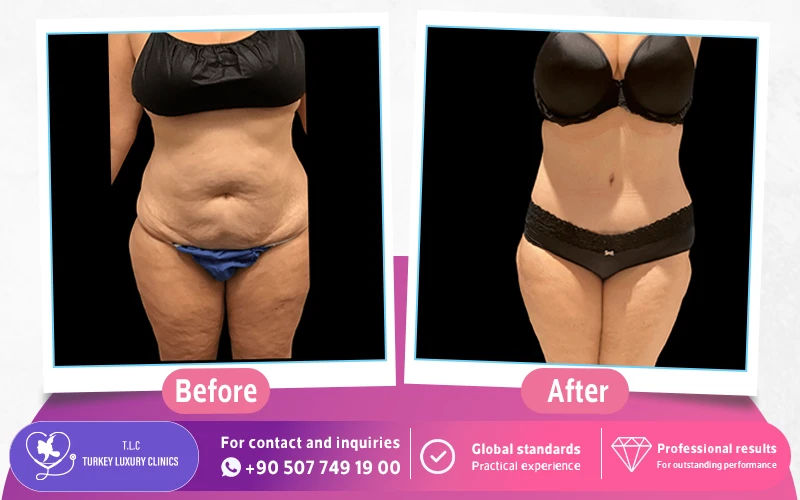
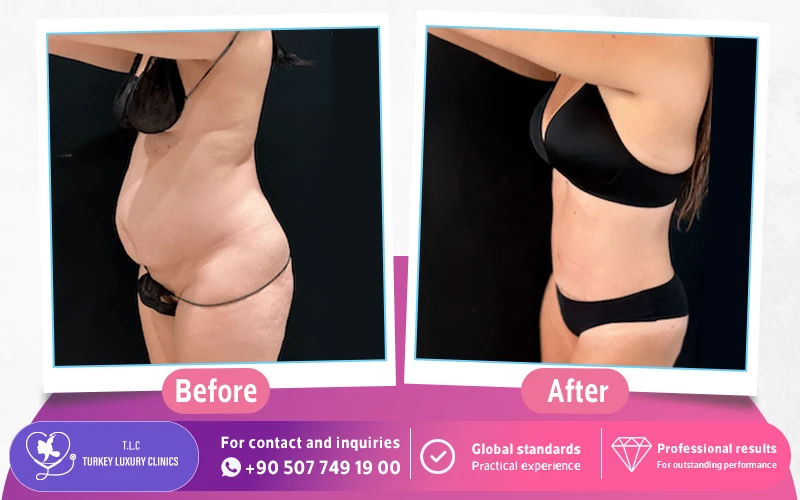
These before and after photos show real liposuction results for patients treated through Turkey Luxury Clinics. Results vary depending on body type, skin elasticity, and the treatment plan, and final results usually appear after 3–6 months.
Risks and Possible Complications of Liposuction
Liposuction has a low complication rate when performed alone by a qualified surgeon, but every surgery carries risks. Most complications are minor and temporary, and the risk increases when several areas or procedures are combined.
Common and minor complications:
- Contour irregularities (up to 9%): Dents, lumps, or uneven areas. They often improve as swelling settles, but some need revision.
- Seroma (about 2%): Fluid collecting under the skin, which may need draining.
- Swelling, bruising, and temporary numbness: Expected after surgery and usually resolve over weeks to months.
- Changes in skin color and asymmetry: Usually mild and often improve with time.
- Loose skin: More likely in patients with low skin elasticity.
Less common complications:
- Hematoma (about 0.15%): A collection of blood under the skin.
- Infection (about 0.1%): Usually treated with antibiotics.
Rare but serious complications:
- Blood clots (DVT / pulmonary embolism): About 0.06% after liposuction alone, rising to about 0.6% when liposuction is combined with other procedures. Walking early and following flight advice lower this risk.
- Fat embolism, a reaction to local anesthetic (lidocaine), and injury to internal organs: Very rare, but they require emergency care.
Contact your surgical team immediately if you have a fever, severe or one-sided swelling, increasing redness, chest pain, or shortness of breath.
How to Book Liposuction in Turkey
Booking liposuction in Turkey usually takes 4 simple steps, from your first message to your arrival in Istanbul:
- Send your photos and medical history: Contact us on WhatsApp with photos of the areas you want to treat, your height and weight, and any medical conditions or medications.
- Get your surgeon’s assessment: A plastic surgeon reviews your case and recommends the right technique, the areas to treat, and whether liposuction alone is suitable for you.
- Receive your treatment plan and quote: You get a written plan with the procedure details, package inclusions, and total price.
- Confirm your dates and travel: Once you choose your surgery date, your patient coordinator arranges your hospital booking, hotel, and airport transfers.
The right decision starts with the right information. Send us your photos on WhatsApp for a personalized quote, and take your time deciding.
FAQs About Liposuction in Turkey