

- Key Facts About Non-Surgical Rhinoplasty
- What Is Non-Surgical Rhinoplasty?
- Non-Surgical Rhinoplasty Before and After Real Photos
- How Long Does Non-Surgical Rhinoplasty Last?
- How Many Syringes and Sessions Are Needed?
- Pros and Cons of Non-Surgical Rhinoplasty
- What Can Non-Surgical Rhinoplasty Fix?
- How Much Does a Non-Surgical Nose Job Cost? (2026 Prices)
- How to Choose the Best Clinic and Specialist in Turkey
- Who Is a Good Candidate for a Filler Nose Job?
- Liquid Nose Job Recovery Timeline
- How Does a Liquid Nose Job Work?
- Risks: Can Liquid Rhinoplasty Go Wrong?
- Non-Surgical Rhinoplasty vs. Surgical Rhinoplasty
- Why Patients Choose Turkey Luxury Clinics for Liquid Rhinoplasty
- FAQs About Non-Surgical Rhinoplasty
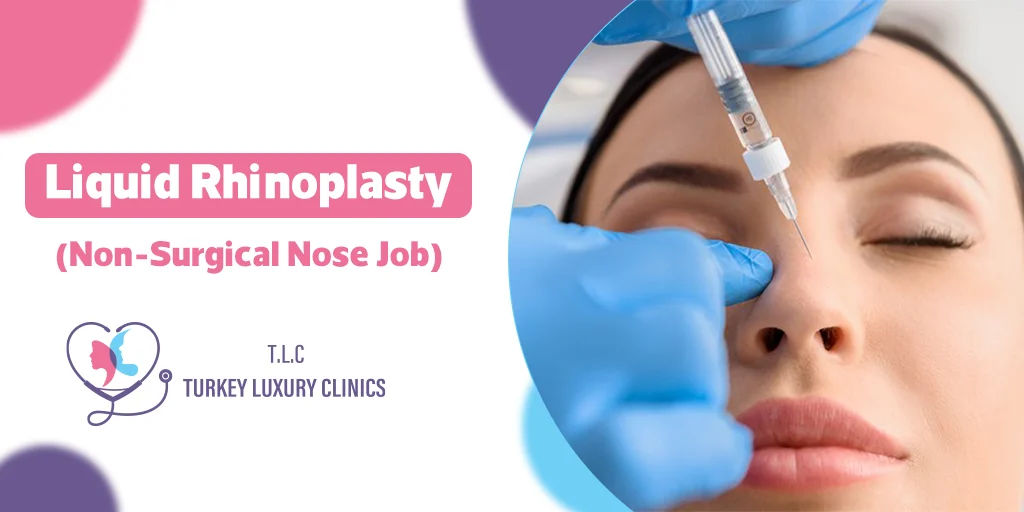
Refine your nose without surgery by Liquid rhinoplasty offers a non-surgical alternative to reshape your profile using dermal fillers.
Non-surgical rhinoplasty, often called a liquid nose job, is a minimally invasive cosmetic procedure that uses dermal fillers to improve the shape and symmetry of the nose without surgery.
It uses injectable dermal fillers to temporarily alter the shape of your nose without surgery. It can smooth a dorsal hump, enhance a flat nasal bridge, correct minor asymmetries, and lift a drooping nasal tip with little to no downtime.
Our expert aesthetic specialists are highly trained in facial anatomy and non-surgical nasal contouring techniques.
The procedure is performed by experienced board-certified plastic surgeons and dermatologists who specialize in liquid rhinoplasty, ensuring precise filler placement, natural-looking results, and a strong focus on vascular safety and facial harmony.
For patients considering nose reshaping but not ready for permanent surgery, non-surgical rhinoplasty offers immediate results, a short recovery period, and the flexibility of a temporary treatment.
Refine your nose without surgery with Liquid rhinoplasty that fixes dorsal humps, raises a flat bridge, corrects a crooked appearance, and refines the nasal tip using dermal fillers
Key Facts About Non-Surgical Rhinoplasty
- What is it? A non-surgical procedure that uses injectable dermal fillers to reshape and contour the nose.
- Who is it for? Individuals with mild to moderate aesthetic concerns, including small dorsal humps, flat nasal bridges, minor asymmetries, or a drooping nasal tip.
- Average Cost in Turkey (2026): Typically, non-surgical rhinoplasty costs range from $200 to $1,200 USD, depending on the filler used, treatment complexity, and clinic location.
- Why Turkey? Turkey is one of the leading destinations for aesthetic medicine, offering experienced specialists, accredited medical facilities, and competitive pricing for international patients.
In this guide, we explain how non-surgical rhinoplasty works, who is a suitable candidate, the expected results, potential risks, recovery, and the cost of liquid rhinoplasty in Turkey.
What Is Non-Surgical Rhinoplasty?
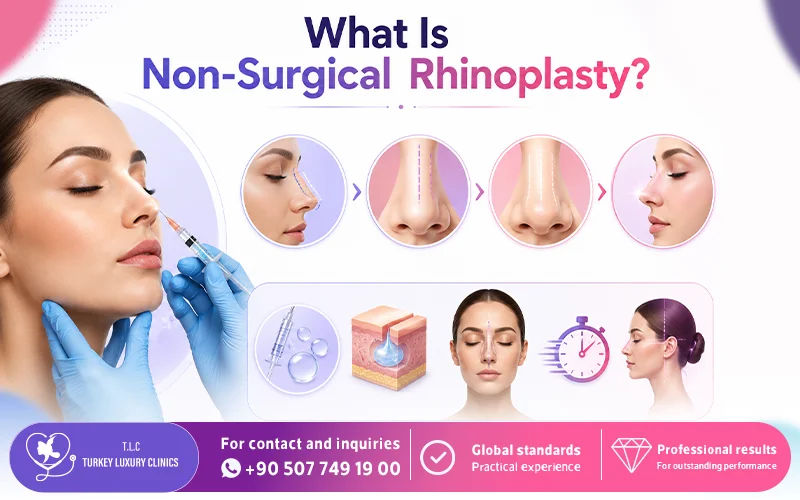
A nonsurgical rhinoplasty is an advanced outpatient cosmetic treatment that alters the external shape of the nose without surgical intervention. Also heavily searched online as a non-surgical nose job or liquid nose job, this technique relies entirely on the precise placement of medical-grade injectable gels into the soft tissue layers of the nose.
Unlike traditional, structural surgical rhinoplasty—which requires a general anesthetic, bone cutting, and cartilage grafting—a liquid nose job works exclusively as a camouflaging agent. By strategically introducing volume into targeted depressions, a specialist can erase profile irregularities, create a straight nasal bridge, and rebalance facial proportions in minutes.
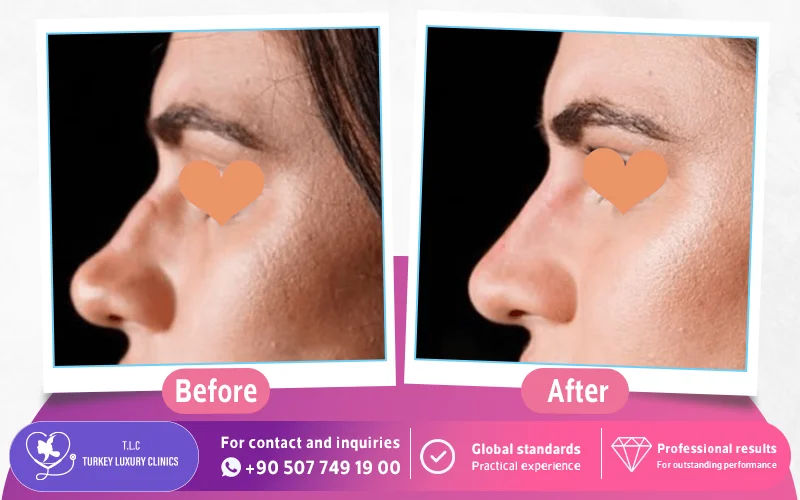
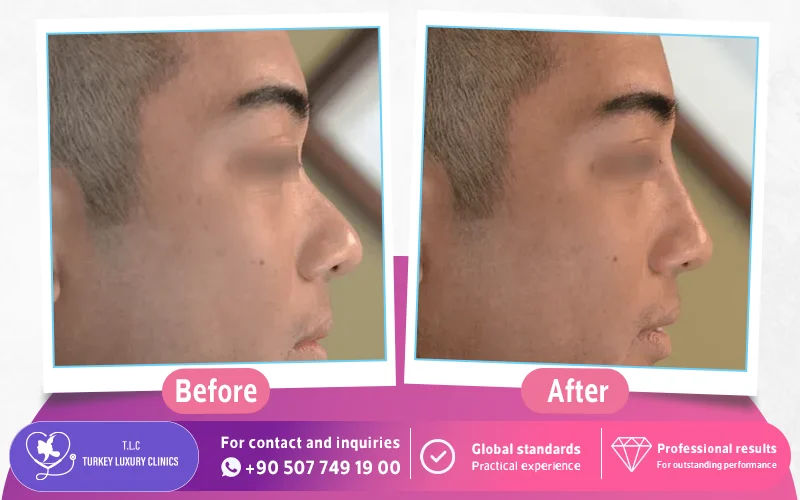
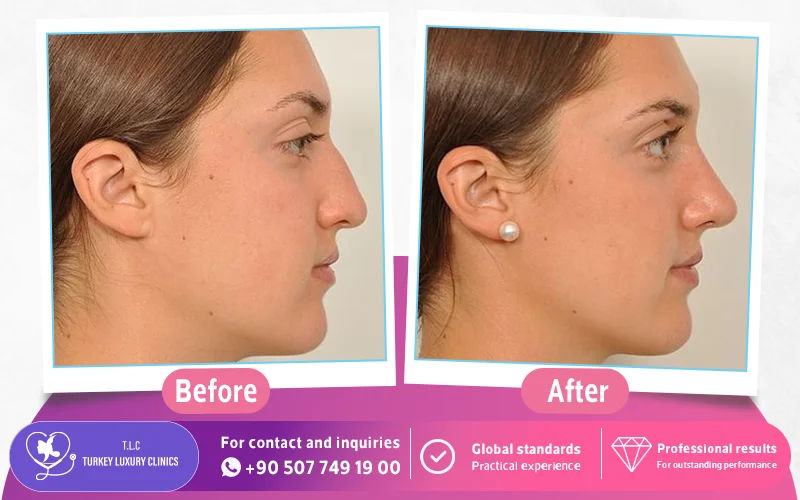
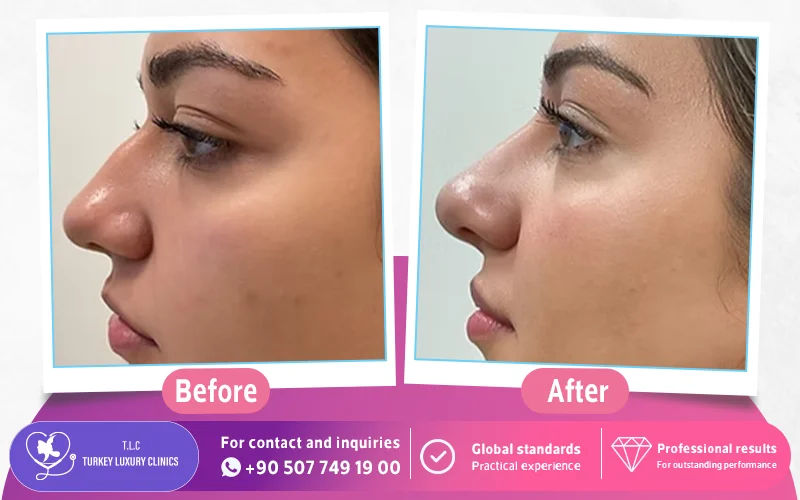
Non-Surgical Rhinoplasty Before and After Real Photos
How Long Does Non-Surgical Rhinoplasty Last?
On average, a nose liquid rhinoplasty lasts between 12 and 18 months. Because the nasal bridge is rigid and experiences very little muscular movement, the hyaluronic acid filler breaks down much more slowly here than in dynamic areas like the lips. To maintain your results permanently, a brief touch-up is recommended once every 12 months.
Results Timeline
Timeline | What to Expect |
Immediately | Visible improvement |
24-48 Hours | Mild swelling |
1 Week | Final appearance |
12-18 Months | Gradual filler absorption |
Factors Affecting Longevity
- Individual Metabolism: Highly active individuals naturally break down the sugar-based hyaluronic acid gel slightly faster.
- Anatomical Movement: Because the nasal bridge is structurally rigid and does not experience constant muscular expressions (unlike the lips), filler breaks down much slower here than in other facial regions.
Maintenance Non-Surgical Nose Job Treatments
To maintain your straight profile permanently without ever undergoing surgery, we recommend scheduling a brief, minor touch-up evaluation once every 12 to 14 months to replenish any naturally absorbed gel.
How Many Syringes and Sessions Are Needed?
A liquid nose job typically requires 1 syringe (0.5 to 1 mL) of hyaluronic acid filler for most patients. Because the nose is a small and structurally tight area, only small, controlled amounts of filler are used to ensure precision and safety.
In some cases of more noticeable asymmetry or contour imbalance, a second syringe may be used, but this is less common and depends on the individual anatomy and treatment goals.
Most patients achieve their desired results in one treatment session. However, a minor follow-up session after 2 to 4 weeks may sometimes be recommended to:
- Refine symmetry
- Adjust small irregularities
- Optimize final contour after swelling settles
The nose requires very precise filler placement, so experienced injectors usually prefer conservative amounts in a single session rather than overfilling in one visit.
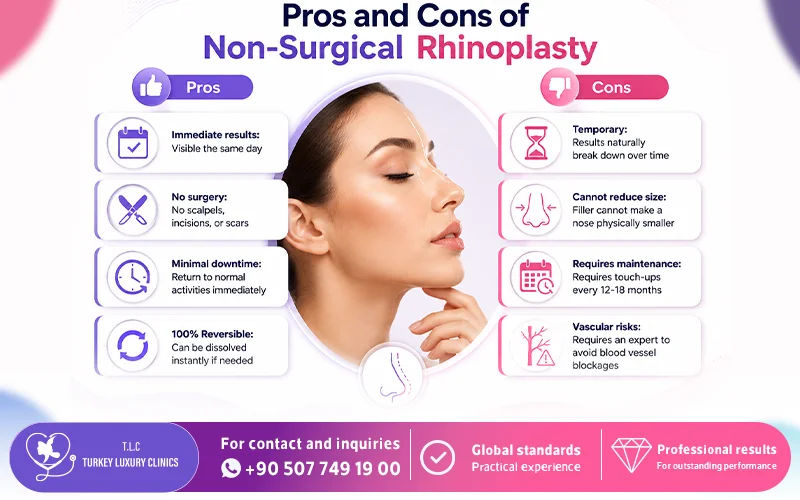
Pros and Cons of Non-Surgical Rhinoplasty
To give you a balanced look at this treatment, here is an honest breakdown of the advantages and limitations of the liquid nose job method:
Pros | Cons |
Immediate results: Visible the same day | Temporary: Results naturally break down over time |
No surgery: No scalpels, incisions, or scars | Cannot reduce size: Filler cannot make a nose physically smaller |
Minimal downtime: Return to normal activities immediately | Requires maintenance: Requires touch-ups every 12-18 months |
100% Reversible: Can be dissolved instantly if needed | Vascular risks: Requires an expert to avoid blood vessel blockages |
What Can Non-Surgical Rhinoplasty Fix?
Because dermal fillers add structural volume, a liquid nose job operates by correcting the optical shadows and depressions that make a nose appear crooked or uneven. It is highly effective for correcting:
- Dorsal Humps: By filling the depression directly above and below a nasal bump, the profile line is completely leveled.
- Crooked Nose Appearance: Precise structural micro-injections into the concave side of an asymmetrical nose fill out the empty volume, creating a symmetrical appearance from a frontal view.
- Flat Nasal Bridge: Low nasal bridges can be elevated and given clean definition, a highly requested adjustment that harmonizes facial features.
- Drooping Nasal Tip: Placing a structural pillar of filler at the base of the nose (the columella) provides an immediate mechanical lift to a downward-pointing tip.
- Minor Asymmetries: Small post-traumatic dents or minor irregularities left behind from a previous, unsatisfactory surgical rhinoplasty can be safely camouflaged.
What Non-Surgical Rhinoplasty Cannot Fix
To maintain clear medical honesty and ensure high trust standards, patients must understand what fillers cannot achieve biologically:
- Large Noses: Fillers occupy physical space. A liquid nose job cannot make a nose smaller. It can only balance the contours so that the nose blends seamlessly into the face.
- Breathing Problems: This procedure is strictly cosmetic. It cannot treat internal airway blockages or structural breathing deviations like a deeply deviated septum.
- Significant Nose Size Reduction: If your ultimate goal is a reduction in total nasal projection, width, or flare, surgical rhinoplasty remains your only viable medical option.
How Much Does a Non-Surgical Nose Job Cost? (2026 Prices)
A non-surgical nose job (liquid rhinoplasty) typically costs $600 to $1,500 per session in the United States, with an average price around $1,200–$1,450 depending on the injector and clinic location. In more advanced or high-end clinics, especially when larger corrections or premium fillers are used, the cost can reach up to $2,000 or more.
In Turkey, the same procedure is significantly more affordable, ranging between $200 and $1,500 per session, with an average cost of around $600. This price variation depends on the clinic, injector experience, and type of filler used.
Istanbul hosts a massive concentration of elite facial plastic surgeons. In Istanbul, the average liquid rhinoplasty prices range from $350 to $1,200 USD, perfect for patients wishing to pair their treatment with an iconic city culture break.
Compared to a surgical nose job cost in Turkey that ranges between $2,000 and $6,000 in 2026, the cost of liquid rhinoplasty is only $300 to $1,200. This makes the non-surgical approach an incredibly accessible option for international patients who want visible profile enhancements at a fraction of the surgical price.
What Affects the Liquid Nose Job Prices?
Several factors influence the final cost of a liquid nose job:
- Amount of filler used: Most patients need 1 syringe (1 ml), but more complex cases may require additional product.
- Type of filler: Hyaluronic acid fillers differ in price and longevity.
- Injector expertise: Board-certified plastic surgeons or dermatologists typically charge higher fees.
- Location: Prices are higher in the US and UK compared to medical tourism destinations like Turkey.
Liquid Rhinoplasty Cost Comparison: Turkey vs the US and the UK
Country | Price Range (USD) | What is Usually Included |
Turkey | $200 - $1,500 | Filler, numbing cream, consultation, follow-up, coordinator, translator and transfers. |
UK | $400 - $1,200 | Filler product, clinical consultation, and a standard two-week follow-up appointment. |
US | $600 - $2,500 | Filler product and the procedure itself. Consultation and follow-up fees are often extra. |
Why Is Non-Surgical Rhinoplasty Cheaper in Turkey?
The lower cost of non-surgical rhinoplasty in Turkey does not mean compromised quality, non-original filler brands, poor standards of care, or inferior results. Instead, the lower prices are primarily driven by economic and operational factors rather than differences in treatment quality.
Many reputable clinics in Turkey use the same internationally recognized dermal filler brands used in the US and Europe, follow modern medical protocols, and employ highly experienced plastic surgeons and aesthetic specialists while still offering significantly more competitive pricing than clinics in many Western countries.
How to Choose the Best Clinic and Specialist in Turkey
To protect your safety and ensure an elegant aesthetic outcome, always verify your chosen clinic and specialist against this medical checklist before booking:
Credentials to Look For
- Direct confirmation that your injector is a Board-Certified Plastic Surgeon or Dermatologist (avoid general practitioners or beauty aestheticians).
- Active operational certification issued by the Turkish Ministry of Health (Health Tourism Accreditation).
- Active clinical memberships in international associations such as ISAPS (International Society of Aesthetic Plastic Surgery).
- Deep understanding of nasal vascular anatomy and the ability to manage rare complications such as vascular occlusion.
Red Flags to Avoid
- Clinics that refuse to show you the original, sealed packaging of the filler syringe before injection.
- Quotes that fall below $200 USD, which often signal the use of uncertified, permanent, or non-reversible counterfeit materials.
- Settings where non-medical staff or technicians are authorized to perform deep facial injections.
Who Is a Good Candidate for a Filler Nose Job?
Ideal Candidates
You are an ideal candidate if you are an adult seeking minor to moderate corrections to your profile, want to avoid surgical downtime, and possess realistic expectations. It is also highly popular for individuals who wish to "test-drive" a new nose shape before making a permanent financial and physical commitment to surgery later in life.
Who Should Avoid Treatment?
- Patients requiring significant reductions in nasal size or width.
- Individuals who must wear heavy, thick-framed prescription eyeglasses every day (as constant pressure can displace fresh filler during the first two weeks).
- Pregnant or breastfeeding individuals.
Liquid Nose Job Recovery Timeline
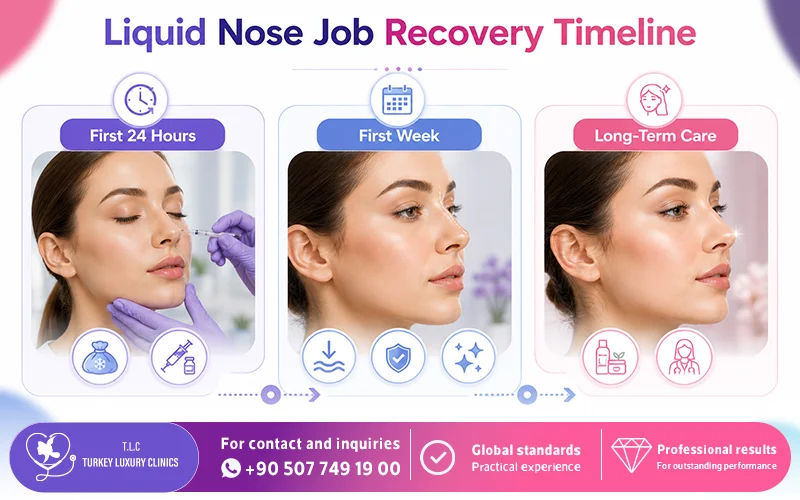
The recovery process for a non-surgical nose job requires virtually zero lifestyle disruption, making it incredibly convenient for international travelers.
- First 24 Hours: You may experience localized redness, mild swelling, and pinpoint tenderness. You are free to walk around, sightsee, and fly home immediately. You must avoid touching or rubbing your nose.
- First Week: Any minor swelling completely subsides, revealing the finalized contour. You must avoid strenuous cardiovascular exercise, steam rooms, saunas, and wearing heavy sunglasses for the first 7 days.
- Long-Term Care: The filler settles firmly against the bone. It requires no special daily maintenance or adjustments.
Liquid Rhinoplasty Aftercare Tips
- Do not massage or press down on your nose yourself under any circumstances.
- Sleep with your head elevated on an extra pillow for the first 2 nights to minimize localized swelling.
- Avoid blood-thinning over-the-counter medications like aspirin for 48 hours to minimize any minor bruising.
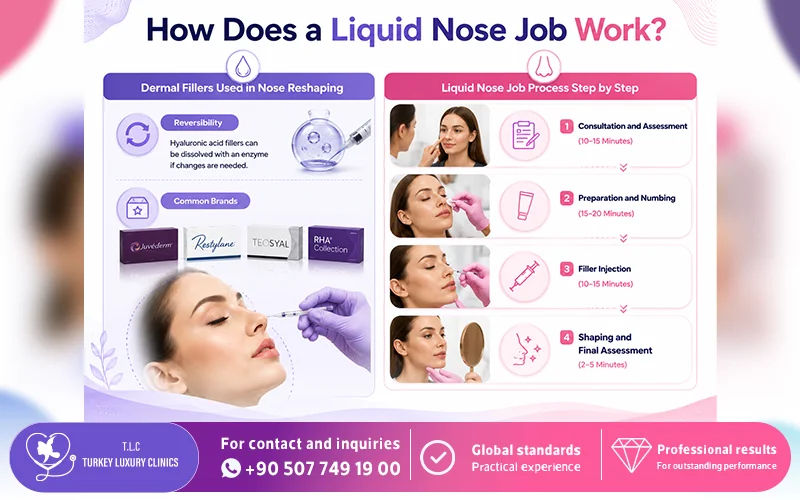
How Does a Liquid Nose Job Work?
The nose is a static facial structure; it lacks the constant muscular movement found in the lips or forehead. This makes it an exceptional structural canvas for dermal fillers, as the injected material experiences very little mechanical breakdown and holds its shape reliably.
Dermal Fillers Used in Nose Reshaping
The gold standard for nasal contouring is highly cross-linked, firm Hyaluronic Acid (HA) filler. Hyaluronic acid is a natural sugar molecule already found in human skin, making it highly biocompatible.
- Reversibility: The primary benefit of HA fillers is safety. They are 100% reversible. If a patient desires a modification, or if a vascular complication arises, an injection of a specialized enzyme (hyaluronidase) safely dissolves the gel within minutes.
- Common Brands: Top-tier clinics in Turkey use premium, FDA-approved brands specifically engineered for bone-mimicking structural support, such as Juvederm Voluma and Restylane Lyft.
Liquid Nose Job Process Step by Step
Non-surgical rhinoplasty is performed as an outpatient procedure and usually takes less than one hour from consultation to completion.
- Consultation and Assessment (10–15 Minutes): Your doctor evaluates your nasal anatomy, skin thickness, facial proportions, and treatment goals to determine whether a liquid nose job is the right option for you.
- Preparation and Numbing (15–20 Minutes): The treatment area is thoroughly cleansed, and a topical numbing cream is applied to maximize comfort during the procedure.
- Filler Injection (10–15 Minutes): Using a fine needle or blunt-tipped cannula, the practitioner carefully injects small amounts of dermal filler into specific areas of the nose to improve contour, symmetry, and overall balance.
- Shaping and Final Assessment (2–5 Minutes): The filler is gently molded and evaluated from different angles to ensure a smooth, natural-looking result that complements the patient's facial features.
Most patients can return to their normal daily activities immediately after the procedure.
Risks: Can Liquid Rhinoplasty Go Wrong?
While a liquid nose job is non-surgical and safe when performed correctly, it is a medical procedure that carries risks. The nose contains a delicate network of blood vessels that connect to the surrounding facial structure.
Common Side Effects
These are minor, completely normal, and clear up independently within a few days:
- Mild localized swelling.
- Temporary redness around the tip or bridge.
- Small, pinpoint bruising.
Rare but Serious Complications
If performed by an untrained, unlicensed injector working out of a beauty salon or day spa, serious medical complications can occur:
- Vascular Occlusion: This happens if dermal filler is accidentally injected directly into a nasal blood vessel or presses against it, blocking natural blood flow.
- Skin Necrosis: If a blockage is not recognized and treated immediately, the surrounding skin tissue can become starved of oxygen and damaged.
How Experienced Injectors Minimize Risks
Our clinic enforces strict safety protocols to ensure patient safety:
- Deep Placement: We inject the filler deep beneath the muscle layers, directly on top of bone and cartilage, safely away from superficial blood vessels.
- Cannula Strategy: We utilize blunt-tipped micro-cannulas rather than sharp needles in high-risk zones like the nasal tip to glide smoothly around blood vessels rather than piercing them.
- Emergency Antidotes: Every treatment room is fully equipped with Hyaluronidase—the immediate antidote enzyme that melts filler away in seconds to restore vascular flow at the earliest sign of any complication.
Non-Surgical Rhinoplasty vs. Surgical Rhinoplasty
To help you evaluate the clinical differences between these procedures, this comparison matrix details the primary metrics:
Feature | Liquid Rhinoplasty (Filler) | Surgical Rhinoplasty (Surgery) |
Procedure Type | Minimally invasive outpatient injections | Inpatient surgical operation |
Downtime | Zero days (immediate return to normal activity) | 1 to 2 weeks of acute swelling and bruising |
Average Cost | Budget-friendly ($300 - $1,500 globally) | Substantial investment ($3,000 - $15,000+) |
Permanence | Temporary (lasts 12 to 18 months) | Permanent (lifetime structural results) |
Anesthesia | Topical numbing cream | General anesthesia or deep sedation |
Reversibility | 100% reversible via Hyaluronidase | Irreversible (requires revision surgery) |
Best For | Camouflaging humps, lifting droop tips | Reducing size, narrowing width, fixing septums |
Why Patients Choose Turkey Luxury Clinics for Liquid Rhinoplasty
- Experienced aesthetic specialists with more than 10 years of experience.
- Premium, FDA-approved fillers.
- Internationally accredited clinical facilities.
- Dedicated international patient coordinators.
- Fully transparent, upfront pricing.
Take the first step toward your ideal profile today. Reach out to our dedicated international patient team to organize your free, personalized digital pre-consultation.
FAQs About Non-Surgical Rhinoplasty