


- What Is a Malleable Penile Prosthesis?
- What Are Malleable Penile Rods?
- Semi-Rigid vs Inflatable Penile Prosthesis: Which Is Right for You?
- Who Is Eligible for a Malleable Penile Prosthesis?
- Advantages of a Malleable Penile Prosthesis
- Disadvantages of a Malleable Penile Prosthesis
- Risks Associated With Malleable Penile Implant Surgery
- Malleable Penile Implant Cost 2026
- How to Get a Comparable Quote
- Best Brands for Malleable Penile Prosthesis
- Malleable Penile Prosthesis Sizes: Diameter, Length and Adjustability
- How Does Malleable Penile Implant Surgery Work
- Malleable Penile Implant Recovery
- How to Hide a Malleable Implant
- Malleable Penile Implant Before and After: What Actually Changes
- Malleable Penile Implant Surgery in Turkey
- FAQs About Malleable Penile Prosthesis
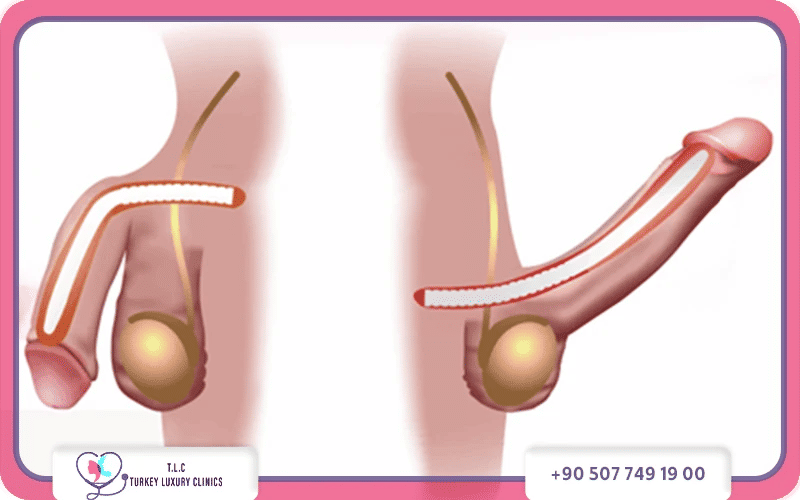
A malleable penile prosthesis (MPP) is a permanent, semi-rigid penile implant used to treat erectile dysfunction. It consists of two bendable, silicone-covered rods placed inside the penis, giving you constant rigidity for intercourse while allowing the penis to be positioned downward when not in use.
You will see the same device called a semi-rigid penile implant, a non-inflatable penile prosthesis, a bendable penile implant, malleable penile rods, penile rods, or simply MPP. All of these refer to the same general type of device.
The malleable implant is the most affordable type of penile prosthesis, and the simplest to use — there is no pump and no fluid reservoir. In Turkey, all-inclusive prices range from $5,000 to $8,000, compared with $15,000 to $20,000 in the United States without insurance.
What Is a Malleable Penile Prosthesis?
A malleable penile prosthesis is a flexible device implanted inside the penis to restore enough rigidity for intercourse when other ED treatments, oral medication, injections, or vacuum erection devices, have not worked or are not suitable for you.
Because the implant is semi-rigid, the penis does not inflate and deflate. You position it upward for intercourse and downward or slightly to one side the rest of the time. The rods themselves provide the rigidity, which is why the device works the same way every time and needs no preparation.
Malleable implants were among the first modern penile prostheses, with silicone devices introduced in the late 1960s. Despite the later arrival of inflatable systems, they remain an important surgical option because of their simple design, ease of use, and low mechanical complexity.
What Are Malleable Penile Rods?
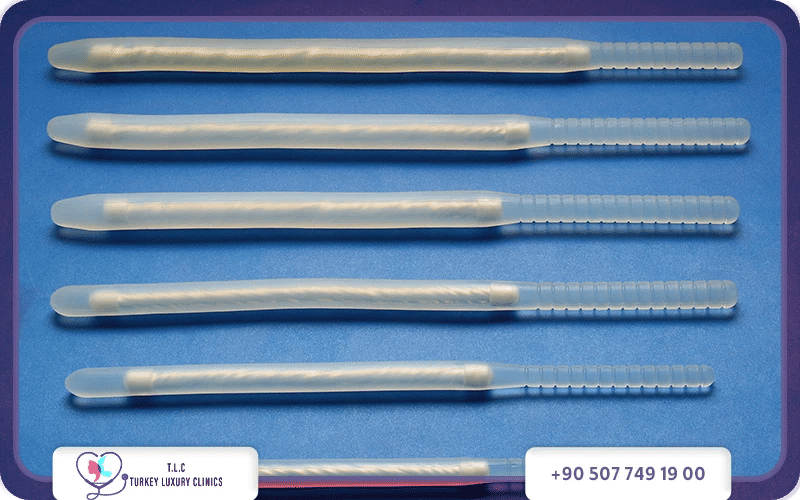
Malleable penile rods are the two semi-rigid cylinders that make up the prosthesis. Each is placed inside one of the corpora cavernosa — the paired erectile chambers that normally become rigid during an erection.
Depending on the model, each rod contains:
- A metal, silver, or Nitinol core — provides firmness and holds the position you bend it into.
- A silicone outer covering — a softer, biocompatible outer surface.
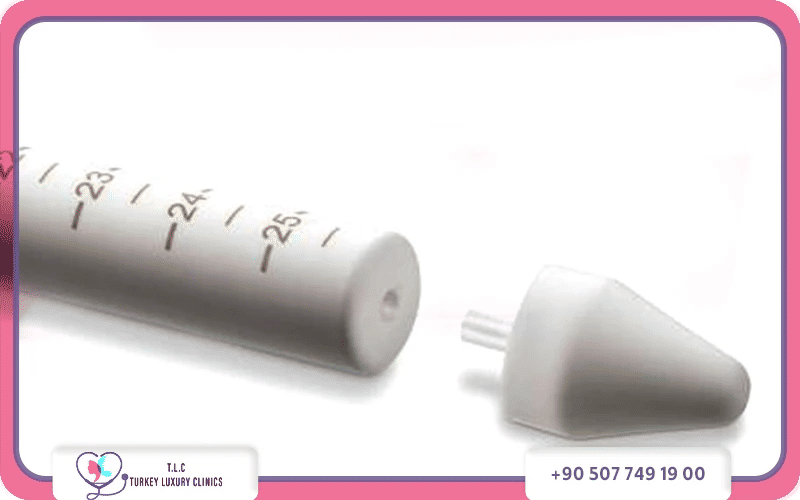
- Rear-tip extenders (RTEs) or tail caps — let the surgeon fine-tune the final implant length.
- Flexible or bendable zones — allow the penis to be repositioned repeatedly without fatiguing the core.
Everything is internal. There is no pump, no reservoir, and no external tubing, so nothing about the device is visible from the outside.
Semi-Rigid vs Inflatable Penile Prosthesis: Which Is Right for You?
Choosing between a malleable implant and an inflatable penile prosthesis (IPP) is the main decision before surgery, and neither device is better in every respect.
Feature | Malleable (Semi-Rigid) | Inflatable (IPP) |
How it works | Manually positioned upward for intercourse | Pump transfers fluid into inflatable cylinders |
Cost | Lower | Higher |
Device design | Two semi-rigid rods | Cylinders plus pump and, usually, reservoir |
Mechanical complexity | Fewer components | More components |
Concealment | Penis remains semi-rigid | More natural flaccid state when deflated |
Girth when activated | Limited expansion | Generally greater expansion |
Hand dexterity needed | Minimal | Required to operate the pump |
Ease of use | Very simple | Requires inflation and deflation |
Often considered for | Limited dexterity, selected salvage cases, simpler operation | Patients prioritising concealment and a natural flaccid appearance |
A malleable implant prioritises simplicity and mechanical reliability; an inflatable implant prioritises concealment and a natural flaccid appearance.
See our full guide to the inflatable penile prosthesis (IPP) for a detailed look at the alternative.
According to contemporary urological reviews, malleable implants can be particularly useful for men with limited hand dexterity, selected patients undergoing prosthesis salvage after infection, and certain cases of refractory ischemic priapism.
A 2026 real-world study published in The Journal of Sexual Medicine analyzed 29,385 penile implant patients and found lower 5-year mechanical breakdown with semi-rigid implants (6.7%) than with inflatable devices (9.1%), although overall revision/removal rates were similar.
Who Is Eligible for a Malleable Penile Prosthesis?
A penile implant is usually the last step, not the first. If pills, injections, or a vacuum device still work for you, your urologist will almost certainly try those before suggesting surgery.
A malleable prosthesis may be particularly considered when:
- Oral medications, injections, or vacuum erection devices have failed or are unsuitable
- You have limited hand dexterity that would make operating an inflatable pump difficult
- A previously infected implant requires a selected salvage strategy
- Refractory acute ischemic priapism requires surgical management
- Significant penile fibrosis or scarring makes placement of an inflatable device more difficult
- You prefer a simpler device with fewer components
Patient selection matters more than device choice. Careful counselling about the permanently semi-rigid nature of the implant, concealment, expected function, risks, and alternatives is what separates a satisfied patient from a disappointed one.
Advantages of a Malleable Penile Prosthesis
- Lower cost: consistently less expensive than an inflatable prosthesis.
- Simple operation: no pump to operate; you position the penis by hand.
- Lower mechanical complexity: no hydraulic pump, reservoir, or fluid system.
- Works if your hands don't: arthritis, neurological disease, or hand weakness are not obstacles.
- Simpler surgery: no separate pump or reservoir to place.
- Always ready: once your surgeon clears you, rigidity is available without inflation or medication.
Disadvantages of a Malleable Penile Prosthesis
- Permanent semi-rigidity: The penis does not return to the fully flaccid state an inflatable prosthesis allows.
- More difficult concealment: Although every component is internal, persistent firmness can be noticeable beneath some clothing.
- Less natural flaccid appearance: This is the main reason some patients choose an inflatable device instead.
- Limited girth expansion: The rods provide structural rigidity rather than the expansion inflatable cylinders give.
- Possible discomfort: Persistent rigidity or pressure is uncomfortable for some men.
- Erosion risk: In uncommon cases, continuous pressure can contribute to tissue erosion and require revision or removal.
If a natural flaccid appearance, maximum concealability, or greater girth is at the top of your list, an inflatable prosthesis is the better conversation to have with your surgeon.
Reported complication rates vary substantially between studies because patient populations, previous procedures, medical conditions, implant models, and follow-up periods all differ. A single overall percentage does not accurately describe any individual patient's risk — ask your surgeon for their own infection and revision rates instead.
Risks Associated With Malleable Penile Implant Surgery
Penile prosthesis implantation is established, well-studied surgery, but it should be treated as a definitive and effectively irreversible treatment for ED.
Infection is the most important complication. Depending on severity, treatment may require antibiotics, implant removal, replacement, or a salvage procedure.
Pain and swelling. Bruising, tenderness, and discomfort are expected during early recovery. Pain that persists or worsens needs to be assessed rather than waited out.
Erosion or extrusion. Pressure from the prosthesis can occasionally damage surrounding tissue.
Malposition or curvature. Sizing, tissue condition, scarring, previous surgery, or postoperative changes may affect the position or angle of the implant.
Device or structural failure. Malleable implants have fewer components than hydraulic systems, so mechanical failure is less common — but structural problems can still develop and require revision.
Revision surgery may eventually be needed for infection, erosion, device problems, pain, anatomical changes, or dissatisfaction.
Penile Implant Surgery Is Permanent
This is the one thing to be certain about before you agree to surgery.
Placing the implant means the rods take over the space inside the erectile chambers. That tissue does not go back to how it was. So if the implant ever has to come out, because of infection, erosion, or any other complication, you should not expect your natural erections to return. You would be left unable to get an erection by any means, including the pills or injections that may still work for you today. That is why implants are offered only after less invasive treatments have failed or cannot be used. It is not a step you can undo if you change your mind.
Malleable Penile Implant Cost 2026
In Turkey, malleable penile implant prices generally range from $5,000 to $8,000, depending on the implant brand, surgeon, hospital, complexity, and whether the operation is a first implantation or a revision.
In the United States, self-pay treatment commonly ranges from approximately $15,000 to $20,000 without insurance. Penile prosthesis surgery is often covered by US insurance when erectile dysfunction has an organic cause, so check your policy before assuming you will pay the full amount.
Cost by Implant Brand
Brand / Model | Turkey (USD) | USA — no insurance (USD) |
Rigicon Rigi10 | $5,000–$6,500 | $15,000–$18,000 |
Coloplast Genesis | $6,000–$7,500 | $16,000–$20,000 |
Boston Scientific AMS Spectra | $6,500–$8,000 | $15,000–$19,000 |
Boston Scientific Tactra | $7,500–$8,000 | $15,000–$19,000 |
Turkish figures represent typical all-inclusive package pricing. US figures represent estimated self-pay treatment costs without insurance and vary by surgeon and facility. All prices in USD.
A Turkey package commonly includes pre-operative consultation and medical evaluation, the prosthesis itself, surgeon fees, anaesthesia, hospital charges, post-operative medication, and follow-up care. Some international packages also include accommodation and airport transfers.
The implant brand is usually the largest single variable in the quote. When comparing clinics, always confirm the exact device included in the price. For a broader comparison across implant types, see our guide to penile prosthesis costs.
How to Get a Comparable Quote
A lower price does not mean two clinics are offering the same operation. Ask each one for the following in writing:
- The exact implant brand and model, and whether the device is included in the price
- Surgeon and anaesthesia fees, hospital charges, and number of nights included
- Pre-operative testing, post-operative medication, and follow-up consultations
- The implant warranty and what it covers
- Who manages complications after you return home, and whether revision surgery is covered or charged separately
- The surgeon's experience with penile prosthesis surgery, and who will actually operate
The fifth point is the one most quotes leave out. If you are travelling for surgery, follow-up continues after you fly home, settle the arrangement before you book.
Best Brands for Malleable Penile Prosthesis
There is no single best malleable penile implant. The right device depends on your corporal dimensions, tissue condition, sizing requirements, previous surgery, and — realistically — which implant your surgeon places most often.
Company | Implant | Country |
Boston Scientific | AMS Spectra | USA |
Boston Scientific | Tactra | USA |
Coloplast | Genesis | USA |
Rigicon | Rigi10 | USA |
Zephyr Surgical Implants | ZSI 100 | Switzerland |
Promedon | TUBE | Argentina |
Coloplast Genesis
Genesis uses a flexible silicone elastomer body with a hydrophilic coating and an internal silver-wire core. It can be trimmed to match corporal length, and its internal design is intended to help the implant hold its selected position while limiting spring-back.
Boston Scientific Tactra
Tactra uses a Nitinol core surrounded by dual-layer silicone, with an articulating flex zone that Boston Scientific describes as improving positioning and concealability.
Boston Scientific AMS Spectra
An earlier and well-established malleable prosthesis with an articulating internal design for positioning and concealment. Tactra has replaced it in several markets, but Spectra is still supplied in some.
Rigicon Rigi10
Rigi10 uses a silicone construction with Rigicon's HydroShield hydrophilic coating and offers the broadest range of diameters in the group. The academic device review reports approximately 135 degrees of bend flexibility — the highest of the current devices — although a specification alone does not make one implant clinically better than another.[1]
Zephyr ZSI 100
ZSI 100 uses silicone with internal reinforcement and adjustable lengths. Zephyr also produces the ZSI 100 FTM, designed for selected patients following phalloplasty.
Promedon TUBE
Available in several diameters and lengths, with a trimmable proximal section that allows sizing to be adjusted during surgery.
Malleable Penile Prosthesis Sizes: Diameter, Length and Adjustability
The goal is not the largest implant that will fit. Your surgeon selects the largest prosthesis that fits safely within the measured corporal space.
An oversized implant can create excessive tissue pressure, discomfort, poor positioning, or a more visible outline under clothing. An undersized one may not provide adequate support at the base.
Manufacturer & Model | Diameter (mm) | Length (cm) | Adjustability |
Boston Scientific Tactra | 9.5, 11, 13 | 14–23, 16–25, 18–27 | 8 cm trimmable zone; 0.5–1.0 cm rear-tip extenders |
Coloplast Genesis | 9.5, 11, 13 | 14–23, 16–25, 18–27 | Trimmable; 0.5 and 1.0 cm tail caps |
Rigicon Rigi10 | 9, 10, 11, 12, 13, 14 | 23 (9–10 mm); 25 (11–14 mm) | 0.5 and 1.0 cm SecureFit extenders |
Promedon TUBE | 9, 10, 11, 12, 13 | 20, 22, 24, 26 depending on diameter | Trimmable proximal third; 10–15 mm RTEs |
Zephyr ZSI 100 | 11 | 12–25 | Trimmable distal and proximal sections |
Ranges are as published by each manufacturer. Specifications change between product generations and vary by market, so final selection follows the manufacturer's current surgical documentation.
Your final size is determined during surgery, after the corpora cavernosa have been measured directly. See our guide to penile implant size options for more detail.
How Does Malleable Penile Implant Surgery Work
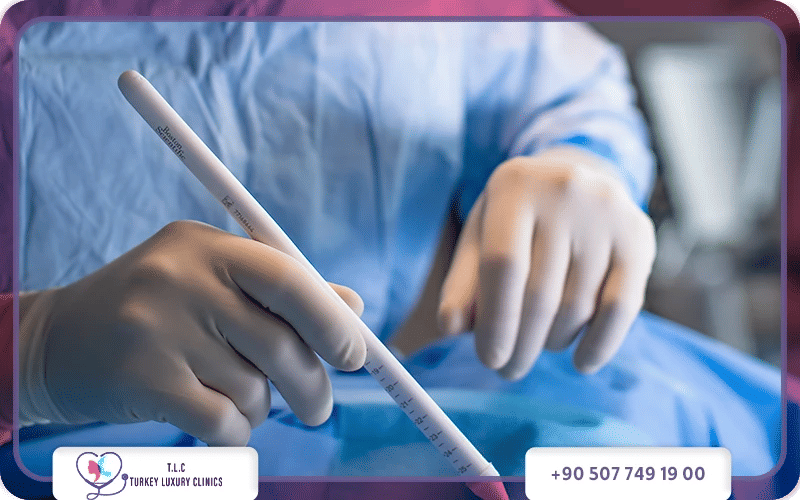
Malleable penile prosthesis surgery places one rod inside each corpus cavernosum. The exact approach varies with the surgeon, the implant, your anatomy, previous surgery, and the underlying condition — but the sequence is broadly the same:
- A small incision is made at the base or shaft of the penis to access the corpora cavernosa.
- Each corpus cavernosum is carefully dilated.
- The surgeon measures the corporal length directly.
- The prosthesis is trimmed or extended with rear-tip extenders to match.
- One rod is inserted and anchored on each side.
- The incision is closed.
There is no external pump, tubing, or visible component — the entire device stays inside the body. An uncomplicated malleable implantation typically takes 1–2 hours, shorter than placing a three-piece inflatable prosthesis, and anaesthesia may be general or regional depending on you and the surgical team.
Malleable Penile Implant Recovery
Most men return to desk work within one to two weeks and are cleared for sex at around six. Recovery varies with your health, the surgical technique, previous operations, and whether this is a first implant or a revision — your surgeon's timeline takes precedence over any general schedule.
First few days
Swelling, bruising, tenderness, and discomfort are common and expected. You'll receive instructions on wound care, medication, showering, positioning, and activity restrictions. Most surgeons position the implant downward during this period to reduce tension on the incision.
Weeks 1–2
Light daily activity and desk work gradually resume. Heavy lifting, strenuous exercise, cycling, and sexual activity remain restricted. Swelling and bruising usually settle over this period, though tenderness can persist longer.
Weeks 2–4
Discomfort continues to fade. Your surgeon may ask you to start gently positioning the implant so the tissue around it heals in a way that allows comfortable movement later. Follow their instructions exactly — bending it too early risks the repair.
When Can You Have Sex After a Malleable Implant?
Most surgeons clear sexual activity at 4–6 weeks, but the date is set by healing, not by the calendar. Three things have to be in place first: the incision must be fully closed with no drainage, swelling and tenderness must have settled enough that positioning the penis is comfortable, and your surgeon must confirm at a follow-up appointment that the implant has settled correctly.
The reason for waiting is straightforward. The tissue around the rods is still forming a capsule during the first weeks, and intercourse before that has healed increases the risk of pain, implant migration, and, most seriously, infection reaching the device. An infection at this stage usually means the implant has to come out.
Expect the first few attempts to feel unfamiliar. Positioning takes practice, sensation may still be slightly altered, and full comfort commonly takes another few weeks after clearance. This is normal and settles for most men.
More detail in our guide to when you can use a penile implant after surgery.
How Do You Use a Malleable Penile Implant?
Using a malleable implant is entirely manual, there is nothing to press, pump, or activate. You bend the penis upward when you want sex and back down afterwards.
For intercourse, hold the shaft and position it upward at a comfortable angle. The rods stay in that position on their own, so there is nothing to maintain during sex and no preparation is needed.
Afterwards, bend the penis downward along the thigh or slightly to one side. Most men find a comfortable position that quickly becomes routine.
What it changes. The implant restores rigidity, but it does not create sensation or orgasm. Sensation, orgasm, and ejaculation generally depend on the nerves and urethra rather than the prosthesis itself. The glans is not implanted, so it may remain softer than the shaft during intercourse.
What takes practice. Positioning may feel deliberate at first. Work with the natural angle of the implant rather than forcing the penis against it. Persistent pain, difficulty positioning, or a feeling that the implant has shifted should be discussed with your surgeon.
Once you are used to it, the implant is available whenever needed, requires no medication, and works the same way each time.
How to Hide a Malleable Implant
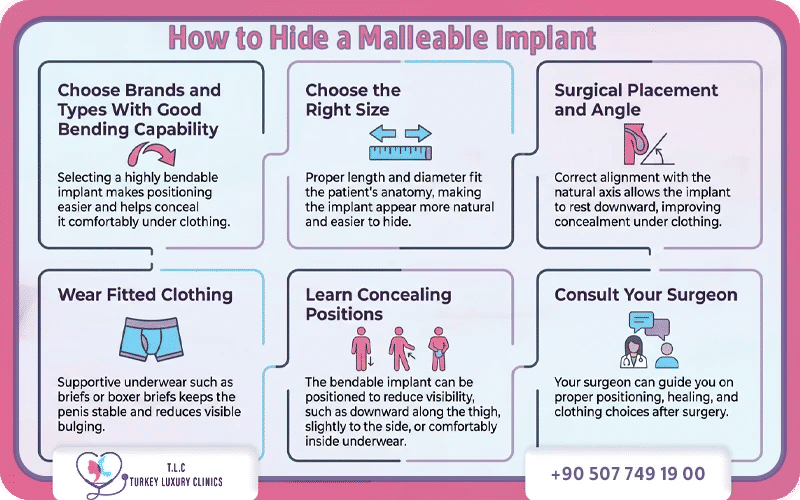
Concealment is the most common practical concern with a semi-rigid implant, and it's mostly a matter of sizing, positioning, and habit.
Choose a device with good bending capability. Higher bend capability makes the penis easier to position flat against the body, though implant selection also depends on your anatomy, sizing, and tissue condition.
Get the length and diameter right. Correct sizing lets the implant sit naturally. An oversized one creates pressure and a more visible outline under clothing.
Surgical placement matters. Aligning the implant with the natural axis of the penis helps it rest downward rather than projecting forward.
Wear supportive underwear. Briefs or boxer briefs keep the penis stable and prevent the movement that causes visible bulging.
Learn a position that works for you. Because the rods bend, you can position the penis to minimise visibility. Most men use one of three:
- Pointing downward along the thigh
- Angled slightly to one side
- Tucked comfortably to the side inside the underwear
Raise it before surgery, not after. If concealment matters particularly to you, say so during implant selection — it can influence both the device chosen and the placement angle.
When to call your surgeon instead. Difficulty positioning the penis, persistent pain, unusual curvature, pressure on the skin, or a change in where the implant sits are medical issues, not clothing problems.
Malleable Penile Implant Before and After: What Actually Changes
- The penis becomes permanently semi-rigid rather than alternating between soft and erect
- You gain reliable rigidity for intercourse, available without medication or preparation
- A small scar at the base or on the shaft, which typically fades over several months
What doesn't change:
- Sensation, orgasm, and ejaculation
- The appearance of the glans, which isn't part of the implant and stays soft
- Urination
Some men notice the erect length appears slightly shorter than they remember, because the implant is sized to the corporal space rather than to a stretched measurement, and because the glans doesn't engorge as it did. Girth is also generally less than with an inflatable device. Discuss expected dimensions with your surgeon before surgery, using your own measurements, this is the single most common source of disappointment, and it's almost entirely preventable with an honest conversation beforehand.
Timeline for appearance. Swelling and bruising dominate the first two weeks and can make early appearance misleading. Most men see the settled result at around 6–8 weeks, and the scar continues to fade for several months after that.
We don't publish clinical photographs on this page. If you'd like to see documented results, ask your surgeon to show you case images during consultation, where they can be discussed in context with your own anatomy.
Malleable Penile Implant Surgery in Turkey
Turkey Luxury Clinics works with contracted hospitals including Liv Hospital and Medical Park — whose Istanbul facilities hold Joint Commission International (JCI) accreditation — and Gaziosmanpaşa Hospital, a university-affiliated teaching hospital. Turkey Luxury Clinics is Temos-accredited, ISO-certified, and licensed for international health tourism by the Turkish Ministry of Health.
Send your medical history and details of the treatments you have already tried, and you will receive an itemised treatment plan stating:
- The recommended implant type, brand, and model
- The hospital and the operating surgeon
- All included medical services
- Accommodation and transfers, where applicable
- The total treatment price
- Follow-up arrangements after you return home
The purpose of the consultation is not to find the cheapest implant, but to establish whether a malleable or inflatable prosthesis is more appropriate for you — and to let you compare options on the same basis.
FAQs About Malleable Penile Prosthesis