

- How Much Does PRK Cost vs. LASIK
- Hidden Costs of PRK vs LASIK: What Most Patients Overlook
- Why Is LASIK More Expensive Than PRK?
- PRK vs LASIK Price by Procedure Type
- PRK vs LASIK Cost in the US, UK, and Turkey
- PRK vs LASIK Cost and Long-Term Value
- Is LASIK Worth the Higher Cost?
- FAQs About PRK vs LASIK Cost
PRK (Photorefractive Keratectomy) and LASIK are similarly priced laser vision correction procedures, although PRK is often slightly less expensive. In the United States, LASIK typically costs between $2,200 and $3,000 per eye, while PRK generally costs $1,800 to $2,500 per eye. The final cost of either procedure depends on several factors, including the technology used, the surgeon's experience, the clinic location, and whether treatment is performed on one or both eyes.
While the upfront cost difference between PRK and LASIK is usually modest, understanding the total cost of treatment, including recovery-related expenses, medications, follow-up care, and long-term value, can help patients make a more informed decision
PRK vs LASIK at a Glance
Factor | PRK | LASIK |
Average Cost Per Eye | $1,500–$2,500 | $1,500–$3,500 |
Recovery Time | Longer | Faster |
Best For | Thin Corneas | Most Eligible Patients |
Long-Term Outcomes | Excellent | Excellent |
How Much Does PRK Cost vs. LASIK
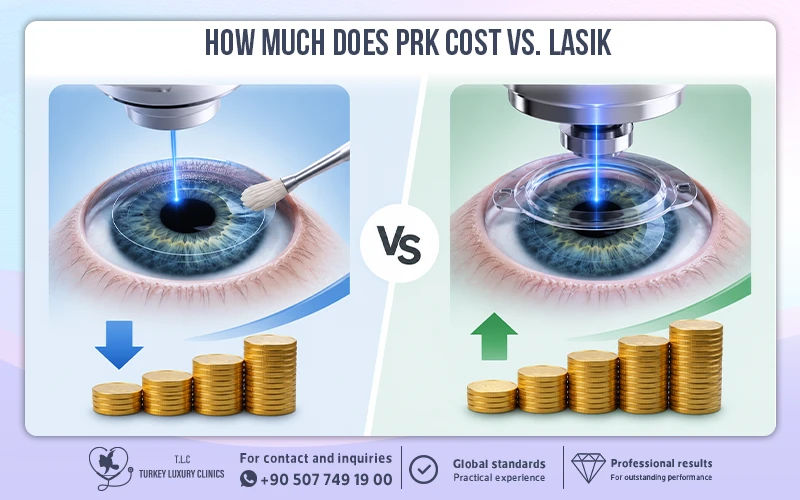
PRK and LASIK costs are relatively close, although PRK is often slightly less expensive. In the United States, PRK typically costs $1,800–$2,500 per eye, while LASIK ranges from $2,200–$3,000 per eye, depending on the technology used and the surgeon's experience.
Some clinics charge nearly identical prices for both procedures to ensure that medical suitability, not cost, drives the treatment decision.
When comparing PRK and LASIK costs, patients should consider more than the surgical fee alone.
Pre-operative testing, prescription medications, follow-up visits, and potential enhancement procedures may affect the total cost of treatment.
Recovery-related expenses, such as time away from work, may also be relevant for some patients, particularly with PRK, which generally requires a longer visual recovery period.
While these additional expenses are usually modest, they can add several hundred dollars, and occasionally more, to the overall investment. For most patients, the best value comes from choosing the procedure that offers the safest and most appropriate outcome for their eyes rather than simply selecting the lowest price.
Hidden Costs of PRK vs LASIK: What Most Patients Overlook
Cost Item | PRK | LASIK | Which Typically Costs More? |
Pre-Operative Evaluation | Comprehensive eye exam, refraction, corneal topography | Comprehensive eye exam, refraction, corneal topography | Similar |
Prescription Antibiotic Drops | Usually 1 week | Usually 1 week | Similar |
Steroid Eye Drops | Often 1–3 months | Usually 1–4 weeks | PRK |
Artificial Tears | Frequently needed for several months | Often needed for a shorter period | PRK |
Bandage Contact Lens | Required for 3–5 days | Not required | PRK |
Follow-Up Visits | Often more frequent during healing | Usually fewer visits | PRK |
Time Away from Work | Commonly 3–7 days or longer | Often 1–3 days | PRK |
Enhancement Procedures | Occasionally required | Occasionally required | Similar |
Management of Complications | Rare | Rare | Similar |
Estimated Additional Costs Beyond the Surgical Fee | $200–$800+ per patient | $100–$500+ per patient | PRK |
While the upfront cost of LASIK is higher than that of PRK, the higher recovery-related expenses of PRK due to longer use of medicated drops, bandage contact lenses, additional follow-up visits, and a longer recovery period may bring them closer together in total costs.
However, for patients with thin corneas or those unsuitable for LASIK, these additional costs are often justified by the safety and suitability of the procedure.
Why Is LASIK More Expensive Than PRK?
LASIK is more expensive than PRK because it requires advanced dual-laser technology, higher manufacturer licensing fees, and complex manual instruments to create the corneal flap.
1. Corneal Flap Creation
One of the main reasons LASIK may cost more than PRK is the creation of a corneal flap. Before reshaping the cornea, LASIK surgeons must create a thin flap using either a femtosecond laser or a mechanical microkeratome, adding an extra step that is not required in PRK.

2. More Advanced Equipment
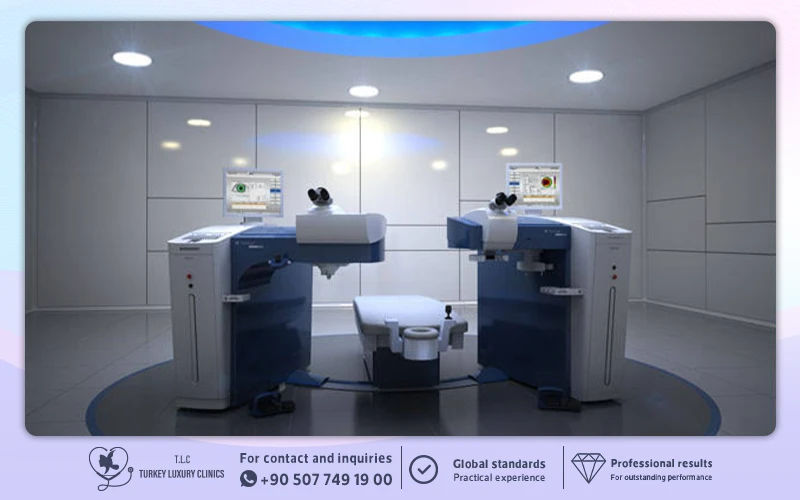
LASIK often requires additional equipment and technology to create the corneal flap safely and accurately. These systems increase both capital and operating costs, which may be reflected in the final treatment price.
3. Premium Technology Options
Many modern LASIK procedures incorporate premium technologies such as FemtoLASIK, Contoura Vision, and wavefront-guided treatments. These advanced customization options can improve precision and visual quality but also increase the overall cost of the procedure.
While LASIK is often priced slightly higher than PRK, the difference is usually modest, and many clinics charge similar fees for both procedures to ensure that patients choose the most appropriate treatment for their eyes rather than the least expensive option.

PRK vs LASIK Price by Procedure Type
Not all PRK and LASIK procedures cost the same. Advanced technologies such as wavefront-guided treatment, femtosecond lasers, and topography-guided mapping can significantly increase the total price. Understanding the different types of PRK and LASIK procedures can help patients compare costs more accurately and choose the option that best fits their vision needs and budget.
Procedure | Average Cost Per Eye (US) |
Standard PRK | $1,500 – $2,500 |
Custom Wavefront-Guided PRK | $2,200 – $3,500 |
Conventional LASIK | $1,500 – $1,800 |
Femto LASIK (Blade-Free LASIK) | $2,000 – $2,800 |
Contoura Vision LASIK | $2,200 – $3,500 |
Standard PRK is typically the most affordable option because it uses a conventional treatment approach without advanced customization technologies. For many patients, it provides excellent visual outcomes at a lower price point.
Custom Wavefront-Guided PRK costs more because it uses detailed digital mapping of the eye to create a personalized treatment plan. This additional technology may improve visual quality and reduce higher-order aberrations in suitable candidates.
Conventional LASIK is often priced similarly to standard PRK. While LASIK requires the creation of a corneal flap, some clinics keep pricing competitive by using established laser platforms and high treatment volumes.
Femto LASIK, also known as blade-free LASIK, generally costs more because a femtosecond laser is used to create the corneal flap instead of a mechanical microkeratome. This advanced technology adds precision and increases equipment costs.
Contoura Vision LASIK is usually among the most expensive LASIK options. It uses highly detailed corneal topography mapping to customize treatment, making it a premium choice for patients seeking the most personalized laser vision correction available.
PRK vs LASIK Cost in the US, UK, and Turkey
The United States has the highest PRK and LASIK costs, followed by the United Kingdom, while Turkey remains one of the most affordable destinations for laser eye surgery.
In the United States, PRK typically costs $1,800–$2,500 per eye ($4,400–$7,000 for both eyes), while LASIK generally ranges from $2,200–$3,000 per eye ($4,400–$8,000 for both eyes).
In the United Kingdom, PRK typically costs $1,900–$3,800 per eye ($3,800–$7,600 for both eyes), while LASIK ranges from approximately $1,900–$3,500 per eye ($3,800–$7,000 for both eyes).
Turkey offers significantly lower prices, with PRK generally costing $700–$1,200 per eye ($1,400–$2,500 for both eyes) and LASIK ranging from $450–$1,200 per eye ($900–$2,400 for both eyes), often less than half the cost of equivalent procedures in the US or UK.
PRK vs LASIK Cost and Long-Term Value
PRK may offer better long-term value for patients with thin corneas, higher-risk corneal anatomy, or those involved in contact sports, military service, or occupations where significant eye trauma is possible. Unlike LASIK, PRK does not create a permanent corneal flap.
With LASIK, a corneal flap remains in place for life and carries a very small but permanent risk of displacement following severe eye trauma. Although this complication is rare, it may be a consideration for individuals at higher risk of eye injuries. For appropriately selected patients, however, both PRK and LASIK provide excellent long-term visual outcomes, making the best-value procedure the one that is safest and most suitable for the patient's eyes and lifestyle.
Is LASIK Worth the Higher Cost?
Both LASIK and PRK are worth their cost because they provide highly predictable vision correction with excellent long-term outcomes. Studies show that the vast majority of LASIK patients achieve 20/20 vision or better, while more than 99% achieve vision sufficient for driving without corrective lenses.
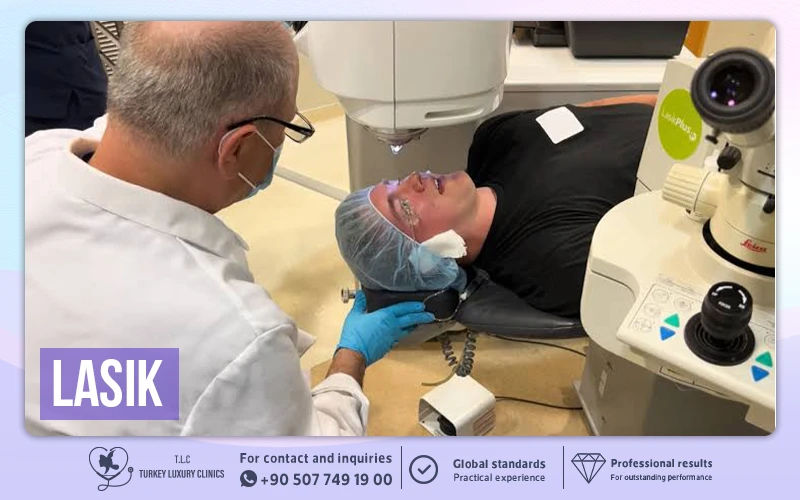
LASIK justifies its slightly higher cost because it offers faster visual recovery, less post-operative discomfort, and a quicker return to work and daily activities. Most patients achieve functional vision within 24–48 hours.
PRK recovery may take several days or weeks. Because of its convenience, predictable recovery, and proven track record, LASIK remains the most commonly performed laser vision correction procedure worldwide and is considered the standard treatment for suitable candidates.
Which Should You Choose: PRK or LASIK?
The decision between PRK and LASIK should not be based on cost alone. The most appropriate procedure depends on factors such as corneal thickness, eye health, lifestyle, occupation, and visual goals. PRK is often recommended for patients with thin corneas or those at a higher risk of eye trauma because it does not create a corneal flap. LASIK, on the other hand, offers faster visual recovery and less post-operative discomfort, making it the preferred option for many eligible candidates.
For most patients, the price difference between PRK and LASIK is relatively small compared with the importance of selecting the safest and most suitable procedure. A comprehensive eye examination with an experienced refractive surgeon is the best way to determine which option offers the greatest long-term value for your eyes.
FAQs About PRK vs LASIK Cost