


- What Is Photorefractive Keratectomy (PRK)?
- PRK vs LASIK: Quick Comparison
- Who May Be a Good Candidate for PRK?
- What Are the Requirements for PRK Surgery?
- Who Is Not a Candidate for PRK?
- The PRK Procedure: Step-by-Step
- What Is PRK Recovery Like?
- Recovery Tips After PRK
- PRK Success Rate and Results
- When Does Vision Stabilize After PRK?
- When Does Corneal Haze Usually Develop After PRK?
- What Are the Risks of PRK Surgery?
- Can a Second PRK Surgery Be Needed?
- How Much Does PRK Surgery Cost?
- Why Choose PRK Surgery in Turkey?
- Considering PRK Surgery in Turkey?
- FAQs About PRK Surgery
PRK (Photorefractive Keratectomy) is an outpatient laser eye surgery used to correct nearsightedness (myopia), farsightedness (hyperopia), and astigmatism. PRK is not considered a major surgical procedure and typically takes only 10 to 15 minutes to perform. During treatment, patients remain awake while numbing eye drops keep the eye comfortable.
During the procedure, an experienced ophthalmologist uses an excimer laser to precisely reshape the cornea, allowing light to focus more accurately on the retina and improving visual clarity.
PRK at a Glance
Feature | PRK |
Procedure Time | 10–15 minutes |
Recovery | 1–4 weeks |
Vision Stabilization | 1–3 months |
Corneal Flap | No |
Suitable for Thin Corneas | Yes |
Success Rate | ~90% achieve 20/40 vision or better |
Pain During Surgery | No (numbing drops used) |
Pain During Recovery | Mild to moderate for 2–3 days |
Best Candidates | Thin corneas, active lifestyles, higher risk of eye trauma |
Unlike LASIK, PRK does not require the creation of a corneal flap. This makes it a common option for patients with thin corneas, mild dry eye symptoms, or active lifestyles that may increase the risk of eye trauma.
While PRK is a safe and well-established procedure with excellent long-term success rates, patients should be aware that recovery is generally slower than LASIK because the corneal surface must heal and regenerate after treatment.
PRK belongs to a group of surface ablation procedures that also includes LASEK. While both techniques offer excellent long-term success rates, they differ in epithelial management, postoperative comfort, and recovery. Learn more in our detailed PRK vs LASEK comparison.

What Is Photorefractive Keratectomy (PRK)?
Photorefractive keratectomy (PRK) is a type of laser refractive surgery designed to correct vision problems caused by refractive errors, including myopia, hyperopia, and astigmatism. By improving how light focuses on the retina, PRK can significantly reduce dependence on glasses and contact lenses.
The procedure is performed by an ophthalmologist, a medical doctor specially trained in eye diseases, medical eye care, and eye surgery.
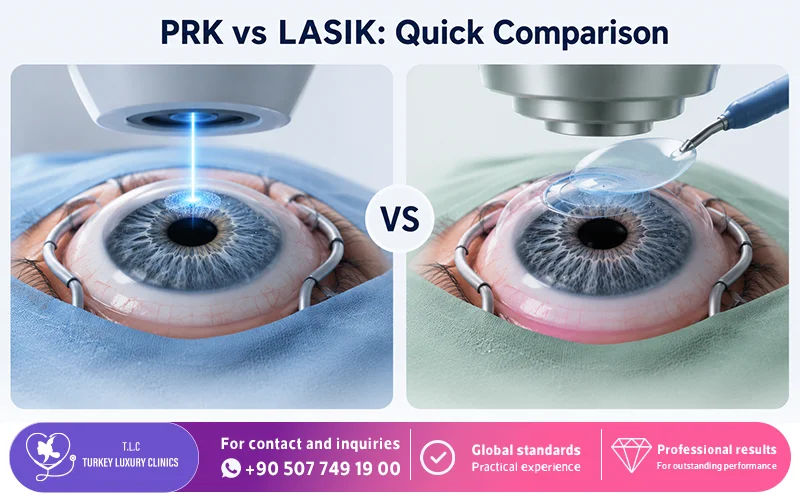
PRK vs LASIK: Quick Comparison
Feature | PRK | LASIK |
Corneal Flap | No | Yes |
Recovery Speed | Slower | Faster |
Thin Corneas | Often Preferred | Not Always Suitable |
Risk of Flap Injury | None | Present |
Long-Term Results | Excellent | Excellent |
Key Differences:
1. No Corneal Flap: PRK removes the cornea's outer surface layer instead of creating a corneal flap like LASIK.
2. Natural Surface Healing: The epithelium naturally regenerates after surgery, and a protective bandage contact lens is typically worn for several days.
3. Longer Recovery: Initial healing usually takes 3 to 5 days, and vision may take several weeks to fully stabilize.
4. No Flap-Related Complications: Because PRK does not create a corneal flap, there is no risk of flap displacement or flap injury after surgery.
5. Better for Some Patients: PRK is often preferred for patients with thin corneas, mild dry eye symptoms, active lifestyles, or occupations with a higher risk of eye trauma.
Who May Be a Good Candidate for PRK?
PRK is often recommended for patients seeking laser vision correction who are not ideal candidates for LASIK. Good candidates may include:
- Patients with thin corneas, irregular corneal surfaces, or mild dry eye symptoms, where creating a corneal flap may be less desirable.
- Individuals with active lifestyles or occupations that increase the risk of eye trauma, including athletes, military personnel, law enforcement officers, and people working in physically demanding environments. These patients may benefit from the absence of a corneal flap and the elimination of flap-related complications.
- Selected patients who require fine-tuning after cataract surgery when a small residual refractive error remains following lens implantation.
- Patients who need additional vision correction after previous LASIK surgery, particularly when creating a second corneal flap is not considered the preferred option.
What Are the Requirements for PRK Surgery?
1. Age Requirements: Candidates for PRK should generally be at least 18 years old, although many surgeons prefer patients to be over 21 years of age because vision is more likely to have stabilized by that time.
2. Eye prescription: A stable eyeglass or contact lens prescription for at least one year is typically required before surgery can be considered.
3. Intact Eye: Patients must have healthy corneas, good overall eye health, and a refractive error that falls within the range that PRK can safely and effectively treat.
4. Expectations: Equally important, candidates should have realistic expectations regarding the outcome of surgery. While PRK can significantly improve vision and reduce dependence on corrective lenses, it cannot guarantee perfect vision or complete freedom from glasses in every circumstance.
Who Is Not a Candidate for PRK?
- Patients with unstable refractive errors, meaning their prescription is still changing, are generally not considered suitable candidates.
- Individuals with very high refractive errors may also require careful evaluation, as eyes with myopia greater than -8.00 diopters or astigmatism greater than 4.00 diopters may have an increased risk of postoperative corneal haze and refractive regression.
- Certain medical conditions can also interfere with healing and affect surgical outcomes. These include some skin disorders, systemic diseases that impair wound healing, uncontrolled diabetes, and conditions associated with excessive scarring.
- Patients with corneal scars, corneal disease, advanced glaucoma, visually significant cataracts, or a history of certain eye infections may not be eligible for the procedure.
- Pregnant and breastfeeding women are generally advised to postpone PRK because hormonal changes can temporarily affect vision and healing responses.

The PRK Procedure: Step-by-Step
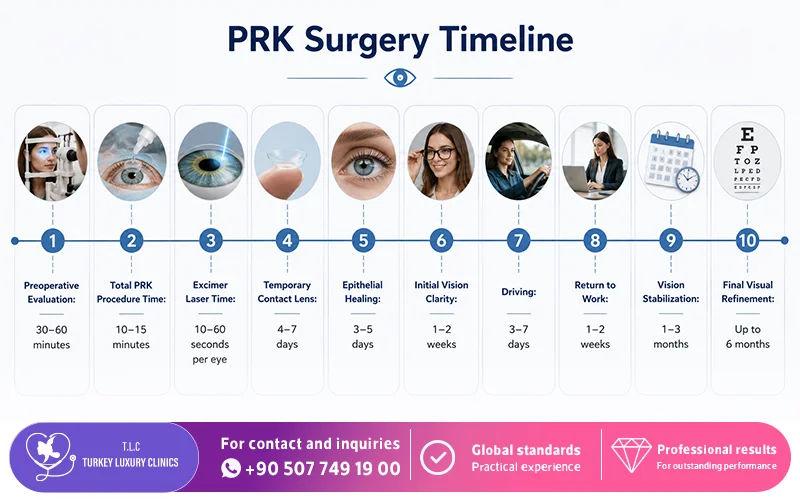
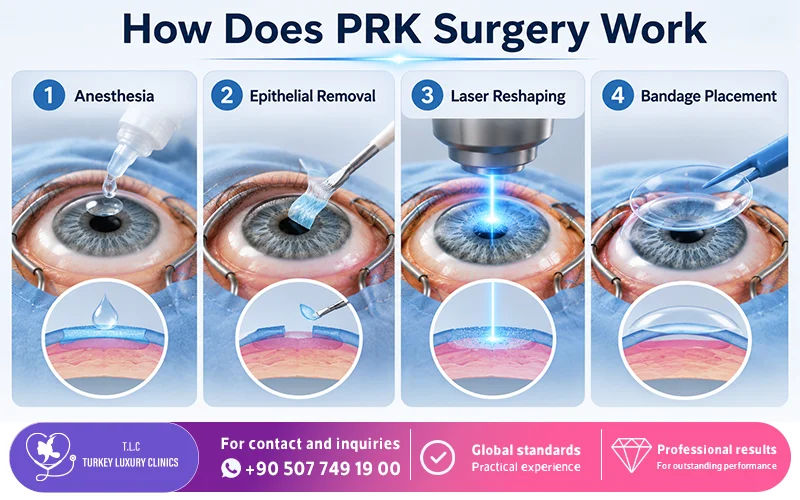
PRK is a highly efficient outpatient procedure that typically takes about 15 minutes. The surgical process follows these key steps:
- Anesthesia: Numbing eye drops are applied to prevent intraoperative pain, and an eyelid holder is placed to eliminate blinking.
- Epithelial Removal: The surgeon removes the epithelium (the thin outer cellular layer of the cornea) using a specialized brush, blade, laser, or diluted alcohol solution.
- Laser Reshaping: The patient fixates on a target light to maintain alignment while the pre-programmed excimer laser vaporizes microscopic amounts of tissue to correct the refractive error.
- Bandage Placement: A clear, protective bandage contact lens is applied over the cornea to shield the exposed surface and facilitate cell regeneration.
What Is PRK Recovery Like?
Recovery after PRK is generally slower than LASIK because the corneal epithelium must regenerate following treatment. As a result, visual recovery takes longer and short-term discomfort is typically more noticeable.
Initial recovery from PRK takes about three to four days. After that, it can still be a few weeks before your vision results are clear.
Immediately after surgery, a bandage contact lens is placed on the eye to protect the healing surface. Patients will need someone to drive them home and are generally encouraged to rest for the remainder of the day.
Most surgeons recommend taking several days away from work, while strenuous exercise and heavy physical activity should be avoided for approximately one week to prevent interference with healing.
Common PRK Recovery Symptoms
Mild to moderate discomfort is common during the first two to three days after PRK. Symptoms may include burning, tearing, foreign body sensation, and light sensitivity. Most patients can manage these symptoms with over-the-counter pain medication, although prescription medications or pain-relieving eye drops may occasionally be required. Patients should contact their ophthalmologist if pain becomes severe or does not improve as expected.
Light sensitivity is one of the most common symptoms during the first few days after surgery. Many patients find sunglasses helpful outdoors and prefer dimmer indoor lighting until the corneal surface has healed and visual comfort improves.
Post-PRK Care and Protection
Mild to moderate eye pain is common during the first 2 to 3 days and is managed using over-the-counter or prescription pain medications and eye drops. Prescribed anti-inflammatory and antibiotic drops must be used exactly as instructed to prevent complications. High-quality sunglasses are recommended outdoors for the duration advised by the surgeon to reduce UV exposure and support corneal healing.
Key Recovery Milestones
Timeline | What to Expect |
Days 1–5 | Blurry vision, tearing, light sensitivity, and a gritty sensation are common while the epithelium heals. The bandage contact lens is usually removed around days 4–7. |
Weeks 1–2 | Vision improves enough for most patients to return to work and daily activities. Mild glare, halos, or fluctuations may persist. |
Weeks 3–4 | Vision continues to sharpen and often reaches most of its final clarity, although minor fluctuations may still occur. |
Months 1–3 | Vision gradually stabilizes as the cornea remodels and heals. |
Up to 6 Months | Subtle improvements in visual sharpness, contrast sensitivity, and night vision may continue. |
Recovery Tips After PRK
To support healing and reduce the risk of complications after PRK:
- Use all prescribed eye drops exactly as directed.
- Wear UV-protective sunglasses whenever you are outdoors.
- Avoid rubbing your eyes during the healing period.
- Avoid swimming pools, hot tubs, and direct water exposure for approximately two weeks.
- Stay away from smoke, dust, and excessively dry environments when possible.
- Avoid eye makeup and facial products around the eyes during the first week.
- Do not drive until your vision is comfortable and your surgeon confirms it is safe.
PRK Success Rate and Results
PRK has a high success rate. Clinical studies show that approximately 90% of patients achieve 20/40 vision or better without glasses or contact lenses, which is sufficient for most daily activities and legal driving requirements in many countries.
Many patients achieve even sharper vision depending on their prescription, corneal characteristics, and healing response. However, individual results vary, and some patients may still require glasses for specific activities such as reading or night driving.
Read more about PRK Surgery Reviews: Real Experiences, Recovery & Results
When Does Vision Stabilize After PRK?
Vision after PRK improves in stages, with final vision stabilization is achieved between 1 and 3 months up to 6 months after PRK surgery. While functional vision often returns much sooner, the cornea continues to heal and remodel for several weeks before reaching its final visual outcome.
PRK Vision Progression Timeline
Timeline | What to Expect |
Days 1–3 | Blurred vision, tearing, burning, discomfort, and light sensitivity. |
Days 5–6 | Bandage contact lens is usually removed after epithelial healing. |
Weeks 1–2 | Functional vision improves and most patients return to routine activities. |
Month 1 | Vision fluctuations remain common; mild blur, ghosting, glare, or halos may occur. |
Months 2–3 | Vision stabilizes and night vision symptoms gradually improve. |
Up to 6 Months | Subtle improvements in visual sharpness and contrast sensitivity may continue. |
How Long Does PRK Eye Surgery Last?
The vision correction achieved with PRK is considered permanent because the excimer laser permanently reshapes the cornea. Once the cornea heals, the corrected tissue does not grow back, and the treatment itself does not wear off over time.
However, PRK cannot prevent natural age-related changes in the eyes. Patients may still develop presbyopia after age 40, cataracts later in life, or other eye conditions unrelated to the original procedure. While the corneal correction is permanent, future changes in vision may occur as part of the normal aging process.
When Does Corneal Haze Usually Develop After PRK?
Corneal haze is a temporary reduction in corneal transparency that can occur as part of the normal healing response after PRK. Corneal haze typically develops later in recovery, most commonly between one and three months after surgery.
In the vast majority of cases, corneal haze gradually improves over time. Advances in laser technology, surgical techniques, and the use of medications such as mitomycin-C have significantly reduced the incidence of clinically significant haze compared with earlier generations of PRK.
What Are the Risks of PRK Surgery?
PRK is generally safe and effective, but like any surgical procedure, it carries potential risks and side effects. Most postoperative discomfort occurs during the first three days after surgery, while delayed epithelial healing is most likely to occur during the first postoperative week. Corneal haze commonly develops between one and three months after surgery, and refractive regression typically appears several months later.
1. Glare and Halos
Some patients notice glare or halos around lights, particularly at night or in low-light environments. These symptoms are often most noticeable during the early stages of healing and usually improve as the cornea recovers.
2. Corneal Haze and Scarring
PRK can occasionally cause corneal haze or mild corneal scarring as part of the healing response. Corneal haze most commonly develops between one and three months after surgery and typically improves over time.
3. Infection
Corneal infection is an uncommon but potentially serious complication. Prompt diagnosis and treatment are essential to prevent permanent vision loss.
4. Undercorrection and Overcorrection
Some patients may experience undercorrection, where the refractive error is not fully corrected, or overcorrection, where the treatment exceeds the intended target. Glasses, contact lenses, or enhancement surgery can often address these issues if they become visually significant.
5. Dry Eye Symptoms
Temporary dry eye symptoms are common after PRK. Clinical reviews suggest that up to 50% of patients experience dryness during the first one to three months after surgery. Most cases improve as corneal nerves recover and the ocular surface stabilizes.
Rare Complications
Most PRK complications resolve without permanent visual consequences. However, rare serious complications can occur, including loss of best-corrected visual acuity, meaning vision remains worse than before surgery even with glasses or contact lenses. Blindness is considered an exceptionally rare complication.

Can a Second PRK Surgery Be Needed?
Yes, a second PRK (Photorefractive Keratectomy) surgery can sometimes be needed. These follow-up treatments are often called "enhancements" or "touch-ups" and are done to fine-tune vision if the first procedure does not fully correct the refractive error, or if your eyesight changes naturally over time such case called refractive regression
The need for additional surgery depends on factors such as the original prescription, corneal healing response, and the final visual result. Enhancement procedures are generally considered only after vision has stabilized and the surgeon determines that further correction would be beneficial.
How Much Does PRK Surgery Cost?
PRK surgery typically costs $4,400 to $7,000 for both eyes in the United States and approximately $3,800 to $7,600 for both eyes in the United Kingdom. In comparison, PRK surgery in Turkey often costs $1,000 to $2,500 for both eyes covering your surgery, airport transfers, hotel stays, translation services, and post-op medications into a single upfront price.
The final cost depends on several factors, including the surgeon's experience, the laser technology used, preoperative testing, postoperative follow-up care, and whether the treatment is purchased as part of an all-inclusive medical travel package.
PRK Surgery Cost Comparison
Country | One Eye | Both Eyes |
Turkey | $500–$1,250 | $1,000–$2,500 |
Mexico | $750–$1,500 | $1,500–$3,000 |
Canada | $1,500–$2,500 | $3,000–$5,000 |
Germany | $1,500–$3,000 | $3,000–$6,000 |
United Kingdom | $1,900–$3,800 | $3,800–$7,600 |
United States | $2,200–$3,500 | $4,400–$7,000 |
Prices are approximate and may vary depending on surgeon experience, laser technology, clinic location, and postoperative care.
Why Choose PRK Surgery in Turkey?
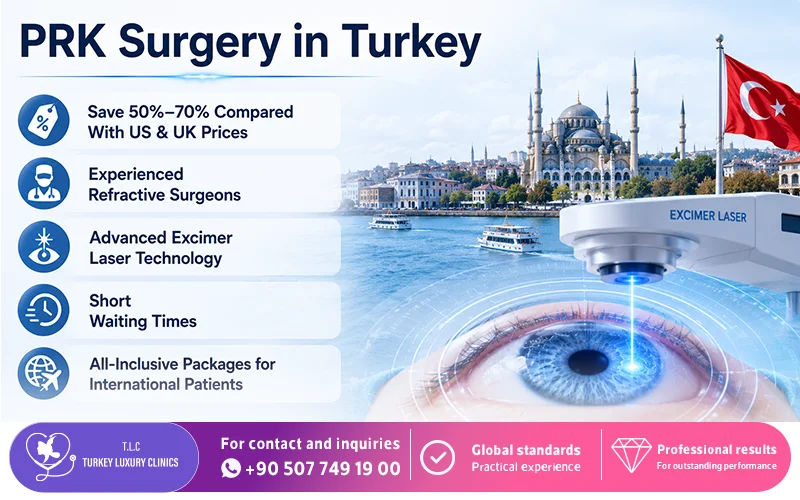
Turkey has become a leading destination for PRK surgery thanks to its combination of experienced refractive surgeons, advanced laser technology, and significantly lower costs than the US and UK.
Many clinics offer modern treatments, short waiting times, and comprehensive packages that may include accommodation, airport transfers, and postoperative care. As a result, international patients can receive high-quality vision correction while saving 50% to 70% compared with treatment in many Western countries.
Considering PRK Surgery in Turkey?
At Turkey Luxury Clinics, we help international patients connect with experienced ophthalmologists and leading eye surgery centers across Turkey. Our team assists with treatment planning, clinic selection, travel arrangements, accommodation, and ongoing patient support throughout the entire journey.
If you are considering PRK surgery and would like to learn whether you are a suitable candidate, contact Turkey Luxury Clinics for a free consultation and personalized treatment plan.
FAQs About PRK Surgery