

- How Piezo Ultrasonic Rhinoplasty Turkey Works
- Key Benefits of Ultrasonic Rhinoplasty
- Ultrasonic Rhinoplasty Cost in Turkey
- What Affects the Ultrasonic Rhinoplasty Price in Turkey
- Ultrasonic Rhinoplasty Before and After in Turkey
- Ultrasonic vs Traditional Rhinoplasty
- Who Is a Good Candidate for Ultrasonic Rhinoplasty
- What to Expect on Ultrasonic Rhinoplasty Surgery Day
- Ultrasonic Rhinoplasty Results in Turkey: What to Expect
- Ultrasonic Rhinoplasty Risks and Side Effects
- How to Choose an Ultrasonic Rhinoplasty Surgeon and Clinic in Turkey
- Is Ultrasonic Rhinoplasty in Turkey Safe?
- Plan your Ultrasonic Rhinoplasty at Turkey Luxury Clinics
Ultrasonic rhinoplasty - commonly called Piezo rhinoplasty - is an advanced nose-reshaping technique in Turkey that uses high-frequency ultrasonic vibrations instead of traditional manual tools (like chisels and hammers) to sculpt the nasal bone.
That precision is why so many patients choose Turkey, but the surgeon behind the device matters most. At Turkey Luxury Clinics, we match you with experienced rhinoplasty surgeons in Istanbul and plan every step around your face, not a template.
Below, you’ll find what the technique really does, what it costs, what recovery looks like, and how to pick a surgeon you can trust. Keep reading, and you’ll know exactly what to ask before you book.
How Piezo Ultrasonic Rhinoplasty Turkey Works
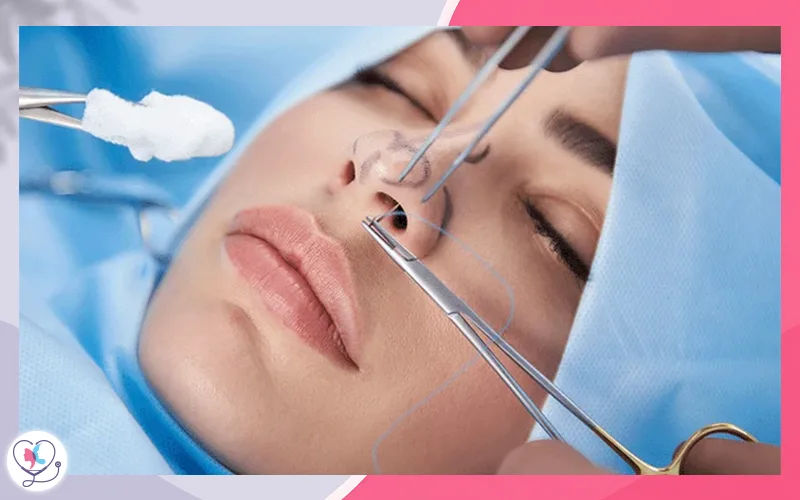
It uses high-frequency sound waves to sculpt and reshape the nasal bones with millimeter-level precision. The surgeon uses a small ultrasonic device that vibrates at high speed to cut and smooth the nasal bone. Think of it as a precise cutting pen rather than a hammer and chisel, the older method.
The device targets hard tissue like bone and does very little to skin or lining, so your surgeon can shape the nose with more control. It’s a tool, though, and the surgeon’s skill still decides the result.
In short, ultrasonic rhinoplasty changes how the bone is shaped, not what you should expect from a good surgeon. Ask how your surgeon plans your bone work, and you’ll feel far more in control from the start.
Selective Bone Shaping
Selective bone shaping means the device cuts bone while leaving nearby soft tissue alone. That’s how surgeons smooth a hump or narrow a wide bridge without roughing up the cartilage, blood vessels and nerves around it.
A cooled saline flow runs over the tip while it works, which keeps heat down. Your surgeon sees the bone directly, so each cut follows the plan you agreed on before surgery. That’s a reassuring detail.
This is also why the technique suits noses that need fine contouring, like a small bump or slightly uneven bones. Small changes are exactly where a gentle, precise tool earns its place.
Open or Closed Approach
Your surgeon can use either an open or a closed approach with ultrasonic tools. The choice depends on your nose, not on the device, so the technology doesn’t limit how your surgeon plans the operation.
Open surgery adds a tiny cut across the skin between the nostrils, which usually heals almost invisibly. Closed surgery keeps every cut inside the nose. Either way, you’ll talk through the plan before anything happens.
Key Benefits of Ultrasonic Rhinoplasty
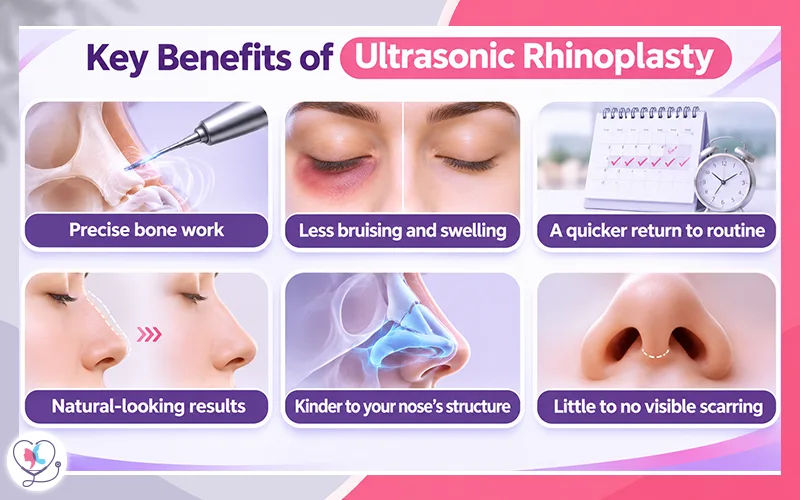
The main benefits are less trauma, finer precision and the option to fix breathing in the same surgery. In plain terms, you get careful bone work and, for many people, an easier first week:
- Precise bone work: A tiny vibrating tip cuts and smooths the nasal bone in small, controlled steps. That means clean edges, fewer unplanned fractures and a result that follows the surgeon’s plan closely.
- Less bruising and swelling: Without hammers and chisels, there’s less force on the soft tissue and small blood vessels around the bone. For many people, that means a calmer, easier first week.
- A quicker return to routine: Major swelling often settles within about a week, and many patients get back to daily activities or work in 5 to 7 days. Full healing of the nose still takes longer.
- Natural-looking results: The controlled shaping lets your surgeon gently smooth a bump, narrow a wide bridge or straighten crooked bones, so your nose looks balanced instead of overdone.
- Kinder to your nose’s structure: Protecting the tissue around the bone supports steadier healing and may lower the chance of problems later, including the need for revision surgery.
- Little to no visible scarring: Closed approaches keep every cut inside the nose, and even open surgery leaves only a tiny mark between the nostrils that usually fades well.
These advantages are real, but they aren’t magic. A great surgeon with traditional tools can still deliver a beautiful result. So weigh the technology and the surgeon together when you compare options.
Reduced Trauma
Ultrasonic rhinoplasty usually means less bruising and swelling in the first week. Because the device disturbs less tissue around the bone, fewer small vessels get damaged, and fewer bruises spread under your eyes.
Less trauma can also mean less discomfort. Many patients describe the first days as pressure and stuffiness rather than sharp pain. You’ll still have swelling, but it tends to feel more manageable.
Remember that bruising varies from person to person. Your skin, your blood vessels and the amount of bone work all play a part, so treat the benefit as a likely advantage, not a promise.
High Precision
Ultrasonic tools let your surgeon sculpt bone in tiny steps, which is why the results look smooth and symmetrical. Instead of a hard tap, each cut follows a planned line along the bridge.
That control matters most for crooked noses, wide bones and bumps on the bridge, where a few millimeters change the whole profile. A precise plan gives you a nose that looks natural, not overdone.
Dual Function: Looks and Breathing
Yes, you can improve how your nose looks and how you breathe in the same operation. Surgeons often combine ultrasonic bone work with septum correction, so you don’t need two separate surgeries.
One thing to know: the device reshapes bone, while the septum and nasal valves are fixed with standard techniques. Your surgeon handles both parts together, so you get a plan that covers looks and airflow.
Ultrasonic Rhinoplasty Cost in Turkey
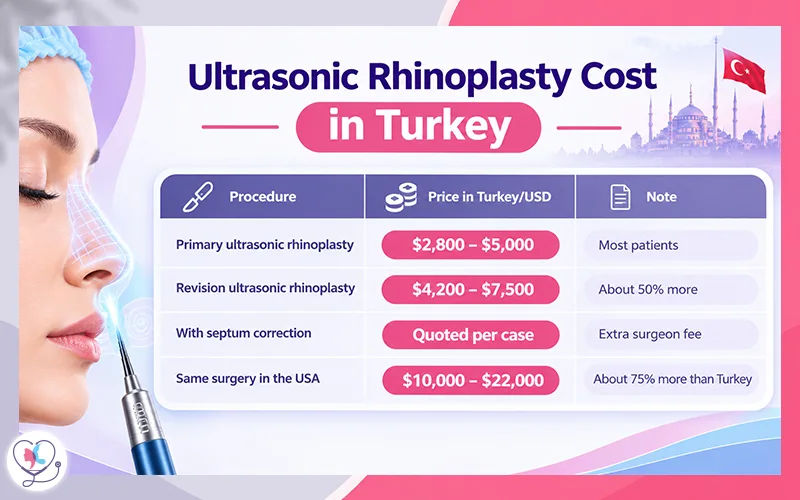
Ultrasonic rhinoplasty in Turkey typically costs between $2,800 to $5,000. That’s a fraction of what you’d pay in many Western countries, and the final quote depends on the surgeon, your city and your case.
Prices vary because every nose is different. A quote that looks cheap may leave things out, so always ask what’s included. Once you know that, comparing offers gets a lot easier.
Procedure | Typical price in Turkey | Note |
Primary ultrasonic rhinoplasty | $2,800 - $5,000 | Most patients |
Revision ultrasonic rhinoplasty | $4,200 - $7,500 | About 50% more |
With septum correction | Quoted per case | Extra surgeon fee |
Same surgery in the USA | $10,000 - $22,000 | About 75% more than Turkey |
How Much Is Ultrasonic Rhinoplasty in Turkey? Average Price Range
Most clients pay roughly $ 2,800 - $5,000 for a primary ultrasonic rhinoplasty in Turkey. Surgeons publish ranges from about $2,900 to $6,300, with top-tier names starting near $5,800 and going up from there.
Revision surgery usually costs about 50% more, because it’s harder and often needs extra cartilage. If you’ve had a nose job before, expect a higher quote and plan for it early.
Currency and timing matter too. Exchange rates can shift your final figure a little, so ask for your quote in writing and confirm which currency it’s in before you decide.
All-Inclusive Packages
- Hospital stay
- Airport transport (arrival and departure)
- Hotel accommodation
- Transfers between hotel, hospital and clinic
- Pre-surgery online consultation
- In-person consultation with the surgeon
- Nasal analysis and 3D imaging
- Pre-surgery blood tests
- Surgeon’s fee
- Anesthesia and anesthesiologist
- Operating room
- Ultrasonic (piezo) device use
- Nasal splint
- Post-surgery medication
- Nursing care
- Check-ups and splint removal in Turkey
- Interpreter or personal assistant
- 24/7 patient support
- Online follow-ups after you fly home
- Optional extras: VIP transfers and extra hotel nights
What Affects the Ultrasonic Rhinoplasty Price in Turkey
Several key medical and logistical factors move the price most:
- Surgeon’s experience and reputation: Surgeons who perform many nose surgeries each month, hold specialist certifications and are known internationally for ultrasonic techniques charge more for that experience.
- Complexity of the bone work: Smoothing a small bump takes less time and precision than narrowing a wide bridge, fixing strong asymmetry or reshaping several areas.
- Cartilage grafts: Grafts taken from the septum, the ear or, in complex cases, the rib add operating time and raise the price.
- Primary vs revision surgery: A first nose job is simpler than a revision.
- Breathing correction: Adding septum or deviated septum surgery to the cosmetic work increases the surgeon’s fee.
- Hospital and location: Large JCI-accredited private hospitals in cities like Istanbul or Ankara charge different facility fees than smaller clinics.
- Treatment-only vs all-inclusive quote: A treatment-only quote covers just the surgeon and hospital fees. An all-inclusive quote also covers general anesthesia, a short hospital stay, 5 to 6 hotel nights, VIP airport and hotel transfers and basic medication after surgery. Always check what your quote includes.
Why Ultrasonic Rhinoplasty Costs Less in Turkey
Ultrasonic (Piezo) rhinoplasty costs far less in Turkey, typically $2,800 to $5,000, reaching $5,000 at the higher end, compared with $10,000 to $22,000 in countries like the USA.
The gap comes from lower living costs, lower clinic overheads and a competitive cosmetic surgery market.
Ultrasonic Rhinoplasty Before and After in Turkey
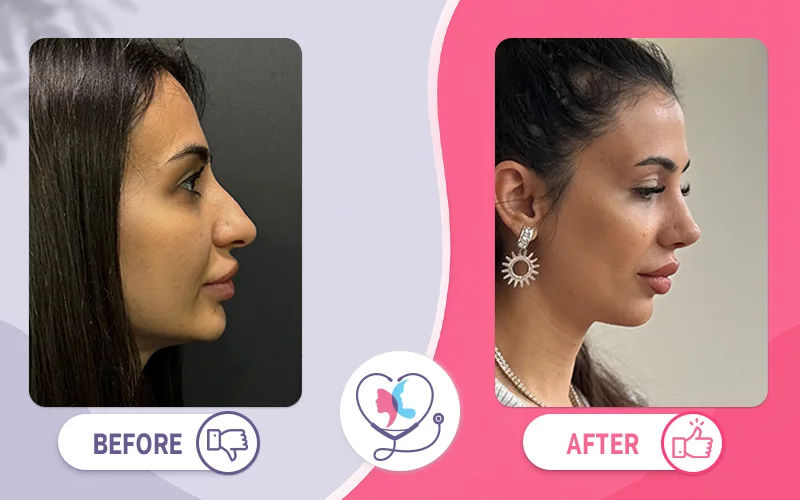
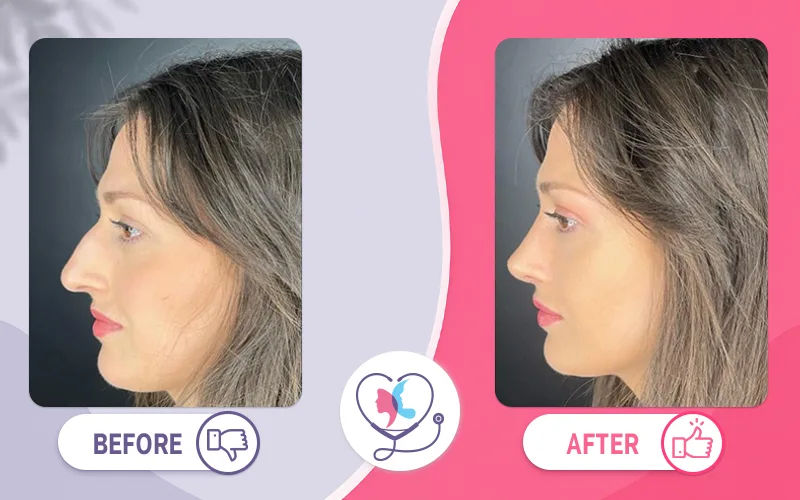
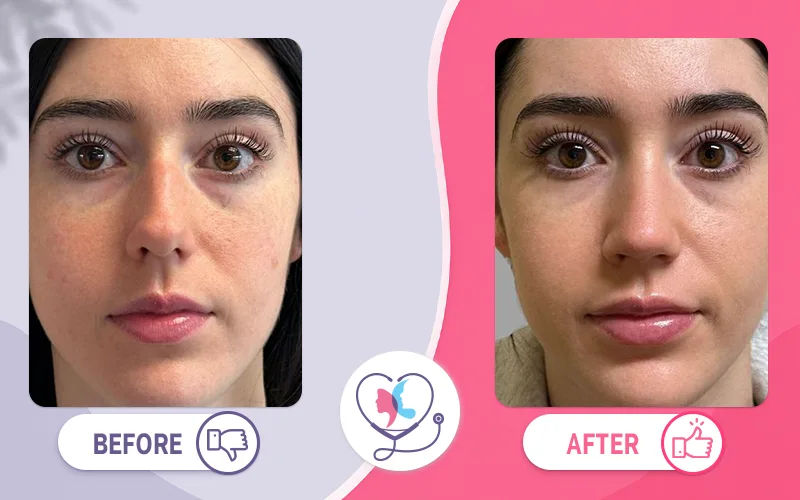
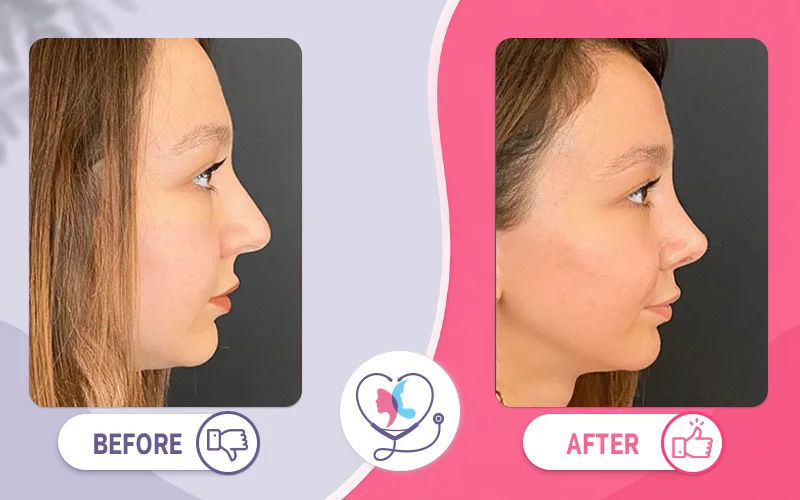
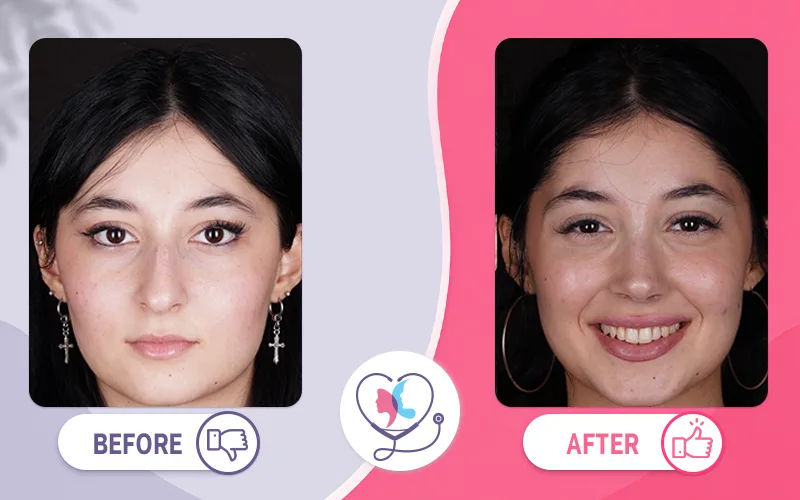
Before-and-after photos show what’s possible, but they won’t tell you which tool was used. Look for patients whose starting nose matches yours, and judge whether the result looks natural and balanced for their face.
Check the timing, too. A photo from two weeks after surgery shows swelling, not the final shape. Most noses look their best at 6 to 12 months, so ask to see results from that stage.
Ultrasonic vs Traditional Rhinoplasty
Ultrasonic (Piezo) rhinoplasty uses high-frequency sound waves to sculpt and smooth nasal bone with millimeter precision, while traditional rhinoplasty relies on manual rasps, chisels, and hammers. They differ significantly in the tools they use, how they affect tissue, and recovery timelines.
Point | Ultrasonic (Piezo) | Traditional |
Tool | Vibrating tip | Chisel and mallet |
Tissue impact | Spares soft tissue | More soft tissue trauma |
Early swelling | Often less | Often more |
Precision | Fine, controlled cuts | Depends on surgeon |
Final result | Depends on surgeon | Depends on surgeon |
Bruising and Swelling
Studies point to less bruising, swelling and pain in the first days after ultrasonic bone work. A 2024 review of 12 randomized trials covering 630 patients found significantly lower swelling and bruising, with similar operating time.
Reviewers rate the evidence as modest, and the benefit shows up mostly in the first week. Still, that’s a meaningful edge if you want a gentler start to recovery. Your final result depends on your surgeon.
What Ultrasonic Technology Can’t Do
- It can’t remove swelling completely
- It can’t speed up how long your nose takes to settle
- It can’t overcome thick skin
- It can’t stop the tip from staying puffy for months, which happens with any technique
- It works on bone, not cartilage, so tip changes still rely on standard techniques
Knowing this keeps your expectations realistic, and realistic expectations are the best way to end up happy with your result.
Who Is a Good Candidate for Ultrasonic Rhinoplasty
A good candidate for ultrasonic rhinoplasty is an individual looking to reshape or refine the bony structures of the nose using a gentler, more precise method than traditional chisels and hammers. However, if your main concern is the tip, ultrasonic tools play a smaller role.
Specific nasal concerns
You may be a good fit if you have a prominent bump on the bridge that needs reducing or smoothing. It also suits a wide, crooked or uneven bridge that needs narrowing or straightening, and revision cases where bone irregularities from a previous surgery need smoothing.
Aesthetic goals
This technique works well if you want subtle, natural-looking refinement instead of a dramatic change. It’s also a good choice if you value precise bone work that spares soft tissue, blood vessels and nerves.
General health and age
You should be in good overall health and ideally a non-smoker, since smoking slows healing and raises the risk of complications. Your facial growth should be complete, usually at 16 to 18 or older. Realistic expectations about healing and the final result matter too.
Lifestyle and recovery
If you want less bruising, swelling and downtime, ultrasonic rhinoplasty is a popular choice, especially for busy professionals and public figures.
What to Expect on Ultrasonic Rhinoplasty Surgery Day
The procedure is performed under general anesthesia or local anesthesia with sedation, focusing on precision bone-shaping using a high-frequency ultrasonic (piezo) device rather than traditional hammers and chisels.
Ultrasonic rhinoplasty usually takes two to three hours. The length depends on how much bone work and septum work your nose needs.
Before surgery, your surgeon analyzes your nose, may use imaging to plan the changes, and asks you to stop blood-thinning medication and smoking. Following these steps closely helps your surgery and healing go smoothly.
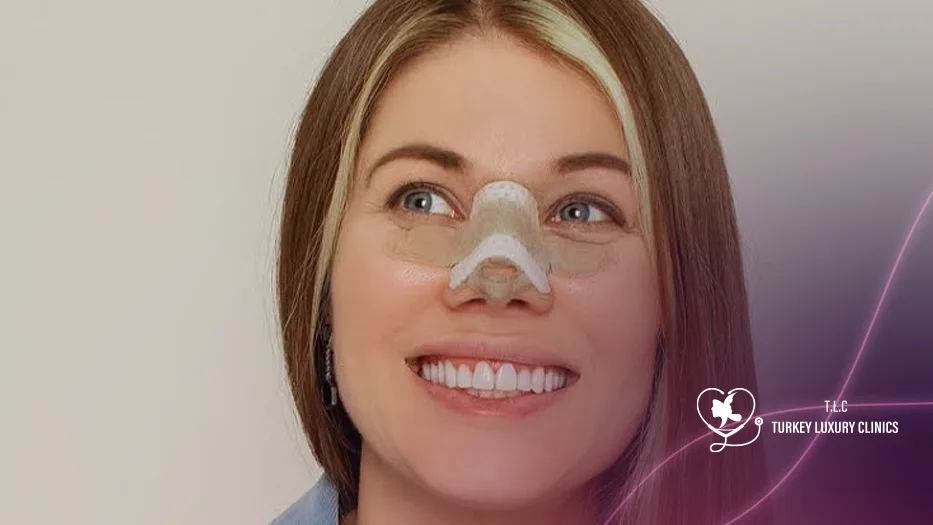
After the operation, you’ll wake up with a splint on your nose and rest under nurse care. Most patients feel groggy rather than in pain, and the team checks on you before you leave for your recovery stay.
Ultrasonic Rhinoplasty Results in Turkey: What to Expect
Expect a smoother, more balanced nose that fits your face, not a dramatically different one. Ultrasonic bone work helps refine the bridge and sides, so results tend to look natural and symmetrical.
Stage | What you’ll feel and see | What happens |
Day 1 - 3 | Mild to moderate pressure, stuffy nose, dull headache | Swelling and bruising peak around day 2 or 3, with less bruising around the eyes than with traditional methods |
Day 5 - 7 | Nose looks presentable, swelling still obvious | Surgeon removes the splint and checks healing before you fly home |
Weeks 1 - 2 | Comfortable enough for daily routine | Most people return to light work |
Weeks 6 - 12 | Swelling drops noticeably | Main shape of the nose becomes clear by month 3 |
Months 6 - 12 | Tip keeps refining | Full healing and final result |
Results unfold slowly. Early photos show swelling, and the nose keeps refining as tissues settle. Most clients are happy with their shape by month six, and the subtle final touches arrive by month twelve.
Your surgeon’s plan, your skin type and your healing all shape the outcome. Thick skin takes longer to show fine definition, so patience pays off. A candid consultation will tell you what’s realistic for your nose.
Ultrasonic Rhinoplasty Risks and Side Effects
Although ultrasonic rhinoplasty involves less soft-tissue trauma, swelling, and bruising, it is still a surgical procedure that carries standard surgical risks alongside device-specific risks. Side effects include:
- Swelling and bruising, often milder than traditional methods
- Nasal stuffiness while healing
- Gentle soreness for 24 to 48 hours, easily eased
- Temporary numbness at the tip that fades
- Rare infection or nosebleeds, kept low with proper aftercare
- Minimal, discreet scarring
- Occasional uneven healing, refined if needed
- Slightly longer, careful sculpting
How to Choose an Ultrasonic Rhinoplasty Surgeon and Clinic in Turkey
Simply, focus on technical equipment, surgeon specialization, credentials, and transparency rather than marketing. Choose a board-certified surgeon with plenty of rhinoplasty experience, preferably with ultrasonic cases. The device is only a tool, so the surgeon’s skill, judgment and eye for natural results matter most.
Look at their before-and-after photos, read patient reviews, and book at least two consultations. An online consultation is a great way to compare surgeons without leaving home, and a good clinic will welcome it.
Is Ultrasonic Rhinoplasty in Turkey Safe?
Yes, ultrasonic (Piezo) rhinoplasty in Turkey can be safe. What matters most is the surgeon, the hospital, and the follow-up care you receive, not the country itself. Choose all three carefully. Safety comes from your choices:
- Research the surgeon
- Read real patient stories,
- Share your full medical history
- Ask questions freely.
Do that, and you’re setting yourself up for a smooth, confident experience.
Aftercare is part of safety too. Make sure your clinic offers follow-up checks once you’re home, so you never have to wait alone with a question about swelling.
Plan your Ultrasonic Rhinoplasty at Turkey Luxury Clinics
You now know how ultrasonic rhinoplasty works, what it costs and what recovery looks like. The next step is finding out what it could do for your nose, and that starts with one conversation.
Every nose is different, so the best way to know if this technique suits you is a personal assessment. Our top rhinoplasty surgeons can review your photos, explain the options and give you a clear quote that lists everything included.
Message Turkey Luxury Clinics today for a no-pressure consultation. Ask every question you have, and take your time deciding. We’ll be right here to guide you at your pace.