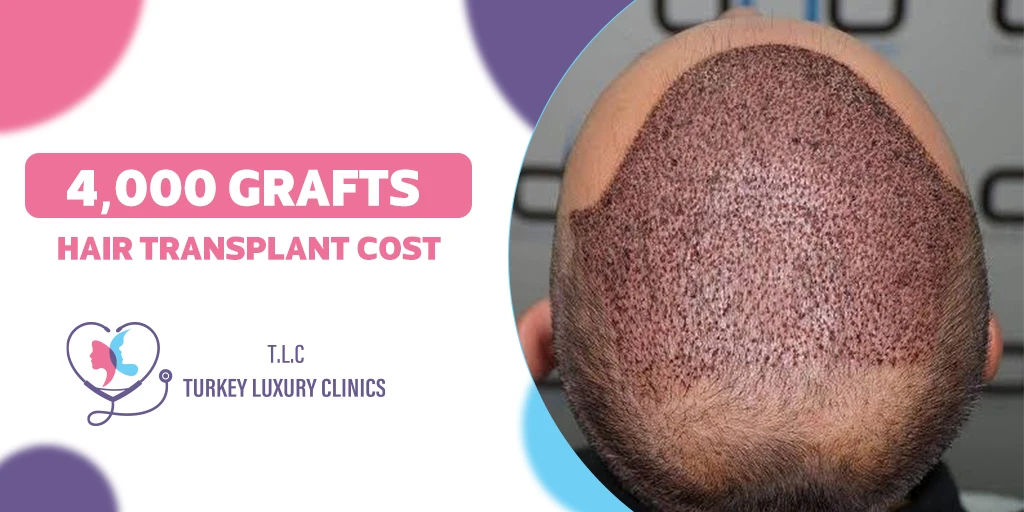


- How Much Does a 4,000-Graft Hair Transplant Cost? (2026 Prices)
- 4000 Grafts Hair Transplant Cost by Country
- 4,000 Grafts Hair Transplant Cost in the USA
- 4,000 Grafts Hair Transplant Cost in the UK
- 4,000 Grafts Hair Transplant Cost in Turkey
- 4,000-Graft Hair Transplant Cost by Technique
- Factors that Affect the Cost of a 4,000-Graft Hair Transplant
- Who Is a Good Candidate for a 4,000-Graft Hair Transplant?
- How Many Hairs Are in 4,000 Grafts?
- How Much Area Can 4,000 Grafts Cover?
- What Are Typical Areas Covered by 4,000 Grafts?
- Norwood Stage and 4,000 Grafts
- Can 4,000 Grafts Cover the Entire Scalp?
- Is a 4,000-Graft Hair Transplant Considered a Mega Session?
- How Long Does a 4,000-Graft Hair Transplant Procedure Take?
- Is a 4,000-Graft Hair Transplant Performed in One Session or Split Sessions?
- Is It Safe to Get 4,000 Grafts in One Session?
- Recovery After a 4,000-Graft Hair Transplant
- 4,000-Graft Hair Transplant Results Timeline
- How Successful Is a 4,000-Graft Hair Transplant?
- 4,000 Grafts Hair Transplant Before & After Photos
- Is a 4,000-Graft Hair Transplant Worth the Cost?
- Get a Personalized 4,000-Graft Hair Transplant Quote in Turkey
- FAQs About 4000 Grafts Hair Transplant Cost
The average cost of a 4,000-graft hair transplant ranges from $2,200 to $4,500 in Turkey and approximately $12,000 to $20,000 in the United States, United Kingdom, Canada, and much of Europe.
While Western clinics usually charge per graft, Turkish clinics commonly offer fixed-price packages that include the procedure, hotel accommodation, airport transfers, medications, and postoperative care.
A 4,000-graft hair transplant is considered a large or mega-session that takes around 7 to 10 hours and may be divided into 2 sessions. It fits patients with moderate to advanced hair loss who require extensive restoration across the hairline, frontal scalp, mid-scalp, and part of the crown.
Because of the larger graft count, the procedure requires more surgical time, greater donor planning, and a higher overall investment than smaller hair transplants.
For many patients with Norwood Stage IV–VI hair loss, 4,000 grafts are enough to achieve substantial cosmetic improvement in a single procedure. However, patients with extensive Norwood VII baldness may still require additional grafts or staged procedures to restore the entire scalp.
How Much Does a 4,000-Graft Hair Transplant Cost? (2026 Prices)
A 4,000-graft hair transplant costs $2,200–$4,500 in Turkey, $12,000–$20,000 in the United States, and $12,000–$18,000 in the United Kingdom.
In the US, UK, Canada, and most of Europe, you pay per graft, usually $3–$5 each for a session this size, so every graft adds to the bill. At $4 per graft, 4,000 grafts come to $16,000, and that's often before consultations, medications, and follow-up visits.
Clinics in Turkey charge one fixed package price that usually covers the surgery, hotel stay, airport transfers, medications, and aftercare.
The cost varies by technique. Standard FUE sits at the lower end, around $2,200–$3,500 in Turkey. Sapphire FUE and DHI take longer and need specialized tools, so they push the price up to $4,500 in Turkey and as much as $22,000 in the US. An experienced surgeon who handles every step of the procedure, or a package with extra hotel nights or PRP, will also raise the total.
4000 Grafts Hair Transplant Cost by Country
Country | Average Cost per Graft (for 4,000 Grafts) | Estimated Cost for 4,000 Grafts |
Turkey | $0.55–$1.13 | $2,200–$4,500 |
United States | $3.00–$5.00 | $12,000–$20,000 |
United Kingdom | $3.00–$4.50 | $12,000–$18,000 |
Canada | $3.00–$4.50 | $12,000–$18,000 |
Australia | $3.00–$4.25 | $12,000–$17,000 |
Germany | $3.00–$4.00 | $12,000–$16,000 |
Large procedures become significantly more expensive in countries where clinics charge per graft, whereas Turkish clinics usually offer fixed-price packages regardless of minor variations in graft count. The per-graft figures above are the total divided by 4,000; many clinics list higher rates for small sessions and lower them as the graft count goes up.
What Is Included in the Price?
The quoted price for a 4,000-graft hair transplant varies considerably between countries.
In the United States and the United Kingdom, 4,000-graft hair transplant price quotations often include only the surgical procedure, while consultations, medications, PRP therapy, laboratory tests, anesthesia, and follow-up appointments may be charged separately.
By contrast, most Turkish clinics offer all-inclusive packages designed for international patients, typically combining accommodation, airport transfers, interpreter services, medications, and postoperative care into a single transparent price. See below what is included in the all-inclusive hair transplant packages in Turkey.
4,000 Grafts Hair Transplant Cost in the USA
A 4,000-graft hair transplant in the United States typically costs between $12,000 and $20,000. Clinics list $3.00–$8.00 per graft, but a session this large is usually priced near the lower end.
Prices are generally highest in metropolitan areas such as New York, Los Angeles, and San Francisco, where surgeon fees and operating costs are significantly higher. Most clinics also bill consultations, PRP therapy, medications, and follow-up appointments separately.
Because hair transplantation is considered an elective cosmetic procedure, health insurance rarely covers the cost, except in selected reconstructive cases.
4,000 Grafts Hair Transplant Cost in the UK
A 4,000-graft hair transplant in the United Kingdom generally costs between £9,000 and £14,000 (approximately $12,000–$18,000). Most clinics calculate the total price per graft, making larger procedures substantially more expensive.
Clinics in London generally charge more than those elsewhere in the UK because of higher operating expenses and surgeon fees. Many quotations exclude PRP therapy, medications, consultations, and extended postoperative care, so patients should always request a detailed breakdown before booking.
4,000 Grafts Hair Transplant Cost in Turkey
A 4,000-graft hair transplant in Turkey typically costs between $2,200 and $4,500, making it one of the most cost-effective destinations worldwide for large hair transplant sessions. Rather than charging per graft, most Turkish clinics provide fixed-price packages that include accommodation, transfers, medications, interpreter services, and postoperative follow-up.
A 4,000-graft hair transplant in Turkey often costs 60–85% less than the same procedure in the United States or the United Kingdom. The lower price is driven primarily by economic and operational advantages, not by transplanting fewer grafts.
Lower prices do not automatically indicate lower quality. Patients should evaluate surgeon qualifications, clinic accreditation, physician involvement, and verified before-and-after results rather than choosing a provider based on price alone.
What's Included in Turkey 4,000-Graft Hair Transplant Packages?
Most international packages typically include:
- Preoperative consultation
- Digital scalp and donor analysis
- Up to 4,000 grafts
- FUE, Sapphire FUE, or DHI procedure
- Local anesthesia
- Surgeon and medical team fees
- Hairline design
- Blood tests
- Medications
- Medical shampoo and aftercare kit
- Hotel accommodation
- VIP airport transfers
- Clinic transportation
- Interpreter services
- Postoperative follow-up
- PRP therapy (when included)
Thinking about a 4,000-graft hair transplant in Turkey? Request a personalized treatment plan to compare surgeons, techniques, package inclusions, and the total cost based on your pattern of hair loss and donor availability.
4,000-Graft Hair Transplant Cost by Technique
Technique | USA | Turkey |
FUE | $12,000–$20,000 | $2,200–$3,500 |
Sapphire FUE | $13,000–$21,000 | $2,500–$4,000 |
DHI | $14,000–$22,000 | $2,800–$4,500 |
Robotic FUE | $15,000–$22,000 | Limited availability |
FUT | $10,000–$16,000 | Rarely offered |
Premium techniques generally increase the cost because they require greater surgical precision, longer operating times, and specialized equipment, rather than because they transplant more grafts.
Factors that Affect the Cost of a 4,000-Graft Hair Transplant
Several factors determine the final cost of a 4,000-graft hair transplant.
- Technique: DHI, Sapphire FUE, and robotic-assisted FUE generally cost more than standard FUE or FUT because they require greater surgical precision and specialized equipment.
- Country: Clinics in the US, UK, and Canada usually charge per graft, whereas Turkey offers fixed-price packages.
- Surgeon's Experience: Board-certified surgeons with extensive experience and consistently documented results usually charge premium fees.
- Donor Hair Quality: Patients with limited donor density, previous transplants, or significant scalp scarring may require more complex planning and longer surgical times.
- Package Inclusions: Hotel accommodation, airport transfers, medications, PRP therapy, translator services, and follow-up care may or may not be included in the quoted price.
- Clinic Reputation: Accredited clinics with experienced surgical teams, modern facilities, and strong before-and-after portfolios generally command higher prices.
Who Is a Good Candidate for a 4,000-Graft Hair Transplant?
A 4,000-graft hair transplant is generally recommended for patients with Norwood Stage IV to VI hair loss who require extensive restoration of the hairline, frontal scalp, mid-scalp, and part of the crown. Ideal candidates should have stable hair loss and good donor hair density to safely harvest a large number of grafts while preserving donor reserves for potential future procedures. If FUT is planned, good scalp laxity is needed as well.
You may be a good candidate if you:
- Have Norwood Stage IV–VI hair loss.
- Have stable or slowly progressing hair loss.
- Have healthy donor hair at the back and sides of the scalp.
- Are in good overall health with no active scalp disease or uncontrolled medical conditions.
- Have realistic expectations about the achievable density and coverage.
Patients with poor donor density, active inflammatory scalp disorders, or rapidly progressing hair loss may require medical treatment first or a different surgical strategy.
How Many Hairs Are in 4,000 Grafts?
A 4,000-graft hair transplant typically contains 8,500 to 10,000 individual hairs, although the exact number depends on the natural composition of each follicular unit. Every graft may contain one, two, three, or occasionally four hairs, meaning the total hair count varies from patient to patient.
Surgeons strategically distribute different graft types throughout the scalp. Single-hair grafts are commonly placed along the frontal hairline to create a soft, natural appearance, while double- and triple-hair grafts are used behind the hairline to maximize density and overall coverage.
Average Hair Count in 4,000 Grafts
Follicular Unit Type | Number of Hairs |
Single-hair graft | 1 hair |
Double-hair graft | 2 hairs |
Triple-hair graft | 3 hairs |
Average Total (4,000 grafts) | Approximately 8,500–10,000 hairs |
The exact number of hairs depends on your genetics, ethnicity, and the natural distribution of follicular units within the donor area.
How Much Area Can 4,000 Grafts Cover?
A 4,000-graft hair transplant can typically cover approximately 80–120 cm² of the scalp, depending on the desired density, hair characteristics, and surgical planning. For most patients, this is enough to restore the hairline, frontal scalp, and much of the mid-scalp, or to treat a combination of the frontal scalp and a moderately thinning crown.
However, 4,000 grafts are generally not sufficient to restore a completely bald scalp from front to back at a high natural density. Patients with extensive Norwood Stage VI or VII hair loss often require additional grafts or staged procedures to achieve full scalp restoration.
What Are Typical Areas Covered by 4,000 Grafts?
For most patients, 4,000 grafts are enough to restore the hairline, frontal scalp, mid-scalp, and part of the crown, making them a common choice for Norwood Stage IV–VI hair loss. How the grafts are shared out depends on where you've lost the most hair.
Hairline and frontal scalp: If the front is completely bald and the hairline has receded deeply, all 4,000 grafts can go to the front. This gives the highest density in the area people notice first, with soft single-hair grafts at the edge and fuller grafts behind it.
Frontal scalp and mid-scalp: This is the most common plan. Most grafts go to the hairline and front, and the rest extend coverage back over the top of the head, with density easing off gradually so the result blends naturally.
Frontal scalp and crown: Both areas draw from the same donor supply. A large bald crown can use a big share of the grafts, which means less density at the front, so many surgeons rebuild the front first and treat the crown in a later session.
Front, mid-scalp, and crown together: This works best when some native hair is still there. Grafts placed among thinning hair look much fuller than the same number spread over a completely bald scalp.
Norwood Stage and 4,000 Grafts
Norwood Stage | Is 4,000 Grafts Usually Enough? | Typical Outcome |
Stage III | Yes | Restores the hairline and frontal scalp with high density. |
Stage IV | Yes | Provides excellent coverage across the hairline, frontal scalp, and most of the mid-scalp. |
Stage V | Usually | Restores the frontal and mid-scalp with moderate coverage of the crown, depending on the desired density. |
Stage VI | Usually Not | Prioritizes the hairline and frontal scalp, but additional grafts are often needed for complete crown coverage. |
Stage VII | No | A larger graft count or staged procedures are typically required to achieve full scalp restoration. |
Can 4,000 Grafts Cover the Entire Scalp?
Covering the entire scalp using 4,000 grafts depends on the size of the balding area, the desired hair density, and the availability of donor hair.
For many patients with Norwood Stage IV or V hair loss, 4,000 grafts can provide excellent coverage across the hairline, frontal scalp, mid-scalp, and part of the crown, creating a natural-looking improvement.
Patients with advanced Norwood VI or VII hair loss usually require more than 4,000 grafts to achieve full scalp coverage. In these cases, surgeons often prioritize rebuilding the hairline and frontal scalp first, as these areas have the greatest cosmetic impact, before addressing the crown in a second procedure if necessary.
Is a 4,000-Graft Hair Transplant Considered a Mega Session?
Yes. A 4,000-graft hair transplant is widely considered a mega session because it involves transplanting a large number of follicular units during a single treatment. In general, procedures involving approximately 3,500 to 5,000 or more grafts are classified as mega sessions, making them suitable for patients with moderate to advanced hair loss who require extensive scalp restoration.
How Long Does a 4,000-Graft Hair Transplant Procedure Take?
A 4,000-graft hair transplant typically takes 7 to 10 hours to complete, although the exact duration depends on the surgical technique, graft quality, donor characteristics, and the size of the treatment area. Most procedures are performed under local anesthesia, allowing patients to remain awake while taking short breaks throughout the day.
Is a 4,000-Graft Hair Transplant Performed in One Session or Split Sessions?
A 4,000-graft hair transplant can be performed safely in one session, as long as the patient has a dense, healthy donor area that can spare that many grafts, and an experienced team performs it. The procedure takes a full day, usually around 7 to 10 hours.
However, many surgeons recommend splitting the procedure over 2 consecutive days, so the grafts spend less time outside the body and both the patient and the team avoid one very long day.
In some cases, the surgeon separates the work into 2 procedures several months apart, usually about a year, to let the donor area heal, see how the first grafts grow, and decide how many more grafts can safely be taken.
Is It Safe to Get 4,000 Grafts in One Session?
Despite the name, a mega session is not inherently riskier when performed by an experienced hair transplant surgeon. At this size, though, two risks need extra care: overharvesting the donor area and a lower graft survival rate. Both come down to the surgeon's planning and how fast the team works.
Risk of Overharvesting
One of the biggest risks is taking too many grafts from the donor area, which leaves thin, patchy, or "moth-eaten" spots at the back of the head. Since extracted follicles never grow back in the same place, that damage is permanent. It also affects your future options.
Most people have roughly 6,000 to 7,000 harvestable grafts in their lifetime, so one 4,000-graft session uses more than half of that supply. If your hair loss keeps progressing, there may be little left for a second procedure.
Lower Graft Survival
Another risk is a lower graft survival rate, which directly affects the success of your procedure. Grafts are living tissue, and the longer they stay outside the body, the fewer of them grow.
Recovery After a 4,000-Graft Hair Transplant
- Visible healing: Most of the visible healing, including the redness, scabs, swelling, and tingling, after a 4,000-graft hair transplant happens in the first two weeks, and patients with desk jobs are usually back at work within 7 to 10 days.
- First 3 days: The first three days are the most uncomfortable. Your scalp will feel tight and tender, and swelling often spreads to the forehead and around the eyes, usually peaking on day 2 or 3. Sleep with your head raised, avoid bending over, and keep your hands off the grafts. The clinic usually does your first wash a day or two after surgery.
- Days 4–10: From day 4 to day 10, the swelling goes down and small scabs form around each graft. They can itch, but scratching or picking them can pull grafts out. Gentle washing, the way your clinic shows you, softens them, and most fall off on their own by day 10 to 12. By then the redness is fading and the donor area feels almost normal. FUT patients have their stitches removed around this time.
- From the second week: Light walking is fine from the second week. Leave the gym, swimming pools, saunas, and direct sun for about a month, and wear only a loose hat over the recipient area for the first 14 days.
- When to call your clinic: Call your clinic right away if you have a fever, bleeding that won't stop, pain or redness that keeps getting worse, or any pus.
Side Effects During Recovery
As with any hair transplant, you may have swelling, itching, and temporary shock loss. Infection is rare, seen in under 1% of FUE cases, and skin necrosis can rarely happen when grafts are packed too densely. An unnatural hairline or uneven density usually comes down to poor design and planning, so look closely at the surgeon's previous results.
4,000-Graft Hair Transplant Results Timeline
Final results from a 4,000-graft hair transplant take about 12 months to show, and the crown can take up to 18.
The first weeks can be discouraging. Between weeks 2 and 6, the transplanted hairs fall out. This is shock loss, and it's expected: the hair shaft sheds while the root stays in the scalp and starts a new growth cycle. Some patients also lose a little native hair around the grafts, and it grows back over the following months.
Time After Surgery | What You'll See |
Weeks 2–6 | Transplanted hairs shed, and the scalp looks close to how it did before surgery |
Month 3 | First fine, thin new hairs appear, often patchy |
Months 4–6 | Growth speeds up; by month 6, around half of the new density is visible |
Months 6–9 | Hair thickens and the change becomes clearly noticeable |
Month 12 | Most patients see close to their final result |
Months 12–18 | The crown and slower areas finish maturing |
A transplant protects the area it treats, while the native hair around it can keep thinning. That's why many surgeons recommend minoxidil or finasteride after surgery, so the result keeps looking full over the years.
How Successful Is a 4,000-Graft Hair Transplant?
With an experienced team, 90–95% of grafts survive and grow. A study of 273 men who underwent 3,000 to 6,000 grafts in a single megasession using the FUE technique reported a similar result, with more than 93% of grafts growing successfully. The study also noted that “compared with multi-stage hair transplantation, FUE megasession has the advantages of reducing operation frequency and overall surgery duration.”
The biggest factor is how quickly and professionally the grafts are handled during harvesting and grafting. Grafts start to weaken once they leave the scalp, so the faster the team places them, the more of them survive. Gentle handling and keeping the grafts cold and moist help too.
Success also depends on careful donor area management. Overharvesting the donor area or prioritizing graft quantity over long-term planning can compromise future procedures and the final cosmetic outcome.
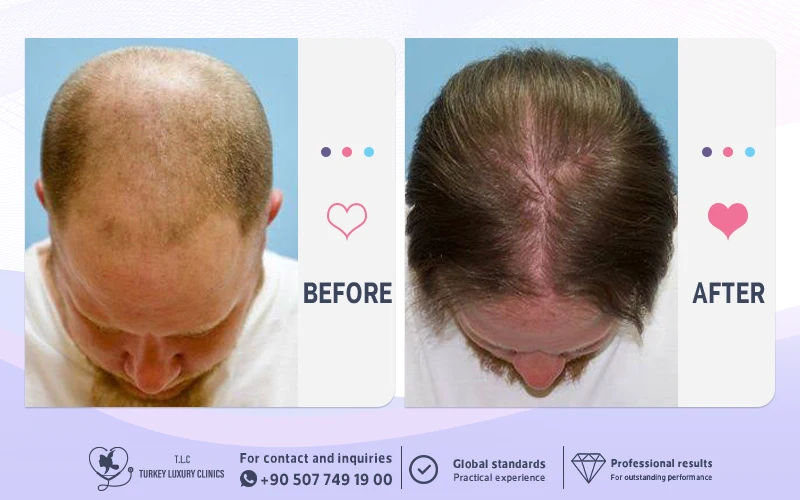
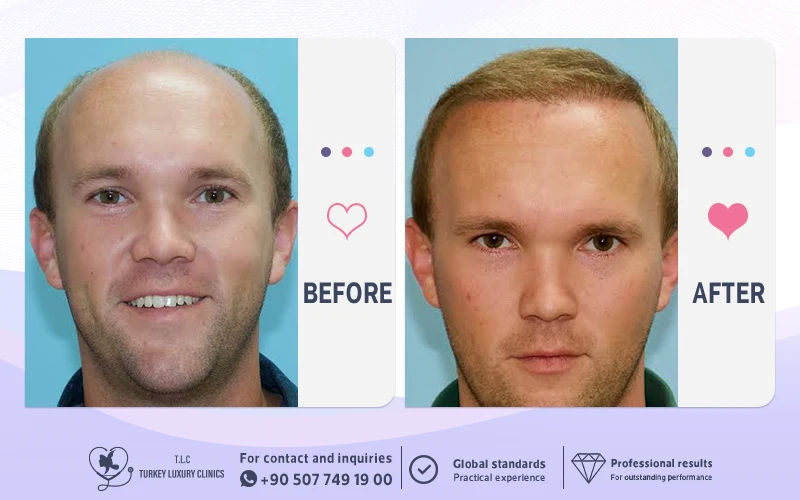
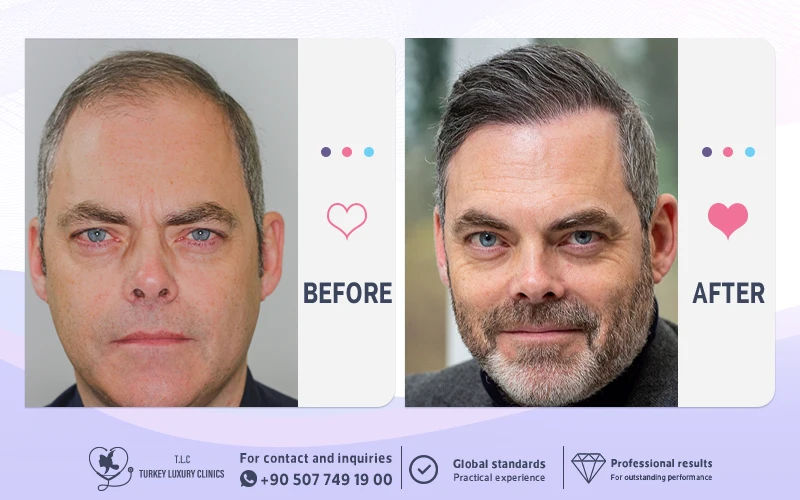
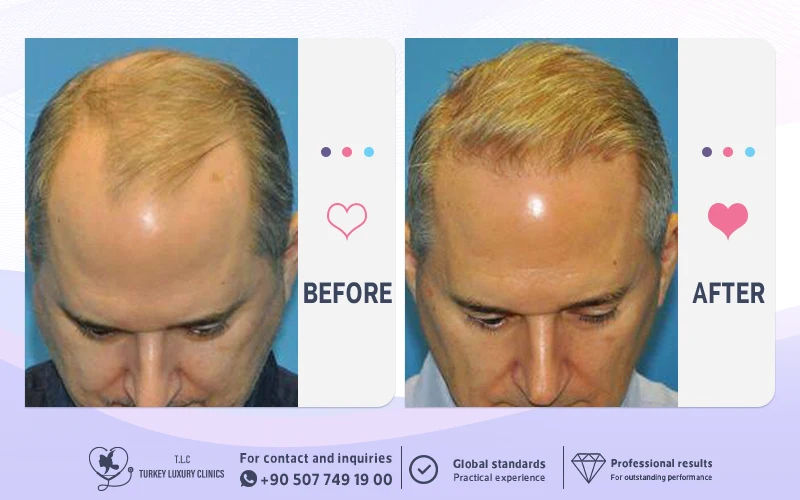
4,000 Grafts Hair Transplant Before & After Photos
Is a 4,000-Graft Hair Transplant Worth the Cost?
A 4,000-graft hair transplant can be worth the cost for patients with moderate to advanced hair loss who need substantial restoration across the hairline, frontal scalp, mid-scalp, or part of the crown. Because this graft count can create a major visual improvement in one large procedure, it may offer better overall value than completing multiple smaller sessions.
However, value depends on more than the quoted price. Patients should compare the surgeon's experience, donor-area management, verified before-and-after results, the level of physician involvement, and what is included in the package. A lower-cost procedure is only worthwhile when it protects the donor area and delivers a realistic long-term treatment plan.
Get a Personalized 4,000-Graft Hair Transplant Quote in Turkey
If you are considering a 4,000-graft hair transplant in Turkey, the first step is a personalized assessment of your hair-loss pattern and donor area. The recommended graft count, surgical technique, and final price may vary depending on the size of the treatment area, desired density, donor hair quality, and whether the procedure should be completed in one day or divided over two sessions.
At Turkey Luxury Clinics, each case is reviewed individually to provide a clear treatment plan and transparent quotation. Packages may include the procedure, hotel accommodation, airport and clinic transfers, medications, interpreter support, and postoperative follow-up.
Send your scalp photos to receive a free online assessment, estimated graft count, recommended technique, and personalized 4,000-graft hair transplant quote in Turkey.
FAQs About 4000 Grafts Hair Transplant Cost