

- Ear Pinning Before and After Photos
- Ear Pinning Before and After
- Otoplasty Before and After Photos
- Otoplasty Before and After
- How Do Ears Look Before Otoplasty?
- Otoplasty Results
- Otoplasty Recovery Pictures
- Book Your Otoplasty Consultation Today with Turkey Luxury Clinics
- FAQs About Ear Pinning Before and After
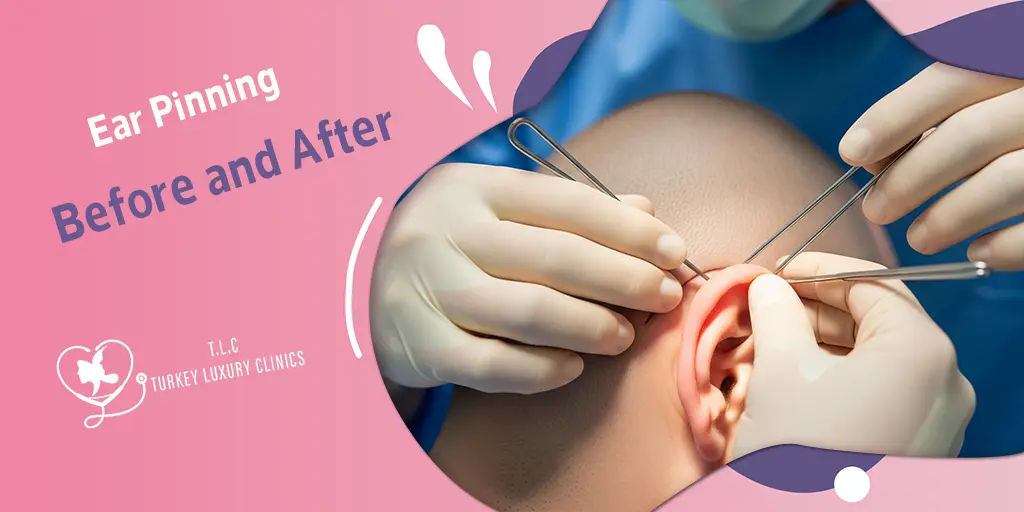
Ear pinning before and after photos, along with other otoplasty ear surgery before and after, clearly illustrate the transformation achieved through ear plastic surgery.
These images help patients understand expected results, recovery timelines, and scar placement, offering a realistic view of what otoplasty can achieve.
Whether you are considering otoplasty for yourself or for a child over the age of four, these before-and-after photos help you understand what to expect and visualize the potential transformation with confidence.
Otoplasty addresses a range of aesthetic ear concerns, including protruding ears, asymmetry, abnormal size, very large or very small, and congenital ear deformities such as lop ear, cupped ear, or shell ear.
By reshaping or repositioning the outer ear, it improves facial harmony, creates a more balanced appearance, and often boosts self-esteem.
Ear Pinning Before and After Photos
Ear Pinning Before and After
Before ear pinning (otoplasty), ears often appear protruding or misshapen, extending more than 2 centimeters from the head. This is usually caused by underdeveloped cartilage folds or an enlarged conchal bowl, preventing the ears from lying close to the scalp. While this congenital condition does not affect hearing, it can significantly impact confidence and self-esteem.
Ear pinning is a surgical procedure that corrects protruding ears by reshaping or repositioning the ear cartilage, thereby bringing the ears closer to the head while maintaining a natural contour. The goal is not to flatten the ears, but to restore balance and symmetry in proportion to the face. It can be performed for both adults and children over 4 years.
After ear pinning, patients can expect temporary swelling and mild bruising, which are usually concealed by protective bandages during the early recovery phase.
Ear pinning results become apparent immediately; however, as healing progresses over the following weeks and swelling gradually subsides, the ears become more clearly positioned closer to the head, achieving a balanced and natural appearance. Final results typically become visible within 3 to 6 months and are considered permanent.
The best ear pinning results look natural, symmetrical, and balanced, with the ears positioned at a subtle angle, typically around 15–20 degrees, close to the head. This achieves a more proportional appearance without drawing attention, with well-hidden scars located behind the ear and long-lasting results after full healing.
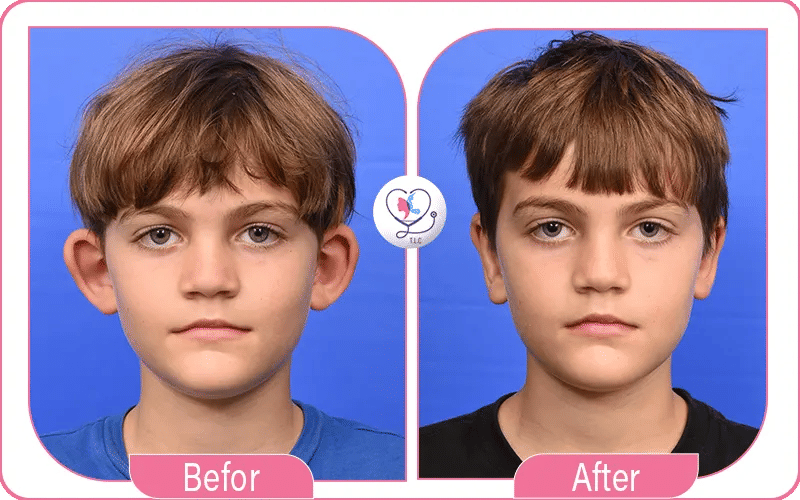
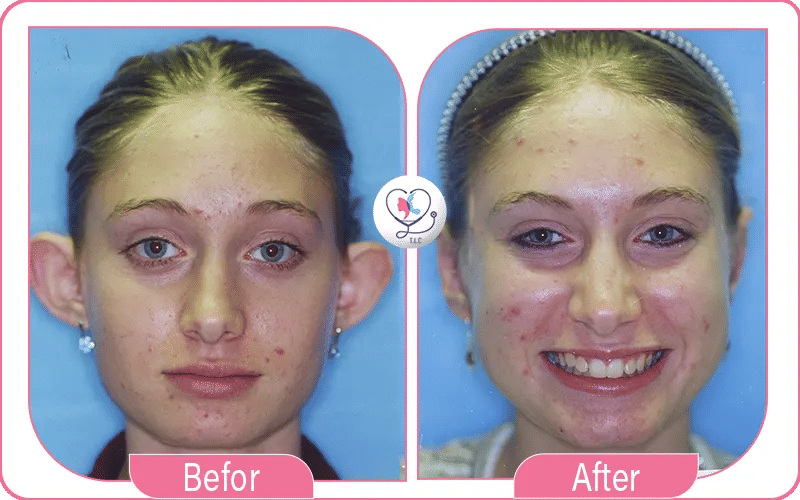
Ear pinning before and after photos commonly show a clear reduction in ear prominence, improved symmetry between both ears, smoother contours, and a more proportionate facial profile.
These transformations enhance overall facial harmony without changing the patient’s natural identity. While early recovery may involve mild swelling, the outcome reflects a subtle, natural-looking correction rather than an overcorrected or tightly pinned appearance.
Otoplasty Before and After Photos
Otoplasty Before and After
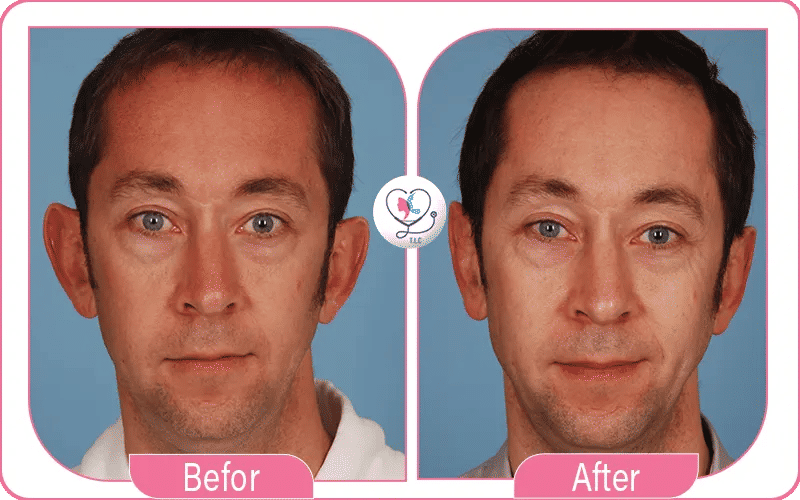
Otoplasty before and after results typically show a noticeable improvement in ear position and symmetry. The most common visible changes include a reduced ear protrusion, a more natural angle between the ear and head, and better balance between both ears. While the ear shape itself usually remains the same, its position becomes less prominent, creating a more harmonious facial appearance.
Before and after otoplasty images also highlight how subtle adjustments can make a significant difference without altering facial identity. Well-performed ear pinning aims for natural-looking results rather than an overly “pinned back” appearance.
Otoplasty reviews are overwhelmingly positive, with patients loving the natural-looking results, increased confidence, and the ability to wear hair in different styles, though some experience temporary tightness, soreness, or numbness during recovery, with high satisfaction rates reported for correcting prominent or asymmetric ears to create a more balanced look.
How Do Ears Look Before Otoplasty?
Before otoplasty, ears often appear prominent or “stick out” due to a lack of natural inner folding or an oversized bowl-like cartilage that pushes the ear outward. This can make the ears look disproportionate to the face, sometimes appearing larger than normal or lacking smooth, natural curves. In some cases, the upper part of the ear may fold forward, giving the ear a drooping or unstructured appearance.
Common ear appearance features before otoplasty include:
- Protruding ears: The ears extend more than 2 cm from the head, making them appear noticeably prominent.
- Poorly defined upper curve: The natural upper fold of the ear appears flat or underdeveloped, causing the ear to flare outward rather than curve smoothly toward the head.
- Excessive inner cartilage: The central bowl-like area of the ear is more pronounced, pushing the entire ear away from the scalp.
- Forward-folding upper ear: The top portion of the ear bends forward, creating a hooded or drooping appearance.
- Visible asymmetry: One ear may differ in shape, size, or position compared to the other, disrupting facial balance.
- Overall appearance: The ears may seem disproportionately large in relation to the face, often leading to feelings of self-consciousness or discomfort in social situations.
Otoplasty Results
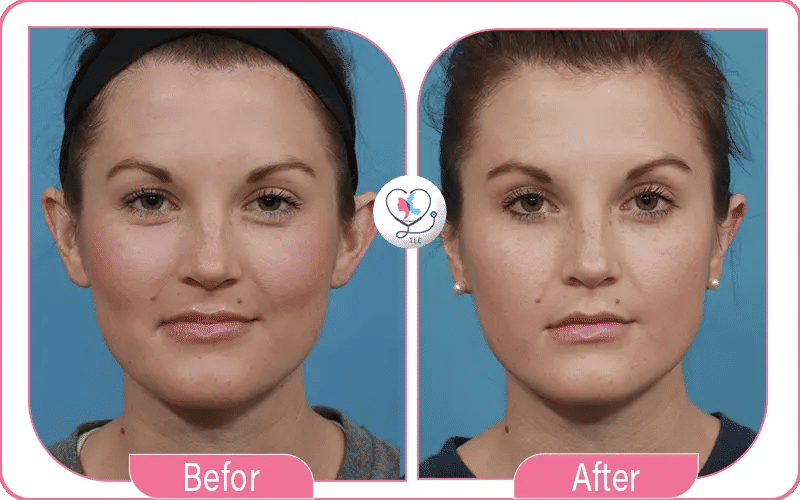
Otoplasty results are generally considered permanent, providing a significant improvement in ear appearance by bringing protruding ears closer to the head or reshaping them.
Ear surgery results appear immediately once the dressings are removed, while final results gradually appear as swelling subsides over a few months, revealing a natural, balanced, and harmonious facial look.
The best otoplasty results show:
- Improved Appearance: Ears sit closer to the head, reducing prominence.
- Enhanced Facial Harmony: The ear-to-scalp angle looks more balanced and proportional.
- Permanence: Results are stable and long-lasting, rarely changing unless the ear is injured.
- Minimal Scarring: Incisions are hidden within natural ear folds or creases, making scars virtually invisible.
Otoplasty Recovery Pictures
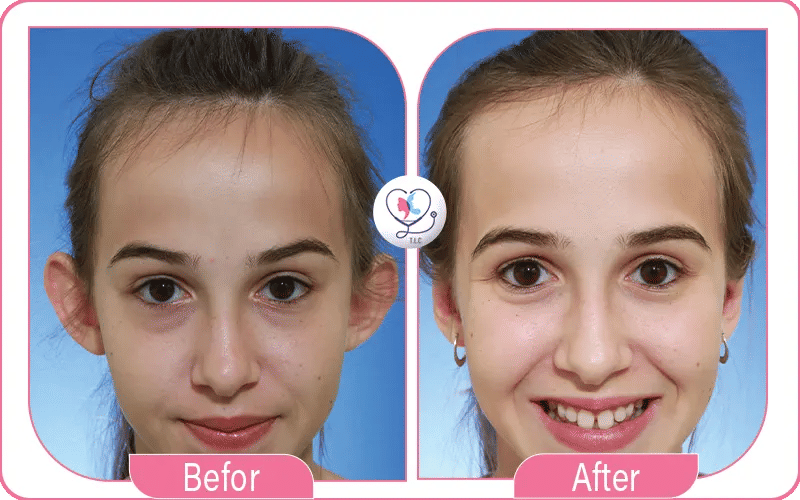
Otoplasty recovery pictures show the healing process after surgery, starting with a bulky head bandage during the first week.
A lighter headband is usually worn, especially at night, for several weeks to protect the ears and reduce swelling.
Significant improvement is typically visible by weeks 2–4 as swelling subsides, while full healing, including avoidance of contact sports, can take 1–3 months. Otoplasty recovery images help patients see how the ear shape gradually becomes clearer and more natural over time.
Book Your Otoplasty Consultation Today with Turkey Luxury Clinics
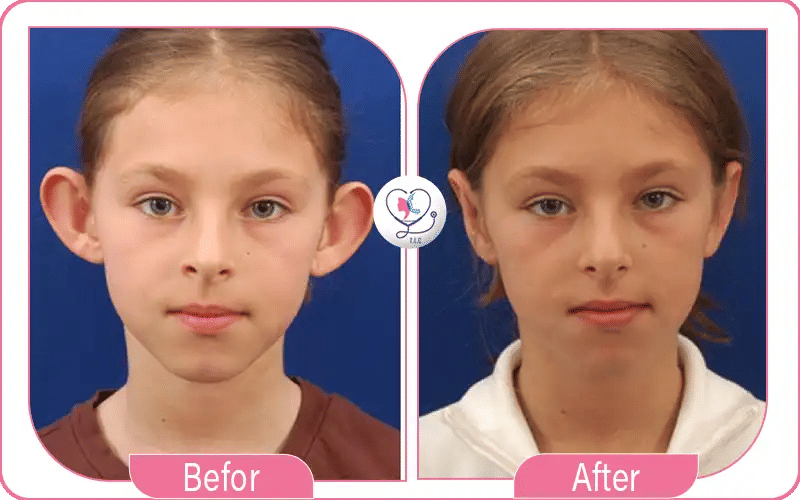
Curious how otoplasty could transform your ears? Schedule a consultation with our expert surgeons to discuss your goals and find the best ear correction option for you or your child.
You may like
Otoplasty Cost 2026: How Much Does Ear Surgery Cost?
Otoplasty in Turkey 2026: Top Surgeons, Costs & Before/After Results
FAQs About Ear Pinning Before and After