

- What is Otoplasty Plastic Surgery?
- Problems Treated by Otoplasty
- Why People Undergo Otoplasty
- Types of Otoplasty Plastic Surgery
- How Otoplasty is Performed
- Otoplasty Procedure Techniques
- What to Expect After Otoplasty Surgery
- Otoplasty Recovery Week by Week
- Otoplasty Surgery Aftercare
- Otoplasty Ear Surgery Side Effects
- Otoplasty Surgery Results
- Risks and Complications of Otoplasty Plastic Surgery
- Before and After Otoplasty
- Cost of Otoplasty 2026
- The Best Otoplasty Doctor
- Get Your Otoplasty with Confidence at Turkey Luxury Clinics
- FAQs About Otoplasty
Otoplasty is a cosmetic ear surgery that harmonizes your ears with your facial features by reshaping, repositioning, or resizing them. It is minimally invasive, carries low risks, and offers a relatively short recovery period. Suitable for both children and adults, it corrects protruding ears, unusually small or large ears, and earlobe issues. This procedure enhances facial balance and boosts self-confidence—all without affecting hearing.
Explore your options with Turkey Luxury Clinics for safe, professional otoplasty results.
What is Otoplasty Plastic Surgery?
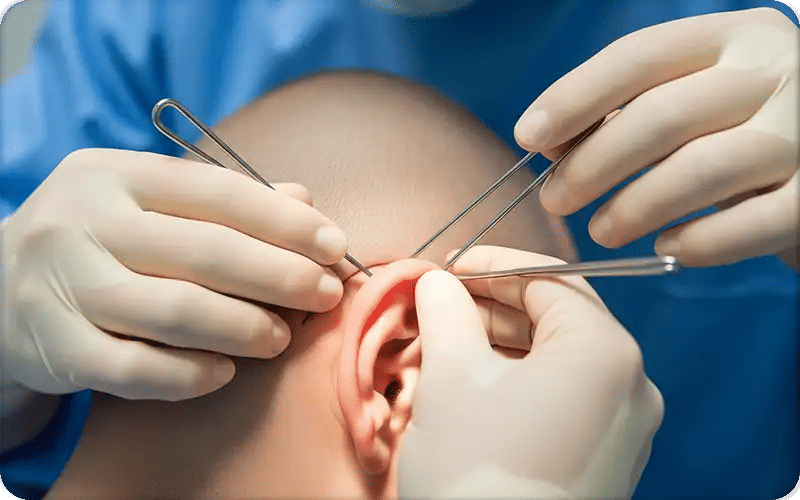
Otoplasty plastic surgery is a cosmetic procedure that reshapes, repositions, or alters the size of the ears to correct deformities, injuries, or prominent “stick-out” ears, creating more balanced and natural-looking features.
Otoplasty surgeries fix deformities and defects of the auricle (external ear), whether these defects are congenital conditions, such as microtia or anotia, or acquired due to injury or trauma. The procedure aims to restore a natural appearance, improve symmetry, and enhance overall facial balance.
This procedure can be performed on both children (typically over age 5) and adults without affecting hearing.
It involves adjusting the ear cartilage, often through incisions behind the ear, to pin protruding ears closer to the head (pinnaplasty) or correct issues like cupped or misshapen ears.
Problems Treated by Otoplasty
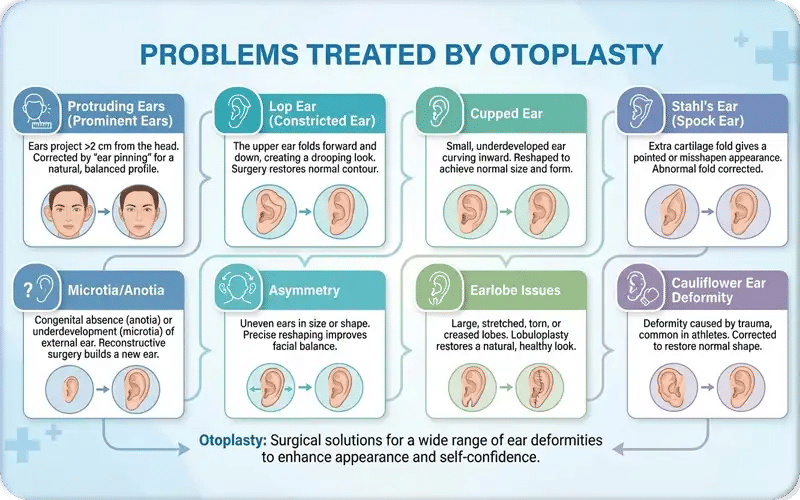
- Protruding Ears (Prominent Ears): The most common reason for ear pinning is otoplasty, where the ears stick out more than two centimeters from the head, often corrected by ear pinning to achieve a natural and balanced appearance.
- Lop Ear (Constricted Ear): The top of the ear folds forward and downward, creating a drooping appearance; surgery restores normal ear contour.
- Cupped Ear: A very small or underdeveloped ear that curves inward, which can be reshaped to achieve a normal ear size and form.
- Stahl’s Ear (Spock Ear): An extra fold of cartilage gives the ear a pointed or misshapen look; otoplasty corrects the abnormal fold.
- Microtia/Anotia: Congenital absence (anotia) or severe underdevelopment (microtia) of the external ear, often treated with reconstructive ear surgery.
- Asymmetry: Uneven ears or differences in size and shape between the two ears, improved through precise reshaping for facial balance.
- Earlobe Issues: Large, stretched, torn, or creased earlobes, often corrected via lobuloplasty to restore a natural look.
- Cauliflower Ear Deformity: A deformity caused by trauma, commonly seen in athletes, which can be corrected to restore the ear’s normal shape.
Why People Undergo Otoplasty
People choose otoplasty for several reasons:
- Reduce Prominent Ears: To make ears less prominent and more proportionate to the face, improving overall facial balance.
- Enhance Symmetry: To create a more natural and harmonious appearance by correcting asymmetry or deformities.
- Boost Self-Confidence: Especially important for children and teenagers who may be teased or feel self-conscious about the appearance of their ears.
Types of Otoplasty Plastic Surgery
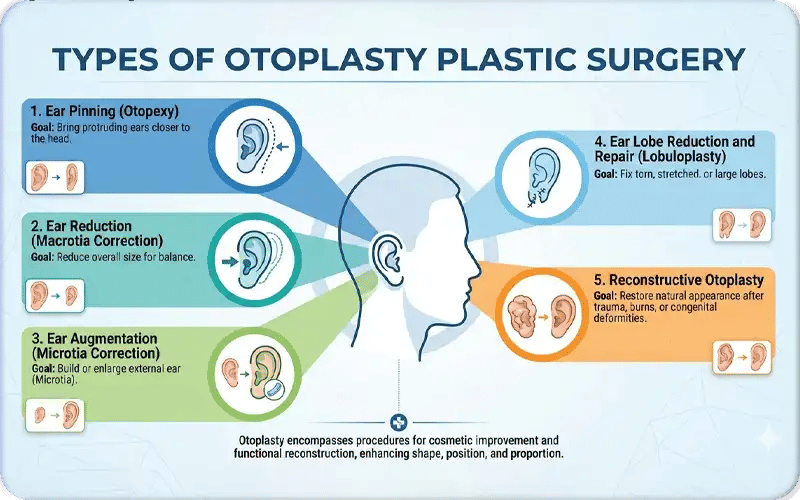
Ear Pinning (Otopexy)
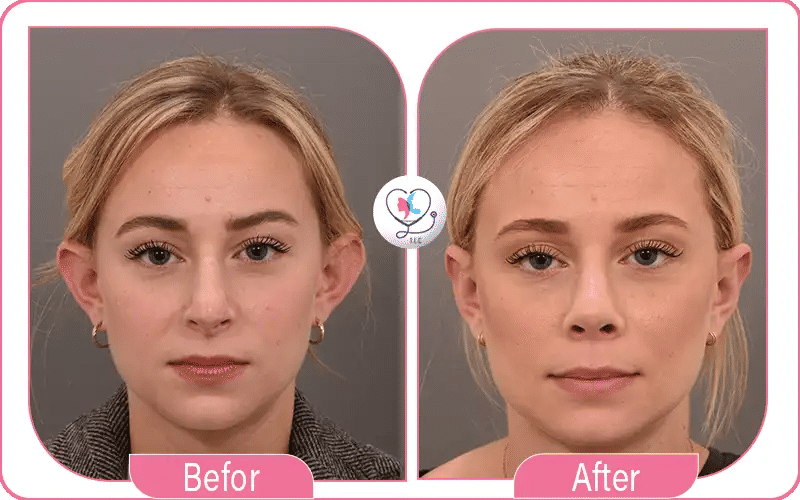
Ear pinning is the most common type of otoplasty plastic surgery and is considered a safe and widely performed procedure. It reduces the appearance of protruding ears by reshaping or repositioning them closer to the head, with before-and-after results typically showing a noticeable improvement in ear position and facial balance.
This procedure is often performed on children around the age of 5–6, once ear development is complete, but it is also suitable for adults seeking cosmetic ear correction. Otoplasty for protruding ears is usually performed through small incisions made behind the ears or within natural skin folds, allowing the surgeon to adjust and reshape the cartilage while minimizing visible scarring. The result is improved facial harmony and increased self-confidence.
Ear pinning recovery time typically involves wearing a supportive bandage for a short period and managing mild discomfort, swelling, or bruising. As with any surgical procedure, potential risks may include asymmetry, undercorrection, or overcorrection, though these complications are uncommon when performed by an experienced surgeon.
Ear Reduction (Macrotia Correction)
Ear reduction surgery for macrotia correction is a plastic surgery procedure designed to reduce the size of abnormally large ears. Large ear correction surgery involves removing excess cartilage and skin to create ears that are more proportionate to the face and better aligned with overall facial features.
The procedure often includes excising tissue from the scapha (upper ear) and reshaping the helical rim to achieve a natural contour. Ear reduction otoplasty typically results in improved facial harmony, enhanced self-confidence, and minimal visible scarring in most cases due to carefully placed incisions.
Ear Augmentation (Microtia Correction)
Microtia ear augmentation surgery reconstructs an underdeveloped or missing outer ear. It typically uses the patient’s own rib cartilage to create an ear framework, which is placed beneath the skin for a natural appearance. This reconstructive process is usually performed in multiple stages over several years.
Ear Lobe Reduction and Repair (Lobuloplasty)
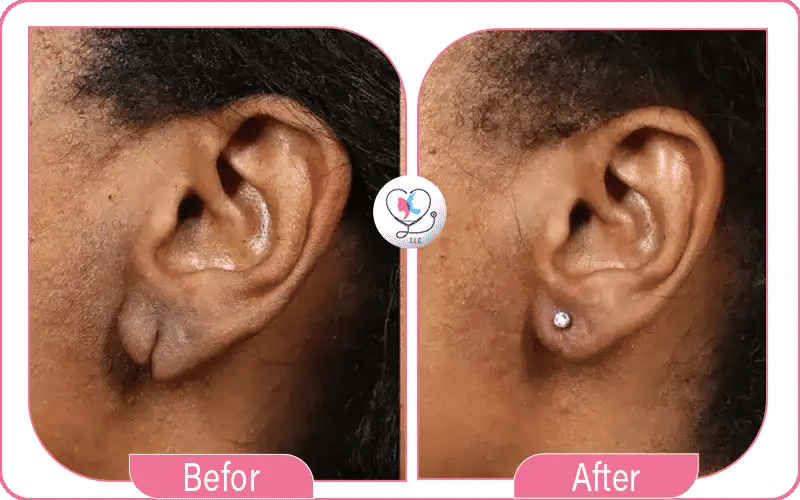
Lobuloplasty, or earlobe repair surgery, is a minor cosmetic procedure that corrects torn, stretched, or sagging earlobes caused by heavy earrings, trauma, or aging. The procedure restores a natural earlobe shape by removing damaged tissue and carefully suturing the edges under local anesthesia. Recovery is quick, and re-piercing is often possible after healing.
Reconstructive Otoplasty
Reconstructive otoplasty is performed to correct complex congenital ear deformities, such as microtia, or to repair damage caused by burns, injuries, or previous surgeries. In some cases, full ear reconstruction is required to restore both appearance and function.
How Otoplasty is Performed
Otoplasty reshapes the ear cartilage, usually through a small incision behind the ear, to make the ears less prominent and create a natural appearance. The procedure typically takes 1–2 hours and the surgeon will use sculpting, folding, or repositioning the cartilage with internal stitches and then closing the incision, followed by a protective headband to support healing.
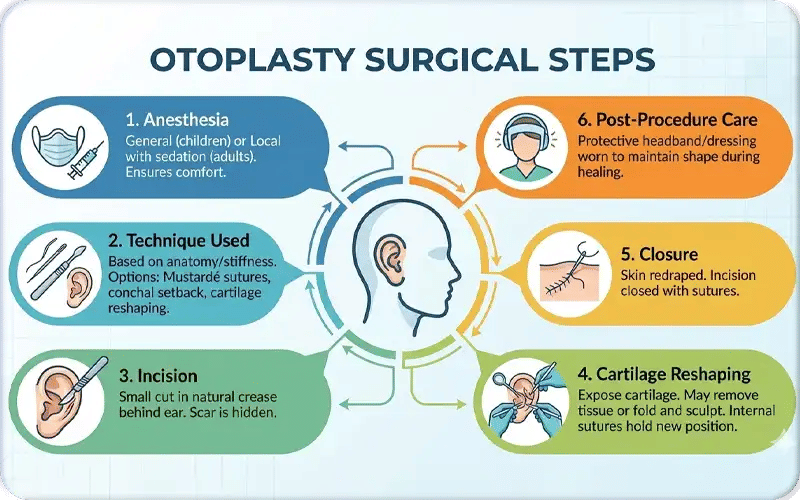
Otoplasty Surgical Steps
- Anesthesia: General anesthesia is used for children, while adults often receive local anesthesia with sedation.
- Technique used: Depending on the ear anatomy and cartilage stiffness, surgeons may use suture-based techniques such as Mustardé, conchal setback methods, or cartilage reshaping techniques to achieve optimal results.
- Incision: A small cut is made in the natural crease behind the ear to hide the scar.
- Cartilage Reshaping: The surgeon exposes the ear cartilage, and depending on the case, a small amount of cartilage or skin may be removed, or the existing cartilage is folded and sculpted. Internal sutures hold the cartilage in its new, natural position closer to the head.
- Closure: The skin is redraped, and the incision is closed with sutures.
- Post-Procedure Care: A protective headband or dressing is worn to maintain the new ear shape during the healing period.
Otoplasty Procedure Techniques
Otoplasty techniques include cartilage scoring, suturing methods such as Mustardé and Converse, and incisionless otoplasty, which may be used alone or in combination to achieve optimal results.
These techniques differ in their level of invasiveness, approach to cartilage reshaping, and suitability for different patients. In many cases, surgeons combine more than one technique to achieve natural, stable, and long-lasting results, especially in adults with stiffer ear cartilage.
The most appropriate otoplasty technique depends on cartilage stiffness, ear anatomy, and patient age. Younger patients often respond well to suture-based methods, while adults may require cartilage scoring or combined approaches for durable correction.
1. Suture Technique (Mustardé Technique)
The stitch technique, also known as the Mustardé technique, is one of the most commonly used otoplasty techniques for correcting prominent ears.
It involves placing permanent sutures in the ear cartilage to recreate or enhance the antihelical fold, allowing the ear to sit closer to the head without removing cartilage.
This technique is ideal for patients with soft or flexible cartilage and provides natural, long-lasting results with minimal visible scarring.
2. Cartilage Scoring (Cutting Technique)
Cartilage scoring otoplasty involves making controlled incisions in the cartilage to weaken it and allow reshaping into a more natural contour.
This technique is particularly effective for adults or patients with thick, rigid cartilage.
3. Incisionless Otoplasty
Incisionless otoplasty is a minimally invasive technique that uses sutures placed through small needle punctures without large incisions or cartilage cutting.
It is suitable for mild ear protrusion and selected patients seeking faster recovery and minimal scarring. However, this technique is not recommended for severe deformities or stiff cartilage.
What to Expect After Otoplasty Surgery
Immediately after otoplasty surgery, your ears will be wrapped in a thick protective dressing or bandage to support healing and control swelling. It is normal to experience soreness, tightness, itching, and mild discomfort, which can be managed with prescribed pain medication. Swelling and bruising around the ears are also expected during the early recovery phase. Keeping your head elevated above heart level, especially while resting or sleeping, helps reduce swelling and discomfort.
The initial bandages are usually removed after a few days. Afterward, patients should maintain proper ear hygiene, avoid strenuous activities for several weeks, and gradually return to normal daily routines. Full recovery typically occurs within 6–8 weeks, although temporary symptoms such as numbness or itching may persist for a short time and resolve naturally.
Otoplasty Recovery Week by Week
- Week 1: Tightness, swelling, mild pain, and bruising are common. A head bandage is worn continuously to protect the ears.
- Week 2: Swelling and bruising significantly improve. Most patients can return to light daily activities.
- Weeks 3–4: Healing continues steadily. Many patients only need to wear a protective headband at night.
- Around 6 Weeks: Near-full recovery is usually achieved, with ears feeling more natural.
- 3–6 Months: Minor residual swelling gradually resolves, and final otoplasty results become fully visible.
Otoplasty Surgery Aftercare
During recovery, patients should wear a supportive headband as instructed, avoid heavy exercise or contact sports, and carefully follow their surgeon’s postoperative guidelines. Proper aftercare plays a key role in achieving smooth healing and long-lasting results.
Otoplasty Ear Surgery Side Effects
In the first few days after surgery, some temporary side effects may occur, including:
- Pain, Swelling, and Bruising: Mild to moderate soreness and bruising are normal and usually improve within a few weeks.
- Numbness or Tingling: Temporary changes in sensation around the ears are common.
- Sore Throat: A mild sore throat may occur after general anesthesia due to the breathing tube.
These side effects are typically short-lived and manageable. Patients should contact their surgeon if symptoms become severe, worsen over time, or are accompanied by fever or signs of infection.
Otoplasty Surgery Results
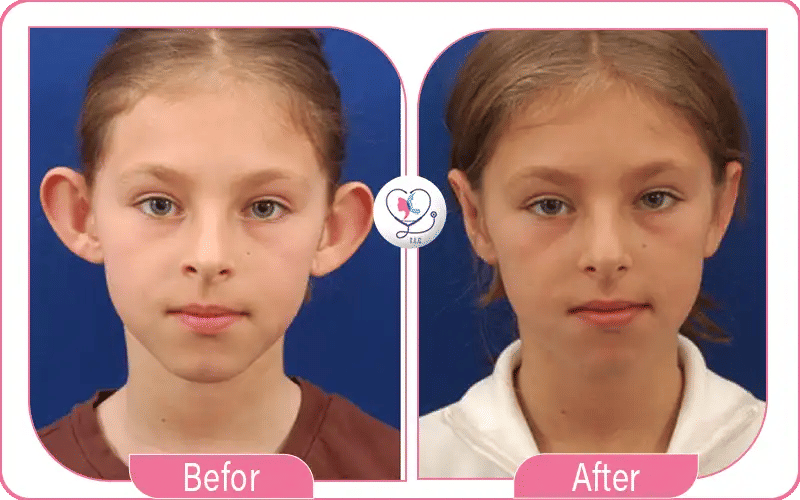
Ear plastic surgery results are generally permanent, producing more natural-looking and symmetrical ears that sit closer to the head.
When Do You See Otoplasty Results? New ear position is noticeable right after surgery, though dressings are worn initially. Over time swelling decreases, and scars fade, with final results often clear by 3-6 months.
Otoplasty success depends on selecting an experienced surgeon and carefully following post-op instructions, such as sleeping on your back and avoiding pressure on the ears, which helps preserve the results and minimizes the rare need for revision surgery.
Risks and Complications of Otoplasty Plastic Surgery
Ear plastic surgery is generally safe, especially when performed under local anesthesia. It does not affect hearing ability or harm overall health, and most patients heal without major complications. However, like any surgical procedure, otoplasty carries certain risks, including asymmetry, infection, bleeding, temporary or permanent changes in sensation, scarring, and the possibility of revision surgery if the results are unsatisfactory.
Rare but more serious Otoplasty Complications:
- Hematoma: A collection of blood beneath the skin that may require medical drainage.
- Infection: Can develop at the incision site and may require antibiotics or further treatment.
- Asymmetry: The ears may heal unevenly, sometimes requiring revision surgery.
- Recurrence (Re-protrusion): In some cases, the ears may gradually begin to protrude again over time.
- Overcorrection: The ears may appear overly pinned back, resulting in an unnatural look.
- Skin Necrosis: Rarely, small areas of skin over the cartilage may lose blood supply, leading to skin breakdown or ulcers.
Otoplasty scar
Otoplasty scars are usually minimal and well-hidden because incisions are placed behind the ear or in natural creases, fading significantly over time to become almost undetectable, though they never fully disappear.
Before and After Otoplasty
Cost of Otoplasty 2026
The cost of otoplasty (ear surgery) varies significantly, but in the U.S., averages range from about $4,000 to over $6,000, with total expenses potentially reaching $10,000+, depending heavily on the surgeon's fee, anesthesia, facility costs, geographic location, and complexity;
Otoplasty in Turkey is significantly cheaper than in the U.S., often costing $1,000 - $3,000, making Turkey an attractive medical tourism option with savings of 40-60% due to lower living costs and a competitive cosmetic industry, though prices depend on the surgeon's experience and clinic.
The Best Otoplasty Doctor
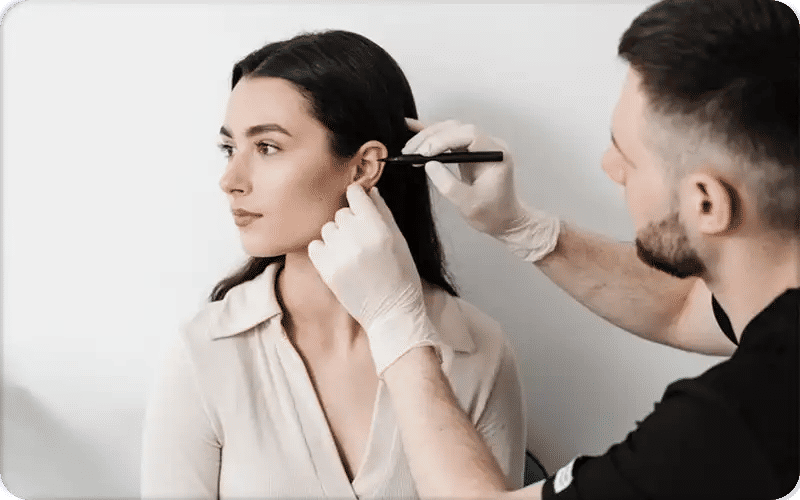
Top otoplasty surgeons should have:
- Board Certification: Verified certification from recognized plastic surgery or facial plastic surgery boards.
- Extensive Experience: Several years of focused practice in otoplasty, including ear reconstruction and revision procedures.
- Specialization: Advanced training in facial aesthetics and ear surgery, with expertise in modern otoplasty techniques.
- Patient-Centered Approach: A commitment to personalized treatment plans, natural-looking results, and patient safety.
- Accredited Surgical Facilities: Procedures performed in state-licensed, accredited, or Medicare-certified surgical centers to ensure the highest safety standards.
To consult with a top otoplasty plastic surgeon in Turkey, contact Turkey Luxury Clinics for personalized guidance and treatment options.
Get Your Otoplasty with Confidence at Turkey Luxury Clinics
Turkey is known for its advanced cosmetic surgery expertise, combining highly qualified surgeons with world-class medical facilities and affordable treatment options.
At Turkey Luxury Clinics, we offer all-inclusive otoplasty packages covering consultation, surgery, accommodation, transportation, and full medical follow-up, ensuring a smooth, safe, and well-supported experience from arrival to recovery.
To ensure safe, natural-looking otoplasty results, all procedures are performed by board-certified plastic surgeons in fully accredited medical facilities.
FAQs About Otoplasty