

- A Glance at Otoplasty Recovery Timeline
- What is the Recovery Time for Otoplasty?
- Factors Influencing Otoplasty Recovery
- Otoplasty Recovery Day by Day
- Otoplasty Recovery Headband
- Otoplasty Scar Recovery
- Otoplasty Recovery Time Instructions
- Otoplasty Recovery in Children vs Adults
- Incisionless vs Traditional Otoplasty Recovery Time
- Get your Ear Plastic Surgery Confidently with Turkey Luxury Clinics
- FAQs About Otoplasty Recovery Time
Otoplasty, or ear plastic surgery, is a cosmetic procedure that involves making small incisions in precise locations behind the ears to reshape, reposition, or resize the ear cartilage. It addresses aesthetic concerns such as protruding ears, injuries, deformities, or unusually small or large ears.
The procedure typically provides a permanent transformation, resulting in a natural, balanced, and face-harmonized appearance, with scars hidden behind the ears that gradually fade over time.
While changes are visible immediately after surgery, a recovery period is necessary before the final results fully settle. This phase is essential for proper healing, achieving optimal outcomes, and minimizing the risk of complications or infections.
Otoplasty recovery involves about 1 week off from work or school, wearing a headband for 2-4 weeks (especially at night), and gradually returning to normal activities, with full recovery and clearance for sports taking 4 to 8 weeks.
Turkey Luxury Clinics guides you through the otoplasty recovery timeline day by day, explaining what to expect, essential care instructions, and how traditional otoplasty differs from non-surgical options.
A Glance at Otoplasty Recovery Timeline
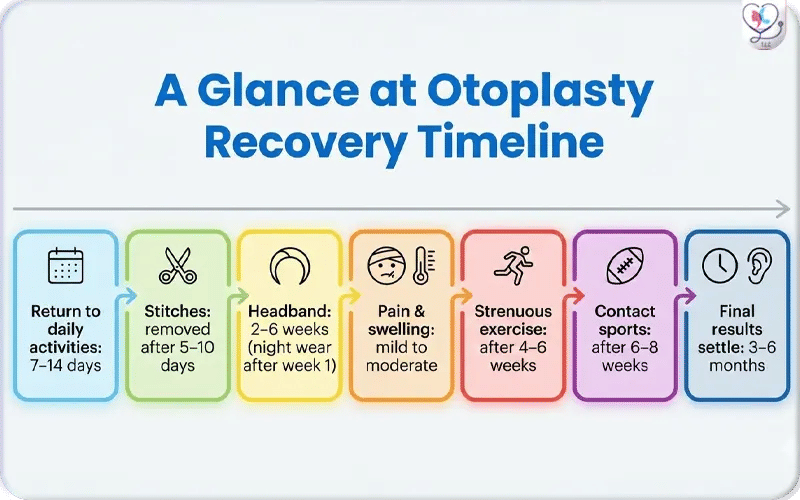
- Return to daily activities: 7–14 days
- Headband: 2–6 weeks (night wear after week 1)
- Pain & swelling: mild to moderate
- Stitches: removed after 5–10 days
- Strenuous exercise: after 4–6 weeks
- Contact sports: after 6–8 weeks
- Final results settle: 3–6 months
What is the Recovery Time for Otoplasty?
Otoplasty recovery, ear pinning recovery, usually requires about one week off from work or school, while full recovery takes approximately 4 to 8 weeks. Patients who undergo incisionless otoplasty typically experience a much faster recovery, with most returning to normal daily activities within 1–2 days and achieving near-complete healing in about one week.
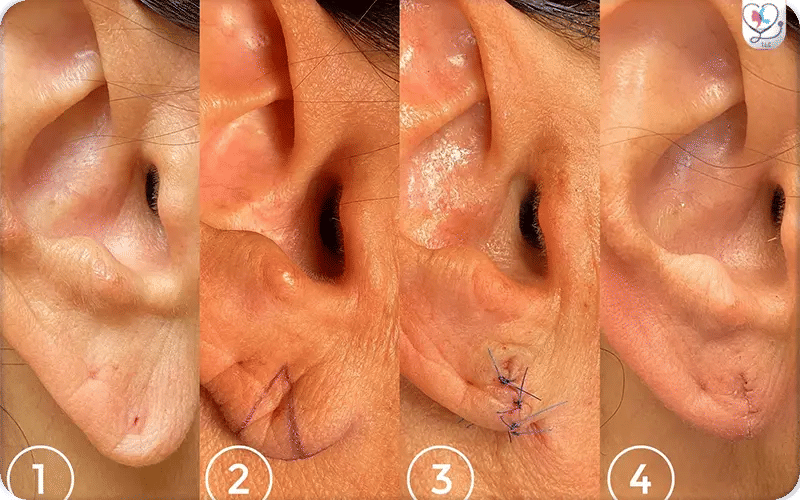
During the early recovery phase, it is normal to experience swelling, pain, tightness, bruising, and general discomfort. These symptoms usually improve significantly within the first week, although mild swelling, tenderness, or numbness may persist for several weeks as the ears continue to heal.
Patients are usually required to wear a protective bandage for about one week, followed by a supportive headband at night for several weeks to maintain ear positioning and protect the surgical site while sleeping. During this time, strenuous activities, heavy exercise, and swimming should be avoided for at least one month to prevent complications and support optimal healing.
Swimming is generally considered safe after 4 to 6 weeks, while contact sports or activities involving impact to the ears are typically allowed after around 8 weeks, once the surgeon confirms proper healing.
Although the results of otoplasty are visible immediately after surgery, the final outcome becomes fully apparent as residual swelling resolves, which may take 3 to 6 months. At this stage, the ears settle into their permanent shape, revealing the natural and long-lasting results of the procedure.
Factors Influencing Otoplasty Recovery
- Surgical Complexity: Recovery is usually faster for minor ear pinning procedures, while more severe deformities or extensive cartilage reshaping require a longer healing period. Incisionless otoplasty typically has the shortest recovery time.
- Individual Healing: Each person’s body heals at a different pace, which can affect swelling, bruising, and overall discomfort.
- Cartilage Quality: Stronger, more robust cartilage, typically found in adults, provides a stable result, while softer cartilage, as in children, may require additional support and slightly longer recovery.
- Post-Op Care: Strictly following your surgeon’s instructions regarding bandages, headband use, activity restrictions, and pain management greatly influences healing outcomes and the final appearance.
Otoplasty Recovery Day by Day
Day 1
On the first day after otoplasty, your ears will be bandaged with a protective dressing and headband to support their new shape. It is normal to experience mild to moderate pain, a sense of tightness, or pressure around the ears. You may also notice some redness and slight swelling as your body begins the healing process.
Days 2–3
During days two and three after otoplasty, swelling and bruising often reach their peak. Your ears may feel numb, tingly, or slightly stiff, which is a normal part of the healing process. Some patients may notice mild drainage from the incision sites as the body begins repairing tissue.
Days 4–7
Between days four and seven after otoplasty, swelling begins to subside, although your ears may still look slightly larger than their final shape. Mild discomfort is normal, but any pain should gradually decrease. Bruising may start to change color and slowly fade as your body continues healing.
Week 2
By the second week after otoplasty, most of the visible swelling and bruising has significantly decreased, and your ears start to look closer to their final shape. Incision lines may begin to fade, though they can remain slightly red. The ears feel more natural, but mild numbness or sensitivity may still persist.
If your surgeon approves, you can switch to wearing the headband only at night, while continuing to protect your ears during daily activities.
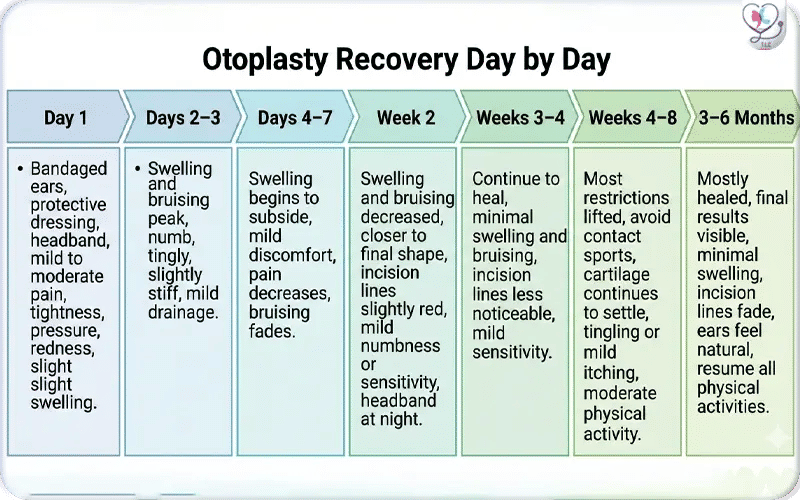
Weeks 3–4
During weeks three and four of otoplasty recovery, your ears continue to heal and approach their final appearance. Swelling and bruising are minimal by this stage, and incision lines gradually become less noticeable. Most patients find that their ears feel almost normal, though some residual tenderness or mild sensitivity can still occur. By the end of the first month, your ears are well on their way to fully settled, giving you a natural, balanced look.
Weeks 4–8
By this time, most restrictions are lifted, but patients should still avoid contact sports or any activities that risk direct trauma to the ears. The cartilage continues to settle, and the ear shape refines. Occasional tingling or mild itching is normal. Gradually, moderate physical activity can be resumed while still protecting the ears, and follow-ups continue to monitor healing.
3–6 Months
By three to six months after otoplasty, your ears have mostly healed, and the final results start to become fully visible. Any remaining swelling is minimal, and incision lines continue to fade, often becoming barely noticeable. The ears feel completely natural, and most numbness or sensitivity has resolved.
At this stage, you can safely resume all physical activities, including contact sports, without risk to the surgical outcome.
Scars are continuing to mature and may slightly lighten in color over time. Maintaining gentle care, such as sun protection and avoiding trauma, helps ensure long-lasting results.
By the end of six months, your otoplasty results are considered stable, providing a balanced and permanent ear appearance.
Otoplasty Recovery Headband
An otoplasty recovery headband is an essential post-surgery garment designed to gently hold the reshaped ears in place. Protecting stitches, reducing swelling, and preventing the ears from shifting, it helps ensure optimal healing and the best final results.
Typically, the headband is worn continuously for the first one to two weeks after surgery, then at night for several additional weeks, following your surgeon’s instructions. They are made from soft, elastic materials. These headbands provide support, reduce discomfort, and act as a safeguard against accidental bumps, helping the delicate tissues heal safely and effectively.
Otoplasty Scar Recovery
Otoplasty scars are generally very discreet because surgeons place incisions strategically in the natural crease behind the ear, known as the postauricular sulcus. While every surgery leaves a permanent mark, these scars are usually invisible to others unless the ear is manually pulled forward.
Healing Timeline
- In the first 0–3 months, scars may appear red, pink, firm, or slightly raised as the body repairs the tissue.
- Between 3–6 months, the marks gradually soften, flatten, and fade.
- By around 12 months, scars typically reach full maturity, becoming faint, thin lines that blend naturally into the surrounding skin.
Otoplasty Recovery Time Instructions
Day 1
- Wear the bandage or recovery headband continuously as instructed.
- Keep your head elevated while resting to reduce swelling.
- Take prescribed pain medications on schedule.
- Avoid touching, bending, or applying pressure to your ears.
- Do not wash your hair or get the bandage wet.
Days 2–3
- Swelling and bruising usually peak.
- Continue wearing the headband, especially during sleep.
- Gently clean incision areas according to your surgeon’s instructions; do not rub or scrub.
- Apply cold compresses near the ears, but never directly on the surgical area.
- Avoid bending, lifting, or strenuous activity.
Days 4–7
- Swelling begins to decrease, though ears may appear slightly larger than final size.
- Keep wearing the headband exactly as recommended.
- Avoid wearing glasses or anything that presses on the ears.
- Maintain gentle hygiene; never scrub the incision sites.
- Avoid any activities that could cause trauma to the ears.
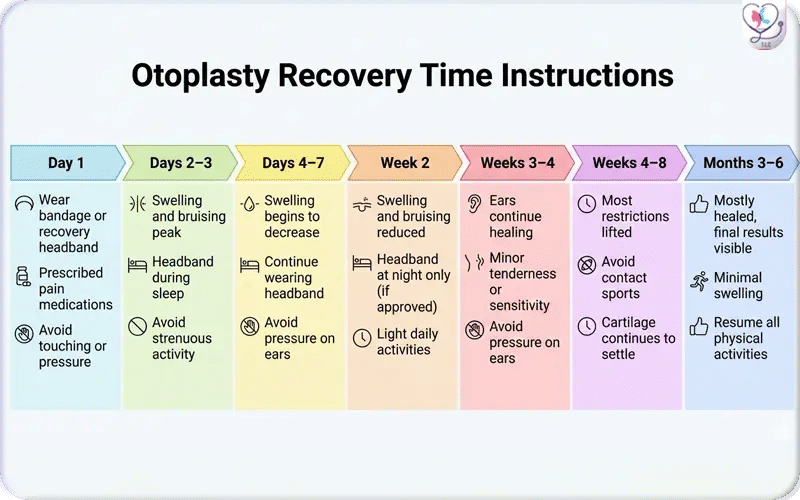
Week 2
- Most visible swelling and bruising have significantly reduced.
- Headband may now be worn only at night, if approved by your surgeon.
- Resume light daily activities, avoiding heavy exercise.
- Protect ears from sun exposure using sunscreen or covering.
- Contact your surgeon if you notice unusual swelling, discharge, or pain.
Weeks 3–4
- Ears continue healing, approaching their final shape.
- Minor tenderness or sensitivity may still occur.
- Gentle ear massage may be recommended after approval.
- Observe minor asymmetry, usually resolving naturally.
- Avoid activities that put pressure on the ears.
- Continue night-time headband use as advised.
Weeks 4–8
- Most restrictions are lifted, but avoid contact sports or any direct trauma until cleared by your surgeon.
- Cartilage continues to settle and refine the ear shape.
- Occasional tingling or mild itching is normal; avoid scratching.
- Gradually resume moderate physical activity while protecting the ears.
- Continue follow-ups to monitor healing and remove stitches if necessary.
Months 3–6
- Ears are mostly healed, with final results becoming visible.
- Residual swelling is minimal; tissues feel natural.
- You can resume all physical activities, including contact sports.
- Scars continue to mature and soften, blending with surrounding skin.
- Maintain sun protection and avoid trauma to ensure long-lasting results.
- Gentle scar massage can improve flexibility and appearance.
Otoplasty Home Care Instruction
- Bathing: Avoid direct water contact with incisions until bandages are removed. Use gentle shampoo and wash carefully.
- Clothing: Wear front-opening shirts or zip-ups to avoid pulling garments over the head.
- Nutrition: Eat sufficient protein, vitamins C & A, and stay hydrated to support tissue healing.
- Headband: Follow your surgeon’s instructions, especially during sleep in the early weeks.
How to Care for an Otoplasty Scar?
- Use silicone gels or sheets to flatten and soften scars.
- Gentle circular massage after surgeon approval.
- Sun protection SPF 30+ for at least a year.
- Avoid pulling, pressure, or tight headbands in the first weeks.
When to Contact Your Surgeon Immediately
- Sudden or severe swelling or pain.
- Persistent bleeding or pus from the incision.
- Severe redness or heat around the ear.
- Numbness or abnormal loss of sensation.
- Noticeable deformity or persistent asymmetry.
Otoplasty Recovery in Children vs Adults
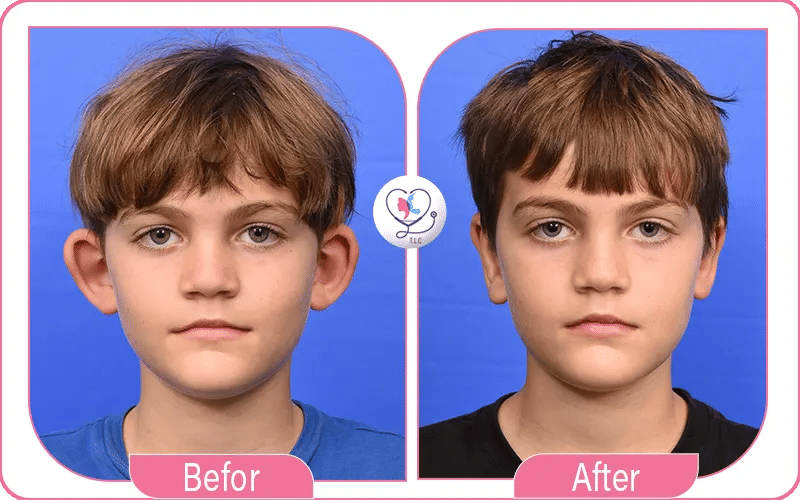
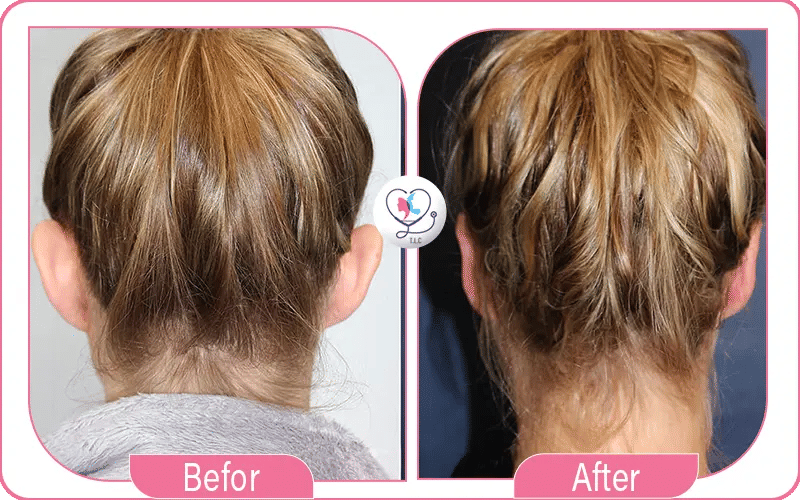
Children usually heal faster after otoplasty because their cartilage is softer and more flexible. Recovery requires parental guidance to ensure they avoid strenuous activities and consistently wear protective headbands. Adults, on the other hand, may experience more bruising and swelling due to firmer cartilage, which sometimes requires stronger sutures. While adults manage most of their recovery independently and can return to work relatively quickly, they must still avoid strenuous activity for a longer period to protect the surgical results.
Incisionless vs Traditional Otoplasty Recovery Time
Recovery Aspect | Incisionless Otoplasty | Traditional Otoplasty |
Return to daily activities | 3–7 days | 7–14 days |
Headband duration | 1–2 weeks | 2–6 weeks |
Pain level | Very mild | Mild to moderate |
Swelling & bruising | Minimal | Moderate |
Stitches | None | Removed after 5–10 days |
Showering & hair washing | After 2–3 days | After bandage removal |
Strenuous exercise | 3–4 weeks | 4–6 weeks |
Contact sports | 2–3 months | 6–8 weeks |
Final results settle | Weeks to a few months | 3–6 months |
Get your Ear Plastic Surgery Confidently with Turkey Luxury Clinics
Look to successful otoplasty in Turkey? Transform your ears with expert otoplasty, correct protrusions, reshape, or resize for a natural, balanced look. Enjoy smooth, day-by-day recovery with professional care and close follow-up from top plastic surgeons at JCI-accredited world-class hospitals with Turkey Luxury Clinics.
FAQs About Otoplasty Recovery Time