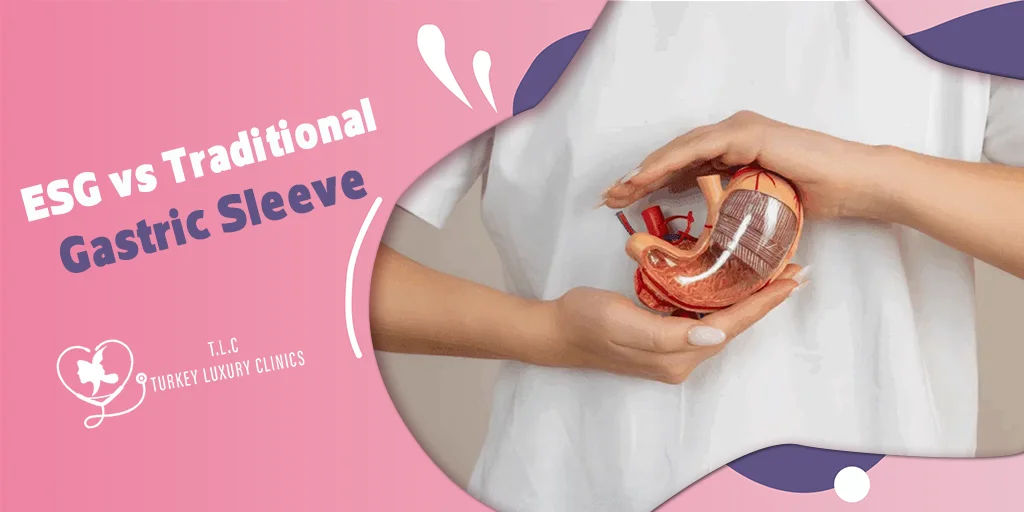


- What are Endoscopic Sleeve Gastrectomy (ESG) and Gastric Sleeve?
- EGS vs Gastric Sleeve: Which One is Right for You?
- Procedural Differences: How ESG vs. Gastric Sleeve Are Performed
- Which is Biologically Stronger: ESG or Gastric Sleeve Surgery?
- Cost of ESG vs. Gastric Sleeve: Turkey vs. USA
- Weight Loss Results: ESG vs. Gastric Sleeve 1, 2, and 5-Year Outcomes
- Recovery Timeline Comparison: ESG vs. Gastric Sleeve
- Risks and Complications: Which Is Safer?
- Endoscopic Sleeve Gastroplasty (ESG): Pros and Cons
- Gastric Sleeve Surgery (VSG): Pros and Cons
- Ideal Candidates: Who Should Choose Which?
- FAQs About ESG vs Gastric Sleeve
The primary difference between Endoscopic Sleeve Gastroplasty (ESG) and Gastric Sleeve (VSG) is that ESG is an incisionless, outpatient procedure that typically achieves 15%–20% total body weight loss with a 3–5 day recovery, while Gastric Sleeve is a permanent laparoscopic surgery that delivers approximately 25%–35% weight loss through stronger hormonal and metabolic effects.
Both procedures are bariatric weight-loss surgeries used not only for obesity reduction but also for improving obesity-related chronic conditions, especially type 2 diabetes mellitus. Both ESG and Gastric Sleeve aim to reduce excess body weight and improve metabolic health, but they differ significantly in mechanism and long-term effectiveness.
Choosing between these two options is no longer just about “surgery vs. non-surgery.” The decision significantly impacts long-term outcomes, including weight loss durability, risk of weight regain, reflux severity, and recovery expectations. From a bariatric specialist's perspective, both procedures are highly effective when appropriately matched to BMI level, metabolic condition, and long-term health goals.
What are Endoscopic Sleeve Gastrectomy (ESG) and Gastric Sleeve?
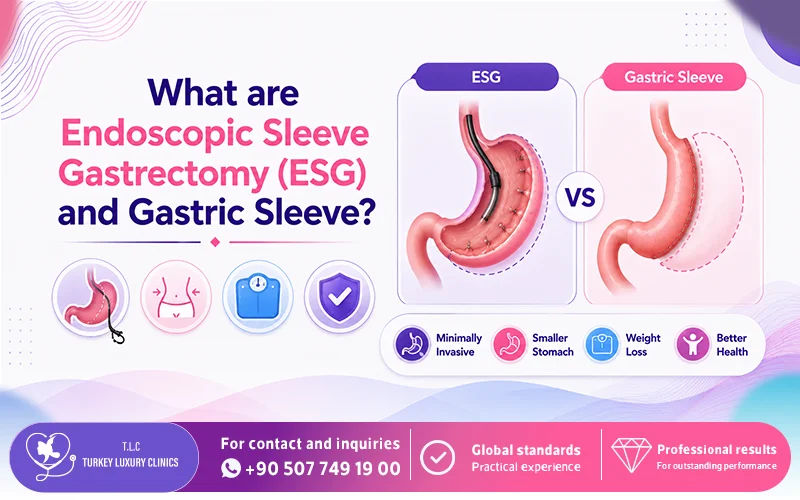
- What is ESG? Endoscopic Sleeve Gastroplasty is a minimally invasive, incisionless procedure designed to reduce stomach volume without removing any tissue. A flexible endoscope equipped with a suturing device is passed through the mouth to place durable internal stitches that fold the stomach inward like an accordion, reducing meal capacity and slowing digestion.
- What is Gastric Sleeve (VSG)? Sleeve Gastrectomy is a laparoscopic abdominal surgery in which approximately 75% to 80% of the stomach is permanently removed, leaving a narrow, banana-shaped "sleeve." It combines physical food restriction with immediate metabolic shifts and appetite hormone suppression.
EGS vs Gastric Sleeve: Which One is Right for You?
This comprehensive table summarizes the core medical, logistical, and financial boundaries of both choices:
Comparison Feature | Endoscopic Sleeve Gastroplasty (ESG) | Surgical Gastric Sleeve (VSG) |
Procedure Type | Endoscopic (Incisionless via mouth) | Laparoscopic (Abdominal surgery) |
External Incisions | None (Zero scars) | 4–5 small incisions (Minimal scarring) |
Stomach Removal | No (Stomach is pleated/folded) | Yes (75%–80% of stomach removed) |
Anesthesia Type | General anesthesia | General anesthesia |
Procedure Duration | 30–45 minutes | 45–60 minutes |
Hospital Stay | Outpatient (Same-day discharge) | 1–2 nights hospital stay |
Reversibility | Potentially reversible / revisable | Permanent & Irreversible |
Hunger Hormone Impact | Mild reduction | Significant reduction (Cuts Ghrelin) |
Avg. Total Weight Loss | 15% – 20% total body weight | 25% – 35% total body weight |
Nutritional Risk | Lower risk of vitamin deficiencies | Higher risk (Requires lifelong vitamins) |
Target BMI Range | Ideal for BMI 30–40 | Ideal for BMI 40+ (or 35+ with diabetes) |
Diabetes Control | Moderate metabolic improvement | Excellent metabolic control / remission |
Recovery Speed | Rapid downtime (3–5 days) | Longer healing (2–4 weeks) |
Surgical Leak Risk | Virtually non-existent | Present (1%–2% staple-line leak risk) |
Ideal Candidate | Moderate obesity / Prefers no surgery | Severe obesity / High metabolic disease |
Procedural Differences: How ESG vs. Gastric Sleeve Are Performed
The core procedural difference between ESG and Gastric Sleeve is how the stomach anatomy is modified. Endoscopic Sleeve Gastroplasty (ESG) is an incisionless, outpatient procedure performed orally through an endoscope to stitch and pleat the stomach internally. Conversely, a Gastric Sleeve (VSG) is a laparoscopic abdominal surgery that requires permanent tissue removal, staples, and external skin cuts.
ESG vs. Gastric Sleeve: Core Operational Differences
- Anesthesia & Timing: While both procedures require general anesthesia for patient safety, an ESG is faster, taking only 30 to 45 minutes, whereas a Gastric Sleeve typically requires 45 to 60 minutes of operative time.
- Incisions & Scarring: ESG is completely incisionless and scarless because the specialized endoscopic tools enter orally through the mouth. In contrast, a Gastric Sleeve requires 4 to 5 small abdominal incisions (ranging from 0.5 to 1.5 cm) to access the gastric cavity.
- Anatomical Alteration: ESG is a potentially revisable, non-surgical reshaping that folds and tightens the stomach walls using durable internal sutures. Conversely, a Gastric Sleeve is a permanent, irreversible surgery that physically cuts away and removes roughly 75% to 80% of the stomach tissue.
- Hospital Stay & Admission: ESG is efficiently performed as an outpatient procedure, allowing patients to discharge home within a few hours. A Gastric Sleeve demands a 1 to 2-night hospital stay for clinical monitoring, leak checking, and post-operative pain management.
Explore: How Long Does Gastric Sleeve Surgery Take? Timeline, Recovery & 2026 Results
Which is Biologically Stronger: ESG or Gastric Sleeve Surgery?
ESG is not a non-surgical equivalent to Gastric Sleeve surgery. This is because a surgical Gastric Sleeve permanently alters your metabolism, while ESG primarily restricts stomach volume. This distinction becomes critical as a patient's BMI increases because a surgical gastric sleeve delivers:
- Direct Hormonal Shifts: It permanently removes the gastric fundus, significantly slashing Ghrelin (the hunger hormone) production to aggressively suppress long-term cravings and quieten "food noise."
- Superior Metabolic Reset: It triggers immediate chemical improvements in insulin resistance and Type 2 diabetes management, occurring independently of immediate weight loss.
- Higher Excess Weight Loss: It achieves a more powerful biological intervention, leading to greater, more stable, and highly documented 5-year weight reduction.
Cost of ESG vs. Gastric Sleeve: Turkey vs. USA
Cost is one of the most decisive factors for international patients evaluating bariatric care. Because ESG eliminates overnight hospital stays and high surgical facility overhead, its global price point trends lower, though regional differences remain dramatic.
Country | Average ESG Cost | Average Gastric Sleeve Cost |
United States | $10,000 – $20,000 | $15,000 – $25,000+ |
Turkey | $3,000 – $5,500 | $3,500 – $7,000 |
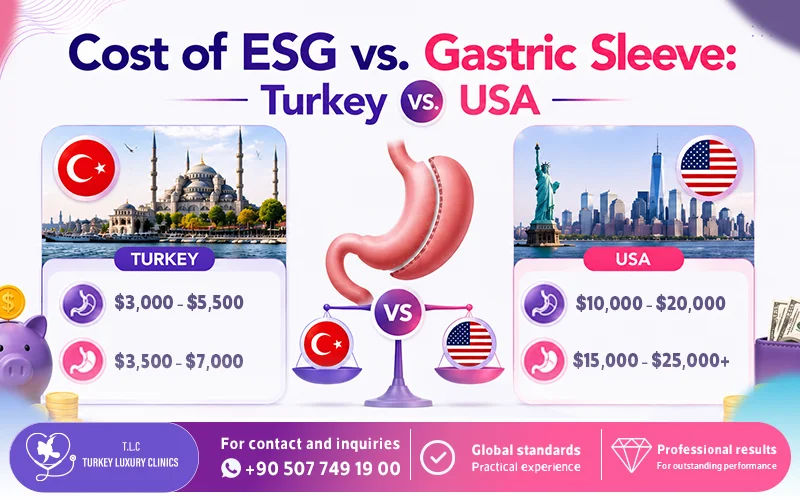
In the United States, self-pay bariatric care is heavily inflated by hospital administration fees, private anesthesia charges, and insurance limitations. Meanwhile, bariatric centers in Turkey provide comprehensive, all-inclusive medical packages designed specifically for international medical tourists.
Our all-inclusive weight loss packages in Turkey successfully cover:
- Surgery performed by highly experienced, internationally accredited bariatric surgeons.
- JCI-accredited hospital facilities with full ICU access and emergency management capabilities.
- Comprehensive pre-operative laboratory tests and diagnostic screenings.
- Premium accommodations, VIP airport transfers, and dedicated translator services.
- Lifelong post-operative nutritional tracking and regular monitoring.
Weight Loss Results: ESG vs. Gastric Sleeve 1, 2, and 5-Year Outcomes
Surgical Gastric Sleeve (VSG) consistently delivers greater, faster, and more durable weight reduction than Endoscopic Sleeve Gastroplasty (ESG) across 1, 2, and 5-year milestones.
At a Glance: 5-Year Weight Loss Projection
Timeframe | Endoscopic Sleeve Gastroplasty (ESG) | Laparoscopic Gastric Sleeve (VSG) |
Year 1 (Peak Loss) | 15% – 20% Total Body Weight Loss | 25% – 35% Total Body Weight Loss |
Year 2 (Stabilization) | 18% – 22% Total Body Weight Loss | 30% – 40% Total Body Weight Loss |
Year 5 (Long-Term) | 15% – 16% Average Sustained Weight Loss | 25% – 30% Average Sustained Weight Loss |
Primary Driver | High reliance on strict behavioral compliance. | Permanent metabolic and hormonal reset. |
Example: For a patient starting at 120 kg, an ESG results in a realistic 18 to 25 kg loss, whereas a Gastric Sleeve yields a substantial 35 to 45 kg reduction within the first 18 months.
What Happens at Year 5? The Reality of Weight Regain
Five-year prospective clinical data demonstrate that while both procedures successfully sustain weight loss, the Gastric Sleeve offers higher long-term stability, especially for individuals with severe obesity (BMI 40+).
However, neither procedure is an absolute shield against weight regain. By Year 5, stomach tissue can adapt, and weight can creep back if a patient falls into frequent snacking, consumes high-calorie liquids, or neglects regular physical activity. Weight loss procedures permanently change your digestive anatomy—but they do not change your psychological relationship with food.
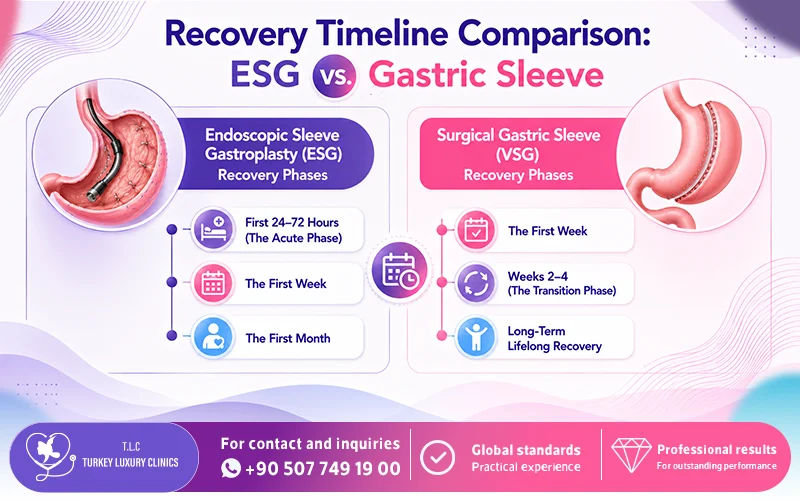
Recovery Timeline Comparison: ESG vs. Gastric Sleeve
The recovery timeline for ESG is significantly faster and less painful than Gastric Sleeve surgery (VSG) due to the complete lack of external incisions. While Endoscopic Sleeve Gastroplasty (ESG) features a rapid 3 to 5-day downtime allowing an immediate return to desk work, a surgical Gastric Sleeve (VSG) requires a more extensive 2 to 4-week recovery period to allow internal stomach staples and abdominal incisions to heal safely.
Endoscopic Sleeve Gastroplasty (ESG) Recovery Phases
- First 24–72 Hours (The Acute Phase): Patients typically experience temporary nausea, stomach cramping, and a feeling of tightness. Carefully controlled liquid intake begins during this window.
- The First Week: Most discomfort improves substantially within 3 to 4 days. Patients walk independently, resume basic daily tasks, and comfortably return to desk jobs.
- The First Month: Patients gradually transition through a strict dietary protocol, moving from clear liquids to soft foods while the internal sutures stabilize.
Surgical Gastric Sleeve (VSG) Recovery Phases
- The First Week: Recovery involves incisional soreness at the port sites, generalized fatigue, and internal abdominal pressure. Early walking is strongly encouraged to eliminate surgical gas pain and prevent blood clots.
- Weeks 2–4 (The Transition Phase): Patients progressively regain energy but manage reduced physical stamina and food tolerance adjustments. Returning to physically demanding or heavy-lifting jobs usually takes 4 to 6 weeks.
- Long-Term Lifelong Recovery: Nutritional adaptation becomes a permanent commitment. To maintain lean muscle mass and prevent malnutrition, patients require lifelong vitamin supplementation, strict protein prioritization, and routine lab monitoring.
Risks and Complications: Which Is Safer?
Endoscopic Sleeve Gastroplasty (ESG) is significantly safer and carries lower overall risks than Gastric Sleeve surgery (VSG). Clinical data shows that ESG has a low complication rate of roughly 1% to 2% with zero internal stapling or cutting. Conversely, surgical Gastric Sleeve carries a higher complication rate (around 3% to 5%) due to surgical risks like staple-line leaks, severe bleeding, and permanent anatomical alteration.
Potential Risks and Side Effects of ESG
Serious complications are highly uncommon because no stomach remova
l or intestinal rerouting occurs. However, risks include temporary post-operative nausea, vomiting, new-onset minor acid reflux, or rare suture loosening.
Potential Risks and Complications of Gastric Sleeve (VSG)
While complication rates remain relatively low in high-volume expert centers, laparoscopic Gastric Sleeve surgery carries higher procedural risks, including internal bleeding, blood clots (DVT), chronic severe acid reflux (GERD), and strictures.
The Primary Surgical Concern: Staple-Line Leaks
The most feared Gastric Sleeve complication is a staple-line leak, which occurs when gastric juices escape through the surgical staple closure into the abdomen. While rare (occurring in about 1% to 2% of patients), a leak is a serious medical emergency that requires immediate intervention, including endoscopic stents, drainage, or extended hospitalization. This critical risk is precisely why surgeon experience and hospital quality matter enormously in minimizing complication rates.
Endoscopic Sleeve Gastroplasty (ESG): Pros and Cons
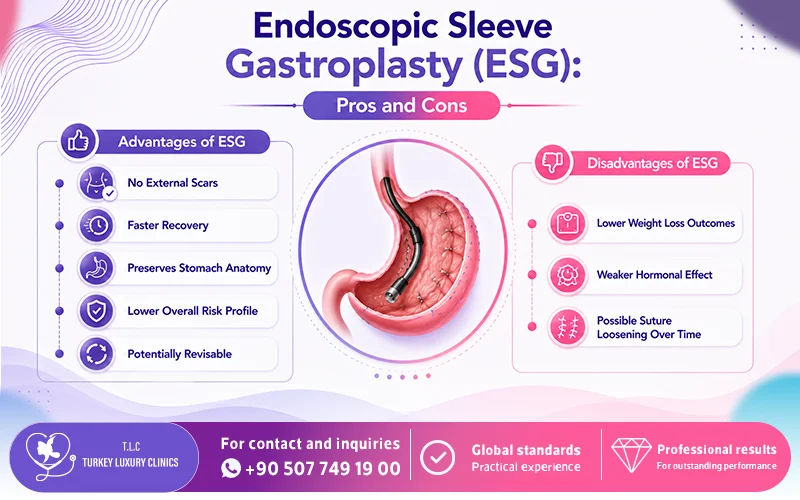
Advantages of ESG
- No External Scars: ESG is performed entirely through the mouth using an endoscope, leaving no abdominal incisions.
- Faster Recovery: Most patients return to desk work and light activities within 3–5 days.
- Preserves Stomach Anatomy: No portion of the stomach is surgically removed; the stomach is internally folded and sutured.
- Lower Overall Risk Profile: ESG carries a relatively low complication rate compared to traditional bariatric surgery.
- Potentially Revisable: In selected cases, sutures may be adjusted or revised endoscopically if needed.
Disadvantages of ESG
- Lower Weight Loss Outcomes: Average total body weight loss is typically lower than Gastric Sleeve surgery.
- Weaker Hormonal Effect: ESG does not significantly reduce Ghrelin production, so appetite suppression is usually less powerful.
- Possible Suture Loosening Over Time: Weight regain may occur if sutures stretch and lifestyle habits deteriorate.
Gastric Sleeve Surgery (VSG): Pros and Cons
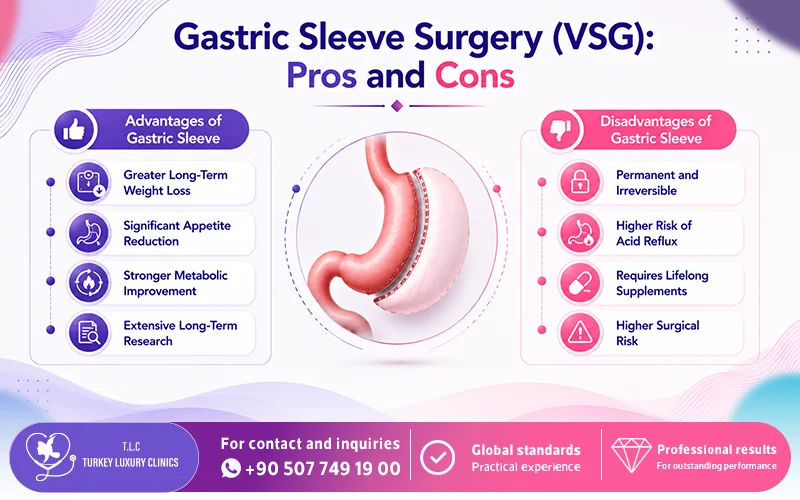
Advantages of Gastric Sleeve
- Greater Long-Term Weight Loss: Gastric Sleeve generally produces stronger and more durable weight reduction.
- Significant Appetite Reduction: Removal of the gastric fundus substantially lowers Ghrelin levels and food cravings.
- Stronger Metabolic Improvement: Many patients experience major improvement in Type 2 diabetes, insulin resistance, and obesity-related conditions.
- Extensive Long-Term Research: Gastric Sleeve is supported by large-scale long-term bariatric outcome data.
Disadvantages of Gastric Sleeve
- Permanent and Irreversible: Approximately 75%–80% of the stomach is permanently removed.
- Higher Risk of Acid Reflux: Some patients develop new or worsening GERD symptoms after surgery.
- Requires Lifelong Supplements: Long-term vitamin supplementation and nutritional monitoring are essential.
- Higher Surgical Risk: Although generally safe, risks such as staple-line leaks and bleeding are unique to surgical procedures.
Ideal Candidates: Who Should Choose Which?
Ideal Candidates for Endoscopic Sleeve Gastroplasty (ESG)
ESG is primarily indicated for individuals with Class I or Class II obesity (BMI between 30 and 40) who have not achieved sustainable results through lifestyle changes alone. Clinical data shows ESG works exceptionally well for:
- Early-Intervention Patients: Individuals seeking medical weight loss before obesity progresses into severe metabolic disease or joint degradation.
- Surgical Aversion: Patients who are medically high-risk for abdominal surgery, carry a fear of permanent organ removal, or want to avoid visible external scarring.
- Time-Constrained Professionals: Busy individuals who require a minimal recovery window and need to safely return to desk work within 3 to 5 days.
Ideal Candidates for Surgical Gastric Sleeve (VSG)
Sleeve Gastrectomy remains the gold standard recommendation for individuals experiencing severe obesity (BMI above 40, or a BMI over 35 paired with critical health conditions). A surgical gastric sleeve is clinically indicated for:
- Severe Metabolic Comorbidities: Patients looking to reverse or aggressively manage Type 2 diabetes, severe obstructive sleep apnea, fatty liver disease (NASH), and chronic hypertension.
- Long-Standing Obesity History: Patients with a documented history of severe weight fluctuations, major weight regain, or prolonged metabolic diet resistance.
- Severe Appetite Dysregulation: Individuals suffering from intense, unmanageable food cravings and constant physical hunger signaling who need a permanent hormonal reset.

FAQs About ESG vs Gastric Sleeve