

- ICL Surgery at a Glance
- What Is ICL Eye Surgery?
- How Does ICL Surgery Correct Your Vision?
- How Does the EVO ICL Surgery Work?
- When Is EVO ICL the Best Choice?
- EVO ICL vs LASIK Eye Surgery
- Implantable Collamer Lens (ICL) Surgery Pros and Cons
- Who Is a Good Candidate for ICL Surgery?
- How Long Does It Take to Recover from ICL Surgery?
- How Successful Is ICL Surgery?
- Is It Worth Traveling to Turkey for ICL Surgery?
- How Can Turkey Luxury Clinics Help?
- FAQs About ICL Surgery
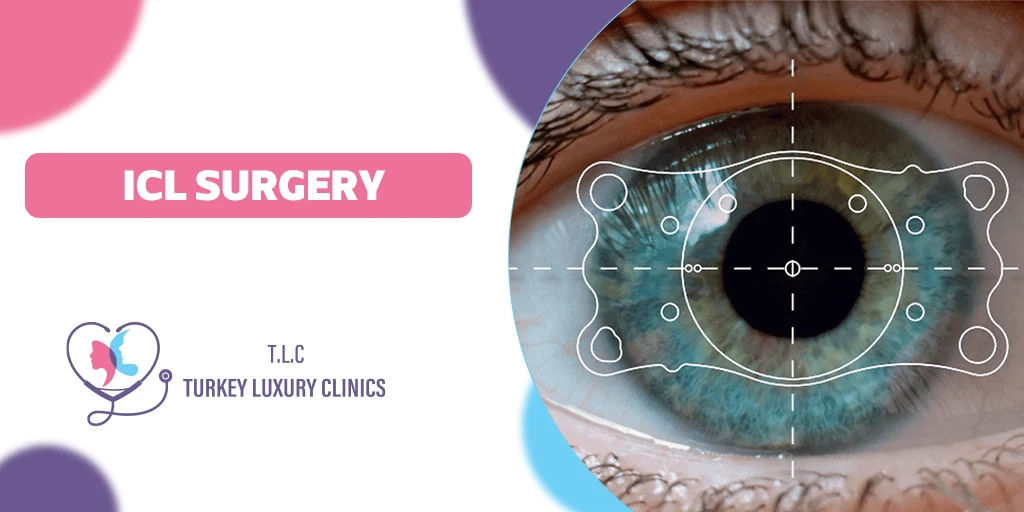
Implantable Collamer Lens (ICL) surgery is a vision correction procedure that places a specialized biocompatible lens inside the eye to reduce or eliminate dependence on glasses and contact lenses.
It serves as an alternative to LASIK and PRK and is particularly suitable for individuals with moderate to high myopia, astigmatism, thin corneas, or those who are not ideal candidates for laser vision correction.
Most modern procedures are performed using the EVO ICL platform, the latest generation of Implantable Collamer Lenses. The newer EVO iteration is widely recognized for its superior safety profile and enhanced comfort.
ICL Surgery at a Glance
- ICL stands for Implantable Collamer Lens. EVO ICL is the modern version.
- It is made from Collamer, a biocompatible material that contains collagen.
- The lens is extremely thin, flexible, and foldable.
- The lens is positioned behind the iris and in front of the eye's natural lens, which remains in place.
- Its primary purpose is to correct refractive errors such as myopia and astigmatism.
- The implanted lens can be removed or replaced if medically necessary.
- Success Rate: About 98%–99%, with patient satisfaction above 99%.
- Recovery: Significant visual improvement often occurs within 24–48 hours.
- Results: Vision typically continues to stabilize during the first few weeks after surgery.
- Cost: $3,500–$5,500 per eye in the US and $1,800–$3,500 per eye in Turkey.
- Risks: Cataract formation, elevated eye pressure, endothelial cell loss, and the potential need for future lens-related procedures.
- Availability in Turkey: Evo ICL is widely available at specialized ophthalmology centers.
What Is ICL Eye Surgery?
ICL (Implantable Collamer Lens) surgery is performed to correct refractive errors such as myopia (nearsightedness) and astigmatism by implanting a very thin biocompatible lens made from Collamer inside the eye, behind the iris, and in front of the natural lens. The lens improves how light focuses on the retina and is designed to remain inside the eye long term, although it can be removed or replaced if medically necessary.
What Does ICL Treat?
ICL treats nearsightedness (myopia) from about −3.00 D to −20.00 D, and astigmatism from about 1.00 D to 4.00 D using a toric ICL. Hyperopic ICLs for farsightedness aren’t approved in the US but are available in other countries, including Turkey.
What Is ICL Made Of?
ICLs are made of Collamer, a soft, flexible material that combines a small amount of collagen with a polymer. Because it is highly biocompatible, the eye tolerates it well long term, and the lens also blocks UV light.
Older ICL vs EVO ICL: What's the Difference?
Most modern ICL procedures are performed using EVO ICL, the latest generation of Implantable Collamer Lenses.
The primary difference is that older ICL models required a separate laser procedure before surgery to create a small opening in the iris. EVO ICL features a built-in central port that allows natural fluid circulation inside the eye, eliminating the need for this additional step.
As a result, EVO ICL offers a simpler treatment process while maintaining the same advantages of vision correction, corneal preservation, and lens reversibility.
How Does ICL Surgery Correct Your Vision?
Implantable Collamer Lens works with your eye’s natural anatomy to bend light precisely onto the retina for sharper vision by permanently placing a customized, biocompatible lens inside the eye.
An ICL is customized by manufacturing the lens specifically to match your exact eye dimensions and prescription. Surgeons use advanced eye-mapping technology to measure your eye's internal shape, ensuring the final lens provides optimal vision correction and a comfortable, safe fit. This applies whether you are correcting severe nearsightedness (myopia) or astigmatism with a toric ICL.
How Does the EVO ICL Surgery Work?
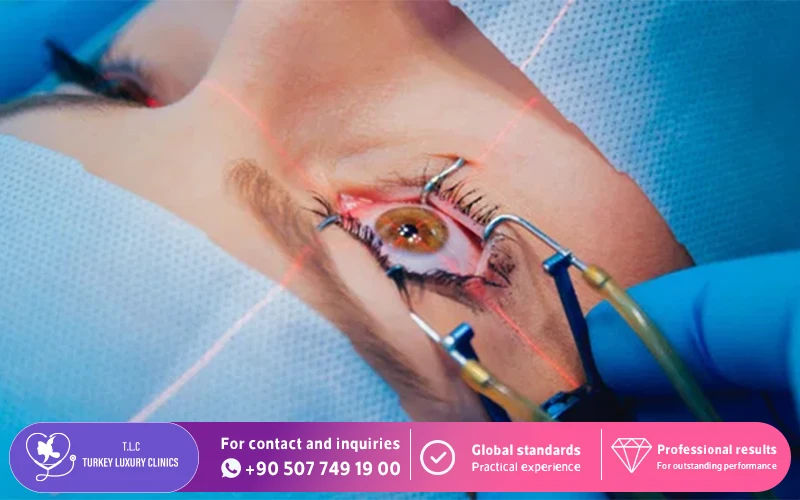
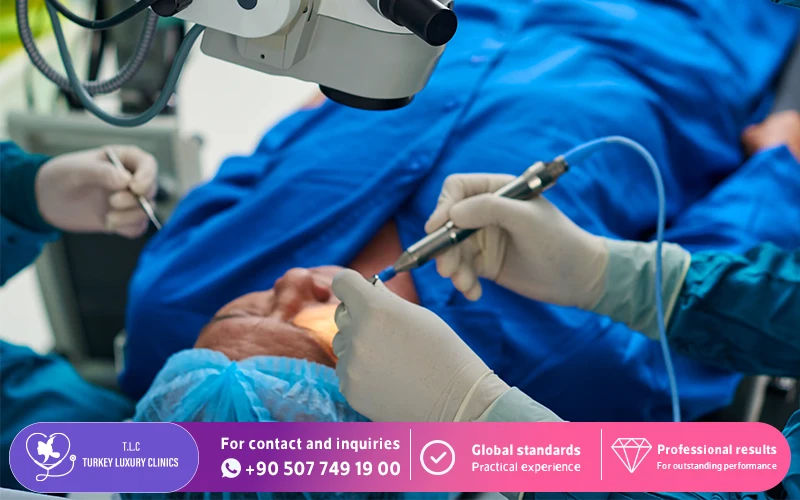
ICL (Implantable Collamer Lens) surgery is an outpatient procedure that typically takes only 15-30 minutes. It utilizes a combination of topical anesthesia (numbing eye drops) and mild sedation. General anesthesia is generally not required.
After the eyes are numbed, the ICL is inserted through a microscopic, painless incision in the cornea. The lens is carefully positioned behind the iris (the colored part of your eye) and directly in front of your natural crystalline lens. The outpatient procedure usually takes only 15 to 30 minutes per eye.
EVO ICL Surgery Procedure Steps:
Step 1: Creating a Small Incision
The surgeon creates a tiny incision at the edge of the cornea to allow the folded lens to be inserted into the eye.
Step 2: Lens Implantation
The flexible ICL is carefully inserted through the incision and positioned behind the iris and in front of the natural lens.
Step 3: Final Positioning
The surgeon gently adjusts the lens to ensure proper positioning and optimal vision correction. The incision is typically self-sealing and usually does not require stitches.
When Is EVO ICL the Best Choice?
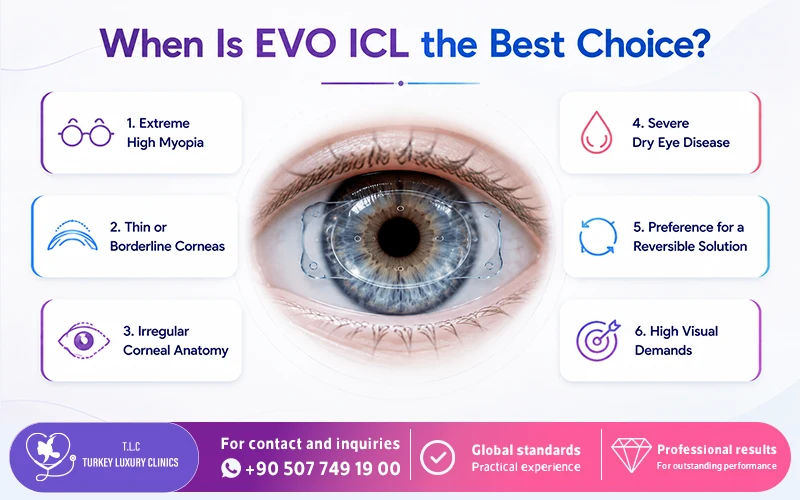
ICL is an excellent solution over LASIK eye surgery for a variety of refractive errors, particularly moderate to high myopia, astigmatism, thin corneas, and patients who are not ideal candidates for laser vision correction.
- Extreme High Myopia: ICL is often preferred for patients with severe nearsightedness, typically ranging from -8.00 D to -20.00 D. At these prescription levels, laser vision correction may require the removal of excessive corneal tissue, potentially compromising long-term corneal stability.
- Thin or Borderline Corneas: Patients with corneal thickness below approximately 500–520 microns, or those with limited residual corneal tissue after laser treatment calculations, may be better candidates for ICL because the procedure corrects vision without removing corneal tissue.
- Irregular Corneal Anatomy: Individuals with suspicious corneal topography, mild corneal irregularities, or borderline biomechanical measurements may be safer candidates for ICL than laser vision correction procedures.
- Severe Dry Eye Disease: Patients with significant dry eye symptoms, severe tear film dysfunction, or conditions such as Sjögren’s syndrome may benefit from ICL because the procedure has minimal impact on the corneal nerves involved in tear production.
- Preference for a Reversible Solution: Unlike laser vision correction, the implanted lens can be removed or replaced if medically necessary in the future.
- High Visual Demands: Patients who prioritize excellent visual quality, contrast sensitivity, and night vision may benefit from the optical advantages often associated with ICL.
EVO ICL vs LASIK Eye Surgery
Feature | EVO ICL | LASIK |
Vision Correction Method | Implantable Lens | Laser Corneal Reshaping |
Reversible | Yes | No |
Corneal Tissue Removal | No | Yes |
Suitable for Thin Corneas | Yes | Often No |
High Myopia (-8D and Above) | Excellent | Limited |
Dry Eye Risk | Lower | Higher |
Recovery Time | 24–48 Hours | 1–3 Days |
Night Vision Quality | Excellent | Good to Excellent |
Long-Term Corneal Stability | Preserved | Altered |
Cost (US) | Higher | Lower |
Implantable Collamer Lens (ICL) Surgery Pros and Cons
Pros (Benefits) | Cons (Risks & Downsides) |
High Correction Range | Higher Up Front Cost |
Reversible | Small Risk of Cataracts |
Preserves the Cornea | Spike in Eye Pressure |
Lower Dry Eye Risk | Nighttime Visual Disturbances |
Built-In UV Protection | Surgical Overcorrection |
Superb Night Vision | Risk of Internal Eye Infection |
Who Is a Good Candidate for ICL Surgery?
You may be a good candidate for ICL surgery if you:
- Are between 21 and 60 years old.
- Have a stable prescription (changing by no more than 0.50 D) for at least one year.
- Have moderate to high myopia, with or without astigmatism.
- Have thin corneas or are not an ideal candidate for LASIK or PRK.
- Have adequate anterior chamber depth (usually at least 3.0 mm) to accommodate the lens safely.
- Have a healthy corneal endothelium and overall good eye health.
- Have realistic expectations regarding the procedure and its outcomes.

What Is the Age Limit for ICL Surgery?
ICL Age Criteria | Age | Notes |
Minimum age | 21 | FDA minimum in the US; some clinics outside the US treat patients from 18 |
Maximum age | 60 | FDA upper limit since February 2026 (previously 45) |
Ideal age | 21–45 | Prescriptions are usually most stable during these years |
The FDA-approved age range for EVO ICL surgery in the US is 21 to 60 years old. Regardless of age, candidates must have a stable prescription and meet the eye health requirements for surgery.
Who Is Not Eligible for ICL?
ICL surgery may not be suitable for patients with:
- Insufficient anterior chamber depth.
- Low endothelial cell count.
- Existing visually significant cataracts.
- Uncontrolled glaucoma or elevated intraocular pressure.
- Active eye inflammation, such as uveitis.
- Untreated retinal tears or significant retinal disease.
- Prescriptions outside the approved treatment range.
- Pregnancy or breastfeeding.

In some cases, patients who are not eligible for ICL surgery may still qualify for alternative vision correction procedures, such as PRK or LASEK, depending on their prescription, corneal measurements, and overall eye health.
How Long Does It Take to Recover from ICL Surgery?
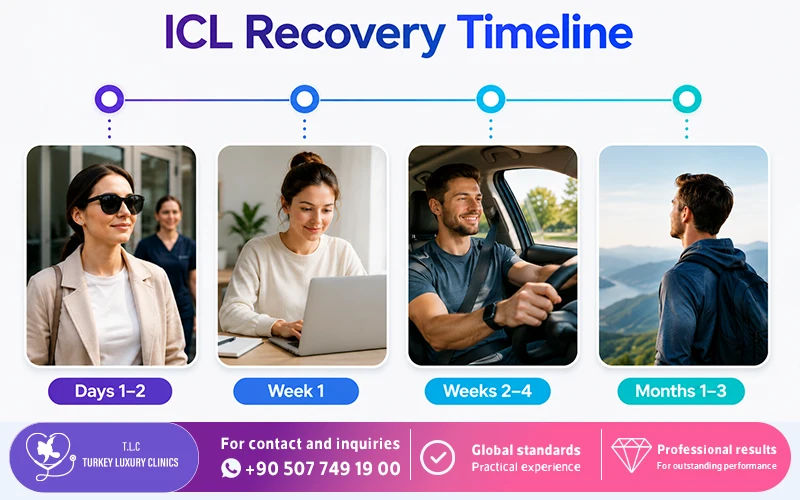
Implantable Collamer Lens (ICL) recovery is relatively fast, with significant vision improvement typically occurring within the first 24 to 48 hours after surgery. Most patients return to work and light daily activities within one to two days, although complete visual stabilization and internal healing may take between one and three months.
ICL Recovery Timeline
- Days 1–2: Functional vision returns rapidly, although temporary blurriness, haziness, glare, or light sensitivity may occur. Patients should arrange for someone to drive them home after surgery.
- Week 1: Vision becomes noticeably sharper. Most patients can return to desk-based work, light walking, and other non-strenuous daily activities.
- Weeks 2–4: Daily routines continue to normalize. Many patients resume driving, light exercise, and wearing makeup, provided their surgeon has approved these activities.
- Months 1–3: Final visual stabilization is typically achieved. Any mild halos, glare, or night-vision disturbances generally continue to improve during this period.
When Will You Notice Results After ICL Surgery?
Most patients notice a dramatic improvement in vision within 24 to 48 hours after ICL surgery. While functional vision returns quickly, visual quality continues to refine during the following weeks as the eye heals and adapts to the implanted lens.
Timeline | What to Expect |
First 24 Hours | Vision is brighter but may appear blurry due to pupil dilation and post-surgical medications. |
24–48 Hours | Significant visual improvement occurs, and many patients achieve driving-quality vision. |
Days 3–7 | Mild fluctuations, halos, glare, or ghosting may occur as the brain adapts. |
Weeks 2–4 | Vision becomes sharper, more stable, and increasingly consistent. |
Months 1–3 | Final visual outcomes are typically achieved with minimal fluctuations. |
What Factors Affect Vision Recovery?
Although most patients experience significant visual improvement within 24–48 hours, final visual clarity may take longer in some cases. Temporary blurry vision can result from normal post-surgical inflammation, pupil dilation, dry eye symptoms, adaptation to the implanted lens, or the use of prescribed steroid eye drops. These effects are usually temporary and improve as the eye heals during the first few weeks after surgery.
Is ICL Surgery Safe? EVO ICL Risks and Complication Rates
ICL surgery is considered one of the safest refractive procedures available today, and major complications are rare. Mild side effects are more common, especially in the first weeks, but most are temporary and treatable.
Common Temporary Side Effects
1. Halos and Glare (Very common – about 43% to 69% of patients early after surgery)
Rings or starbursts around lights at night, partly caused by the lens’s central port. They usually fade or become much less noticeable within 1 to 12 months.
2. Temporary Rise in Eye Pressure (About 5% to 11%)
Usually happens on the first day after surgery and is treated with eye drops. Long-term pressure problems are rare.
3. Dry Eye and Mild Discomfort (Common – first days to weeks)
Mild dryness, light sensitivity, and a foreign-body sensation, generally less than after LASIK.
4. Temporary Blurred or Fluctuating Vision (Common)
Vision may fluctuate as inflammation settles and the eye adapts to the lens.
Rare but Serious Complications
1. Lens Repositioning or Exchange (About 5% to 9%)
Some lenses need to be rotated, repositioned, or exchanged, most often toric lenses that need axis alignment.
2. Endothelial Cell Loss (About 2% to 9%)
A gradual loss of the cornea’s inner cells, which is why yearly checkups are recommended.
3. Cataract Formation (About 0.1% with EVO ICL)
Much lower with modern EVO lenses than with older ICL models, which had rates of around 1.8%.
4. Infection Inside the Eye (Endophthalmitis) (About 0.017%, or 1 in 6,000)
Extremely rare but serious, and requires immediate treatment.
5. Retinal Detachment (Very rare)
Mainly linked to high myopia itself rather than the ICL. Seek urgent care if you notice flashes, floaters, or a curtain over your vision.
Is ICL Riskier Than LASIK?
ICL carries different risks rather than more risk overall. Because it is surgery inside the eye, it has rare risks that LASIK doesn’t, such as raised eye pressure, cataracts, or infection inside the eye. LASIK, on the other hand, has a higher chance of dry eye and flap-related problems, and it removes corneal tissue permanently. For high prescriptions or thin corneas, ICL is often the safer choice.
Does ICL Need to Be Replaced?
No. ICL lenses are designed to remain inside the eye permanently and do not typically require replacement. The biocompatible Collamer material is highly durable and does not degrade over time. However, the lens can be removed, exchanged, or repositioned if medically necessary, such as in rare cases of lens-related complications, significant prescription changes, or future cataract surgery.
Can I Develop Cataracts After ICL?
Yes. ICL surgery does not prevent age-related cataracts from developing later in life because the eye's natural lens remains in place. Although modern EVO ICL lenses have significantly reduced the risk, cataract formation remains a rare potential long-term complication of ICL surgery. If cataracts develop in the future, the ICL can be removed during cataract surgery and replaced with an intraocular lens (IOL).
How Successful Is ICL Surgery?
ICL surgery has a success rate of about 98%–99%. Most patients achieve 20/20 vision or better, and about 99.4% say they would choose ICL again. Results are strongest in moderate to high myopia, where ICL often gives sharper contrast and better night vision than laser surgery because the cornea isn’t reshaped.
Outcome | Result |
Overall success rate | About 98%–99% |
Patients reaching 20/20 without glasses | About 95%–99% |
Within ±1.00 D of the target prescription | About 94% |
Patient satisfaction | 99%–99.9% |
A small number of patients need the lens repositioned or exchanged to reach their best result, which is an established part of ICL care rather than a failed surgery.
ICL Long-Term Results After 10–20 Years
ICL results stay stable for many years. A 2025 long-term study found slightly faster loss of the cornea’s inner cells (endothelial cells) in ICL patients, which is why yearly eye checkups are recommended. In a ten-year series, about 4.7% of lenses were removed or exchanged, mostly due to cataracts or a change in prescription.
ICL vs LASIK Success Rate
Both procedures have very high success rates, with most patients reaching 20/20 or 20/25 vision. LASIK suits mild to moderate prescriptions, while ICL often gives better results for high myopia, thin corneas, or dry eyes.
Can Your Vision Get Worse After ICL?
The lens doesn’t wear out, but vision can still change because of a natural prescription change, age-related reading vision loss after 40, cataracts later in life, or rarely a toric lens rotating. Most of these can be fixed by repositioning or exchanging the lens, or with cataract surgery.
Is It Worth Traveling to Turkey for ICL Surgery?
Yes, for most patients. ICL surgery costs $3,500–$5,500 per eye in the US, while the same EVO ICL procedure in Turkey typically costs $1,800–$3,500 per eye, or about $3,500–$7,000 for both eyes, using the same FDA-approved EVO Visian ICL lenses made by STAAR Surgical. For a full breakdown, see our guide to ICL eye surgery cost.
Other reasons international patients choose Turkey include:
- Experienced surgeons: Turkish eye hospitals perform a high volume of EVO ICL and Toric EVO ICL procedures.
- Modern technology: Leading clinics use the same lenses and diagnostic equipment as major Western eye centers.
- Accredited facilities: Many hospitals hold JCI or ISO accreditation.
- All-inclusive packages: Most cover the eye exam, surgery, medications, follow-up visits, airport transfers, and hotel stay.
How Long Should I Stay in Turkey After ICL Surgery?
Most international patients stay in Turkey for approximately 5–7 days. This allows time for the pre-operative examination, surgery, and at least one post-operative follow-up visit before returning home.
How Can Turkey Luxury Clinics Help?
Whether ICL is right for you depends on measurements only an eye exam can give: your prescription, corneal thickness, and the space inside your eye (anterior chamber depth). If you have recent eye test results or a prescription, send them to our team on WhatsApp for a free preliminary review. Our ophthalmologists will tell you whether EVO ICL suits your eyes, which lens type you may need, and give you a clear price for treatment in Turkey before you make any travel plans.
Get a Free ICL Eligibility Assessment
FAQs About ICL Surgery