

- IVF in Turkey At a Glance
- What is IVF?
- IVF Options Available in Turkey
- Ideal Candidates for IVF in Turkey
- How Much Does IVF Cost in Turkey (2026)
- Step-by-Step IVF Procedure
- IVF in Turkey Timeline (Full Journey)
- Why International Patients Choose IVF in Turkey
- Best IVF Clinics in Turkey
- FAQs About IVF in Turkey
In 2026, Turkey has emerged as a major hub for medical tourism, attracting international patients with advanced fertility treatments at significantly lower costs than in Western Europe or the United States.
IVF clinics in Istanbul, Ankara, and Antalya offer state-of-the-art facilities, internationally accredited standards, and experienced fertility specialists.
With the advancement of embryo culture techniques, the dream of parenthood has become more attainable than ever for many couples.
Patients choose Turkey for its combination of high-quality care, competitive success rates, and cost-effective treatment packages, making it a reliable and attractive destination for IVF.
Start your IVF journey with Turkey Luxury Clinics to receive personalized guidance, access to top accredited clinics, and comprehensive support every step of the way.
IVF in Turkey At a Glance
- Top Clinics: Accredited centers in Istanbul, Ankara, Antalya
- Cost: $2,500 for standard IVF procedure cycle
- Stay Duration: 2–3 weeks for main procedures
- Return Home: Safe 24–48 hours after embryo transfer
- Pregnancy Test: 14 days later, usually at home
- Advanced Procedures: IVF, ICSI, PGT, egg freezing, mild cycles
- Eligibility: Married heterosexual couples with own eggs/sperm
- Packages Include: Consultations, monitoring, retrieval, transfer, hotel, airport, interpreter
- Success Rate: 40–70% per cycle
- Technology & Support: Time-lapse monitoring and embryo freezing
What is IVF?
IVF (In Vitro Fertilization) is a fertility treatment in which eggs are fertilized by sperm outside the body, in a laboratory dish, before the resulting embryo is transferred to the uterus to achieve pregnancy. It is commonly used when other fertility methods have failed, such as in cases of blocked fallopian tubes, male infertility, or unexplained infertility. The process typically involves stimulating the ovaries to produce multiple eggs, retrieving the eggs, fertilizing them with sperm, culturing the embryos for several days, and finally transferring one or more embryos into the uterus.
IVF Options Available in Turkey
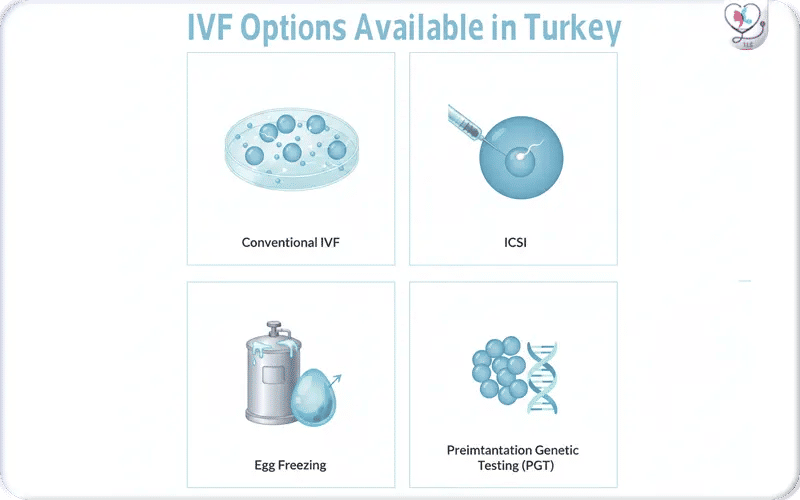
Conventional IVF:
Conventional IVF is the standard fertility treatment involving ovarian stimulation, egg retrieval, laboratory fertilization, and embryo transfer into the uterus. It is suitable for most couples experiencing infertility and serves as the foundation for many IVF procedures.
ICSI (Intracytoplasmic Sperm Injection):
ICSI is used for male infertility cases, where a single sperm is directly injected into an egg. This method helps overcome low sperm count, poor motility, or abnormal sperm morphology, increasing the chances of successful fertilization.
Egg Freezing:
Egg freezing allows women with diminished ovarian reserve or those facing medical treatments like chemotherapy to preserve their fertility. Eggs are collected, frozen, and stored for future IVF attempts.
Preimplantation Genetic Testing (PGT):
PGT involves screening embryos for genetic conditions before transfer. This helps select chromosomally healthy embryos and reduces the risk of inherited disorders.
Ideal Candidates for IVF in Turkey
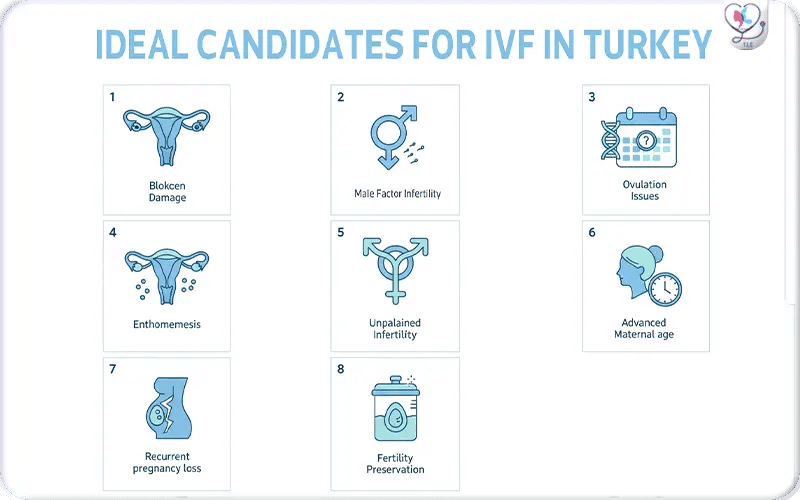
Common Reasons for IVF include:
- Blocked or Damaged Fallopian Tubes: When the fallopian tubes are blocked or damaged, eggs cannot meet sperm naturally, preventing conception. IVF bypasses the tubes by fertilizing eggs in the lab.
- Male Factor Infertility: Low sperm count, poor motility, or abnormal sperm shape can reduce the chances of natural fertilization. IVF with ICSI can help overcome these issues.
- Ovulation Issues: Problems with releasing eggs regularly, often linked to PCOS or hormonal imbalances, can make natural conception difficult. IVF ensures eggs are retrieved and fertilized effectively.
- Endometriosis: Tissue similar to the uterine lining grows outside the uterus, which can damage reproductive organs or interfere with implantation. IVF can improve pregnancy chances despite endometriosis.
- Unexplained Infertility: Sometimes, couples cannot conceive despite normal tests. IVF offers a solution by combining eggs and sperm in controlled conditions.
- Advanced Maternal Age: Women over 35 may experience reduced egg quality and ovarian reserve, lowering natural fertility. IVF can optimize timing and egg selection to improve outcomes.
- Recurrent Pregnancy Loss: Couples with a history of multiple miscarriages may benefit from IVF with genetic screening to select healthy embryos.
- Fertility Preservation: For patients facing cancer treatment or those delaying parenthood, eggs or embryos can be frozen for future IVF cycles
Eligibility Criteria for IVF Treatment in Turkey
- Legal Restrictions: Turkish law allows IVF only for married heterosexual couples using their own sperm and eggs.
- No Donor Programs: The use of donor eggs, sperm, or embryos is strictly prohibited in Turkey.
- Age Limits: Although there is no official legal age limit, most clinics do not treat women over 45–46, due to the requirement of using only their own eggs.
How Much Does IVF Cost in Turkey (2026)
IVF costs in Turkey are significantly lower than in the US/Europe, typically ranging from $2,500 to $5,000 USD per cycle, covering basic procedures and medications, with advanced options like PGD or ICSI adding to the cost.
IVF cost breakdown:
- Single IVF Cycle: $2,500 – $5,000
- Conventional IVF: $3,000 – $4,000
- Natural Cycle IVF: Around $3,500
- Medications: Additional $800 – $1,200
Many clinics in Istanbul, Antalya, or Ankara offer all-inclusive IVF packages covering accommodation, airport transfers, and translation services, offering substantial savings up to 75% less than the US, where the cost of IVF ranges between ~$12,000 - $25,000 and while providing high-quality care.
What is Included in IVF Packages in Turkey?
IVF packages in Turkey typically bundle core medical procedures like consultations, monitoring (blood tests/scans), egg retrieval, fertilization (IVF/ICSI), embryo culture (often with time-lapse), and embryo transfer, with some all-inclusive options adding medications, airport transfers, hotel stays, interpreters, and post-transfer support, though costs vary by clinic and what's excluded (like airfare or some meds).
Specialized IVF Treatments in Turkey: Estimated Costs (2026)
Specialized IVF Treatment | Estimated Cost (2026) |
Standard IVF with PGD | $8,000 – $14,000 |
IVF with Preimplantation Genetic Screening (PGS) | $9,000 – $15,000 |
IVF with Comprehensive Chromosomal Screening (CCS) | $10,000 – $16,500 |
IVF with Next-Generation Sequencing (NGS) | $10,000 – $15,000 |
IVF with Single Gene Disorder Testing (SGDT) | $9,000 – $14,500 |
IVF with Embryo Banking (per cycle) | $8,000 – $14,000 |
IVF with Embryo Banking (multiple cycles) | $16,000 – $28,000 |
IVF with Minimal Stimulation | $7,500 – $13,000 |
Step-by-Step IVF Procedure
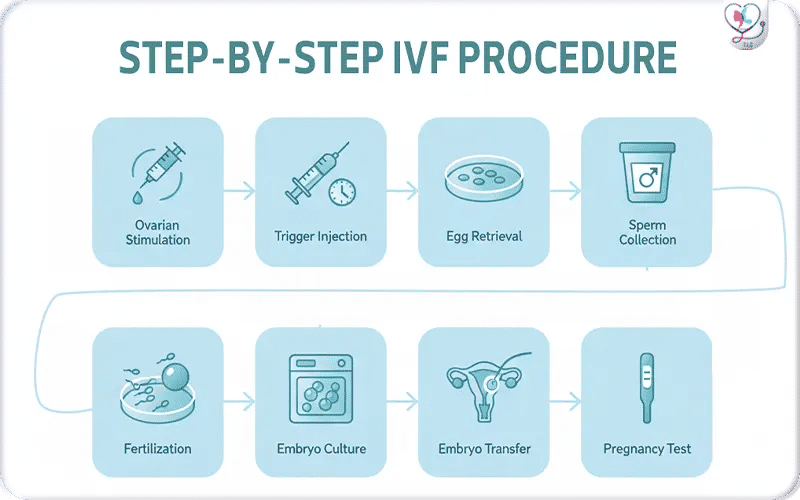
1. Ovarian Stimulation:
The IVF process begins with ovarian stimulation, where patients receive injectable hormones to encourage the ovaries to produce multiple eggs rather than the single egg normally released each month. During this stage, doctors closely monitor hormone levels and follicle growth through blood tests and ultrasounds to ensure optimal development. The goal is to maximize the number of mature eggs available for retrieval, increasing the chances of successful fertilization. This phase usually lasts 8–14 days, depending on the patient’s response.
2. Trigger Injection:
Once the follicles are ready, a trigger injection, such as hCG or a GnRH agonist, is administered to ensure the eggs reach full maturity. The timing of this injection is precise, typically occurring about 36 hours before egg retrieval, to optimize the readiness of eggs for fertilization in the laboratory.
3. Egg Retrieval:
Eggs are collected from the ovaries using ultrasound-guided needle aspiration, a procedure usually performed under light sedation for patient comfort. The process generally takes 15–30 minutes, and the retrieved eggs are immediately prepared in the lab for fertilization.
4. Sperm Collection:
A semen sample is collected from the male partner or previously stored sperm, then washed and concentrated in the lab to select the healthiest and most motile sperm for fertilization. In cases of severe male infertility, sperm may be obtained surgically through procedures such as PESA or TESA.
5. Fertilization:
The eggs and sperm are combined in a laboratory dish to allow fertilization. In cases where male infertility is a concern, Intracytoplasmic Sperm Injection (ICSI) is used, injecting a single sperm directly into each egg. Embryologists closely monitor fertilized eggs for early signs of development to identify the healthiest embryos.
6. Embryo Culture:
Fertilized eggs are cultured in specialized incubators for 3–6 days to reach the optimal stage for transfer, whether at the cleavage or blastocyst stage. During this time, embryologists assess embryo quality, development, and sometimes perform genetic testing, such as PGT-A or PGT-M, to select the embryos with the best chance of successful implantation.
7. Embryo Transfer:
The selected embryos are transferred into the uterus using a thin, flexible catheter. Usually, one or two embryos are transferred depending on age, embryo quality, and patient preference. The procedure is minimally invasive and generally painless, with patients advised to rest briefly and avoid strenuous activity afterward.
8. Pregnancy Test:
Approximately 10–14 days after the embryo transfer, a blood test (β-hCG) is performed to confirm whether implantation has occurred. Follow-up ultrasounds are typically conducted a few weeks later to verify a viable intrauterine pregnancy. Success rates depend on maternal age, embryo quality, and individual medical conditions.
IVF in Turkey Timeline (Full Journey)
An IVF cycle in Turkey typically takes around 3–4 weeks (21–25 days) from the initial scans to embryo transfer. Most international patients stay in Turkey for approximately 2–3 weeks to complete ovarian stimulation, egg retrieval, and embryo transfer, while the pregnancy test is usually done 14 days after transfer, often after returning home.
IVF in Turkey: Timeline Breakdown
- Preparation & Arrival (Days 1–2): Baseline ultrasound and blood tests to assess hormone levels and ovarian readiness.
- Ovarian Stimulation (Days 2–12): Daily hormone injections with regular monitoring through ultrasounds and blood tests.
- Egg Retrieval (Days 12–14): Trigger injection followed by egg collection under light sedation.
- Embryo Development (Days 14–19): Fertilization in the lab and close embryo monitoring.
- Embryo Transfer (Days 19–20): A simple outpatient procedure to place the embryo(s) into the uterus.
- Pregnancy Test (Around Day 34): Blood test performed 14 days after embryo transfer to confirm pregnancy.
Most clinics recommend resting for 24–48 hours after the transfer, after which flying or returning home is allowed. There is no scientific evidence showing that travel negatively affects implantation or IVF success.
Patients do not need to stay in Turkey until the pregnancy blood test; the test is usually done 14 days after transfer and can be performed in the patient’s home country, unless the treating doctor advises otherwise due to individual medical factors.
Why International Patients Choose IVF in Turkey
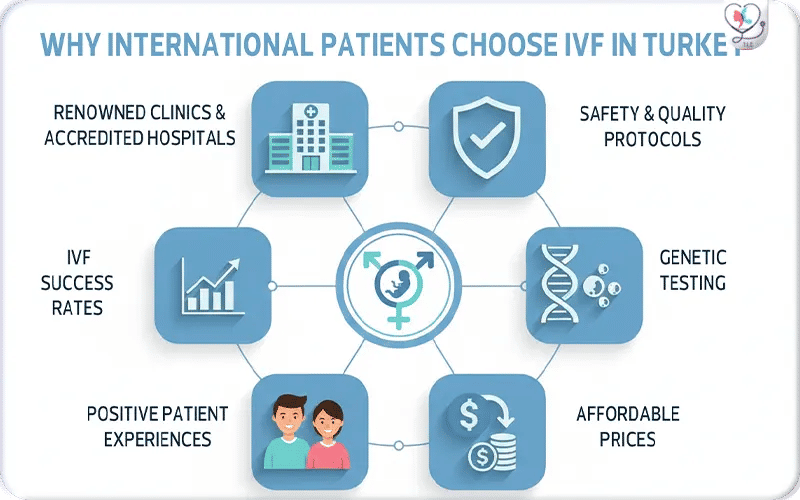
1. Renowned Clinics & Accredited Hospitals
Turkey is home to well-established IVF clinics and internationally accredited hospitals, including JCI-certified facilities, offering high standards of medical care, safety, and patient trust.
2. Safety & Quality Protocols
IVF clinics in Turkey operate under strict national regulations, licensed medical supervision, and regular inspections, ensuring safe and reliable treatment for international patients.
3. Genetic Testing
Advanced genetic testing (PGT-A and PGT-M) is widely available to improve success rates and reduce miscarriage risk.
4. Affordable Prices
IVF treatment in Turkey is generally more affordable than in many Western countries, while maintaining comparable medical standards and transparent pricing structures.
5. Positive Patient Experiences
IVF reviews in Turkey often highlight caring medical teams, clear communication, organized support for international patients, and overall satisfaction with treatment outcomes and value.
6. IVF Success Rates in Turkey
IVF success rates in Turkey are strong and comparable to international standards. For women under 35, success rates often range between 60–70% per cycle, while outcomes vary significantly with age, dropping to approximately 20–40% for women over 40. Success depends on factors such as age, egg quality, medical history, and treatment protocols.
Best IVF Clinics in Turkey

Istanbul, Ankara & Antalya are popular destinations with established clinics; however, Istanbul is home to the highest density of accredited clinics.
In Istanbul, IVF clinics are reported to have high success rates consistent with national averages, multiple birth rates that are equal to or lower than national benchmarks, strong patient satisfaction scores, positive inspection outcomes, and access to comprehensive counseling services.
At Turkey Luxury Clinics, we allow you to access top IVF clinics in Istanbul that commonly offer:
- Board-certified fertility specialists with extensive clinical experience
- Accredited laboratories follow international quality and safety standards
- Advanced fertility technologies such as ICSI, PGT, and embryo freezing
- Individualized treatment plans based on each patient’s medical profile
- Transparent pricing with clear explanations of treatment components
- Dedicated patient coordinators for medical, emotional, and logistical support
- Ethical medical practices are aligned with Turkish healthcare regulations
- Multilingual communication and support for international patients
Ensuring patients are matched with clinics that meet international standards while receiving guidance at every step of their IVF journey.
You may like
Positive Signs After Embryo Transfer: Early Pregnancy Clues
IVF Timeline: Step-by-Step Process from Start to Finish
FAQs About IVF in Turkey