


- What Are the Positive Signs After Embryo Transfer?
- What if You Do Not Feel Any of These Symptoms?
- Do Symptoms Differ Between Fresh and Frozen Embryo Transfers?
- What to Expect After Embryo Transfer Day by Day
- What to Do After an Embryo Transfer
- Pregnancy Test After Embryo Transfer
- When to Contact Your Fertility Team During the Two-Week Wait
- Need Guidance During Your IVF Journey?
- FAQs About Positive Signs After Embryo Transfer
For most women undergoing IVF, feelings of excitement, hope, and worry often come together. Whether your treatment involves a fresh embryo transfer or a frozen embryo transfer (FET), many patients wonder how to tell if the procedure is working before taking a test.
Discover with Turkey Luxury Clinics the common and reassuring signs after IVF embryo transfer, helping you stay informed, hopeful, and confident during this crucial waiting period.
What Are the Positive Signs After Embryo Transfer?
Positive signs after embryo transfer reflect subtle body changes as the embryo begins implantation. These may include mild cramping, bloating, and fatigue in the first few days, followed by possible light spotting, breast tenderness, nausea, increased vaginal discharge, or frequent urination as pregnancy hormones like progesterone and hCG rise. Because these symptoms can also resemble PMS or medication side effects—and some women experience no symptoms at all—the only definitive confirmation of pregnancy is a blood test (beta-hCG) performed about 10–14 days after transfer.
Below are the most commonly reported positive signs after embryo transfer, explained in a clear and medically accurate way.
Light Spotting or Implantation Bleeding

You might notice light spotting, often pink or brown, on your underwear or when wiping. This can happen when the embryo attaches to the uterine lining and small blood vessels are affected. Implantation bleeding is usually very light and short-lived and does not look like a regular period. Not seeing spotting doesn’t mean anything is wrong; many successful pregnancies happen without it.
Mild Cramping or Lower Abdominal Sensations

Some women feel mild cramping, pressure, or pulling in the lower abdomen after embryo transfer. This can be related to implantation or simply the effect of progesterone on the uterus. These sensations are typically gentle and come and go. Strong or worsening pain, however, should always be discussed with your doctor.
Breast Tenderness or Sensitivity
If your breasts feel sore, heavy, or more sensitive than usual, you’re not imagining it. Rising progesterone levels after embryo transfer can cause these changes as your body prepares for a possible pregnancy. Keep in mind that this symptom is very common, even in cycles that don’t result in pregnancy.
Feeling More Tired Than Usual

Feeling unusually tired or sleepy is something many women notice during the waiting period. Progesterone has a calming effect on the body, and early pregnancy hormones may add to this feeling. Listening to your body and allowing yourself extra rest can be helpful during this time.
Mild Nausea or Digestive Changes
Some women experience mild nausea, queasiness, or changes in appetite after embryo transfer. These symptoms can be linked to early hormonal shifts, though they are not experienced by everyone. If you don’t feel nauseous at all, that’s completely normal too.
Bloating or Abdominal Fullness

Bloating is very common after IVF and can make your abdomen feel tight or swollen. This happens because progesterone slows digestion and causes fluid retention. While bloating can be uncomfortable, it doesn’t indicate whether the embryo has implanted or not.
Changes in Vaginal Discharge
You may notice an increase in clear or milky vaginal discharge during this phase. This is usually caused by hormonal changes and increased blood flow to the pelvic area. As long as the discharge has no strong odor or unusual color, it’s generally considered normal.
Needing to Urinate More Often
Some women feel the urge to urinate more frequently after embryo transfer. If implantation occurs, early pregnancy hormones can affect kidney function and blood flow. However, increased fluid intake and medications can also cause this symptom.
Headaches
Headaches can appear due to hormonal fluctuations, particularly changes in estrogen levels. IVF medications are a common cause, and these headaches are usually temporary. Staying hydrated and resting may help ease discomfort.
A Delayed or Missed Period
A missed period is often the sign many women wait for. However, during IVF cycles, progesterone support can delay bleeding even if pregnancy hasn’t occurred. This is why a missed period alone isn’t enough to confirm success.
What if You Do Not Feel Any of These Symptoms?
It’s important to remember that having symptoms—or having none at all—does not predict the outcome of your IVF cycle. Many women with successful pregnancies report no noticeable signs before their test. The only reliable way to know if the embryo transfer worked is through a blood pregnancy test, usually done 10–14 days after transfer.
Do Symptoms Differ Between Fresh and Frozen Embryo Transfers?

Positive signs after a fresh embryo transfer can differ slightly from those after a frozen embryo transfer (FET). This difference is mainly related to ovarian hyperstimulation, which occurs during standard IVF cycles.
Fresh transfers involve higher hormone stimulation, which may lead to bloating, mild abdominal discomfort, or other side effects. FET cycles usually follow a more natural hormonal pattern, reducing side effects while offering similar—or sometimes even better—chances of successful implantation.
However, symptoms such as light spotting, cramping, fatigue, and breast tenderness can occur after both fresh and frozen transfers. These symptoms are caused by rising progesterone levels in both types of cycles.
What to Expect After Embryo Transfer Day by Day
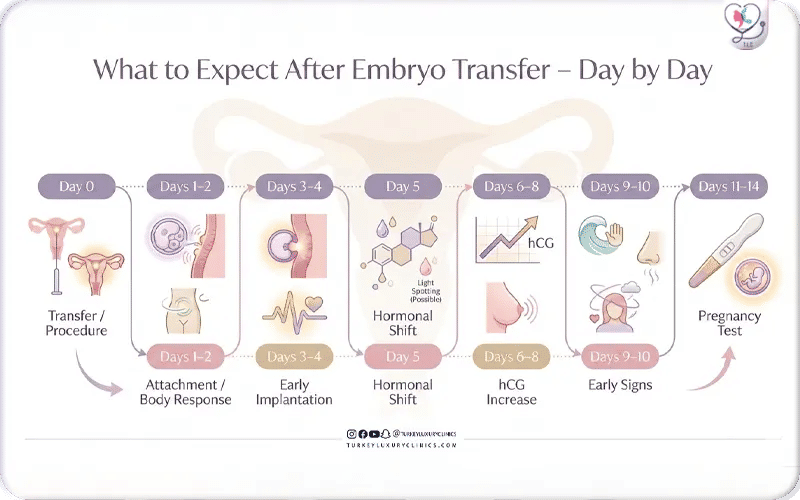
During the two-week wait, the blastocyst grows, attaches to the uterine lining, and begins developing into a fetus. Most women are naturally curious about what happens during this period and which signs indicate a successful implantation.
Day 0 (Transfer Day):
Mild cramping or discomfort from the procedure is common and completely normal.
Days 1–2:
The embryo starts attaching to the uterine lining. Fatigue from medications or progesterone support is common and is one of the earliest signs that the body is responding.
Days 3–4:
Early implantation begins. You might notice mild cramping, a sense of fullness, or slight bloating, which are normal and can indicate the early stages of implantation.
Day 5:
Implantation continues. Light spotting, mild cramping, and increased bloating may appear as the body adjusts to hormonal changes.
Days 6–8:
As implantation deepens, breast tenderness, mild headaches, mood changes, and continued bloating may occur. Hormones like hCG start rising, making early pregnancy signs more noticeable.
Days 9–10:
Rising hCG can bring mild nausea, food aversions, a heightened sense of smell, or emotional fluctuations. Some women may notice mild discharge.
Days 11–14 (Two-Week Wait):
Early pregnancy signs become more pronounced, including breast changes, fatigue, frequent urination, or mild cramping. By this stage, hCG levels are usually high enough for a pregnancy test to confirm pregnancy.
Day by Day Positive Signs After Embryo Transfer
The following day-by-day overview summarizes the most commonly noticed changes, keeping in mind that experiences vary widely between women.
| Day | Symptoms / Positive Signs |
| Day 1 | Fatigue from medications, mild pelvic fullness |
| Day 2 | Mild cramping, continued tiredness |
| Day 3 | Light spotting may start, subtle mood changes |
| Day 4 | Cramping increases slightly, and bloating more noticeable |
| Day 5 | Implantation may occur, light pink/brown spotting, mild bloating |
| Day 6 | Some breast tenderness, mood swings begin |
| Day 7 | Breast tenderness is more noticeable, slight nausea, or dizziness |
| Day 8 | Increased discharge, continued bloating |
| Day 9 | Spotting may continue or appear anew, mild cramps |
| Day 10 | More noticeable fatigue, emotional fluctuations |
| Day 11–14 | Symptoms may intensify; a pregnancy test can confirm |
These signs are commonly reported by IVF patients and explained based on clinical experience and reproductive medicine guidelines.
What to Do After an Embryo Transfer

DO:
- Continue all fertility medications as prescribed (even if bleeding starts).
- Stay hydrated and eat well.
- Engage in light activity like walking to promote blood flow.
- Manage pain with approved medications like Tylenol/Paracetamol (avoid codeine for more than 3 days).
DON’T:
- Rely on symptoms to confirm pregnancy; many women have none, or symptoms mimic PMS/medications.
- Do strenuous exercise, heavy lifting, or intense workouts unless approved by your doctor.
- Take a pregnancy test until the date your clinic recommends (usually around 9–10 days post-transfer).
Pregnancy Test After Embryo Transfer

For the most reliable results, take a pregnancy test 10–14 days after an embryo transfer, allowing the embryo enough time to implant and produce detectable levels of hCG. Early urine tests may result in false negatives, causing unnecessary stress from inconclusive results.
Scheduled Pregnancy Test After IVF
- At-Home Urine Test: Wait about 10–14 days (or follow your clinic’s instructions) for accurate results.
- Beta Blood Test: Can sometimes be done earlier (around days 8–10), but it is best to follow your clinic’s schedule for a precise and reliable reading.
When to Contact Your Fertility Team During the Two-Week Wait
While mild cramping, spotting, or fatigue can be normal, you should contact your fertility clinic immediately if you experience severe pain, heavy bleeding, fever, or persistent vomiting. Even during the standard two-week wait, your specialists can provide guidance, reassurance, and, if needed, medical support to ensure your health and peace of mind.
Need Guidance During Your IVF Journey?
At Turkey Luxury Clinics, we understand that the two-week wait after an embryo transfer can be both exciting and nerve-wracking. You are never alone. Our experienced fertility team is here to provide personalized guidance and support at every step. If you have concerns at any point during the waiting period, our specialists are always available to answer your questions, monitor your progress, and ensure you feel confident and informed throughout your IVF journey.
You may like:
Can You Choose Gender with IVF?
IVF Timeline: Step-by-Step Process from Start to Finish
IVF in Turkey: 2026 Costs, Success Rates & Best Clinics
FAQs About Positive Signs After Embryo Transfer