


Many patients are surprised to learn that the IVF timeline begins weeks or even months before pregnancy and follows a precise, step-by-step schedule.
An IVF journey requires proper planning, as it is longer and more structured than a natural pregnancy. Unlike standard conception, IVF does not begin with pregnancy itself; it often starts weeks or even months earlier with consultations, medical testing, and ovarian preparation.
The IVF timeline outlines each stage of the process, from the first doctor visit and medical history evaluation to ovarian stimulation, egg retrieval, embryo transfer, and the waiting period before pregnancy testing. Understanding this timeline helps patients prepare for the full duration of IVF and know what to expect at every step.
At Turkey Luxury Clinics, we explain the IVF timeline day by day and step by step, so you can clearly understand the full IVF cycle, its duration, and how to plan your journey toward a hopeful new beginning with confidence.
What is the IVF Process Timeline?
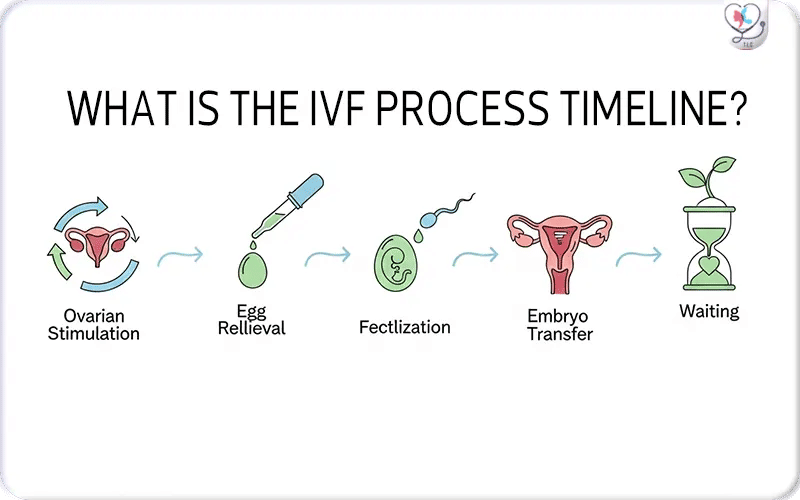
The IVF process timeline usually takes 6 to 8 weeks from start to finish and is divided into five main stages. The schedule is carefully planned around your menstrual cycle, with each step timed according to hormone levels, ultrasounds, and medical monitoring. When genetic testing is included, the overall timeline may extend beyond this period.
The timeline varies by individual, but key steps include stimulation, retrieval, fertilization/culture, transfer, and the two-week wait for results
An IVF procedure cycle starts with consultations, followed by ovarian stimulation (10-14 days of injections) to grow multiple eggs, monitored by ultrasounds. A trigger shot matures eggs, leading to retrieval, then lab fertilization and embryo culture for 3-6 days (to blastocyst stage). Finally, an embryo transfer occurs, followed by a ~2-week wait for a pregnancy test (hCG blood test) to confirm implantation.
The exact schedule varies based on individual response and whether a fresh or frozen transfer is planned
IVF Cycle and Stages Timeline Table
Stage (Duration) | What to expect | |
Menstrual Cycle & Baseline Tests (Day 1–2) | Baseline tests, ultrasound, and hormone checks; plan stimulation starts. | |
Ovarian Stimulation | (Day 3–12) | Daily injections to stimulate follicles; regular monitoring; medication adjustments. |
Trigger Injection | (Day 12–13) | HCG injection to mature eggs; final monitoring before retrieval. |
Egg Retrieval | (Day 13–14) | Eggs collected under anesthesia and sent for fertilization. |
Fertilization & Embryo Development | (Day 14–16) | Eggs are fertilized; embryos develop to a blastocyst; selection for transfer or freezing. |
Embryo Transfer | (Day 17) | Fresh or frozen embryos are transferred into the uterus. |
Implantation Window | (Day 18–21) | Embryo attaches; hCG rises; early pregnancy signs monitored. |
Pregnancy Test | (Day 22–24) | Blood/urine tests confirm pregnancy; follow-ups scheduled. |
PGT (If Used) | (Day 15–20) | Embryo biopsy for genetic testing; transfer delayed until results are ready. |
Step-by-Step IVF Timeline
The IVF process officially starts on day 1 of your menstrual cycle, when your clinic schedules your treatment and begins ovarian stimulation. However, the journey usually begins weeks earlier with initial consultations, fertility assessments, and baseline tests to check hormone levels, ovarian reserve, and uterine health.
1. Pre-Cycle Consultation (Takes Weeks to 1 Month)

The pre-cycle consultation is the foundational stage of IVF and crucial for the success of the IVF process. It usually lasts a few weeks before your menstrual cycle begins. During this period, you will:
- Meet your doctor and review your medical history, including reproductive and fertility factors, reasons for IVF, and any previous miscarriages
- Explain your goals and expectations for treatment and understand potential outcomes.
- You may undergo comprehensive fertility testing, including:
- Blood tests for hormones (FSH, LH, AMH) and screening for infections or genetic factors.
- Ultrasounds to assess ovarian reserve and uterine health.
- Semen analysis for male partners to evaluate sperm quality.
- Optional uterine/tubal evaluation (SIS or HSG).
- Develop a personalized IVF plan, covering:
- Tailored stimulation protocol and medication schedule.
- Instructions on medication administration and upcoming appointments.
- Lifestyle adjustments to optimize IVF success.
This preparatory phase ensures your body is ready and all factors are addressed, allowing a smooth transition into the active stimulation phase of the IVF cycle that starts on the first day of your menstruation.
2. Ovarian Stimulation (Takes 9-15 Days)

Ovarian stimulation in IVF uses hormonal medications, primarily FSH and LH. Some protocols may also include GnRH agonists or antagonists to control timing and prevent premature ovulation. These hormones encourage the ovaries to produce multiple eggs (usually 10–15+) instead of the single egg produced in a natural cycle, significantly increasing pregnancy chances by creating more embryos. The exact number of eggs, however, varies depending on patient age, ovarian reserve, and the chosen protocol.
Ovarian stimulation involves daily administration of these hormones—most commonly by injection, though oral medications may sometimes be used—for about 8–14 days. Follicle growth is closely monitored with ultrasound. Once your ovaries produce a sufficient number of mature eggs,you receive a final “trigger” shot (often hCG injection), about 36 hours before egg retrieval.
The timing of egg retrieval, typically between day 10 and 14 of the cycle, depends on when the follicles reach optimal size (usually 17–20 mm) and the administration of a final “trigger” shot.
3. Egg Retrieval (On Day ~15)
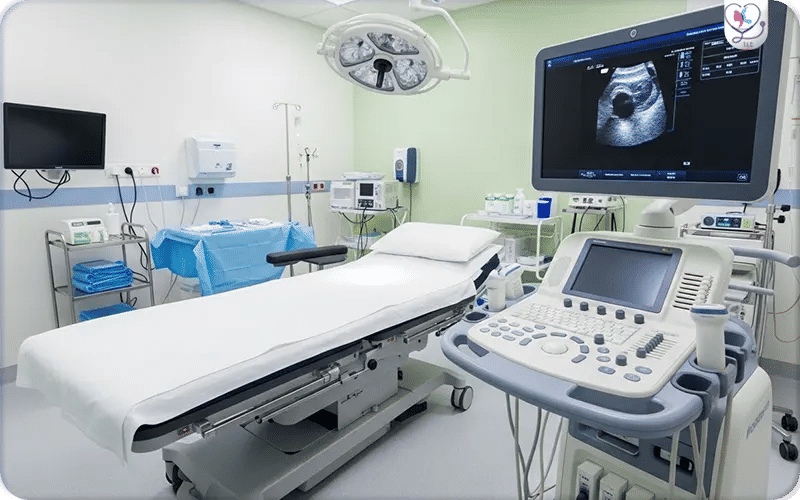
Egg retrieval in IVF is a minor procedure used to collect mature eggs from the ovaries using a thin, ultrasound-guided needle. It is performed under light anesthesia, so you are asleep and feel no pain. This step takes place after ovarian stimulation and is essential for fertilization or egg freezing.
During the procedure, a vaginal ultrasound probe allows the doctor to visualize the ovaries and follicles. A thin needle is then guided through the vaginal wall into each follicle to gently aspirate the fluid containing the egg. The entire process typically lasts 15–30 minutes.
After egg retrieval, the collected fluid is immediately examined by an embryologist to identify and count the eggs. The eggs are either fertilized in the lab or frozen for future use. Most patients recover quickly, experiencing only mild discomfort similar to menstrual cramps.
4. Fertilization & Embryo Culture (Takes 3-7 Days)
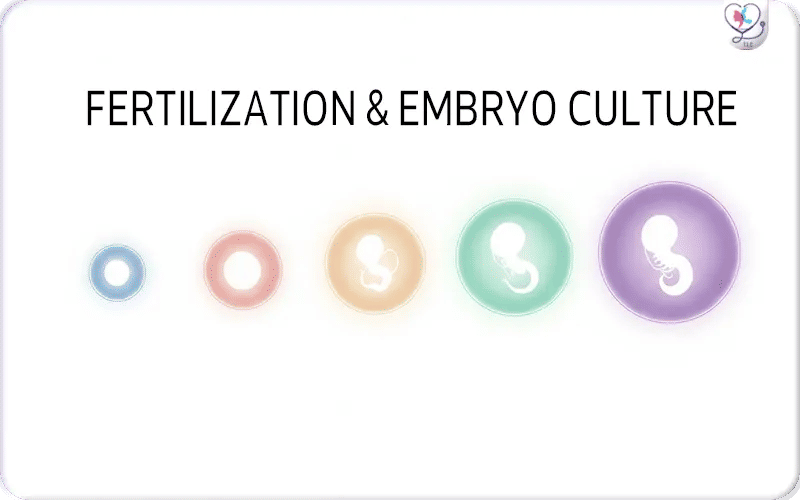
After egg retrieval, fertilization takes place in the lab using conventional IVF or ICSI, where sperm and eggs are combined.
The resulting embryos are then cultured in incubators for 3–6 days until they reach the blastocyst stage, the stage at which the embryo is ready for transfer.
During this period, embryologists monitor embryo development and quality to select the healthiest embryos for transfer.
Embryo Freezing & Genetic Testing (PGT)
If the parents are ready, a fresh embryo transfer is performed. If not, healthy embryos can be frozen for later transfer, a process known as frozen embryo transfer (FET).
Also at this stage of IVF, genetic testing or gender selection is performed, if needed.
The test is called PGTtest and is performed at the blastocyst stage to screen for inherited or sex-linked conditions or to select the embryo’s sex.
Biopsy is done on day 5–6 when the embryo reaches the blastocyst stage (around 100 cells), and results usually take 5–10 days before the embryo can be safely transferred.
5. Embryo Transfer (Days 3-5 of Fertilization or Later)
The mature and selected embryos are transferred into the uterus either on day 3 or day 5 of fertilization:
Day 3 Transfer (Cleavage Stage Transfer): The embryo is usually at the 6–8 cell stage.
Day 5 Transfer (Blastocyst Transfer): The embryo is transferred when it has reached the blastocyst stage, which generally offers a higher chance of implantation and pregnancy.
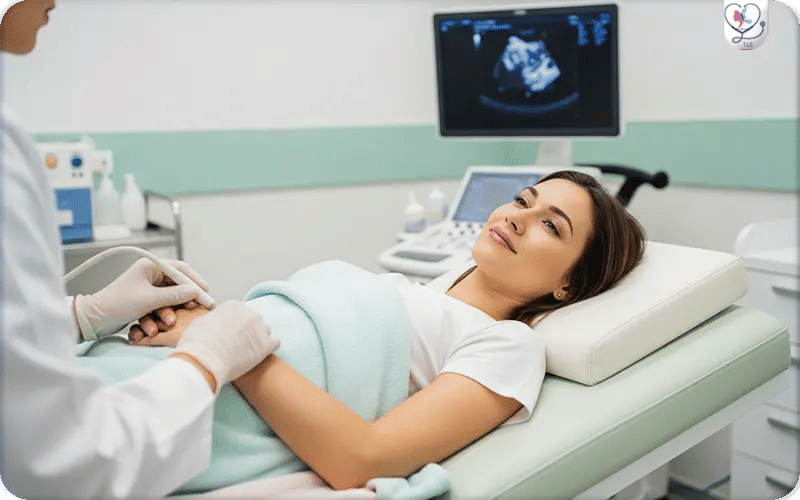
Embryo transfer is the final step of IVF, where one or more carefully selected embryos are gently placed into the uterus using a thin catheter under ultrasound guidance.
The goal is implantation and pregnancy. The procedure is quick and usually painless, often compared to a Pap smear.
What happens during the procedure:
- Preparation: No anesthesia is typically required. A speculum is used to visualize the cervix, and a moderately full bladder helps improve ultrasound guidance.
- The transfer: The doctor inserts a thin, flexible catheter through the cervix and releases the embryo(s) into the uterine cavity while monitoring placement by ultrasound.
- Duration: The transfer itself takes only a few minutes.
- Sensation: Most patients feel little to no pain, though mild pressure, cramping, or bladder discomfort is possible.
- After transfer: A short rest period (about 20–60 minutes) may follow, after which you can go home. Implantation usually occurs a few days after transfer, depending on the embryo’s stage and individual factors
6. IVF Timeline After Transfer & Pregnancy Test (Days 1–14 Post-Transfer)

After embryo transfer, implantation occurs in the uterus during the first 1–5 days, followed by rising hCG hormone levels around days 5–9. A pregnancy test—usually a clinic blood test—is performed about 9–14 days post-transfer, marking the "two-week wait." Mild cramping or spotting may occur, but early home tests are not recommended due to the risk of false positives from trigger shots. After a positive test, early pregnancy is monitored with ultrasound scans and blood tests to ensure proper development.
IVF Process Timeline with Genetic Testing
When PGT (Preimplantation Genetic Testing) is added, an IVF cycle extends beyond the usual 4–6 weeks, typically taking 6–8 weeks or more from ovarian stimulation to embryo transfer. The extension is due to embryo biopsy, freezing, and waiting for lab results before scheduling the frozen embryo transfer (FET).
1. Biopsy & Freezing (Day 5–6)
Healthy embryos are biopsied at the blastocyst stage (around 100 cells), and the embryos are frozen immediately after to preserve them while awaiting test results.
2. PGT Lab Analysis (7–14 Days)
The biopsied cells are analyzed for genetic conditions, chromosomal abnormalities, or sex selection (PGT-A, PGT-M, or PGT-SR). This process requires frozen embryos, which adds time compared to a fresh transfer.
3. Frozen Embryo Transfer (Next Cycle)
Once the lab results confirm a genetically normal embryo, the uterus is prepared, and the selected embryo is thawed and transferred in a subsequent cycle.
IVF Timeline Day by Day
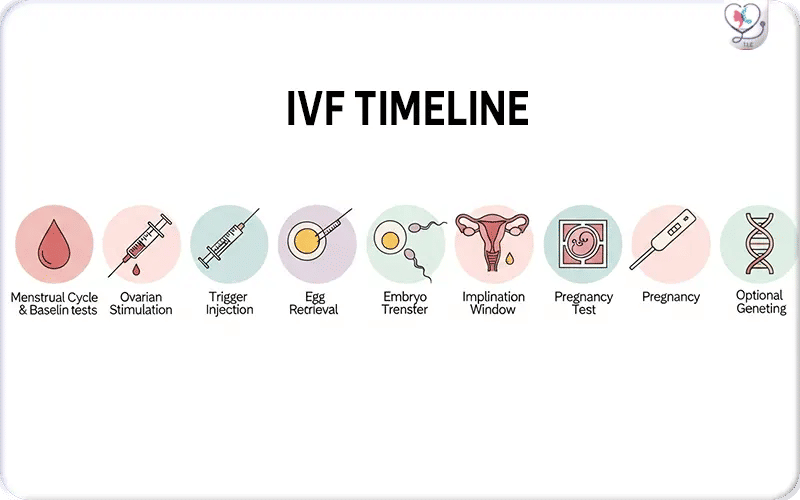
IVF Timeline Protocols
In IVF, there are 3 main protocols for ovarian stimulation, each chosen based on your health and specific needs. Each protocol has its own duration and advantages, and your doctor selects the best approach to give you the highest chance of success.
1. IVF long protocol timeline
The Long Lupron (Agonist) Protocol is the most commonly used. It starts with Lupron (a medication given to temporarily suppress the ovaries and prevent premature ovulation) for 2–3 weeks, followed by hormonal stimulation to produce multiple eggs. This protocol provides good control over egg development and helps maximize the number of eggs retrieved.
2. IVF Short Protocol Timeline
The Short (Antagonist) Protocol is faster and gentler, reducing the risk of ovarian hyperstimulation, making it ideal for women with PCOS. Stimulation begins almost immediately, with an antagonist medication added after a few days to prevent premature ovulation.
3. Natural IVF Cycle Timeline
The Natural or Modified Natural Cycle is suitable for women who respond poorly to stimulation or prefer minimal medication. It relies on monitoring a natural cycle or gentle stimulation, usually producing only one or a few eggs, with close monitoring via ultrasound and hormone tests.
Start Your IVF Journey Smoothly with Full Support at Turkey Luxury Clinics
Don’t feel overwhelmed—our expert team is here to guide you every step of the way. From personalized IVF plans to advanced genetic testing and embryo transfer support, we make your journey smoother and more confident. Contact us today to book your consultation and take the first step toward parenthood.
You may like
IVF in Turkey: 2026 Costs, Success Rates & Best Clinics
Can You Choose Gender with IVF? Up to 100% Accuracy
Positive Signs After Embryo Transfer: Early Pregnancy Clues
FAQs About IVF Timeline