

- What is the Egg Retrieval Process?
- Why Egg Retrieval is Crucial for IVF Success
- The IVF Stage Before Egg Retrieval
- How to Prepare for the Egg Retrieval Process?
- The Day of Egg Retrieval Process
- Step by Step Egg Retrieval Process
- After Egg Retrieval
- Recovery After Egg Retrieval Process
- Next Stage After Egg Retrieval Process
- Get Your IVF with Turkey Luxury Clinics Expert Guidance
- FAQ About Egg Retrieval Process
Egg retrieval is the step that sets IVF apart from IUI or natural conception, where eggs remain inside the body to be fertilized naturally. In IVF, eggs are collected from the ovaries, creating the opportunity for laboratory fertilization, which is essential when sperm count is low, multiple embryos are desired, or genetic testingis planned.
Egg retrieval is a crucial step in IVF that involves collecting mature eggs from your ovaries for fertilization in a lab. It is a minimally invasive procedure performed under sedation. You will not feel any pain during the procedure, which usually takes 15–30 minutes, and is generally safe and well-tolerated.
At Turkey Luxury Clinics, we guide you through the egg retrieval process step by step, explaining exactly what happens before, during, and after the procedure. Learn how to prepare, what to expect, and how to optimize your chances for a safe and successful IVF outcome.
Choosing an expert fertility clinic ensures your procedure is performed by experienced IVF specialists in state-of-the-art facilities, maximizing safety and success rates. Contact us today for a free consultation and a personalized IVF plan tailored to your needs.
What is the Egg Retrieval Process?
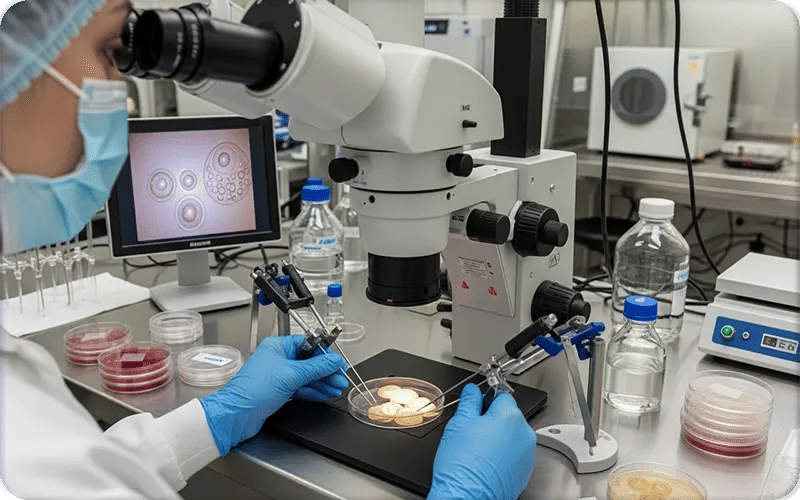
The egg retrieval process is a minimally invasive procedure, usually performed under sedation. During the procedure, a doctor uses an ultrasound-guided needle to aspirate fluid containing eggs from the ovarian follicles through the vaginal wall, collecting them for IVF or freezing.
The procedure is short, typically lasting 15–30 minutes, and involves a thin needle connected to gentle suction, with the eggs immediately examined by embryologists in the lab.
It is a safe, straightforward, and largely pain-free procedure.
You will feel nothing during the retrieval itself, but after the anesthesia wears off, mild cramping may occur. Patients are advised to rest at home with an escort due to the effects of sedation.
Why Egg Retrieval is Crucial for IVF Success
Egg retrieval is crucial for IVF success because it allows the collection of multiple eggs, helping to overcome challenges such as blocked fallopian tubes, low egg quantity or quality, or male infertility. Collecting several eggs dramatically increases the chances of conception.
Additionally, egg retrieval enables fertility preservation, such as egg freezing for future use or before medical treatments, and allows preimplantation genetic testing (PGT) to select healthier embryos. This gives hope to patients with genetic concerns, age-related fertility decline, or those seeking multiple embryos for IVF.
The IVF Stage Before Egg Retrieval
Egg retrieval is the second phase of IVF, following ovarian stimulation with hormone injections (FSH and LH) after 36 hours of the trigger injection with hcg hormone. It is usually performed on days 10 to 15 of your menstrual cycle (after 8 to 10 days of IVF injection treatments).
During the monitoring phase, your doctor tracks the growth and development of ovarian follicles using ultrasound (every 1 to 2 days) and hormone tests.
Only follicles that reach the appropriate size and appear mature are targeted for egg retrieval. This ensures that the collected eggs have the best chance of successful fertilization in IVF.
How to Prepare for the Egg Retrieval Process?
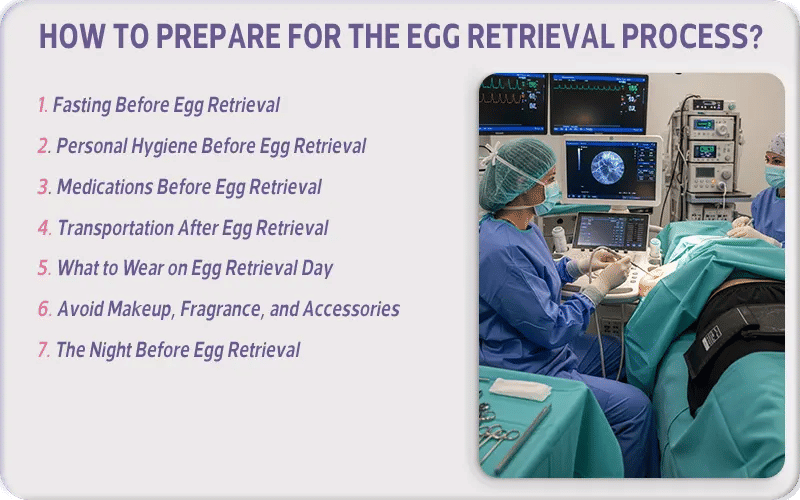
Proper preparation before the egg retrieval process is essential for a safe procedure, smooth recovery, and optimal IVF outcomes. Preparing correctly helps reduce risks related to sedation, infection, and discomfort, while ensuring the procedure goes as planned on retrieval day.
Below is a clear, step-by-step guide covering everything you need to do the day before and the morning of your IVF egg retrieval.
1. Fasting Before Egg Retrieval
You must stop eating and drinking (including water) 6–8 hours before your scheduled egg retrieval. This is critical because intravenous sedation or light anesthesia is used during the procedure. Fasting reduces the risk of anesthesia-related complications and ensures your safety.
2. Personal Hygiene Before Egg Retrieval
Take a shower using antimicrobial soap on the morning of your procedure to reduce the risk of infection.
Avoid applying lotions, oils, creams, or powders afterward, as these can interfere with sterility during the procedure.
Good hygiene supports a safe egg retrieval and lowers the chance of complications.
3. Medications Before Egg Retrieval
Confirm with your fertility clinic whether you should take any morning medications.If approved, take them only with a small sip of water. Do not take any unapproved medications or supplements on the day of retrieval.
4. Transportation After Egg Retrieval
Because sedation is used, you cannot drive yourself home after the procedure.
Arrange for a partner, family member, or friend to accompany you and take you home safely.
5. What to Wear on Egg Retrieval Day
Wear loose, comfortable clothing and shoes that are easy to slip on and off. Comfort is key, as you may feel mild cramping after the procedure.
For your IVF egg retrieval, wear loose, comfortable clothes like sweatpants or a dress with an elastic waist, plus soft socks, to accommodate bloating and for easy changing into a gown.
6. Avoid Makeup, Fragrance, and Accessories
Take off all jewelry, including rings, necklaces, and bracelets. If you wear contact lenses, switch to glasses for the day. Do not wear makeup, perfume, deodorant, or nail polish. This makes it easier for the medical team to monitor you and reduces infection risk.
7. Shaving Before Egg Retrieval
It is not recommended to shave immediately before egg retrieval. Many doctors advise against shaving close to the procedure to reduce irritation and infection risk.
If grooming is necessary, do so several days in advance and always follow your clinic’s specific hygiene instructions.
Why Avoid Shaving Right Before Egg Retrieval?
- Infection Risk: Shaving can cause tiny cuts or skin irritation, allowing bacteria to enter and increasing the risk of infection during egg retrieval.
- Skin Sensitivity: The genital area is naturally sensitive, and shaving right before the procedure may cause discomfort or inflammation.
8. The Night Before Egg Retrieval
In the day leading up to egg retrieval:
- Follow a balanced, nutritious diet
- Stay well hydrated until fasting begins
- Get enough sleep the night before
- Reduce stress as much as possible
9. What to Avoid Before the Egg Retrieval Process
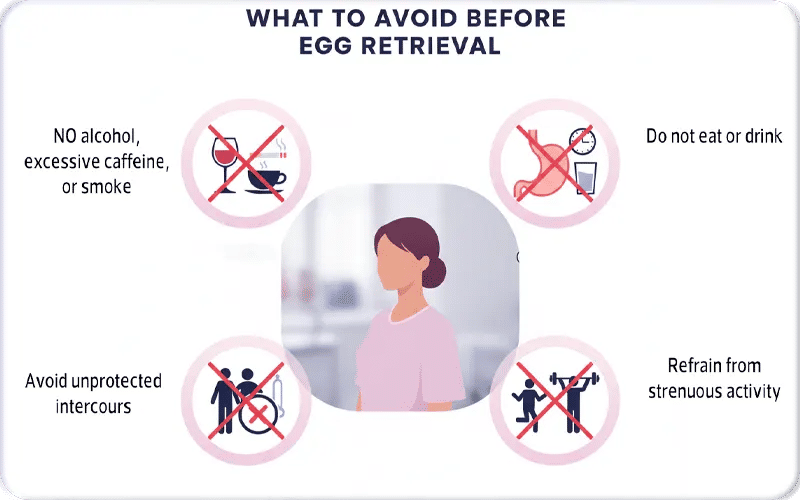
- Do not eat or drink the night before your egg retrieval to ensure safety under sedation.
- Do not consume alcohol, excessive caffeine, or smoke, as these can affect egg quality and recovery.
- Avoid unprotected intercourse in the days leading up to the procedure.
- Refrain from strenuous activity before and immediately after the retrieval to reduce discomfort and support healing.
The Day of Egg Retrieval Process
Egg retrieval is a brief procedure, typically 15–30 minutes, performed under sedation for comfort. During the procedure, the doctor uses an ultrasound-guided needle to gently aspirate fluid containing eggs from the ovarian follicles through the vaginal wall.
Arrive early to check your ID, stay calm, and ensure accurate timing. A nurse will help you change into a gown while the operating room is prepared. Once ready, sedation will be administered, and most patients feel drowsy or unaware of the procedure.
Step by Step Egg Retrieval Process
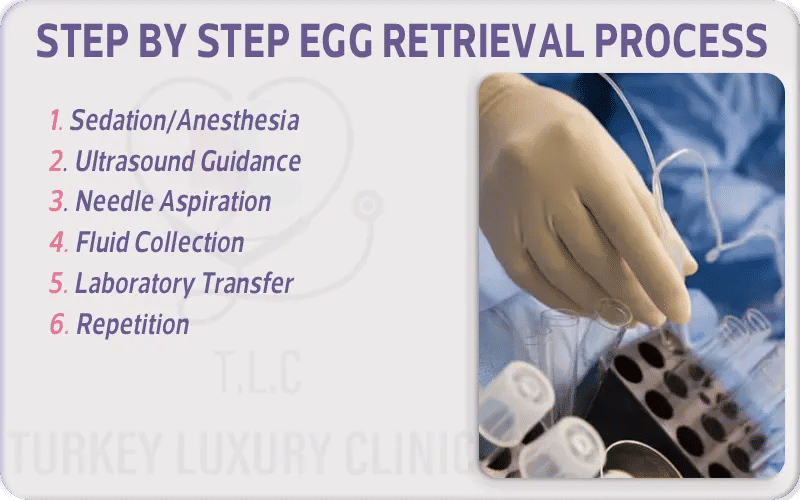
- Sedation/Anesthesia: Intravenous sedation or light anesthesia keeps you relaxed and calm. Most patients have little or no memory of the procedure.
- Ultrasound Guidance: A transvaginal ultrasound probe is inserted to visualize the ovaries, which are enlarged and filled with follicles after stimulation.
- Needle Aspiration: A thin needle attached to a catheter is carefully passed through the vaginal wall into each follicle.
- Fluid Collection: Gentle suction withdraws the follicular fluid, which contains the mature eggs.
- Laboratory Transfer: The collected fluid is immediately handed to an embryologist, who identifies and isolates the eggs under a microscope.
- Repetition: This process is repeated for all accessible follicles in both ovaries until all mature eggs are collected.
After Egg Retrieval
After egg retrieval, expect a recovery period with symptoms, side effects, pain and healing of your ovaries, follicles, and hormone level returning to normal.
After egg retrieval, expect mild cramping, bloating, and fatigue as your ovaries recover, requiring rest and light activity for a few days, avoiding heavy lifting or strenuous exercise for about a week to prevent complications like ovarian torsion
Recovery After Egg Retrieval Process
After egg retrieval, mild cramping, bloating, fatigue, and light spotting are normal as your ovaries shrink after stimulation, similar to period symptoms. Most people feel comfortable within 1–2 days, though full recovery—including the ovaries returning to their normal size—can take 1–2 weeks. Your next period might be slightly heavier than usual.
During recovery:
- Rest on the first day and avoid strenuous activity for about a week.
- Manage mild cramping or bloating with over-the-counter pain relief and stay hydrated.
- Monitor for unusual symptoms, such as severe pain, heavy bleeding, or fluid retention, which could indicate Ovarian Hyperstimulation Syndrome (OHSS), and contact your doctor if they occur.
Recovery Timeline After Eggs Retrieval
Full recovery after egg retrieval usually takes about a week, though initial rest is needed only for 1–2 days. OTC pain relief, warm compresses, and light exercise can alleviate cramping and bloating. Maintaining a balanced diet, staying hydrated, and avoiding alcohol, smoking, or heavy lifting accelerate recovery. Tracking your symptoms helps distinguish normal post-procedure effects from signs that require medical attention, ensuring your body is ready for fertilization, embryo development, and eventual transfer.
What Happens to Ovaries, Follicles, and Hormones After Egg Retrieval
The ovaries gradually shrink over several days, and the emptied follicles are naturally reabsorbed by your body without causing long-term harm.
At the same time, your hormones fluctuate: estrogen levels drop quickly, progesterone may be supplemented depending on your IVF protocol, and LH and FSH remain low. These hormonal changes can lead to temporary fatigue, mood swings, breast tenderness, or mild digestive changes. Overall, your body is adjusting while the retrieved eggs are being fertilized in the lab, and careful rest, hydration, and light activity help manage symptoms and support recovery.
Side Effects After Egg Retrieval
After egg retrieval, it’s normal to experience several common symptoms as your body recovers. Many patients report mild to moderate cramping or pelvic discomfort, along with bloating, tenderness, or light spotting. These effects happen because your ovaries were temporarily enlarged from stimulation and the follicles were aspirated.
After egg retrieval, mild side effects are common and usually short-lived. Most patients experience cramping, bloating, light spotting, or fatigue, similar to period symptoms. These effects result from ovarian stimulation and the minor invasiveness of the procedure. While they typically resolve within a few days, monitoring your body is important. Severe pain, heavy bleeding, fever, or sudden swelling may indicate complications like Ovarian Hyperstimulation Syndrome (OHSS), and you should contact your doctor immediately.
Healing After Egg Retrieval
Healing after egg retrieval begins immediately, with most women feeling ready to resume light activities within 24–48 hours. Your ovaries gradually return to their normal size over 1–2 weeks, and some mild discomfort or bloating may persist during this time. Rest, hydration, and gentle movement support recovery, while avoiding strenuous activity helps prevent discomfort. Following your doctor’s post-procedure instructions ensures a smooth healing process and prepares your body for the next IVF stages.
Next Stage After Egg Retrieval Process
The clinic will contact you afterward to inform you about the number of eggs retrieved and the next steps, usually involving fertilization and embryo development.
After egg retrieval in IVF, the collected eggs are sent to the laboratory for fertilization. Fertilization is achieved either through conventional insemination or ICSI (intracytoplasmic sperm injection). The resulting embryos are then cultured in the lab for several days, usually 3–5 days, to reach the cleavage stage (Day 3) or blastocyst stage (Day 5). This is also when genetic testing (PGT) can be performed, if planned, before the embryo transfer.
Get Your IVF with Turkey Luxury Clinics Expert Guidance
Successful IVF begins with careful egg retrieval planning and expert laboratory handling. Trust our internationally accredited specialists and proven protocols to guide you through every step. Schedule your consultation today and take the first step toward achieving your fertility goals.
You may like
IVF After Tubal Ligation: Success Rates and Chances of Pregnancy
IVF Timeline: Step-by-Step Process from Start to Finish
Positive Signs After Embryo Transfer: Early Pregnancy Clues
FAQ About Egg Retrieval Process