


- Is IVF Painful?
- Which Part of IVF Is Painful?
- How Painful is IVF?
- Pain Levels and Sensations During Different IVF Stages
- Are IVF Injections Painful?
- Is IVF Egg Retrieval Painful? What to Expect
- IVF Embryo Transfer Step
- Is Embryo Transfer Painful in IVF
- How to Relieve IVF Pain and Discomfort
- Get IVF with Premium Care at Turkey Luxury Clinics
- FAQs About Is IVF Painful
IVF involves discomfort rather than severe pain in most stages, but the experience varies by phase.
- Stage 1 (ovarian stimulation, days 1–10): Patients may feel a sharp pinch from each subcutaneous injection, along with mild abdominal bloating and a sense of ovarian fullness by the second week. Most rate this 2–3 out of 10.
- Stage 2 (egg retrieval, days 12–14): This step is performed under sedation or light general anaesthesia, so no pain is felt during the 20-minute procedure. Afterwards, patients may experience period-like cramping for 24–72 hours, typically rated 4–6 out of 10.
- Stage 3 (embryo transfer, days 17–22): Usually performed without anaesthesia and similar to a Pap smear. Most patients rate discomfort at 1–2 out of 10.
- Stage 4 (the two-week wait): No direct physical pain, although progesterone supplementation may cause breast tenderness and mood changes.
The injection phase can be managed with ice packs and rotating injection sites. Post-retrieval discomfort typically responds well to paracetamol or ibuprofen and rest. However, severe abdominal pain at any stage is not normal and should be evaluated for ovarian hyperstimulation syndrome (OHSS).
Explore your IVF journey in detail with Turkey Luxury Clinics, and get a free consultation tailored to your needs.
Is IVF Painful?

No, IVF is not acutely painful; however, involves temporary mild to moderate discomfort, mainly from hormone injections (stinging), bloating, and cramping similar to PMS after the egg retrieval (done under sedation) and embryo transfer (painless).
Pain levels vary, but most find manageable discomfort manageable with over-the-counter pain relief and rest, with the emotional aspect often more challenging than the physical pain, and extreme pain signals a need for immediate doctor consultation. IVF discomfort is usually mild to moderate.
Injections feel like a brief sting, egg retrieval is painless under sedation, but causes cramps after sedation, and embryo transfer causes minimal pressure.
Despite this, patient reviews indicate that these temporary sensations are usually manageable and are considered worth it for the chance of pregnancy.
Every person’s experience varies, but modern techniques and support focus on minimizing physical pain, while emotional challenges remain the primary concern.
Which Part of IVF Is Painful?
According to patient reviews, the most uncomfortable part of fertility treatment by IVF is often egg retrieval, which is commonly described as cramping and pressure in the lower abdomen, even though it is performed under sedation.
Other patients report that hormone injections, whether for ovarian stimulation or later during pregnancy, are the hardest part due to both the pain of repeated injections and the side effects linked to high hormone levels.
Embryo transfer, on the other hand, is usually less painful, though mild cramps and a sense of discomfort may occur. In some cases, these sensations can even be a positive sign of an early IVF pregnancy.
How Painful is IVF?
On the pain scale, IVF discomfort is generally mild to moderate (around 4–7 out of 10). Many patients describe it as similar to strong menstrual cramps or soreness after an intense workout. For some women, the most uncomfortable parts are usually the daily injections, which feel like small pinches, and cramping after egg retrieval.
Egg retrieval itself is performed under sedation, but post-procedure discomfort is very common; however, it is managed with rest and mild painkillers. Embryo transfer is typically associated with minimal discomfort, similar to that of a Pap smear.
While most people find IVF manageable, a small percentage may experience more significant pain, particularly in cases of ovarian hyperstimulation syndrome (OHSS).
Pain Levels and Sensations During Different IVF Stages
The table below breaks down how painful IVF is at each stage, including IVF injections, ovarian stimulation, egg retrieval, post-retrieval recovery, and embryo transfer, with the perceived pain level (1–10) and what sensations you are likely to experience.
IVF Stage | Pain Level (1–10) | Sensation |
IVF Hormone Injections | 2–3 | Quick stinging; thin needles make injections tolerable. |
IVF Ovarian Stimulation | 3–4 | Bloating, pelvic heaviness, like mild PMS. |
IVF Egg Retrieval | 0 | Performed under sedation; no pain during procedure. |
Post-Retrieval | 4–5 | Mild cramping or pressure for 24–48 hours. |
IVF Embryo Transfer | 1–2 | Minimal pressure, similar to a Pap smear. |
To prepare well, you need to understand each stage of IVF—how it works, how painful each stage may be, and what causes pain or discomfort. It is essential to understand that these discomforts do not necessarily indicate that something is wrong or that the treatment is failing.
Are IVF Injections Painful?
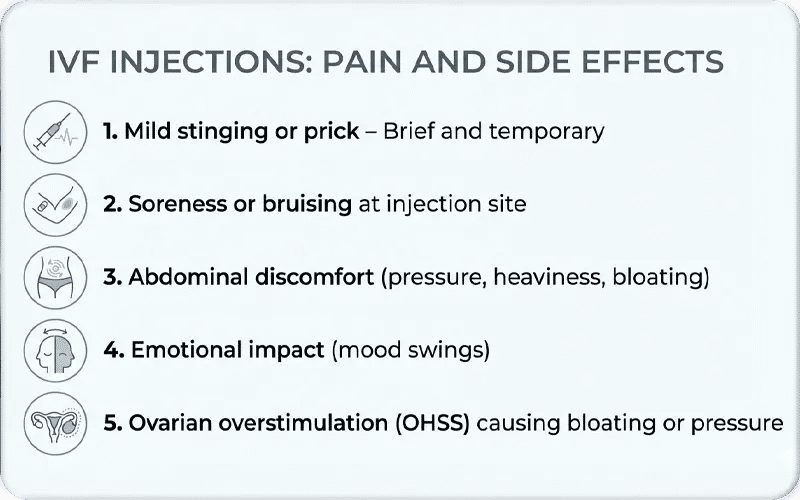
In Vitro Fertilization (IVF) injections are hormone-based medications used during in vitro fertilization (IVF) to stimulate the ovaries to produce multiple mature eggs, regulate ovulation, and prepare the body for embryo transfer.
Some of the side effects associated with these treatments include pain and discomfort during and after the injection period, such as:
- Mild stinging or prick: The most common sensation, usually brief and temporary.
- Soreness or bruising: Mild tenderness at the injection site may occur, especially with repeated injections.
- Abdominal discomfort: As the ovaries grow, you may feel pressure, heaviness, or bloating, similar to PMS symptoms.
- Emotional impact: Hormonal changes can lead to mood swings, which may make physical discomfort feel more intense.
- Ovarian overstimulation (OHSS): One reason some IVF patients experience bloating, pressure, or discomfort during treatment. It occurs when the ovaries respond strongly to fertility medications and temporarily enlarge.
How Painful Are IVF Injections and Ovarian Stimulation?
In Vitro Fertilization (IVF) injections are generally not intensely painful and usually cause only mild discomfort, such as a brief sting or slight pinch, similar to a vaccination, due to the use of very thin needles. However, pain is subjective, and some individuals may experience increased soreness, bloating, or a feeling of pressure as the ovaries enlarge during ovarian stimulation.
These sensations are typically manageable with simple strategies such as rotating injection sites, using ice, distraction techniques, and receiving support from a loved one.
Is IVF Egg Retrieval Painful? What to Expect
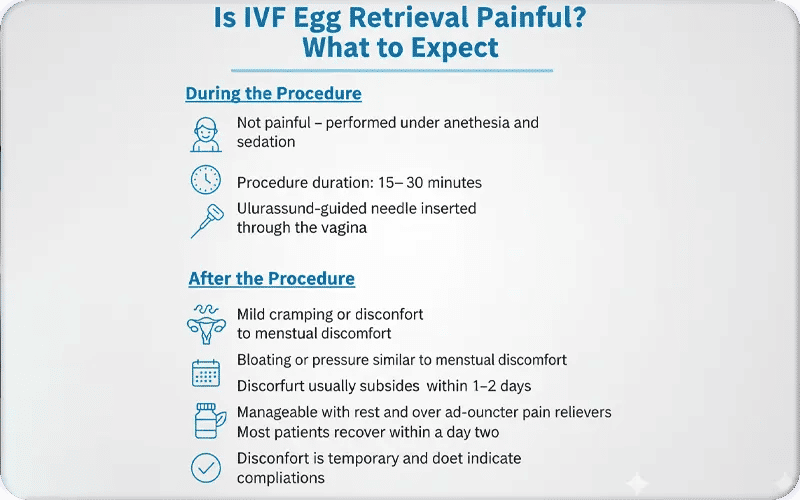
IVF egg retrieval is not painful because it is performed under anesthesia and sedation. Mild cramping or discomfort may occur afterward, but it usually subsides within 1–2 days.
Egg retrieval in IVF is a minimally invasive procedure used to collect mature eggs from the ovaries after hormonal stimulation. During the procedure, an ultrasound-guided needle is inserted through the vagina to aspirate fluid from the follicles.
The procedure typically takes 15–30 minutes and is performed under sedation, ensuring you feel no pain while it is happening.
Once the anesthesia wears off, mild to moderate cramping, bloating, or pressure may occur, similar to menstrual discomfort. These sensations are generally short-lived and manageable with rest and over-the-counter pain relievers such as ibuprofen.
Most patients recover quickly within a day or two.
Even if many eggs are retrieved, the discomfort is temporary, and medical teams closely monitor patients to ensure safety and comfort. These side effects are a normal part of the process and do not indicate any complications.
How Painful is IVF Egg Retrieval?
After the procedure, you can expect mild to moderate cramping, bloating, or pressure, similar to menstrual discomfort. These sensations usually resolve within a few days as the ovaries shrink. Patients typically recover well with rest and pain relief, though retrieving more eggs may cause slightly more intense cramping initially.
Once the eggs are retrieved, the next critical step is embryo transfer, which is usually far less uncomfortable.
IVF Embryo Transfer Step
Embryo transfer (ET) is a key step in in-vitro fertilization (IVF), where one or more embryos, created in a lab from fertilized eggs, are placed into a woman’s uterus to establish a pregnancy. The procedure is often guided by ultrasound to ensure precise placement.
This relatively simple and quick procedure uses a thin catheter to deliver the embryo(s) through the cervix into the uterine cavity. It is the final stage of IVF, allowing conception for couples or individuals facing infertility. Embryo transfer can involve fresh or frozen embryos, depending on the IVF cycle plan.
Is Embryo Transfer Painful in IVF
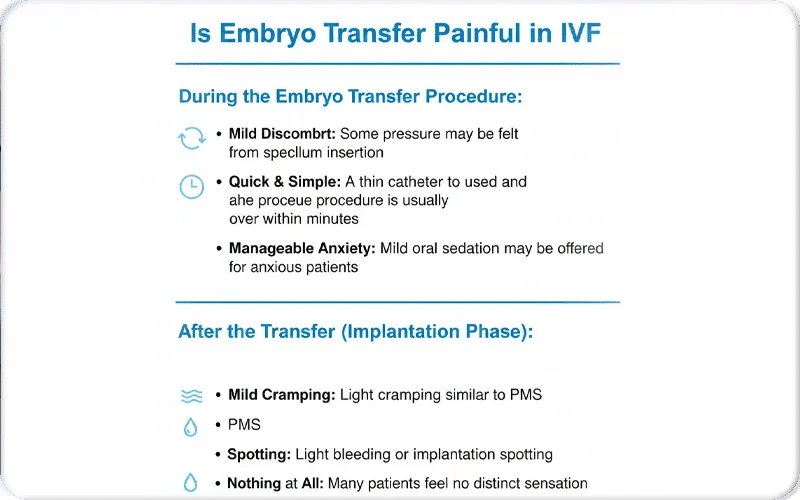
No, the embryo transfer (ET) procedure is safe, generally pain-free, and requires no anesthesia. Discomfort varies, but the procedure is usually well-tolerated and quick, and far less intense than other IVF stages, such as egg retrieval.
During the Embryo Transfer Procedure:
- Mild Discomfort: Some pressure may be felt from the speculum insertion, similar to a Pap smear.
- Quick & Simple: A thin catheter is used to place the embryo, and the procedure is usually over within minutes.
- Manageable Anxiety: Some clinics offer mild oral sedation for patients who feel anxious.
After the Transfer (Implantation Phase):
- Mild Cramping: Light cramping, similar to PMS, is common and normal.
- Spotting: Light bleeding or implantation spotting can occur.
- Nothing at All: Many patients feel no distinct sensation afterward.
Overall, embryo transfer is considered a gentle and brief procedure, and most patients find it easy to tolerate.
Read about IVF success rate and what factors affect its success.
How to Relieve IVF Pain and Discomfort
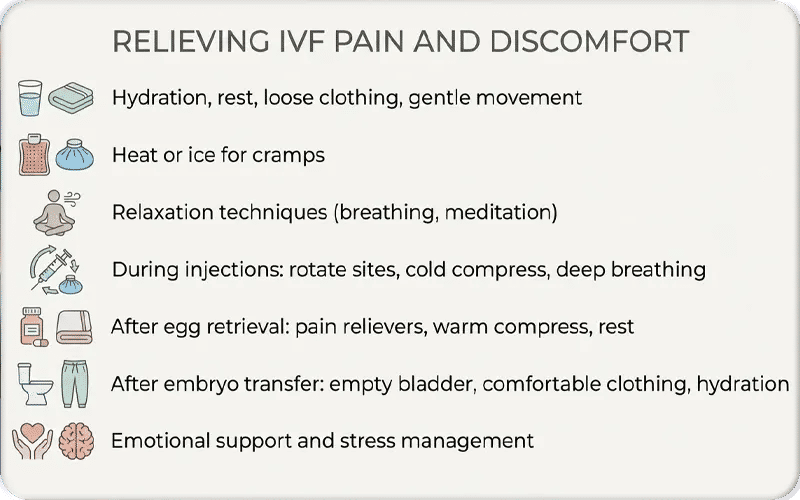
To relieve IVF pain and discomfort: Focus on hydration, rest, loose clothing, and gentle movement (like walking or yoga); use heat or ice for cramps, practice relaxation techniques (breathing, meditation), and communicate with your clinic about pain relievers or emotional support, as managing stress and physical symptoms with these methods helps greatly.
Effective Ways to Reduce Pain and Discomfort During IVF
- During hormone injections: Rotate injection sites, use a cold compress or numbing cream, and practice deep breathing to stay relaxed.
- After egg retrieval: Take prescribed pain relievers, apply a warm compress, and rest while incorporating gentle movement like short walks.
- After embryo transfer: Empty your bladder beforehand, wear comfortable clothing, follow your clinic’s instructions, and stay well-hydrated.
- Stress and emotional management: Use meditation, deep breathing exercises, or share your experience with a partner, friend, or counselor.
Get IVF with Premium Care at Turkey Luxury Clinics
Your comfort is our priority. Begin your journey to parenthood with confidence and receive premium care from internationally certified gynecologists and IVF specialists at top JCI-accredited hospitals. Whether you are considering standard IVF, IVF after tubal ligation, or genetic testing, or IVF with ICSI, our expert team is here to guide you every step of the way for a smooth, supported, and stress-free experience.
Schedule a free consultation with Turkey Luxury Clinics and let our experts guide you through every step of IVF, ensuring a smooth, comfortable, and fully supported experience.
You may like
IVF Timeline: Step-by-Step Process from Start to Finish
FAQs About Is IVF Painful