

- What is Frozen Embryo Transfer (FET)?
- Why Choose Frozen Embryo Transfer?
- How Does Frozen Embryo Transfer Work?
- IVF Frozen Embryo Transfer Cycle Timeline
- How to Prepare for Frozen Embryo Transfer?
- FROZEN Embryo Transfer Procedure Step by Step
- Tips for Successful Embryo Transfer?
- Frozen Embryo Transfer in Turkey
- Start your FET Confidently with Turkey Luxury Clinics
- FAQS About Frozen Embryo Transfer
Frozen Embryo Transfer (FET) is a type of In Vitro Fertilization (IVF) in which the embryo is not transferred into the uterus during the same IVF cycle. Instead, the embryo is cryopreserved (frozen) using specialized techniques until the woman is ready for transfer.
FET provides flexibility and can lead to higher success rates due to better uterine preparation or the option for Preimplantation Genetic Testing (PGT) before transfer. In many cases, FET success rates are comparable to those of fresh embryo transfers.
At Turkey Luxury Clinics, we provide expert guidance and personalized care for your FET journey, helping maximize your chances of success with ease and comfort.
What is Frozen Embryo Transfer (FET)?
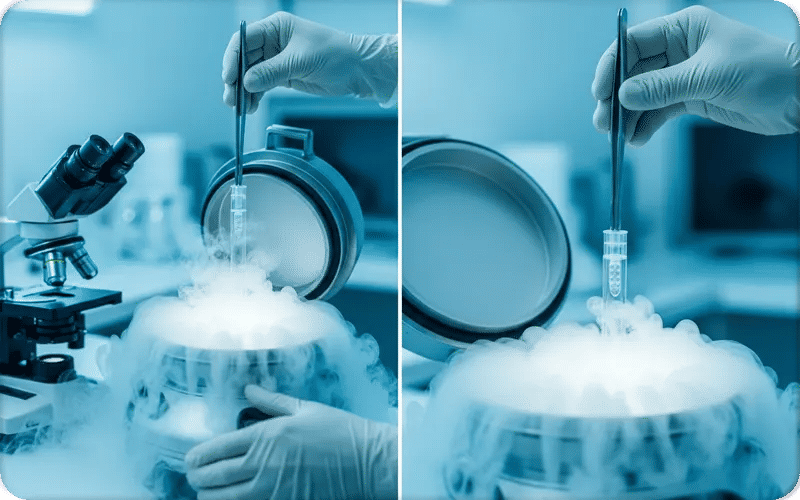
A Frozen Embryo Transfer (FET) is a fertility procedure in which a previously cryopreserved (frozen) embryo, often from an earlier IVF cycle, is thawed and transferred into the uterus to achieve pregnancy. This approach allows pregnancy attempts without repeating the entire egg retrieval process and helps optimize the timing for implantation.
The uterine lining is carefully prepared with hormones to make it receptive, and the embryo is gently placed into the uterus using a thin catheter at the optimal stage, making the procedure minimally invasive and providing flexibility for future pregnancy planning.
Embryo transfer is the last step in the IVF procedure, it is safe, painless and performed without anesthesia.
Why Choose Frozen Embryo Transfer?
Many women may need to preserve their eggs in an intact state, especially in certain situations such as before undergoing cancer treatment, prior to major surgeries, or when delaying pregnancy for personal or career reasons. Egg freezing allows these women to maintain fertility options for the future while ensuring the eggs remain healthy and viable for later use.
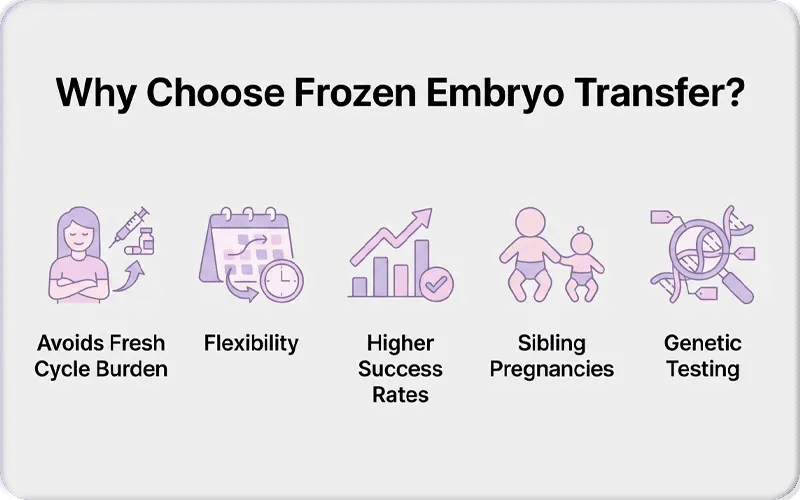
- Avoids Fresh Cycle Burden: No need for repeated hormone stimulation or egg retrieval.
- Flexibility: The transfer can be timed when the patient’s body is optimally prepared.
- Higher Success Rates: In some cases, frozen transfers may result in better outcomes than fresh transfers, as the uterine environment is less affected by IVF stimulation hormones.
- Sibling Pregnancies: Leftover embryos can be stored for future pregnancies.
- Genetic Testing: Provides time for Preimplantation Genetic Testing (PGT) before transfer.
How Does Frozen Embryo Transfer Work?
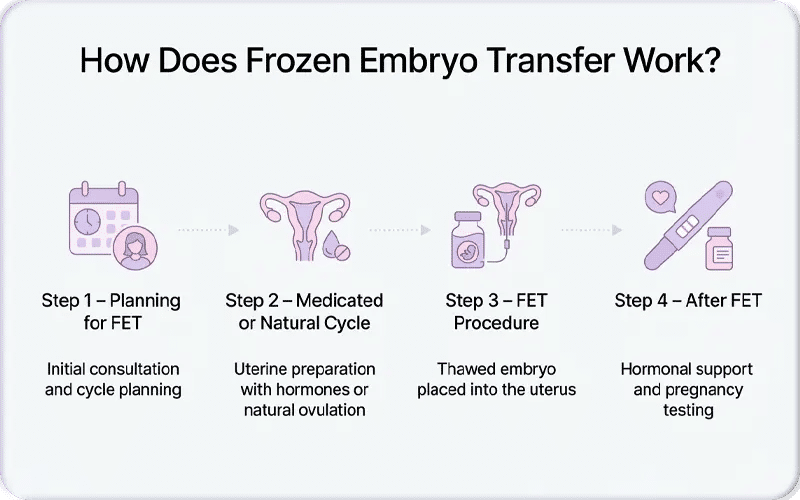
1, Planning for FET after egg retrieval
Frozen embryo transfer begins with an initial consultation and planning session. During this visit, the fertility specialist reviews your medical history, confirms that your body is ready for the transfer, and outlines the plan for the upcoming cycle.
Many clinics prescribe birth control pills before FET to organize the menstrual cycle and align it with the clinic calendar, making it easier to manage hormone levels and choose the ideal timing for implantation.
2. Medicated vs natural FET cycle
The doctor will decide whether the process will follow a natural cycle, suitable for women who ovulate regularly, or a medicated cycle that relies on hormonal support to prepare the uterus to accept embryo placement.
In a medicated cycle, uterine preparation is the main focus. Estrogen is prescribed in the form of pills, patches, or sometimes injections to help thicken the endometrium, which is the lining of the uterus where the embryo will implant. Throughout this stage, you attend several monitoring appointments that include blood tests and ultrasounds to measure hormone levels and check lining thickness.
Once the lining reaches the desired quality, progesterone is added, via injections, vaginal gel, or tablets, to complete the preparation for implantation. The next stage is embryo thawing and transfer.
3. FET Procedure
On the scheduled day, the embryology team carefully thaws the selected embryo or embryos in the laboratory. The procedure itself is simple and usually quick: the doctor uses a very thin catheter to place the embryo through the cervix into the uterus. Ultrasound guidance is often used to ensure the placement is precise and gentle. It takes only around 5 to 15 and feel only such as a Pap smear.
4. After FET procedure
After the procedure, you move into post-transfer support. Hormone medications continue to give the uterus the stability it needs to nurture early pregnancy. Around 10 to 14 days later, a blood test for hCG is performed to confirm whether pregnancy has occurred.
IVF Frozen Embryo Transfer Cycle Timeline
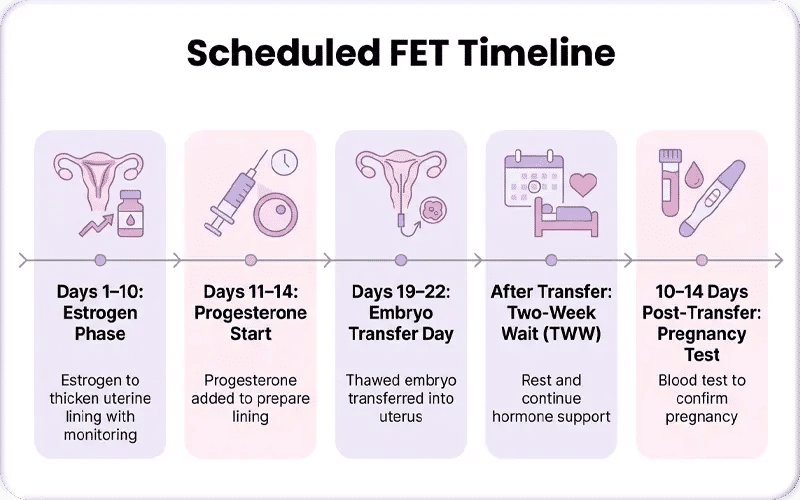
A Frozen Embryo Transfer (FET) cycle begins when you decide to use embryos that were created and frozen during a previous IVF cycle.
The earliest timing for the FET procedure is usually 4 to 8 weeks after egg retrieval and the FET cycle generally spans 2 to 4 weeks, focused on preparing the uterus for implantation.
During FET cycle, estrogen is administered first to thicken the uterine lining, followed by progesterone to make the lining receptive. During this period, your clinic monitors your progress through ultrasounds and blood tests to ensure hormone levels and lining thickness are optimal.
The embryo transfer is usually scheduled between cycle days 18 and 22, or 3–5 days after starting progesterone, depending on whether it’s a natural or medicated cycle. A pregnancy test is conducted 10–14 days after the transfer to confirm results.
Scheduled FET Timeline
Days 1–10: Estrogen Phase
The FET cycle begins with estrogen (pills, patches, or injections) to thicken the uterine lining (endometrium). During this phase, you will attend monitoring appointments, including ultrasounds and blood tests, to evaluate lining development and ensure hormone levels are optimal.
Days 11–14: Progesterone Start
Around day 11, progesterone (injections, suppositories, or vaginal gel) is added to make the lining receptive for embryo implantation. This step is crucial to prepare the uterus for successful transfer.
Days 19–22: Embryo Transfer Day
The exact timing of the transfer depends on ultrasound evaluation of the uterine lining. On transfer day, the embryologist thaws the frozen embryo, checks its viability, and gently transfers it into the uterus using a thin catheter. The procedure is typically quick, minimally invasive, and painless.
After Transfer: Two-Week Wait (TWW)
Following the transfer, a two-week waiting period begins. During this time, focus on rest, hydration, and continuing progesterone and estrogen as instructed. Avoid strenuous activity and maintain a calm, healthy routine.
10–14 Days Post-Transfer: Pregnancy Test
A blood test (beta hCG) is performed about 10–14 days after the transfer to confirm whether pregnancy has occurred.
Read more about IVF timeline Step-by-Step Process from Start to Finish
How to Prepare for Frozen Embryo Transfer?
Whether you follow a natural or medicated FET cycle, proper uterine preparation is essential for implantation success. To prepare for a frozen embryo transfer (FET), focus on a healthy lifestyle with a balanced diet (whole foods, healthy fats), moderate exercise (walking, yoga), and stress management (sleep, mindfulness) while strictly avoiding smoking, excessive caffeine/alcohol, and certain chemicals, and importantly, follow your doctor's specific medication instructions and arrive with a full bladder for the procedure. Planning ahead, packing comfortable clothes, and organizing logistics the night before can reduce stress on transfer day.
What to do Before Embryo Transfer?
- Medications & Supplements: Take all prescribed medications (such as progesterone) exactly as directed. Consult your doctor before taking any over-the-counter medications or supplements.
- Diet: Focus on whole foods—lean proteins, fruits, vegetables, and healthy fats like avocado, olive oil, and nuts. Avoid sugary or processed foods, excessive salt, and very cold foods or drinks, including smoothies.
- Lifestyle: Stop smoking, vaping, and recreational drug use. Limit caffeine to under 200 mg per day and avoid alcohol.
- Exercise: Stick to gentle activities such as walking, swimming, or yoga, and avoid strenuous workouts
- Mind-Body: Practice relaxation techniques like meditation or deep breathing and prioritize plenty of sleep.
- Avoid Chemicals: Limit exposure to endocrine-disrupting chemicals found in household products, nail polish, and similar items.
What to do the night before embryo transfer
Medication: Take any scheduled evening medications.
Hydration: Drink plenty of water but avoid heavy meals.
Relax: Read, listen to calming music, or meditate.
Prepare: Pack your bag and lay out loose, comfortable clothing for the morning.
FROZEN Embryo Transfer Procedure Step by Step
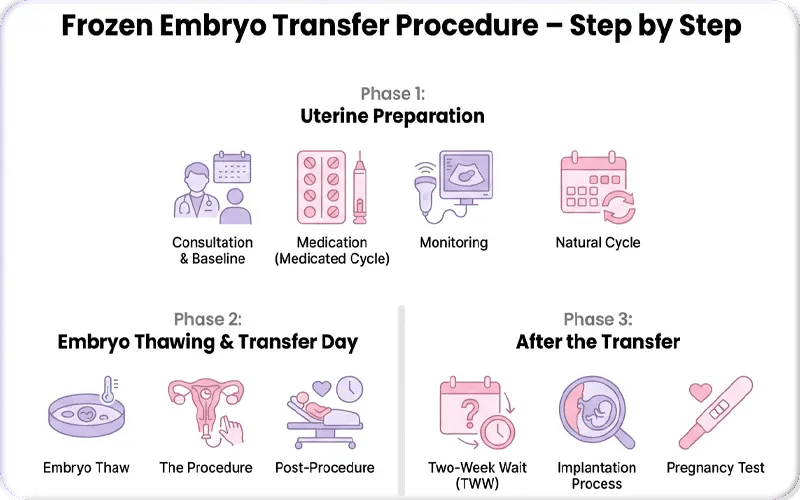
Phase 1: Uterine Preparation (Weeks Before Transfer)
1. Consultation & Baseline: Review records, baseline bloodwork, and ultrasound to check hormone levels and uterine lining thickness.
2. Medication (Medicated Cycle): Start estrogen (pills, patches, injections) to build the uterine lining, followed by progesterone once the lining is thick enough (around 7mm or more).
3. Monitoring: Regular clinic visits (ultrasounds, blood tests) track lining development and adjust meds.
4. Natural Cycle: Involves monitoring your natural ovulation (LH surge) with ultrasounds/tests, with progesterone started after ovulation.
Phase 2: Embryo Thawing & Transfer Day
1. Embryo Thaw:
On the scheduled day, embryologists carefully thaw the chosen embryo(s) and check viability.
2. The Procedure:
You'll lie on an exam table, often with a full bladder for ultrasound guidance. A speculum is used to visualize the cervix. A thin catheter carries the embryo through the cervix into the uterus. You might see a tiny "flash" (air bubble) on the ultrasound, not the embryo itself. The catheters are removed.
3. Post-Procedure: Brief rest (15 mins), then you go home, continuing medications.
Phase 3: After the Transfer
After a Frozen Embryo Transfer (FET), the two-week wait (TWW) begins, focusing on rest, managing stress with gentle activities like walking, following medication (progesterone) instructions, eating well (as if pregnant), avoiding strenuous exercise, hot baths, intercourse, and watching for mild symptoms like spotting or cramping
During Two-week wait FET, you wait for the clinic-scheduled pregnancy test to confirm results, while reporting severe pain or bleeding to a doctor immediately.
After a 5-day frozen blastocyst transfer, the embryo begins hatching, attaching, and implanting into the uterine lining over the next few days, with full implantation usually complete by days 4-5 post-transfer.
During the two-week wait after, it’s important to continue progesterone and other meds as instructed, with Pregnancy test after FET is done about 10-14 days post-transfer, through the blood test (beta hCG), to check for pregnancy.
Tips for Successful Embryo Transfer?
For a successful embryo transfer, focus on a nutrient-rich diet, healthy lifestyle (no smoking/alcohol, moderate exercise), stress management (meditation, relaxation), and strict adherence to prescribed medications like progesterone, ensuring you arrive at the clinic with a full bladder as instructed by your doctor, and prioritizing rest and a positive mindset for the first few days post-transfer to support implantation
Before your FET and during preparation it is recommended to:
- Stick to your medication schedule exactly as the clinic prescribes because hormone timing is crucial for implantation.
- Support your body with healthy habits such as balanced food, good hydration, regular sleep, and only mild exercise.
- Reduce stress through walking, breathing techniques, or calm daily routines.
- Avoid harmful factors like alcohol, smoking, strenuous workouts, and hot baths that may overheat or exhaust the body.
- Prepare logistics early by arranging documents, transportation, and time off work to stay relaxed on transfer day.
- Come with a full bladder on the day of the procedure to improve ultrasound visibility and accurate embryo placement.
- Clinic monitoring with ultrasounds and blood tests determines the best timing, and progesterone is often used for uterine preparation.
Frozen Embryo Transfer in Turkey
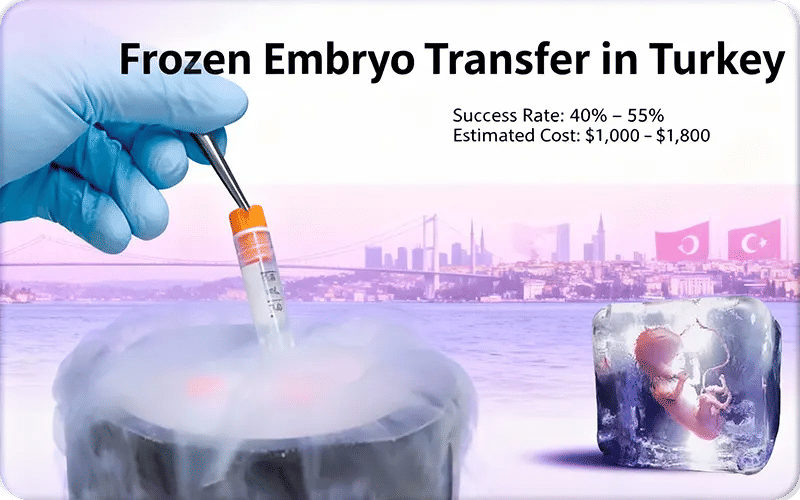
Turkey’s fertility centers use modern laboratory techniques and experienced specialists to optimize outcomes for patients undergoing FET. According to medical statistics, the pregnancy success rate following a frozen embryo transfer in Turkey generally ranges from around 40% to 55%, with higher rates often seen in younger patients and when embryos have been genetically tested or cultured to the blastocyst stage.
Another advantage of choosing FET in Turkey is cost‑effectiveness compared with many Western countries. A typical FET cycle in Turkey is significantly more affordable, often costing roughly $1,000 to $1,800, depending on the clinic, medications, and additional services such as genetic testing or extended monitoring.
In Turkey, clinics combine fertility care with tailored services bundled in all-inclusive packages for medical tourists, including multi‑day packages that cover treatment, hospital appointments, and local support.
These packages help streamline your fertility journey and make FET in Turkey an attractive choice for patients seeking both quality and value.
Start your FET Confidently with Turkey Luxury Clinics
At Turkey Luxury Clinics, we guide you through every step of your FET journey, from initial consultation to post-transfer care. Our experienced fertility specialists use the latest technology to maximize your chances of success, while our dedicated team ensures a comfortable, stress-free experience. Whether you need assistance with travel, accommodation, or understanding the treatment process, we provide full support tailored to your needs. Start your path to parenthood today—schedule your consultation with Turkey Luxury Clinics and take the first step toward a successful FET.
You may like
IVF After Tubal Ligation: Success Rates and Chances of Pregnancy
IUI vs IVF: Key Differences, Success Rates, Cost & Which Is Better
FAQS About Frozen Embryo Transfer