

- What Does IVF Success Rate Mean?
- How Successful is IVF?
- First IVF Cycle Success Rate vs. Cumulative Success
- Factors Affecting IVF Success
- Who Has a High IVF Success Rate?
- Approximate IVF Success Rates by Age Group
- How to Increase Your Chances of IVF Success
- IVF Success Rate in Turkey (2026)
- Ready to Take the Next Step in Your IVF Journey?
- FAQs About How Successful is IVF
Starting an in vitro fertilization (IVF) journey can be both exciting and full of hope. While success is never guaranteed, younger women and those undergoing multiple cycles often achieve the best outcomes, especially when advanced techniques like ICSI, blastocyst culture, genetic testing (PGT), and frozen embryos are used.
The IVF success rate is primarily influenced by a woman’s age: women aged 24–34 have the highest success rates (45–50%), while older women can still improve their chances through multiple attempts, the assistance of highly skilled specialists, and modern procedures.
At Turkey Luxury Clinics, we explain how success rates differ between the first cycle and cumulative cycles, highlight the key factors that influence outcomes, and guide you on steps to maximize your chances of a successful IVF journey.
What Does IVF Success Rate Mean?

IVF success rates refer to the percentage of IVF cycles that result in a live birth, which is the ultimate goal for most couples. While a positive pregnancy test confirmed by ultrasound is an encouraging milestone, it does not guarantee a successful pregnancy, as some pregnancies may not reach full term.
Generally, when you hear about IVF success rates, these numbers represent averages per cycle, reflecting outcomes for a group of patients rather than predicting an individual’s chances.
Actual success can vary widely depending on factors such as a woman’s age, egg and sperm quality, and the underlying cause of infertility.
Some clinics provide both per-cycle and cumulative success rates, helping patients understand how repeated IVF cycles may increase their overall chances of having a healthy baby.
How Successful is IVF?
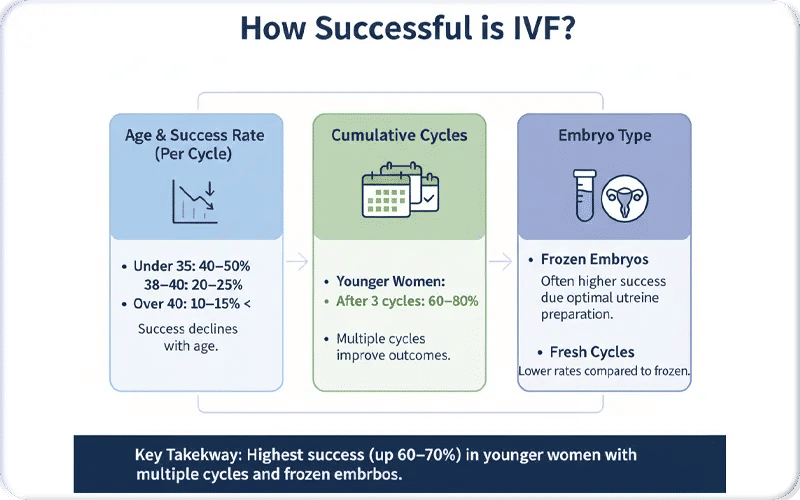
IVF success rates depend mainly on age, cumulative treatment cycles, and embryo type.
Women under 35 have the highest chances, averaging 40–50% per cycle. Success gradually declines with age, dropping to around 20–25% for women between 38 and 40, and 10–15% or lower after 40.
Success improves with multiple cycles, and for younger women, cumulative outcomes can reach 60–80% after three attempts.
Frozen embryo transfers often provide better results than fresh cycles because they allow optimal uterine preparation and hormonal balance, enhancing implantation and live birth rates.
Overall, the highest IVF success is seen in younger women who undergo multiple cycles and use frozen embryos, with overall success reaching up to 60–70% in suitable patients.
First IVF Cycle Success Rate vs. Cumulative Success
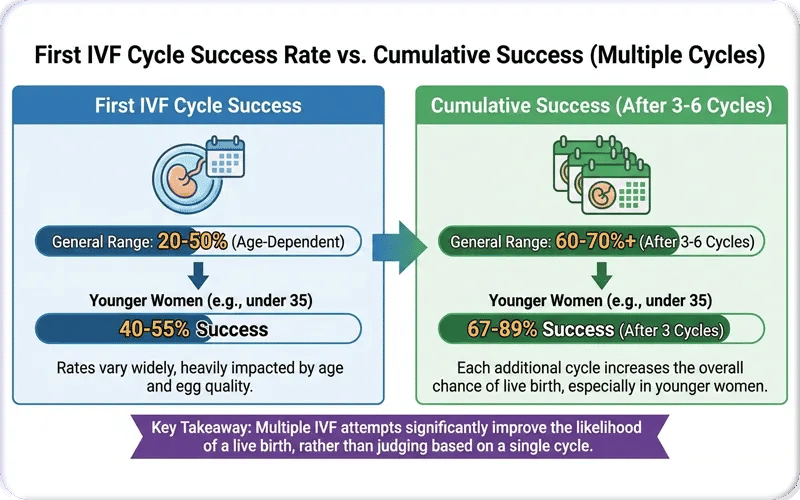
IVF success on the first try varies widely (around 20-50%), heavily depending on the woman's age, with younger women having much higher rates.
The success rate of the first IVF cycle is generally lower than the cumulative success rate because each additional cycle increases the overall chance of achieving a live birth.
This effect is especially noticeable in younger women. While first-cycle success rates typically range from 30% to 60%, depending largely on age and egg quality, cumulative live birth rates can rise to 60–70% or higher after three to six cycles.
For example, a woman under 35 may have a 40–55% chance of success in her first IVF cycle, but this likelihood can increase to 67–89% after three cycles. This demonstrates the significant benefit of multiple IVF attempts rather than judging outcomes based on a single cycle alone.
Factors Affecting IVF Success
IVF success depends on a combination of biological, lifestyle, and procedural factors.
Among these, female age, largely due to its impact on egg quality, is the most influential. Embryo quality, sperm quality, and the receptivity of the uterine lining also play critical biological roles.
Additionally, clinic expertise and healthy lifestyle choices such as proper nutrition, weight management, and quitting smoking can significantly improve outcomes. On the other hand, poor lifestyle habits and substandard laboratory conditions are known to reduce success rates.
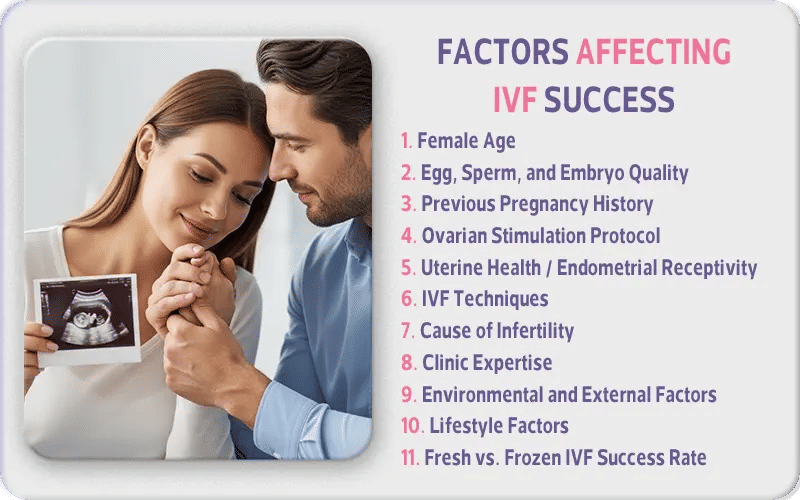
Main factors affecting IVF success include:
1. Female Age
Age is one of the most important factors affecting IVF success. Women between 24 and 34 generally have the highest chances, while success gradually declines after 40 due to reduced egg quantity and quality. Younger women tend to produce more viable eggs, increasing the likelihood of fertilization, implantation, and ultimately a live birth.
2. Egg, Sperm, and Embryo Quality
The quality of eggs, sperm, and embryos plays a crucial role in IVF outcomes. Poor-quality eggs or sperm reduce the chances of creating healthy embryos, while embryos with genetic abnormalities may fail to implant or result in miscarriage. Egg quality naturally declines with age, which can significantly impact overall success rates.
3. Previous Pregnancy History
A woman’s reproductive history can influence IVF success. Women who have previously carried a pregnancy to term often have higher success rates compared to those who have never been pregnant or have experienced recurrent miscarriages. Previous successful pregnancies indicate that the reproductive system is capable of supporting a pregnancy.
4. Ovarian Stimulation Protocol
The medications and timing used to stimulate the ovaries affect both the number and quality of eggs retrieved. Choosing the optimal stimulation protocol, tailored to the patient’s age and hormone levels, can improve egg quality, increase the number of embryos available, and enhance the chances of a successful pregnancy.
5. Uterine Health / Endometrial Receptivity
A receptive uterine lining is vital for implantation. Factors such as endometrial thickness, hormonal balance, immune environment, and overall uterine health determine whether an embryo can successfully implant. Even high-quality embryos may fail to implant if the endometrium is not adequately prepared.
6. IVF Techniques
IVF success rates are heavily influenced by techniques like ICSI, blastocyst culture, and genetic testing (PGT), which improve fertilization, embryo selection, and implantation.
The procedure of transferring embryos into the uterus also is a critical step. Precision, proper timing, and the skill of the specialist performing the transfer directly affect implantation success. Poor technique can lower success rates regardless of embryo quality.
7. Cause of Infertility
The underlying reason for infertility—such as PCOS, endometriosis, or male-factor infertility—can significantly affect IVF outcomes. Identifying and addressing these causes may improve success rates.
8. Clinic Expertise

The experience of fertility specialists, embryologists, and the quality of laboratory technology and protocols are key determinants of IVF success. Clinics with high standards, advanced equipment, and skilled staff generally achieve better outcomes.
9. Environmental and External Factors
Exposure to environmental toxins, poor sleep, and other external stressors can negatively impact fertility. Minimizing these risks and creating a healthy environment supports higher IVF success rates.
10. Lifestyle Factors
- Weight: Maintaining a healthy BMI supports hormonal balance and improves implantation rates. Being underweight or overweight may reduce IVF success.
- Smoking and Alcohol: Smoking significantly damages egg and sperm quality. Excessive alcohol and high caffeine intake can also negatively impact fertility.
- Diet and Exercise: A balanced diet rich in folic acid, antioxidants, and essential nutrients supports reproductive health. Moderate exercise is beneficial, while excessive training may be harmful.
- Stress: High stress levels can interfere with hormone regulation and treatment adherence. Stress management is an important part of IVF preparation.
11. Fresh vs. Frozen IVF Success Rate
Frozen embryo transfers (FETs) can increase IVF success rates because they give the body time to recover from ovarian stimulation and create a more receptive uterine environment. They also allow genetic testing of embryos, improving the chance of a healthy pregnancy and reducing risks.
Reasons FETs Are Often More Successful:
- Better Uterine Environment: Hormone levels from fresh IVF stimulation can interfere with implantation. FETs allow hormones to normalize, mimicking natural conception.
- Lower OHSS Risk: Freezing embryos avoids the risk of ovarian hyperstimulation syndrome, a serious complication in fresh cycles.
- Genetic Screening (PGT-A): Embryos can be tested for chromosomal normality before transfer, increasing implantation success and lowering miscarriage risk.
- Healthier Babies: FETs are associated with lower chances of preterm birth and placental problems, leading to better neonatal outcomes.
- Flexible Timing: Transfers can be scheduled for optimal uterine readiness, and single embryo transfer is easier, further reducing risks.
Who Has a High IVF Success Rate?
The highest IVF success rates are seen in women under 35, reaching around 40–50% per cycle. With multiple cycles and cumulative treatment, success rates can rise to 60–70%, especially when high-quality embryos and frozen embryo transfers are used. Success rates decline significantly after age 40, often falling to 10–15% or lower per cycle.
Couples may have higher than typical chances if they have:
- Younger women (<35) with high egg quality
- Mild infertility causes (like blocked tubes only)
- Use of advanced lab techniques like PGT (genetic screening)
- Skilled clinics with high-quality labs
Approximate IVF Success Rates by Age Group
Age Group | First cycle | After 2 Cycles | After 3 Cycles |
<35 | 35–50% | 55–65% | 65–70% |
35–37 | 25–36% | 40–50% | 50–55% |
38–40 | 19–26% | 30–40% | 40–45% |
>40 | 5–15% | 10–20% | 15–25% |
From the table, the chance of a successful live birth from the first cycle is lower than that of the second and third attempts, with the highest success rates seen in younger women. Success rates are now further improved through advanced techniques and highly skilled specialists.
How to Increase Your Chances of IVF Success
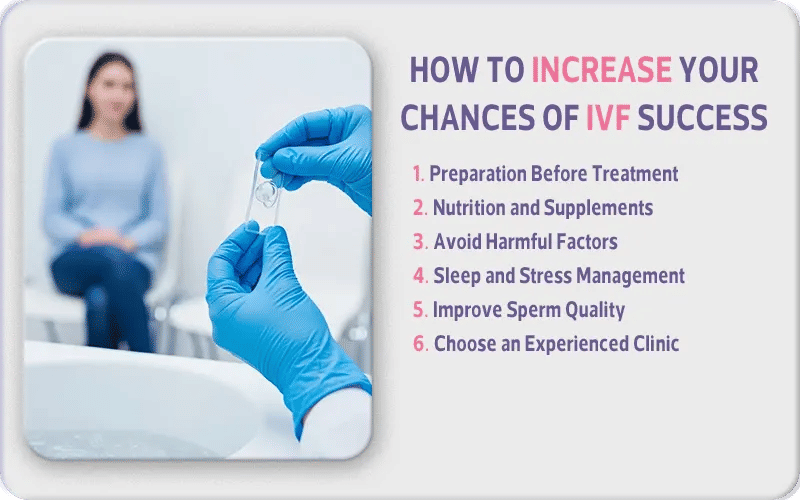
1. Preparation Before Treatment
- Start preparing your body at least three months before your IVF cycle to optimize egg and sperm quality.
- Maintain a healthy weight and engage in moderate physical activity to improve fertility outcomes.
2. Nutrition and Supplements
- Eat a balanced diet rich in vegetables, whole grains, lean proteins, and healthy fats.
- Take folic acid before and during pregnancy to reduce the risk of neural tube defects.
- Correct vitamin D deficiencies under medical supervision to support fertility.
3. Avoid Harmful Factors
- Stop smoking and avoid alcohol; limit caffeine to 1–2 cups per day.
- Avoid prolonged heat exposure from saunas, hot tubs, or long hot baths.
- Minimize exposure to environmental toxins in plastics and cosmetics.
4. Sleep and Stress Management
- Ensure 7–8 hours of quality sleep to support hormonal balance.
- Use relaxation techniques and emotional support to reduce stress and improve treatment adherence.
5. Improve Sperm Quality
- Maintain a healthy lifestyle, stay hydrated, and avoid smoking and alcohol.
- Refrain from ejaculation for 3–4 days before sperm collection to optimize sperm quality.
6. Choose an Experienced Clinic
- Clinic expertise, advanced laboratory technology, and skilled specialists significantly increase IVF success rates.
IVF Success Rate in Turkey (2026)
IVF success rates in Turkey are highly competitive, averaging 40–50%. These strong outcomes are driven by a combination of advanced technologies (such as PGT and ICSI), highly skilled specialists, accredited clinics, affordable costs, and a supportive medical tourism environment.
This makes Turkey a top destination for IVF, offering results comparable to—or even better than—those in Western countries, especially for younger patients.
Ready to Take the Next Step in Your IVF Journey?
Every couple’s path to parenthood is unique, and knowing your personal chances can make all the difference. At Turkey Luxury Clinics, our fertility specialists provide personalized guidance, advanced treatments, and support at every step, from the first consultation to a successful embryo transfer.
Book your consultation today to explore your IVF options, discuss success rates tailored to your situation, and move one step closer to bringing your dream of a healthy baby to life.
You may like:
Can You Choose Gender with IVF?
Positive Signs After Embryo Transfer: Early Pregnancy Clues
IVF Timeline: Step-by-Step Process from Start to Finish
IVF in Turkey: 2025 Costs, Success Rates & Best Clinics
FAQs About How Successful is IVF