

- When Does Implantation Occur After FET?
- What Happens to Embryo After FET?
- Stages of Embryo Implantation After FET
- What to Expect During FET Implantation
- Embryo Implantation Timeline After FET
- When Does Implantation Bleeding Occur After FET?
- How to Differentiate Between Implantation Bleeding, Period, and Early Miscarriage
- Negative Signs of Implantation After FET
- When and How to Take a Pregnancy Test After FET
- Plan for a Successful FET with Turkey Luxury Clinics
- FAQs About When Does Implantation Occur After FET
After a Frozen Embryo Transfer (FET), you typically enter the two-week waiting period. What happens during these two weeks is critical, as embryo implantation determines whether pregnancy begins or the embryo is shed with the next menstrual cycle.
Implantation is the process in which the transferred embryo (blastocyst) attaches to and burrows into the uterine lining (endometrium), begins to develop, and signals the start of pregnancy.
When does implantation occur after FET? Implantation after FET is a gradual process that usually begins within 1–2 days after transfer and completes over the following days, typically between 5 and 6 days post-transfer. This timeframe is known as the window of implantation (WOI).
Once implantation is successful, the body starts producing hCG, the pregnancy hormone, which can be detected through a blood test. Some women may also notice early, subtle signs of a positive IVF outcome.
Discover with Turkey Luxury Clinics when implantation happens after FET day by day, what to expect during the implantation window, the symptoms your body may experience, and why proper timing and uterine readiness are essential for success. If you need personalized guidance, feel free to contact us for expert support throughout your FET journey.
When Does Implantation Occur After FET?
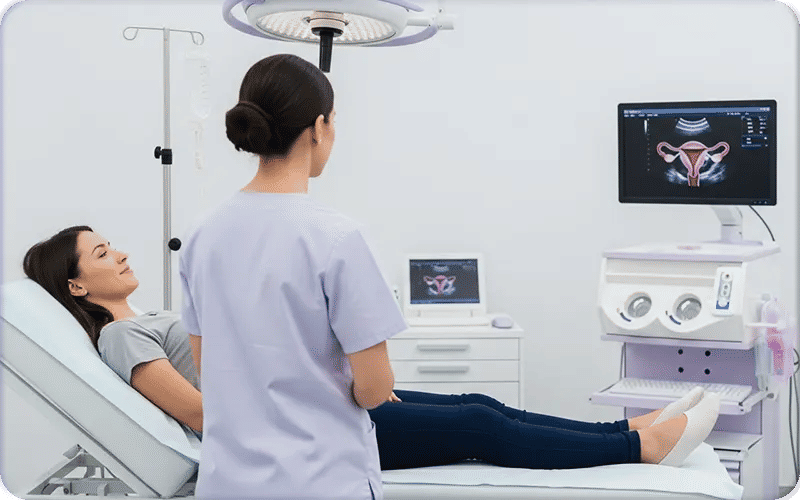
After a Frozen Embryo Transfer (FET), implantation typically begins 1–2 days after transfer for blastocyst-stage embryos and usually completes around days 5–6 post-transfer. At this point, the pregnancy hormone hCG starts to be produced, marking the end of the first week of the two-week waiting period. By days 9–12 after FET, hCG levels generally become detectable in a blood test; however, clinics often recommend waiting 10–14 days for a definitive result..
What Happens to Embryo After FET?
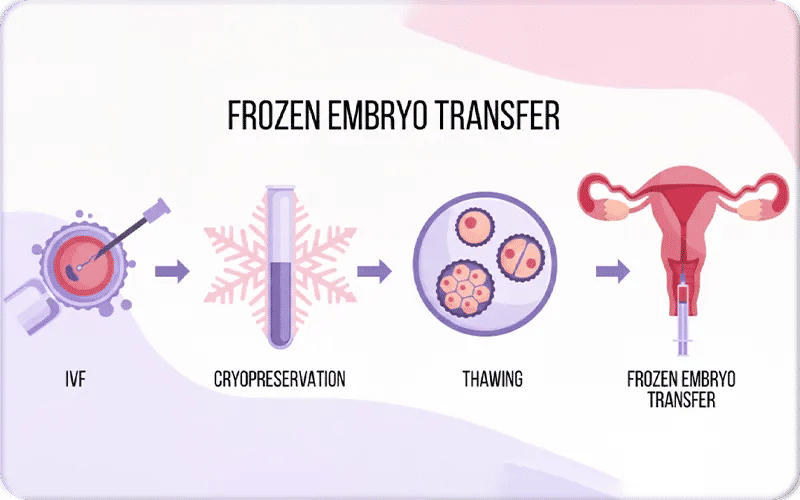
After a Frozen Embryo Transfer (FET), your transferred embryo, which is usually a blastocyst on Day 5, initially floats freely in the uterus.
Then, within 1–2 days, it begins hatching and attaching to the uterine lining. in a process called implantation.
Implantation after FET is a gradual process that occurs over several days, during which the embryo burrows deeper into the thick endometrium until fully embedded.
Once the embryo successfully embeds inside the uterus, around days 5–6 after implantation starts, it begins producing hCG, the pregnancy hormone, which can be detected in the blood about 9–12 days after transfer.
The full process from transfer to secure implantation typically takes 7–10 days, leading to a positive pregnancy test roughly 10–14 days post-transfer.
As development continues, the embryo differentiates into two main parts: the outer cells form the placenta, which supports the pregnancy, while the inner cells develop into the baby.
At the same time, the body increases hormone production to maintain the uterine lining and support early pregnancy, which is why a blood pregnancy test can confirm implantation.
This stage is critical because implantation is what truly initiates pregnancy. Once the embryo attaches to the uterine lining, it starts forming a connection that allows it to receive oxygen and nutrients needed for continued growth and development.
During the implantation window, some women may notice mild signs such as light spotting or gentle cramping during this time, while many feel no symptoms at all, both are completely normal.
Implantation process is typically the same in natural conception, fresh or frozen embryo transfer, however, in the FET IVF it is more secured because your uterus is fully prepared with thick lining, which may improve implantation conditions compared to some fresh transfers, depending on individual factors.
Stages of Embryo Implantation After FET
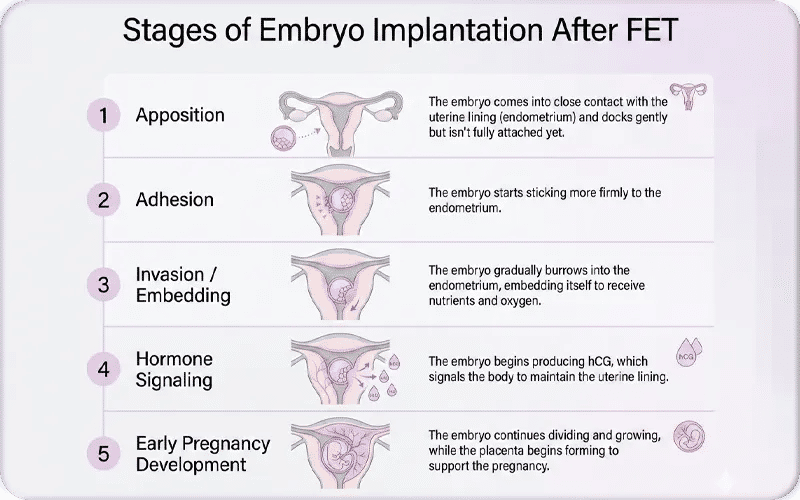
After a Frozen Embryo Transfer (FET), the embryo goes through several precise stages to ensure it attaches securely and pregnancy begins:
- Apposition – The embryo comes into close contact with the uterine lining (endometrium) and “docks” gently but isn’t fully attached yet.
- Adhesion – The embryo starts sticking more firmly to the endometrium, aided by specialized proteins that help secure it to the uterine wall.
- Invasion / Embedding – The embryo gradually burrows into the endometrium, embedding itself so it can start receiving nutrients and oxygen from the mother’s blood supply.
- Hormone Signaling – Once fully embedded, the embryo begins producing hCG (human chorionic gonadotropin), which signals the body to maintain the uterine lining and can later be detected in a blood pregnancy test.
- Early Pregnancy Development – The embryo continues dividing and growing, while the placenta begins forming to support the pregnancy.
What to Expect During FET Implantation
After a Frozen Embryo Transfer (FET), early signs of successful implantation may include mild cramping or twinges, light spotting (implantation bleeding), fatigue, breast tenderness or swelling, increased creamy vaginal discharge, bloating, frequent urination, and mood swings.
These symptoms are driven by rising hormone levels, including progesterone and hCG, and can be very similar to premenstrual symptoms, making it difficult to distinguish them from true signs of pregnancy. Therefore, only a pregnancy test can confirm a positive result.
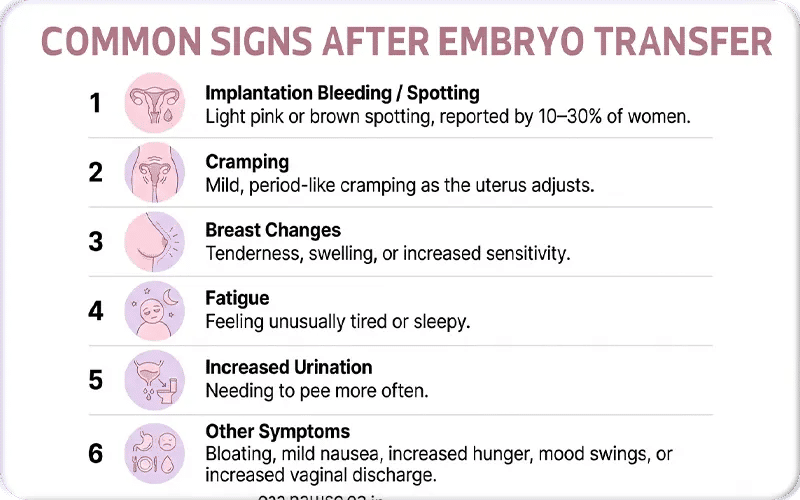
Some of the most common positive signs after embryo transfer include:
- Implantation Bleeding/Spotting: Light pink or brown spotting, reported by 10–30% of women.
- Cramping: Mild, period-like cramping as the uterus adjusts.
- Breast Changes: Tenderness, swelling, or increased sensitivity.
- Fatigue: Feeling unusually tired or sleepy.
- Increased Urination: Needing to pee more often.
- Other Symptoms: Bloating, mild nausea, increased hunger, mood swings, or increased vaginal discharge.
Embryo Implantation Timeline After FET
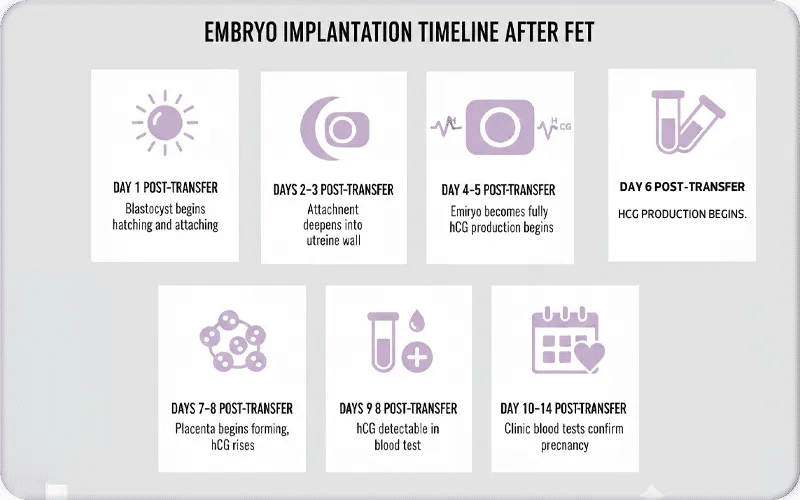
Here is a day by day breakdown of the implantation window and the 2 weeks period after transferring of the blastocyst, the embryo on its day 5 of fertilization FET:
Day 1 Post-Transfer
The blastocyst begins hatching from its shell and starts attaching to the uterine lining. Most women feel nothing at this stage, though very mild cramping or a sense of heaviness in the lower abdomen can sometimes occur.
Days 2–3 Post-Transfer
Attachment deepens and implantation progresses into the uterine wall. Some women may notice light spotting or minor cramping, while many feel no changes at all.
Days 4–5 Post-Transfer
The process called invasion typically occurs around this time, as the embryo burrows deeper into the endometrium and becomes fully embedded, leading to symptoms you may experience such as mild spotting, light cramping, or a slight sense of pelvic pressure.
During this stage, hormones start to change, which can lead to systemic symptoms such as fatigue, breast tenderness or swelling, mood changes, and sometimes increased vaginal discharge.
Day 6 Post-Transfer
The embryo begins producing the pregnancy hormone hCG, which enters the bloodstream. The likelihood of implantation bleeding may increase, but this is not a sign of miscarriage; rather, it is a normal and positive sign of implantation. Symptoms are usually subtle, though some women may notice breast tenderness or slight changes in vaginal discharge..
Days 7–8 Post-Transfer
By Day 7 after a Frozen Embryo Transfer (FET), the embryo is usually well into the implantation process.the placenta begins forming, and the embryo continues producing the pregnancy hormone hCG, although levels are typically too low to be detected by home pregnancy tests. The elevated hCG levels continue rising as the embryo develops causing more signs like mild fatigue, breast sensitivity, or mood changes may begin.
Day 9 Post-Transfer
hCG is often detectable in a blood test, though clinics usually recommend waiting a bit longer for an accurate result. Some women may notice increased tiredness, mild bloating, or more noticeable breast changes.
Days 10–14 Post-Transfer
hCG levels continue to rise, which is the typical window for clinic blood tests to confirm pregnancy. Early pregnancy symptoms such as fatigue, breast tenderness, mild cramping, or mood changes may appear, though many women still feel no noticeable symptoms.
It is important to note that it is completely normal to feel no symptoms at all, and there is no need to worry. The only reliable way to confirm pregnancy is through a blood or urine pregnancy test.
Read more about IVF timeline from start to finish
When Does Implantation Bleeding Occur After FET?
Implantation bleeding after FET typically occurs 6 to 12 days post-transfer, when the embryo attaches to the uterine lining. It often happens around the time a period would be due, but appears as light pink or brown spotting, lasting a few hours to a couple of days. This is a common sign of implantation; however, its absence does not necessarily mean the FET was unsuccessful. The only way to confirm pregnancy is with a blood or urine test.
How to Differentiate Between Implantation Bleeding, Period, and Early Miscarriage
Spotting after FET or early in a cycle can be confusing. The following table summarizes the main differences to help you identify what you might be experiencing.
| Feature | Implantation Bleeding | Menstrual Period | Early Miscarriage |
| Timing | 6–12 days post-transfer | Around expected period | Often after positive test |
| Flow | Very light; doesn’t soak a pad | Moderate to heavy | Starts light, becomes heavy |
| Color | Pink or brown | Red | Red or dark red |
| Clots/Tissue | None | Small clots possible | Large clots or grey-white tissue |
| Duration | Hours to 2 days | 3–7 days | Several days to weeks |
| Pain | Mild twinges or none | Moderate cramps | Severe cramps |
Negative Signs of Implantation After FET
Signs of failed implantation after a Frozen Embryo Transfer (FET) often resemble a regular period, including heavier bleeding, significant cramping, and the absence of typical early pregnancy symptoms such as fatigue or nausea, usually resulting in a negative pregnancy test.
It is important to note that some warning signs require immediate medical attention. These include severe or intense abdominal pain or bleeding that is much heavier than a normal period, which could indicate complications such as ectopic pregnancy or Ovarian Hyperstimulation Syndrome (OHSS).
When and How to Take a Pregnancy Test After FET
After a Frozen Embryo Transfer (FET), it’s best to wait 10–14 days before taking a home urine test or following your doctor’s instructions for a blood test, usually around day 14, to ensure accurate results. Testing too early can lead to false negatives due to low hCG levels, while fertility medications like Ovidrel or Pregnyl may rarely cause false positives.
Home Urine Test
- Use the first morning urine for the highest hCG concentration.
- Follow the test kit instructions carefully.
- Wait the full recommended time (usually 3–5 minutes) for the result.
Blood Test (Beta hCG)
- Conducted at the clinic, usually around 14 days post-transfer.
- More sensitive than urine tests and can detect lower hCG levels.
- Your doctor may schedule a follow-up to confirm results.
Why Wait?
- The embryo needs time to implant and produce detectable hCG.
- Early testing increases the risk of false negatives.
- Waiting ensures reliable results and avoids confusion from fertility medications.
Plan for a Successful FET with Turkey Luxury Clinics

At Turkey Luxury Clinics, we know every FET journey is unique. Our fertility specialists provide personalized guidance, clear medical insight, and continuous support. Whether you’re preparing for a Frozen Embryo Transfer or navigating the waiting period, contact us for expert care every step of the way.
You may like
Can You Choose Gender with IVF?
IVF in Turkey: 2026 Costs, Success Rates & Best Clinics
FAQs About When Does Implantation Occur After FET