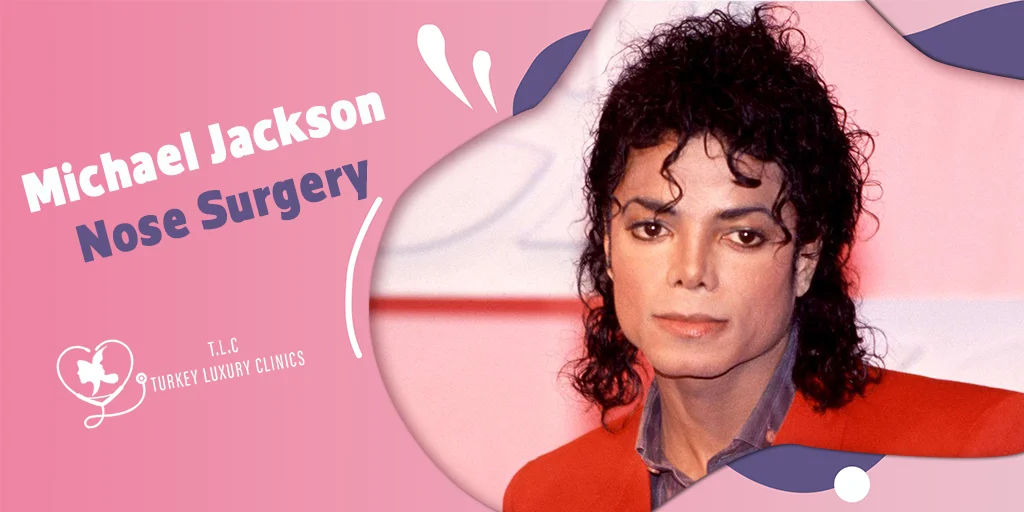


- Michael Jackson Nose Before Surgery: The Natural Appearance
- Why Did Michael Jackson Get Nose Surgery?
- How Many Nose Surgeries Did Michael Jackson Have?
- Michael Jackson Nose Collapse: What Went Wrong?
- Michael Jackson Nose Evolving: Year by Year Timeline
- Michael Jackson Nose Before and After Comparison
- Expert Analysis of Michael Jackson's Nasal Transformation
- How Much Do Primary and Revision Rhinoplasty Cost?
- Secure Your Nose Surgery with Turkey Luxury Clinics
- FAQs About Michael Jackson Nose Surgery
Even in 2026, Michael Jackson’s nose transformation remains one of the most discussed celebrity plastic surgery stories in history. The dramatic changes in his nose size, shape, and overall structure have fueled years of speculation about his primary nose job and subsequent revision rhinoplasty surgeries.
When comparing the Michael Jackson nose before surgery during his early years with The Jackson 5 to his later, more refined and sharply defined nasal shape, the transformation appears increasingly dramatic over time. These visible differences led to widespread speculation about rhinoplasty procedures and repeated cosmetic revisions.
While his initial nose job addressed medical concerns following a nasal injury in the late 1970s, numerous revision rhinoplasties followed over the subsequent decades.
Consequently, discussions surrounding Michael Jackson's nose surgeries shifted beyond mere aesthetics and into critical medical considerations, such as structural support, cartilage integrity, and long-term surgical outcomes.
Today, Michael Jackson’s case is frequently referenced in conversations about revision rhinoplasty, cosmetic surgery risks, and the pressure of maintaining appearance under global fame.
Michael Jackson Nose Before Surgery: The Natural Appearance
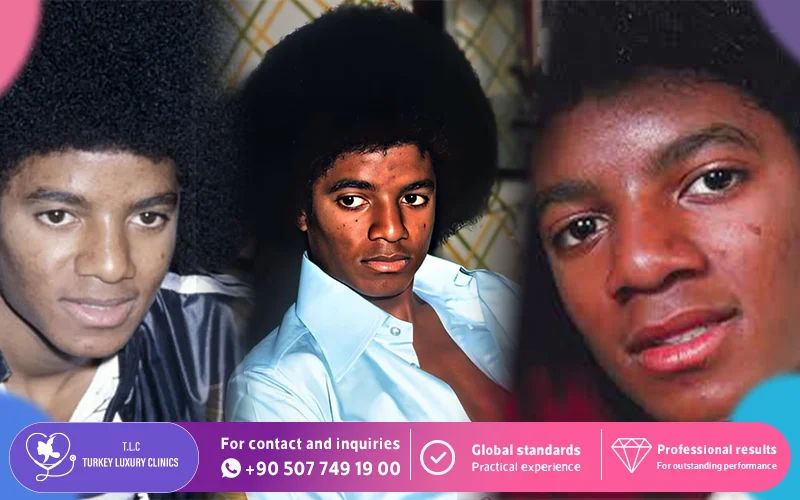
At this stage, there were no visible signs of surgical intervention. His appearance reflected typical adolescent facial structure, and his nose remained consistent through his early career performances and appearances.
Before undergoing any plastic surgery, Michael Jackson had a broad, naturally rounded African-American nose with a wide base and full nasal tip.
Photos from his youth with the Jackson 5 and during the era of his 1979 solo album Off the Wall showcase his original, unaltered facial features, his appearance was recognizable because of:
- His natural smile
- Curly Afro hairstyle
- Youthful facial structure
- Distinct Jackson family features
At that stage, there were no visible signs of cosmetic alterations.
As Michael Jackson transitioned into his solo career during the late 1970s, subtle changes in his nose gradually became noticeable. Following the injury he later discussed publicly, fans observed a slimmer bridge and a more refined nasal shape during the “Off the Wall” era.
These early changes marked the beginning of one of the most talked-about celebrity appearance transformations ever documented in pop culture.
Why Did Michael Jackson Get Nose Surgery?
Michael Jackson said his first nose surgery was performed after he broke his nose during a dance rehearsal in 1979. According to his public statements, the procedure was intended to correct the injury and improve his breathing. However, many experts believe additional rhinoplasty and revision procedures may have followed over the years due to aesthetic goals, ongoing nasal concerns, and the challenges associated with previous surgeries.
Jackson stated in multiple interviews that his initial rhinoplasty followed a nasal injury sustained during a dance rehearsal in the late 1970s. While the first procedure was reportedly performed for functional and medical reasons, his nose continued to change significantly throughout the following decades. This led many plastic surgeons and biographers to speculate that additional revision rhinoplasty procedures may have been performed to refine earlier results or address complications from previous surgeries.
Over time, however, his nose continued to change in shape and definition. Many plastic surgery experts believe additional revision procedures may have been performed to refine earlier results and adjust nasal proportions.
Several factors are commonly cited when discussing why his nose appearance kept evolving:
- Initial injury correction: The first procedure was reportedly performed to repair a broken nose.
- Aesthetic refinement: Gradual adjustments may have been made to achieve a more defined nasal profile.
- Revision surgeries: Repeated procedures can sometimes be required to correct previous surgical outcomes.
- Structural changes over time: Multiple rhinoplasties can weaken cartilage and alter nasal support.
- Public image pressure: As a global celebrity, appearance expectations may have influenced decisions over time.
As the surgeries became more extensive, fans and surgeons began noticing signs of structural weakening around the nose, including an unusually narrow bridge and thinning tissue.

How Many Nose Surgeries Did Michael Jackson Have?
Michael Jackson publicly admitted to having two nose surgeries, but the exact number of rhinoplasty procedures he underwent remains unknown. Some surgeons, biographers, and commentators have speculated that he may have undergone additional revision rhinoplasty procedures over several decades due to the dramatic changes in his appearance. However, no complete medical records have ever been released to confirm the total number of surgeries.
Some surgeons and observers estimate that he may have undergone multiple revision rhinoplasty procedures over the years, although no official medical records are publicly available to confirm this. Because rhinoplasty can involve subtle staged refinements, the exact number remains unknown.
Michael Jackson Nose Collapse: What Went Wrong?
Medical discussions around Michael Jackson’s nose often focus on the long-term effects of repeated rhinoplasty rather than a single surgical outcome.
Some surgeons suggest that the significant changes in his nasal structure over time may be associated with cumulative structural weakening from multiple rhinoplasty procedures. In complex revision cases, repeated surgical intervention can reduce cartilage support and increase scar tissue formation, which may gradually affect nasal shape and stability.
Over time, this can lead to increased structural fragility and a more delicate nasal appearance, particularly in cases involving multiple revisions.
Expert Insight: “According to board-certified plastic surgeons, undergoing more than two or three revision rhinoplasties can significantly compromise the nasal support structures. Modern preservation rhinoplasty focuses on maintaining cartilage integrity to avoid the types of complications often associated with historically aggressive revision cases.

Michael Jackson Nose Evolving: Year by Year Timeline
According to facial plastic surgeons and biographical accounts, Jackson's nose evolved through several distinct phases:
1979 (First Rhinoplasty)
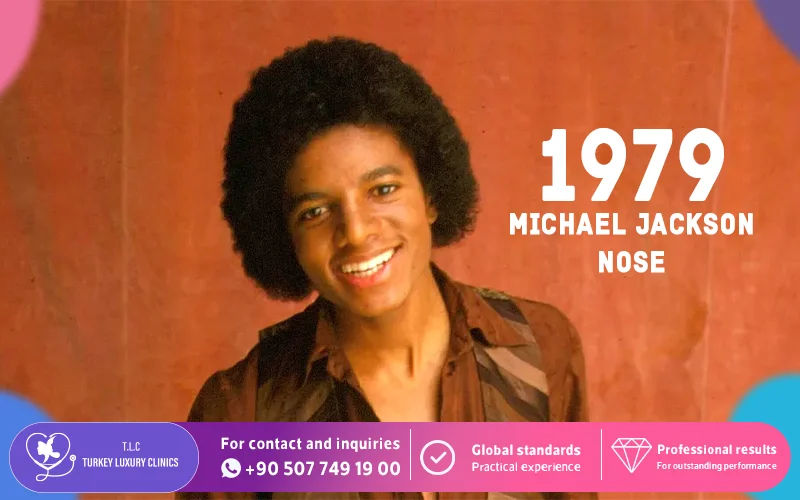
Experts believe the initial procedure may have included nostril narrowing and subtle bridge refinement and slightly raised the bridge. The result was subtle and preserved a natural look.
Early 1980s (Thriller Era)
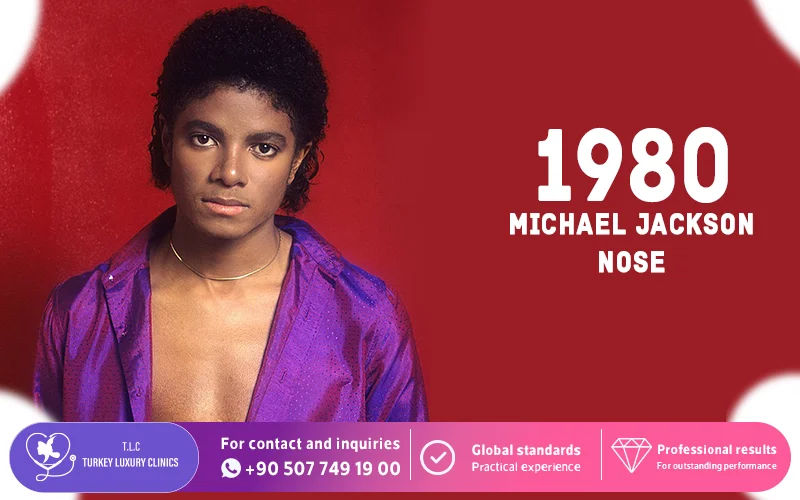
By the early 1980s, additional changes became visible, leading some experts to speculate that a second procedure may have been performed. This further thinned the bridge and refined the nasal tip.
Mid-to-Late 1980s (Bad Era)
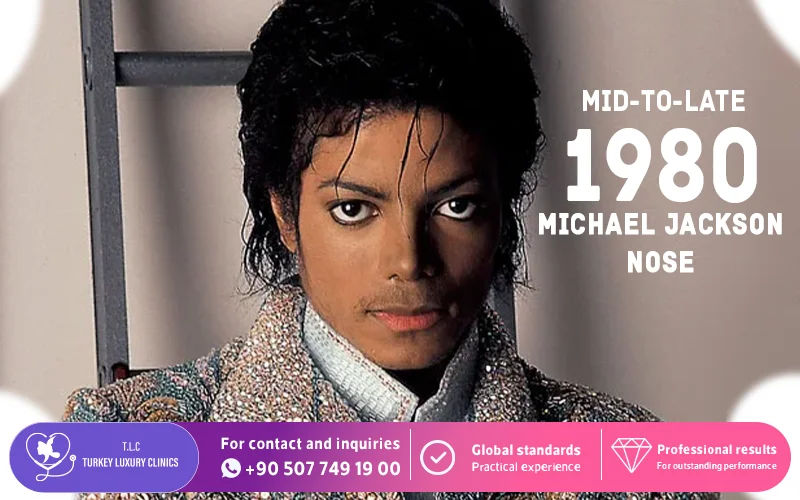
The alterations became starkly dramatic. The nose was carved down significantly smaller, the tip became distinctly pointed, and the nostrils took on a sharper, triangular appearance.
1990s–2000s (Advanced Revisions and Reconstruction)
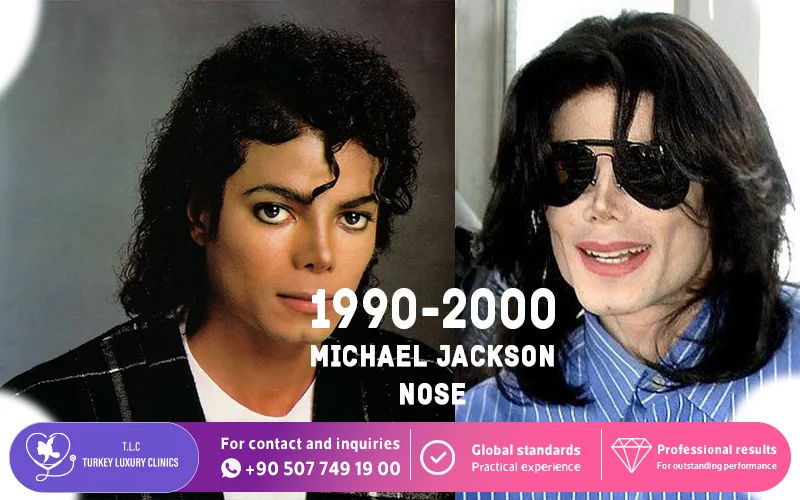
Some facial plastic surgeons have suggested that repeated revision surgeries may have contributed to progressive structural weakening and loss of cartilage support, requiring complex reconstruction using cartilage grafts from other parts of his body to keep the airway open
Michael Jackson Nose Before and After Comparison
Anatomical Feature | Before Surgery (1970s) | Later Appearance (1990s–2000s) |
Nasal Bridge | Wider bridge with a relatively low profile and natural contour. | Significantly narrower bridge with a more defined and elevated appearance. |
Nasal Tip | Rounded and fuller nasal tip with natural projection. | More refined and sharply defined tip with reduced volume. |
Nostrils (Alar Base) | Wider nostril base with balanced proportions. | Noticeably narrower nostril base and reduced overall width. |
Overall Nasal Shape | Broad, natural structure that blended with surrounding facial features. | Smaller, more sculpted appearance with greater definition. |
Facial Harmony | Features appeared naturally balanced during early career years. | The nose became a more prominent focal point due to its substantial refinement. |
While the visual differences are striking, facial plastic surgeons emphasize that rhinoplasty involves more than aesthetic changes. Altering the bridge, tip, and nostril base can also affect structural support and nasal function, particularly when multiple revision procedures are performed over time.
Expert Analysis of Michael Jackson's Nasal Transformation
Although no official medical records of Michael Jackson's nose surgeries exist, plastic surgeons and medical experts generally attribute the drastic changes in his nasal structure over three decades to a combination of repeated rhinoplasties. Many experts believe repeated procedures may have contributed to progressive cartilage thinning and reduced nasal support, potentially increasing the complexity of later reconstructive efforts.
While his first surgery—a primary nose job known as a septorhinoplasty—addressed functional, medical, and reconstructive goals alongside minor cosmetic refinement, all subsequent operations fall under the revision classification. In plastic surgery, a revision rhinoplasty specifically fixes the complications and consequences of a previous procedure.
Primary Michael’s Nose Job: Refinements and Septorhinoplasty
Many experts believe Jackson's first surgery was likely a septorhinoplasty, a procedure that combines functional correction with cosmetic reshaping. Following a reported nasal injury in the late 1970s, this approach would have allowed surgeons to improve breathing while also refining the appearance of the nose.
Compared with earlier photographs, the post-surgical changes appeared relatively conservative. The bridge looked slightly more defined, while the nostrils appeared narrower without dramatically altering his overall facial harmony.
Revision Rhinoplasty
As Jackson's appearance continued to evolve throughout the 1980s and 1990s, several facial plastic surgeons suggested that revision rhinoplasty procedures may have been performed. Revision surgery is commonly used to modify, refine, or correct previous rhinoplasty results.
Unlike primary rhinoplasty, revision procedures become increasingly complex because surgeons must work around scar tissue and altered anatomy. Many experts believe the progressive narrowing of Jackson's nose is consistent with the cumulative effects of multiple revisions performed over an extended period.
Structural Weakening Concerns
One of the most frequently discussed aspects of Jackson's transformation is the possibility of structural weakening. In rhinoplasty, excessive reduction of cartilage can gradually compromise the natural support system that maintains nasal shape and airflow.
Some surgeons have noted that Jackson's later appearance showed features commonly associated with reduced structural support, including an extremely narrow bridge and a more delicate nasal framework. However, the exact extent of any functional impairment remains unknown because no complete medical records have been made public.
Possible Reconstructive Procedures
In advanced revision cases, reconstructive techniques are sometimes required to restore strength and stability to the nose. These procedures often involve cartilage grafts taken from the ear, rib, or nasal septum to reinforce weakened areas.
Several experts have speculated that reconstructive methods may have been necessary during the later stages of Jackson's surgical journey. While this has never been officially confirmed, such procedures are commonly used when surgeons need to preserve both appearance and nasal function after multiple operations.
What Modern Patients Can Learn
Michael Jackson's case is frequently referenced in discussions about the importance of balancing aesthetics with long-term structural support. Modern rhinoplasty techniques place greater emphasis on preserving cartilage, maintaining airflow, and achieving natural-looking results that remain stable for years after surgery.
For patients considering primary or revision rhinoplasty, the case highlights the value of careful surgical planning and choosing a surgeon with extensive experience in both cosmetic and functional nasal procedures.
How Much Do Primary and Revision Rhinoplasty Cost?
The cost of nose surgery varies depending on the type of procedure and geographic location. Functional procedures such as septoplasty are generally more affordable than cosmetic rhinoplasty. Similarly, primary rhinoplasty is typically less expensive than secondary or revision nose jobs, which require more advanced surgical expertise and complex correction techniques.
Septorhinoplasty costs can vary widely depending on case complexity, the surgical approach, and the experience of the surgeon, as it combines both functional and aesthetic correction in a single procedure.
Nose job costs in Turkey are significantly lower than in the United States or the United Kingdom. As a result, many international patients choose Turkey for rhinoplasty procedures due to its combination of high-quality medical care and experienced ENT and rhinoplasty surgeons at more affordable prices.
All-inclusive nose job packages in Turkey offer a more convenient experience by covering medical expenses along with travel logistics. These packages often include accommodation, airport transfers, and a dedicated coordinator, making the overall treatment journey more organized, transparent, and comfortable.
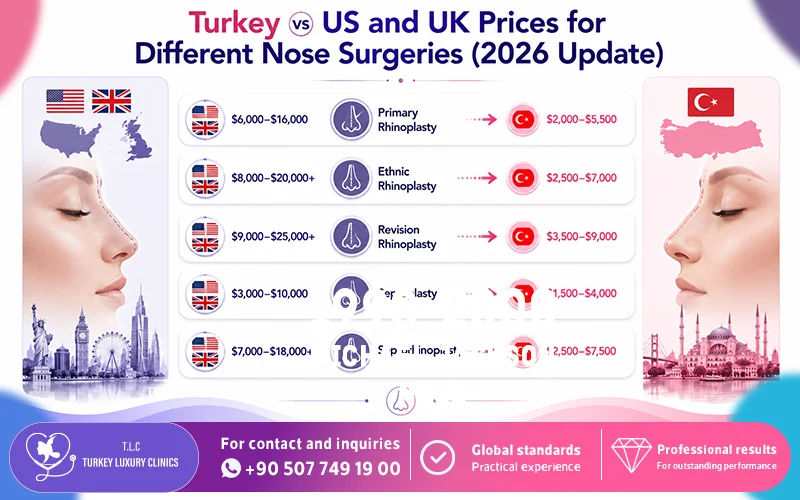
Turkey vs US and UK Prices Table for Different Nose Surgeries (2026 Update):
Nose Surgery | US and UK Prices (USD) | Turkey Prices (USD) |
Primary Rhinoplasty | $6,000–$16,000 | $2,000–$5,500 |
Ethnic Rhinoplasty | $8,000–$20,000+ | $2,500–$7,000 |
Revision Rhinoplasty | $9,000–$25,000+ | $3,500–$9,000 |
Septoplasty | $3,000–$10,000 | $1,500–$4,000 |
Septorhinoplasty | $7,000–$18,000+ | $2,500–$7,500 |
Secure Your Nose Surgery with Turkey Luxury Clinics
Are you looking for a safe, natural-looking transformation without the risk of long-term complications? Our board-certified specialists utilize the latest preservation techniques to protect your natural airways and deliver stable, life-changing results.
Get a Free Consultation & Personalized Quote from Top Specialists
FAQs About Michael Jackson Nose Surgery