


Seeing neck lift surgery recovery pictures day by day helps patients understand what to expect and set realistic expectations. In these photos, you typically show significant swelling and bruising, with a compression garment worn around the neck and chin. This early post-operative appearance is far from the final result, and you may feel unpresentable during this initial phase.
Discover detailed day-by-day visual explanations of neck lift recovery with Turkey Luxury Clinics, including photos that illustrate each stage of the healing process.
What to Expect Visually During Neck Lift Recovery Day by Day
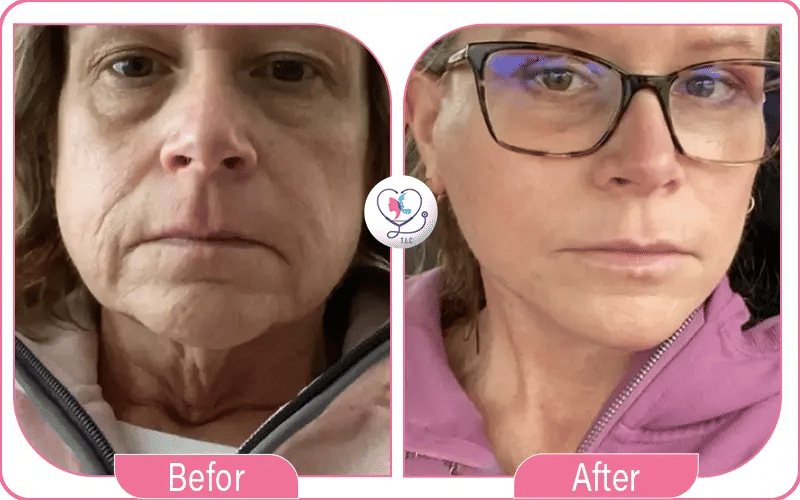
- Swelling: The most noticeable change, making the neck and jawline appear puffy and full.
- Bruising: Discoloration, often purple or blue, starting under the chin and possibly spreading.
- Compression Garment & Bandages: A wrap or garment is worn to control swelling and support healing.
- Tightness: The skin may feel pulled tight, with possible numbness or stiffness.
- Incision Lines: Redness or slight darkness may be visible at incision points (under the chin, around the ears or hairline), but these are usually discreet.
- Drains (Initially): Some patients may have a small drain on Day 1, which is typically removed quickly.
Neck Lift Recovery Pictures Day by Day
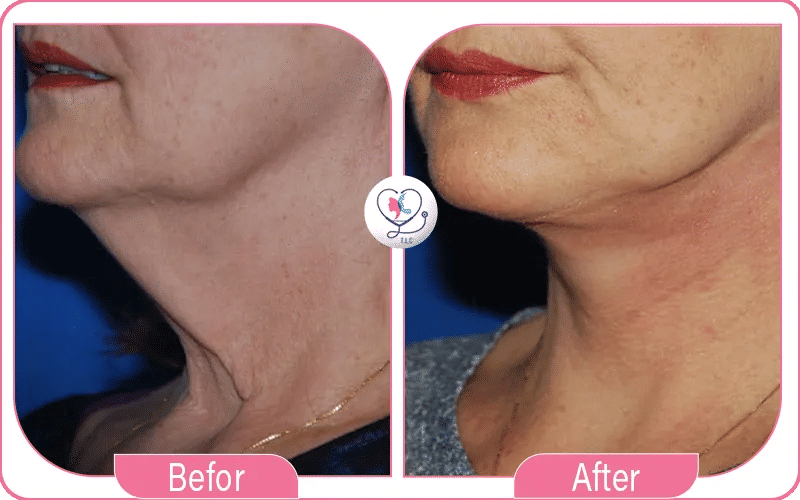
Recovery time from a neck lift typically involves 1–2 weeks for swelling and bruising to subside, 2–4 weeks for initial healing and scar fading, and several months for final results to fully appear.
Day of Surgery (Day 0)
After a neck lift procedure, you can return home the same day. The neck is usually wrapped in a compression bandage, and in some cases, a small drain may be placed to prevent fluid buildup. A feeling of tightness, heaviness, or numbness in the neck is completely normal. You are advised to rest, keep the head elevated, and avoid any sudden neck movements.
Day 1
The neck is tightly wrapped with compression, with visible swelling and early bruising
The first 24 hours after surgery are the most critical. You typically leave the clinic with neck dressings or a supportive compression garment, and some may have small drainage tubes to prevent fluid buildup.
What to expect visually? Under the garment, expect significant swelling, early bruising, and tightness, with the face appearing puffy or slightly distorted. You may notice visible stitches or drains, and feel groggy from anesthesia.
Other sensations: Tightness or numbness around the neck and jawline is common. Pain is usually mild to moderate and can be controlled with prescribed medications.
Recovery tips: Keep your head elevated, rest completely, and limit movement to short, gentle walks indoors. Cold compresses can be applied if recommended. Avoid bending, twisting, or sudden neck movements.
Day 2
Swelling and bruising often peak, the neck feels tight, and drains may still be present
Swelling and bruising may increase slightly on day 2, which is a normal part of the healing process. The neck can feel tight or stiff, and numbness may persist. While discomfort often starts to stabilize, activity should remain very limited, with continued emphasis on rest and proper head positioning.
Visual description of Day 2 – What to expect:
On day 2 after a neck lift, expect significant swelling and bruising, often peaking around this time. Under the compression garment, the neck may look tight, puffy, and slightly distorted.
Some soreness or pressure is normal, and pain can usually be managed with prescribed medications. Drains may still be present. It’s normal to look quite different and feel tender, but this is part of the healing process. Continue to keep your head elevated and limit movement.
Days 3
Face and neck look very puffy or uneven; discomfort and tightness continue,
Day 3 often represents the peak of swelling and bruising after a neck lift. The face and neck may appear puffy, uneven, or unusual (“alien”). Discomfort is normal, with tightness or pressure, but pain is usually manageable with medication, and some itchiness may begin.
You may have a follow-up appointment to remove drains or bandages, and gentle showering is often allowed (without using a blow dryer). Light activity can be attempted if you feel up to it, always keeping the head elevated.
Although Day 3 may feel like the visual and physical worst, it is also the turning point: swelling begins its slow decline, even if the appearance doesn’t improve immediately. Expect to look very different from your baseline, but remember this intense phase is temporary, and true healing has begun.
Day 4 and 5
Swelling shifts and bruising turns green/yellow; tightness eases slightly and early contouring begins.
By Day 4, swelling begins to shift, and bruising starts to change color, transitioning to green or yellow, signaling that the healing process is underway. Tightness may ease slightly, and the mental fog from anesthesia lifts, though the face and neck remain puffy and swollen, still far from the final look.
By Day 5, swelling continues to subside, and early contours of the neck and jawline start to appear. Neck mobility may improve, but movements should still be cautious. Drainage tubes (if used) are often removed by this point, and the compression garment or head wrap remains in place for support. Light activities, such as short walks around the home, are generally safe, but bending, lifting, or strenuous movements should still be avoided.
Pain and discomfort are reduced compared to earlier days, but some swelling and bruising remain visible, which is a normal part of the healing process.
Days 6 and 7
Swelling and bruising significantly decrease; stitches or bandages may be removed.
By the end of the first week, significant improvement in swelling and bruising is usually visible. You may have stitches or bandages removed around this time, and the neck begins to show a clearer contour. Pain and discomfort are minimal.
You can gradually resume light daily activities, but high-impact exercise, heavy lifting, or excessive neck movement is still discouraged. The neck shape starts to appear more natural, though full results are not yet visible.
Weeks 2–3
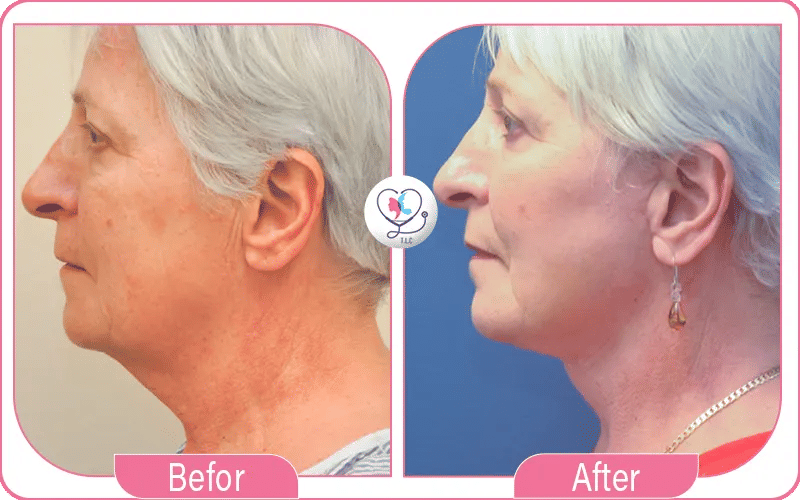
Neck starts to appear more natural
During the second and third weeks, most bruising fades, and swelling continues to subside. You may feel comfortable returning to desk work or light social activities. The neck and jawline appear more defined, though minor residual swelling may remain, particularly in deeper tissues. Gentle facial movements become easier, and overall comfort improves significantly.
Weeks 4–6
Subtle contouring visible, skin elasticity improves;
By one month post-op, swelling is minimal, and the results of the neck lift become more apparent. You can resume normal daily activities, including light exercise, though intense workouts should be reintroduced gradually. Skin elasticity improves, and subtle irregularities from swelling resolve. Scars are healing and may appear slightly pink but will continue to fade over the coming months.
Months 2–6
Neck contour and jawline are refined and near final.
Recovery continues as residual swelling disappears and tissues settle into their new position. By the third month, you will see the final neck contour and jawline definition. Scar visibility decreases and becomes subtle over time. By months 4–6, the neck lift results are stable and long-lasting, with smooth, natural contours and minimal residual signs of surgery.
Months 9–12
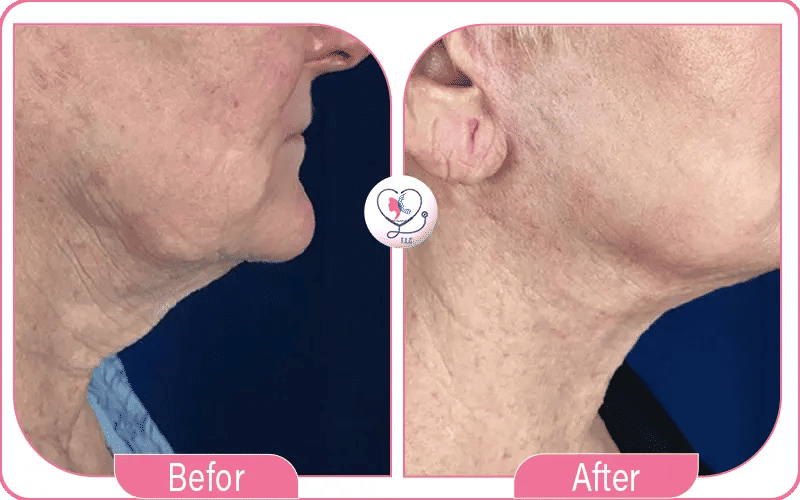
Swelling fully resolves, scars fade, and the neck’s shape is completely settled for a smooth, natural profile.
This period marks the final outcome. Swelling has fully resolved, scars have matured and faded significantly, and the neck’s shape has completely settled into its long-term result.
Scar Photos During Neck Lift Recovery Time
Photos show neck lift scars are hidden in natural creases under the chin and behind the ears, initially red and raised, fading to thin, pale lines within 6–12 months.
Neck lift scars are strategically hidden in natural creases: a short horizontal line under the chin and incisions behind the ears, following the earlobe and extending into the hairline, often forming an “inverted V” or “U” shape to camouflage them within skin folds and hair. Exact placement depends on the technique used, but the goal is minimal visibility once healed, blending naturally with the contours of the neck and jawline.
Initially, neck lift scars appear red and raised, gradually flattening and fading to pale, fine lines over 6–12 months. Full maturation can take up to two years, but incision placement (under the chin and around the ears) helps them remain discreet.
By 2–3 months, scars typically appear less noticeable and slightly pink, and by six months, they become significantly paler and softer. Following your surgeon’s aftercare instructions, avoiding sun exposure, and using recommended scar treatments are key to minimizing their appearance.
Swelling Photos During Neck Lift Recovery
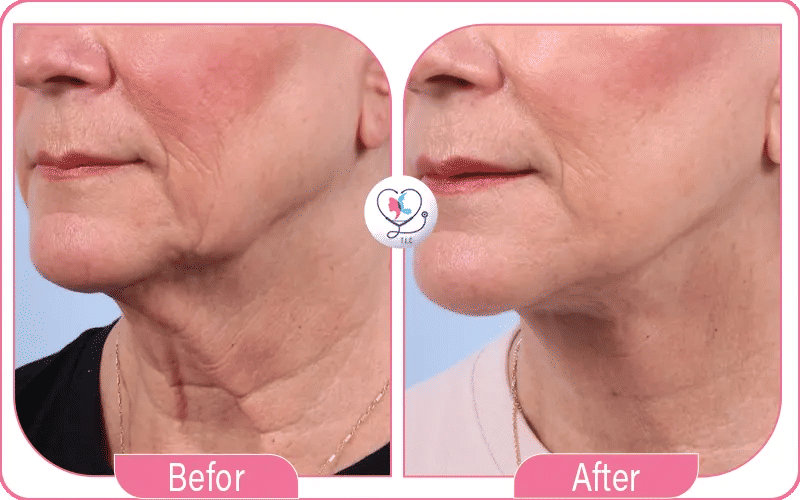
Photos show intense swelling initially (days 1–10), gradually reducing to a tight appearance by 2–3 weeks, and settling into subtle contours by months 1–3, eventually reaching a smooth, final profile.
Swelling is a natural part of healing, caused by the body sending fluids and immune cells to the treated tissues. It peaks in the first few days and gradually subsides over weeks to months as the skin readjusts and scar tissue forms. The extent of surgery, individual healing, activity levels, and post-op care all influence how long swelling lasts.
Read more about:
Non-Surgical Facelift: Costs, Results & Best Options
How to Use TENS Unit for Facelift: Steps, Common Mistakes & Tips