

- What Is Roux-en-Y Gastric Bypass?
- How Does Gastric Bypass Work?
- Roux-en-Y vs Mini Gastric Bypass vs Sleeve Gastrectomy
- Who Is a Good Candidate for Gastric Bypass?
- How Much Does Gastric Bypass Surgery Cost? [2026 Prices]
- Gastric Bypass in Turkey for International Patients
- Roux-en-Y Bypass Turkey Cost [2026 Prices]
- Best Gastric Bypass Surgeon in Turkey
- Roux-en-Y Gastric Bypass vs Sleeve Gastrectomy
- Roux-en-Y vs Mini Gastric Bypass
- Expected Weight Loss and Metabolic Results After Gastric Bypass
- Gastric Bypass Recovery Timeline
- Diet After Gastric Bypass Surgery
- Life After Gastric Bypass: What Changes Long-Term
- Risks, Side Effects and Complications of Gastric Bypass Surgery
- FAQs About Gastric Bypass Surgery
Roux-en-Y gastric bypass is a bariatric surgery that reduces stomach size and reroutes part of the small intestine to promote long-term weight loss and metabolic improvement. Most patients lose approximately 60%–80% of their excess body weight within 12–18 months, while many also experience significant improvement in type 2 diabetes and acid reflux (GERD).
For patients struggling with severe obesity, gastric bypass surgery is often considered one of the most powerful long-term weight loss and metabolic procedures available today. Beyond reducing stomach size, Roux-en-Y gastric bypass permanently changes how the digestive system handles food, hunger hormones, calorie absorption, and blood sugar regulation.
Many patients experience dramatic improvements not only in weight, but also in type 2 diabetes, acid reflux (GERD), mobility, sleep apnea, and overall quality of life.
However, gastric bypass is not a “quick fix.” The procedure requires lifelong nutritional monitoring, permanent eating habit changes, and a clear understanding of potential risks, side effects, and long-term complications.
What Is Roux-en-Y Gastric Bypass?
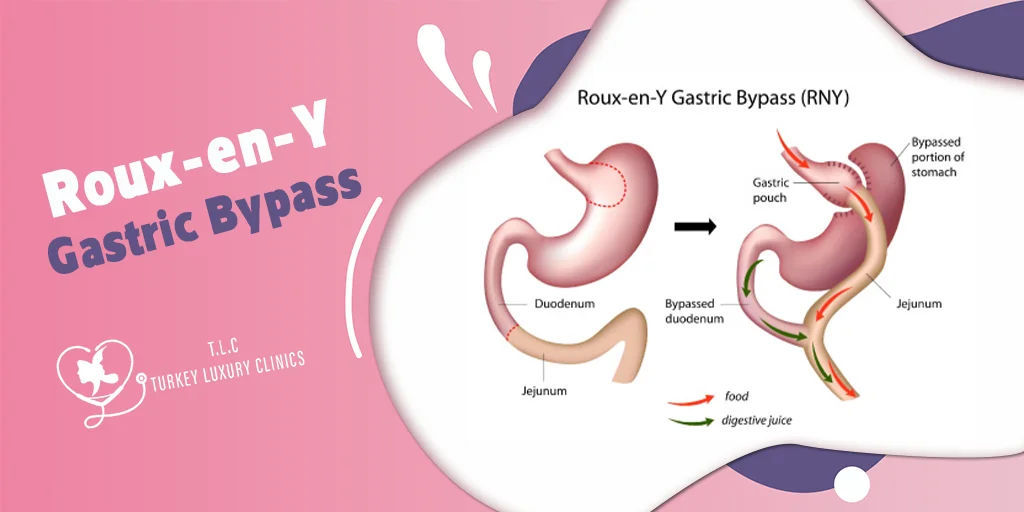
Roux-en-Y gastric bypass is a bariatric surgery that reduces the stomach to a small pouch and connects it directly to a lower part of the small intestine. This limits food intake, reduces calorie absorption, and changes gut hormones that control appetite and blood sugar.
Because it combines restriction, mild malabsorption, and metabolic effects, gastric bypass is considered one of the most effective long-term weight-loss procedures.
How Does Gastric Bypass Work?
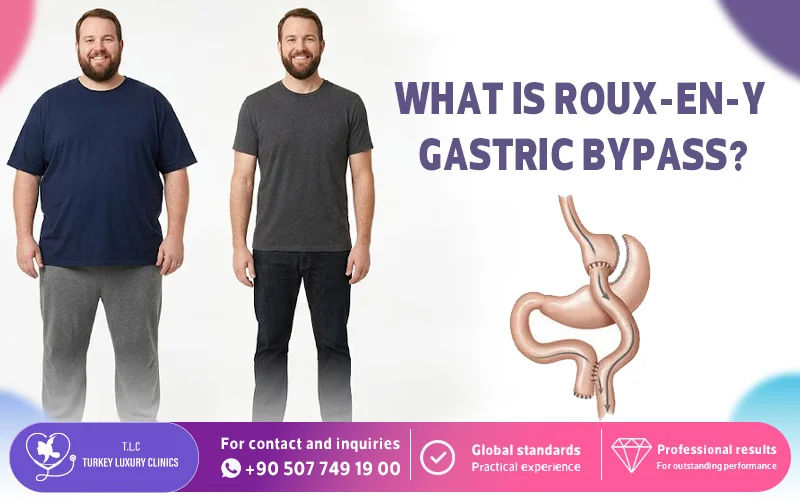
Gastric bypass (most commonly the Roux-en-Y procedure) helps you lose weight by creating a small stomach pouch and bypassing part of the small intestine. This reduces food intake, decreases calorie absorption, and triggers hormonal changes that lower hunger and improve metabolism.
1. Smaller Stomach Pouch
During surgery, a small stomach pouch about the size of an egg is created from the upper part of the stomach. Because the pouch holds much less food, patients feel full after smaller meals.
2. Intestinal Bypass
The pouch is connected directly to a lower section of the small intestine, bypassing the duodenum and part of the jejunum. This changes nutrient absorption and reduces calorie uptake.
3. Hormonal and Metabolic Changes
GLP-1 and PYY increase after surgery, helping patients feel full sooner and improving insulin sensitivity. This is why type 2 diabetes may improve quickly, even before major weight loss occurs.
Roux-en-Y vs Mini Gastric Bypass vs Sleeve Gastrectomy
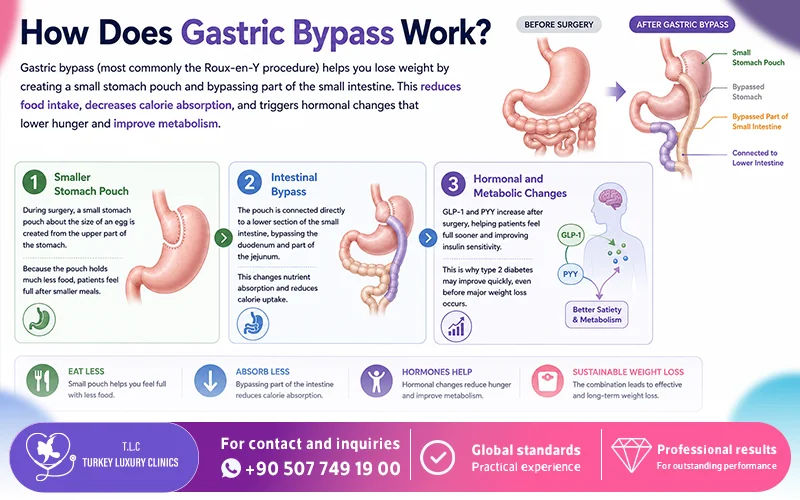
Feature | Roux-en-Y Gastric Bypass | Mini Gastric Bypass (OAGB) | Sleeve Gastrectomy |
Procedure Type | Restrictive + metabolic + mild malabsorption | Restrictive + metabolic | Restricted only |
Technique | Two intestinal connections | Single intestinal connection | Stomach removal with sleeve shape |
Average Excess Weight Loss | 60%–80% | 60%–75% | 50%–70% |
GERD (Acid Reflux) Effect | Usually improves significantly | Usually improves, but data varies | May worsen in some patients |
Diabetes Improvement | Strong metabolic effect | Strong metabolic effect | Moderate to strong |
Nutrient Deficiency Risk | Higher | Moderate | Lower |
Surgical Complexity | Higher | Moderate | Lower |
Long-Term Evidence | Very strong | Growing | Very strong |
Dumping Syndrome Risk | More common | Possible | Less common |
Revision Surgery Use | Common revision option | Less commonly used for revision | Often first-step procedure |
Who Is a Good Candidate for Gastric Bypass?
Good candidates for gastric bypass are adults with severe obesity who have not achieved sustainable weight loss through diet, exercise, or medical treatment. It may also be recommended for patients with type 2 diabetes, severe GERD, metabolic syndrome, or weight regain after another bariatric procedure.
Patients who may qualify for gastric bypass surgery include:

- Class III obesity: BMI of 40 or higher
- Class II obesity with obesity-related diseases: BMI of 35–39.9 with conditions such as type 2 diabetes, hypertension, obstructive sleep apnea, fatty liver disease, severe reflux, or cardiovascular disease
- Selected Class I obesity cases: BMI of 30–34.9 with severe or difficult-to-control metabolic disease, particularly type 2 diabetes in carefully selected patients
In addition to BMI criteria, candidates must demonstrate readiness for permanent lifestyle changes, including lifelong dietary modification, vitamin supplementation, follow-up appointments, and long-term behavioral commitment.
Gastric Bypass for Patients With Acid Reflux Disease (GERD)
Roux-en-Y gastric bypass is widely considered one of the most effective bariatric procedures for patients with significant gastroesophageal reflux disease (GERD).
It is often preferred over sleeve gastrectomy because it reduces acid exposure to the esophagus and improves reflux symptoms in most obese patients.
Bariatric surgeons commonly recommend gastric bypass for patients with:
- chronic GERD requiring daily medication
- severe heartburn or regurgitation
- erosive esophagitis
- Barrett’s esophagus
- hiatal hernia associated with obesity
Gastric Bypass for Type 2 Diabetes
Gastric bypass (Roux-en-Y) is considered one of the most effective metabolic surgeries for patients with type 2 diabetes and obesity. In selected cases, it may also be recommended for patients with lower BMI when diabetes is severe and difficult to control.
Bariatric surgeons may consider gastric bypass for patients with:
- BMI ≥40 kg/m² regardless of diabetes severity
- BMI 35–39.9 kg/m² with poorly controlled type 2 diabetes or obesity-related diseases
- BMI 30–34.9 kg/m² in selected cases with severe, difficult-to-control diabetes
It is typically considered when diabetes remains uncontrolled despite medications, insulin resistance is severe, or long-term metabolic control is not achievable through lifestyle treatment alone.
How Gastric Bypass Improves Diabetes?
- Increased GLP-1 and other incretin hormones
- Reduced insulin resistance
- Decreased calorie intake leading to metabolic improvement
- Altered gut hormone signaling affecting glucose metabolism
- Improved insulin sensitivity
Gastric Bypass for Revision After Sleeve Gastrectomy
Gastric bypass (Roux-en-Y) is commonly used as a revision procedure after sleeve gastrectomy when patients experience significant weight regain or develop severe acid reflux that does not respond to medical treatment. It is considered one of the most effective revisional bariatric options for restoring weight loss and improving metabolic outcomes.
This procedure is often recommended when the gastric sleeve fails to provide adequate long-term weight control or when complications such as persistent GERD or poor metabolic response occur after the initial surgery.
How Much Does Gastric Bypass Surgery Cost? [2026 Prices]
Gastric bypass surgery typically costs between $15,000 and $35,000 without insurance, with a national average of around $23,000. The exact cost can vary depending on factors such as location, hospital fees, surgeon experience, and the complexity of the procedure.
If the surgery is deemed medically necessary and insurance requirements are met, many major insurance providers, as well as Medicare and some Medicaid programs (depending on the state), may cover part or all of the cost.
In Turkey, prices are usually significantly lower, allowing patients to save thousands of dollars compared to U.S. costs while still receiving care at internationally accredited hospitals staffed by experienced bariatric surgeons.
Gastric bypass surgery is more expensive than the gastric sleeve cost because it is a more complex procedure that combines stomach restriction with intestinal rerouting, requiring longer surgery time and higher surgical expertise, which increases overall hospital and surgical costs.
Lower bariatric cost in Turkey does not automatically mean lower quality. Still, patients should carefully check the surgeon's experience, hospital accreditation, ICU availability, complication protocols, and long-term follow-up before choosing a clinic abroad.
Gastric Bypass in Turkey for International Patients
Many international patients choose Turkey for gastric bypass because treatment costs are lower than in the USA and Europe, waiting times are shorter, and many clinics offer structured packages that include surgery, hospital stay, transfers, accommodation, and follow-up support.
However, the most important factor is not price alone. Patients should compare the asurgeon's experience, hospital accreditation, emergency care standards, nutrition follow-up, and transparency around complication management.
Roux-en-Y Procedure Guide in Turkey
Factor | Details |
Procedure Duration | Approximately 2–4 hours |
Hospital Stay | Usually 1–3 days |
Hotel Accommodation | Typically 3–5 nights |
Travel Allowed After | Usually 5–7 days |
Recovery Time | Routine activities within 2–4 weeks |
Average Excess Weight Loss | Approximately 60%–80% EWL |
Weight Loss Timeline | Most results occur within 12–18 months |
Main Benefits | Weight loss, diabetes improvement, and reflux control |
Long-Term Requirement | Lifelong supplements and nutritional follow-up |
Common Risks | Dumping syndrome, vitamin deficiencies, and gallstones |
Roux-en-Y Bypass Turkey Cost [2026 Prices]
Roux-en-Y gastric bypass in Turkey typically costs between $3,500 and $6,500 USD, making it significantly more affordable than the USA and UK while still being performed in accredited hospitals by experienced bariatric surgeons. The price varies based on hospital standards, surgeon expertise, and the level of included services, but most international patients choose Turkey for its lower cost combined with full medical care packages.
Turkey gastric bypass package:
$3,500 – $4,800 USD
What is included in the package?
- Pre-operative medical tests and evaluation
- Roux-en-Y gastric bypass surgery (laparoscopic)
- Hospital stay (1–3 nights)
- Post-operative medications
- Hotel accommodation (depending on package)
- Airport pick-up and private transfers
- Translator and patient coordinator support
- Follow-up visits and online monitoring
Best Gastric Bypass Surgeon in Turkey
Selecting the right bariatric surgeon is one of the most important decisions for successful outcomes. At Turkey Luxury Clinics, we partner with bariatric surgeons who have:
- Experience specifically in Roux-en-Y gastric bypass procedures
- Working at a JCI-accredited hospital, ensuring the availability of high safety and quality standards and intensive care units (ICU)
- Clear and transparent complication and revision rates
- Long-term follow-up and nutritional support programs
- Availability of English-speaking medical staff
- Access to psychological and dietary counseling after surgery
Offering a well-structured follow-up system is just as important as the surgery itself, as it directly impacts long-term weight loss maintenance and patient safety.
Roux-en-Y Gastric Bypass vs Sleeve Gastrectomy
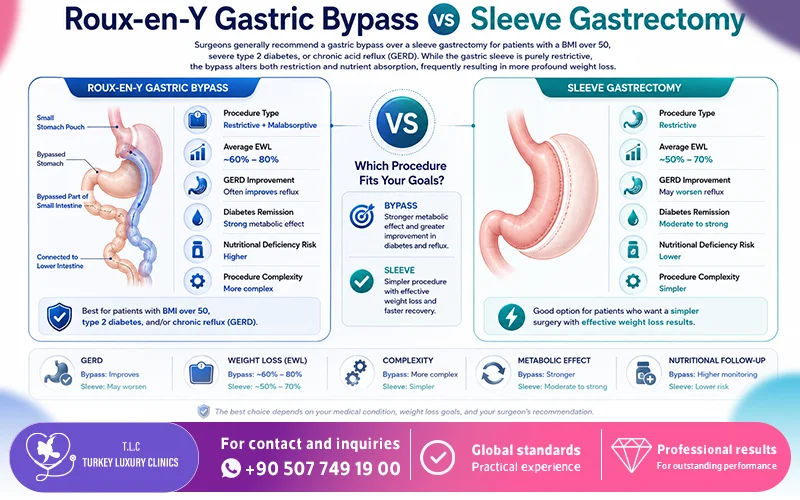
Surgeons generally recommend a gastric bypass over a sleeve gastrectomy for patients with a BMI over 50, severe type 2 diabetes, or chronic acid reflux (GERD). While the gastric sleeve is purely restrictive, the bypass alters both restriction and nutrient absorption, frequently resulting in more profound weight loss.
Feature | Gastric Bypass | Sleeve Gastrectomy |
Procedure Type | Restrictive + malabsorptive | Restrictive |
Average EWL | ~60%–80% | ~50%–70% |
GERD Improvement | Often improves reflux | May worsen reflux |
Diabetes Remission | Strong metabolic effect | Moderate to strong |
Nutritional Deficiency Risk | Higher | Lower |
Procedure Complexity | More complex | Simpler |
Read more about: Gastric Sleeve vs Gastric Bypass: Success rate, Costs, and Recovery
Roux-en-Y vs Mini Gastric Bypass
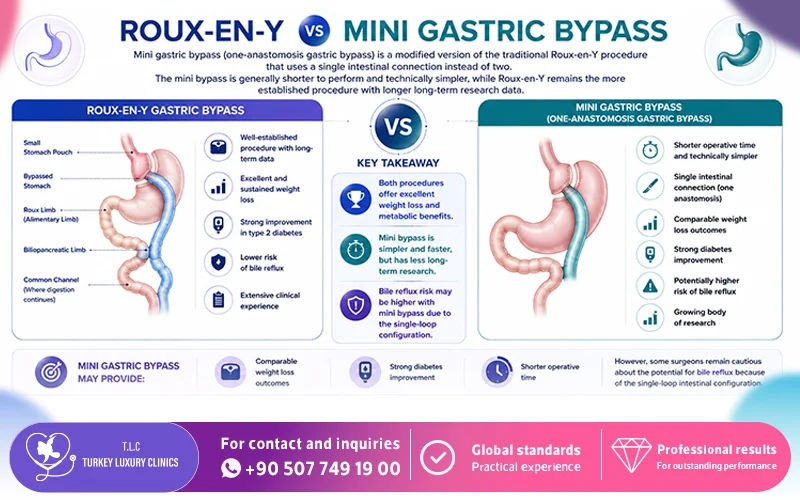
Mini gastric bypass (one-anastomosis gastric bypass) is a modified version of the traditional Roux-en-Y procedure that uses a single intestinal connection instead of two.
The mini bypass is generally shorter to perform and technically simpler, while Roux-en-Y remains the more established procedure with longer long-term research data.
Mini gastric bypass may provide:
- Comparable weight loss outcomes
- Strong diabetes improvement
- Shorter operative time
However, some surgeons remain cautious about the potential for bile reflux because of the single-loop intestinal configuration.
Feature | Roux-en-Y Gastric Bypass | Mini Gastric Bypass |
Intestinal Connections | Two | One |
Surgical Complexity | Higher | Lower |
Long-Term Evidence | Extensive | Growing |
Risk of Bile Reflux | Lower | Potentially higher |
Weight Loss Results | Excellent | Excellent |
Expected Weight Loss and Metabolic Results After Gastric Bypass
Weight loss after gastric bypass starts rapidly within the first month, accelerates during the first 6 months, and then slows down over time, with most patients losing about 50% of their excess body weight (EBW) during this period.
Weight loss gradually tapers into a maintenance phase, with most patients reaching their lowest weight approximately 12 to 18 months after surgery.
After this period, weight typically stabilizes, and long-term success depends on maintaining dietary habits, physical activity, and medical follow-up. Some degree of weight regain may occur over time, but it is usually partial and manageable with consistent lifestyle changes rather than a complete reversal of results.
Weight loss after gastric bypass is generally greater and faster than gastric sleeve due to its combined restrictive and malabsorptive mechanism, along with stronger gut hormone effects that reduce appetite and improve metabolic control.

Weight Loss Timeline (Excess Body Weight Lost)
Time After Surgery | Excess Weight Loss (EWL) | Clinical Pattern & Phase Characteristics |
Month 1 | 10% – 20% | Rapid early loss: sharp drop driven by post-operative liquid diet and significant fluid shifts. |
Month 3 | 30% – 40% | Peak fat loss phase: fastest visible changes with noticeable reductions in clothing size. |
Month 6 | 50% – 60% | Steady transition phase: weight loss continues but gradually slows as metabolic adaptation begins. |
Year 1 | 60% – 70% | Target achievement phase: most patients reach their maximum expected weight loss around this stage. |
Years 2–5 | 65%+ (stabilized) | Long-term stability phase: weight typically stabilizes, with normal fluctuations of ±5% considered expected. |
Expected Diabetes Outcomes After Gastric Bypass
Clinical studies consistently show strong metabolic improvements after gastric bypass surgery:
- Significant reduction in HbA1c levels
- Reduced need for insulin and diabetes medications
- Partial or complete remission of type 2 diabetes in many patients
- Improved long-term glycemic control compared with medical therapy alone
These effects occur not only due to weight loss but also due to early hormonal changes that improve insulin sensitivity shortly after surgery.
Patients with shorter duration of diabetes, better preserved pancreatic function, and less advanced disease tend to achieve the highest remission rates.
Can You Gain Weight Back After Gastric Bypass?
Yes, some weight regain can happen years after gastric bypass, especially if eating habits return to high-calorie snacks, sugary drinks, or large portions. However, most regain is partial and can often be managed with nutrition support, physical activity, behavioral changes, and medical follow-up.
Gastric Bypass Recovery Timeline
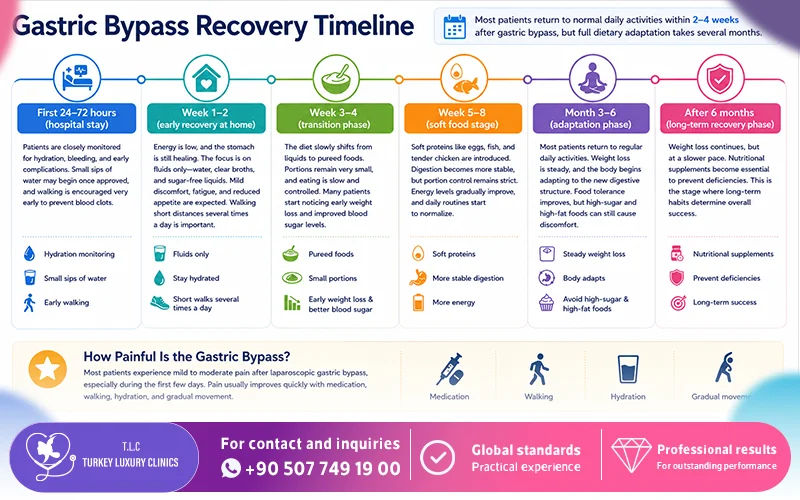
Most patients return to normal daily activities within 2–4 weeks after gastric bypass, but full dietary adaptation takes several months.
First 24–72 hours (hospital stay)
Patients are closely monitored for hydration, bleeding, and early complications. Small sips of water may begin once approved, and walking is encouraged very early to prevent blood clots.
Week 1–2 (early recovery at home)
Energy is low, and the stomach is still healing. The focus is on fluids only—water, clear broths, and sugar-free liquids. Mild discomfort, fatigue, and reduced appetite are expected. Walking short distances several times a day is important.
Week 3–4 (transition phase)
The diet slowly shifts from liquids to pureed foods. Portions remain very small, and eating is slow and controlled. Many patients start noticing early weight loss and improved blood sugar levels.
Week 5–8 (soft food stage)
Soft proteins like eggs, fish, and tender chicken are introduced. Digestion becomes more stable, but portion control remains strict. Energy levels gradually improve, and daily routines start to normalize.
Month 3–6 (adaptation phase)
Most patients return to regular daily activities. Weight loss is steady, and the body begins adapting to the new digestive structure. Food tolerance improves, but high-sugar and high-fat foods can still cause discomfort.
After 6 months (long-term recovery phase)
Weight loss continues, but at a slower pace. Nutritional supplements become essential to prevent deficiencies. This is the stage where long-term habits determine overall success.
How Painful Is the Gastric Bypass?
Most patients experience mild to moderate pain after laparoscopic gastric bypass, especially during the first few days. Pain usually improves quickly with medication, walking, hydration, and gradual movement.
Diet After Gastric Bypass Surgery
Diet progression after gastric bypass is structured and non-negotiable for proper healing and long-term results.
Phase 1: Clear liquids (Days 1–7)
Only transparent fluids are allowed. The goal is hydration without stressing the new stomach pouch.
Phase 2: Full liquids (Weeks 2–3)
Protein shakes, milk, and smooth soups are introduced. Protein intake becomes a priority to support healing.
Phase 3: Pureed foods (Weeks 3–4)
Blended foods with a smooth texture are added. Meals are extremely small, usually a few spoonfuls at a time.
Phase 4: Soft foods (Weeks 5–8)
Soft proteins, cooked vegetables, and easy-to-digest foods are introduced gradually.
Phase 5: Regular bariatric diet (After 2 months)
Meals focus on:
- High protein intake
- Low sugar and low fat
- Small, frequent portions
- Slow and mindful eating
Foods that are typically avoided long-term include carbonated drinks, refined sugar, and highly processed meals, as they can cause dumping syndrome or weight regain.

What Foods Should Be Avoided After Gastric Bypass?
Patients are usually advised to avoid sugary foods, carbonated drinks, alcohol, fried foods, large portions, and drinking fluids with meals. These foods may trigger dumping syndrome, discomfort, vomiting, or weight regain.
Life After Gastric Bypass: What Changes Long-Term
Life after gastric bypass is not just about weight loss—it involves permanent metabolic, hormonal, and lifestyle changes.
1. Appetite and hunger changes
Hormones that control hunger significantly decrease, meaning patients feel full much faster and stay satisfied longer.
2. Weight loss and maintenance
Most patients lose a substantial percentage of excess weight within 12–18 months. However, maintaining results depends heavily on diet consistency and physical activity.
3. Nutritional requirements
Because absorption is reduced, lifelong vitamin and mineral supplementation becomes necessary, especially for iron, B12, calcium, and vitamin D.
4. Food tolerance changes
Some foods may no longer be tolerated well, especially sugary or greasy meals. Eating habits must permanently shift toward simpler, protein-focused meals.
5. Emotional and lifestyle adjustments
Many patients experience improved mobility, confidence, and overall quality of life. However, adapting to new eating behaviors can take time and requires discipline.
6. Long-term success factors
Sustainable results depend on:
- Regular follow-up visits
- Consistent protein intake
- Hydration habits
- Daily movement or exercise
- Avoiding old eating patterns

Risks, Side Effects and Complications of Gastric Bypass Surgery
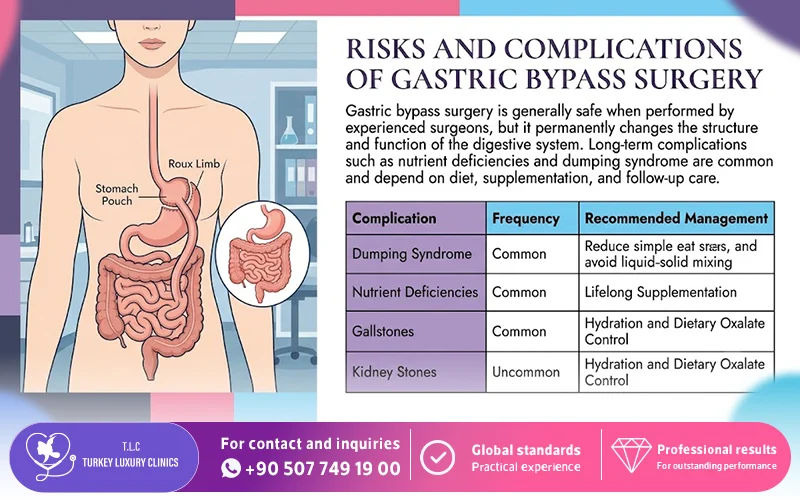
Gastric bypass surgery is generally safe when performed by experienced bariatric surgeons, but it permanently changes the structure and function of the digestive system by reducing stomach size and bypassing part of the small intestine. These changes can lead to long-term complications such as nutrient deficiencies, dumping syndrome, gallstones, and, in some cases, late surgical complications.
Most of these risks are long-term and depend heavily on diet, supplementation, and follow-up care.
Complication | Frequency | Reversible? | Recommended Management |
Dumping Syndrome | Common | Yes | Reduce simple sugars, eat smaller, more frequent meals, and avoid liquid–solid mixing |
Vitamin & Mineral Deficiencies | Common | Yes | Lifelong bariatric supplementation |
Gastric Pouch / Intestinal Adaptation Changes | Common | No | Long-term dietary adaptation, revision only in severe cases |
Gallstones | Common | No | Surgical removal if symptomatic |
Kidney Stones | Uncommon | Yes | Hydration and dietary oxalate control |
Marginal Ulcers | Uncommon | Yes | Acid suppression, H. pylori treatment, avoid NSAIDs |
Anastomotic Strictures | Rare | Yes | Endoscopic balloon dilation |
Internal Hernias | Rare | No | Urgent surgical repair |
Severe Postprandial Hypoglycemia | Rare | Yes | Low glycemic diet + specialist management |
Dumping Syndrome
Dumping syndrome is one of the most common side effects after gastric bypass surgery. It occurs when food—especially sugar or high-fat meals—moves too quickly from the stomach pouch into the small intestine.
- Early Dumping (10–30 mins post-meal) causes nausea, vomiting, cramping, and rapid heart rate.
- Late Dumping (1–3 hours post-meal) triggers a massive insulin spike, causing severe low blood sugar (hypoglycemia), dizziness, and sweating.
It is a mild to moderate long-term side effect that is usually managed through dietary modification, including reducing simple carbohydrates, eating smaller frequent meals, and avoiding liquid–solid mixing. It is more common after gastric bypass surgery than after gastric sleeve procedures.
Gallstones and Kidney Stones
Gallstones may develop after gastric bypass due to rapid weight loss and changes in bile flow, sometimes requiring gallbladder removal if symptomatic. Kidney stones can also occur due to increased oxalate absorption and are usually managed with hydration and dietary changes.
Nutritional Deficiencies
Nutritional deficiencies are common after gastric bypass because the surgery bypasses key absorption areas in the small intestine, leading to low levels of iron, vitamin B12, vitamin D, calcium, and folate.
The most common deficiencies after gastric bypass include iron, vitamin B12, folate, calcium, and vitamin D. Without regular supplements and blood tests, patients may develop fatigue, hair loss, anemia, nerve symptoms, or reduced bone density.
Without treatment, these deficiencies may lead to fatigue, hair loss, neurological symptoms, and reduced bone density making lifelong bariatric supplementation and routine blood tests essential.
Severe Postprandial Hypoglycemia
Severe postprandial hypoglycemia is a rare metabolic complication that can develop months or years after gastric bypass surgery. It occurs due to an exaggerated insulin response after meals, leading to low blood sugar levels. Symptoms may include dizziness, sweating, confusion, weakness, and in severe cases fainting. Management focuses on dietary strategies such as low glycemic load meals, frequent small portions, and protein-rich nutrition, with specialist metabolic care required in persistent cases.
Long-Term Surgical Complications
Some complications can develop months or even years after surgery due to anatomical changes in the digestive system.
1. Internal hernia
Loops of intestine may slip through created openings, which can reduce blood flow and cause severe abdominal pain or bowel obstruction.
2. Bowel obstruction
Scar tissue, adhesions, or twisting of the intestines can block normal food passage and may require urgent medical attention.
3. Marginal ulcers
Ulcers can form at the connection between the stomach pouch and small intestine, leading to pain, bleeding, or, in severe cases, perforation.
4. Anastomotic strictures
Scar tissue may narrow the surgical connection, causing difficulty swallowing, vomiting, and food intolerance. These are often treated endoscopically.
When to Seek Medical Help Immediately After a Gastric Bypass?
After gastric bypass surgery, certain symptoms should never be ignored:
- Severe or sudden abdominal pain
- Persistent vomiting or inability to keep fluids down
- Signs of internal bleeding (black stools or vomiting blood)
- Severe dizziness or fainting after meals
These symptoms may indicate a serious complication that requires urgent medical evaluation.

Can Gastric Bypass Be Reversed?
Gastric bypass is considered a permanent surgery. Reversal is technically possible in rare cases, but it is complex and usually reserved for severe complications such as uncontrolled ulcers, malnutrition, or serious intolerance.
FAQs About Gastric Bypass Surgery