

- What to Eat After Tonsillectomy?
- Why Eat a Soft, Cold, and Bland Diet After Tonsillectomy?
- List of Soft Foods to Eat After a Tonsillectomy
- Day by Day Food Progression After Tonsillectomy
- Best Foods for Children After a Tonsillectomy
- What Not to Eat After Tonsillectomy
- Recover Comfortably After Your Tonsillectomy with Turkey Luxury Clinics
- FAQs About What to Eat After Tonsillectomy
What to eat after a tonsillectomy is crucial to minimize pain, promote healing, and reduce the risk of complications such as dehydration and post-operative bleeding. After surgery, your diet should progress gradually from clear liquids to cold liquids, soft foods, and eventually regular foods as your throat heals. Most people can return to a normal diet within 10–14 days, depending on their recovery.
The best foods to eat after a tonsillectomy are hydrating, soft, cold, and easy-to-swallow foods such as yogurt, mashed potatoes, applesauce, pudding, scrambled eggs, oatmeal, smoothies, and ice cream. During the first few days, staying hydrated with water, electrolyte drinks, and non-citrus fluids is just as important as choosing the right foods. Avoid spicy, acidic, crunchy, and hot foods until your throat has fully healed to reduce pain and lower the risk of bleeding.
This guide explains exactly what to eat after a tonsillectomy for both adults and children, including the best soft foods, foods to avoid, and practical recovery tips for a smoother recovery.
What to Eat After Tonsillectomy?
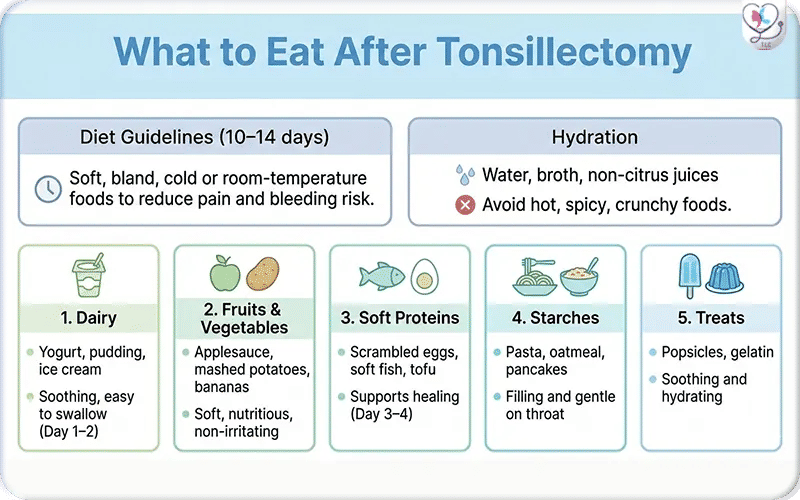
After a tonsillectomy, it is best to follow a soft, bland diet consisting of foods that are cold or at room temperature for 10–14 days. This approach helps minimize throat pain and lowers the risk of post-operative bleeding.
Recommended foods include ice cream, yogurt, mashed potatoes, applesauce, pudding, scrambled eggs, and smoothies. It is also important to stay well hydrated with water, broth, and non-citrus juices while avoiding crunchy, spicy, or hot foods that may irritate the healing throat.
1. Yogurt and Dairy Products
Cold dairy products such as yogurt, pudding, ice cream, frozen yogurt, custard, and milkshakes help soothe the throat while providing protein and calories to support recovery when eating is difficult. Yogurt is especially beneficial during the first few days after surgery because it is smooth, easy to swallow, and rich in protein and calcium. These foods are generally well tolerated from day 1–2, depending on your comfort.
2. Soft Fruits and Vegetables
Soft fruits and vegetables such as applesauce, mashed bananas, avocado, peaches, pears, cooked carrots, and mashed potatoes provide essential vitamins, minerals, antioxidants, fiber, and carbohydrates that support healing and hydration. Serve them at room temperature or slightly chilled, and choose cooked, mashed, or pureed varieties that are easy to swallow.
3. Soft Proteins
Soft protein foods such as scrambled eggs, finely chopped chicken, soft fish, tuna, tofu, cottage cheese, soft cheese, and pureed soups provide the protein needed for tissue repair and wound healing without irritating the surgical site. Introduce these foods gradually around days 3–4, or once swallowing becomes more comfortable.
4. Soft Grains and Starches
Soft carbohydrates including oatmeal, cream of wheat, soft rice, pasta, noodles, macaroni and cheese, pancakes, and soft bread provide energy for recovery while remaining easy to chew and swallow. Serve them lukewarm rather than hot, and avoid crusty or hard edges that may scratch the healing throat. These foods are typically introduced around day 3 as swallowing improves.
5. Cold Soothing Treats
Cold treats such as ice cream, popsicles, gelatin (Jell-O), and ice chips help numb the throat, reduce discomfort, and encourage hydration during the early stages of recovery. Plain ice cream without hard mix-ins and popsicles without fruit chunks or candy pieces are the safest choices. These foods can usually be enjoyed from day 1–2, provided they do not contain hard or acidic ingredients.
6. Smoothies
Smoothies made with soft fruits, yogurt, or milk provide hydration, calories, protein, vitamins, and minerals in an easy-to-swallow form. Avoid citrus fruits or other acidic ingredients during the first few days after surgery. They are typically well tolerated from day 2–3, once liquids can be swallowed comfortably.
7. Broth and Soup
Clear broths and blended soups help maintain hydration while providing nutrients that are gentle on the throat. Serve them warm rather than hot to avoid irritating the surgical area. They can usually be introduced immediately after surgery if tolerated.
Why Eat a Soft, Cold, and Bland Diet After Tonsillectomy?
Choosing soft, cold, and bland foods after a tonsillectomy is crucial to minimize pain, prevent irritation and bleeding, and protect the surgical site during swallowing. Cold foods help soothe inflammation, soft textures reduce the risk of irritating healing scabs, and bland foods prevent throat irritation, allowing for smoother, faster recovery.
Maintaining high fluid intake is also critical for healing and reducing pain. Avoiding sharp, crunchy, or hot foods prevents injury to the throat, which could dislodge scabs and lead to bleeding.
Recommended food types and their benefits with examples
Food Type | Examples | Benefit |
Cold Foods | Popsicles, ice cream, and cold water | Reduce post-operative pain, soothe inflammation, and help decrease throat swelling |
Soft Foods | Scrambled eggs, mashed potatoes, soft pasta | Easy to swallow, protects the surgical site, and prevents irritation of healing tissue |
Bland Foods | Yogurt, pudding, oatmeal, applesauce | Avoid throat irritation and prevent stinging or burning caused by acidic or spicy foods |
Benefits of Soft Foods After Tonsillectomy
Soft foods are a core part of recovery after a tonsillectomy because they are easy to chew and swallow without irritating the surgical site. They help protect healing tissue and reduce the risk of pain or bleeding caused by friction. Common soft food options include mashed potatoes, scrambled eggs, soft pasta, oatmeal, yogurt, and applesauce. They provide energy and essential nutrition while keeping swallowing as comfortable as possible during the healing phase.
Benefits of Cold Foods After Tonsillectomy
Cold foods are especially helpful in the first few days after a tonsillectomy. The cold temperature helps numb the throat, reduce swelling, and ease post-operative pain. Foods like popsicles, ice cream, frozen yogurt, ice chips, and cold water provide temporary relief while also encouraging fluid intake. Cold foods are often better tolerated than warm or hot foods during early recovery.
Benefits of Blended Foods After Tonsillectomy
Blended foods offer a smooth texture that minimizes irritation to the throat while still providing nutrition. These foods are ideal when transitioning from liquids to soft solids. Examples include smoothies, blended soups, pureed vegetables, blended fruits, and protein shakes (non-citrus and non-acidic). Blended foods are gentle on the throat and help meet calorie and nutrient needs during recovery.
Benefits of Hydrating Liquids After Tonsillectomy
Drinking at least 4 to 6 eight-ounce glasses of liquids daily is essential to prevent dehydration. Staying hydrated after a tonsillectomy is critical for pain control and proper healing. Dehydration can worsen throat pain and slow recovery.
Best liquids include water, clear broths, electrolyte drinks, and non-citrus juices such as apple or white grape juice. Sipping fluids regularly throughout the day helps keep the throat moist, supports healing, and reduces discomfort when swallowing.
List of Soft Foods to Eat After a Tonsillectomy
Below is a categorized list of soft foods that are generally safe to eat after a tonsillectomy. Choose foods that are soft, cool or lukewarm, easy to swallow, and gentle on the healing throat.
Cold Foods for Pain Relief
- Ice cream
- Frozen yogurt
- Yogurt
- Popsicles
- Gelatin (Jell-O)
- Fruit ice
- Ice chips
- Pudding
- Custard
Hydrating Drinks
- Water
- Clear broth
- Bone broth
- Electrolyte drinks
- Apple juice
- White grape juice
- Non-citrus fruit juices
- Protein shakes
- Non-acidic smoothies
- Milk
- Chocolate milk
- Yogurt drinks
Soft Meals & Starches
- Mashed potatoes
- Sweet mashed potatoes
- Oatmeal
- Cream of wheat
- Cooked cereal
- Soft rice
- Pasta
- Noodles
- Macaroni and cheese
- Soft pancakes
- Soft bread
- Bread soaked in milk
- Soft cereal soaked in milk
Protein Foods
- Scrambled eggs
- Soft-boiled eggs
- Soft fish
- Baked fish (without breading)
- Finely chopped or shredded chicken
- Tuna
- Tofu
- Cottage cheese
- Soft cheese
- Smooth peanut butter
- Pureed soups
- Blended bean soups
Fruits & Vegetables
- Applesauce
- Mashed bananas
- Ripe avocado
- Peaches
- Pears
- Cooked apples
- Cooked fruit without skins or seeds
- Cooked carrots
- Cooked squash
- Cooked mushrooms
- Cooked asparagus
- Mashed vegetables
- Pureed vegetables
Day by Day Food Progression After Tonsillectomy
A day-by-day food progression is designed to reduce pain, maintain good nutrition, and support healing after a tonsillectomy. Once you are fully awake after anesthesia and your healthcare provider allows you to drink, start with small sips of cold water or other clear, non-acidic liquids. As swallowing becomes easier, gradually introduce cold liquids such as milk, electrolyte drinks, or diluted non-citrus juices, followed by smooth foods like yogurt, pudding, applesauce, and mashed potatoes. As healing progresses, you can slowly add soft solids before returning to your normal diet.
Use the timeline below as a general guide, and move to the next stage only when you can comfortably swallow your current foods without increased pain or bleeding. If a new food causes discomfort or worsens your symptoms, return to the previous stage for another day or two before trying again.
Recovery Day | What to Eat | Examples |
Day 1 | Cold liquids only | Water, ice chips, popsicles, ice cream, frozen yogurt, electrolyte drinks, apple or white grape juice |
Day 2 | Cold liquids + very soft foods | Jell-O, pudding, custard, slushies, lukewarm clear broth |
Day 3 | Soft, smooth foods | Applesauce, mashed bananas, yogurt, mashed potatoes, oatmeal |
Day 4 | Soft solids | Scrambled eggs, soft pasta (mac & cheese), well-cooked rice, ripe avocado |
Day 5 | Soft proteins | Soft fish, tuna, finely chopped chicken, creamy soups |
Days 6–7 | Expanded soft diet | Pancakes, cream of wheat, mashed vegetables, smoothies |
Days 8–10 | Gradual texture increase | Moist ground meat, soft casseroles, noodles, soft bread soaked in milk |
Days 11–14 | Near-normal diet | Most soft foods, avoiding crunchy, spicy, or hot items |
Best Foods for Children After a Tonsillectomy
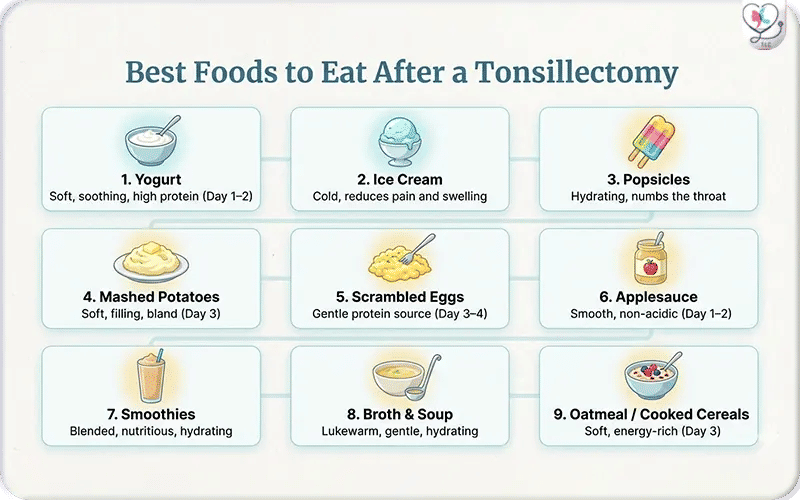
For children after a tonsillectomy, it’s important to offer soft, cold, and easy-to-swallow foods to soothe the throat and prevent bleeding.
Choose options your child prefers to ensure they eat enough. Best choices include pudding, ice cream, yogurt, applesauce, mashed potatoes, scrambled eggs, and smoothies.
Staying hydrated is essential, so provide plenty of water, apple juice, and non-red popsicles. Avoid sharp, crunchy, acidic, or hot foods, which can irritate the throat or increase the risk of bleeding.
A list of diets suitable for children after tonsillectomy:
- Fruit: Strained or pureed fruit such as applesauce or baby food fruit.
- Milk: Milk, chocolate milk, shakes, instant breakfast drinks, and yogurt drinks.
- Soup: Any strained soup (without chunks).
- Cereal: Cooked cereals like cream of wheat or oatmeal.
- Drinks: Water, milk, and non-citrus fruit juices are recommended.
What Not to Eat After Tonsillectomy
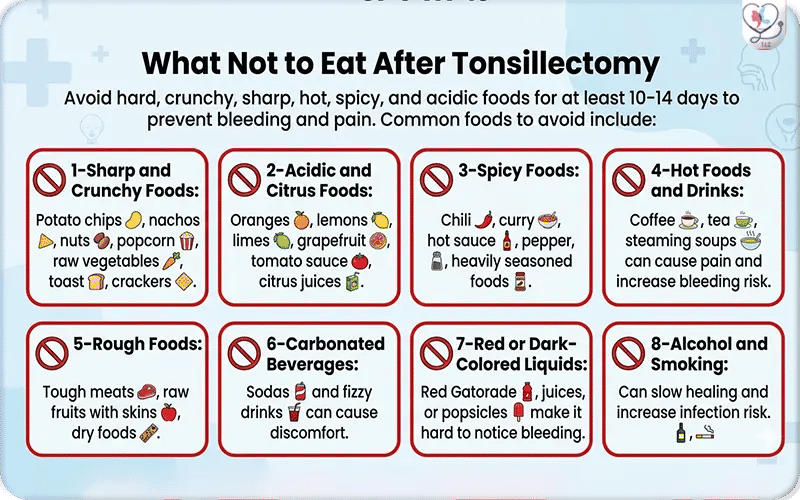
Avoid hard, crunchy, sharp, hot, spicy, and acidic foods for at least 10–14 days to prevent bleeding and pain. Common foods to avoid include:
- Sharp and Crunchy Foods: Potato chips, nachos, nuts, popcorn, raw vegetables, toast, crackers.
- Acidic and Citrus Foods: Oranges, lemons, limes, grapefruit, tomato sauce, citrus juices.
- Spicy Foods: Chili, curry, hot sauce, pepper, and heavily seasoned foods.
- Hot Foods and Drinks: Coffee, tea, and steaming soups can cause pain and increase bleeding risk.
- Rough Foods: Tough meats, raw fruits with skins, dry foods.
- Carbonated Beverages: Sodas and fizzy drinks can cause discomfort.
- Red or Dark-Colored Liquids: Red Gatorade, juices, or popsicles make it hard to notice bleeding.
- Alcohol and Smoking: Can slow healing and increase infection risk.
Recover Comfortably After Your Tonsillectomy with Turkey Luxury Clinics
Healing smoothly after a tonsillectomy requires expert guidance, proper diet, and attentive care. At Turkey Luxury Clinics, we provide personalized day-by-day diet plans, post-operative support, and access to internationally trained ENT specialists in JCI-accredited hospitals.
Let our experienced team guide you through every stage of recovery, ensuring minimal pain, safe healing, and peace of mind. Contact Turkey Luxury Clinics today to schedule your consultation and receive professional care tailored to your needs.
You may like
Tonsillectomy and Adenoidectomy for Kids: Procedures, Recovery & Benefits
Cost of tonsil removal surgery 2026 updates
FAQs About What to Eat After Tonsillectomy